Results by title
42 books match the query 'Photographers'
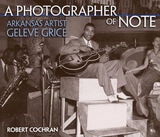
A Photographer of Note
Arkansas Artist Geleve GriceGeleve Grice
University of Arkansas Press, 2003
In a selection of more than one hundred black and white images taken over a period of sixty years, this book bears witness to the life of a remarkable photographer and to small-town African American life in the middle of the twentieth century. Geleve Grice was born and raised near Pine Bluff, and he has documented the ordinary life of his community: parades, graduations, weddings, club events, and whatever else brought people together. In the process he has created a remarkable historical portrait of an African American community. Through his lens we glimpse the daily patterns of segregated Pine Bluff, and we also participate in the excitement of greeting extraordinary visitors. Martin Luther King Jr., Mary McLeod Bethune, Harry S. Truman, and others all came through town.
Folklorist Robert Cochran worked with Grice to select these photographs from the thousands he has taken across a lifetime. They organized the work chronologically, reflecting Grice’s early years in small-town Arkansas, his travel as a serviceman in World War II, and his long career in Pine Bluff. Cochran’s accompanying chapters link Grice to the great tradition of American community photographers. He also shows how work for pay-at the Arkansas Agricultural, Mechanical and Normal College in Pine Bluff; at the Arkansas State Press daily newspaper; through his own studio-shaped Grice’s work. Cochran shows that Grice not only made his living taking photographs for jobs, but that he also made his own life by making photographs for himself-and now for history.
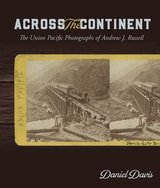
Across the Continent
The Union Pacific Photographs of Andrew Joseph RussellDaniel Davis
University of Utah Press, 2018
Copublished with the Utah State Historical Society. Affiliated with the Utah Division of State History, Utah Department of Heritage & Arts
Andrew J. Russell is primarily known as the man who photographed the famous “East and West Shaking Hands” image of the Golden Spike ceremony on May 10, 1869. He also took nearly one thousand other images that document almost every aspect of the construction of the Union Pacific Railroad. Across the Continent is the most detailed study to date of the life and work of an often-overlooked but prolific artist who contributed immensely not only to documentation of the railroad but also to the nation’s visualization of the American West and, earlier, the Civil War.
The central focus in the book is on the large body of work Russell produced primarily to satisfy the needs of the Union Pacific. Daniel Davis posits that this set of Russell’s photos is best understood not through one or a handful of individual images, but as a photographic archive. Taken as a whole, that archive shows that Russell intended for viewers never to forget who built the Union Pacific. His images celebrate working people—masons working on bridge foundations, freighters and their wagons, surveyors with their transits, engine crews posed on their engines, as well as tracklayers, laborers, cooks, machinists, carpenters, graders, teamsters, and clerks pushing paper.
Russell contributed to a golden age of Western photography that visually introduced the American West to the nation, changing its public image from that of a Great American Desert to a place of apparently unlimited economic potential.

Adolphe Gouhenant
French Revolutionary, Utopian Leader, and Texas Frontier PhotographerPaula Selzer
University of North Texas Press, 2019
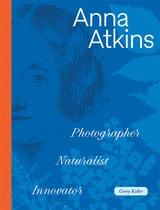
Anna Atkins
Photographer, Naturalist, InnovatorCorey Keller
J. Paul Getty Trust, The, 0
Step into the world of Anna Atkins (1799–1871), perhaps the world’s first female photographer and a pioneer of the medium. She lived an existence full of heartache and triumph, from her mother’s death when Atkins was an infant to her publication of multiple photographic books as an adult. After the passing of her mother, Atkins was raised primarily by her father and grandfather, who placed an emphasis on both her emotional and intellectual growth. As a result, she spent her life surrounded by some of the brightest minds of Victorian England during the Industrial Revolution.
Despite societal gender norms of the time, which typically limited women to a life within the home, Atkins gained the respect of the scientific community with her ambitious multivolume album Photographs of British Algae: Cyanotype Impressions, now recognized as the world’s first photographically illustrated book. Her cyanotypes, in addition to their scientific accuracy, lent artistic beauty to her publications, setting the stage for new uses of this experimental technology. In an era replete with state-of-the-art inventions and innovative ideas, Atkins pushed photography forward in its earliest days with courage, creativity, and brilliance.
Ages thirteen and up.
Please note that this title is sold and distributed in North America by ABRAMS, New York.

Artful Lives
The Francis Watts Lee Family and Their TimesPatricia J. Fanning
University of Massachusetts Press, 2016
Francis Watts Lee and his family hold a special place in the history of American photography. F. Holland Day completed a series of remarkable photographs of Lee's daughter Peggy, and the striking portrait of the child and her mother titled Blessed Art Thou among Women is one of Gertrude Käsebier's most iconic compositions. In Artful Lives, Patricia J. Fanning uses these and other significant images as guideposts to explore the Lee family and the art and culture of their age.
A social reform advocate, Francis Watts Lee was an artistic photographer and a talented printer, part of the circle of avant-garde artists and intellectuals who formed Boston's bohemia. He married twice, first Agnes Rand, an award-winning poet and children's book author, and later, after their divorce, Marion Lewis Chamberlain, a librarian and MIT-trained architect. Francis and Agnes's eldest daughter, Peggy, who was so integral to the work of pioneer Pictorialists, died at age seven of juvenile diabetes. Her sister, Alice, who lost her hearing in infancy, became a wood carver and sculptor.
Utilizing previously unknown family archives and institutional sources, Fanning traces the Lee family's story in the context of major artistic, political, social, and religious trends, including the Arts and Crafts movement, Christian Socialism, and Aestheticism, while also showing how their experiences reflected the national culture's evolving conceptions of family, gender, childhood, medicine, deaf education, and mourning. This richly drawn and gracefully written account of one family informs our understanding of this vibrant era, in Boston and well beyond.
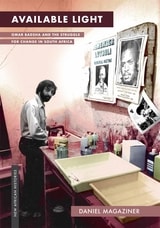
Available Light
Omar Badsha and the Struggle for Change in South AfricaDaniel Magaziner
Ohio University Press, 2024
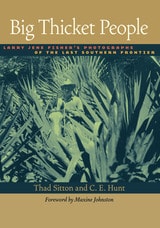
Big Thicket People
Larry Jene Fisher's Photographs of the Last Southern FrontierBy Thad Sitton and C.E. Hunt
University of Texas Press, 2008
Living off the land—hunting, fishing, and farming, along with a range of specialized crafts that provided barter or cash income—was a way of life that persisted well into the twentieth century in the Big Thicket of southeast Texas. Before this way of life ended with World War II, professional photographer Larry Jene Fisher spent a decade between the 1930s and 1940s photographing Big Thicket people living and working in the old ways. His photographs, the only known collection on this subject, constitute an irreplaceable record of lifeways that first took root in the southeastern woodlands of the colonial United States and eventually spread all across the Southern frontier.
Big Thicket People presents Fisher's photographs in suites that document a wide slice of Big Thicket life-people, dogs, camps, deer hunts, farming, syrup mills, rooter hogs and stock raising, railroad tie making, barrel stave making, chimney building, peckerwood sawmills, logging, turpentining, town life, church services and picnics, funerals and golden weddings, and dances and other amusements. Accompanying each suite of images is a cultural essay by Thad Sitton, who also introduces the book with a historical overview of life in the Big Thicket. C. E. Hunt provides an informative biography of Larry Jene Fisher.
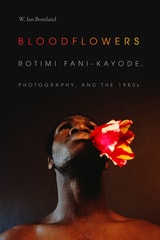
Bloodflowers
Rotimi Fani-Kayode, Photography, and the 1980sW. Ian Bourland
Duke University Press, 2019
Brassai
Letters to My ParentsBrassaï
University of Chicago Press, 1997
"[Brassaï] is probably the only photographer—at least in France—to have acquired such a vast audience and mastered his material to such a degree that he can express himself with a flexibility and apparent ease that is almost literary in its nature."—Jean Gallien, Photo-Monde
"The letters that Brassaï wrote to his parents between 1920 and 1940 chronicle the sometimes painful stages by which this gifted man hauled himself from penury to celebrity."—Peter Hamilton, Times Literary Supplement
"In these proud, protective, occasionally conscience-stricken missives, the young man full of eager dreams emerges as one of the century's pioneering photographers, revered for his lushly atmospheric portraits of Paris after dark."—Elle
"A fascinating insight into how a bright individual slowly found his calling."—Christine Schwartz Hartley, New York Times Book Review
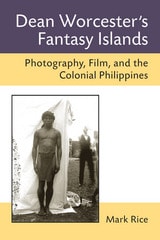
Dean Worcester's Fantasy Islands
Photography, Film, and the Colonial PhilippinesMark Rice
University of Michigan Press, 2014
Dean Worcester’s Fantasy Islands brings to life one of the most significant (but under examined) figures in the history of U.S. colonialism in the Philippines. Upon the outbreak of the Spanish-American War, Worcester, a scientist who had traveled twice to the Philippines on zoological expeditions, established himself as one of America’s leading experts on the Philippines. Over a fourteen-year career as a member of the U.S. colonial regime, Worcester devoted much of his time and energy to traveling among and photographing non-Christian minority groups in the Philippines. He amassed an archive of several thousand photographs taken by him or by government photographers. Worcester deployed those photographs in books, magazine articles, and lectures to promote his belief that the United States should maintain control of the Philippines for decades to come. While many historians have examined American colonial photography in the Philippines, this book is the first lengthy treatment of Worcester’s role in shaping American perceptions of the Philippines in the early twentieth century.
Father Flashes
Tricia Bauer
University of Alabama Press, 2011
H. H. Bennett, Photographer
His American LandscapeSara Rath
University of Wisconsin Press, 2010
"My energies for near a lifetime have been used almost entirely to win such prominence as I could in outdoor photography."—H. H. Bennett
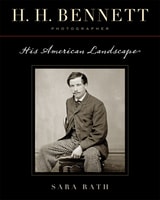
Henry Hamilton Bennett (1843–1908) became a celebrated photographer in the half-century following the American Civil War. Bennett is admired for his superb depictions of dramatic landscapes of the Dells of the Wisconsin River and also for his many technical innovations in photography, including a stop-action shutter and a revolving solar printing house that is now housed at the Smithsonian Institution. With his instantaneous shutter, he gained recognition for his striking images of moving subjects, such as lumber raftsmen shooting the river rapids and his son Ashley leaping in midair from a bluff to the craggy pillar of Stand Rock. Less well-known are Bennett’s splendid urban photographs of nineteenth-century Chicago, Milwaukee, and St. Paul.
This engaging biography of H. H. Bennett tells his life story, illustrated throughout with his remarkable photographs, some of them rarely viewed before. It draws on the photographer’s own letters and journals, along with other family documents, to portray the sweep of his career and personal life. An important figure in the history of photography, he also contributed to the growth of American tourism: his nationally distributed stereoscopic views of Dells rock formations and his portraits of local Ho-Chunk Indians played a significant role in creating the Wisconsin Dells as the popular tourist destination it is today. Despite personal challenges—a crippling Civil War injury, the death of his first wife, and continual financial worries—Bennett produced an extensive portfolio that captures the midwestern culture of his time. He accepted commissions in the 1890s to document Chicago’s modern skyscrapers, grand residences of Milwaukee’s entrepreneurs and sailing ships in its harbor, enormous scenic panoramas along the routes of Wisconsin railroads, and sparkling ice palaces lit by fireworks at the St. Paul Winter Carnival.
Finalist, Midwest Regional Interest, Midwest Book Awards
Inventing Nadar
A History of Photographic FirstsEmily Doucet
Duke University Press, 2025
John Heartfield and the Agitated Image
Photography, Persuasion, and the Rise of Avant-Garde PhotomontageAndrés Mario Zervigón
University of Chicago Press, 2012
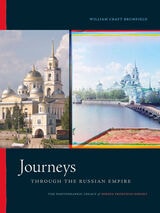
Journeys through the Russian Empire
The Photographic Legacy of Sergey Prokudin-GorskyWilliam Craft Brumfield
Duke University Press, 2020
In 1918 Prokudin-Gorsky escaped an increasingly chaotic, violent Russia and regained nearly 2,000 of his bulky glass negatives. His subsequent peripatetic existence before settling in Paris makes his collection's survival all the more miraculous. The U.S. Library of Congress acquired Prokudin-Gorsky's collection in 1948, and since then it has become a touchstone for understanding pre-revolutionary Russia. Now digitized and publicly available, his images are a sensation in Russia, where people visit websites dedicated to them.
William Craft Brumfield—photographer, scholar, and the leading authority on Russian architecture in the West—began working with Prokudin-Gorsky's photographs in 1985. He curated the first public exhibition of them in the United States and has annotated the entire collection. In Journeys through the Russian Empire, Brumfield—who has spent decades traversing Russia and photographing buildings and landscapes in their various stages of disintegration or restoration—juxtaposes Prokudin-Gorsky's images against those he took of the same buildings and areas. In examining the intersections between his own photography and that of Prokudin-Gorsky, Brumfield assesses the state of preservation of Russia's architectural heritage and calls into question the nostalgic assumptions of those who see Prokudin-Gorsky's images as the recovery of the lost past of an idyllic, pre-Soviet Russia.
This lavishly illustrated volume—which features some 400 stunning full-color images of ancient churches and mosques, railways and monasteries, towns and remote natural landscapes—is a testament to two brilliant photographers whose work prompts and illuminates, monument by monument, questions of conservation, restoration, and cultural identity and memory.
Kracauer. Photographic Archive
Edited by Maria Zinfert
Diaphanes, 2014
Kracauer.Photographic Archive, a companion volume to The Past’s Threshold: Essays on Photography, collects previously unpublished photographs by Siegfried and Elisabeth, “Lili,” Kracauer. With its remarkably rich material, the book tells the story of the Kracauer’s close working relationship, from their marriage in Germany to their escape to Paris and the war and postwar years in the United States. While neither Kracauer nor his wife trained in photography, their portraits, city views, and landscapes evince impressive aesthetic and technical skill, while simultaneously shedding light on their lives marked by exile and flight.
Lee Miller
A LifeCarolyn Burke
University of Chicago Press, 2007
Living with His Camera
Jane Gallop
Duke University Press, 2003
Living with His Camera is Gallop’s nuanced meditation on photography and the place it has in her private life and in her family. A reflection on family, it attempts—like Blau’s photographs themselves—to portray the realities of family life beyond the pieties of conventional representations. Living with His Camera is about some of the most pressing issues of visuality and some of the most basic issues of daily life. Gallop considers intimate photographs of moments both dramatic and routine: of herself giving birth to son Max or crying in the midst of an argument with Blau, pouring herself cereal as Max colors at the breakfast table, or naked, sweeping the floor. With her trademark candor, humor, and critical acumen, Gallop mixes personal reflection with close readings of Roland Barthes’s Camera Lucida, Susan Sontag’s On Photography, Kathryn Harrison’s novel Exposure, and Pierre Bourdieu’s Photography.
Presenting his photographs and her text, Living with His Camera is a portrait of a couple whose professional activity is part of their private lives and whose private life is viewed through their professional gazes. While most of us set aside rigorous thought when we turn to the sentimental realm of home life, Gallop and Blau look at each other not only with great affection but also with the keen focus of a sharp, critical gaze.
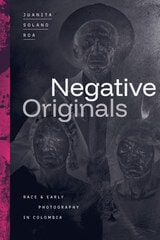
Negative Originals
Race and Early Photography in ColombiaJuanita Solano Roa
Duke University Press, 2025
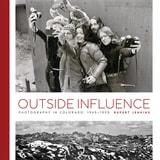
Outside Influence
Photography in Colorado, 1945–1995Rupert Jenkins
University Press of Colorado, 2025
Outside Influence: Photography in Colorado, 1945–1995 is the first detailed account of the state’s history of post–World War II expressive photography. The title “Outside Influence” alludes to the historic presence of the natural landscape as subject and to the transformative impact of out-of-state artists and educators. Their arrival in Colorado beginning in the 1960s galvanized interpretive photography by introducing innovative concepts, nontraditional materials, and emergent digital technologies to students, peers, and their audience-at-large.
Throughout the book’s nine chapters, Rupert Jenkins contextualizes Colorado photography’s postwar development with a social, political, and cultural abstract that encompasses national events and trends, the emerging presence of women and photographers of color, and institutional leadership. Drawing from more than 120 personal interviews, he identifies the medium’s principal in-state creators, mentors, and advocates from the modernist era of film processing to the emergence of interdisciplinary digital practice. Jenkins answers fundamental questions about the people and work of this era: Who generated this significant body of innovative, noncommercial photographic work? Where did they come from? Who inspired them, and who in turn did they inspire?
As Eric Paddock, curator of photography at the Denver Art Museum, discusses in his foreword, by looking at the schools, workshops, galleries, and museums that supported these artists, Jenkins stresses the importance of collaboration and community to any successful venture. Crucially, in examining the lives and careers of photographers like Robert Adams, Walter Chappell, Albert Chong, Cherie Hiser, Barbara Houghton, Winter Prather, Mark Sink, Melanie Walker, Myron Wood, and numerous others, Outside Influence seeks to affirm the medium’s legacy within Colorado’s fine arts canon.
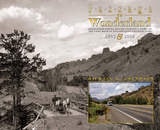
Passage to Wonderland
Rephotographing Joseph Stimson's Views of the Cody Road to Yellowstone National Park, 1903 and 2008Michael A. Amundson
University Press of Colorado, 2012
Amundson examines the physical changes along "the most scenic fifty miles in America" and explores the cultural and natural history behind them. This careful analysis of the paired images make Passage to Wonderland more than a "then and now" photography book--it is a unique exploration of the interconnectedness between the Old West and the New West. It will be a wonderful companion for those touring the Cody Road as well as those armchair tourists who can follow the road on Google Earth using the provided GPS coordinates.
The University Press of Colorado gratefully acknowledges the generous support of the Charles Redd Center for Western Studies at Brigham Young University toward the publication of this book.
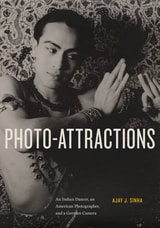
Photo-Attractions
An Indian Dancer, an American Photographer, and a German CameraAjay Sinha
Rutgers University Press, 2022
Art historian Ajay Sinha uses these hitherto unpublished photographs and archival research to raise provocative and important questions about photographic technology, colonial histories, race, sexuality and transcultural desires. Challenging the assumption that Gopal was merely objectified by Van Vechten’s Orientalist gaze, he explores the ways in which the Indian dancer co-authored the photos. In Sinha’s reading, Van Vechten’s New York studio becomes a promiscuous contact zone between world cultures, where a “photo-erotic” triangle is formed between the American photographer, Indian dancer, and German camera.
A groundbreaking study of global modernity, Photo-Attractions brings scholarship on American photography, literature, race and sexual economies into conversation with work on South Asian visual culture, dance, and gender. In these remarkable historical documents, it locates the pleasure taken in cultural difference that still resonates today.
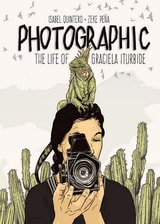
Photographic
The Life of Graciela IturbideIsabel Quintero
J. Paul Getty Trust, The, 2021
Renowned Mexican photographer Graciela Iturbide was born in Mexico City in 1942, the oldest of thirteen children. When tragedy strikes Graciela as a young mother, she turns to photography for solace and understanding.
From then on Graciela embarks on a photographic journey that takes her throughout her native Mexico, from the Sonora Desert to Juchitán to Frida Kahlo’s bathroom, and then to the United States, India, and beyond.
Photographic is a symbolic, poetic, and deeply personal graphic biography of this iconic photographer. Graciela’s journey will excite young adults and budding photographers, who will be inspired by her resolve, talent, and curiosity.
Ages twelve and up
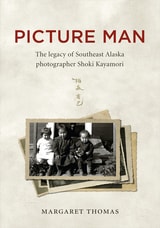
Picture Man
The Legacy of Southeast Alaska Photographer Shoki KayamoriMargaret Thomas
University of Alaska Press, 2015
In Picture Man, Margaret Thomas views Kayamori’s life through multiple lenses. Using Kayamori’s original photos, she explores the economic and political realities that sent Kayamori and thousands like him out of Japan toward opportunity and adventure in the United States, especially the Pacific Northwest. She reveals the tensions around Asian immigrants on the West Coast and the racism that sent many young men north to work in the canneries of Alaska. And she illuminates the intersecting—and at times conflicting—lives of villagers and migrants in a time of enormous change. Part history, part biography, part photographic showcase, Picture Man offers a fascinating new view of Alaska history.
Proof
Photographs from Four Generations of a Texas FamilyByrd M. Williams IV
University of North Texas Press, 2016
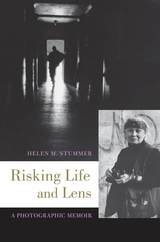
Risking Life and Lens
A Photographic MemoirHelen M. Stummer
Temple University Press, 2017
For more than forty years, Helen M. Stummer has captured images depicting the dignity, humanity, and suffering of people living in conditions of poverty. Her efforts taught her to understand firsthand the resilience of people living in insufferable conditions. In her inspiring memoir, Risking Life and Lens, Stummer recounts her experiences as a socially-concerned documentary photographer whose passion for her work overcame her fears.
Stummer’s images, from the mean streets of Manhattan and Newark, New Jersey, to the back woods of Maine and the mountains of Guatemala, expose the myths of poverty and serve as a metaphor for her challenges in her own life. The 159 photographs reproduced here recount Stummer’s journey as an artist and her personal quest for truth.
Risking Life and Lens shares Stummer’s work and educational efforts and it provides valuable insights about race, class, and social justice—issues that continue to divide the country and the world. Her work has created change in both her own life and the lives of those who view it.
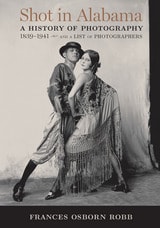
Shot in Alabama
A History of Photography, 1839–1941, and a List of PhotographersFrances Osborn Robb
University of Alabama Press, 2016
A landmark study of vernacular and professional photography, from 1839 to 1941, that frames Alabama’s history through its images.
Shot in Alabama by Frances Osborn Robb is a visual and textual narrative of Alabama’s photographic history from 1839 to 1941. It describes the phenomenon of photography as practiced in Alabama as a major cultural force, paying close attention to the particular contexts from which each image emerges and the fragments of microhistory that each image documents.
Presented chronologically—from the very first photograph ever taken in the state to the appearance of cameras as commonplace possessions in mid-twentieth-century households—Robb draws into sharp relief the eras of daguerreotypes, Civil War photography, photographic portraiture at the end of the nineteenth century, urban and rural photography in the early twentieth century, WPA photography during the Great Depression, postcards and tourist photography, and pre–World War II illustrated books and art photographs. Robb also examines a wide spectrum of vernacular photography: Alabama-made photographs of everyday people and places, the photographs that fill dresser drawers and shoeboxes, a vast array of unusual images against which Alabama’s more typical iconography can be measured.
She also chronicles the work of hundreds of photographers—black and white, amateur and professional, women and men—some little-known outside their communities, some of them the medium’s most important practitioners. “Who Shot Alabama?” is an accompanying appendix that includes 1,400 photographers by name, working dates, and location—a resource that will help countless individuals, families, and archives identify the specific Alabama photographers whose names appear on family photographs or those in institutional collections.
Shot in Alabama is an insightful document of photography as both a communicator and creator of social, cultural, economic, and visual history. It highlights the very personal worlds rendered by individual photographs as well as the larger panorama of Alabama history as seen through the photographs collectively. A landmark work of research, curation, and scholarship, it fills the void of published history on Alabama photography and is an invaluable resource for historians, archivists, librarians, collectors, hobbyists, and readers with an interest in Alabama history or historic photography. Shot in Alabama is a book that all Alabamians will want on their coffee tables.

Smoky, the Dog That Saved My Life
The Bill Wynne StoryNancy Roe Pimm
Ohio University Press, 2019
World War II soldier Bill Wynne met Smoky while serving in New Guinea, where the dog, who was smaller than Wynne’s army boot, was found trying to scratch her way out of a foxhole. After he adopted her, she served as the squadron mascot and is credited as being the first therapy dog for the emotional support she provided the soldiers. When they weren’t fighting, Bill taught Smoky hundreds of tricks to entertain the troops. Smoky became a war hero herself at an airstrip in Luzon, the Philippines, where she helped save forty airplanes and hundreds of soldiers from imminent attack.
After the war, Bill worked as a Hollywood animal trainer and then returned to his hometown of Cleveland, Ohio. He and Smoky continued to perform their act, even getting their own TV show, How to Train Your Dog with Bill Wynne and Smoky.
Nancy Roe Pimm presents Bill and Smoky’s story to middle-grade readers in delightful prose coupled with rich archival illustrations. Children will love learning about World War II from an unusual perspective, witnessing the power of the bond between a soldier and his dog, and seeing how that bond continued through the exciting years following the war.
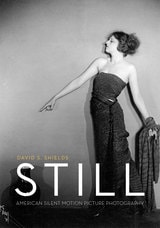
Still
American Silent Motion Picture PhotographyDavid S. Shields
University of Chicago Press, 2013
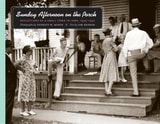
Sunday Afternoon on the Porch
Reflections of a Small Town in Iowa, 1939-1942Everett W. Kuntz
University of Iowa Press, 2008
Everett bought movie reel film in bulk from a mail-order house, rolled his own film, and developed it in a closet at home, but he never had the money to print his photographs. More than two thousand negatives stayed in a box while he married, raised a family, and worked as an electrical engineer in the Twin Cities. When he became ill with cancer in the fall of 2002—sixty years after he had developed the last of his bulk film—Everett opened his time capsule and printed the images from his youth. He died in 2003, having brought his childhood town back to life just as he was leaving it.
A sense of peace radiates from these images. Whether skinny-dipping in the Turkey River, wheelbarrow-racing, threshing oats, milking cows, visiting with relatives after church, or hanging out at the drugstore or the movies, Ridgeway’s hardworking citizens are modest and trusting and luminous in their graceful harmony and their unguarded affection for each other. Visiting the town in 2006 as he was writing the text to accompany these photographs, Jim Heynen crafted vignettes that perfectly complement these rediscovered images by blending fact and fiction to give context and voice to Ridgeway’s citizens.
The Fisher King
A NovelAnthony Powell
University of Chicago Press, 2004
Ostensibly a novel about gossip on a cruise ship, The Fisher King is much more: a highly stylized narrative infused with Greek mythology, legend, and satire.
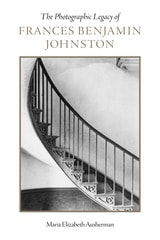
The Photographic Legacy of Frances Benjamin Johnston
Maria Elizabeth Ausherman
University of Alabama Press, 2022
An illustrated account of the life and work of the pioneering photographer
The Photographic Legacy of Frances Benjamin Johnston (1864–1952) draws on original papers and photographs from the Library of Congress to document the extraordinary life and nearly seventy-year career of this pioneering photographer. Maria Elizabeth Ausherman illuminates the early origins of Johnston’s style and vision, and her attempts to change society through her art. One of the first women to work in an emerging field dominated by men, Johnston achieved acclaim as an accomplished photographer and photojournalist.
As the official White House photographer for five administrations, she was instrumental in defining the medium and inspiring women to train in and appreciate photography. But it is her monumental nine-state survey of southern American architecture that stands as her most significant contribution to the history and development of photography both as art and as documentary. Through her photography, Johnston showed reverence for the beautiful historic buildings she appreciated and also helped shape architectural and photographic preservation in the United States.

The Photography of Gustave Le Gray
Eugenia Parry Janis
University of Chicago Press, 1987
Drawing on entirely new material Eugenia Parry Janis fully analyzes the life and work of Le Gray and demonstrates the originality of his artistic achievement in the context of discoveries about his personal and professional history. Janis, approaching the photographs of Le Gray with the methods and sensibilities of an art historian, reveals telling connections between Le Gray's choices of subject matter and formal means of presentation and the existing pictorial practice of other media such as painting. This same approach makes her sensitive to Le Gray's departures from such traditional practice, and she skillfully illustrates how he evolved from student painter into master photographer. In doing so she gives us a glimpse of the way in which Le Gray's manipulation of the photographic process was always informed by his pictorial needs and by his developing style.

The Splendid Drunken Twenties
Selections from the Daybooks, 1922 - 30Carl Van Vechten
University of Illinois Press, 2002
Between 1922 and 1930, Carl Van Vechten--one of the most significant figures of the Harlem Renaissance--kept a daily record of his activities. The records recount his day-to-day life, as well as the alliances, drinking habits, feuds, and affairs of a wide number of the period's luminaries, providing a rich resource for reconstructing the culture of 1920s New York and the social milieu during Prohibition. Bruce Kellner has provided copious informative notes identifying central figures and clarifying details.
The The Traveling Camera
Lewis Hine and the Fight to End Child LaborAlexandra S. D. Hinrichs
J. Paul Getty Trust, The, 2021
Stunning visuals and poetic text combine to tell the inspiring story of Lewis Hine (1874–1940), a teacher and photographer who employed his art as a tool for social reform. Working for the National Child Labor Committee, Hine traveled the United States, taking pictures of children as young as five toiling under dangerous conditions in cotton mills, seafood canneries, farms, and coal mines. He often wore disguises to sneak into factories, impersonating a machinery inspector or traveling salesman. He said, “If I could tell this story in words, I wouldn’t need to lug a camera.” His poignant pictures attracted national attention and were instrumental in the passage of child labor laws. The Traveling Camera contains extensive back matter, including a time line, original photos, and a bibliography.
Ages six to nine.
This Is Not For You
An Activist's Journey of Resistance and ResilienceRichard Brown
Oregon State University Press, 2021
The book finds Brown approaching his eightieth birthday and reflecting on his life. As he recalls his childhood in 1940s Harlem, his radicalization in the newly desegregated Air Force, and his decades of activism in one of America’s whitest cities, he questions how much longer he’ll do this work, and he wonders who, if anyone, will take his place.
This is a book about how and why to become an engaged, activist citizen, and how activists can stay grounded, no matter how deeply they immerse themselves in the work. It also offers an intimate, firsthand look at policing: what policing is and could be, how civilians can have a say, and how police can and should be responsive to and inclusive of civilian voices. This Is Not For You speaks on every page about being Black in America: about Black pride; Black history, art, and culture; and the experience of resisting white supremacy. It also stands as a much-needed counternarrative to Portlandia, telling a different story about the city and who has shaped it.
Over fifty percent of royalties earned on this book will be donated to organizations working on behalf of Black Portlanders.
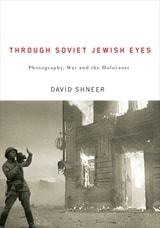
Through Soviet Jewish Eyes
Photography, War, and the HolocaustShneer, David
Rutgers University Press, 2012
These wartime photographers were the first liberators to bear witness with cameras to Nazi atrocities, three years before Americans arrived at Buchenwald and Dachau. In this passionate work, David Shneer tells their stories and highlights their work through their very own images-he has amassed never-before-published photographs from families, collectors, and private archives.
Through Soviet Jewish Eyes helps us understand why so many Jews flocked to Soviet photography; what their lives and work looked like during the rise of Stalinism, during and then after the war; and why Jews were the ones charged with documenting the Soviet experiment and then its near destruction at the hands of the Nazis.
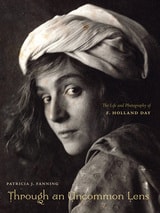
Through an Uncommon Lens
The Life and Photography of F. Holland DayPatricia J. Fanning
University of Massachusetts Press, 2008
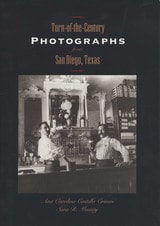
Turn-of-the-Century Photographs from San Diego, Texas
By Ana Carolina Castillo Crimm and Sara R. Massey
University of Texas Press, 2003
Situated in the South Texas borderlands some fifty miles west of Corpus Christi, San Diego was a thriving town already a hundred years old at the turn of the twentieth century. With a population that was 90 percent Mexican or Mexican American and 10 percent Anglo, the bicultural community was the seat of Duval County and a prosperous town of lumberyards, banks, mercantile stores, and cotton gins, which also supplied the needs of area ranchers and farmers. Though Anglos dominated its economic and political life, San Diego was culturally Mexican, and Mexican Americans as well as Anglos built successful businesses and made fortunes.
This collection of nearly one hundred photographs from the estate of amateur photographer William Hoffman captures the cosmopolitan town of San Diego at a vibrant moment in its history between 1898 and 1909. Grouped into the categories women and their jobs, local homes, men and their businesses, children at school and church, families and friends, and entertainment about town, the photos offer an immediate visual understanding of the cultural and economic life of the community, enhanced by detailed captions that identify the subjects and circumstances of the photos. An introductory historical chapter constitutes the first published history of Duval County, which was one of the most important areas of South Texas in the early twentieth century.
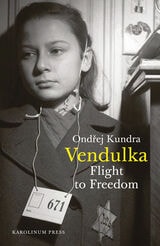
Vendulka
Flight to FreedomOndrej Kundra
Karolinum Press, 2021
Famed Czech photographer Jan Lukas snapped an offhand portrait of twelve-year-old Vendulka Vogl in March 1943. A friend of the Vogls, Lukas was saying goodbye to the family, who were soon to leave Prague for a concentration camp. The photograph almost didn’t see the light of day—Lukas knew that if the Nazis found it on him, he could wind up in the camps as well—but the image was eventually developed and came to symbolize the Holocaust and humanize its victims. Seventy years after this famous picture was taken, investigative journalist Ondřej Kundra discovered that, despite all odds, Vendulka Vogl had survived the camps of Terezín, Auschwitz, and Christianstadt, and was in fact still alive and living in the United States. Kundra persuaded her to tell the remarkable story surrounding the photograph: her survival, her later decision to flee the Communist regime for America, and how she later reconnected with Jan Lukas, maintaining a lifelong friendship.
Vogl’s thrillingly moving story, Kundra’s sharp and engaging writing, and Lukas’s striking photography all combine to make Vendulka an inspiring investigation into the horrors of totalitarianism and the redemptive beauty of friendship.

Vesna Pavlovic
StagecraftVesna Pavlovic
Vanderbilt University Press, 2021
The book includes critical essays that contextualize and expound on Pavlović's unique treatment of the photographic medium, in which a photographic moment is expanded to include the conditions of image making, production, documentation, and representation.
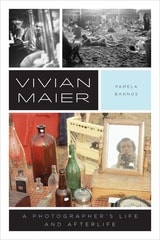
Vivian Maier
A Photographer’s Life and AfterlifePamela Bannos
University of Chicago Press, 2017
But, as Pamela Bannos reveals in this meticulous and passionate biography, this story of the nanny savant has blinded us to Maier’s true achievements, as well as her intentions. Most important, Bannos argues, Maier was not a nanny who moonlighted as a photographer; she was a photographer who supported herself as a nanny. In Vivian Maier: A Photographer’s Life and Afterlife, Bannos contrasts Maier’s life with the mythology that strangers—mostly the men who have profited from her work—have created around her absence. Bannos shows that Maier was extremely conscientious about how her work was developed, printed, and cropped, even though she also made a clear choice never to display it. She places Maier’s fierce passion for privacy alongside the recent spread of her work around the world, and she explains Maier’s careful adjustments of photographic technique, while explaining how the photographs have been misconstrued or misidentified. As well, Bannos uncovers new information about Maier’s immediate family, including her difficult brother, Karl—relatives that once had been thought not to exist.
This authoritative and engrossing biography shows that the real story of Vivian Maier, a true visionary artist, is even more compelling than the myth.