Results by title
34 books match the query 'Photographs'
A Box of Photographs
Roger Grenier
University of Chicago Press, 2013
Among Unknown Tribes
Rediscovering the Photographs of Explorer Carl LumholtzBy Bill Broyles
University of Texas Press, 2014

Barrio
Photographs from Chicago's Pilsen and Little VillagePaul D'Amato
University of Chicago Press, 2006
Barrio collects ninety of these striking color images along with D’Amato’s fascinating account of his time photographing Mexican Chicago and his acceptance—often grudging, after threatened violence—into the heart of the city’s Mexican community. Some of the photos here are beautifully composed and startling—visual narratives that are surreal and dreamlike, haunting and mythic. Others, like those D’Amato took while shadowing graffiti artists in the subway, are far more immediate and improvisational. With a foreword by author Stuart Dybek that places D’Amato’s work in the context of the Pilsen and Little Village that Dybek has elsewhere captured so memorably, this book offers a penetrating, evocative, and overall streetwise portrait of two iconic and enduring Hispanic neighborhoods.
Becoming
The Photographs of Clementina, Viscountess HawardenCarol Mavor
Duke University Press, 1999
With drama, wit, and verve, Lady Hawarden’s girls, becoming women, entwine each other, their mirrored reflections and select feminine objects (an Indian traveling cabinet, a Gothic-style desk, a shell-covered box) as homoerotic partners. The resulting mise-en-scène is secretive, private, delicious, and arguably queer—a girltopia ripe with maternality and adolescent flirtation, as touching as it is erotic. Luxuriating in the photographs’ interpretive possibilities, Mavor makes illuminating connections between Hawarden and other artists and writers, including Vermeer, Christina Rossetti, George Eliot, Lewis Carroll, and twentieth-century photographers Sally Mann and Francesca Woodman. Weaving psychoanalytic theory and other photographic analyses into her work, Mavor contemplates the experience of the photograph and considers the relationship of Hawarden’s works to the concept of the female fetish, to voyeurism, mirrors and lenses, and twins and doubling. Under the spell of Roland Barthes, Mavor’s voice unveils the peculiarities of the erotic in Lady Hawarden’s images through a writerly approach that remembers and rewrites adolescence as sustained desire.
In turn autobiographical, theoretical, historical, and analytical, Mavor’s study caresses these mysteriously ripped and scissored images into fables of sapphic love and the real magic of photography.
Ben Shahn's American Scene
Photographs, 1938John Raeburn
University of Illinois Press, 2010
The paintings, murals, and graphics of Ben Shahn (1898-1969) have made him one of the most heralded American artists of the twentieth century, but during the 1930s he was also among the nation's premier photographers. Much of his photographic work was sponsored by the New Deal's Farm Security Administration, where his colleagues included Dorothea Lange and Walker Evans.
Ben Shahn's American Scene: Photographs, 1938 presents one hundred superb photographs from his most ambitious FSA project, a survey of small-town life in the Depression. John Raeburn's accompanying text illuminates the thematic and formal significance of individual photographs and reveals how, taken together, they address key cultural and political issues of the years leading up to World War II. Shahn's photographs highlight conflicts between traditional values and the newer ones introduced by modernity as represented by the movies, chain stores, and the tantalizing allure of consumer goods, and they are particularly rich in observation about the changes brought about by Americans' universal reliance on the automobile. They also explore the small town's standing as the nation's symbol of democratic community and expose the discriminatory social and racial practices that subverted this ideal in 1930s America.

Can the Subaltern See?
Photographs as History, Volume 84Fernando Coronil , ed.
Duke University Press, 0
Each essay looks at the role of a particular photographic genre in the making of modern Latin American identities. Articles cover the adaptation in late-nineteenth-century Oaxaca of European type photography as a tool of imperialist enterprise and science, state consolidation, and consumer culture; the use of portrait photography by the K’iche Mayans of Quetzaltenango; and the family album—made up of snapshots, postcards, and other memorabilia—as a historical document.
Contributors. Greg Grandin, Daniel James, Mirta Zaida Lobato, Deborah Poole

Deep Nature
Photographs from IowaLinda Scarth
University of Iowa Press, 2009
The Scarths’ close-up images of showy orchis and northern monkshood, great spangled fritillary and painted lady, red-breasted nuthatch and eastern wood-pewee, ornate box turtle and gray treefrog, big bluestem and cotton-grass, and many other natural wonders look more like paintings than photographs. Beginning with an iridescent fly hovering over a neon-purple fringed gentian and ending with their iconic image of coneflowers refracted in dewdrops, they have created a sparkling jewelbox of images that will make us look at the small world around us with renewed appreciation.
Attending to the small things in the fabric of nature is the Scarths’ source of artistic inspiration. Taking Walt Whitman’s “every leaf is a miracle” as their beginning, they celebrate not only each leaf but each feather, insect, dewdrop, flower, lichen, and intricate organism in the evolving web of life.
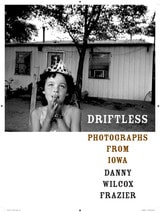
Driftless
Photographs from IowaDanny Wilcox Frazier
Duke University Press, 2007
Robert Frank, Prize Judge
In Driftless, Danny Wilcox Frazier’s dramatic black-and-white photographs portray a changing Midwest of vanishing towns and transformed landscapes. As rural economies fail, people, resources, and services are migrating to the coasts and cities, as though the heart of America were being emptied. Frazier’s arresting photographs take us into Iowa’s abandoned places and illuminate the lives of those people who stay behind and continue to live there: young people at leisure, fishermen on the Mississippi, veterans on Memorial Day, Amish women playing cards, as well as more recent arrivals: Lubavitcher Hasidic Jews at prayer, Latinos at work in the fields. Frazier’s camera finds these newcomers while it also captures activities that seemingly have gone on forever: harvesting and hunting, celebrating and socializing, praying and surviving.
This collection of photographs is a portrait of contemporary rural Iowa, but it is also more that that. It shows what is happening in many rural and out-of-the-way communities all over the United States, where people find ways to get by in the wake of closing factories and the demise of family farms. Taken by a true insider who has lived in Iowa his entire life, Frazier’s photographs are rich in emotion and give expression to the hopes and desires of the people who remain, whose needs and wants are complicated by the economic realities remaking rural America. Poetic and dark but illuminated with flashes of insight, Frazier’s stunning images evoke the brilliance of Robert Frank’s The Americans.
To view an image gallery, click here.

Game Faces
Sport Celebrity and the Laws of ReputationSarah K. Fields
University of Illinois Press, 2016
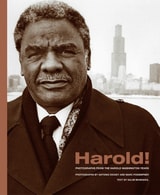
Harold!
Photographs from the Harold Washington YearsPhotographs by Antonio Dickey and Marc PoKempner, text by Salim Muwakkil
Northwestern University Press, 2007
Antonio Dickey and Marc PoKempner were there with Washington throughout 1982-87, Dickey as his campaign and personal photographer and PoKempner on assignment for the New York Times, People, and Time, capturing the force of his personality and the inspiration he brought to Chicago. Their photographs have become the definitive documentation of the Harold years and were featured in the Chicago Historical Society’s 2003–2004 exhibit “Harold Washington: The Man and the Movement.” They were there for his underdog rise, his win, his first term, and his untimely death just seven months into his second term. The year 2007 marks the twentieth anniversary of Washington’s death, and this loving tribute in words and pictures will keep his message alive for future generations.
Hoover Dam
The Photographs of Ben GlahaBarbara Vilander
University of Arizona Press, 1999
Hoover Dam: The Photographs of Ben Glaha is the first detailed examination of Glaha's images of the project, some of which have never before been published. Glaha photographed every aspect of the construction process—from details of how the dam was assembled to the overall progress as the dam rose from the bottom of the dry riverbed. Glaha not only provided the Bureau with the photographs it required, he also employed his own artistic abilities to produce images of the dam that were exhibited in museums and galleries as works of art. Because Glaha was able to create a selection of Hoover Dam photographs worthy of exhibition, he was unique among government documentary photographers.
Art historian Barbara Vilander's text places Glaha's efforts within the historical context of western landscape exploration and development and reveals how his particular qualifications led to his selection as the project photographer. Vilander then examines the many publications and venues in which the Bureau used Glaha's photographs to create support for the project. She also discusses how Glaha was recognized in his own era as an influential artist and teacher, and compares his work with that of other contemporary landscape photographers addressing western water management.
Glaha's Hoover Dam images were widely published, although in accordance with Bureau policy he was not usually given personal credit and therefore his name remains largely unknown. Vilander's book corrects that oversight by giving Glaha the technical and artistic credit he is due within the context of one of the most ambitious projects in American history.
Illuminating the Particular
Photographs of Milwaukee's Polish South SideChristel T. Maass
Wisconsin Historical Society Press, 2003
While Kwasniewski's camera captured the sights and sounds of Milwaukee at the turn of the century from the perspective of a single ethnic group in a single neighborhood, his photographs resonate far beyond Milwaukee's Polish South Side. They illuminate the particulars of American life during the early decades of the twentieth century. "What we see, reflected in the distant mirror," says John Gurda, "is ourselves."
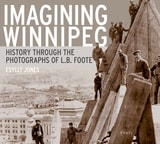
Imagining Winnipeg
History Through the Photographs of L.B. FooteEsyllt W. Jones
University of Manitoba Press, 2012
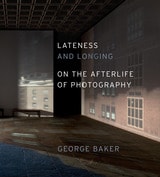
Lateness and Longing
On the Afterlife of PhotographyGeorge Baker
University of Chicago Press, 2023
Beginning in the 1990s, a series of major artists imagined the expansion of photography, intensifying its ideas and effects while abandoning many of its former medium constraints. Simultaneous with this development in contemporary art, however, photography was moving toward total digitalization.
Lateness and Longing presents the first account of a generation of artists—focused on the work of Zoe Leonard, Tacita Dean, Sharon Lockhart, and Moyra Davey—who have collectively transformed the practice of photography, using analogue technologies in a dissident way and radicalizing signifiers of older models of feminist art. All these artists have resisted the transition to the digital in their work. Instead—in what amounts to a series of feminist polemics—they return to earlier, incomplete, or unrealized moments in photography’s history, gravitating toward the analogue basis of photographic mediums. Their work announces that photography has become—not obsolete—but “late,” opened up by the potentially critical forces of anachronism.
Through a strategy of return—of refusing to let go—the work of these artists proposes an afterlife and survival of the photographic in contemporary art, a formal lateness wherein photography finds its way forward through resistance to the contemporary itself.

Look at me
Photographs from Mexico City by Jed FieldingJed Fielding
University of Chicago Press, 2009
Sight is central to the medium of photography. But what happens when the subjects of photographic portraits cannot look back at the photographer or even see their own image? An in-depth pictorial study of blind schoolchildren in Mexico, Look at me draws attention to (and distinctions between) the activity of sight and the consciousness of form.
Combining aspects of his earlier, acclaimed street work with an innovative approach to portraiture, Chicago-based photographer Jed Fielding has concentrated closely on these children’s features and gestures, probing the enigmatic boundaries between surface and interior, innocence and knowing, beauty and grotesque. Design, composition, and the play of light and shadow are central elements in these photographs, but the images are much more than formal experiments; they confront disability in a way that affirms life. Fielding’s sightless subjects project a vitality that seems to extend beyond the limits of self-consciousness. In collaborative, joyful participation with the children, he has made pictures that reveal essential gestures of absorption and the basic expressions of our creatureliness.
Fielding’s work achieves what only great art, and particularly great portraiture can: it launches and then complicates a process of identification across the barriers that separate us from each other. Look at me contains more than sixty arresting images from which we often want to look away, but into which we are nevertheless drawn by their deep humanity and palpable tenderness. This is a monograph of uncommon significance by an important American photographer.
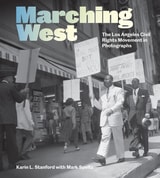
Marching West
The Los Angeles Civil Rights Movement in PhotographsKarin L. Stanford
J. Paul Getty Trust, The, 2026
This volume presents the first visual history of the people and organizations that led the fight for change during the civil rights era in Los Angeles.
During a 1963 speech to a crowd of nearly forty thousand at Wrigley Field in Los Angeles, Dr. Martin Luther King Jr. addressed the question of how Angelenos could contribute to the civil rights movement: “The most important thing that you can do is to set Los Angeles free, because you have segregation and discrimination here, and police brutality.”
Marching West illuminates the dynamic history of civil rights activism in Los Angeles and explores how the medium of photography both witnessed and advanced the fight for Black equality. Over one hundred images, some of which have never been previously published, reveal connections between the local and national movements and document the actions of Western coalitions, religious leaders, Hollywood stars, and concerned citizens. Drawn from the Tom & Ethel Bradley Center at California State University, Northridge (CSUN), the Getty Research Institute, and other Southern California collections—including prints by Harry Adams, Howard Bingham, Charles Brittin, Joe Flowers, Vera Jackson, and Charles Williams—this unprecedented volume presents less familiar but essential stories about American progress toward social justice.
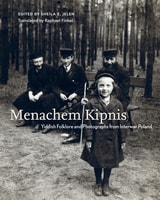
Menachem Kipnis
Yiddish Folklore and Photographs from Interwar PolandSheila E. Jelen
Rutgers University Press, 2026
Menachem Kipnis (1878–1942) was one of the early twentieth-century’s greatest Jewish eastern European ethnomusicologists, folklorists, and photographers. He had a weekly column in the Warsaw Yiddish newspaper Haynt, retelling humorous old folk stories about the fictional Polish town of Chelm, populated exclusively by fools. At the same time, his photographs of Jewish life in eastern Europe regularly appeared in the Forverts (Forward), the most popular Yiddish daily newspaper in the United States. Now, for the first time, Kipnis’s stories and photographs are published together in a single book.
Menachem Kipnis brings these photographs and stories into dialogue with one another, bridging the Jewish communities in Poland and in America during the interwar period. This dialogue, between image and text, between European metropolis and American metropolis, captures a key historical moment when American Jews sought to imagine the lives of their coreligionists in the “Old Country” and eastern European urban Jews sought to distinguish themselves from their Jewish compatriots who were still living in the shtetl. Including an introductory essay, annotations, and an epilogue by Sheila E. Jelen, Menachem Kipnis suggests new ways of understanding both visual and literary depictions of eastern European Jewish culture between the two world wars.
Movements of Air
The Photographs from Étienne-Jules Marey’s Wind TunnelsGeorges Didi-Huberman and Laurent Mannoni
Diaphanes, 2022
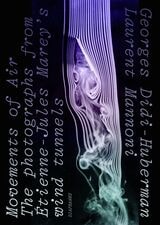
Featuring more than one hundred and fifty photographs and images, Movements of Air reprints the breathtaking pictures of Étienne-Jules Marey—images captured between 1899 and 1901 during his scientific experiments with moving air and smoke—and complements them with essays by Georges Didi-Huberman and Laurent Mannoni.
Mannoni begins by reflecting on Marey’s experimental approach. As the founder of the “graphic method,” Marey was also the developer of an aerodynamic wind tunnel. His experiments’ photographs of fluid motion introduced a whole world of movements and turbulences, and fluids, and influenced generations of scientists and artists alike. Didi-Huberman expands on the philosophical debates surrounding these aesthetically and technically instructive images. Even though Marey’s main interest was graphic information, Didi-Huberman shows us how the flow of all things drew this ingenious experimenter to a photographic practice that creates drags, streaks, expansions, and visual dances. Marey’s wind tunnel photographs were also themselves causes of turbulence in the history of images. The artists Dombois and Oeschger explore these “graphical” vortices of the last 120 years, providing at the end of the book a collage from historical and contemporary material interlaced with their own image-making in Dombois’s wind tunnel at the Zurich University of the Arts.

My Soul's Been Psychedelicized
Electric Factory: Four Decades in Posters and PhotographsLarry Magid
Temple University Press, 2011
On February 2, 1968, the Electric Factory, Philadelphia's first major venue for the era's new music, opened with a show featuring the Chambers Brothers. Performing their neosoul and gospel sounds in a warm and inviting venue, they declared, "My soul's been psychedelicized!"-a feeling that the Factory's cofounder, Larry Magid, has been experiencing ever since.
In My Soul's Been Psychedelicized, Magid presents a spectacular photographic history of the bands and solo acts that have performed at the Electric Factory and at other venues in Factory-produced concerts over the past four decades. The book includes concert posters, photographs, and promotional items featuring both rising stars and established performers, such as Pink Floyd, Jimi Hendrix, Bob Dylan, Bruce Springsteen, Bette Midler, Elvis Presley, Tina Turner, Pearl Jam and many, many more.
The images—candid and celebratory—create a one-of-a-kind history of rock and roll, from the wild 1960s to the Live Aid concert in 1985 and the closing of the Philadelphia Spectrum in 2009. Magid's vivid recollections constitute a who's who of pop music and culture. As one of the great concert producers, he shares his unique perspective on the business, talking about how it has changed and how lasting careers have been carefully developed.
For anyone who has ever attended a concert at the Electric Factory—or for anyone who missed a show—My Soul's Been Psychedelicized will bring back great memories of the music and the musicians.
No Caption Needed
Iconic Photographs, Public Culture, and Liberal DemocracyRobert Hariman and John Louis Lucaites
University of Chicago Press, 2007
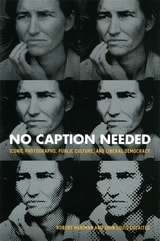
In No Caption Needed, Robert Hariman and John Louis Lucaites provide the definitive study of the iconic photograph as a dynamic form of public art. Their critical analyses of nine individual icons explore the photographs themselves and their subsequent circulation through an astonishing array of media, including stamps, posters, billboards, editorial cartoons, TV shows, Web pages, tattoos, and more. Iconic images are revealed as models of visual eloquence, signposts for collective memory, means of persuasion across the political spectrum, and a crucial resource for critical reflection.
Arguing against the conventional belief that visual images short-circuit rational deliberation and radical critique, Hariman and Lucaites make a bold case for the value of visual imagery in a liberal-democratic society. No Caption Needed is a compelling demonstration of photojournalism’s vital contribution to public life.
Olga Tufnell's “Perfect Journey”
Letters and Photographs of an Archaeologist in the Levant and MediterraneanEdited by John D.M. Green and Henry Ros
University College London, 2021
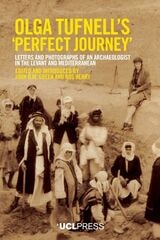
Olga Tufnell was a British archaeologist working in Egypt, Cyprus, and Palestine in the 1920s and 1930s—a period often described as a golden age of archaeological discovery. For the first time, this book presents Tufnell’s account of her experiences in her own words. Based largely on letters, the text is accompanied by dozens of photographs that shed light on her personal experiences of travel and dig life at this extraordinary time. Introductory material by John D.M. Green and Ros Henry provides the social, historical, biographical, and archaeological context, as the letters offer new insights into the social and professional networks and history of archaeological research in Palestine under the British Mandate. They provide insights into the role of foreign archaeologists, relationships with local workers and inhabitants, and the colonial framework within which they operated during turbulent times. This book will be an important resource for those studying the history of archaeology in the Eastern Mediterranean, particularly for the sites of Qau el-Kebir, Tell Fara, Tell el-‘Ajjul and Tell ed-Duweir (ancient Lachish). Moreover, Tufnell’s lively style makes this a fascinating personal account of archaeology and travel in the interwar era.
One Small Farm
Photographs of a Wisconsin Way of LifeCraig Schreiner
Wisconsin Historical Society Press, 2013
“People’s lives are written on the fields of old farms. The rows of the fields are like lines on a page, blank and white in winter, filled in with each year’s story of happiness, disappointment, drought, rain, sun, scarcity, plenty. The chapters accumulate, and people enter and leave the narrative. Only the farm goes on.”—From the Introduction
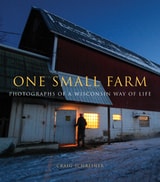
In One Small Farm, Craig Schreiner’s evocative color photographs capture one family as they maintain the rhythms and routines of small farm life near Pine Bluff, Wisconsin. “Milk in the morning and milk at night. Feed the cows and calves. Plant crops. Grind feed. Chop and bale hay. Cut wood. Clean the barn. Spread manure on the fields. Plow snow and split wood in winter. In spring, pick rocks from the fields. Cultivate corn. Pick corn. Harvest oats and barley. Help calves be born. Milk in the morning and milk at night.”
There’s much more to life on the farm than just chores, of course, and Schreiner captures the rhythms and richness of everyday life on the farm in all seasons, evoking both the challenges and the joys and providing viewers a window into a world that is quickly fading. In documenting the Lamberty family’s daily work and life, these thoughtful photos explore larger questions concerning the future of small farm agriculture, Wisconsin cultural traditions, and the rural way of life.

Photographs from Detroit, 1975–2019
Bruce Harkness
Ohio University Press, 2022
A retrospective survey of Bruce Harkness’s striking social documentary photographs and an invaluable historical record that bears witness to irrevocably lost swaths of Detroit’s social and urban fabric.
In 1980, the cities of Detroit and Hamtramck, Michigan, exercised eminent domain to develop nearly five hundred acres of land for a new industrial park and General Motors assembly plant. But the land was not vacant. Some thirty-five hundred people lived there in Poletown—some of them for their entire lives. They attended neighborhood schools and churches, worked for and patronized small businesses, walked the sidewalks, drove the streets, and tended to lawns and gardens. Harkness began photographing the area in February 1981. He recorded street scenes, intersections, panoramic views, homes, businesses, churches, and people. Ten months, ninety visits, and six hundred photographs later, it all disappeared forever.
The Poletown series established Harkness as a major Detroit documentarian. It came on the heels of late-1970s projects located in and around the city’s skid row: Cass Corridor. The images include gritty streetscapes, a portrait series depicting residents living in a crumbling apartment building, and the lively cultural milieu of a local gay and transgender bar. Most of this old portion of inner-city Detroit since has been supplanted by urban redevelopment and gentrification.
During the late 1980s, Harkness collaborated with urban historian John J. Bukowczyk on a major documentary project, Urban Interiors. While the Poletown project had documented the exteriors of buildings and streetscapes on Detroit’s East Side, Urban Interiors captured the insides of inner-city Detroit homes and businesses and included extended oral history interviews.
While Harkness has always found human dignity and resilience in his subjects, the tone of his work brightened in the 1990s alongside Detroit’s revival. Photographs from this era include blues musicians performing in clubs and at outdoor concerts and the distinctive, robust youth culture that flourished in Dearborn’s now-defunct Zone Coffee House.
Featuring images from these and other projects, Photographs from Detroit, 1975–2019 includes Harkness’s extensive notes, which describe and contextualize the encounters he shared with the people and places he photographed, and offer insight into his working methods and equipment. The volume and quality of Harkness’s work merits him recognition as one of Detroit’s most important documentary photographers during this pivotal, transitional era in the city’s history.
Harkness’s images depict the struggles and resilience of ordinary individuals and families in working-class communities who together have indelibly shaped the spirit of Detroit. This book is a must-have for Detroiters past and present as well as historians, anthropologists, social documentary advocates, and photobook collectors everywhere.

Photographs
Archival Care and ManagementMary Lynn Ritzenthaler
Society of American Archivists, 2006

Preserving Our Heritage
Perspectives from Antiquity to the Digital AgeMichele Valerie Cloonan
American Library Association, 2015
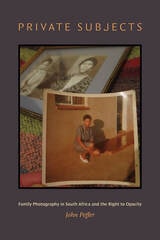
Private Subjects
Family Photography in South Africa and the Right to OpacityJohn Peffer
Duke University Press, 2026
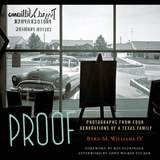
Proof
Photographs from Four Generations of a Texas FamilyByrd M. Williams IV
University of North Texas Press, 2016

Starting Over with John and Yoko
The PhotographsRoger Farrington
Rutgers University Press, 2026
“This is one to linger over.” —Publishers Weekly
On August 7, 1980, John Lennon and Yoko Ono made their triumphant return to the recording studio after a self-imposed five-year absence. Roger Farrington, an up-and-coming photographer from Boston, was hired to get “the shot” that would announce their comeback. It would be Lennon’s most intense press scrutiny since the heady days of the Beatles’ maiden voyage to America in 1964, and for Farrington, it would be the assignment of a lifetime. Just four months later, Lennon’s assassination would plunge the world into mourning.
Reproducing, for the first time, the entire run of Farrington’s iconic photographs from that day, Starting Over transports readers back to 1980 and into Manhattan’s Hit Factory, where Lennon and Ono recorded their acclaimed LP Double Fantasy. With supporting photos and other ephemera, Farrington and renowned Beatles historian Kenneth Womack capture a poignant moment in music history and provide an insider’s look at celebrity photography in the pre-digital age.
Taken by Design
Photographs from the Institute of Design, 1937-1971Edited by David Travis and Elizabeth Siegel
University of Chicago Press, 2002
With nearly 300 illustrations, including many never-before published photographs, Taken by Design examines the changing nature of photography over this critical period in America's midcentury. It starts by documenting the experimental nature of Moholy's Bauhaus approach and photography's new and enhanced role in training the "complete designer." Next it traces the formal and abstract camera experiments under Harry Callahan and Aaron Siskind, which aimed at achieving a new kind of photographic subjectivity. Finally, it highlights the ID's focus on conscious references to the processes of the photographic medium itself. In addition to photographs by Moholy, Callahan, and Siskind, the book showcases works by Barbara Crane, Yasuhiro Ishimoto, Joseph Jachna, Kenneth Josephson, Gyorgy Kepes, Nathan Lerner, Ray K. Metzker, Richard Nickel, Arthur Siegel, Art Sinsabaugh, and many others. Major essays from experts in the field, biographies, a chronology, and reprints of critical essays are also included, making Taken by Design an essential work for anyone interested in the history of American photography.
Contributors include:
Keith Davis, Lloyd Engelbrecht, John Grimes, Nathan Lyons, Hattula Moholy-Nagy, Elizabeth Siegel, David Travis, Larry Viskochil, James N. Wood
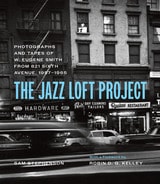
The Jazz Loft Project
Photographs and Tapes of W. Eugene Smith from 821 Sixth Avenue, 1957–1965W. Eugene Smith and Sam Stephenson
University of Chicago Press, 2023
In 1957, Eugene Smith walked away from his longtime job at Life and the home he shared with his wife and four children to move into a dilapidated, five-story loft building at 821 Sixth Avenue in New York City’s wholesale flower district. The loft was the late-night haunt of musicians, including some of the biggest names in jazz—Charles Mingus, Zoot Sims, Bill Evans, and Thelonious Monk among them. Here, from 1957 to 1965, he made nearly 40,000 photographs and approximately 4,000 hours of recordings of musicians. Smith found solace in the chaotic, somnambulistic world of the loft and its artists, and he turned his documentary impulses away from work on his major Pittsburg photo essay and toward his new surroundings.
Smith’s Jazz Loft Project has been legendary in the worlds of art, photography, and music for more than forty years, but until the publication of this book, no one had seen his extraordinary photographs or read any of the firsthand accounts of those who were there and lived to tell the tales.
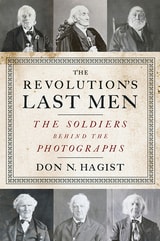
The Revolution's Last Men
The Soldiers Behind the PhotographsDon N. Hagist
Westholme Publishing, 2015
The Stories of the Final Six Surviving Soldiers Who Fought in the American Revolution
During the Civil War that threatened to tear the United States apart came the realization that only a handful of veterans of the American Revolution still survived—men who had fought the war that created the nation. Six of these men were photographed and interviewed for a book by Reverend E. B. Hillard that appeared late in 1864. Their images have captivated generations since then; but—through a combination of faded memories and the interviewer’s patriotic agenda—the biographies accompanying these amazing photographs were garbled and distorted, containing information that ranged from inaccurate to implausible. Now for the first time the military careers of these men have been researched in detail using a wide range of primary sources. The result is a new perspective on the actual service of these soldiers, from enlistment to discharge, along with new details of their relatively quiet postwar lives. The Revolution’s Last Men presents the original biographical interviews published in 1864, pension depositions and other first-hand accounts given by each man later in life, and an up-to-date biography examining each soldier’s service and discussing the inaccuracies and uncertainties of the previously published accounts. To complement the photographs taken in 1864, original drawings depict the men as they may have appeared when they were soldiers, using current research on military artifacts and material culture. Also included are additional photographs of some of the men that were not part of the 1864 collection but taken when their status as the last known survivors of the American Revolution made them celebrities. While the photographs of these aged veterans continue to inspire, this book puts their service into perspective and allows these men to be appreciated for who they really were and for their great and unique service to their country.

The Scrapbook in American Culture
Susan Tucker
Temple University Press, 2006

The Weather and a Place to Live
Photographs of the Suburban WestSteven B. Smith
Duke University Press, 2005
The power of these photographs lies in part in Smith’s unusual knowledge of the places he portrays. Raised in Utah, Smith has worked on construction crews, and he was a contractor in California after living on the East Coast for a few years. When he moved to Los Angeles in 1991, he writes, “I was so astounded by what I saw happening to the landscape as it was being developed that I started photographing it immediately. The landscapes I saw were scraped bare, re-sculpted, sealed, and then covered so as not to erode away before the building process could be completed.”
Smith’s photographs offer a disturbing vision of the future of our planet, where the desire for home ownership is pitted against the costs of development in epic proportions. These altered landscapes force us to consider the consequences of human design battling natural forces across great expanses, a fragile balancing act and a contorted equation in which nature becomes both inspiration and invisible adversary. Smith’s elegant photographs of this constructed universe confront us with the beauty of images as images, yet push us to reflect on the devastation possible in the simple act of choosing a place to live.
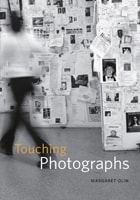
Touching Photographs
Margaret Olin
University of Chicago Press, 2012
Photography does more than simply represent the world. It acts in the world, connecting people to form relationships and shaping relationships to create communities. In this beautiful book, Margaret Olin explores photography’s ability to “touch” us through a series of essays that shed new light on photography’s role in the world.