Results by title
557 books match the query 'Poems' and 44 start with a
A Black Bridge
PoemsRalph Tejeda Wilson
University of Nevada Press, 2001
A Grain of Sand in Lambeth
PoemsGeoffrey Babbitt
University of Nevada Press, 2025
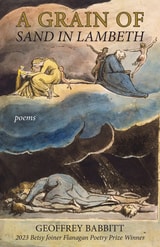
Each poem in this collection inhabits a moment of Blake’s life, offering a vivid glimpse into his unique perspective—a perspective that rejected the normative for the transformative power of imagination. From his visionary watercolors to his provocative views on oil painting, these poems draw readers into Blake’s world, where reality and the unseen converge in prismatic intensity.
A Grain of Sand in Lambeth is an invitation to experience the world through Blake’s eyes—a world where imagination reigns supreme and art is a living force.
A Necklace of Bees
PoemsDannye Romine Powell
University of Arkansas Press, 2008

A Psalm for Cottondale
PoemsSharony A. Green
University of Alabama Press, 2026
A lyrical journey through memory, place, and resilience in the heart of Alabama
A Psalm for Cottondale is a lyrical meditation on memory, place, and survival in the American South. Through a sequence of interconnected free-verse poems, Sharony Green reflects on life in Cottondale, Alabama, where change unfolds in ways that can be both poignant and unexpected. Rooted in the histories, landscapes, and cultural currents of an Alabama college town, the collection explores how one place can evoke the memory of many others, inviting readers to consider broader questions of identity, belonging, and endurance.
Written in a clear, steady voice, these poems balance intimacy with historical awareness, allowing inherited stories, silences, and everyday moments to emerge with quiet power. Green’s careful craftsmanship and emotional restraint lend authority to the collection, while a subtle psalmic undercurrent adds spiritual depth without sacrificing nuance. As the poems move through themes of joy, grief, witness, and renewal, Cottondale becomes both a physical community and a symbolic terrain shaped by race, land, memory, and hope.
Inspired by writings that engage history, geography, and culture, A Psalm for Cottondale offers an elegant and deeply attentive reflection on Southern and American life, illuminating the ways people endure, adapt, and find meaning in a changing world. Ideal for readers of contemporary poetry, Southern literature, African American studies, place-based writing, and works that explore history, memory, faith, and community through a lyrical lens.
A Question of Seeing
PoemsDonald Finkel
University of Arkansas Press, 1998
In lines electrified with lyricism and wit, Donald Finkel carves a clearing out of the backyard brush and the intellectual brambles of existence.
Whether he writes a short lyric or a long experimental series, Finkel relies on concrete images—a breeze through grass, a cigarette in a piano player’s hand—to ground his central questions about the clash of order and chaos in our everyday lives.
He delights in naming weeds and towering trees, cars and streets. Yet, in each poem, there is a constant tension between the actual wind and the words we must use to convey the wind’s force.
Working fluently in formal lines and in free verse, he can write with equal authority of butchers or great painters, aged bookkeepers or schizophrenics, Greek gods or house cats. In this new collection, Finkel has given us the priceless keepsakes, the best gifts from the clearing his words have won.
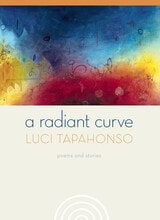
A Radiant Curve
Poems and StoriesLuci Tapahonso
University of Arizona Press, 2008
These engaging words draw us into a workaday world that, magically but never surprisingly, has room for the Diyin Dine’é (the Holy People), Old Salt Woman, and Dawn Boy. When she describes her grandson’s First Laugh Ceremony—explaining that it was originally performed for White Shell Girl, who grew up to be Changing Woman—her account enriches us and we long to hear more. Tapahonso weaves the Navajo language into her work like she weaves “the first four rows of black yarn” into a rug she is making “for my little grandson, who inherited my father’s name: Hastiin Tsétah Naaki Bísóí.”
As readers, we find that we too are surrounded by silent comfort, held lovingly in the confident hands of an accomplished writer who has a great deal to tell us about life.
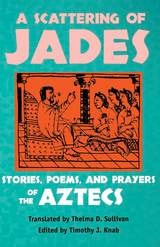
A Scattering of Jades
Stories, Poems, and Prayers of the AztecsThelma D. Sullivan
University of Arizona Press, 2003
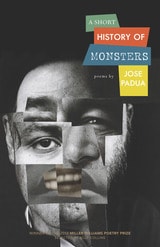
A Short History of Monsters
PoemsJose Padua
University of Arkansas Press, 2019
Winner, 2019 Miller Williams Poetry Prize
“We are the happy riders on the stream of Padua’s consciousness . . . a smart, sympathetic mind at work.”
—Billy Collins
Drawing on the spirit of New York City in decades past, A Short History of Monsters presents the sins and obsessions of a poet nimble in beat and slam traditions. In his first full-length collection, Jose Padua wrestles with an American dream interrupted by failure, excess, and other nightmares. Often brash and unruly, these poems range from recollections of lost, drunken days to unadorned manifestations of hope. Throughout, the speaker redefines his relationship to pop culture, praising it, skewering it, and mourning it by turns.
The poems that make up A Short History of Monsters tend toward both dark humor and epiphany, diving deeply into their own despair and rising up again with existential absurdity. This is a poetry that gets down into the grit and grime of the real world, digging out a space to experience being alive as miraculous in and of itself.
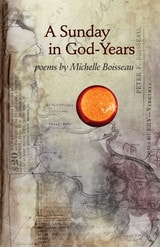
A Sunday in God-Years
PoemsMichelle Boisseau
University of Arkansas Press, 2009
A Sunday in God-Years takes its title from the notion that if we consider ourselves inside the long stretch of geologic time, human history happens in the blink of God’s eye as he rolls over during a Sunday nap. The book is centered around the long poem “A Reckoning” made up of fifteen shorter poems/sections (some sections are documents like wills and runaway slave notices). This long poem tries to reckon and recognize the sticky webs that bind the heirs of those who were slave holders (like the Boisseaus) and of those who were held as slaves.
“A Reckoning” builds the context for the rest of the book which, among other things, looks through the metaphors from geology to confront the historic and personal: Boisseau’s paternal ancestors fled religious persecution in France in 1685 and soon after their arrival in Virginia became entangled in slave ownership. When one looks on human history through the lens of geologic time, when one shifts the scale from the now and near to the distant, and takes a sky-perch, like God, some fascinating things begins to happens. Looking down on us from a satellite, from a conjectural place in deeper spaces from which our cameras have never looked, or from a moment long before humans ventured from trees, human history is thrillingly diminished and immediate human compassion becomes essential as air.
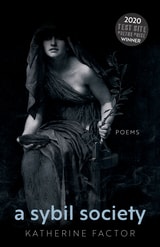
A Sybil Society
PoemsKatherine Factor
University of Nevada Press, 2022
In a time when only a select few are prosperous, A Sybil Society paints a portrait of the present moment and unveils a restless truth. The collection is fearless in the face of convention and gives readers a sense of devastating sorrow in a world gone mad.
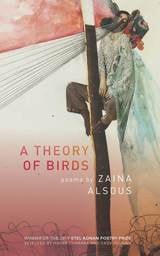
A Theory of Birds
PoemsZaina Alsous
University of Arkansas Press, 2019
Winner of the 2019 Etel Adnan Poetry Prize
Inside the dodo bird is a forest, Inside the forest
a peach analog, Inside the peach analog a woman, Inside
the woman a lake of funerals
This layering of bird, woman, place, technology, and ceremony, which begins this first full-length collection by Zaina Alsous, mirrors the layering of insights that marks the collection as a whole. The poems in A Theory of Birds draw on inherited memory, historical record, critical theory, alternative geographies, and sharp observation. In them, birds—particularly extinct species—become metaphor for the violences perpetrated on othered bodies under the colonial gaze.
Putting ecological preservation in conversation with Arab racial formation, state vernacular with the chatter of birds, Alsous explores how categorization can be a tool for detachment, domination, and erasure. Stretching their wings toward de-erasure, these poems—their subjects and their logics—refuse to stay put within a single category. This is poetry in support of a decolonized mind.
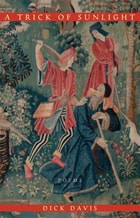
A Trick of Sunlight
PoemsDick Davis
Ohio University Press, 2006
In his new collection of poems, Dick Davis, the acclaimed author of Belonging, addresses themes that he has long worked with—travel, the experience of being a stranger, the clash of cultures, the vagaries of love, the pleasures and epiphanies of meaning that art allows us. But A Trick of Sunlight introduces a new theme that revolves around the idea of happiness—is it possible, must it be illusory, is its fleetingness an essential part of its nature so that disillusion is inevitable?
Many of the poems are shaded by the poet’s awareness of growing older, and by the ways that this both shuts down many of life’s possibilities and frees us from their demands. The levity of some verses here is something of a departure for Davis, but his insights can be mordant too, revealing darknesses as often as they invoke frivolity.
As Davis’s readers have come to expect, the poems in A Trick of Sunlight. aim at the aesthetic satisfactions that accompany accurate observations expressed with wit, intelligence, and grace. But they achieve as well an immediacy and rawness of vision that seem to belie his careful craft.
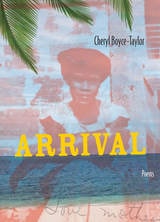
ARRIVAL
PoemsCheryl Boyce-Taylor
Northwestern University Press, 2017
ARRIVAL is a poetic love story between mother and daughter. The poems are road maps, intertwining generations with a narrative beginning in 1950 with a woman who is pregnant with twins. In her seventh month she delivers a stillborn boy and a baby girl weighing less than two pounds. From there, the evocation of a series of catastrophic family events brings forth Cheryl Boyce-Taylor’s power to strip her readers down to their most vulnerable. Boyce-Taylor is steeped in the narratives of Trinidad and New York City, colored with metaphorical stew-pot images. She revels in her lyrical range as she weaves these poetic retellings of family, place, and identity.
Above the Birch Line
PoemsPia Taavila-Borsheim
Gallaudet University Press, 2021
Affrilachia
PoemsFrank X Walker
Ohio University Press, 2000
After the Afterlife
PoemsT. R. Hummer
Acre Books, 2017
which is like trying to teach
The cat to waltz, so much awkwardness, so many tender
advances, and I’m shocked when it actually learns,
When it minces toward me in a tiny cocktail gown, offering a martini,
asking for this dance, insisting on hearing me refuse
To reply, debating all along, in the chorus of its interior mewing, who
are you really, peculiar animal, who taught you to call you you.
After the Others
PoemsBruce Weigl
Northwestern University Press, 1999
In his twelfth volume of poetry, Bruce Weigl continues his quest for emotional and spiritual enlightenment. Quiet and moving, these poems combine an intimate voice with a searingly direct look at suffering and senseless violence, at human desire and love, and at man's relationship with nature.
After the Reunion
PoemsDavid Baker
University of Arkansas Press, 1994
Afternoon Masala
PoemsVandana Khanna
University of Arkansas Press, 2014
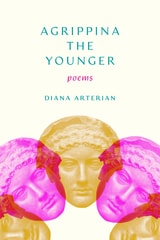
Agrippina the Younger
PoemsDiana Arterian
Northwestern University Press, 2025
A poetic journey through the past of the Roman Empress Agrippina looks toward the future
Agrippina the Younger follows one woman’s study of another, separated by thousands of miles and two millennia but bound by a shared sense of powerlessness. Agrippina was a daughter in a golden political family, destined for greatness—but she hungered for more power than women were allowed. Exhausted by the misogyny of the present, Diana Arterian reaches into the past to try to understand the patriarchal systems of today. In lyric verse and prose poems, she traces Agrippina’s rise, interrogating a life studded with intrigue, sex, murder, and manipulation. Arterian eagerly pursues Agrippina through texts, ruins, and films, exhuming the hidden details of the ancient noblewoman’s life. These poems consider the valences of patriarchy, power, and the archive to try to answer the question: How do we recover a woman erased by history?
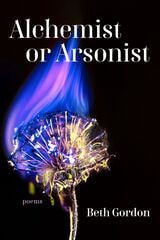
Alchemist or Arsonist
PoemsBeth Gordon
Acre Books, 2027
A feminist poetry collection re-examining the figure of the crone and upending the patriarchal expectations she embodies.
In Alchemist or Arsonist, her second full-length collection, Beth Gordon supercharges the term crone, demonstrating in image-rich poems the magical strength of older women. The Crone is frank about the realities of aging—including plucking chin hairs—yet she also surprises, warning the reader: “The tiger has always been there. . . . She is right in front of you.” Taking afternoon shots of mescal and waiting in line for Mexican street corn, she contemplates Captcha pictures, AI, and tattoos.
The book expands its concerns in several long poems and sequences, encompassing the full range of human experience. “The Secret Fate of All Life,” a series of golden shovels based on quotes from the HBO show True Detective, moves into the surreal to represent language’s failure to describe the death of an infant, and how time can be displaced by grief. Other works explore the transformation that can come from tragedy, the perils of marriage and other relationships, and the complicated conversation older and younger versions of the self would have with each other.
Gordon’s candid, wry, uncompromising voice is both refreshing and bracing, and the poems perform alchemy as they set fire to traditional expectations. With an undercurrent of violence and murder, the book reveals the ultimate consequences of patriarchy. “Alchemist or arsonist: the end is the same,” The Crone tells us. “Something becomes something else.”
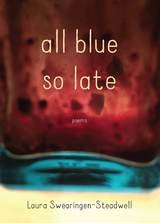
All Blue So Late
PoemsLaura Swearingen-Steadwell
Northwestern University Press, 2018
The skeleton of this fine collection is a series of direct addresses to the author’s fourteen-year-old self, caught at the moment between girlhood and womanhood, when her perspective on everything suddenly changes. Swearingen-Steadwell’s poetic adventures through worlds within and without reveal the restlessness of the seeker. They offer unabashed tenderness to anyone who reckons with solitude, and chases joy.
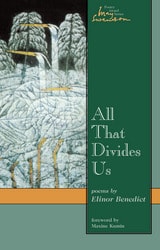
All That Divides Us
PoemsElinor Benedict foreword by Maxine Kumin
Utah State University Press, 2000
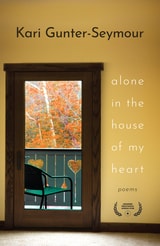
Alone in the House of My Heart
PoemsKari Gunter-Seymour
Ohio University Press, 2022
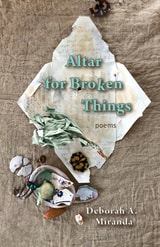
Altar for Broken Things
PoemsDeborah A. Miranda
BkMk Press, 2020
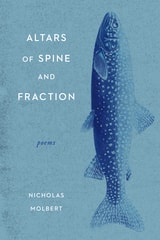
Altars of Spine and Fraction
PoemsNicholas Molbert
Northwestern University Press, 2024
A debut poetry collection set in and around Louisiana’s fishing village of Cocodrie
Altars of Spine and Fraction follows its protagonist through the joys and dangers of childhood on the rural Gulf Coast, through familial loss, and into adulthood. Refusing to romanticize what has been lost, Molbert instead interrogates how nostalgia is most often enjoyed by those with the privilege to reject or indulge it.
Violent hurricanes sweep across the landscapes of the poems, and Molbert probes the class inequalities that these climate crises lay bare. Moving from outdoor rural spaces in its first half to indoor domestic spaces in its second half, the collection explores family history, generational trauma, and the toxic masculinity that is shouldered by boys raised in the Deep South.
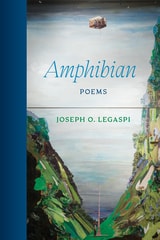
Amphibian
PoemsJoseph O. Legaspi
Northwestern University Press, 2026
Exploring queerness, belonging, and the meaning of home through the lens of a Filipino American
How does a queer brown body move through the American panorama? In Amphibian, Joseph O. Legaspi explores the metaphor of “amphibious living”—adapting, surviving, and flourishing in varying geographies—as it pertains to immigrants and to queerness. These poems draw on the natural world to illuminate personal experiences and, in turn, closely examine cultural, environmental, and societal constructs and concerns.
Legaspi searches in nature for evidence of the validity of his own existence, determined to declare his belonging. Dwelling in landscape as a guide into the interior, Amphibian journeys not only between earth, water, and air, but also into the past, cataloging an immigrant’s departures, arrivals, and returns to native soil. This moving collection is at every turn liberating, fraught, and altered.
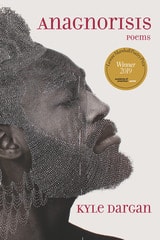
Anagnorisis
PoemsKyle Dargan
Northwestern University Press, 2018
Winner of the 2019 Academy of American Poets Lenore Marshall Poetry Prize
In Anagnorisis, award-winning poet Kyle Dargan ignites a reckoning. From the depths of his rapidly changing home of Washington, D.C., the poet is both enthralled and provoked, having witnessed-on a digital loop running in the background of Barack Obama's unlikely presidency—the rampant state-sanctioned murder of fellow African Americans. He is pushed toward the same recognition articulated by James Baldwin decades earlier: that an African American may never be considered an equal in citizenship or humanity.
This recognition—the moment at which a tragic hero realizes the true nature of his own character, condition, or relationship with an antagonistic entity—is what Aristotle called anagnorisis. Not concerned with placatory gratitude nor with coddling the sensibilities of the country's racial majority, Dargan challenges America: "You, friends- / you peckish for a peek / at my cloistered, incandescent / revelry-were you as earnest / about my frostbite, my burns, / I would have opened / these hands, sated you all."
At a time when U.S. politics are heavily invested in the purported vulnerability of working-class and rural white Americans, these poems allow readers to examine themselves and the nation through the eyes of those who have been burned for centuries.
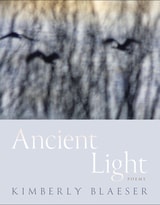
Ancient Light
PoemsKimberly Blaeser
University of Arizona Press, 2024
With vision and resilience, Kimberly Blaeser’s poetry layers together past, present, and futures. Against a backdrop of pandemic loss and injustice, MMIW (Missing and Murdered Indigenous Women), hidden graves at Native American boarding schools, and destructive environmental practices, Blaeser’s innovative poems trace pathways of kinship, healing, and renewal. They celebrate the solace of natural spaces through sense-laden geo-poetry and picto-poems. With an Anishinaabe sensibility, her words and images invoke an ancient belonging and voice the deep relatedness she experiences in her familiar watery regions of Minnesota.
The collection invites readers to see with a new intimacy the worlds they inhabit. Blaeser brings readers to the brink, immerses them in the darkest regions of the Anthropocene, in the dangerous fallacies of capitalism, and then seeds hope. Ultimately, as the poems enact survivance, they reclaim Indigenous stories and lifeways.
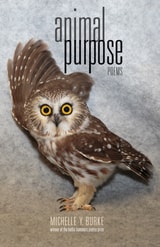
Animal Purpose
PoemsMichelle Y. Burke
Ohio University Press, 2016
In Animal Purpose, Michelle Y. Burke explores the lives of men and women as they stand poised between the desire to love and the compulsion to harm. In one poem, a woman teaches a farmhand the proper way to slaughter a truckload of chickens. In another, a couple confronts the recent loss of a loved one when a stranger makes an unexpected confession in a crowded restaurant. Set in both rural and urban spaces, these poems challenge received ideas about work, gender, and place. Danger blurs into beauty and back again. Burke scours the hard edges of the world to find “fleeting softness,” which she wishes “into the world like pollen that covers everything.”
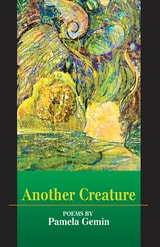
Another Creature
PoemsPamela Gemin
University of Arkansas Press, 2010
Finalist, Miller Williams Poetry Prize
In Another Creature Pamela Gemin reconciles her generation’s impulse toward personal freedom with its costs as she moves her cast of innocents and outlaws through Midwestern landscapes embroidered with green lawns, blue lakes and raspberry patches eerily wired for sound. Hers are hungry poems, in and of the world, expounding the “flavors and hues, the fragrance and skin / of the merchandise of Earth.”
Answering the Ruins
PoemsGregory Fraser
Northwestern University Press, 2009
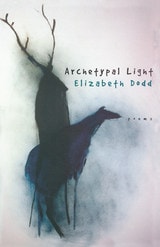
Archetypal Light
PoemsElizabeth Dodd
University of Nevada Press, 2001
Arts of a Cold Sun
POEMSG. E. Murray
University of Illinois Press, 2003
Viewing his subjects sometimes from airplane altitude, sometimes from the intimacy of a shared restaurant table, Murray crafts “true stories about color,” narratives of dislocation and belonging that invite readers to question their own relationship to art.
Included in this volume is a long sequential poem titled “The Seconds,” which Murray composed across the second days of thirteen months. The rhythms of this diary-as-poem seize the tensions of shifting times and locales, capturing the essences of moments that are at once chosen and arbitrary.
“Codes toward an Incidental City,” the sequence that closes the book, is a confederacy of forty poems that delve into the concrete familiarities and mythologies of urban landscapes, illuminating the ecstasies of city life.
As They Sail
PoemsSamuel Hazo
University of Arkansas Press, 1999
With each new collection of poems, Samuel Hazo explores themes of mortality and love, passion and art, courage and grace in a style that is unmistakably his own. In As They Sail, he writes with equal feeling and clarity about political and artistic figures and the complex synchronicity between life and art. He is extremely interested in the wonderment and discovery that emerges in the act of writing, in the movement toward wisdom that results from expression of feeling.
Questioning is always more important in his writing than answering. Hazo has the ability to accomplish what he attributes to another poet, Charles Causley, in “When Nothing’s Happening, Everything’s Happening”: “. . . the poems borne of his pen / . . . help us to feel what we think.” He is able to achieve this “felt thought” without any trace of self-absorption or sentimentality.
Whether Hazo is writing about Nixon, Hemingway, or Brando or simply about walking in France, he finds the essence of language that gives rise to an emotional response. In a time when poetry without emotion is praised and language is said to make sense simply because it exists on the page, Hazo’s clear voice and concern with the nature of love, time, change, and the meaning of the past is uniquely refreshing.

At Every Wedding Someone Stays Home
PoemsDannye Romine Powell
University of Arkansas Press, 1994
The poems of Dannye Romine Powell take ordinary moments and transform them into rare and luminous epiphanies. These poems have the air of real places and real people who go about the perilous business of living in this world.
Powell is a poet of candor and clarity, and she has a wit that moves in surprising ways. These are poems not only to admire, but to relish and share; the pleasure they bring is closer to that of an old leather jacket than of a new pair of shoes. Powell writes like no one else, and she’s a joy to read.
At the Park on the Edge of the Country
PoemsAustin Araujo
The Ohio State University Press, 2025
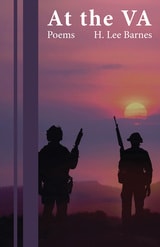
At the VA
Poemsbarnes
University of Nevada Press, 2027
At the VA offers an unflinching and deeply humane portrait of combat veterans—primarily from the Vietnam era—as they seek care within Veterans Affairs hospitals. These imagistic, lyrical pieces focus not on the battlefield but on its aftermath.
Author H. Lee Barnes, a veteran himself, addresses familiar wounds such as PTSD, moral injury, and survivor’s guilt while also bringing attention to underexamined experiences, including those of women veterans who have survived sexual assault. The collection honors sacrifice without sentimentality and resilience without oversimplifying the challenges veterans face.
At its center is a quiet irony: the VA can be frustrating and imperfect, yet to be there at all is to have survived. In that tension, Barnes finds a measured sense of hope that will resonate with readers who understand any type of trauma and recovery. Thoughtful and timely, At the VA asks what we owe our veterans long after their service ends.
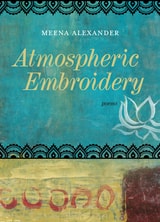
Atmospheric Embroidery
PoemsMeena Alexander
Northwestern University Press, 2018
In this haunting collection of poems we travel through zones of violence to reach the crystalline depths of words: Meena Alexander writes, "So landscape becomes us, / Also an interior space bristling with light." At the heart of this book is the poem cycle "Indian Ocean Blues," a sustained meditation on the journey of the poet as a young child from India to Sudan. There are poems inspired by the drawings of children from war-torn Darfur and others set in present-day New York City. These sensual lyrics of body, memory, and place evoke the fragile, shifting nature of dwelling in our times.
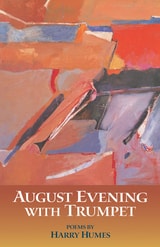
August Evening with Trumpet
PoemsHarry Humes
University of Arkansas Press, 2004
From its first poem, “String,” with its mythic overtones to the final “The Movement of Ice,” August Evening with Trumpet deals with the varieties of surprise and mystery, pain and wonder in the human experience. In constant motion, this collection ranges across a broad landscape, one in which trout swim through a house, where a coal miner father on vacation digs clams, where an old mother refuses help as she walks a narrow plank across a brook, and where in the quietly moving “Late November,” the speaker releases a raccoon from a leg-hold steel trap.
Uncluttered, clear, and direct, the poems move effortlessly and seamlessly into one another, gathering an overall pleasing unity and narrative energy. And if there is a vein of quiet sorrow and darkness running through the collection, it is balanced against courage, grace, and good humor. At the book’s center is a deep reverence for childhood, for parents, for children, for language, and for landscape, all of which Humes admirably holds up for us. Harry Humes’s work brings to mind William Blake’s “To see a World in a Grain of Sand / And a Heaven in a Wild Flower.”
Aurum
PoemsSantee Frazier
University of Arizona Press, 2019
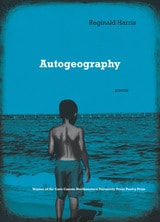
Autogeography
PoemsReginald Harris
Northwestern University Press, 2013
In his second collection of poetry, Reginald Harris traverses real and imagined landscapes, searching for answers to the question “What are you?” From Baltimore to Havana, Atlantic City to Alabama—and from the broad memories of childhood to the very specific moment of Marvin Gaye singing at the 1983 NBA All-Star Game shortly before his death—this is a travel diary of internal and external journeys exploring issues of race and sexuality. The poet traveler falls into and out of love and lust, sometimes coupled, sometimes alone. Autogeography tracks how who you are changes depending on where you are; how where you are and where you’ve been determine who you are and where you might be headed.

Azores
PoemsDavid Yezzi
Ohio University Press, 2008
A Slate Best Book of 2008
Included in Pushcart Prize XXXIV: Best of the Small Presses
Like a voyage to the Portuguese islands of the title, the poems in Azores arrive at their striking and hard-won destinations over the often-treacherous waters of experience—a man mourns the fact that he cannot not mourn, a father warns his daughter about harsh contingency, an unnamed visitor violently disrupts a quiet domestic scene. The ever-present and uncomfortable realities of envy, lust, and mortality haunt the book from poem to poem. Yezzi does not shy away from frank assessments of desire and human failing, the persistent difficulties of which are relieved periodically by a cautious optimism and even joy. Whether the poem’s backdrop is volcanic islands in the Mid-Atlantic or Manhattan Island at sunset, Yezzi examines the forces of change in the natural world, as w hether mundane or startlingly intimate. By turns plainspoken, caustic, evocative, and wry, these poems are, in matters of form, well-wrought and musical and, in matters of the heart, clear-eyed and always richly human.
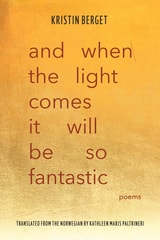
and when the light comes it will be so fantastic
poemsKristin Berget and Kathleen Maris Paltrineri
Northwestern University Press, 2025
Norwegian poet Kristin Berget’s 2017 Brage Prize–nominated poetry collection and when the light comes it will be so fantastic weaves together themes of ecological and linguistic loss, memory and deep time, and motherhood and grief. Berget’s poetics point to landscapes used as sites of extraction, where exhausted phosphorus, starving clay layers, and forest machines are encountered. The poems in this collection traverse forests, deserts, and seas—their poetic matter separated by fields of caesuras, visual absences suggestive of Earth’s ongoing extinctions. As jurors of the Brage Prize commented, within these pages is a universe where humans can seldom be separated from one another or from the nature they live in and among. Berget’s first book translated into English is an innovative exploration of the climate crises we are living with today and the complex emotions that ebb and flow along with it.