Results by title
6 books match the query 'Portuguese language'

A Grammar of Spoken Brazilian Portuguese
Earl W. Thomas
Vanderbilt University Press, 1987
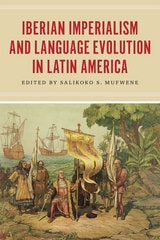
Iberian Imperialism and Language Evolution in Latin America
Edited by Salikoko S. Mufwene
University of Chicago Press, 2014
The essays approach language development through an ecological lens, exploring the effects of politics, economics, cultural contact, and natural resources on the indigenization of Spanish and Portuguese in a variety of local settings. They show how languages adapt to new environments, peoples, and practices, and the ramifications of this for the spread of colonial languages, the loss or survival of indigenous ones, and the way hybrid vernaculars get situated in larger political and cultural forces. The result is a sophisticated look at language as a natural phenomenon, one that meets a host of influences with remarkable plasticity.
Language and Social Relationship in Brazilian Portuguese
The Pragmatics of PolitenessBy Dale April Koike
University of Texas Press, 1992
"Give me the salt" and "Please pass the salt" make the same request, but in a polite situation the first utterance may give offense, while the second may not. How and why such differences in wording and intonation, in a particular context, produce different effects is the concern of pragmatics, the area of linguistics that deals with how speech is used in interaction. In this innovative study of pragmatics in Brazilian Portuguese, Dale Koike analyzes the politeness phenomenon, specifically in the context of speech acts known as "directives."
As acts intended to get someone to do something, directives bring into play a variety of sociocultural factors, depending on the relationship between the participants. Using empirical data obtained through natural language observation and from questionnaires of over one hundred adult native speakers, Koike identifies factors—such as age, education, and gender—that influence the strategies of politeness a given speaker is likely to use in making a directive. This research clarifies the unwritten language rules and assumptions that native speakers intuitively follow in phrasing their directive utterances.
Koike also includes important material on the acquisition of strategies for politeness by children and adult second-language learners, as well as on gender differences in politeness forms. Her research proposes important additions to the theory of speech acts as conceived by Austin and Searle, particularly in the application of deictic organization to account for a hierarchy of pragmatic forms.
Language and Social Relationship in Brazilian Portuguese will be of interest to a wide audience in diverse fields, including linguistics, anthropology, interaction analysis, communications, semantics, sociology, psychology, and education.
Pois não
Brazilian Portuguese Course for Spanish Speakers, with Basic Reference GrammarBy Antônio Roberto Monteiro Simões
University of Texas Press, 2008
Spanish speakers can learn Brazilian Portuguese much more rapidly than any other language, and thousands of students have used Antônio Simões's text/workbook Com licença: Brazilian Portuguese for Spanish Speakers to make the transition between the two languages. Recognizing the need for a text that incorporates current cultural references and the latest language pedagogy, Simões now offers Pois não: Brazilian Portuguese Course for Spanish Speakers, with Basic Reference Grammar.
Pois não contrasts Portuguese and Spanish, which accomplishes two main goals. It teaches the equivalent of one year of college Portuguese in one semester, three times a week, to Spanish speakers who also have a solid understanding of English. Additionally, the book serves as a basic reference guide to Brazilian Portuguese for the same audience.
Pois não can be used by students in the classroom or by independent learners. Users of the book may focus on the drills alone, concentrate on both the explanations and drills, or use the book as a reference for consultation only. Answers to all of the exercises are included in the book. Audio and video recordings by native Brazilian speakers of dialogues that appear in the book can be downloaded at https://utexas.box.com/v/PoisNaoAudio.
Portuguese Memory Book
A New Approach to Vocabulary BuildingBy William F. Harrison and Dorothy Winters Welker
University of Texas Press, 1996
Mnemonics is an age-old device for remembering names, numbers, and many other things. The Portuguese Memory Book, by William F. Harrison and Dorothy Welker, makes use of this reliable memory help in a series of mnemonic jingles that are by turns playful, sardonic, touching, and heroic to help both students and independent learners acquire and remember Portuguese vocabulary.
The mnemonic jingles present both the sound of the Portuguese word (indicated by syllables in underlined boldface type) and its English meaning (given by a word or phrase in boldface type):
noite (f.) night
Don't annoy Chihuahuas in the night.
If you ignore their bark, you'll feel their bite.
This innovative approach to vocabulary building is simple, effective, and entertaining. The authors also include a general pronunciation guide to Brazilian Portuguese, particularly to the Carioca dialect of Rio de Janeiro.
Portuguese
A Reference ManualBy Sheila R. Ackerlind and Rebecca Jones-Kellogg
University of Texas Press, 2011
An essential, comprehensive guide for all who are interested in learning the Portuguese language and mastering its complexities, Portuguese: A Reference Manual supplements the phonetic and grammatical explanations offered in basic textbooks. While the Manual focuses on Brazilian Portuguese, it incorporates European Portuguese variants and thus provides a more complete description of the language. Accessible to non-linguists and novice language learners, as well as informative for instructors of Portuguese and specialists in other languages, this guide incorporates the Orthographic Accord (in effect since 2009–2010), which attempts to standardize Portuguese orthography.
The Manual reflects the language as it is currently taught at both the undergraduate and graduate levels by providing detailed explanations of the sound and writing systems and the grammar of the principal Portuguese dialects. A reference guide rather than a textbook, the Manual also provides extensive verb charts, as well as comparisons of Portuguese with English and Spanish.