Results by title
12 books match the query 'Primatology'

Apes on the Edge
Chimpanzee Life on the West African SavannaJill Pruetz
University of Chicago Press, 2025
Fongoli chimpanzees are unique for many reasons. Their female hunters are the only apes that regularly hunt with tools, seeking out tiny bush babies with wooden spears. Unlike most other chimps, these apes fear neither water nor fire, using shallow pools to cool off in the Senegalese heat. Up to 90 percent of their home range burns annually—the result of human hunting or clearing for gold mining—and Fongoli chimpanzees have learned to predict the movement of such fires and to avoid them.
The study of Fongoli chimps is also unique. While most primate research occurs in isolated reserves, Fongoli chimpanzees live alongside humans, and as primatologist and anthropologist Jill Pruetz reports, this shared habitat creates both challenges and opportunities. The issues faced by Fongoli chimpanzees—particularly food scarcity and environmental degradation—are also issues faced by their human neighbors. This connection is one reason Pruetz, who has studied Fongoli apes for over two decades, created the nonprofit Neighbor Ape in 2008 to provide for the welfare of the humans who share their landscape with apes. It is also why Pruetz decided to write this book, the first to offer readers a view of these chimps’ lives and to explain the specific conservation efforts needed to help them. Incorporating stories from Pruetz’s time in the field, including the compelling rescue of a young chimp from poachers, Apes on the Edge opens a fascinating window into primate research, conservation, and the inner workings of a very special population of our closest nonhuman relatives.

Apes on the Edge
Chimpanzee Life on the West African SavannaJill Pruetz
University of Chicago Press, 2025
A moving story of survival and an eye-opening introduction to an extraordinary community of chimps and people.
Fongoli chimpanzees are unique for many reasons. Their female hunters are the only apes that regularly hunt with tools, seeking out tiny bush babies with wooden spears. Unlike most other chimps, these apes fear neither water nor fire, using shallow pools to cool off in the Senegalese heat. Up to 90 percent of their home range burns annually—the result of human hunting or clearing for gold mining—and Fongoli chimpanzees have learned to predict the movement of such fires and to avoid them.
The study of Fongoli chimps is also unique. While most primate research occurs in isolated reserves, Fongoli chimpanzees live alongside humans, and as primatologist and anthropologist Jill Pruetz reports, this shared habitat creates both challenges and opportunities. The issues faced by Fongoli chimpanzees—particularly food scarcity and environmental degradation—are also issues faced by their human neighbors. This connection is one reason Pruetz, who has studied Fongoli apes for over two decades, created the nonprofit Neighbor Ape in 2008 to provide for the welfare of the humans who share their landscape with apes. It is also why Pruetz decided to write this book, the first to offer readers a view of these chimps’ lives and to explain the specific conservation efforts needed to help them. Incorporating stories from Pruetz’s time in the field, including the compelling rescue of a young chimp from poachers, Apes on the Edge opens a fascinating window into primate research, conservation, and the inner workings of a very special population of our closest nonhuman relatives.
Chimpanzees in Context
A Comparative Perspective on Chimpanzee Behavior, Cognition, Conservation, and WelfareEdited by Lydia M. Hopper and Stephen R. Ross
University of Chicago Press, 2020
After a foreword by Jane Goodall, the book features sections that examine chimpanzee life histories and developmental milestones, behavior, methods of study, animal communication, cooperation, communication, and tool use. The book ends with chapters that consider how we can apply contemporary knowledge of chimpanzees to enhance their care and conservation. Collectively, these chapters remind us of the importance of considering the social, ecological, and cognitive context of chimpanzee behavior, and how these contexts shape our comprehension of chimpanzees. Only by leveraging these powerful perspectives do we stand a chance at improving how we understand, care for, and protect this species.
Dialogues on the Human Ape
Laurent Dubreuil
University of Minnesota Press, 2018
A primatologist and a humanist together explore the meaning of being a “human animal”
Humanness is typically defined by our capacity for language and abstract thinking. Yet decades of research led by the primatologist Sue Savage-Rumbaugh has shown that chimpanzees and bonobos can acquire human language through signing and technology.
Drawing on this research, Dialogues of the Human Ape brings Savage-Rumbaugh into conversation with the philosopher Laurent Dubreuil to explore the theoretical and practical dimensions of what being a “human animal” means. In their use of dialogue as the primary mode of philosophical and scientific inquiry, the authors transcend the rigidity of scientific and humanist discourses, offering a powerful model for the dissemination of speculative hypotheses and open-ended debates grounded in scientific research.
Arguing that being human is an epigenetically driven process rather than a fixed characteristic rooted in genetics or culture, this book suggests that while humanness may not be possible in every species, it can emerge in certain supposedly nonhuman species. Moving beyond irrational critiques of ape consciousness that are motivated by arrogant, anthropocentric views, Dialogues on the Human Ape instead takes seriously the continuities between the ape mind and the human mind, addressing why language matters to consciousness, free will, and the formation of the “human animal” self.
How Primates Eat
A Synthesis of Nutritional Ecology across a Mammal OrderEdited by Joanna E. Lambert, Margaret A. H. Bryer, and Jessica M. Rothman
University of Chicago Press, 2024
What do we mean when we say that a diet is nutritious? Why can some animals get all the energy they need from eating leaves while others would perish on such a diet? Why don’t mountain gorillas eat fruit all day as chimpanzees do? Answers to these questions about food and feeding are among the many tasty morsels that emerge from this authoritative book. Informed by the latest scientific tools and millions of hours of field and laboratory work on species across the primate order and around the globe, this volume is an exhaustive synthesis of our understanding of what, why, and how primates eat. State-of-the-art information presented at physiological, behavioral, ecological, and evolutionary scales will serve as a road map for graduate students, researchers, and practitioners as they work toward a holistic understanding of life as a primate and the urgent conservation consequences of diet and food availability in a changing world.
Monkeytalk
Inside the Worlds and Minds of PrimatesJulia Fischer
University of Chicago Press, 2017
An eye-opening blend of storytelling, memoir, and science, Monkeytalk takes us into the field and the world’s primate labs to investigate the intricacies of primate social mores through the lens of communication. After first detailing the social interactions of key species from her fieldwork—from baby-wielding male Barbary macaques, who use infants as social accessories in a variety of interactions, to aggression among the chacma baboons of southern Africa and male-male tolerance among the Guinea baboons of Senegal—Fischer explores the role of social living in the rise of primate intelligence and communication, ultimately asking what the ways in which other primates communicate can teach us about the evolution of human language.
Funny and fascinating, Fischer’s tale roams from a dinner in the field shared with lionesses to insights gleaned from Rico, a border collie with an astonishing vocabulary, but its message is clear: it is humans who are the evolutionary mimics. The primate heritage visible in our species is far more striking than the reverse, and it is the monkeys who deserve to be seen. “The social life of macaques and baboons is a magnificent opera,” Fischer writes. “Permit me now to raise the curtain on it.”
Primate Societies
Edited by Barbara B. Smuts, Dorothy L. Cheney, Robert M. Seyfarth, Richard W. Wr
University of Chicago Press, 1986
information on primate socioecology and its theoretical and
empirical significance, spanning the disciplines of behavioral
biology, ecology, anthropology, and psychology. It is a very rich
source of ideas about other taxa.
"A superb synthesis of knowledge about the social lives of
non-human primates."—Alan Dixson, Nature
The Evolution of Primate Societies
Edited by John C. Mitani, Josep Call, Peter M. Kappeler, Ryne A. Palombit, and Joan B. Silk
University of Chicago Press, 2012
In 1987, the University of Chicago Press published Primate Societies, the standard reference in the field of primate behavior for an entire generation of students and scientists. But in the twenty-five years since its publication, new theories and research techniques for studying the Primate order have been developed, debated, and tested, forcing scientists to revise their understanding of our closest living relatives.
Intended as a sequel to Primate Societies, The Evolution of Primate Societies compiles thirty-one chapters that review the current state of knowledge regarding the behavior of nonhuman primates. Chapters are written by the leading authorities in the field and organized around four major adaptive problems primates face as they strive to grow, maintain themselves, and reproduce in the wild. The inclusion of chapters on the behavior of humans at the end of each major section represents one particularly novel aspect of the book, and it will remind readers what we can learn about ourselves through research on nonhuman primates. The final section highlights some of the innovative and cutting-edge research designed to reveal the similarities and differences between nonhuman and human primate cognition. The Evolution of Primate Societies will be every bit the landmark publication its predecessor has been.
The Infanticide Controversy
Primatology and the Art of Field ScienceAmanda Rees
University of Chicago Press, 2009
Infanticide in the natural world might be a relatively rare event, but as Amanda Rees shows, it has enormously significant consequences. Identified in the 1960s as a phenomenon worthy of investigation, infanticide had, by the 1970s, become the focus of serious controversy. The suggestion, by Sarah Hrdy, that it might be the outcome of an evolved strategy intended to maximize an individual’s reproductive success sparked furious disputes between scientists, disagreements that have continued down to the present day.
Meticulously tracing the history of the infanticide debates, and drawing on extensive interviews with field scientists, Rees investigates key theoretical and methodological themes that have characterized field studies of apes and monkeys in the twentieth century. As a detailed study of the scientific method and its application to field research, The Infanticide Controversy sheds new light on our understanding of scientific practice, focusing in particular on the challenges of working in “natural” environments, the relationship between objectivity and interpretation in an observational science, and the impact of the public profile of primatology on the development of primatological research. Most importantly, it also considers the wider significance that the study of field science has in a period when the ecological results of uncontrolled human interventions in natural systems are becoming ever more evident.
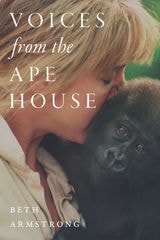
Voices from the Ape House
Beth Armstrong
The Ohio State University Press, 2020
Through anecdotal stories, readers get a glimpse into the fascinating lives of gorillas—the familiar gentleness of mothers and fathers toward their infants, power plays and social climbing, the unruly nature of teenagers, the capacity for humor, and the shared sadness by group members as they mourn the death of one of their own. In the end, Armstrong’s conflict with captivity and her lifelong fondness for these animals helped shape a zoo program dedicated to gorilla conservation.
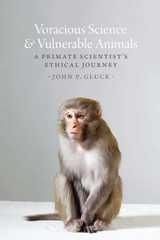
Voracious Science and Vulnerable Animals
A Primate Scientist's Ethical JourneyJohn P. Gluck
University of Chicago Press, 2016
Gluck begins by taking us inside the laboratory of Harry F. Harlow at the University of Wisconsin, where Gluck worked as a graduate student in the 1960s. Harlow’s primate lab became famous for his behavioral experiments in maternal deprivation and social isolation of rhesus macaques. Though trained as a behavioral scientist, Gluck finds himself unable to overlook the intense psychological and physical damage these experiments wrought on the macaques. Gluck’s sobering and moving account reveals how in this and other labs, including his own, he came to grapple with the uncomfortable justifications that many researchers were offering for their work. As his sense of conflict grows, we’re right alongside him, developing a deep empathy for the often smart and always vulnerable animals used for these experiments.
At a time of unprecedented recognition of the intellectual cognition and emotional intelligence of animals, Voracious Science and Vulnerable Animals is a powerful appeal for our respect and compassion for those creatures who have unwillingly dedicated their lives to science. Through the words of someone who has inflicted pain in the name of science and come to abhor it, it’s important to know what has led this far to progress and where further inroads in animal research ethics are needed.
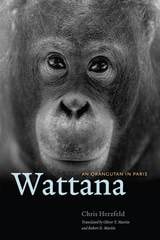
Wattana
An Orangutan in ParisChris Herzfeld
University of Chicago Press, 2016
Offering a uniquely intimate look at the daily lives of captive great apes, Herzfeld uses Wattana’s life to trace the history of orangutans from their first arrival in Europe in 1776 to the inhabitants of the Zoo of Paris and other zoos today. She provides a close look at the habits, technical know-how, and skills of Wattana, who, remarkably, uses strings, paper rolls, rope, and even pieces of wood to make things. And she thoughtfully explores how apes individually—and often with ingenuity—come to terms with and adapt to their captive environments and caretakers. Through these stories, Wattana sympathetically reveals the extraordinary psychology and distinctive personalities of great apes as well as the interconnections between animal and human lives, especially in zoos.
Scientists predict that orangutans will disappear from the wild by 2030, and captive animals like Wattana may, as a result, provide our best chance to understand and appreciate their astonishing intelligence and abilities. Wattana, the accomplished maker of knots, is the hero of this poignant book, which will enthrall anyone curious about the lives of our primate cousins.