Results by title
29 books match the query 'Prime ministers'
Asquith
Stephen Bates
Haus Publishing, 2006
Attlee
David Howell
Haus Publishing, 2006
Baldwin
Anne Perkins
Haus Publishing, 2006
Balfour
Ewen Green
Haus Publishing, 2006

Blair
Mick Temple
Haus Publishing, 2006
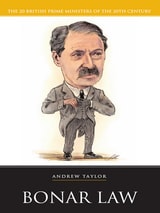
Bonar Law
Andrew Taylor
Haus Publishing, 2006
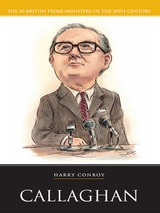
Callaghan
Harry Conroy
Haus Publishing, 2006

Campbell-Bannerman
Roy Hattersley
Haus Publishing, 2006
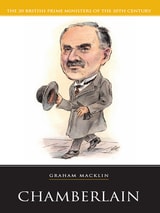
Chamberlain
Graham Macklin
Haus Publishing, 2006
Churchill
Sebastian Haffner
Haus Publishing, 2003
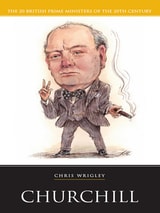
Churchill
Chris Wrigley
Haus Publishing, 2006
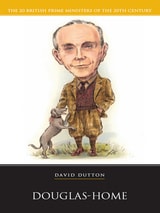
Douglas Home
David Dutton
Haus Publishing, 2006
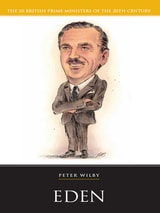
Eden
Peter Wilby
Haus Publishing, 2006
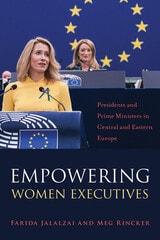
Empowering Women Executives
Presidents and Prime Ministers in Central and Eastern EuropeFarida Jalalzai and Meg Rincker
Temple University Press, 2027
What role does gender play as women pursue government positions, gain office, and govern countries in Central and Eastern Europe? In Empowering Women Executives, Farida Jalalzai and Meg Rincker examine women’s paths to and influence at the executive level, focusing specifically on Croatia, Poland, Slovakia, Estonia, and Romania.
The authors interview President Kersti Kaljulaid of Estonia, Prime Minister Jadranka Kosor of Croatia, Prime Minister Iveta Radičová of Slovakia, and Prime Minister Viorica Dăncilă of Romania as well as dozens of political experts and insiders to provide an in-depth look at female executives’ power in office. The authors also show the impact these leaders had in a region where traditional gender roles expanded only after the fall of Communism.
Each case study describes the historical context in which a woman emerges as a candidate, her ability to shape legislation, and how the media portrays her gender in analyzing her leadership. The authors also consider how gender influences a female executive’s leadership style or policy priorities—from appointing women to government positions and support for policies benefitting women to being a role model.
Empowering Women Executives illuminates women’s political inclusion in an area of the world where women have gained significant political agency.
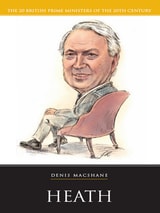
Heath
Denis MacShane
Haus Publishing, 2006
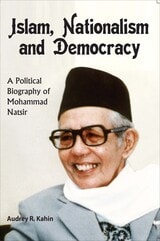
Islam, Nationalism and Democracy
a Political Biography of Mohammad NatsirAudrey R. Kahin
National University of Singapore Press, 2012
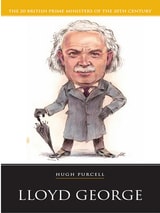
Lloyd George
Hugh Purcell
Haus Publishing, 2006
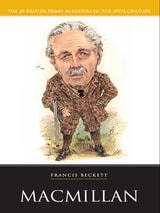
Macmillan
Francis Beckett
Haus Publishing, 2006
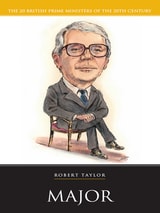
Major
Robert Taylor
Haus Publishing, 2006
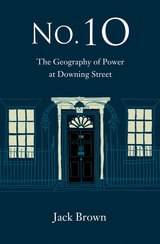
No. 10
The Geography of Power at Downing StreetJack Brown
Haus Publishing, 2019
Written by Number 10’s first ever ‘Researcher in Residence,’ with unprecedented access to people and papers, No. 10: The Geography of Power at Downing Street sheds new light on unexplored aspects of Prime Ministers’ lives. Jack Brown tells the story of the intimately entwined relationships between the house and its post-war residents, telling how each occupant’s use and modification of the building reveals their own values and approaches to the office of Prime Minister. The book reveals how and why Prime Ministers have stamped their personalities and philosophies upon Number 10 and how the building has directly affected the ability of some Prime Ministers to perform the role. Both fascinating and extremely revealing, No. 10 offers an intimate account of British political power and the building at its core. It is essential reading for anyone interested in the nature and history of British politics.

Patrice Lumumba
Georges Nzongola-Ntalaja
Ohio University Press, 2014
Patrice Lumumba was a leader of the independence struggle in what is today the Democratic Republic of the Congo, as well as the country’s first democratically elected prime minister. After a meteoric rise in the colonial civil service and the African political elite, he became a major figure in the decolonization movement of the 1950s. Lumumba’s short tenure as prime minister (1960–1961) was marked by an uncompromising defense of Congolese national interests against pressure from international mining companies and the Western governments that orchestrated his eventual demise.
Cold war geopolitical maneuvering and well-coordinated efforts by Lumumba’s domestic adversaries culminated in his assassination at the age of thirty-five, with the support or at least the tacit complicity of the U.S. and Belgian governments, the CIA, and the UN Secretariat. Even decades after Lumumba’s death, his personal integrity and unyielding dedication to the ideals of self-determination, self-reliance, and pan-African solidarity assure him a prominent place among the heroes of the twentieth-century African independence movement and the worldwide African diaspora.
Georges Nzongola-Ntalaja’s short and concise book provides a contemporary analysis of Lumumba’s life and work, examining both his strengths and his weaknesses as a political leader. It also surveys the national, continental, and international contexts of Lumumba’s political ascent and his swift elimination by the interests threatened by his ideas and practical reforms.
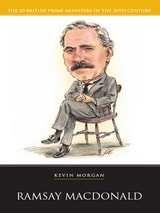
Ramsay Macdonald
Kevin Morgan
Haus Publishing, 2006
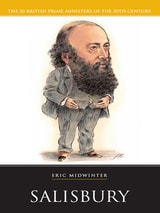
Salisbury
Eric Midwinter
Haus Publishing, 2006
Thatcher
Clare Beckett
Haus Publishing, 2006

The British Prime Minister, 2nd ed.
Anthony King
Duke University Press, 1985
The Gendered Executive
A Comparative Analysis of Presidents, Prime Ministers, and Chief ExecutivesJanet M. Martin
Temple University Press, 2016
Excluded from the ranks of elite executive decision-makers for generations, women are now exercising power as chiefs of government and chiefs of state. As of April 2016, 112 women in 73 countries have served as presidents or prime ministers.
The Gendered Executive is a critical examination of national executives, focusing on matters of identity, representation, and power. The editors and contributors to this volume address the impact of female executives through political mobilization and participation, policy- and decision-making, and institutional change. Other topics include party nomination processes, the intersectionality of race and gender, and women-centered U.S. foreign policy in southern Africa. In addition, case studies from Chile, India, Portugal, and the United States are presented, as are cross-national comparisons of women leaders in Latin America.
The Gendered Executive will enhance our understanding of the complexity of gender in and comparative analyses of executive politics.
Contributors include: Amy C. Alexander, Sheetal Chhabria, Georgia Duerst-Lahti, Maria C. Escobar-Lemmon, Cory Charles Gooding, Lilly Goren, Karen M. Hult, Farida Jalalzai, Daniela F. Melo, Catherine Reyes-Housholder, Ariella R. Rotramel, Leslie A. Schwindt-Bayer, Michelle M. Taylor-Robinson, and the editors
William Massey
New ZealandJames Watson
Haus Publishing, 2010
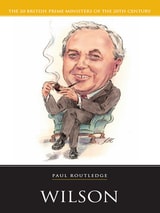
Wilson
Paul Routledge
Haus Publishing, 2006

Winston Churchill
Resolution, Defiance, Magnanimity, Good WillEdited by R. Crosby Kemper III
University of Missouri Press, 1995
In 1946 Winston Churchill shook the world with his famous "Iron Curtain" speech on the campus of Westminster College in Fulton, Missouri, now the site of the Winston Churchill Memorial and Library. Inscribed on the pediment of his statue at the memorial is the epigraph from Churchill's History of the Second World War:
In War: Resolution
In Defeat: DefianceIn Victory: MagnanimityIn Peace: Good WillNo other words provide so poignant a summary of the principles that sustained Churchill's life's work.
Under the auspices of the Winston Churchill Memorial and Library, the Crosby Kemper Lectureship was established in 1979 by the Enid and Crosby Kemper Foundation of Kansas City, Missouri. Lectures have been delivered annually, or biennially, at the Winston Churchill Memorial and Library on the campus of Westminster College by authorities on British history and on Sir Winston Churchill. The essays included in this volume constitute the first dozen Crosby Kemper lectures, most by individuals who were personally acquainted with Churchill and all by individuals who had studied his life and his work.
Lord Robert Blake discusses Churchill's ambivalence toward the Conservative party during his political career. Philip S. Ziegler, Earl Mountbatten's biographer, examines whether Britain should have granted independence to India in 1947, taking as his departure Churchill's unequivocal belief that Britain's imperial rule there was a sacred trust not to be betrayed. Martin Gilbert, Churchill's biographer, carefully examines the origins of the Cold War and the famous Iron Curtain speech. Sir Michael Howard, Lovett Professor and Naval Historian at Yale University, further examines Churchill's role during the Cold War and the formulation of his "two-track" strategy that pushed for military strength while persistently striving for peace with the Soviets. Sir John Colville, Churchill's private secretary, ponders the extent to which great men are made by circumstances, citing Churchill's peccadilloes and strengths. Churchill's daughter Mary Soames and granddaughter, the sculptor Edwina Sandys, also give moving portraits of a much-loved family man.
All bring this illustrious leader to life in the process of interpreting his political actions, reviewing his historical contributions, and sharing anecdotes about his personal life.