Results by title
8 books match the query 'Prisoners and prisons, Japanese'
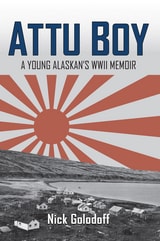
Attu Boy
A Young Alaskan's WWII MemoirNick Golodoff
University of Alaska Press, 2015
One of those survivors, Nick Golodoff, became a prisoner of war at just six years old. He was among the dozens of Unangan Attu residents swept away to Hokkaido, and one of only twenty-five to survive. Attu Boy tells Golodoff’s story of these harrowing years as he found both friendship and cruelty at the hands of the Japanese. It offers a rare look at the lives of civilian prisoners and their captors in WWII-era Japan. It also tells of Golodoff’s bittersweet return to a homeland torn apart by occupation and forced internments. Interwoven with other voices from Attu, this richly illustrated memoir is a testament to the struggles, triumphs, and heartbreak of lives disrupted by war.
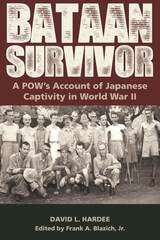
Bataan Survivor
A POW’s Account of Japanese Captivity in World War IIDavid L. Hardee, Edited by Frank A. Blazich, Jr.
University of Missouri Press, 2026
A forgotten account, written in the immediate aftermath of World War II, which vividly portrays the valor, sacrifice, suffering, and liberation of the defenders of Bataan and Corregidor through the eyes of one survivor.
The personal memoir of Colonel David L. Hardee, first drafted at sea from April-May 1945 following his liberation from Japanese captivity, is a thorough treatment of his time in the Philippines. A career infantry officer, Hardee fought during the Battle of Bataan as executive officer of the Provisional Air Corps Regiment. Captured in April 1942 after the American surrender on Bataan, Hardee survived the Bataan Death March and proceeded to endure a series of squalid prison camps. A debilitating hernia left Hardee too ill to travel to Japan in 1944, making him one of the few lieutenant colonels to remain in the Philippines and subsequently survive the war. As a primary account written almost immediately after his liberation, Hardee’s memoir is fresh, vivid, and devoid of decades of faded memories or contemporary influences associated with memoirs written years after an experience. This once-forgotten memoir has been carefully edited, illustrated and annotated to unlock the true depths of Hardee’s experience as a soldier, prisoner, and liberated survivor of the Pacific War.
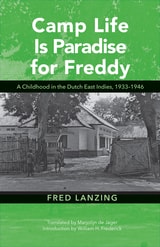
Camp Life Is Paradise for Freddy
A Childhood in the Dutch East Indies, 1933–1946Fred Lanzing
Ohio University Press, 2017
“Children see and hear what is there; adults see and hear what they are expected to and mainly remember what they think they ought to remember,” David Lowenthal wrote in The Past Is a Foreign Country. It is on this fraught foundation that Fred Lanzing builds this memoir of his childhood in a Japanese internment camp for Dutch colonialists in the East Indies during the World War II.
When published in the Netherlands in 2007, the book triggered controversy, if not vitriol, for Lanzing’s assertion that his time in the camp was not the compendium of horrors commonly associated with the Dutch internment experience. Despite the angry reception, Lanzing’s account corresponds more closely with the scant historical record than do most camp memoirs. In this way, Lanzing’s work is a substantial addition to ongoing discussions of the politics of memory and the powerful—if contentious—contributions that subjective accounts make to historiography and to the legacies of the past.
Lanzing relates an aspect of the war in the Pacific seldom discussed outside the Netherlands and, by focusing on the experiences of ordinary people, expands our understanding of World War II in general. His compact, beautifully detailed account will be accessible to undergraduate students and a general readership and, together with the introduction by William H. Frederick, is a significant contribution to literature on World War II, the Dutch colonial experience, the history of childhood, and Southeast Asian history.
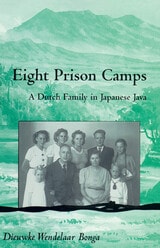
Eight Prison Camps
A Dutch Family in Japanese JavaDieuwke Wendelaar Bonga
Ohio University Press, 1996
Eldest daughter of eight children, the author grew up in Surakarta, Java, in what is now Indonesia. In the months following the bombing of Pearl Harbor, however, Dutch nationals were rounded up by Japanese soldiers and put in internment camps. Her father and brother were sent to separate men’s camps, leaving the author, her mother, and the five younger children in the women’s camp. In this and later seven other prison camps in central Java, their lives gradually deteriorated from early days of fear and crowding to near starvation, forced labor, beatings, and seeing others disappear or die. On the family’s return to Holland after the war, they found a nation recovering from German occupation and largely ignorant of the horror of the Far East experience.
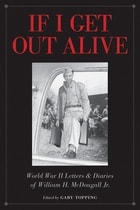
If I Get Out Alive
The World War II Letters and Diaries of William H McDougall JrGary Topping
University of Utah Press, 2007
McDougall’s letters to his family offer a rare and detailed look at daily life in Tokyo and in Japanese-occupied Shanghai during the months leading up to the Pearl Harbor attack. After his imprisonment in Sumatra, he began keeping a daily journal of his experiences as a POW. Published here for the first time are the journals he retrieved at the end of World War II.
Written by an articulate and perceptive professional reporter, McDougall's letters and diaries offer an intimate, personal narrative of conditions in wartime East Asia.

Living in the Shadow of a Hell Ship
The Survival Story of U.S. Marine George Burlage, a WWII Prisoner-of-War of the JapaneseGeorgianne Burlage
University of North Texas Press, 2020
Profiles in Survival
The Experiences of American POWs in the Philippines during World War IIJohn C. Shively
Indiana Historical Society Press, 2012
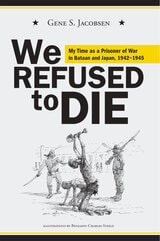
We Refused to Die
My time as a prisoner of war in Bataan and Japan, 1942-1945Gene S Jacobsen
University of Utah Press, 2004
In engaging, direct prose, Jacobsen’s three-and-a-half year experience as a prisoner of war takes the reader on a brutal and harrowing march through hatred and forgiveness, fortitude and freedom. We Refused to Die is an honest memoir that shines light on one of history’s darkest moments.