Results by title
35 books match the query 'Privacy & Surveillance'

A Thousand Paper Cuts
US Empire and the Bureaucratic Life of WarAnjali Nath
Duke University Press, 2025
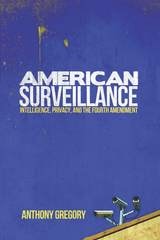
American Surveillance
Intelligence, Privacy, and the Fourth AmendmentAnthony Gregory
University of Wisconsin Press, 2016
Anthony Gregory challenges such simplifications, offering a nuanced history and analysis of these difficult issues. He highlights the complexity of the relationship between the gathering of intelligence for national security and countervailing efforts to safeguard individual privacy. The Fourth Amendment prohibiting unreasonable searches and seizures offers no panacea, he finds, in combating assaults on privacy—whether by the NSA, the FBI, local police, or more mundane administrative agencies. Given the growth of technology, together with the ambiguities and practical problems of enforcing the Fourth Amendment, advocates for privacy protections need to work on multiple policy fronts.
“This fascinating review of the shifts and accretions of American law and culture is filled with historical surprises and twenty-first-century shocks, so beneficial in an era of gross American ahistoricality and cultural acquiescence to the technological state. Every flag-waving patriot, every dissenter, every judge and police officer, every small-town mayor and every president should read America Surveillance. We have work to do!”—Lt. Col. Karen U. Kwiatkowski, (Ret.), former Senior Operations Staff Officer, Office of the Director, National Security Agency

An Era of Disruption and Violence
The FBI and the Shattering of the Sixties New LeftAaron J. Leonard
Rutgers University Press, 2027
Throughout the decade of the sixties, the FBI and other elements of the government undertook a massive effort to contain the movement against the American apartheid system and the war in Vietnam. The prime focus of these increasingly repressive efforts was the young radicals of the New Left, residing in the Students for a Democratic Society. Utilizing thousands of pages of unexamined FBI files, voluminous reports from Congress, and the author’s files obtained through Freedom of Information filings, this book will tell the story of the massive repression set loose against SDS, the group’s breakup due to internecine factionalism, and how this was encouraged and amplified at every turn by secret measures deployed by the FBI.

Breaking the World
Black Insecurity and the Horizons of Speculative FictionJustin L. Mann
Duke University Press, 2026

Crisis Vision
Race and the Cultural Production of SurveillanceTom Monahan
Duke University Press, 2022

Digital Rights at the Periphery
Making Brazil's Marco CivilGuy T. Hoskins
University of Illinois Press, 2025
Signed into law in 2014, the Marco Civil da Internet (Brazilian Civil Rights Framework for the Internet) appeared to offer pioneering legislation for a digital bill of rights that addressed issues like network neutrality and privacy. Guy T. Hoskins chronicles the Marco Civil’s development and its failure to confront the greatest concentration of power in the digital age: informational capitalism. Combining interviews with discourse and political-economic analysis, Hoskins reveals why the legislation fell short while examining the implications of its emergence in Brazil, which remains on the margins of the global system of informational capitalism. Hoskins places collectivist and public service principles at the core of any framework’s effectiveness. He also shows why we must create systems sensitive to the sociocultural and political-economic contexts that will shape digital rights and their usefulness.
Compelling and contrarian, Digital Rights at the Periphery looks at communications policy and internet governance in the Global South and the lessons they provide for the rest of the world.

Disobedient Aesthetics
Surveillance, Bodies, ControlAnthony Stagliano
University of Alabama Press, 2024
A compelling inquiry into the rhetorical and aesthetic techniques that subvert contemporary regimes of digital surveillance, embodiment, and control.
The contemporary world bristles with tools of observation and manipulation. Security cameras, social media, data mining, biometric scans, and other instruments ensnare the individual in a web of surveillance. In Disobedient Aesthetics, Anthony Stagliano exposes the use of human lives as sites of data exploitation and outlines paths of resistance. From the thermal-vision systems used on military drones, which use human body heat itself as a media object, to facial recognition platforms that use human faces as data mines, and from law enforcement tools of DNA analysis to data-driven urban governance, the realm of algorithmic surveillance and control is wide and subtle.
Disobedient Aesthetics outlines interventions into the technical systems subtending data-driven surveillance and control. Stagliano maps not only the surveillant regimes afforded by recent networked technologies, but also the inventive, artistic research into ways of undermining, upending, or redirecting such technologies. The concluding chapter examines creative, critical, and collective efforts to democratize access to the technology that undergirds such scrutiny and enables ways to detect and contest its power.
In a fascinating epilogue, Stagliano revisits current theories of control and offers an alternative reading of Gilles Deleuze’s oft-cited thesis on control societies: namely that it is not a matter of “finding new weapons” to undermine control but developing new techniques, new designs, new prototypes, and new modes of creative escape.
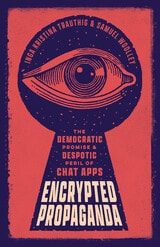
Encrypted Propaganda
The Democratic Promise and Despotic Peril of Chat AppsInga Kristina Trauthig and Samuel Woolley
University of Chicago Press, 0
Essential reading on a hard-to-study but dominant communication tool, encrypted messaging apps—WhatsApp, Signal, and their kin—showing their promise and dangers.
Pundits have long pointed to social media’s power to catalyze or end political movements—and to strengthen or weaken democracies. But this power is shifting from social media platforms (such as Facebook and YouTube) to lesser-studied encrypted messaging apps (such as WhatsApp and Signal). This urgent book explains how these technologies work and how they differ from their predecessors, outlining their strengths and vulnerabilities at a crucial stage in their evolution.
While many Facebook users have at least heard of propaganda and the algorithms used to filter and highlight content on that platform, they are more likely to trust messaging apps as sources of authentic and secure information. Paired with a growing distrust of traditional media, more people are joining large groups on these apps and using them as news sources, even when those groups include relative strangers. This makes these apps particularly vulnerable to political propaganda—and even government espionage.
Security studies scholar Inga Kristina Trauthig and propaganda scholar Samuel Woolley consider both the role of these apps in spreading disinformation and as tools for maintaining free speech and civic discourse in the face of censorship. The same closed nature that makes these apps seem trustworthy has made them particularly difficult to research. And so this qualitative study draws on some 180 interviews with propagandists, activists, influence campaigners, and other users in fourteen countries. The book’s findings and the authors’ recommendations are crucial for understanding the future of online communication and safeguarding democratic speech.

Forever Suspect
Racialized Surveillance of Muslim Americans in the War on TerrorSelod, Saher
Rutgers University Press, 2018
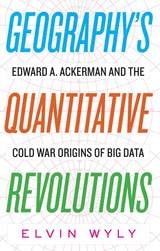
Geography's Quantitative Revolutions
Edward A. Ackerman and the Cold War Origins of Big DataElvin Wyly
West Virginia University Press, 2019
Do you have a smartphone? Billions of people on the planet now navigate their daily lives with the kind of advanced Global Positioning System capabilities once reserved for the most secretive elements of America’s military-industrial complex. But when so many people have access to the most powerful technologies humanity has ever devised for the precise determination of geographical coordinates, do we still need a specialized field of knowledge called geography?
Just as big data and artificial intelligence promise to automate occupations ranging from customer service and truck driving to stock trading and financial analysis, our age of algorithmic efficiency seems to eliminate the need for humans who call themselves geographers—at the precise moment when engaging with information about the peoples, places, and environments of a diverse world is more popular than ever before. How did we get here? This book traces the recent history of geography, information, and technology through the biography of Edward A. Ackerman, an important but forgotten figure in geography’s “quantitative revolution.” It argues that Ackerman’s work helped encode the hidden logics of a distorted philosophical heritage—a dangerous, cybernetic form of thought known as militant neo-Kantianism—into the network architectures of today’s pervasive worlds of surveillance capitalism.
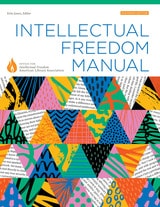
Intellectual Freedom Manual, Eleventh Edition
Erin Office for Intellectual Freedom
American Library Association, 2026
When someone faces a difficult intellectual freedom (IF) issue, they usually don’t have time to wade through dense text to find the answers they need. Designed as a real-world reference, OIF’s Intellectual Freedom Manual provides trusted, comprehensive guidance for every library worker, from the volunteer to the director, in plain language. Whether you’re developing or reviewing policies, on-boarding new staff or trustees, responding to challenges and controversies, or studying librarianship, you’ll find this a vital tool, with features such as
- contributions that center the voices of Black, Indigenous, and other People of Color (BIPOC) and LGBTQIA+ people, who are often targeted by censorship efforts;
- chapters that begin with an overview explaining the big ideas and offering reflection questions;
- an introduction to IF and why it matters, drawing on ALA's core IF documents and supported with adaptable policy worksheets;
- information and best practice guidance on key topics such as access, children and youth, censorship and internet filtering, collection development and management, copyright, meeting rooms and exhibit spaces, library programming, politics and religion, privacy, and visits and requests from law enforcement;
- stories from real people whose lives have been impacted by IF, showing how library policies shape culture, protect staff and users, and affect real people;
- concise breakdowns of IF issues from legal experts, helping you understand the laws and how they apply in real situations;
- practical advice on advocating for IF, getting help when challenges arise, lobbying, and working with your elected officials;
- a thorough index to help you quickly find the information you need; and
- a helpful glossary and selected bibliography of additional resources.
Nonhuman Witnessing
War, Data, and Ecology after the End of the WorldMichael Richardson
Duke University Press, 2024
Paradoxes of Digital Disengagement
In Search of the Opt-Out ButtonAdi Kuntsman and Esperanza Miyake
University of Westminster Press, 2022
Listen to authors Adi Kuntsman and Esperanza Miyake discuss collective data justice, the rights, refusals and ethics of digital (dis)engagement in this latest podcast from Lateral, the Journal of the Cultural Studies Association.
“The digital now thoroughly saturates our everyday lives to the point where it seems we are drowning. But is it possible to swim on our terms? This book thoughtfully examines this question, critically teasing apart the structures of power that permeate digital relations and charting pathways to a more just digital world. Essential reading for those who want to move beyond personal digital detoxes to challenge and transform our digital society and economy.” - Professor Rob Kitchin, author of The Data Revolution and Data Lives
“The seductions of tech have ushered in the encroachment of technological solutions into policing, law enforcement and ever-widening systems of social regulation across the UK and Europe. This book marks a critical intervention – by conceptualising our understanding of the ways in which data and digital harms are systemically expended against the powerless. It is a must read for those of us who are concerned to resist the (digital) exclusion of the marginalised, and the (digital) banishment of the vulnerable.” - Dr Patrick Williams, author of Data-Driven Policing: The Hardwiring of Discriminatory Policing Practices Across Europe
“While imaginaries of techno futures constructed by the Digital Lords of contemporary societies become self-fulfilling prophecies, we struggle to imagine a present and future free from digital coercion and exclusion. In their powerful interdisciplinary analysis, Adi Kuntsman and Esperanza Miyake delve into the personal, social, political and environmental costs of compulsory digitality. Rejecting a self-defeating naturalisation of digitality and digital inevitability Paradoxes of Digital Disengagement compellingly shows how collective digital justice is imperative in this future/present where the machine rules and people can become marginalized and excluded. A much-needed scholarly intervention that can inspire our collective thinking, research and praxis.” - Dr Benedetta Brevini, author of Is AI Good for the Planet?
“Kuntsman and Miyake have written an engaging book. It offers a readable critique of enforced digitality and broadens the scope of disconnection studies. The detailed analyses of complicated documents are elegantly structured and thought-provoking.” - https://blogs.lse.ac.uk/lsereviewofbooks/2022/11/16/book-review-paradoxes-of-digital-disengagement-in-search-of-the-opt-out-button-by-adi-kuntsman-and-esperanza-miyake/
Life is increasingly governed and mediated through digital and smart technologies, platforms, big data and algorithms. However, the reasons, practices and impact of how the digital is used by different institutions are often deeply linked to social oppression and injustice. Similarly, the ability to resist these digital impositions is based on inequality and privilege. Challenging the ways in which we are increasingly dependent on the digital, this book raises a set of provocative and urgent questions: in a world of compulsory digitality is there an opt out button? Where, when, how, why and to whom is it available? Answering these questions has become even more relevant since the COVID-19 pandemic. In response, the book puts forward the concept of ‘digital disengagement’ which is explored across six key areas of digitisation: health; citizenship; education; consumer culture; labour; and the environment.
Part I examines the difficulty of opting out of compulsory digitality in a world where most things are digital by default. From health apps, algorithmic decision-making to learning analytics, opting out comes with a set of troubling consequences. Part II turns to several examples of disconnection and disengagement. The chapters reveal how phenomena like digital detoxes, time-management apps and online ‘green’ spaces are co-opted by the very digital systems one is trying to resist.
The book critiques issues relating to digital surveillance, algorithmic discrimination and biased tech, corporatisation and monetisation of data, exploitative digital labour, digitalised self-discipline and destruction of the environment. As an interdisciplinary piece of work, the book will be useful to any scholar and activist in Digital, Internet and Social Media Studies; Digital Sociology and Social Policy; Digital Health; Media, Popular and Communication Studies; Consumer culture; and Environment Studies.
Predator Empire
Drone Warfare and Full Spectrum DominanceIan G. R. Shaw
University of Minnesota Press, 2016
What does it mean for human beings to exist in an era of dronified state violence? How can we understand the rise of robotic systems of power and domination? Focusing on U.S. drone warfare and its broader implications as no other book has to date, Predator Empire argues that we are witnessing a transition from a labor-intensive “American empire” to a machine-intensive “Predator Empire.”
Moving from the Vietnam War to the War on Terror and beyond, Ian G. R. Shaw reveals how changes in military strategy, domestic policing, and state surveillance have come together to enclose our planet in a robotic system of control. The rise of drones presents a series of “existential crises,” he suggests, that are reengineering not only spaces of violence but also the character of the modern state. Positioning drone warfare as part of a much longer project to watch and enclose the human species, he shows that for decades—centuries even—human existence has slowly but surely been brought within the artificial worlds of “technological civilization.” Instead of incarcerating us in prisons or colonizing territory directly, the Predator Empire locks us inside a worldwide system of electromagnetic enclosure—in which democratic ideals give way to a system of totalitarian control, a machinic “rule by Nobody.”
As accessibly written as it is theoretically ambitious, Predator Empire provides up-to-date information about U.S. drone warfare, as well as an in-depth history of the rise of drones.

Privacy Matters
Conversations about Surveillance within and beyond the ClassroomEstee Beck
Utah State University Press, 2020
This collection offers practical analyses of surveillance and privacy as they occur within classrooms and communities. Organized by themes—surveillance and classrooms, surveillance and bodies, surveillance and culture—Privacy Matters provides writing, rhetoric, and communication scholars and teachers with specific approaches, methods, inquiries, and examinations into the impact tracking and monitoring has upon people’s habits, bodies, and lived experiences.
While each chapter contributes a new perspective in the discipline and beyond, Privacy Matters affirms that these analyses remain inconclusive. This collection is a call for scholars, researchers, activists, and educators within rhetoric and composition to continue the scholarly conversation because privacy matters to all of us.
Contributors: Christina Cedillo, Jenae Cohn, Dànielle Nicole DeVoss, Dustin Edwards, Norah Fahim, Ann Hill Duin, Gavin P. Johnson, John Peterson, Santos Ramos, Colleen A. Reilly, Jennifer Roth Miller, Jason Tham, Stephanie Vie
Privacy and the Past
Research, Law, Archives, EthicsLawrence, Susan C
Rutgers University Press, 2016
Profiles and Plotlines
Data Surveillance in Twenty-first Century LiteratureKatherine D. Johnston
University of Iowa Press, 2023
In Profiles and Plotlines, Katherine Johnston engages this energetic reformation of contemporary literature to account for a society and economy of frenetic counting. Fiction and poetry are capable of addressing precisely that for which algorithms cannot or do not account: the effects of profile culture; the ideologies and supposed truth-power of data; the gendered and racialized dynamics of watching and being watched; and the politics of who counts and what gets counted. Johnston analyzes prescient work by contemporary authors such as Jennifer Egan, Claudia Rankine, Mohsin Hamid, and William Gibson to probe how the claims of data surveillance serve to make lives seem legible, intelligible, and sometimes even expendable.

Sex Offenders, Stigma, and Social Control
Rickard, Diana
Rutgers University Press, 2016
Shareveillance
The Dangers of Openly Sharing and Covertly Collecting DataClare Birchall
University of Minnesota Press, 2017
Cracking open the politics of transparency and secrecy
In an era of open data and ubiquitous dataveillance, what does it mean to “share”? This book argues that we are all “shareveillant” subjects, called upon to be transparent and render data open at the same time as the security state invests in practices to keep data closed. Drawing on Jacques Rancière’s “distribution of the sensible,” Clare Birchall reimagines sharing in terms of a collective political relationality beyond the veillant expectations of the state.

Shock and Yawn
Resisting Banal Terror Through Queer StorytellingMegan Sibbett
The Ohio State University Press, 2026
Building on queer theorists’ critiques of intimate and administrative violence, especially Gloria Anzaldúa’s “intimate terrorism,” Sibbett develops methodologies for conceptualizing and subverting violence aimed at queer, racialized, and gendered bodies in this era of surveillance and increasing authoritarianism. Sibbett addresses book bans, anti-trans legislation, idealized histories of westward expansion, and more, examining materials that include public service announcements, advertising, social media, news reports, poems, interviews, and novels. In so doing, she demonstrates the crucial role queer testimonies—and queer histories and queer futures—play in revealing systemic violence and illuminating the transformative potential of everyday resistance.

Sovereign, Settler, Leaker, Lie
Forms of the Secret in US Political RhetoricAtilla Hallsby
The Ohio State University Press, 2026
In Sovereign, Settler, Leaker, Lie, Atilla Hallsby argues that secrets play a pivotal role in organizing political discourse in the United States. Hallsby takes up contemporary case studies—ranging from the Valerie Plame scandal during the George W. Bush presidency, to the use of Saul Alinsky’s name as a partisan codeword for politicizing Obama’s Blackness, to Chelsea Manning’s public naming and outing—to show how dramatic revelations increasingly fail to produce meaningful change and instead reproduce entrenched racial, gendered, and colonial hierarchies.
The core feature of these interlinked moments of crisis is the secret: a rhetorical patterning of political life organized by specific forms, each one lending a familiar shape to the shadows of American empire. These forms, theorized here as tropes, connect decades of secrets, linking the George W. Bush administration’s War on Terror to the Trump-era reemergence of “deep state” conspiracy theories. As an extension of secrecy and surveillance studies, and with the aim of attaining a more accountable and just form of US governmentality, Sovereign, Settler, Leaker, Lie explains how still-unfolding political realities in the United States emerged, transformed, and regenerate.

Spying with Maps
Surveillance Technologies and the Future of PrivacyMark Monmonier
University of Chicago Press, 2002
Despite our apprehension about surveillance technology, Spying with Maps is not a jeremiad, crammed with dire warnings about eyes in the sky and invasive tracking. Monmonier's approach encompasses both skepticism and the acknowledgment that geospatial technology brings with it unprecedented benefits to governments, institutions, and individuals, especially in an era of asymmetric warfare and bioterrorism. Monmonier frames his explanations of what this new technology is and how it works with the question of whether locational privacy is a fundamental right. Does the right to be left alone include not letting Big Brother (or a legion of Little Brothers) know where we are or where we've been? What sacrifices must we make for homeland security and open government?
With his usual wit and clarity, Monmonier offers readers an engaging, even-handed introduction to the dark side of the new technology that surrounds us—from traffic cameras and weather satellites to personal GPS devices and wireless communications.
State of Fear
Policing a Postcolonial CityJoshua Barker
Duke University Press, 2024
Technocreep and the Politics of Things Not Seen
Neda Atanasoski and Nassim Parvin, editors
Duke University Press, 2025
Contributors. Neda Atanasoski, Katherine Bennett, Iván Chaar López, Sushmita Chatterjee, Hayri Dortdivanlioglu, Sanaz Haghani, Jacob Hagelberg, Jennifer Hamilton, Antonia Hernández, Marjan Khatibi, Tamara Kneese, Erin McElroy, Vernelle A. A. Noel, Jessica Olivares, Nassim Parvin, Beth Semel, Renee Shelby, Tanja Wiehn

Terror Capitalism
Uyghur Dispossession and Masculinity in a Chinese CityDarren Byler
Duke University Press, 2021
The Big Data Agenda
Data Ethics and Critical Data StudiesAnnika Richterich
University of Westminster Press, 2018
This book highlights that the capacity for gathering, analysing, and utilising vast amounts of digital (user) data raises significant ethical issues. Annika Richterich provides a systematic contemporary overview of the field of critical data studies that reflects on practices of digital data collection and analysis. The book assesses in detail one big data research area: biomedical studies, focused on epidemiological surveillance. Specific case studies explore how big data have been used in academic work.
The Big Data Agenda concludes that the use of big data in research urgently needs to be considered from the vantage point of ethics and social justice. Drawing upon discourse ethics and critical data studies, Richterich argues that entanglements between big data research and technology/ internet corporations have emerged. In consequence, more opportunities for discussing and negotiating emerging research practices and their implications for societal values are needed.
An electronic version of this book is freely available, thanks to the support of libraries working with Knowledge Unlatched. KU is a collaborative initiative designed to make high quality books Open Access for the public good. More information about the initiative and details about KU's Open Access programme can be found at www.knowledgeunlatched.org.

The Carceral Surround
R. Joshua Scannell
University of Minnesota Press, 2026
How digital technologies entrench state power—and a new vision for resistance
As law enforcement agencies deploy increasingly advanced technologies to suppress dissent, hunt migrants, and target marginalized communities, The Carceral Surround offers a powerful new theory of police and prison power in the digital age. Making sense of the rapid expansion of digital carceral infrastructure in a nation that claims to value freedom and individual rights, R. Joshua Scannell moves beyond familiar debates over privacy to show that understanding digital policing requires confronting the political and racial logics that sustain police power.
Drawing on digital media theory, science and technology studies, critical race and ethnic studies, and carceral theory, The Carceral Surround reveals how twenty-first-century policing is less about managing crime than about governing possibility. Carceral power now operates across every register of daily life through predictive analytics, risk modeling, and algorithmic systems that track, sort, and preempt. From social media archives and facial recognition software to satellite mapping and radiation sensors, Scannell charts how seemingly disparate media converge into an environment of control that links technocratic governance to the maintenance of racial hierarchy and capitalist order.
Tracing today’s technoauthoritarian regime from the NYPD’s assault on Black Lives Matter protesters in 2020 to the Stop LAPD Spying Coalition’s campaign to end predictive policing contracts, The Carceral Surround is a rare hybrid of critique and refusal, illuminating the digital logic of US authoritarianism while imagining pathways for collective resistance beyond its grasp.
Retail e-book files for this title are screen-reader friendly.
The Cybernetic Border
Drones, Technology, and IntrusionIván Chaar López
Duke University Press, 2024

The General Data Protection Regulation in Plain Language
Bart van der Sloot
Amsterdam University Press, 2020
This book sets out the most important obligations of individuals and organisations that process data about others. These include taking technical security measures, carrying out an impact assessment and registering all data-processing procedures within an organisation. It also discusses the rights of citizens whose data are processed, such as the right to be forgotten, the right to information and the right to data portability.

The General Data Protection Regulation in Plain Language
Bart van der Sloot
Amsterdam University Press, 2020
This book sets out the most important obligations of individuals and organisations that process data about others. These include taking technical security measures, carrying out an impact assessment and registering all data-processing procedures within an organisation. It also discusses the rights of citizens whose data are processed, such as the right to be forgotten, the right to information and the right to data portability.

The Privatisation of Israeli Security
Shir Hever
Pluto Press, 2017

The Vital Realities for 2020 and Beyond
Writings on Water Wars, Nuclear Devastation, Endless War, Economic Revolution, and Surveillance Versus FreedomRoger Armbrust
Parkhurst Brothers, Inc., 2019

Threshold
How Smart Homes Change Us Inside and OutHeather Suzanne Woods
University of Alabama Press, 2024
An urgent and cautionary examination of the totalizing effect of smart home technology on the lives of those who live in them—and those who don’t
Smart homes are here—domestic spaces bristling with networked technologies that appear to enhance work, entertainment, logistics, health, and security. But these technologies may also extract a cost in attention, money, and privacy. In Threshold, communication and technology expert Heather Suzanne Woods applies rhetorical theory to answer the urgent question of how swiftly proliferating smart homes alter those who inhabit them.
Building on extensive research into smart homes in the United States, Woods recounts how smart homes arose and predicts the trajectory of their future form. She pulls back the curtain on the technology, probes who is in control, and questions whether a home can be too smart. She reveals how smart homes incentivize ubiquitous computing as a daily practice, priming smart home occupants for permanent transactional existence largely controlled by corporate interests.
Woods suggests a dynamic cultural framework for understanding smart homes that takes into account sociotechnical variables such as gender, class, income, race, criminal justice, and more through which smart homes shape human life. Woods’s framework reveals how smart homes both reflect social norms about technology as well as whet consumer appetites for an ever more totalizing relationship with technology. She argues that this progression leads to “living in digitality,” a cultural state of constant use and reliance on technology.
Written for homeowners, policymakers, technology enthusiasts, and scholars, Threshold interweaves meticulously researched critical analysis with matter-of-fact graphics that map relationships between digital tools and social life. Readers will appreciate this bracing assessment of smart technologies that empowers smart home users to make informed decisions about their dwellings.
Under Surveillance
Being Watched in Modern AmericaBy Randolph Lewis
University of Texas Press, 2017
Never before has so much been known about so many. CCTV cameras, TSA scanners, NSA databases, big data marketers, predator drones, “stop and frisk” tactics, Facebook algorithms, hidden spyware, and even old-fashioned nosy neighbors—surveillance has become so ubiquitous that we take its presence for granted. While many types of surveillance are pitched as ways to make us safer, almost no one has examined the unintended consequences of living under constant scrutiny and how it changes the way we think and feel about the world. In Under Surveillance, Randolph Lewis offers a highly original look at the emotional, ethical, and aesthetic challenges of living with surveillance in America since 9/11.
Taking a broad and humanistic approach, Lewis explores the growth of surveillance in surprising places, such as childhood and nature. He traces the rise of businesses designed to provide surveillance and security, including those that cater to the Bible Belt’s houses of worship. And he peers into the dark side of playful surveillance, such as eBay’s online guide to “Fun with Surveillance Gadgets.” A worried but ultimately genial guide to this landscape, Lewis helps us see the hidden costs of living in a “control society” in which surveillance is deemed essential to governance and business alike. Written accessibly for a general audience, Under Surveillance prompts us to think deeply about what Lewis calls “the soft tissue damage” inflicted by the culture of surveillance.

When Riot Cops Are Not Enough
The Policing and Repression of Occupy OaklandKing, Mike
Rutgers University Press, 2017
Drawn from King’s intensive field work, the book focuses on the physical, legal, political, and ideological dimensions of repression—in the streets, in courtrooms, in the media, in city hall, and within the movement itself—When Riot Cops Are Not Enough highlights the central role of political legitimacy, both for mass movements seeking to create social change, as well as for governmental forces seeking to control such movements. Although Occupy Oakland was different from other Occupy sites in many respects, King shows how the contradictions it illuminated within both social movement and police strategies provide deep insights into the nature of protest policing generally, and a clear map to understanding the full range of social control techniques used in North America in the twenty-first century.