Results by title
7 books match the query 'Problem youth'

12 Rounds in Lo's Gym
Boxing and Manhood in AppalachiaTodd D. Snyder
West Virginia University Press, 2018
Part love letter to Appalachia, part rigorous social critique, readers may find 12 Rounds in Lo’s Gym—and its narrative of individual and community strength in the face of globalism’s headwinds—a welcome corrective to popular narratives that blame those in the region for their troubles.
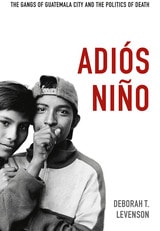
Adiós Niño
The Gangs of Guatemala City and the Politics of DeathDeborah T. Levenson
Duke University Press, 2013
Crime and Justice, Volume 24
Youth ViolenceEdited by Michael Tonry and Mark H. Moore
University of Chicago Press Journals, 1998
Featuring articles by leading American and European scholars from many fields, Youth Violence provides a reliable, up-to-date, authoritative and comprehensive overview of policy issues and research developments concerning crime and violence among the young.

Dead End Kids
Gang Girls and the Boys They KnowMark S. Fleisher
University of Wisconsin Press, 2000
Dead End Kids exposes both the depravity and the humanity in gang life through the eyes of a teenaged girl named Cara, a member of a Kansas City gang. In this shocking yet compassionate account, Mark Fleisher shows how gang girls’ lives are shaped by poverty, family disorganization, and parental neglect.
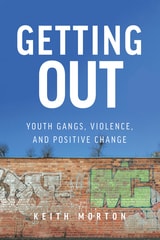
Getting Out
Youth Gangs, Violence, and Positive ChangeKeith Morton
University of Massachusetts Press, 2019
For eight years Keith Morton codirected a safe-space program for youth involved in gang or street violence in Providence, Rhode Island. Getting Out is a result of the innovative perspectives he developed as he worked alongside staff from a local nonviolence institute to help these young people make life-affirming choices. Rather than view their violence as pathological, Morton explains that gang members are victims of violence, and the trauma they have experienced leads them to choose violence as the most meaningful option available. To support young people as they “unlearned” violence and pursued nonviolent alternatives, he offered what he calls a "Youth Positive" approach that prioritizes healing over punishment and recognizes them as full human beings. Informed by deep personal connections with these youth, Morton contends that to help them, we need to change our question from “What is wrong with you?” to “What happened to you?”

Sounding for Cool
Donald Morrill
Michigan State University Press, 2002
Sounding for Cool is about self-transformation, about growing up on one’s own as a product of contemporary America, and about how to become not just a man, but a contributing adult in society. Donald Morrill presents the day-to-day lives of seven young men (white, black, Hispanic, immigrant, middle-class, thick-headed, poor, and smart), who for various reasons have become homeless. Placed in a Transitional Living Program facility (TLP) by the courts, these men must learn to navigate in the world of “normal” values and reasonable rules. Streetwise and callow, trained to seek shortcuts or to make excuses, they struggle with the structures and assumptions inherent in living a law-abiding, bill-paying life. While sorting out their souls, they learn how to connect with others.
In turn, Sounding for Cool scrutinizes the staff of the TLP, one woman and three men, who variously come to terms with their lives by settling accounts from the past. As a TLP volunteer, Donald Morrill often finds himself bridging the gap between staff and client. In the process of telling their stories, he chronicles his own journey to understand the past. Ultimately, Sounding for Cool asks the enduring questions, “Who am I in the world and what can I become?”
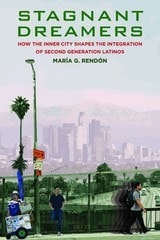
Stagnant Dreamers
How the Inner City Shapes the Integration of the Second GenerationMaria G. Rendon
Russell Sage Foundation, 2019
Winner of the 2020 Robert E. Park Award for Best Book from the Community and Urban Sociology Section of the American Sociological Association
Winner of the 2020 Distinguished Contribution to Research Award from the Latino/a Section of the American Sociological Association
Honorable Mention for the 2020 Thomas and Znaniecki Award from the International Migration Section of the American Sociological Association
A quarter of young adults in the U.S. today are the children of immigrants, and Latinos are the largest minority group. In Stagnant Dreamers, sociologist and social policy expert María Rendón follows 42 young men from two high-poverty Los Angeles neighborhoods as they transition into adulthood. Based on in-depth interviews and ethnographic observations with them and their immigrant parents, Stagnant Dreamers describes the challenges they face coming of age in the inner city and accessing higher education and good jobs, and demonstrates how family-based social ties and community institutions can serve as buffers against neighborhood violence, chronic poverty, incarceration, and other negative outcomes.
Neighborhoods in East and South Central Los Angeles were sites of acute gang violence that peaked in the 1990s, shattering any romantic notions of American life held by the immigrant parents. Yet, Rendón finds that their children are generally optimistic about their life chances and determined to make good on their parents’ sacrifices. Most are strongly oriented towards work. But despite high rates of employment, most earn modest wages and rely on kinship networks for labor market connections. Those who made social connections outside of their family and neighborhood contexts, more often found higher quality jobs. However, a middle-class lifestyle remains elusive for most, even for college graduates.
Rendón debunks fears of downward assimilation among second-generation Latinos, noting that most of her subjects were employed and many had gone on to college. She questions the ability of institutions of higher education to fully integrate low-income students of color. She shares the story of one Ivy League college graduate who finds himself working in the same low-wage jobs as his parents and peers who did not attend college. Ironically, students who leave their neighborhoods to pursue higher education are often the most exposed to racism, discrimination, and classism.
Rendón demonstrates the importance of social supports in helping second-generation immigrant youth succeed. To further the integration of second-generation Latinos, she suggests investing in community organizations, combating criminalization of Latino youth, and fully integrating them into higher education institutions. Stagnant Dreamers presents a realistic yet hopeful account of how the Latino second generation is attempting to realize its vision of the American dream.