Results by title
38 books match the query 'Decline'
An Atlantic City Reader
The Rise and Decline of an American ResortLouis J. Parascandola
Rutgers University Press, 2026
As Atlantic City grew to become one of the largest tourist destinations on the East Coast, it loomed ever larger in the imaginations of American writers. Generation upon generation of novelists, journalists, musicians, and poets visited Atlantic City and left with vivid impressions of its kaleidoscopic delights and its seedy underbelly.
This new reader collects all of these diverse perspectives on the city in one place, including accounts of Atlantic City by such famous visitors as Walt Whitman, William Carlos Williams, Fanny Hurst, Arthur Conan Doyle, Damon Runyon, Langston Hughes, Elmore Leonard, and Bruce Springsteen. Arranged chronologically, the anthology traces the city’s history from its humble beginnings as a quiet health resort to its rapid ascent to the world’s playground, its gradual decline, and its hopeful if tenuous future. Together, the pieces in this collection take us inside the city’s glitz, glamor, and gambling palaces, but they also don’t shy away from its troubling histories of racial discrimination, political corruption, and urban decay. Compiling fiction, poetry, drama, memoirs, newspaper stories, and magazine reports, The Atlantic City Reader presents an engaging and multifaceted portrait of this iconic resort town.
Arkansas’s Gilded Age
The Rise, Decline, and Legacy of Populism and Working-Class ProtestMatthew Hild
University of Missouri Press, 2018
The story of farmer and labor protest in Arkansas during the late nineteenth century offers lessons relevant to contemporary
working-class Americans in what some observers have called the “new Gilded Age.”

Beautiful Terrible Ruins
Detroit and the Anxiety of DeclineApel, Dora
Rutgers University Press, 2015
Cinemas and Cinema-Going in the United Kingdom
Decades of Decline, 1945–1965Sam Manning
University of London Press, 2020
Cinema attendance fell in all regions, but the speed, nature, and extent of this decline varied widely across the United Kingdom. By presenting detailed case studies of two similarly-sized industrial cities, Belfast and Sheffield, this book adds nuance and detail to the discussion of regional variations in film exhibition and audience habits. Using a wide range of sources, such as oral testimony, box-office data, newspapers, and trade journals, Cinemas and Cinema-Going in the United Kingdom conveys the diverse and ever-changing nature of the cinema industry.
Committees and the Decline of Lawmaking in Congress
Jonathan Lewallen
University of Michigan Press, 2020
He finds that because party leaders have more control over the legislative agenda, committees have spent more of their time conducting oversight instead. Partisanship alone does not explain this trend; changes in institutional rules and practices that empowered party leaders have created more uncertainty for committees and contributed to a shift in their policy activities. The shift toward oversight at the committee level combined with party leader control over the voting agenda means that many members of Congress are effectively cut out of many of the institution’s policy decisions. At a time when many, including Congress itself, are considering changes to modernize the institution and keep up with a stronger executive branch, the findings here suggest that strengthening Congress will require more than running different candidates or providing additional resources.
Congress Overwhelmed
The Decline in Congressional Capacity and Prospects for ReformEdited by Timothy M. LaPira, Lee Drutman, and Kevin R. Kosar
University of Chicago Press, 2020
The essays in Congress Overwhelmed assess Congress’s declining capacity and explore ways to upgrade it. Some provide broad historical scope. Others evaluate the current decay and investigate how Congress manages despite the obstacles. Collectively, they undertake the most comprehensive, sophisticated appraisal of congressional capacity to date, and they offer a new analytical frame for thinking about—and improving—our underperforming first branch of government.
Dayton
The Rise, Decline, and Transition of an Industrial CityAdam A. Millsap
The Ohio State University Press, 2019
Thoroughly researched and engagingly written, Millsap’s book explores the economic background of the region made famous by J. D. Vance’s Hillbilly Elegy. From early twentieth-century optimism, through the Great Depression and post-WWII manufacturing decline, to Dayton now, with its labor-force problems and opioid crisis, Millsap tracks the underlying forces driving the city’s trajectory. Race relations, interstates, suburbanization, climate, crime, geography, and government policies all come into play as Millsap develops a picture of the city, past and present. By examining the past, Millsap proposes a plan for the future, claiming that there is hope for Dayton to thrive again. And if Dayton can rise from its industrial ashes, then perhaps the Rust Belt can shed its stigma and once again become the backbone of American innovation.
Death Penalty in Decline?
The Fight against Capital Punishment in the Decades since Furman v. GeorgiaAustin Sarat
Temple University Press, 2024
At a time when the United States is undertaking an unprecedented national reconsideration of the death penalty, Death Penalty in Decline? seeks to evaluate how abolitionists might succeed today.
Contributors: John Bessler, Corinna Barrett Lain, James R. Martel, Linda Ross Meyer, Carol S. Steiker, Jordan M. Steiker, and the editor

Decline Of The Nation-State
Gurutz Jáuregui Bereciartu
University of Nevada Press, 1994
This scholarly work explains the historical and contemporary causes that have given rise to the current explosion of nationalist movements in western Europe. The text also discusses the course these movements may take in the future. The current world political order, maintained by the separation of and frequent antagonism between sovereign nation-states, is increasingly inadequate given the profound social, economic, and technological transformations which have occurred in recent years. The nation-state is no longer the axis of political systems. Existing nation-states are currently undergoing a process similar to the one that caused the disappearance of traditional social forms and territorial entities which were subsumed into broader political structures. The goal of contemporary nationalist movements to create their own nation-states may therefore constitute an anachronistic aspiration and historical error. This crisis of the nation-state, as a form of universal juridico-political organization, and its replacement by supranational structures, is fraught with its own dangers. The latter purports to construct a supranational Europe. However, this new Europe cannot be established in opposition to the nations and regions; rather, it must form a kind of consensual melting pot resulting from the mixture of the complex social and cultural traditions of the different communities constituting European society. Decline of the Nation-State was translated into English by William A. Douglass. It was published originally as Contra el estado-nación: En orno al hecho y la cuestion naciónal in 1986.

Don’t Kill Your Baby
Public Health and the Decline of Breastfeeding in the Nineteenth and Twentieth CenturiesJacqueline H. Wolf
The Ohio State University Press, 2001
False Dawn
The Rise and Decline of Public Health NursingKaren Buhler-Wilkerson
Rutgers University Press, 2021
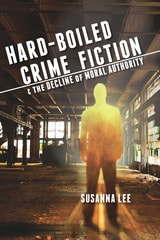
Hard-Boiled Crime Fiction and the Decline of Moral Authority
Susanna Lee
The Ohio State University Press, 2016
Lee traces the history of the hard-boiled detective through the twentieth century and on both sides of the Atlantic (France and the United States), tying the idea of morality to the character model in nuanced, multifaceted ways. When the heroic model devolves, the very conceptual validity of individual moral authority can seem to devolve as well. Hard-Boiled Crime Fiction and the Decline of Moral Authority charts the evolution of that character model of the hard-boiled hero, the mid-century deterioration of his exemplarity, and twenty-first-century endeavors to resuscitate the accountable hero. The history of hard-boiled crime fiction tells nothing less than the story of individual autonomy and accountability in modern Western culture.
Humanism in Crisis
The Decline of the French RenaissancePhilippe Desan, Editor
University of Michigan Press, 1991
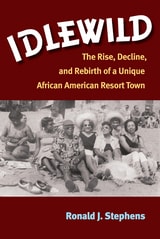
Idlewild
The Rise, Decline, and Rebirth of a Unique African American Resort TownRonald J. Stephens
University of Michigan Press, 2013
In 1912, white land developers founded Idlewild, an African American resort community in western Michigan. Over the following decades, the town became one of the country’s foremost vacation destinations for the black middle class, during its peak drawing tens of thousands of visitors annually and hosting the era’s premier entertainers, such as The Four Tops, Della Reese, Brook Benton, and George Kirby. With the civil rights movement and the resulting expansion of recreation options available to African Americans, Idlewild suffered a sharp social and economic decline, and by the early 1980s the town had become a struggling retirement community in the midst of financial and political crises.
Meticulously researched and unearthing never-before-seen historical material, Ronald J. Stephens’s book examines the rapid rise and decline of this pivotal landmark in African American and leisure history, in the process exploring intersections among race, class, tourism, entertainment, and historic preservation in the United States. Featuring a wealth of fieldwork on contemporary Idlewild, the book also takes a candid look at recent revitalization efforts and analyzes the possibilities for a future resurgence of this national treasure.
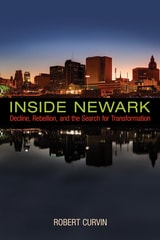
Inside Newark
Decline, Rebellion, and the Search for TransformationCurvin, Robert
Rutgers University Press, 2014
Based on historical records and revealing interviews with over one hundred residents and officials, Inside Newark traces Newark’s history from the 1950s, when the city was a thriving industrial center, to the era of Mayor Cory Booker. Along the way, Curvin covers the disturbances of July 1967, called a riot by the media and a rebellion by residents; the administration of Kenneth Gibson, the first black mayor of a large northeastern city; and the era of Sharpe James, who was found guilty of corruption. Curvin examines damaging housing and mortgage policies, the state takeover of the failing school system, the persistence of corruption and patronage, Newark’s shifting ethnic and racial composition, positive developments in housing and business complexes, and the reign of ambitious mayor Cory Booker.
Inside Newark reveals a central weakness that continues to plague Newark—that throughout this history, elected officials have not risen to the challenges they have faced. Curvin calls on those in positions of influence to work for the social and economic improvement of all groups and concludes with suggestions for change, focusing on education reform, civic participation, financial management, partnerships with agencies and business, improving Newark’s City Council, and limiting the term of the mayor. If Newark’s leadership can encompass these changes, Newark will have a chance at a true turnaround.

Love Apocalypse
New Intimacies and the Decline of Marriage and FertilityAlex J. Nelson
Rutgers University Press, 2026
Marriage and fertility rates are falling around the world, upending social security planning and threatening economic growth. In Love Apocalypse, anthropologists present their insights into this society-altering demographic shift, drawing on their research into the ways love, romantic relationships, and family are being transformed by cultural, social, and economic forces. Each case study in this volume examines a unique cultural context from either Asia (China, South Korea, Japan, India), Europe (Germany, Lithuania), or Latin America (Cuba, Peru), grounded in years of ethnographic research into how communities’ experiences and perceptions of love, marriage, and family are changing in response to economic precarity, shifting gender relations, status competition, and diversifying cultural norms. It is increasingly clear that marriage and two-parent nuclear families will not be the universal norm of the twenty-first century even if this arrangement was largely idealized a mere generation ago. However, this does not mean the end of love, intimacy, or family but rather its transformation and the emergence of new intimate relationships and adaptations to the challenges and opportunities of life in the twenty-first century.
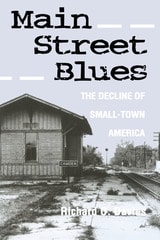
MAIN STREET BLUES
THE DECLINE OF SMALL-TOWN AMERICARichard O. Davies
The Ohio State University Press, 1998
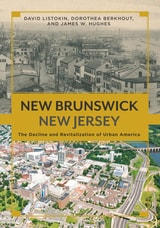
New Brunswick, New Jersey
The Decline and Revitalization of Urban AmericaListokin, David
Rutgers University Press, 2016

Pax Americana
Hegemony Or Decline?Jochen Hippler
Pluto Press, 1994
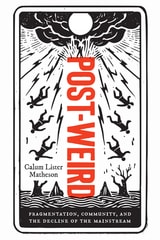
Post-Weird
Fragmentation, Community, and the Decline of the MainstreamCalum Lister Matheson
Rutgers University Press, 2026
An ambitious look at rhetoric and psychosis that explores how communities form when society collapses
American society seems to have fractured. Common touchpoints of authority have receded in recent decades and beliefs that were once taboo are now openly shared, from neo-Nazism to occultism to conspiracy thinking. In this book, Calum Lister Matheson goes beyond the fraying of contemporary American culture to ask how splinter communities form in our current media environment, what keeps them together, and what they build from the ruins of shared language.
In his stirring exploration of how people communicate when old forms of authority and meaning collapse, Matheson examines far-flung groups that have departed the mainstream—Sandy Hook deniers, Appalachian serpent handlers, pro-anorexia bloggers, incels, transvestigators, pseudoscientific reactionaries, and more—and finds unexpected similarities among their many differences. Key among their parallels is the insistence that the symbols shared by each community represent a hidden truth that cannot be questioned or interpreted but is revealed through signs—words, images, videos, and texts. By documenting American fringe cultures, extremism, and the social functions of language, this book rethinks concepts like irony, psychosis, propriety, and what it means to be normal in weird times.

Rave Culture
The Alteration and Decline of a Philadelphia Music SceneTammy L. Anderson
Temple University Press, 2009
It used to be that raves were grassroots organized, anti-establishment, unlicensed all-night drug-fueled dance parties held in abandoned warehouses or an open field. These days, you pay $40 for a branded party at popular riverfront nightclubs where age and status, rather than DJ expertise and dancing, shape your experience.
In Rave Culture, sociologist Tammy Anderson explores the dance music, drug use and social deviance that are part of the pulsing dynamics of this collective. Her ethnographic study compares the Philadelphia rave scene with other rave scenes in London and Ibiza. She chronicles how generational change, commercialization, law enforcement, hedonism, and genre fragmentation fundamentally altered electronic dance music parties. Her analysis calls attention to issues of personal and collective identity in helping to explain such social change and what the decline of the rave scene means for the future of youth culture and electronic dance music.

Return to Havana
The Decline of Cuban Society Under CastroMaurice Halperin
Vanderbilt University Press, 1994
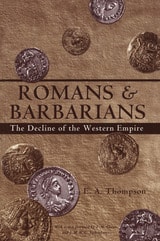
Romans and Barbarians
The Decline of the Western EmpireE. A. Thompson
University of Wisconsin Press, 2002
Available for the first time in paperback, this classic work by renowned historian E.A. Thompson examines the fall of the Roman Empire in the West from the barbarian perspective and experience. Standard interpretations of the decline of the Roman Empire in the West view the barbarian invaders as destroyers. Thompson, however, argues that the relationship between the invaders and the invaded was far more complex than the common interpretation would suggest. This edition includes a new foreword by F.M. Clover and J.H.W.G. Liebeschuetz.

Stagg's University
The Rise, Decline, and Fall of Big-Time Football at ChicagoRobin Lester
University of Illinois Press, 1995
The legendary University of Chicago football program had an unusual beginning, a dazzling middle, and an inglorious conclusion. Its architect: Amos Alonzo Stagg, the most creative and entrepreneurial college coach of his time. A former all-American gridiron star at Yale, Stagg joined an elite academic institution that boasted intellectual notables like John Dewey, Thorstein Veblen, and Albert Michelson. Within fifteen years, the fame of Stagg's football program had eclipsed even Michelson's renown as the first American citizen to win a Nobel Prize.
Robin Lester follows the commercial trail blazed by Stagg and University President William Rainey Harper and the subsequent transformation of college football into a mass entertainment industry that changed campuses and captured the national imagination. Fascinating and detailed, Stagg's Universityreveals how the University of Chicago's football industry prefigured today's billion-dollar sport juggernaut and details the life and leadership of one of its foundational personages.

Staging Ageing
Theatre, Performance and the Narrative of DeclineMichael Mangan
Intellect Books, 2013
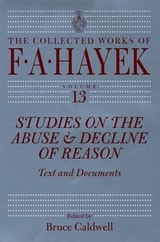
Studies on the Abuse and Decline of Reason
Text and DocumentsF. A. Hayek
University of Chicago Press, 2010
Hayek argues that the vast number of elements whose interactions create social structures and institutions make it unlikely that social science can predict precise outcomes. Instead, he contends, we should strive to simply understand the principles by which phenomena are produced. For Hayek this modesty of aspirations went hand in hand with his concern over widespread enthusiasm for economic planning. As a result, these essays are relevant to ongoing debates within the social sciences and to discussion about the role government can and should play in the economy.

The Allegorical Epic
Essays in its Rise and DeclineMichael Murrin
University of Chicago Press, 1980
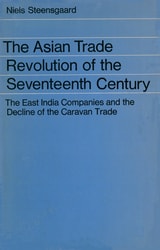
The Asian Trade Revolution
The East India Companies and the Decline of the Caravan TradeNiels Steensgaard
University of Chicago Press, 1975
In this work Neils Steensgaard combines an analytical economic approach with detailed historic scholarship to provide an imaginitive and important analysis of a central incident in modern world history. The event is the breaking of the Portuguese monopoly on Asian trade in the seventeenth century by English and Dutch mercantile interests. This change the author demonstrates, was not simply the triumph of the new powers over the old. Rather, the Dutch--English victory heralded a structural change in international trade: the triumph of entrepreneurial capitalism over the older economic mode of the "peddler-merchant."
Professor Steensgaard's study is divided into two major parts. The first examines the economic and political structure of the seventeenth century institutions in the Near East, Portugal, England, and the Netherlands. The author demonstrates that the rise to preeminence of the English and Dutch East India Companies over the Portuguese "State of India" was the result of the superior economic and bureaucratic organization of the former. The eclipse of Portuguese power in general, the author argues, is best understood as an institutional failure–an inability to adapt to changing patterns and demands of economic life.
The second part of Professor Steensgaard's study provides a detailed historical account of an important event in the fall of the Portuguese trading empire–the loss of the city of Hormuz in 1622. Hormuz, located at a strategic point at the entrance of the Persian Gulf, was a central port city on the Asian trade route. It fell to an English and Persian force. The author demonstrates why this event exemplifies the Portuguese institutional weaknesses that are discussed in the first part of the book.
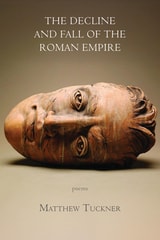
The Decline and Fall of the Roman Empire
Matthew Tuckner
Four Way Books, 2025
The Decline and Fall of the Roman Empire is a book-length sequence of 53 poems with identical eponymous titles. Heartbreaking and searingly lucid, this debut collection from poet Matthew Tuckner chronicles his best friend's illness and subsequent death from cancer. Its brilliance is not only in recognizing the vastness and particularity of grief — how the loss of a beloved is so personally all encompassing that it splits time irrevocably, separating our personal history into distinct eras of before and after as the governing principles of our lives crumble — but also in joining the discrete experience of one person's sickness to a carcinogenic imperial core, the late-capitalist global order that ensnares all people in toxic landscapes that make us sick.
Describing a trip to Japan, Tuckner evokes the brute force of appetite alongside the delicacy of life as he recalls "memories of its greedy koi fish, a ceramic bowl / of goji berries perfectly balanced on a tree branch." Beholden to a ticking clock, we catalogue, becoming evidentiary and encyclopedic in our impulses. "We fatten the time until it bursts into artifacts: / sixteen photographs of a single puddle // taking shape in the red glow of your darkroom." In borrowing the title of Edward Gibbon's seminal 6-volume history, Tuckner anchors the associative detours of his sprawling intellect and executes a stunning metacommentary on his own lyrics: time collapses every era into a spattering of sentences, tyrannical as it forcibly converts the present to the past, and yet the barbarous recursion of human feeling resists oblivion, evoking the eternity of emotional significance. Tuckner's shrewd balance of irony and tenderness make this cerebral inversion possible: this friendship is the poet's canon event, the Rome at which every road in his mind arrives, and yet it is also the singular dialect that will not cede to death's subsuming lingua franca.
Damien Hirst's taxidermy art, The John Keats House, superfund sites in Rome, NY, the 2023 Ohio Train Derailment, a children's book titled Oil Spill! — these poems travel widely in their topics to understand the specific ravages of disease on the human body, and in turn, the ravages of human beings on the planet. Its trenchant criticism isn't pessimistic, though — its redemption is the restorative, unending love that made these elegies possible. Equally gutted and mesmerized by our infinite, arbitrary ability to discern meaning in mess, these poems ask us to bear witness to what we can develop if we will sit in the darkness. To read the photo essay of a storm's aftermath. It tells an ancient story that becomes brand new, the one about "a puddle you glimpsed the moon in & stopped for. // A puddle that was just plain rain until it fell."
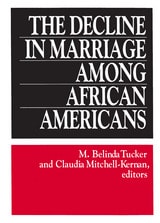
The Decline in Marriage Among African Americans
Causes, Consequences, and Policy ImplicationsM. Belinda Tucker
Russell Sage Foundation, 1995
The Decline of Comity in Congress
Eric M. Uslaner
University of Michigan Press, 1996
The Decline of Latin American Economies
Growth, Institutions, and CrisesEditied by Sebastian Edwards, Gerardo Esquivel, and Graciela Márquez
University of Chicago Press, 2007
Latin America’s economic performance is mediocre at best, despite abundant natural resources and flourishing neighbors to the north. The perplexing question of how some of the wealthiest nations in the world in the nineteenth century are now the most crisis-prone has long puzzled economists and historians. The Decline of Latin American Economies examines the reality behind the struggling economies of Argentina, Chile, and Mexico.
A distinguished panel of experts argues here that slow growth, rampant protectionism, and rising inflation plagued Latin America for years, where corrupt institutions and political unrest undermined the financial outlook of already besieged economies. Tracing Latin America’s growth and decline through two centuries, this volume illustrates how a once-prosperous continent now lags behind. Of interest to scholars and policymakers alike, it offers new insight into the relationship between political systems and economic development.
The Decline of Organized Labor in the United States
Michael Goldfield
University of Chicago Press, 1987

The Decline of the Novel
Joseph Bottum
St. Augustine's Press, 2019
The novel has lost its purpose, Joseph Bottum argues in this fascinating new look at the history of fiction. We have not transcended our need for what novels provide, but we have grown to distrust the culture that allowed novels to flourish. “For almost three hundred years,” Bottum writes, “the novel was a major art form, perhaps the major art form, of the modern world—the device by which, more than any other, we tried to explain ourselves to ourselves.” But now we no longer “read novels the way we used to.”
In a historical tour de force—the kind of sweeping analysis almost lost to contemporary literary criticism—Bottum traces the emergence of the novel from the modern religious crisis of the individual soul and the atomized self. In chapters on such figures as Sir Walter Scott, Charles Dickens, and Thomas Mann, he examines the enormous ambitions once possessed by novels and finds in these older works a rebuke of our current failure of nerve.
“We walk with our heads down,” Bottum writes. “Without a sense of the old goals and reasons––a sense of the good achieved, understood as progress––all that remains are the crimes the culture committed in the past to get where it is now. uncompensated by achievement, unexplained by purpose, these unameliorated sins must now seem overwhelming: the very definition of a failed culture.” In readings of everything from genre fiction to children’s books, Bottum finds a lack of faith in the ability of art to respond to the deep problems of existence. “the decline of the novel’s prestige reflects and confirms a genuine cultural crisis,” he writes.
Linking the novel to its religious origins, Bottum describes the urgent search for meaning in the new conditions of the modern age: “If the natural world is imagined by modernity as empty of purpose, then the hunt for nature’s importance is supernatural, by definition.” the novel became a fundamental device by which culture pursued the supernatural—facilitated by modernity’s confidence in science and cultural progress. Losing that confidence, Bottum says, we lost the purpose of the art: “the novel didn’t fail us. We failed the novel.”
Told in fast-paced, wide-ranging prose, Bottum’s The Decline of the Novel is a succinct critique of classical and contemporary fiction, providing guidelines for navigating the vast genre. this book is a must-read for those who hunger for grand accounts of literature, students of literary form, critics of contemporary art, and general readers who wish to learn, finally, what we all used to know: the deep moral purpose of reading novels.

The Rise and Decline of Communist Czechoslovakia´s Railway Sector
Tomáš Nigrin
Central European University Press, 2022
Once the pride of interwar Czechoslovakia, and key during the forced industrialization of the Stalinist period, during the 1970s and 1980s the Czechoslovak railway sector showed the symptoms of the political tiredness and economic exhaustion of the Soviet Bloc. This book examines the failure of central economic planning through the lens of this national transport system.
Based on the presentation of its history and on the detailed scrutiny of the actors, institutions, internal mechanisms, and conditions of the railway sector, the analysis reveals the identities of the real stakeholders in the state administration. This case shows how the country was governed by Communist Party institutions and government ministries, and how developments in the transportation sector—like in every sector—reflected their priorities. Numerous tables with selected statistics underscore the economic analysis and black and white photos offer a glimpse on the technical base of the railway sector.
The book is filled with enlightening comparisons of the Czechoslovak transportation industry with its counterparts in the whole Eastern Bloc. Integration into the Council for Mutual Economic Assistance (Comecon) of the Bloc could have been an asset, yet the records have more to say about conflicts than cooperation.
The Rise and Decline of the Zairian State
Crawford Young and Thomas Edwin Turner
University of Wisconsin Press, 1985
The Unsteady March
The Rise and Decline of Racial Equality in AmericaPhilip A. Klinkner and Rogers M. Smith
University of Chicago Press, 1999
"[An] unflinching portrait of the leviathan of American race relations. . . . This important book should be read by all who aspire to create a more perfect union."—Publishers Weekly, starred review
"Could it be that our unswerving belief in the power of our core values to produce racial equality is nothing but a comforting myth? That is the main argument put forth by Philip Klinkner and Rogers Smith . . . The Unsteady March is disturbing because it calls into question our cherished national belief and does so convincingly. . . . [It] is beautifully written, and the social history it provides is illuminating and penetrating."—Aldon Morris, American Journal of Sociology
Winner of the Horace Mann Bond Award of the W.E.B. Du Bois Institute for Afro-American Research at Harvard University.
Trading Democracy for Justice
Criminal Convictions and the Decline of Neighborhood Political ParticipationTraci Burch
University of Chicago Press, 2013