Results by title
39 books match the query 'Prostitution & Sex Trade'
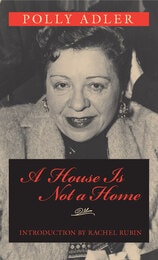
A House Is Not a Home
Polly Adler
University of Massachusetts Press, 2006
Polly Adler's “house”—the brothel that gave this best-selling 1953 autobiography its title—was a major site of New York City underworld activity from the 1920s through the 1940s. Adler's notorious Lexington Avenue house of prostitution functioned as a sort of social club for New York's gangsters and a variety of other celebrities, including Robert Benchley and his friend Dorothy Parker. According to one New York tabloid, it made Adler's name “synonymous with sin.”
This new edition of Adler's autobiography brings back into print a book that was a mass phenomenon, in both hardback and paperback, when it was first published. A self-consciously literary work, A House Is Not a Home provides an informal social history of immigrant mobility, prostitution, Jewish life in New York, police dishonesty, the “white slavery” scare of the early twentieth century, and political corruption.
Adler's story fills an important gap in the history of immigrant life, urban experience, and organized crime in New York City. While most other accounts of the New York underworld focus on the lives of men, from Herbert Asbury's Gangs of New York through more recent works on Jewish and Italian gangsters, this book brings women's lives and problems to the forefront.
A House Is Not a Home is compellingly readable and was popular enough to draw Hollywood's attention in the early 1960s—leading to a film starring Shelley Winters as Adler. The book has been largely forgotten in the ensuing decades, lost both to its initial audience of general readers and to scholars in women's studies, immigration history, and autobiography who are likely to find it a treasure trove. Now, with a new introduction by Rachel Rubin that contextualizes Adler's life and literary achievement, A House Is Not a Home is again available to the many readers who have come to understand such “marginal” life stories as a special refraction of the more typical American success narrative.

A House Is Not a Home
Polly Adler, with an Introduction by Rachel Rubin
University of Massachusetts Press, 2006
Polly Adler's “house”—the brothel that gave this best-selling 1953 autobiography its title—was a major site of New York City underworld activity from the 1920s through the 1940s. Adler's notorious Lexington Avenue house of prostitution functioned as a sort of social club for New York's gangsters and a variety of other celebrities, including Robert Benchley and his friend Dorothy Parker. According to one New York tabloid, it made Adler's name “synonymous with sin.”
This new edition of Adler's autobiography brings back into print a book that was a mass phenomenon, in both hardback and paperback, when it was first published. A self-consciously literary work, A House Is Not a Home provides an informal social history of immigrant mobility, prostitution, Jewish life in New York, police dishonesty, the “white slavery” scare of the early twentieth century, and political corruption.
Adler's story fills an important gap in the history of immigrant life, urban experience, and organized crime in New York City. While most other accounts of the New York underworld focus on the lives of men, from Herbert Asbury's Gangs of New York through more recent works on Jewish and Italian gangsters, this book brings women's lives and problems to the forefront.
A House Is Not a Home is compellingly readable and was popular enough to draw Hollywood's attention in the early 1960s—leading to a film starring Shelley Winters as Adler. The book has been largely forgotten in the ensuing decades, lost both to its initial audience of general readers and to scholars in women's studies, immigration history, and autobiography who are likely to find it a treasure trove. Now, with a new introduction by Rachel Rubin that contextualizes Adler's life and literary achievement, A House Is Not a Home is again available to the many readers who have come to understand such “marginal” life stories as a special refraction of the more typical American success narrative.
CONTROLLING VICE
REGULATING BROTHEL PROSTITUTION IN ST. PAUL, 1865–1883JOEL BEST
The Ohio State University Press, 1998
For eighteen years following the Civil War, the police in St. Paul, Minnesota, informally regulated brothel prostitution. Each month, the madams who ran the brothels were charged with keeping houses of ill fame and fined in the city’s municipal court. In effect, they were paying licensing fees in order to operate illegal enterprises. This arrangement was open; during this period, the city’s newspapers published hundreds of articles about vice and its regulation.
Joel Best claims that the sort of informal regulation in St. Paul was common in the late nineteenth century and was far more typical than the better known but brief experiment with legalization tried in St. Louis. With few exceptions, the usual approach to these issues of social control has been to treat informal regulation as a form of corruption, but Best’s view is that St. Paul’s arrangement exposes the assumption that the criminal justice system must seek to eradicate crime. He maintains that other policies are possible.
In a book that integrates history and sociology, the author has reconstructed the municipal court records for most of 1865–83, using newspaper articles, an arrest ledger kept by the St. Paul police, and municipal court dockets. He has been able to trace which madams operated brothels and the identities of many of the prostitutes who lived and worked in them.
Challenging Perspectives on Street-Based Sex Work
Katie Hail-Jares
Temple University Press, 2017
Are sex workers victims, criminals, or just trying to make a living? Over the last five years, public policy and academic discourse have moved from criminalization of sex workers to victim-based understanding, shaped by human trafficking. While most research focuses on macro-level policies and theories, less is known about the on-the-ground perspectives of people whose lives are impacted by sex work, including attorneys, social workers, police officers, probation officers, and sex workers themselves.
Challenging Perspectives on Street-Based Sex Work brings the voices of lower-echelon sex workers and those individuals charged with policy development and enforcement into conversation with one another. Chapters highlight some of the current approaches to sex work, such as diversion courts, trafficking task forces, law enforcement assisted diversion and decriminalization. It also examines how sex workers navigate seldom-discussed social phenomenon like gentrification, pregnancy, imperialism, and being subjects of research. Through dialogue, our authors reveal the complex reality of engaging in and regulating sex work in the United States and through American aid abroad.
Contributors include: Aneesa A. Baboolal, Marie Bailey-Kloch, Mira Baylson, Nachale “Hua” Boonyapisomparn, Belinda Carter, Jennifer Cobbina, Ruby Corado, Eileen Corcoran, Kate D’Adamo, Edith Kinney, Margot Le Neveu, Martin A. Monto, Linda Muraresku, Erin O’Brien, Sharon Oselin. Catherine Paquette, Dan Steele, Chase Strangio, Signy Toquinto, and the editors.

Children of Other Worlds
Exploitation in the Global MarketJeremy Seabrook
Pluto Press, 2001
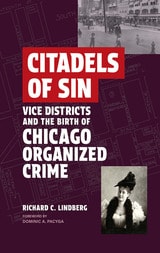
Citadels of Sin
Vice Districts and the Birth of Chicago Organized CrimeRichard C. Lindberg, with a foreword by Dominic A. Pacyga
Southern Illinois University Press, 2026
Revealing Chicago’s underworld before Al Capone
Vice in Chicago did not begin—or end—with Al Capone. In this vividly written narrative, historian Richard C. Lindberg peels back the mythology of Prohibition-era gangsters to reveal a more entrenched, intricate and disturbing system of vice and corruption that took shape decades earlier. Long before the rise of organized crime syndicates, Chicago’s political leaders in league with the criminal classes deliberately created and managed politically-protected segregated vice districts known in Chicago and in other cities as “Levees,” that institutionalized prostitution, graft, and forced sex work in the name of preserving civic order by isolating the vice trade from the citizenry.
Set against the backdrop of the Gilded Age and Progressive Era, Citadels of Sin situates Chicago within a nationwide experiment in regulating prostitution. Reformers, clergy, and municipal officials across the United States believed that confining vice to designated districts would protect respectable neighborhoods and commercial centers. More than fifty such districts emerged nationwide. Instead of curbing crime, however, the Levees became engines of corruption, enriching politicians, police, lawyers, and judges while normalizing exploitation and violence. Lindberg argues that these systems laid the groundwork for modern global human trafficking.
Chicago, with its size and political complexity, supported three major Levees. On the West Side, poverty and endemic corruption devastated local communities. On the North Side, one vice district survived longest, eventually transforming into the fashionable Rush Street nightclub scene. The South Side levee proved most consequential of all, evolving into the organized crime network known as “the Outfit,” whose influence continues to endure.
Lindberg brings the levee era to life through sharp portraits and damning accountability. He exposes how media sensationalism glamorized vice while masking its human cost, and he holds powerful figures—most notably Mayors Carter Harrison Sr. and Jr.—responsible for enabling a system built on bribery, “white slavery,” and coerced sex work. The levees were not accidental byproducts of urban growth; they were carefully managed political machines.
As World War I priorities and urban redevelopment finally dismantled formal vice districts, their activities did not disappear. Instead, they dispersed into neighborhoods, suburbs, and new forms.
By walking readers through the former vice districts as they exist today, Lindberg forges a powerful connection between past and present. In tracing the rise and fall of these districts, he reveals how efforts to impose moral order produced the very exploitation they claimed to prevent—proof that reform, when compromised by politics and greed, can collapse into catastrophe.
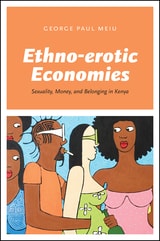
Ethno-erotic Economies
Sexuality, Money, and Belonging in KenyaGeorge Paul Meiu
University of Chicago Press, 2017
George Paul Meiu uses his deep familiarity with the communities these men come from to explore the long-term effects of markets of ethnic culture and sexuality on a wide range of aspects of life in rural Kenya, including kinship, ritual, gender, intimate affection, and conceptions of aging. What happens to these communities when young men return with such surprising wealth? And how do they use it to improve their social standing locally? By answering these questions, Ethno-erotic Economies offers a complex look at how intimacy and ethnicity come together to shape the pathways of global and local trade in the postcolonial world.

Feminism, Interrupted
Disrupting PowerLola Olufemi
Pluto Press, 2020
"Reading her is to believe that another world is possible."—The Guardian
More than just a slogan on a t-shirt, feminism is a radical tool for fighting back against structural violence and injustice. Feminism, Interrupted is a bold call to seize feminism back from the cultural gatekeepers and return it to its radical roots.
Writer and organizer Lola Olufemi explores state violence against women, the fight for reproductive justice, transmisogyny, gendered Islamophobia and solidarity with global struggles, showing that the fight for gendered liberation can change the world for everybody when we refuse to think of it solely as women's work. Chapters include:
*Know your history
*The sexist state
*The fight for reproductive justice
*The savior complex: Muslim women and gendered Islamophobia
*Complicated consent: How to support sex workers
*The answer to sexual violence is not more prisons
*Feminism and food
*Solidarity is a doing word
Including testimonials from Sisters Uncut, migrant groups working for reproductive justice, prison abolitionists and activists involved in the international fight for Kurdish and Palestinian rights, Olufemi emphasizes the link between feminism and grassroots organizing. Reclaiming feminism from the clutches of the consumerist, neoliberal model, Feminism, Interrupted shows that when “feminist” is more than a label, it holds the potential for radical transformative work.
Olufemi writes in her Introduction, "Feminism is a political project about what could be. It’s always looking forward, investing in future we can’t quite grasp yet. It’s a way of swishing, hoping, aiming at everything that has been deemed impossible. It’s a task that has to be approached seriously. This book is for anyone who is beginning to think critically….If this book makes you pick up another book, or watch a documentary, search the archive, reach for a poetry book—if it spars or reignites your interest in feminism, then it has served its purpose."

Finding Mr. Perfect
K-Drama, Pop Culture, Romance, and RaceMin Joo Lee
Rutgers University Press, 2026
Getting Screwed
Sex Workers and the LawAlison Bass
University Press of New England, 2015
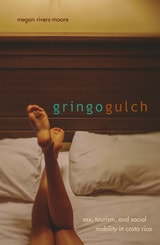
Gringo Gulch
Sex, Tourism, and Social Mobility in Costa RicaMegan Rivers-Moore
University of Chicago Press, 2016
Rivers-Moore situates her ethnography at the intersections of gender, race, class, and national dimensions in the sex industry. Instead of casting sex workers as hapless victims and sex tourists as neoimperialist racists, she reveals each group as involved in a complicated process of class mobility that must be situated within the sale and purchase of leisure and sex. These interactions operate within an almost entirely unregulated but highly competitive market beyond the reach of the state—bringing a distinctly neoliberal cast to the market. Throughout the book, Rivers-Moore introduces us to remarkable characters—Susan, a mother of two who doesn’t regret her career of sex work; Barry, a teacher and father of two from Virginia who travels to Costa Rica to escape his loveless, sexless marriage; Nancy, a legal assistant in the Department of Labor who is shocked to find out that prostitution is legal and still unregulated. Gringo Gulch is a fascinating and groundbreaking look at sex tourism, Latin America, and the neoliberal state.
Hostels, Sexuality, and the Apartheid Legacy
Malevolent GeographiesGlen S. Elder
Ohio University Press, 2003
In the last decade, the South African state has been transformed dramatically, but the stubborn, menacing geography of apartheid still stands in the way of that country’s visions of change. Environmentally degraded old homelands still scar the rural geography of South Africa.
Formerly segregated, now gated, neighborhoods still inhibit free movement. Hostels, Sexuality, and the Apartheid Legacy is a study of another such space, the converted “male” migrant worker hostel.
Professor Glen Elder identifies hostels as sites of public and domestic violence, literal destruction and rebuilding, and as an important node in the spread of HIV/AIDS.
Hostels have also become home to increasing numbers of “invisible” female residents. Finding that one way to understand hostel space is through women’s experiences, Professor Elder turned to thirty black migrant women living in an East Rand hostel to map the everyday geographies of South Africa’s time of change.
By following the lives of these women, Elder identifies spatialized forms of marginalization, impoverishment, infection, and disempowerment. But, as he points out, the women’s survival strategies may provide signposts to the way out of apartheid’s malevolent geography.
Hostels, Sexuality, and the Apartheid Legacy argues that the gendered geography of the migrant labor system developed in South Africa was premised upon sexual assumptions about men, women, and their bodies, and that feminist and queer analyses of space can inform public policy decisions.
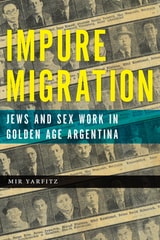
Impure Migration
Jews and Sex Work in Golden Age ArgentinaMir Yarfitz
Rutgers University Press, 2019

Intimate Industries
Restructuring (Im)Material Labor in AsiaRhacel Parreñas, Hung Cam Thai and Rachel Silvey, special issue editors
Duke University Press, 0
This issue addresses how laborers within intimate industries—those who do interpersonal work that tends to the sexual, bodily, health, hygiene, or care needs of individuals—are shaping Asia’s growing role in the global economy. The contributors investigate how intimate industries support relational connections for consumers while disrupting laborers’ relationships, as in the case of migrants who perform intimate labor away from their families and communities of origin. The articles collected here include examinations of such trade-offs and their complex meanings and implications for the workers. The authors explore these social processes through the lens of industries that organize, enable, or delimit the trade in domestic labor, marriage migration, companionship and romance, sex work, pornographic performance, surrogate mothering and ova donation, and cosmetics sales. This issue puts people, as embodied subjects, back into narratives of economic change and offers a perspective on globalization from below.
Contributors: Danièle Bélanger, Hae Yeon Choo, Nicole Constable, Daisy Deomampo, Akhil Gupta, Chaitanya Lakkimsetti, Pei-Chia Lan, Purnima Mankekar, Eileen Otis, Juno Salazar Parreñas, Rhacel Parreñas, Sharmila Rudrappa, Celine Parreñas Shimizu, Rachel Silvey, Hung Cam Thai, Leslie Wang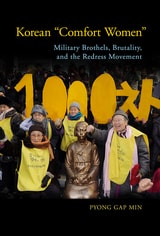
Korean "Comfort Women"
Military Brothels, Brutality, and the Redress MovementPyong Gap Min
Rutgers University Press, 2021
Korean “Comfort Women” synthesizes the previous major findings about Japanese military sexual slavery and legal recommendations, and provides new findings about the issues “comfort women” faced for an English-language audience. It also examines the transnational redress movement, revealing that the Japanese government has tried to conceal the crime of sexual slavery and to resolve the women’s human rights issue with diplomacy and economic power.

Love in the Drug War
Selling Sex and Finding Jesus on the Mexico-US BorderBy Sarah Luna
University of Texas Press, 2020
2020 — Ruth Benedict Prize – Association for Queer Anthropology, American Anthropological Association
2020 — Gloria E. Anzaldúa Book Prize – National Women’s Studies Association
2020 — Honorable Mention, Sara A. Whaley Book Prize
2021 — Best Book in Social Sciences – Mexico Section, Latin American Studies Association (LASA)
Sex, drugs, religion, and love are potent combinations in la zona, a regulated prostitution zone in the city of Reynosa, across the border from Hidalgo, Texas. During the years 2008 and 2009, a time of intense drug violence, Sarah Luna met and built relationships with two kinds of migrants, women who moved from rural Mexico to Reynosa to become sex workers and American missionaries who moved from the United States to forge a fellowship with those workers.
Luna examines the entanglements, both intimate and financial, that define their lives. Using the concept of obligar, she delves into the connections that tie sex workers to their families, their clients, their pimps, the missionaries, and the drug dealers—and to the guilt, power, and comfort of faith. Love in the Drug War scrutinizes not only la zona and the people who work to survive there, but also Reynosa itself—including the influences of the United States—adding nuance and new understanding to the current Mexico-US border crisis.
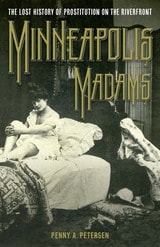
Minneapolis Madams
The Lost History of Prostitution on the RiverfrontPenny A. Petersen
University of Minnesota Press, 2013
Sex, money, and politics—no, it’s not a thriller novel. Minneapolis Madams is the surprising and riveting account of the Minneapolis red-light district and the powerful madams who ran it. Penny Petersen brings to life this nearly forgotten chapter of Minneapolis history, tracing the story of how these “houses of ill fame” rose to prominence in the late nineteenth century and then were finally shut down in the early twentieth century.
In their heyday Minneapolis brothels were not only open for business but constituted a substantial economic and political force in the city. Women of independent means, madams built custom bordellos to suit their tastes and exerted influence over leading figures and politicians. Petersen digs deep into city archives, period newspapers, and other primary sources to illuminate the Minneapolis sex trade and its opponents, bringing into focus the ideologies and economic concerns that shaped the lives of prostitutes, the men who used their services, and the social-purity reformers who sought to eradicate their trade altogether. Usually written off as deviants, madams were actually crucial components of a larger system of social control and regulation. These entrepreneurial women bought real estate, hired well-known architects and interior decorators to design their bordellos, and played an important part in the politics of the developing city.
Petersen argues that we cannot understand Minneapolis unless we can grasp the scope and significance of its sex trade. She also provides intriguing glimpses into racial interactions within the vice economy, investigating an African American madam who possibly married into one of the city’s most prestigious families. Fascinating and rigorously researched, Minneapolis Madams is a true detective story and a key resource for anyone interested in the history of women, sexuality, and urban life in Minneapolis.
Mobile Orientations
An Intimate Autoethnography of Migration, Sex Work, and Humanitarian BordersNicola Mai
University of Chicago Press, 2018
Using a bold blend of personal narrative and autoethnography, Mai provides intimate portrayals of sex workers from sites including the Balkans, the Maghreb, and West Africa who decided to sell sex as the means to achieve a better life. Mai explores the contrast between how migrants understand themselves and their work and how humanitarian and governmental agencies conceal their stories, often unwittingly, by addressing them all as helpless victims. The culmination of two decades of research, Mobile Orientations sheds new light on the desires and ambitions of migrant sex workers across the world.
On the Game
Women and Sex WorkSophie Day
Pluto Press, 2007
Through the lens of public health, economics, will, and human rights, Day explores the public and private lives of individual sex workers. She offers a unique perspective on contemporary capitalist society, one that iwll be of interest to a broad range of social scientist.
The author brings a unique perspective to her work. She is both an anthropologist and the founder of the renowned Praed Street Project, established in 1986 as a referral and support center for London prostitutes.
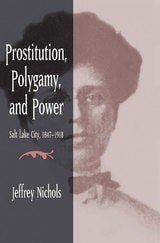
Prostitution, Polygamy, and Power
Salt Lake City, 1847-1918Jeffrey Nichols
University of Illinois Press, 2002
Jeffrey Nichols examines how prostitution became a focal point in the moral contest between Mormons and gentiles and aided in the construction of gender systems, moral standards, and the city's physical and economic landscapes. Gentiles likened polygamy to prostitution and accused polygamous Mormons of violating Christian norms of family structure and sexual behavior. Defending their church and its ideals, Mormons blamed gentiles for introducing the sinful business of prostitution into their honorable city. Nichols traces the interplay of prostitution and reform from the 1890s, when the Church of Jesus Christ of Latter-day Saints began to move away from polygamy, to World War I, when Mormon and gentile moral codes converged at the expense of prostitutes. He also considers how the conflict over polygamy distinguished Salt Lake City from other cities struggling to abolish prostitution in the Progressive Era.
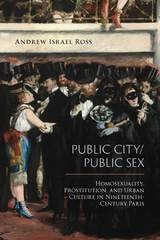
Public City/Public Sex
Homosexuality, Prostitution, and Urban Culture in Nineteenth-Century ParisAndrew Israel Ross
Temple University Press, 2019
In the 1800s, urban development efforts modernized Paris and encouraged the creation of brothels, boulevards, cafés, dancehalls, and even public urinals. However, complaints also arose regarding an apparent increase in public sexual activity, and the appearance of “individuals of both sexes with depraved morals” in these spaces. Andrew Israel Ross’s illuminating study, Public City/Public Sex, chronicles the tension between the embourgeoisement and democratization of urban culture in nineteenth-century Paris and the commercialization and commodification of a public sexual culture, the emergence of new sex districts, as well as the development of gay and lesbian subcultures.
Public City/Public Sex examines how the notion that male sexual desire required suitable outlets shaped urban policing and development. Ross traces the struggle to control sex in public and argues that it was the very effort to police the city that created new opportunities for women who sold sex and men who sought sex with other men. Placing public sex at the center of urban history, Ross shows how those who used public spaces played a central role in defining the way the city was understood.
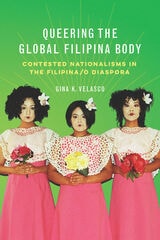
Queering the Global Filipina Body
Contested Nationalisms in the Filipina/o DiasporaGina K. Velasco
University of Illinois Press, 2020
Using a queer diasporic analysis, Velasco examines the politics of nationalism within Filipina/o American cultural production to consider an essential question: can a queer and feminist imagining of the diaspora reconcile with gendered tropes of the Philippine nation? Integrating a transnational feminist analysis of globalized gendered labor with a consideration of queer cultural politics, Velasco envisions forms of feminist and queer diasporic belonging, while simultaneously foregrounding nationalist movements as vital instruments of struggle.

Scandalous Practices
Homosexuality, Male Prostitution, and Sexual Citizenship in Post-Fascist ItalyAlessio Ponzio
Temple University Press, 2027
From the 1940s to the 1970s, homosexual men in Italy began to express themselves authentically after years of silence under Fascist repression. In Scandalous Practices, Alessio Ponzio deftly recounts the socio-cultural shifts that occurred for queer Italians during this period.
In tabloids and other publications, journalists sensationalized same-sex male prostitution, dramatized scandalous homosexual murders, and portrayed homosexuality as devious, dangerous, and threatening to the “new” post-war masculinity. Homosexual Italians responded to this public shaming and these negative stereotypes through resistance. As part of an ongoing struggle for gender and sexual equality, they established networks and created public discussions that engendered pride, rights awareness, and a political commitment to emancipation.
Ponzio meticulously details how Italy as a nation and culture dealt with emerging representation of queer sexuality through a reinvention that fomented self-understanding and self-representations. Instead of marginalizing it, the popular media unintentionally made homosexuality understandable to many who did not know what it was or could not make sense of their own desires. Scandalous Practices illustrates how this new sexual knowledge spread publicly across social classes and fostered the development of positive queer identities and communities.
In the series Sexuality Studies
Sex Tourism in Bahia
Ambiguous EntanglementsErica Lorraine Williams
University of Illinois Press, 2013
Sex Workers, Psychics, and Numbers Runners
Black Women in New York City's Underground EconomyLaShawn Harris
University of Illinois Press, 2016

Sex in the Middle East and North Africa
L. L. Wynn
Vanderbilt University Press, 2022
The book is organized into three sections: Single and Dating, Engaged and Married, and It's Complicated. The allusion to categories of relationship status on social media is at once a nod to the compulsion to categorize, recognition of the many ways that categorization is rarely straightforward, and acknowledgment that much of the intimate lives described by the contributors is mediated by online technologies.
Sex, Power, and Slavery
Gwyn Campbell
Ohio University Press, 2014
Sexual exploitation was and is a critical feature of enslavement. Across many different societies, slaves were considered to own neither their bodies nor their children, even if many struggled to resist. At the same time, paradoxes abound: for example, in some societies to bear the children of a master was a potential route to manumission for some women. Sex, Power, and Slavery is the first history of slavery and bondage to take sexuality seriously.
Twenty-six authors from diverse scholarly backgrounds look at the vexed, traumatic intersections of the histories of slavery and of sexuality. They argue that such intersections mattered profoundly and, indeed, that slavery cannot be understood without adequate attention to sexuality. Sex, Power, and Slavery brings into conversation historians of the slave trade, art historians, and scholars of childhood and contemporary sex trafficking. The book merges work on the Atlantic world and the Indian Ocean world and enables rich comparisons and parallels between these diverse areas.
Contributors: David Brion Davis, Martin Klein, Richard Hellie, Abdul Sheriff, Griet Vankeerberghen, E. Ann McDougall, Matthew S. Hopper, Marie Rodet, George La Rue, Ulrike Schmieder, Tara Iniss, Mariana Candido, James Francis Warren, Johanna Ransmeier, Roseline Uyanga with Marie-Luise Ermisch, Francesca Ann Louise Mitchell, Shigeru Sato, Gabeba Baderoon, Charmaine Nelson, Ana Lucia Araujo, Brian Lewis, Ronaldo Vainfas, Salah Trabelsi, Joost Coté, Sandra Evers, and Subho Basu
Sexual Labor in the Athenian Courts
Allison Glazebrook
University of Texas Press, 2021
Oratory is a valuable source for reconstructing the practices, legalities, and attitudes surrounding sexual labor in classical Athens. It provides evidence of male and female sex laborers, sex slaves, brothels, sex traffickers, the cost of sex, contracts for sexual labor, and manumission practices for sex slaves. Yet the witty, wealthy, and independent hetaira, well-known from other genres, does not feature. Its detailed narratives and character portrayals provide a unique discourse on sexual labor and reveal the complex relationship between such labor and Athenian society.
Through a holistic examination of five key speeches, Sexual Labor in the Athenian Courts considers how portrayals of sex laborers intersected with gender, the body, sexuality, the family, urban spaces, and the polis in the context of the Athenian courts. Drawing on gender theory and exploring questions of space, place, and mobility, Allison Glazebrook shows how sex laborers represented a diverse set of anxieties concerning social legitimacy and how the public discourse about them is in fact a discourse on Athenian society, values, and institutions.
Slavery and Sexuality in Classical Antiquity
Edited by Deborah Kamen and C. W. Marshall
University of Wisconsin Press, 2021
Slavery and Sexuality in Classical Antiquity reveals the often hidden and contradictory attitudes concerning the sexual identities and expression of enslaved people. These individuals were typically objectified by both social convention and legal description but were also recognized as human subjects, with subjectivity and sexual desires of their own. The contributors provoke valuable and fascinating questions that not only recognize the trauma and struggles of enslaved people but also point to the apparent inconsistencies in the mindsets of the enslavers. The resulting volume expands our understanding of both sexuality and slavery in ancient Greece and Rome, as separate subjects and as they impacted each other.
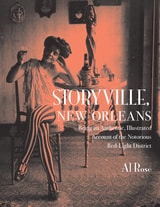
Storyville, New Orleans
Being an Authentic, Illustrated Account of the Notorious Red-Light DistrictAl Rose
University of Alabama Press, 1978
A true-to-life impression of Storyville, the only legally established red light district in the US
At the turn of the twentieth-century, there were hundreds of red-light districts in the United States, ranging in size from a discreet “house” or two in or near small towns and cities to block after bawdy block of brothels in larger cities such as Chicago and San Francisco. Storyville, New Orleans: Being an Authentic, Illustrated Account of the Notorious Red Light District seeks to offer the reader a reasonably true-to-life impression of Storyville, the most famous of the large districts and the only such district in the United States that was legally established.
Storyville was an area, carefully defined by law, outside of which prostitutes or women “notoriously abandoned to lewdness” were not permitted to live or work. Prostitutes working within the District were considered to be engaged in legal enterprises so long as they confined themselves to prostitution and other related activities such as dispensing food and drink to their customers.
From the early days of the French colony of Louisiana, a great number of prostitutes, women from correctional centers, and those with so-called “loose morals” were transported to the New World, resulting in a large proportion of the earliest female residents in New Orleans engaging in prostitution. During the course of Storyville’s legal existence from January 1, 1898 to November 12, 1917—it is evident that in establishing this district the New Orleans city council acted out of a sense of frustration after decades of attempting to deal rationally with a serious social problem. As the author says in the preface, “You may see this as a disorderly book about disorderly houses—and so it may be. But I doubt you will find it dull.”
Systemic Silencing
Activism, Memory, and Sexual Violence in IndonesiaKatharine E. McGregor
University of Wisconsin Press, 2023
The Compassionate Court?
Support, Surveillance, and Survival in Prostitution Diversion ProgramsCorey S. Shdaimah, Chrysanthi S. Leon, and Shelly A. Wiechelt
Temple University Press, 2023
The authors of The Compassionate Court? provide case studies of such programs and draw upon interviews and observations conducted over a decade to reveal how participants and professionals perceive court-affiliated PDPs, clients, and staff. Considering the motivations, vision, and goals of these programs as well as their limitations—the inequity and disempowerment of their participants—the authors also present their own changing perspectives on prostitution courts, diversion programs, and criminalization of sex work.
The Economy of Prostitution in the Roman World
A Study of Social History and the BrothelThomas A. J. McGinn
University of Michigan Press, 2004
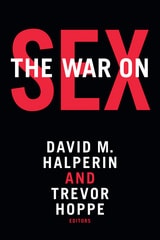
The War on Sex
David M. Halperin and Trevor Hoppe, editors
Duke University Press, 2017

Touching Encounters
Sex, Work, and Male-for-Male Internet EscortingKevin Walby
University of Chicago Press, 2012

Trafficking Women’s Human Rights
Julietta Hua
University of Minnesota Press, 2011
The history of human beings bought and sold, forced into lives of abject servitude or sexual slavery, is a story as old as civilization and yet still of global concern today. How this story is told, Julietta Hua argues, says much about our cultural beliefs. Through a critical inquiry into representations of human trafficking, she reveals the political, social, and cultural strains underlying our current preoccupation with this issue and the difficulty of framing human rights in universal terms.
In Trafficking Women’s Human Rights, Hua maps the ways in which government, media, and scholarship have described sex trafficking for U.S. consumption. As her investigation takes us from laws like the Victims of Trafficking and Violence Protection Act to political speeches and literary and media images, it uncovers dark assumptions about race, difference, and the United States’ place in the world expressed—and often promoted—by such images. The framing itself, exploiting dichotomies of victim/agent, rescued/rescuer, trafficked/smuggled, illustrates the limits of universalism in addressing human rights.
Uniquely broad in scope, this work considers the laws of human trafficking in conjunction with popular culture. In doing so, it constructively draws attention to the ways in which notions of racialized sexualities form our ideas about national belonging, global citizenship, and, ultimately, human rights.
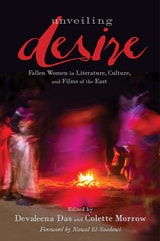
Unveiling Desire
Fallen Women in Literature, Culture, and Films of the EastDas, Devaleena
Rutgers University Press, 2018
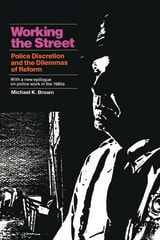
Working the Street
Police Discretion and the Dilemmas of ReformMichael K. Brown
Russell Sage Foundation, 1981
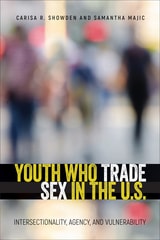
Youth Who Trade Sex in the U.S.
Intersectionality, Agency, and VulnerabilityCarisa R. Showden and Samantha Majic
Temple University Press, 2018
When cases of domestic minor sex trafficking (DMST) by predatory men are reported in the media, it is often presented that a young, innocent girl has been abused by bad men with their demand for sex and profit. This narrative has shaped popular understandings of young people in the commercialized sex trades, sparking new policy responses. However, the authors of Youth Who Trade Sex in the U.S. challenge this dominant narrative as incomplete. Carisa Showden and Samantha Majic investigate young people’s engagement in the sex trades through an intersectional lens.
The authors examine the dominant policy narrative’s history and the political circumstances generating its emergence and current form. With this background, Showden and Majic review and analyze research published since 2000 about young people who trade sex since 2000 to develop an intersectional “matrix of agency and vulnerability” designed to improve research, policy, and community interventions that center the needs of these young people. Ultimately, they derive an understanding of the complex reality for most young people who sell or trade sex, and are committed to ending such exploitation.