Results by title
28 books match the query 'Protestant'
A Particular Place
Urban Restructuring and Religious Ecology in a Southern ExurbEiesland, Nancy L
Rutgers University Press, 2000
A Particular Place tells the story of the dramatic changes that take place in the religious lives of a community faced with urban restructuring—in this case, Dacula, Georgia, a once-quiet small town on the outskirts of Atlanta. The demographics of Dacula were changed dramatically by the population inflow, service sector development, and housing expansion brought on by the growing metropolis.
Nancy L. Eiesland provides a qualitative study of how the local religious congregations altered themselves, their relations with one another, and—over time—their community in light of this disruption to their social order. Eiesland accounts for these changes by examining the lives of area newcomers and long-time residents, discussing the responses of locals to the emergence of a megachurch in their community, investigating the wrenching processes of congregational birth and deaths, and studying responses to community conflicts.Applying population ecology approaches to the study of religious organizations within their local contexts, A Particular Place addresses together two types of restructuring that are often mutually implicated—urban and religious restructuring. This book demonstrates all that can be learned from studious attention to a particular place.
A Perturbed System
Religion and Climate Change from the End of a WorldSusannah Crockford
University of Chicago Press, 2026
Our ecological system is disturbed, and with it, every other system we’ve built to inhabit it. We do not face inevitable destruction, yet many of us cannot conceive of climate change as anything but the end of the world, an apocalypse with all its biblical trappings. Why?
In A Perturbed System, anthropologist Susannah Crockford argues that we must understand the climate emergency as a spiritual crisis, a result of Christian colonialism that we (religious or not) still struggle to describe without religious language. Climate discourse in the United States and northern Europe, Crockford shows, is framed by the same theological motifs that drove extraction, including ideas about prophecy, mediation, sacrifice, original sin, cult, messiah, and apocalypse. By listening to people on the edge of the crisis, A Perturbed System reveals a world in transition, what happens when worlds end—ecologically, socially, politically, and personally—and how we might live through these endings together.
American Evangelicals and the 1960s
Edited by Axel R. Schäfer
University of Wisconsin Press, 2013
Awkward Rituals
Sensations of Governance in Protestant AmericaDana W. Logan
University of Chicago Press, 2022
In the years between the American Revolution and the Civil War, there was an awkward persistence of sovereign rituals, vestiges of a monarchical past that were not easy to shed. In Awkward Rituals, Dana Logan focuses our attention on these performances, revealing the ways in which governance in the early republic was characterized by white Protestants reenacting the hierarchical authority of a seemingly rejected king. With her unique focus on embodied action, rather than the more common focus on discourse or law, Logan makes an original contribution to debates about the relative completeness of America’s Revolution.
Awkward Rituals theorizes an under-examined form of action: rituals that do not feel natural even if they sometimes feel good. This account challenges common notions of ritual as a force that binds society and synthesizes the self. Ranging from Freemason initiations to evangelical societies to missionaries posing as sailors, Logan shows how white Protestants promoted a class-based society while simultaneously trumpeting egalitarianism. She thus redescribes ritual as a box to check, a chore to complete, an embarrassing display of theatrical verve. In Awkward Rituals, Logan emphasizes how ritual distinctively captures what does not change through revolution.
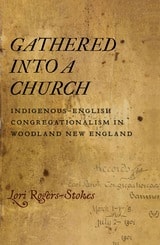
Gathered into a Church
Indigenous-English Congregationalism in Woodland New EnglandLori Rogers-Stokes
University of Massachusetts Press, 2025
Uncovering how and where Indigenous and settler communities found common ground using newly public church records
Puritans in the American colonies created Congregationalism, a Protestant denomination where power rested in each congregation rather than a larger central body. As has often been told, the official Puritan mission included outreach to Indigenous people. This may appear as nothing more than forced conversion under colonization, but church records from Massachusetts—digitized and made public for the first time—reveal the authenticity of this Indigenous religious experience, as evidenced by commonalities between the Congregational way and some aspects of local Native American cultures. The records also show how the decentralized churches stood in contrast to a growing civil government in the colonies.
Lori Rogers-Stokes focuses on the Massachusetts Bay Colony during the decades around the turn of the eighteenth century, a period bookended by King Philip’s War and the First Great Awakening. She uses as her primary source the many records kept by individual Congregational churches of the time. These records, accumulated over generations, have been missing from the historical record, allowing overly simplistic accounts of this religious community to circulate. With church records now available, Rogers-Stokes reveals a more realistic picture of diverse congregations and contrasts their internal workings—which show inherent flexibility and a focus on a shared creation of community—with a developing civil government focused on consolidating power around white landowners. The result is a story that can expand how scholars write about this period, this region, and these communities, both settler and Indigenous.
Harbingers of Hope
William E. Hull
University of Alabama Press, 2007
The journey to which this book beckons has five stages. At the outset we meet a restless God of surprises who is never satisfied with things as they are. This encounter discloses the necessity of making transforming changes in our lives if we are to keep pace with the divine dynamic. Our reorientation toward an attitude of expectancy is not an end itself but provides the impetus for a lifelong process of growth toward maturity. Because this quest takes place in a world resistant to changes that challenge the status quo, there will be opposition, setbacks, even defeats that God endures with us as the cost of building a new tomorrow. In that struggle our task is not to flee or to fight but to bear a winsome witness in the confidence that God’s purposes will finally prevail over the human predicament.
Just as the crowing cock is a harbinger of dawn and the robin on the lawn is a harbinger of spring, these 27 messages become harbingers of a steadfast hope, as they help us to anticipate the new future that God is seeking to create for his weary world and as they invite us to actualize that future in the here and now.
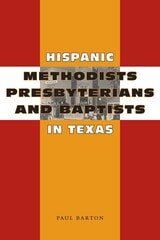
Hispanic Methodists, Presbyterians, and Baptists in Texas
By Paul Barton
University of Texas Press, 2006
The question of how one can be both Hispanic and Protestant has perplexed Mexican Americans in Texas ever since Anglo-American Protestants began converting their Mexican Catholic neighbors early in the nineteenth century. Mexican-American Protestants have faced the double challenge of being a religious minority within the larger Mexican-American community and a cultural minority within their Protestant denominations. As they have negotiated and sought to reconcile these two worlds over nearly two centuries, los Protestantes have melded Anglo-American Protestantism with Mexican-American culture to create a truly indigenous, authentic, and empowering faith tradition in the Mexican-American community.
This book presents the first comparative history of Hispanic Methodists, Presbyterians, and Baptists in Texas. Covering a broad sweep from the 1830s to the 1990s, Paul Barton examines how Mexican-American Protestant identities have formed and evolved as los Protestantes interacted with their two very different communities in the barrio and in the Protestant church. He looks at historical trends and events that affected Mexican-American Protestant identity at different periods and discusses why and how shifts in los Protestantes' sense of identity occurred. His research highlights the fact that while Protestantism has traditionally served to assimilate Mexican Americans into the dominant U.S. society, it has also been transformed into a vehicle for expressing and transmitting Hispanic culture and heritage by its Mexican-American adherents.
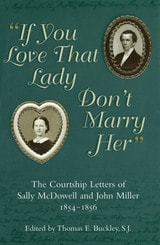
If You Love That Lady Don't Marry Her
The Courtship Letters of Sally Mcdowell and John Miller, 1854-1856Edited by Thomas E. Buckley
University of Missouri Press, 2000
"Could you love me so much that if the whole world turned against us, & we were obliged to live alone, given up by society you could live entirely in me? Could I ever become all the world to you?" --John Miller to Sally McDowell, February 21, 1855
"At last I come to tell you that I am yours. And I pray God to bless us not only in each other but to each other, and to grant us His favor and protection in the important step we are about to take.
If even to this hour I have fears and misgivings, and am disturbed by doubts and anxieties you must forgive me. They grow out of a condition of things as painful as it is unalterable, and out of an anxious temper which is, I think, like dear little Allie's ticklishness "constitutional." They are entirely without justification in anything I know or believe of you for I have the very fullest trust in your affection, and every confidence in your high and honorable character. But the cloud that rests upon the past with me does obscure the present to us both and looks portentous for the future. Yet you must take me with it all. Perhaps I may by and by prove to be something else than a burden to you; and at any rate, my affection is of some value to you, isn't it?" --Sally McDowell to John Miller, April 30, 1855
"If You Love That Lady Don't Marry Her" is a fascinating collection of almost five hundred letters between John Miller (1819-1895) and Sally Campbell Preston McDowell (1821-1895). Their correspondence began in early August 1854 and continued until their marriage in November 1856. The oldest daughter of the late Governor James McDowell of Virginia, Sally McDowell owned and managed Colalto, the family plantation. She was considered part of the South's social and political elite. John Miller, a widower with two young children, was a Presbyterian minister in Philadelphia. Son of Samuel Miller, a founder of Princeton Theological Seminary, he was one of the North's most prominent clergymen.
McDowell and Miller literally fell in love by mail, but one major obstacle blocked their marriage: Sally McDowell was a divorced woman. She had been wed to Governor Francis Thomas of Maryland, but his jealousy and cruelty soon drove her from Annapolis. Although an 1846 legislative divorce freed her to remarry legally, it was not socially acceptable to do so, especially not to "a man of the cloth." So when Miller and McDowell announced their plan to marry, social pressure cost him his pulpit and made her the object of extreme criticism from family members and friends. Although Miller was initially determined to wed despite any opposition, he eventually settled for a long-term engagement to preserve McDowell's social position.
Apart from a few brief visits, Miller and McDowell's relationship depended entirely upon letters. Begun in carefully guarded terms, these letters soon evolved into intimate explorations of their deepening love, their respective gender roles, the problems created by divorce, and religious and familial obligations. McDowell provides the unusual feminist perspective of a divorced woman in mid-nineteenth-century America. As she probes her own inner world, her correspondence with Miller becomes a healing experience through which she gradually surmounts the limitations she experiences as a woman, her depression and the fears resulting from her first marriage, and the stigma of divorce. Ultimately her self- revelations lead to their marriage in November 1856, which lasted until their deaths a week apart almost forty years later.
Because of their unique situation, Miller and McDowell committed to paper the private thoughts and feelings that most couples would have expressed in person. Although their personal relationship forms the principal subject of these letters, the couple also discussed such issues as the growing sectional tensions, national and state politics and politicians, literary figures, church meetings and personages, slave management and behavior, and family and community values and attitudes. Eloquently written, these letters offer a unique window on American society on the eve of the Civil War. They also reveal important information about gender roles and relationship in nineteenth-century America. Because no other book like this exists in print, readers everywhere will welcome "If You Love That Lady Don't Marry Her."
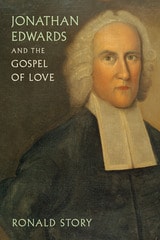
Jonathan Edwards and the Gospel of Love
Ronald Story
University of Massachusetts Press, 2012
Jonathan Edwards has long epitomized the Puritan preacher as fiery scold, fixated on the inner struggle of the soul and the eternal flames of hell. In this book, Ronald Story offers a fundamentally different view of Edwards, revealing a profoundly social minister who preached a gospel of charity and community bound by love.
The first chapters trace Edwards's life and impact, examine his reputation as an intellectual, Calvinist, and revivalist, and highlight the importance for him of the gentler, more compassionate concepts of light, harmony, beauty, and sweetness. Story then explains what Edwards means by the “Gospel of Love”—a Christian faith that is less individual than interpersonal, and whose central feature is the practice of charity to the poor and the quest for loving community in this world, the chief signs of true salvation. As Edwards preached in his sermon “Heaven Is a World of Love,” the afterlife itself is social in nature because love is social.
Drawing on Edwards's own sermons and notebooks, Story reveals the minister's belief that divine love expressed in the human family should take us beyond tribalism, sectarianism, provincialism, and nationality. Edwards offers hope, in the manner of Walter Rauschenbusch, Karl Barth, Martin Luther King Jr., and other great “improvers,” for the coming of a world without want and war. Gracefully and compellingly written, this book represents a new departure in Edwards studies, revising the long-standing yet misleading stereotype of a man whose lessons of charity, community, and love we need now more than ever.
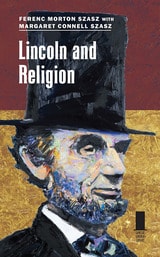
Lincoln and Religion
Ferenc Morton Szasz with Margaret Connell Szasz
Southern Illinois University Press, 2014
Abraham Lincoln’s faith has commanded more broad-based attention than that of any other American president. Although he never joined a denomination, Baptists, Presbyterians, Quakers, Episcopalians, Disciples of Christ, Spiritualists, Jews, and even atheists claim the sixteenth president as one of their own. In this concise volume, Ferenc Morton Szasz and Margaret Connell Szasz offer both an accessible survey of the development of Lincoln’s religious views and an informative launch pad for further academic inquiry. A singular key to Lincoln’s personality, especially during the presidential years, rests with his evolving faith perspective.
After surveying Lincoln’s early childhood as a Hard-Shell Baptist in Kentucky and Indiana, the authors chronicle his move from skepticism to participation in Episcopal circles during his years in Springfield, and, finally, after the death of son Eddie, to Presbyterianism. They explore Lincoln’s relationship with the nation’s faiths as president, the impact of his son Willie’s death, his adaptation of Puritan covenant theory to a nation at war, the role of prayer during his presidency, and changes in his faith as reflected in the Emancipation Proclamation and his state papers and addresses. Finally, they evaluate Lincoln’s legacy as the central figure of America’s civil religion, an image sharpened by his prominent position in American currency.
A closing essay by Richard W. Etulain traces the historiographical currents in the literature on Lincoln and religion, and the volume concludes with a compilation of Lincoln’s own words about religion.
In assessing the enigma of Lincoln’s Christianity, the authors argue that despite his lack of church membership, Lincoln lived his life through a Christian ethical framework. His years as president, dominated by the Civil War and personal loss, led Lincoln to move into a world beholden to Providence.

New Considerations of the Doctrinal Differences Between Catholics and Protestants
A Defense of My Symbolism Against the Objections of Ferdinad Christian Baur in TübingenJohann Adam Möhler
Catholic University of America Press, 2027
Praying in the Pine Straw
The Camp-Meeting Experience in AlabamaRobert C. Morgan
University of Alabama Press, 2025
Step into the South’s brush arbors and piney woods where faith runs deep, stories run wild, and the old-time camp meeting was anything but quiet.
Praying in Pine Straw immerses readers in the raw, rollicking, and deeply human world of Alabama’s camp meetings—a Southern tradition where fire-and-brimstone preaching echoed through pine forests and where faith was often accompanied by contradiction. From “treeing the Devil” to “holy laughter,” these revivals blended heartfelt worship with all the complications of human nature. Mule-drawn wagons brought the faithful to rustic camps, where gospel fervor mingled with whiskey traders, local politicians, and opportunists of every kind. Preachers thundered against sin—even as they sometimes flirted with it themselves.
Robert C. Morgan offers a textured portrait of camp meetings as both spiritual experience and cultural spectacle, reviving a Southern tradition that flourished from the late nineteenth to mid-twentieth centuries. With a blend of humor and keen insight, Praying in the Pine Straw unveils the enduring contradictions of “old-time religion” and its significant influence on Southern culture and faith—a legacy that is both treasured and complex.
Protestant and Roman Catholic Ethics
Prospects for RapprochementJames M. Gustafson
University of Chicago Press, 1978
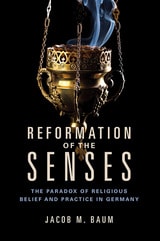
Reformation of the Senses
The Paradox of Religious Belief and Practice in GermanyJacob M. Baum
University of Illinois Press, 2018
Reforming Empire
Protestant Colonialism and Conscience in British LiteratureChristopher Hodgkins
University of Missouri Press, 2002
“The strength of Empire,” wrote Ben Jonson, “is in religion.” In Reforming Empire, Christopher Hodgkins takes Jonson’s dictum as his point of departure, showing how for more than four centuries the Protestant imagination gave the British Empire its main paradigms for dominion and also, ironically, its chief languages of anti-imperial dissent. From Edmund Spenser’s Faerie Queene to Rudyard Kipling’s “The Man Who Would Be King,” English literature about empire has turned with strange constancy to themes of worship and idolatry, atrocity and deliverance, slavery and service, conversion, prophecy, apostasy, and doom.
Focusing on the work of the Protestant imagination from the Renaissance origins of English overseas colonization through the modern end of England’s colonial enterprise, Hodgkins organizes his study around three kinds of religious binding—unification, subjugation, and self-restraint. He shows how early modern Protestants like Hakluyt and Spenser reformed the Arthurian chronicles and claimed to inherit Rome’s empire from the Caesars: how Ralegh and later Cromwell imagined a counterconquest of Spanish America, and how Milton’s Satan came to resemble Cortés; how Drake and the fictional Crusoe established their status as worthy colonial masters by refusing to be worshiped as gods; and how seventeenth-century preachers, poets, and colonists moved haltingly toward a racist metaphysics—as Virginia began by celebrating the mixed marriage of Pocahontas but soon imposed the draconian separation of the Color Line.
Yet Hodgkins reveals that Tudor-Stuart times also saw the revival of Augustinian anti-expansionism and the genesis of Protestant imperial guilt. From the start, British Protestant colonialism contained its own opposite: a religion of self-restraint. Though this conscience often was co-opted or conscripted to legitimize conquests and pacify the conquered, it frequently found memorable and even fierce literary expression in writers such as Shakespeare, Daniel, Herbert, Swift, Johnson, Burke, Blake, Austen, Browning, Tennyson, Conrad, Forster, and finally the anti-Protestant Waugh. Written in a lively and accessible style, Reforming Empire will be of interest to all scholars and students of English literature.
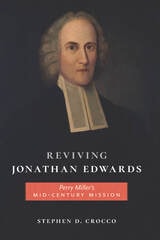
Reviving Jonathan Edwards
Perry Miller’s Mid-Century MissionStephen D. Crocco
University of Massachusetts Press, 2026
The untold story of how an unlikely Harvard atheist helped resurrect one of America’s greatest Puritans
Jonathan Edwards is widely regarded as one of America’s most important and original thinkers. Prior to the mid-twentieth century, however, he was largely unknown to the learned community, except, perhaps, as a preacher of terror due to his well-known sermon, “Sinners in the Hands of an Angry God.” In 1948 and 1949, Harvard professor of English Perry Miller published four pieces on him, including the acclaimed biography, Jonathan Edwards, and only a few years later he became the general editor of Edwards’s collected works. Miller’s efforts helped to resurrect Edwards as America’s greatest Puritan and to solidify him as central to the American experience, and their names have been closely intertwined ever since.
Miller, an iconoclastic scholar widely considered to be the founder of American studies, was known for his brilliant scholarship, devoted teaching, and hard living. Dying prematurely in 1963, he remains an enigmatic and controversial figure, with no biography available. In Reviving Jonathan Edwards, Stephen D. Crocco explores why this Harvard atheist, with an eerie sense that his time was short, delayed work on his planned magnum opus—a sweeping intellectual history of early America—to edit the works of the greatest of all American Puritans.
In a riveting history that combines biographical insight with a detailed look into mid-century academia, Crocco draws on a large body of unpublished correspondence to offer an intricate detective tale of a decades-long publishing endeavor. He provides fresh portraits of Miller and the editorial committee he assembled, which included Sydney Ahlstrom, Roland Bainton, H. Richard Niebuhr, Norman Holmes Pearson, Paul Ramsey, and John E. Smith, and follows the story long after Miller’s death, tracing the repeated, sometimes seemingly intractable challenges that publishing the many volumes on Edwards’s work faced. He concludes by tracing Edwards studies up to 2003, the 300th anniversary of his birth, when the quiet revival of this colonial minister had evolved into a full scholarly renaissance.
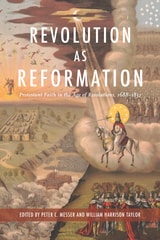
Revolution as Reformation
Protestant Faith in the Age of Revolutions, 1688–1832Edited by Peter C. Messer and William Harrison Taylor
University of Alabama Press, 2021
Essays that explore how Protestants responded to the opportunities and perils of revolution in the transatlantic age
Revolution as Reformation: Protestant Faith in the Age of Revolutions, 1688–1832 highlights the role that Protestantism played in shaping both individual and collective responses to revolution. These essays explore the various ways that the Protestant tradition, rooted in a perpetual process of recalibration and reformulation, provided the lens through which Protestants experienced and understood social and political change in the Age of Revolutions. In particular, they call attention to how Protestants used those changes to continue or accelerate the Protestant imperative of refining their faith toward an improved vision of reformed religion.
The editors and contributors define faith broadly: they incorporate individuals as well as specific sects and denominations, and as much of “life experience” as possible, not just life within a given church. In this way, the volume reveals how believers combined the practical demands of secular society with their personal faith and how, in turn, their attempts to reform religion shaped secular society.
The wide-ranging essays highlight the exchange of Protestant thinkers, traditions, and ideas across the Atlantic during this period. These perspectives reveal similarities between revolutionary movements across and around the Atlantic. The essays also emphasize the foundational role that religion played in people’s attempts to make sense of their world, and the importance they placed on harmonizing their ideas about religion and politics. These efforts produced novel theories of government, encouraged both revolution and counterrevolution, and refined both personal and collective understandings of faith and its relationship to society.
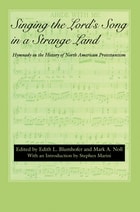
Singing the Lord's Song in a Strange Land
Hymnody in the History of North American ProtestantismEdith L. Blumhofer
University of Alabama Press, 2008
Music and song are important parts of worship, and hymns have long played a central role in Protestant cultural history. This book explores the ways in which Protestants have used and continue to use hymns to clarify their identity and define their relationship with America and to Christianity. Representing seven groups—Baptists, Presbyterians, Lutherans, Mennonites, Holiness, Hispanics, and Evangelicals—the nine essays reveal how hymns have helped immigrants to establish new identities, contributed to the body of worship resources, and sustained ethnic identity.
Individual essays address the music of the Old-Fashioned Revival Hour, America’s longest running and most successful independent radio program; singing among Swedish evangelicals in America; the German hymn tradition as transformed by Mennonite immigrants; the ways hymnody reinforces themes of the Wesleyan holiness movement; the history of Mercer’s Cluster (1810), a southern hymnal that gave voice to slaves, women, and native Americans; and the Presbyterian hymnal tradition in Canada formed by Scottish immigrants.
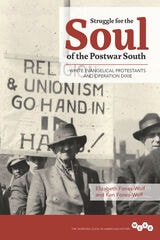
Struggle for the Soul of the Postwar South
White Evangelical Protestants and Operation DixieElizabeth Fones-Wolf and Ken Fones-Wolf
University of Illinois Press, 2015
The authors' nuanced look at working class religion reveals how laborers across the surprisingly wide evangelical spectrum interpreted their lives through their faith. Factors like conscience, community need, and lived experience led individual preachers to become union activists and mill villagers to defy the foreman and minister alike to listen to organizers. As the authors show, however, all sides enlisted belief in the battle. In the end, the inability of northern organizers to overcome the suspicion with which many evangelicals viewed modernity played a key role in Operation Dixie's failure, with repercussions for labor and liberalism that are still being felt today.
Identifying the role of the sacred in the struggle for southern economic justice, and placing class as a central aspect in southern religion, Struggle for the Soul of the Postwar South provides new understandings of how whites in the region wrestled with the options available to them during a crucial period of change and possibility.
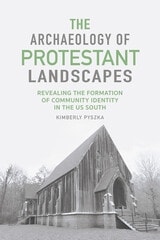
The Archaeology of Protestant Landscapes
Revealing the Formation of Community Identity in the US SouthKimberly Pyszka
University of Alabama Press, 2023
How religious institutions used landscapes and architecture to express their religious and social ideologies
The Archaeology of Protestant Landscapes focuses on three religious institutions in the US South in the eighteenth and nineteenth centuries: St. Paul’s Parish Church in coastal South Carolina, St. Luke’s Episcopal Church in central Alabama, and Cane Hill College in Northwest Arkansas. Drawing from archaeological surveys and excavations, artifact analysis, archival research, geophysical testing, and architectural information on religious structures, Kimberly Pyszka offers case studies of these institutions, which were located in developing communities that varied socially, politically, and economically.
Pyszka uses these case studies to demonstrate that select religious institutions used and modified natural landscape features to create cultural landscapes to express their ideology, identity, goals, and social, religious, and political power. She notes that where those structures were constructed, how they sat on the landscape, their architectural style, and their overall visual appearance were well-considered decisions made by religious leaders to benefit their organizations, communities, and, sometimes, themselves.
Pyszka also uses these case studies to highlight the social roles that religious organizations played in the development of communities. She points to landscape decisions—specifically to how the architectural design of religious structures was used, intentionally or not, to unite people, often those of differing religious backgrounds—as contributing to the creation of a common identity among people living in new and still-growing settlements, aiding in community development. This book contributes to the growing body of work within historical archaeology on churches, churchyards, and cemeteries and to the increasing awareness among archaeologists of how these sites contribute to questions of identity, consumerism, trade, and colonialism.
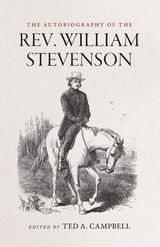
The Autobiography of the Rev. William Stevenson
Ted A. Campbell
Bridwell Press, 2024
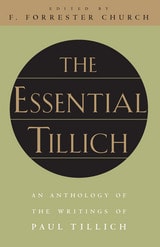
The Essential Tillich
Paul Tillich
University of Chicago Press, 1999
This volume collects Tillich's best and most important work. Editor F. Forrester Church has structured the book around eight key areas of Tillich's thought, titled: Ultimate Concern; Symbols of Faith; The Protestant Principle; Addressing the Situation; Love, Power, and Justice; The Courage to Be; The Future of Religions; and Living on the Boundary. Through them we get a clear picture of the work of a man whom Church describes as “a man of rare genius and perspecuity, a modern man whose heart was in Jerusalem, whose spirit was with the ancient Greeks, and whose soul was committed to a better future.”
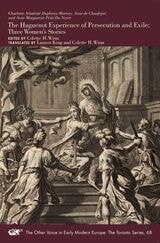
The Huguenot Experience of Persecution and Exile
Three Women’s StoriesCharlotte Arbaleste Duplessis-Mornay, Anne de Chaufepié, and Anne Marguerite Petit Du Noyer
Iter Press, 2019
Edited by Colette H. Winn. Translated by Lauren King and Colette H. Winn
The Other Voice in Early Modern Europe: The Toronto Series, Vol. 68
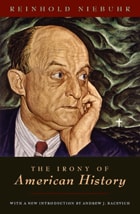
The Irony of American History
Reinhold Niebuhr
University of Chicago Press, 2008
“The supreme American theologian of the twentieth century.”—Arthur Schlesinger Jr., New York Times
“Niebuhr is important for the left today precisely because he warned about America’s tendency—including the left’s tendency—to do bad things in the name of idealism. His thought offers a much better understanding of where the Bush administration went wrong in Iraq.”—Kevin Mattson, The Good Society
“Irony provides the master key to understanding the myths and delusions that underpin American statecraft. . . . The most important book ever written on US foreign policy.”—Andrew J. Bacevich, from the Introduction
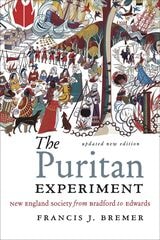
The Puritan Experiment
New England Society from Bradford to EdwardsFrancis J. Bremer
Brandeis University Press, 2026
A revised and updated edition of a classic text on the early puritans.
The Puritan Experiment is an accessible, authoritative account of early New England, one with an enduring appeal for students and general readers. This revised and updated edition explains puritanism while incorporating fresh insights from current scholarship.
Tracing the puritans’ journey from the Old World to America, Francis J. Bremer examines the causes and contexts of the puritan movement and analyzes the cultural, political, and economic revolutions wrought by the movement in both Old and New England. A pioneering text in its field, The Puritan Experiment is sweeping in scope. Bremer’s examination begins with the English Act of Supremacy of 1534 which placed King Henry VIII at the head of the Church of England, and it ends with the death of the puritan theologian Jonathan Edwards in 1758. From meeting house architecture to the Salem witch trials, from relations with Native Americans to the founding of the nation’s first colleges, Bremer details with style and grace how “a living system of faith” profoundly influenced the course of history in the New World.
This illustrated edition includes new information about lay empowerment, the role of women, Native society, and the enslavement of Native Americans and Africans.
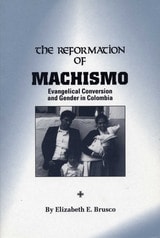
The Reformation of Machismo
Evangelical Conversion and Gender in ColombiaBy Elizabeth E. Brusco
University of Texas Press, 1995
Protestant evangelicalism has spread rapidly in Latin America at the same time that foreign corporations have taken hold of economies there. These concurrent developments have led some observers to view this religious movement as a means of melding converts into a disciplined work force for foreign capitalists rather than as a reflection of conscious individual choices made for a variety of personal, as well as economic, reasons.
In this pioneering study, Elizabeth Brusco challenges such assumptions and explores the intra-household motivations for evangelical conversion in Colombia. She shows how the asceticism required of evangelicals (no drinking, smoking, or extramarital sexual relations are allowed) redirects male income back into the household, thereby raising the living standard of women and children. This benefit helps explain the appeal of evangelicalism for women and questions the traditional assumption that organized religion always disadvantages women.
Brusco also demonstrates how evangelicalism appeals to men by offering an alternative to the more dysfunctional aspects of machismo. Case studies add a fascinating human dimension to her findings.
With the challenges this book poses to conventional wisdom about economic, gender, and religious behavior, it will be important reading for a wide audience in anthropology, women’s studies, economics, and religion. For all students of Latin America, it offers thoughtful new perspectives on a major, grass-roots agent of social change.
The Story upon a Hill
The Puritan Myth in Contemporary American FictionChristopher Leise
University of Alabama Press, 2017
The Story upon a Hill: The Puritan Myth in Contemporary American Fiction analyzes the work of several of the most important contemporary writers in the United States as reinterpreting commonplace narratives of the country’s origins with a keen eye on the effects of inclusion and exclusion that Puritan myths promote. In 1989, Ronald Reagan recalled the words of Massachusetts Bay Colony governor John Winthrop, who imagined the colony as a “city upon a hill” for future nations to emulate. In Reagan’s speech, Winthrop’s signature rhetoric became an emblem of American idealism, and for many Americans, the Puritans’ New England was the place where the United States forged its original identity.
But what if Winthrop never gave that speech? What if he did not even write it? Historians cannot definitively answer these questions. In fact, no group that we refer to as American Puritans thought of themselves as Puritans. Rather, they were a group of dissident Christians often better defined by their disagreements than their shared beliefs.
Literary scholars interested in Anglo-American literary production from the seventeenth century through the present, historians, and readers interested in how ideas about Christianity circulate in popular culture will find fascinating the ways in which William Gaddis, Kurt Vonnegut, Thomas Pynchon, and Marilynne Robinson repurpose so-called Puritan forms of expression to forge a new narrative of New England’s Congregationalist legacy in American letters. Works by Colson Whitehead, Paul Auster, Toni Morrison, and others are also considered. The Story upon a Hill raises a provocative question: if the Puritans never existed as we understand them, what might American history look like in that context?
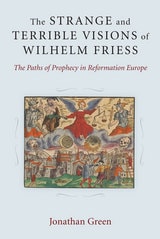
The Strange and Terrible Visions of Wilhelm Friess
The Paths of Prophecy in Reformation EuropeJonathan Green
University of Michigan Press, 2014
Dutch scholars have recognized that Frans Fraet was executed for printing a prognostication by Willem de Vriese, but this prognostication was thought to be lost. A few scholars of sixteenth-century German apocalypticism have briefly noted the prophecies of Wilhelm Friess but have not studied them in depth. The Strange and Terrible Visions of Wilhelm Friess is the first to connect de Vriese and Friess, as well as recognize the prophecy of Wilhelm Friess as an adaptation of a French version of theVademecum of Johannes de Rupescissa, making these pamphlets by far the most widespread source for Rupescissa’s apocalyptic thought in Reformation Germany. The book explains the connection between the first and second prophecies of Wilhelm Friess and discovers the Calvinist context of the second prophecy and its connection to Johann Fischart, one of the most important German writers of the time.
Jonathan Green provides a study of how textual history interacts with print history in early modern pamphlets and proposes a model of how early modern prophecies were created and transmitted. The Strange and Terrible Visions of Wilhelm Friess makes important contributions to the study of early modern German and Dutch literature, apocalypticism and confessionalization during the Reformation, and the history of printing in the sixteenth century.