Results by title
33 books match the query 'Psychic trauma'
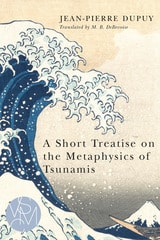
A Short Treatise on the Metaphysics of Tsunamis
Jean-Pierre Dupuy
Michigan State University Press, 2015
Jean-Pierre Dupuy asks whether, from Lisbon to Sumatra, mankind has really learned nothing about evil. When moral crimes are unbearably great, he argues, our ability to judge evil is gravely impaired, and the temptation to regard human atrocity as an attack on the natural order of the world becomes irresistible. This impulse also suggests a kind of metaphysical ruse that makes it possible to convert evil into fate, only a fate that human beings may choose to avoid. Postponing an apocalyptic future will depend on embracing this paradox and regarding the future itself in a radically new way.
The American edition of Dupuy’s classic essay, first published in 2005, also includes a postscript on the 2011 nuclear accident that occurred in Japan, again as the result of a tsunami.
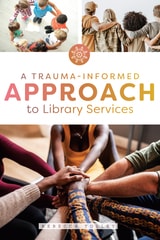
A Trauma-Informed Approach to Library Services
Rebecca Tolley
American Library Association, 2014
We are only now coming to terms with how common trauma really is; a landmark Kaiser study that surveyed patients receiving physicals found that almost two-thirds had experienced at least one form of abuse, neglect, or other trauma as a child. Though originating in the fields of health and social services, trauma-informed care is a framework that holds great promise for application to library work. Empathetic service, positive patron encounters, and a more trusting workplace are only a few of the benefits that this approach offers. In this important book Tolley, experienced in both academic and public libraries, brings these ideas into the library context. Library administrators, directors, and reference and user services staff will all benefit from learning
- the six key principles of trauma-informed care;
- characteristics of a trusting and transparent library organization, plus discussion questions to promote a sense of psychological safety among library workers;
- how certain language and labels can undermine mutuality, with suggested phrases that will help library staff demonstrate neutrality to patron ideas and views during information requests;
- delivery models that empower patrons;
- advice on balancing free speech on campus with students’ need for safety;
- how appropriate furniture arrangement can help people suffering from PTSD feel safe;
- guidance on creating safe zones for LGBTQIA+ children, teens, and adults; and
- self-assessment tools to support change toward trauma-responsive library services.
A Trauma-Informed Framework for Supporting Patrons
The PLA Workbook of Best PracticesThe Public Library Association Social Worker Task Force
American Library Association, 2022
- delve into what trauma is and how it impacts library work;
- be introduced to a framework for utilizing a trauma-informed lens in your interactions;
- practice exercises to spur personal reflection on common concerns bound up with library work and the policies relating to these issues; and
- gain hand-on tools and techniques, including strategies for de-escalation and guidance on the impacts of involving law-enforcement and banning patrons.
You will also explore various scenarios which provide the opportunity to integrate what you’ve learned and practice responding through a trauma-informed lens, including
- Mental Health Challenges
- Sleeping at the Library
- Strong Personal Odor
- Personal Belongings
- Suspected Intoxication/Under the Influence
- Substance Use
- Threatening Verbal and Nonverbal Behavior
- Unsheltered Teens
- Adult Self-Neglect
- Child Abuse or Assault
- Solicitation or Panhandling
- Stealing
- Child Unattended After Closing
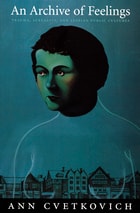
An Archive of Feelings
Trauma, Sexuality, and Lesbian Public CulturesAnn Cvetkovich
Duke University Press, 2003
An Archive of Feelings brings together oral histories from lesbian activists involved in act up/New York; readings of literature by Dorothy Allison, Leslie Feinberg, Cherríe Moraga, and Shani Mootoo; videos by Jean Carlomusto and Pratibha Parmar; and performances by Lisa Kron, Carmelita Tropicana, and the bands Le Tigre and Tribe 8. Cvetkovich reveals how activism, performance, and literature give rise to public cultures that work through trauma and transform the conditions producing it. By looking closely at connections between sexuality, trauma, and the creation of lesbian public cultures, Cvetkovich makes those experiences that have been pushed to the peripheries of trauma culture the defining principles of a new construction of sexual trauma—one in which trauma catalyzes the creation of cultural archives and political communities.
Bible through the Lens of Trauma
Elizabeth Boase
SBL Press, 2016
Explore emerging trends in trauma studies and biblical interpretation
In recent years there has been a surge of interest in trauma, trauma theory, and its application to the biblical text. This collection of essays explores the usefulness of using trauma theory as a lens through which to read the biblical texts. Each of the essays explores the concept of how trauma might be defined and applied in biblical studies. Using a range of different but intersection theories of trauma, the essays reflect on the value of trauma studies for offering new insights into the biblical text. Including contributions from biblical scholars, as well as systematic and pastoral theologians, this book provides a timely critical reflection on this emerging discussion.
Features:
Brothers in Grief
The Hidden Toll of Gun Violence on Black Boys and Their SchoolsNora Gross
University of Chicago Press, 2024
JahSun, a dependable, much-loved senior at Boys’ Prep was just hitting his stride in the fall of 2017. He had finally earned a starting position on the varsity football team and was already weighing two college acceptances. Then, over Thanksgiving, tragedy struck. An altercation at his older sister’s home escalated into violence, killing the unarmed teenager in a hail of bullets. JahSun’s untimely death overwhelmed his entire community, sending his family, friends, and school into seemingly insurmountable grief. Worse yet, that spring two additional Boys’ Prep students would be shot to death in their neighborhood. JahSun and his peers are not alone in suffering the toll of gun violence, as every year in the United States teenagers die by gunfire in epidemic numbers, with Black boys most deeply affected.
Brothers in Grief closely attends to the neglected victims of youth gun violence: the suffering friends and classmates who must cope, mostly out of public view, with lasting grief and hidden anguish. Set at an ambitious urban high school for boys during the heartbreaking year following the death of JahSun, the book chronicles the consequences of untimely death on Black teen boys and on a school community struggling to recover. Sociologist Nora Gross tells the story of students attempting to grapple with unthinkable loss, inviting readers in to observe how they move through their days at school and on social media in the aftermath of their friends’ and classmates’ deaths. Gross highlights the discrepancy between their school’s educational mission and teachers’ and administrators’ fraught attempts to care for students’ emotional wellbeing. In the end, the school did not provide adequate space for grief, making it more difficult for students to heal, reengage with school, and imagine hopeful futures. Even so, supportive relationships deepened among students and formed across generations, offering promising examples of productive efforts to channel student grief into positive community change.
A searing testimony of our collective failure to understand the inner lives of our children in crisis, Brothers in Grief invites us all to wrestle with the hidden costs of gun violence on racial and educational inequity.
Chronicling Trauma
Journalists and Writers on Violence and LossDoug Underwood
University of Illinois Press, 2011
To attract readers, journalists have long trafficked in the causes of trauma--crime, violence, warfare--as well as psychological profiling of deviance and aberrational personalities. Novelists, in turn, have explored these same subjects in developing their characters and by borrowing from their own traumatic life stories to shape the themes and psychological terrain of their fiction. In this book, Doug Underwood offers a conceptual and historical framework for comprehending the impact of trauma and violence in the careers and the writings of important journalist-literary figures in the United States and British Isles from the early 1700s to today.
Grounded in the latest research in the fields of trauma studies, literary biography, and the history of journalism, this study draws upon the lively and sometimes breathtaking accounts of popular writers such as Charles Dickens, Ernest Hemingway, Dorothy Parker, Graham Greene, and Truman Capote, exploring the role that trauma has played in shaping their literary works. Underwood notes that the influence of traumatic experience upon journalistic literature is being reshaped by a number of factors, including news media trends, the advance of the Internet, the changing nature of the journalism profession, the proliferation of psychoactive drugs, and journalists' greater self-awareness of the impact of trauma in their work.
The most extensive scholarly examination of the role that trauma has played in the shaping of our journalistic and literary heritage, Chronicling Trauma: Journalists and Writers on Violence and Loss discusses more than a hundred writers whose works have won them fame, even at the price of their health, their families, and their lives.
Contesting Childhood
Autobiography, Trauma, and MemoryDouglas, Kate
Rutgers University Press, 2010
Drawing on trauma and memory studies and theories of authorship and readership, Contesting Childhood offers commentary on the triumphs, trials, and tribulations that have shaped this genre. Douglas examines the content of the narratives and the limits of their representations, as well as some of the ways in which autobiographies of youth have become politically important and influential. This study enables readers to discover how stories configure childhood within cultural memory and the public sphere.
Embodying American Slavery in Contemporary Culture
Lisa Woolfork
University of Illinois Press, 2008
Extremities
Trauma, Testimony, and CommunityEdited by Nancy K. Miller and Jason Tougaw
University of Illinois Press, 2002
How do we come to terms with what can't be forgotten?
How do we bear witness to extreme experiences that challenge the limits of language? This remarkable volume explores the emotional, political, and aesthetic dimensions of testimonies to trauma as they translate private anguish into public space. Nancy K. Miller and Jason Tougaw have assembled a collection of essays that trace the legacy of the Holocaust and subsequent events that have shaped twentieth-century history and still haunt contemporary culture.
Extremities combines personal and scholarly approaches to a wide range of texts that bear witness to shocking and moving accounts of individual trauma: Toni Morrison's Beloved, Sylvia Plath's "Daddy" and "Lady Lazarus," Kathryn Harrison's The Kiss, Tatana Kellner's Holocaust art, Ruth Klüger's powerful memoir Still Alive, and Binjamin Wilkomirski's controversial narrative of concentration camp suffering Fragments. The book grapples with the cultural and social effects of historical crises, including the Montreal Massacre, the Warsaw Ghetto Uprising, and the medical catastrophes of HIV/AIDS and breast cancer.
Developing insights from autobiography, psychoanalysis, feminist theory and gender studies, the authors demonstrate that testimonies of troubling and taboo subjects do more than just add to the culture of confession–-they transform identities and help reimagine the boundaries of community. Extremities offers an original and timely interpretive guide to the growing field of trauma studies. The volume includes essays by Ross Chambers, Sandra M. Gilbert, Susan Gubar, Marianne Hirsch, Wayne Koestenbaum, Eve Kosofsky Sedgwick, and others.
Fourteen Stories, None of Them Are Yours
A NovelLuke B. Goebel
University of Alabama Press, 2014
Haunting the Korean Diaspora
Shame, Secrecy, and the Forgotten WarGrace M. Cho
University of Minnesota Press, 2008
Grace M. Cho exposes how Koreans in the United States have been profoundly affected by the forgotten war and uncovers the silences and secrets that still surround it, arguing that trauma memories have been passed unconsciously through a process psychoanalysts call “transgenerational haunting.” Tracing how such secrets have turned into “ghosts,” Cho investigates the mythic figure of the yanggongju, literally the “Western princess,” who provides sexual favors to American military personnel. She reveals how this figure haunts both the intimate realm of memory and public discourse, in which narratives of U.S. benevolence abroad and assimilation of immigrants at home go unchallenged. Memories of U.S. violence, Cho writes, threaten to undo these narratives—and so they have been rendered unspeakable.
At once political and deeply personal, Cho’s wide-ranging and innovative analysis of U.S. neocolonialism and militarism under contemporary globalization brings forth a new way of understanding—and remembering—the impact of the Korean War.
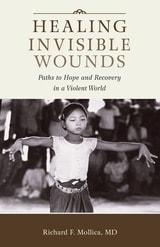
Healing Invisible Wounds
Paths to Hope and Recovery in a Violent WorldRichard F. Mollica
Vanderbilt University Press, 2006
Here is how Neil Boothby, Director of the Program on Forced Migration and Health at the Mailman School of Public Health, Columbia University, describes the book:
"Mollica provides a wealth of ethnographic and clinical evidence that suggests the human capacity to heal is innate--that the 'survival instinct' extends beyond the physical to include the psychological as well. He enables us to see how recovery from 'traumatic life events' needs to be viewed primarily as a 'mystery' to be listened to and explored, rather than solely as a 'problem' to be identified and solved. Healing involves a quest for meaning--with all of its emotional, cultural, religious, spiritual and existential attendants--even when bio-chemical reactions are also operative."
Healing Invisible Wounds reveals how trauma survivors, through the telling of their stories, teach all of us how to deal with the tragic events of everyday life. Mollica's important discovery that humiliation--an instrument of violence that also leads to anger and despair--can be transformed through his therapeutic project into solace and redemption is a remarkable new contribution to survivors and clinicians.
This book reveals how in every society we have to move away from viewing trauma survivors as "broken people" and "outcasts" to seeing them as courageous people actively contributing to larger social goals. When violence occurs, there is damage not only to individuals but to entire societies, and to the world. Through the journey of self-healing that survivors make, they enable the rest of us not only as individuals but as entire communities to recover from injury in a violent world.
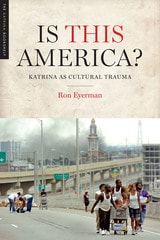
Is This America?
Katrina as Cultural TraumaBy Ron Eyerman
University of Texas Press, 2015
From police on the street, to the mayor of New Orleans and FEMA administrators, government officials monumentally failed to protect the most vulnerable residents of New Orleans and the Gulf Coast during the Katrina disaster. This violation of the social contract undermined the foundational narratives and myths of the American nation and spawned a profound, often contentious public debate over the meaning of Katrina’s devastation. A wide range of voices and images attempted to clarify what happened, name those responsible, identify the victims, and decide what should be done. This debate took place in forums ranging from mass media and the political arena to the arts and popular culture, as various narratives emerged and competed to tell the story of Katrina.
Is This America? explores how Katrina has been constructed as a cultural trauma in print media, the arts and popular culture, and television coverage. Using stories told by the New York Times, New Orleans Times-Picayune, Time, Newsweek, NBC, and CNN, as well as the works of artists, writers, musicians, filmmakers, and graphic designers, Ron Eyerman analyzes how these narratives publicly articulated collective pain and loss. He demonstrates that, by exposing a foundational racial cleavage in American society, these expressions of cultural trauma turned individual experiences of suffering during Katrina into a national debate about the failure of the white majority in the United States to care about the black minority.
Learning from the High Priestess
Affect, Femme Care, and Somatic PracticeAnn Cvetkovich
Duke University Press, 2026
Millennial Style
The Politics of Experiment in Contemporary African Diasporic CultureAliyyah I. Abdur-Rahman
Duke University Press, 2024
Navigating Difficult Situations in Public Libraries
The PLA Guide to Trauma-Informed De-EscalationMargaret Ann Paauw
American Library Association, 2025
- a succinct overview of how to define and understand trauma, including its definition, causes, effects, and manifestations;
- evidence-informed approaches drawn from the fields of social work, psychology, and counseling;
- dozens of activities, handouts, and worksheets designed to spur reflection and help readers build upon the practices introduced in the book;
- guidance on debriefing, evaluation, facing compassion fatigue, and other aftercare topics; and
- appendices that provide information on mental health resources, crisis intervention hotlines, and further reading on trauma and burnout.
Phoenix Zones
Where Strength Is Born and Resilience LivesHope Ferdowsian, MD
University of Chicago Press, 2018
With Phoenix Zones, Dr. Hope Ferdowsian shows us how. Ferdowsian has spent years traveling the world to work with people and animals who have endured trauma—war, abuse, displacement. Here, she combines compelling stories of survivors with the latest science on resilience to help us understand the link between violence against people and animals and the biological foundations of recovery, peace, and hope. Taking us to the sanctuaries that give the book its title, she reveals how the injured can heal and thrive if we attend to key principles: respect for liberty and sovereignty, a commitment to love and tolerance, the promotion of justice, and a fundamental belief that each individual possesses dignity. Courageous tales show us how: stories of combat veterans and wolves recovering together at a California refuge, Congolese women thriving in one of the most dangerous places on earth, abused chimpanzees finding peace in a Washington sanctuary, and refugees seeking care at Ferdowsian’s own medical clinic.
These are not easy stories. Suffering is real, and recovery is hard. But resilience is real, too, and Phoenix Zones shows how we can foster it. It reveals how both people and animals deserve a chance to live up to their full potential—and how such a view could inspire solutions to some of the greatest challenges of our time.
Radioactive Ghosts
Gabriele Schwab
University of Minnesota Press, 2020
A pioneering examination of nuclear trauma, the continuing and new nuclear peril, and the subjectivities they generate
Amid resurgent calls for widespread nuclear energy and “limited nuclear war,” the populations that must live with the consequences of these decisions are increasingly insecure. The nuclear peril combined with the looming threat of climate change means that we are seeing the formation of a new kind of subjectivity: humans who are in a position of perpetual ontological insecurity. In Radioactive Ghosts, Gabriele Schwab articulates a vision of these “nuclear subjectivities” that we all live with.
Focusing on the legacies of the Manhattan Project, Hiroshima, and nuclear energy politics, Radioactive Ghosts takes us on a tour of the little-seen sides of our nuclear world. Examining devastating uranium mining on Native lands, nuclear sacrifice zones, the catastrophic accidents at Chernobyl and Fukushima, and the formation of a new transspecies ethics, Schwab shows how individuals threatened with extinction are creating new adaptations, defenses, and communal spaces. Ranging from personal accounts of experiences with radiation to in-depth readings of literature, film, art, and scholarly works, Schwab gives us a complex, idiosyncratic, and personal analysis of one of the most overlooked issues of our time.
Resilience and the Localisation of Trauma in Aceh, Indonesia
Catherine Smith
National University of Singapore Press, 2017
In this book, Catherine Smith examines the global reach of the contested, yet compelling, concept of trauma. She explores how what is considered “trauma” has expanded well beyond the bounds of therapeutic practice to become a powerful cultural idiom shaping the ways people understand the effects of violence and imagine possible responses to suffering. In Aceh, conflict survivors have incorporated the ideas of trauma into their local languages, healing practices, and political imaginaries. The appearance of this idiom of distress into the Acehnese medical-moral landscape provides an ethnographic perspective on suffering and recovery, and contributes to our contemporary debates about the international reach of psychiatry and the cultural consequences as it spreads beyond the domain of medicine.
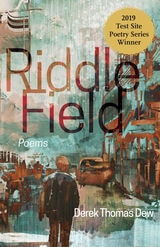
Riddle Field
PoemsDerek Thomas Dew
University of Nevada Press, 2020
"Dew is an exciting and complex new voice in contemporary poetry." —Publisher's Weekly
The beautifully crafted poems in Riddle Field explore two parallel themes, the impact of the impending destruction of a dam on a small town and the trauma of sexual abuse and eventual recovery from it. This work focuses on the environment, human and physical, in which the loss of nature and innocence is born and calls attention to the many ways we create both intimacy and distance when trauma is hidden or denied. Derek Thomas Dew’s language is harsh, honest, and sometimes heartbreaking. His poems capture the confusion and fatigue that must be navigated for a victim of abuse to piece himself back together and the internal strife that comes with carry-ing a traumatic secret that can no longer be ignored.
Rich with unforgettable images and the quiet strength of hard-won survival, Riddle Field tackles the complex process of achieving self-awareness and recovery in the wake of profound trauma.

Signs Of Danger
Waste, Trauma, and Nuclear ThreatPeter C. Van Wyck
University of Minnesota Press, 2004
Questions the literal burying of the nuclear threat and how it relates to expectations for our future
A rising ocean. A falling building. A toxic river. Species extinguished. A nuclear landscape. In a world so configured, the state of contemporary ecological thought and practice is woefully—and perilously—inadequate. Focusing on the government’s nuclear waste burial program in Carlsbad, New Mexico, Signs of Danger begins the urgent work of finding a new way of thinking about ecological threat in our time.
The Waste Isolation Pilot Plant in Carlsbad began receiving shipments in 1999. With a proposed closing date of 2030, this repository for nuclear waste must be secured with a sign, the purpose of which will be to keep people away for three hundred generations. In the official documents uncovered by Peter van Wyck, we encounter a government bureaucracy approaching the issue of nuclear waste as a technical problem only to find itself confronting a host of intractable philosophical issues concerning language, culture, and history. Signs of Danger plumbs these depths as it shows us how the problem raised in the desert of New Mexico is actually the problem of a culture grappling with ecological threats and with questions of the limits of meaning and representation in the deep future. The reflections at the center of this book—on memory, trauma, disaster, representation, and the virtual—are aimed at defining the uniquely modern status of environmental and nuclear threats. They offer invaluable insights into the interface of where culture ends and nature begins, and how such a juncture is closely linked with questions of risk, concepts of history, and the cultural experience of time.Winner of the 2005 Gertrude J. Robinson Book Prize of the Canadian Communication Association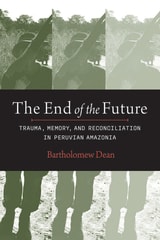
The End of the Future
Trauma, Memory, and Reconciliation in Peruvian AmazoniaBartholomew Dean
Vanderbilt University Press, 2023
To give context to the causes and consequences of the MRTA's presence in the lower and central Huallaga, this book relies on the written works and testimony of Sístero García Torres, an MRTA rebel commander; the government's Truth and Reconciliation Commission; MRTA propaganda; media accounts; and critical historical texts. Besides exposing Huallaga Valley human rights abuses, the book's contribution to political anthropology is consequential for its insistence that reconciliation is by no means equivalent to local, Indigenous notions of "justice" or customary forms of dispute resolution. Without deliberately addressing the diverse socio-cultural contours defining overlapping epistemologies of justice, freedom, and communal well-being, enduring reconciliation will likely remain elusive.
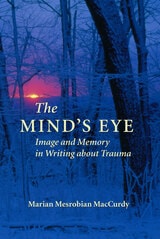
The Mind's Eye
Image and Memory in Writing about TraumaMarian Mesrobian MacCurdy
University of Massachusetts Press, 2007
MacCurdy begins by discussing what trauma is, how traumatic memories are stored and accessed, and how writing affects them. She then focuses on the processes involved in translating traumatic images into narrative form, showing how the same patterns and problems emerge whether the writers are students or professionals. Using examples drawn from the classroom, MacCurdy investigates the beneficial effects of the study of trauma on communities as well as individuals, witnesses as well as writers, and explores the implications of these relationships for the world at large, particularly as they pertain to issues of justice, retribution, and forgiveness.
Throughout the volume the author draws on her own experience as teacher, writer, survivor, and descendant of survivors to explain how one can engage student work on difficult subjects without appropriating the texts or getting lost in the emotions generated by them. She further shows how appropriate safeguards can be put in place to protect both teacher and student writer. The end result of such a pedagogy, MacCurdy demonstrates, is not simply better writers but more integrated people, capable of converting their own losses and griefs into compassion for others.
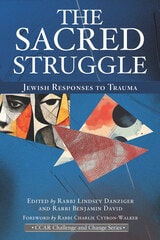
The Sacred Struggle
Jewish Responses to TraumaRabbi Lindsey Danziger and Rabbi Benjamin David
Central Conference of American Rabbis, 2025
much more.
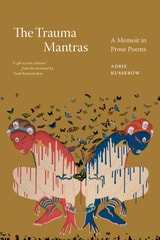
The Trauma Mantras
A Memoir in Prose PoemsAdrie Kusserow
Duke University Press, 2024
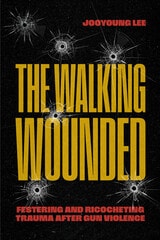
The Walking Wounded
Festering and Ricocheting Trauma After Gun ViolenceJooyoung Lee
University of Chicago Press, 2026
Gun violence is a plague in the United States; even survivors experience suffering that wreaks havoc on their lives and our communities. Although excellent emergency trauma care means that 80 percent of shooting victims do not die from their injuries, surviving is only the first step. Most survivors then find themselves trapped in health care and judicial systems that only amplify their pain, trauma, and uncertainty.
In The Walking Wounded, Jooyoung Lee invites readers into the hospitals, courtrooms, and homes where gunshot victims struggle to rebuild their lives. Drawing from years of fieldwork in Philadelphia, Lee shows how victims’ injuries fester into new problems over time in the absence of meaningful follow-up care. Attempting routine tasks with a wounded body reminds survivors that they are no longer who they used to be—both physically and socially. Lee shows how trauma ricochets through victims’ worlds as their injuries also affect their family and friends. To make matters worse, Lee argues, existing government safety nets place victims into ever more precarious circumstances that compound their suffering.
In the face of health care and judicial systems that fail wounded people, Lee urges a sensible and sensitive rehabilitative process aimed at equipping the walking wounded with ongoing care that aspires for more than mere survival: the regaining of independent lives.

The Wendys
Allison Benis White
Four Way Books, 2020
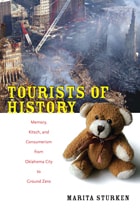
Tourists of History
Memory, Kitsch, and Consumerism from Oklahoma City to Ground ZeroMarita Sturken
Duke University Press, 2007
Sturken contends that a consumer culture of comfort objects such as World Trade Center snow globes, FDNY teddy bears, and Oklahoma City Memorial t-shirts and branded water, as well as reenactments of traumatic events in memorial and architectural designs, enables a national tendency to see U.S. culture as distant from both history and world politics. A kitsch comfort culture contributes to a “tourist” relationship to history: Americans can feel good about visiting and buying souvenirs at sites of national mourning without having to engage with the economic, social, and political causes of the violent events. While arguing for the importance of remembering tragic losses of life, Sturken is urging attention to a dangerous confluence—of memory, tourism, consumerism, paranoia, security, and kitsch—that promulgates fear to sell safety, offers prepackaged emotion at the expense of critical thought, contains alternative politics, and facilitates public acquiescence in the federal government’s repressive measures at home and its aggressive political and military policies abroad.
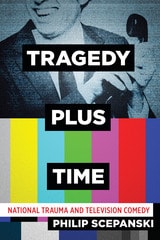
Tragedy Plus Time
National Trauma and Television ComedyBy Philip Scepanski
University of Texas Press, 2021
Following the most solemn moments in recent American history, comedians have tested the limits of how soon is “too soon” to joke about tragedy. Comics confront the horrifying events and shocking moments that capture national attention and probe the acceptable, or “sayable,” boundaries of expression that shape our cultural memory. In Tragedy Plus Time, Philip Scepanski examines the role of humor, particularly televised comedy, in constructing and policing group identity and memory in the wake of large-scale events.
Tragedy Plus Time is the first comprehensive work to investigate tragedy-driven comedy in the aftermaths of such traumas as the JFK assassination and 9/11, as well as during the administration of Donald Trump. Focusing on the mass publicization of television comedy, Scepanski considers issues of censorship and memory construction in the ways comedians negotiate emotions, politics, war, race, and Islamophobia. Amid the media frenzy and conflicting expressions of grief following a public tragedy, comedians provoke or risk controversy to grapple publicly with national traumas that all Americans are trying to understand for themselves.
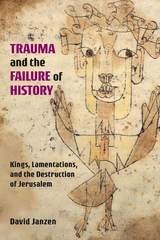
Trauma and the Failure of History
Kings, Lamentations, and the Destruction of JerusalemDavid Janzen
SBL Press, 2019
A theoretical and exegetical exploration of trauma in the Hebrew Bible
David Janzen discusses the concepts of history and trauma and contrasts the ways historians and trauma survivors grapple with traumatic events, a contrast embodied in the very different ways the books of Kings and Lamentations react to the destruction of Jerusalem. Janzen’s study warns that explanations in histories will tend to silence the voices of trauma survivors, and it challenges traditional approaches that sometimes portray the explanations of traumatic events in biblical literature as therapeutic for victims.
Features:
- Exploration of history as a narrative explanation that creates a past readers can recognize to be true
- Examination of how trauma results in a failure of victims to fully experience or remember traumatic events.
- A case for why the past is a construction of cultures and historians
Trauma
A GenealogyRuth Leys
University of Chicago Press, 2000
In a book that is bound to ignite controversy, Ruth Leys investigates the history of the concept of trauma. She explores the emergence of multiple personality disorder, Freud's approaches to trauma, medical responses to shellshock and combat fatigue, Sándor Ferenczi's revisions of psychoanalysis, and the mutually reinforcing, often problematic work of certain contemporary neurobiological and postmodernist theorists. Leys argues that the concept of trauma has always been fundamentally unstable, oscillating uncontrollably between two competing models, each of which tends at its limit to collapse into the other.
A powerfully argued work of intellectual history, Trauma will rewrite the terms of future discussion of its subject.
When the Bones Speak
The Living, the Dead, and the Sacrifice of Contemporary OkinawaChristopher T. Nelson
Duke University Press, 2025