Results by title
46 books match the query 'Psychological'

A Brief Alphabet of Torture
StoriesVi Khi Nao
University of Alabama Press, 2017
An unflinching and riveting meditation on the pain that attends every facet of existence—love and sacrifice and intimacy and beauty—a biography of torture.
Like all of Vi Khi Nao’s acclaimed and award-winning work, A Brief Alphabet of Torture bleeds across many modes and genres—poetry, essay, fiction, drama—and itself almost constitutes a novel of a different kind. Each tale captures the emotional, physical, psychological, political, and artistic concerns that pervade life like breath and which, even when very beautiful, are filled with pain.
These stories are all facets of Nao’s imagination that define the way she views creation, sexuality, violence, and the role of life in an ontological system that relies heavily on cultural, social, and artistic duress. Some stories like “Winter Rose” and “I Love You Me Neither” rise above the boundaries of pain to places of beauty and grace and love, where pain has no place, but make clear how rare such moments appear in life.
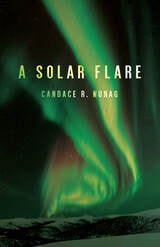
A Solar Flare
Candace R. Nunag
University of Alabama Press, 2025
A hybrid of short works exploring the 1859 Carrington solar flare
A flood of illumination, a cosmic cataclysm frozen in time—the Carrington Event of 1859 was the most disruptive solar flare in recorded history, an electromagnetic storm that wiped out telegraph systems across the world and which, if it were to occur today, might well destroy anything on the planet with an electrical circuit.
Candace Nunag’s A Solar Flare is a hybrid of short essays, research notes, poems, graphite rubbings, and instant photographs, as well as bits of flash fiction, all simultaneously contemplating technology and memory, while preoccupied with the 1859 solar flare. The ghost of the Carrington Event haunts A Solar Flare with the promise of definitive answers about the narrator’s many severed connections: her digital, supernatural, eastern, western, and analog past. It is an attempt to illuminate the path of thought, wending its way through the tangles of rumination and irreconcilable spaces of wonder.
As If Fire Could Hide Us
Melanie Rae Thon
University of Alabama Press, 2023
Three lives. One song. A fire that reveals what cannot be hidden.
As If Fire Could Hide Us explores the expansiveness of consciousness and compassion through and beyond the human body.
A twelve-year-old girl slips out a basement window, steals a bike, and sets off on a perilous adventure. Injured and slowly bleeding out, Orelia enters a vast, spectacularly animate environment where she senses the limits of self disintegrating, her being entangled with the forest.
A prison guard and member of the strap down team witnesses a painfully prolonged execution and is delivered to a heart-cracking sense of identification with the ones he’s killed. Every grieving mother is his own. Any man might be himself, his closest friend, his brother.
An organ donor’s body is restored and resurrected through the bodies of multitudes. Spiritually and physically, one human being becomes many. Everything in the cosmos is intertwined and interchangeable. Embracing this awareness may bring fear or euphoria—desolation, peace, despair, rapture.
Border State
Tonu Onnepalu
Northwestern University Press, 2000
An immediate sensation upon its 1993 publication in Europe, already translated into more than a dozen languages, Border State is a brilliantly realized account of a man in the grip of Western excess, emotionally crippled by a world that is subsuming his own and inhabiting a West in which "all countries have become imaginary deserts of ruins where crowds of nomads roam from one attraction to the other." His tale, in which disillusion and murder become inextricably linked, is a compelling exploration of scarcity, longing, and madness.

Brezhat
A NovellaMichael Holt
University of Alabama Press, 2027
Three Sams, one impossible building, and a mystery echoing across worlds, lifetimes, and dreams.
Brezhat is a thrilling, puzzle-like novella that unfolds across three overlapping worlds, all occurring within the same haunted building. In one timeline, the building is a school where children's dreams are recorded. In another, an orphanage tied to a glass factory. In the third, a postapocalyptic ruin inhabited by a community of eccentric survivors.
Within its shifting halls live three versions of the same person, all named Sam. Though separated by time and circumstance, the Sams share dreams, sensations, and fleeting encounters that bind their lives together in unsettling ways. As they wander through forgotten corridors and forbidden rooms, the Sams undertake tasks both ordinary and uncanny. They deliver life-saving serum, reassemble the body of a broken friend, talk with the dead, and bury dead mice. Along the way, they are guided, taught, and sometimes misled by an unforgettable cast of adults: teachers, nuns, scientists, artists, a librarian, and the inscrutable Mr. Jones, a janitor who seems to exist outside of time altogether. Threaded through each timeline is the shadow of a former friend whose acts of violence echo across worlds, causing old wounds to recur in new forms. Blending speculative fiction, psychological insight, and gothic atmosphere, Brezhat is a mesmerizing novella steeped in mystery, unraveling the stories we inherit, the selves we might have been, and the strange ways pain reverberates across a lifetime.

Children of the Albatross
Anaïs Nin
Ohio University Press, 1959
Children of the Albatross is divided into two sections: “The Sealed Room” focuses on the dancer Djuna and a set of characters, chiefly male, who surround her; “The Café” brings together a cast of characters already familiar to Nin’s readers, but it is their meeting place that is the focal point of the story.
As always, in Children of the Albatross, Nin’s writing is inseparable from her life. From Djuna’s story, told in “The Sealed Room” through hints and allusions, hazy in their details and chronology, the most important event to emerge is her father’s desertion (like Nin’s) when she was sixteen. By rejecting realistic writing for the experience and intuitions she drew from her diary, Nin was able to forge a novelistic style emphasizing free association, spontaneity, and improvisation, a technique that finds its parallel in the jazz music performed at the café where Nin’s characters meet.
Children of the Albatross
Anaïs Nin
Ohio University Press, 2023
The second novel in Anaïs Nin’s Cities of the Interior series, Children of the Albatross is divided into two sections: “The Sealed Room” focuses on the dancer Djuna and a set of characters, chiefly male, who surround her; “The Café” brings together a cast of characters already familiar to Nin’s readers, but it is their meeting place that is the focal point of the story.
As always, in Children of the Albatross, Nin’s writing is inseparable from her life. From Djuna’s story, told in “The Sealed Room” through hints and allusions, hazy in their details and chronology, the most important event to emerge is her father’s desertion (as Nin’s father did) when she was sixteen. By rejecting realistic writing for the experience and intuitions she drew from her diary, Nin was able to forge a novelistic style emphasizing free association, spontaneity, and improvisation, a technique that finds its parallel in the jazz music performed at the café where Nin’s characters meet.
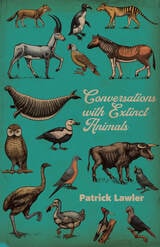
Conversations with Extinct Animals
A NovelPatrick Lawler
University of Alabama Press, 2024
An experimental narrative by eco-fiction author and poet Patrick Lawler evolves out of the interactions between twenty-four extinct animals and those characters who struggle for significance in the face of their own extinction.
Patrick Lawler’s second novel, Conversations with Extinct Animal, is a dialogue between psychology and ecology—between poetry and story. A suicide note masquerading as a love letter, the novel transcends genres and keeps kaleidoscopically shifting: sometimes it is an elegy, and sometimes it is a therapy session—but always these are the field notes for the end of the world.
As a collection of characters associated with The Facility come to terms with an individual’s death, they must confront their own losses amid the colossal absence of the twenty-four extinct animals. All the characters float between various inexplicable, mystifying “syndromes” that call into question their identities and, ultimately, call into question the elements of story itself. “Looking at pictures of the Extinct Animals, I can’t help but wonder if it is too late to save the world—especially since there are so many different worlds,” observes the narrator of the novel in his efforts to save the unsavable.
Couch People
A NovelWill Burns
University of Alabama Press, 2026
A darkly comic descent into Arkansas’s surreal criminal underworld through the eyes of a hapless, debt‑ridden hypochondriac
Couch People is a feverish, darkly comic novel that captures the anxious intensity of a world obsessed with wellness and control even as life keeps spinning into chaos. Prince, a debt-ridden drug dealer on probation, clings to vitamins and homeopathic rituals while stumbling through a surreal Arkansas underworld filled with criminal volatility and sudden violence.
As Prince fights to stay out of prison, recover his stolen money, and hold onto a fragile hope for love, he moves through a landscape populated by unforgettable misfits and bizarre dangers, including a system where snitches are cremated, turned into diamonds, and set into convicts’ teeth. Will Burns blends his satirical bite with unexpected tenderness, creating a narrative that prizes raw interiority and absurd humor over neat redemption. Couch People becomes a propulsive fever dream about love, loss, and the impossible effort to impose order on a world that refuses to make sense, inviting readers to embrace the beautiful mess of being alive without a manual, a map, or mercy.
Double-Check for Sleeping Children
StoriesKirstin Allio
University of Alabama Press, 2024
WINNER OF THE FC2 CATHERINE DOCTOROW INNOVATIVE FICTION PRIZE
Double-Check for Sleeping Children is the newest work by award-winning writer Kirstin Allio
At once formal and tidal, damning and dreaming, Kirstin Allio’s Double-Check for Sleeping Children is charged with prayer, curse, redemption and abasement. Does truth come from reason, or beauty, or suffering? It takes the inner lives of outsiders, dark mirrors, and false ceilings to find an answer.
Families split by social class, a wealthy young widow, addicts, hunters, poor whites, a green card bride and a nursing mother: in twenty poetically and morally propulsive short stories, Allio disquiets the sublimated and palpates shadows. She leads us through the sometimes flooded, other times flood-lit halls of the human soul.
Part menacing, macabre Mary Gaitskill, part Denis Johnson in Jesus’ Son, and with the taut, wry, tell-all detail of Elizabeth Hardwick, Double-Check for Sleeping Children deals in codedness and transgression. The stories explore coming of age in middle age, anxiety about time and technology, inverted revelation. “What was I supposed to do with Basho and Mosie?” Sheila asks herself about her children in “Uncollected Territories.” “Be my real self? Hand myself over, do what you will with me, plant your strange selves in my private soil?”
Driscoe
Greg Mulcahy
University of Alabama Press, 2026
A stark, hypnotic exploration of memory, identity, and the fractured stories we inherit, and invent, to survive
Driscoe is a stylistically daring novel that plunges deep into the unstable terrain of memory, identity, and the stories we tell to endure collapse. Hypnotic and recursive, it moves through contradiction as both method and meaning, tracing how belief hardens, fractures, and reforms under pressure. The prose hums with unease, balancing precision and disorientation as certainty dissolves into overlapping versions of the same events.
At its center is Jouska, a man suspended between narratives of success and failure, loyalty and betrayal, progress and ruin. He is pursued by obsessive memories of his ex-wife, his brother, and the elusive figure of Driscoe, by turns entrepreneur, fraud, chemist, builder, trickster. Everyone claims a story about Driscoe. None align, yet all insist on their authority. Entangled in familial conflict and his own faltering recollections, Jouska can neither trust nor abandon any version of the truth.
When Jouska receives an email announcing the death of his superior, the already fragile architecture of his life splinters further. What follows is a journey through a bureaucratic labyrinth where death is both confirmed and denied, and where greed, doubt, presence, and absence pulse relentlessly. Driscoe emerges as a narrative dirge for a collapsing American middle class and the myths that sustained it, tracing the impossibility of aligning personal loss with cultural unraveling. This novel will resonate with readers drawn to literary fiction that is intellectually demanding, formally inventive, and attuned to the psychic costs of living amid social and economic decay.
Euphrates Dance
A NovelHussein Hussein
Parkhurst Brothers, Inc., 2017
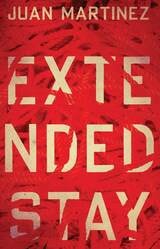
Extended Stay
Juan Martinez
University of Arizona Press, 2023
In a rundown neighborhood in the heart of Las Vegas, the Alicia hotel awakens and beckons to the most vulnerable—those with something to hide.
After his parents are killed in a horrific roadside execution, Alvaro flees his home in Colombia and finds work as a line cook at the seedy hotel. Together with his sister, Carmen, he begins to make a new life in the desert, earning a promotion to management along with an irresistible offer to stay at the hotel rent-free. But as beloved photographs go missing, cockroaches seep from the walls, and grotesque strangers wander the corridors, the promise of the Alicia decays into nightmare. Alvaro discovers that the hotel is a small appendage of an enormous creature that feeds on guests and their secrets, one that will eventually bring him face-to-face with the memories he most wants to outrun. Alvaro, Carmen, and their friends decide to cooperate with the creature rather than fight it. But in their efforts to appease it, do they sacrifice too much of themselves?
Haunting and visceral, Extended Stay uses the language of body horror and the gothic to comment on the complicated relationship between the Latinx undocumented experience and capitalism, the erasure of those living and working on the margins, the heavy toll exacted by memory, and the queasy permeability of boundaries that separate the waking world from the world of dreams.

Hard Side of The Mountain
Paul Cohen
Carnegie Mellon University Press, 2027
Dark family secrets follow Coe as he drops out of college and attempts to start a new life with fellow outlaws in the mountains of Wyoming.
“Fleeing a mental illness diagnosis pushed by his family, Coe drops out of college and hits the road, ending up in Wyoming, where he falls in with a group living illegally on the mountain above a resort town. Here he works muscle jobs, climbs mountains, befriends a pair of brothers new to the sport, and slips under the spell of Benny, a Vietnam war vet who sleeps beneath a rocky overhang, ascends cliffs like a mountain goat, and seems to know things he shouldn't about Coe's French grandfather. At Benny's command, the group climbs routes well beyond the brothers' abilities and kicks off a dangerous vandalism war against the resort corporation. An old cook warns Coe away from Benny, suggesting the secret to his identity is encoded in a bible passage. Meanwhile, from letters sent by his great aunt, Coe receives contradictory accounts of his grandfather's past. As those close to Coe meet tragic ends, he is forced to confront the frightful notion that this Wyoming violence may connect to a crime committed a half century before. Is the old cook right about Benny and the biblical mystery? Is Coe slipping into mental illness? High on the mountain, alone with Benny, Coe must cast his lot.
Hogg
A NovelSamuel R. Delany
University of Alabama Press, 2004
A fearless descent into the darkest corners of human desire and violence.
First written thirty-five years ago and completed days before the Stonewall riots in New York, award-winning author Samuel R. Delany’s Hogg is one of America’s most famous “unpublishable” novels. It recounts three days in 1969 in the life of truck driver and rapist-for-hire, Franklin Hargus. Narrated by his young accomplice, Delaney’s novel portrays an exploration of erotic depravity, a capacious landscape of sexuality that transgresses social and erotic boundaries.
While testing readers’ tolerance, what transfigures the novel into a work of literature is Delany’s refusal, faced with moral anxieties and revulsion, to mutilate or disown his creation. Hogg’s characters wear recognizable human faces, possessing intense loyalty, perverse admiration, and a kind of integrity. Hargus fascinates. He is the embodiment of what society can turn people into, the decaying condition of the human soul.
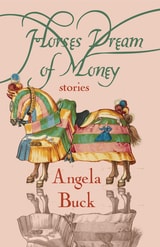
Horses Dream of Money
StoriesAngela Buck
University of Alabama Press, 2021
2021 Big Other Book Award Fiction Finalist
A visceral, stark, and deadpan collection of stories that brilliantly fuse humor with horror
Horses Dream of Money is a daring collection of tales, darkly humorous, that eerily channels the surreal and sinister mood of the times. Preoccupied with the fault lines between life and death, and veering often into horror, Angela Buck brings a raw energy and witty sobriety to these accounts of human life and connection with the intimacy of fireside-storytelling, gimlet-eyed revelry in bloodletting, and a masterful sleight of hand between the fantastical and the quotidian.
“The Solicitor” reinvents the coming-of-age story as a romance-for-hire between a girl and her “solicitor,” a man whose services are demanded by her mother and enforced by a cruel master. “Coffin-Testament” is a fabulous futuristic account of the extinction of human life on earth written 1,667 years later by a group of lady robots channeling Sir Thomas Browne to muse on their own mortality. “The Bears at Bedtime” documents a compound of cuddly kind worker-bears and their ruthless doings. “Bisquit” imagines today’s precariat as a lovable horse who is traded from one master to another until a horse race brings his maddeningly repetitive adventures to a violent conclusion.
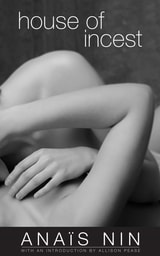
House of Incest
Anaïs Nin
Ohio University Press, 1958
With an introduction by Allison Pease, this new edition of House of Incest is a lyrical journey into the subconscious mind of one of the most celebrated feminist writers of the twentieth-century.
Originally published in 1936, House of Incest is Anaïs Nin’s first work of fiction. Based on Nin’s dreams, the novel is a surrealistic look within the narrator’s subconscious as she attempts to distance herself from a series of all-consuming and often taboo desires she cannot bear to let go. The incest Nin depicts is a metaphor—a selfish love wherein a woman can appreciate only qualities in a lover that are similar to her own. Through a descriptive exploration of romances and attractions between women, between a sister and her beloved brother, and with a Christ-like man, Nin’s narrator discovers what she thinks is truth: that a woman’s most perfect love is of herself. At first, this self-love seems ideal because it is attainable without fear and risk of heartbreak. But in time, the narrator’s chosen isolation and self-possessed anguish give way to a visceral nightmare from which she is unable to wake.
Houses behind the Trees
By Mohamed El-Bisatie
University of Texas Press, 1998
Set in a small village in the Egyptian Delta, El-Bisatie's finely tuned novella illustrates the social and sexual tensions in a community in which nothing is secret and where people's pasts haunt their present.
When Mussad catches the butcher's son Amer with his wife, the whole village knows and waits with bated breath for Mussad to exact his revenge. But something goes wrong. Mussad's ill-planned schemes are choked by an opaque veil of history—his wife's sexual past, the war-torn lives of their families, and the personal allegiances of his friends and enemies. The village women relive private desires and inner fears as the men take sides in the struggle, either to protect Amer from Mussad's wrath or to help Mussad track down and confront his nemesis.
In the words of Denys Johnson-Davies, "El-Bisatie is a writer's writer, which is to say a writer who makes no concession to the lazy reader. El-Bisatie stands back from his canvas and sketches his characters and events with a studied detachment. While there is drama in his stories it is never highlighted. The menace lurks almost unseen between the lines."
Ledfeather
Stephen Graham Jones
University of Alabama Press, 2008
A story of life, death, love, and the ties that bind us not only to what has been, but what will be.
After burning up the blacktop in New Mexico with The Fast Red Road and rewriting Indian history on the Great Plains with The Bird is Gone, Stephen Graham Jones now takes us to Montana. Set on a Blackfeet Indian reservation, Ledfeather lays bare the life of one Indian boy, Doby Saxon: his near-death experience, his suicide attempts, his brief glimpse of victory, and the unnecessary death of one of his best friends.
But through Doby emerges a connection to the past, to an Indian Agent who served the United States government over a century before. This revelation leads to another and another until it becomes clear that the decisions of this single Indian agent have impacted the lives of generations of Blackfeet Indians—and the life of Doby Saxon, a boy standing in the middle of the road at night, his hands balled into fists, the reservation wheeling all around him like the whole of Blackfeet history collapsing in on him.
Jones’s beautifully complex novel is a story of life, death, love, and the ties that bind us not only to what has been, but what will be: the power of one moment, the weight of one decision, the inevitability of one outcome, and the price of one life.
Marriage to the Sea
Linked NovellasSarah Stone
Four Way Books, 2026
Memories of Lazarus
By Adonias Filho
University of Texas Press, 1969
These are the recollections of Alexandre—of his life, his death-in-life, and his ultimate death, as they are played out against the mobile tapestry of the valley where he was born. The valley itself, in the backlands of the state of Bahia, Brazil, alternates at different stages in Alexandre’s consciousness between reality and symbol. It swings from a harsh regional specificity to become the panorama of all human life, its endless, eroding wind the devouring hostility of all environments and its pain the pain of every human being in the face of his own brutality and that of others.
Throughout the novel Alexandre’s mind ranges from sharp awareness, through hallucination, to oblivion (“a man dies while alive,” says Jeronimo, his mentor), and back again as he experiences the violent, obtuse phenomena of life in the valley—his universe and ours. This latter-day Lazarus leaves the resisting hills and black sky once only, hounded by the valley dwellers who believe he has murdered his wife, her father, and her brother. Yet despite his awareness of the horror of the valley and his intuition of something beyond it, it is precisely his contact with the gentler existence to which he escapes that forces Alexandre to recognize his nature for what it is. Turning his back on a greater and more varied range of feeling and experience, he chooses the narrow ferocity of the valley, to which he returns to die the final death for which the earlier deaths have prepared him.
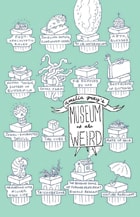
Museum of the Weird
Amelia Gray
University of Alabama Press, 2010
WINNER OF FC2’s AMERICAN BOOK REVIEW/RONALD SUKENICK INNOVATE FICTION PRIZE
Step inside a gallery where the strange feels familiar.
A monogrammed cube appears in your town. Your landlord cheats you out of first place in the annual Christmas decorating contest. You need to learn how to love and care for your mate—a paring knife. These situations and more reveal the wondrous play and surreal humor that make up the stories in Amelia Gray’s stunning collection of stories: Museum of the Weird.
Acerbic wit and luminous prose mark these shorts, while sickness and death lurk amidst the humor. Characters find their footing in these bizarre scenarios and manage to fall into redemption and rebirth. Museum of the Weird invites you into its hallways, then beguiles, bewitches, and reveals a writer who has discovered a manner of storytelling all her own.
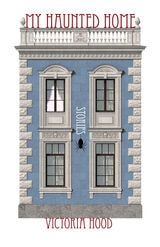
My Haunted Home
StoriesVictoria Hood
University of Alabama Press, 2022
WINNER OF FC2’s RONALD SUKENICK INNOVATIVE FICTION PRIZE
Meditations on the ways grief is felt and harvested—the funny, the sorrowful, the surreal, and the unmentionable
The stories in My Haunted Home delve in startling ways into the lives of the obsessed, the grieving, and the truly haunted. Victoria Hood conjures a shifting range of narrators through an unstable range of worlds where mothers might be dead, girls compulsively shove peanuts inside their ears, agoraphobia traps people inside their houses, and cats won’t eat your soup. In “The Teeth, the Way I Smile,” a daughter who looks like her dead mother manifests grief both in her house and her body. In “Smelly Smelly,” a woman slowly comes to realize her boyfriend has been dead for weeks. In “You, Your Fault,” we explore the unfolding love of two women who love every part of each other—including the parts that fixate on arson and murder.
Each story is a bite-size piece of haunting candy on a necklace of obsession holding them together. Hood probes the worlds of what can be haunted, unpacking the ways in which hauntings can be manifested in physical forms, mentally harvested and lived through, and even a change in what is haunting.
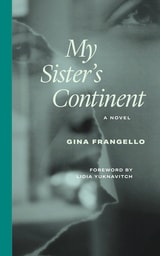
My Sister's Continent
A NovelGina Frangello, Lidia Yuknavitch
Northwestern University Press, 2026
Kirby is a young woman attempting to come to terms with a failed bout of therapy and the truth about her identical twin, Kendra. Since girlhood, Kirby both idolized and envied Kendra, a fearless and charismatic ballet dancer who commanded the attention of everyone in their orbit. In the aftermath of tragedy, Kirby is sent a case study by a former psychiatrist intent on publishing a distorted version of her family’s secrets. She responds by using Kendra’s private and revealing journals to reconstruct their final months together, as well as her own “disastrous” time in therapy, to voice her own truth.
Freud’s “Dora,” a young woman whose mysterious symptoms he contentiously chalked up to “hysteria,” appears at turns in the faces of each twin as they navigate a world of sexuality, familial dysfunction, and possibly-psychosomatic ailments. Reissued with a new foreword by Lidia Yuknavitch, Frangello’s groundbreaking early novel brings “Dora” into a new era.
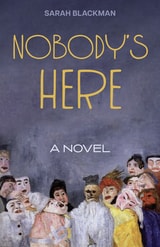
Nobody's Here
A NovelSarah Blackman
University of Alabama Press, 2026
An end-of-life sex worker accused of murdering the man she loved—and a town forced to reckon with what makes a life meaningful
Set amid the lush landscapes and winding waterways of Maryland’s Eastern Shore, Nobody’s Here is a haunting and compassionate novel about love, loss, and the value of a life. Flossie Taw works as an end-of-life sex worker, providing live-in care and companionship to men in their final days. Her latest client, Leonidas “Leo” Bane, has kept her by his side longer than anyone before him. Against her own rules, Flossie falls in love.
When Leo is found dead from what may or may not have been a self-inflicted gunshot wound, Flossie becomes the subject of suspicion in her small Maryland town. As she struggles with an unfamiliar grief, she becomes the subject of intense local speculation as neighbors, friends, police officers, the county coroner, and countless others weigh in on her character, her profession, and her possible role in Leo’s death.
Told through a rich chorus of voices alongside Flossie’s own, Nobody’s Here explores how ordinary people wrestle with life’s biggest questions while navigating the demands of everyday life. As the residents of Canterbury, Maryland, debate Flossie’s culpability, they are also forced to consider what makes a life meaningful and what we owe one another at the end of it. Nobody’s Here asks readers to look beyond appearances and decide for themselves whether Flossie Taw is responsible for Leo’s death, or whether she was responsible for giving his life meaning.
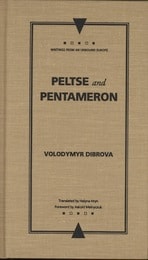
Peltse and Pentameron
Volodymyr Dibrova
Northwestern University Press, 1996
Peltse portrays the formation of an average apparatchik. Both funny and alarming, it provides a psychological portrait of an individual trapped in a system he simultaneously dislikes and depends upon for survival. Pentameron tells the story of one day in the life of five colleagues at a Soviet research institute. Each is dissatisfied, yet all are trapped in and by a system that has taken away their ability to act decisively.
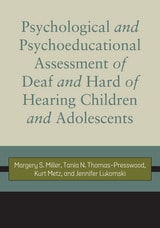
Psychological and Psychoeducational Assessment of Deaf and Hard of Hearing Children and Adolescents
Margery S. Miller
Gallaudet University Press, 2015
Authors Margery S. Miller, Tania Thomas-Presswood, Kurt Metz, and Jennifer Lukomski bring a wealth of knowledge and experience to this in-depth treatment of topics essential to educators and school psychologists. They cover such critical areas as test construction and measurement; the diversity in American Deaf culture; the role of parents in the assessment process; neuropsychological assessments; nonverbal methods for assessing intelligence; and the need for sign language competency when testing cognitive and language skills.
The text concludes with recommendations for the development of valid and reliable tests for all students who are deaf and hard of hearing.

Sailing Against the Wind
A NovelJaan Kross
Northwestern University Press, 2012
Jaan Kross's historical novel Sailing Against the Wind fictionalizes the life of Bernhard Schmidt (1879–1935), an Estonian-born inventor. Schmidt lost an arm in his youth while experimenting with a homemade rocket, resulting in psychological trauma that would plague him for the rest of his life. Largely self-taught, Schmidt was driven to seek recognition of his talents.
He moved to Germany in the 1930s, where, after perfecting techniques for polishing lenses, he began developing ideas for improving astronomical telescopes. He was arrested for selling one to the Russians, and although he got off with only a warning, he later suffered a breakdown and was sent to a mental hospital, where he soon died. Sailing Against the Wind becomes a meditation on national identity, the relationship between history and the individual life, and the mechanisms of the historical novel as a genre.

Sex for the Millennium
Extreme TalesHarold Jaffe
University of Alabama Press, 2026
An innovative work of experimental prose examining the entanglements of media, authority, and embodied experience.
Sex for the Millennium: Extreme Tales by Harold Jaffe is a provocative collection of experimental narratives that push the boundaries of form, language, and subject matter. Blending fiction, satire, and cultural commentary, the book presents a series of fragmented “extreme” episodes that explore the intersections of desire, power, and media in contemporary society.
Jaffe uses the concept of sex as a central metaphor rather than a literal focus, exploring how desire can be shaped, controlled, and commodified within larger social and political systems. Rather than following a traditional plot, Jaffe constructs a shifting landscape populated by characters caught in systems of control shaped by institutions, technology, and consumer culture. The stories examine how identity and intimacy are mediated by external forces.
Jaffe's work reflects postmodern literary traditions, using disjointed narratives and abrupt tonal shifts to unsettle the reader. His writing challenges social norms and exposes the underlying mechanisms of authority and manipulation at work in everyday life. With dark humor and intentional provocation, Sex for the Millennium: Extreme Tales offers a critique of modern culture, inviting readers to confront questions about autonomy, authenticity, and the influence of media in shaping human experience.
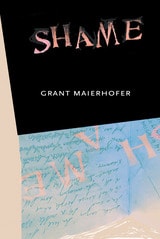
Shame
Grant Maierhofer
University of Alabama Press, 2022
A kaleidoscopic sequence of autofictional narratives about identity, grief, and narrative itself.
Shame is a daring exploration of the potential and limits of memory and self. Here we meet Grant Maierhofer at various points within his life then, now, and in the future as he investigates the sense of shame that haunts the course of his days. The real and unreal, fact and fiction, blur together in a Kaufmanesque sequence of overlapping narratives about who we really are, how we cope with regret, and the repetitions of our behavior.
Through lists, fragments, recollections, and rants, the story of a son’s vexing grief for his father emerges. A sober addict trying to figure out how to navigate pleasure, diversion, and escape. A father trying to figure out marriage, children, maturity, and responsibility. A confused observer in a world constantly torn apart by media, politics, and aggression. A meditation on the nature of art, and art’s place in contemporary life.
Subject Lessons
Susan S. Levine
Carnegie Mellon University Press, 2027
Psychoanalyst Susan S. Levine provides a fly-on-the-wall view of psychoanalysis through the observations of fictional Dr. Sandra Krasnapol.
Subject Lessons is a novel in stories that provides a fly-on-the-wall view of psychoanalysis from the perspective of the elegant and exacting Dr. Sandra Krasnapol, whose sometimes hair-raising, sometimes heartwarming encounters in and out of the office offer voyeuristic satisfaction for anyone who has ever wondered what goes on in an analyst’s mind.
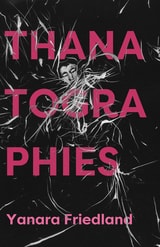
Thanatographies
Yanara Friedland
University of Alabama Press, 2026
A haunting, poetic excavation of memory, the nocturnal imagination, and a search for new forms of language to act upon legacies of violence and erasure.
Thanatographies is a genre-defying meditation on disappearance, memory, and the porous boundaries between the living and the dead. In poetic prose, Yanara Friedland weaves together dreamscapes, historical fragments, personal recollections, and philosophical inquiry to explore the afterlives of loss and survival. Moving through rooms, cities, forests, and archives, the text becomes a living document of insomnia, exile, and the spectral presence of women across time, including artists, revolutionaries, caretakers, and ghosts.
Structured in four sections titled Room, Night, Medusas, and Burials, the book traverses inner and outer landscapes, from Berlin’s haunted streets to the intimate terrain of the body. Friedland’s voice is both lyrical and incisive, drawing on figures such as Unica Zürn, Rosa Luxemburg, and Else Lasker-Schüler to illuminate the intersections of gender, violence, and historical erasure. The result is a deeply embodied poetics of wakefulness, where hidden life remembers and speaks.
Thanatographies is written for readers of experimental literature, feminist theory, and contemporary poetics. The book resonates with artists, scholars, and seekers who are compelled by the aesthetics of mourning, the politics of memory, and the radical potential of language to hold what is otherwise unspeakable.
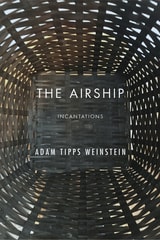
The Airship
IncantationsAdam Tipps Weinstein
University of Alabama Press, 2021
A hypnotic tale of a Jewish refugee from Europe and his three years stranded aboard the Vasari
The Airship is the entrancing fictional biography of Nathan Cohen, who was deported from the US in 1912 under the Alien Act and spent the first years of World War I on a passenger ship, shuttled between the US and Argentina. Newspapers called him “The Wandering Jew” and “The Man Without a Country,” speculating he would spend the rest of his life at sea.
Adam Tipps Weinstein provides a wise, rich, nuanced, and mischievous exploration of Cohen’s emigration from Bauska, in the Russian Pale of Settlement, to Las Pampas, in Argentina. The Airship is finally Cohen’s wish for a new line of flight, which he realizes when he launches his beloved Laika, aboard a scavenged hot-air balloon.
Told through a series of incantations—spells, songs, folk tales, ghosts, charms—the book traces Cohen’s biography across time and a great expanse of geography. The concepts of home and homeland are stretched until they break. Was there ever a home? The Airship incants these paradoxes of location, nationality, faith, and belonging in a bordered and borderless world.
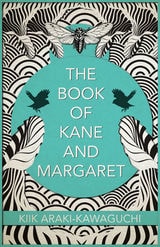
The Book of Kane and Margaret
A NovelKiik Araki-Kawaguchi, Illustrations by Gautam Rangan
University of Alabama Press, 2020
WINNER OF FC2’S RONALD SUKENICK INNOVATIVE FICTION PRIZE
A novel about two teenage lovers who disrupt a World War II internment camp in Arizona
Kane Araki and Margaret Morri are not only the names of teenage lovers living in a World War II Japanese relocation camp. Kane Araki is also the name of a man who, mysteriously, sprouts a pair of black raven’s wings overnight. Margaret Morri is the name of the aging healer who treats embarrassing conditions (smelly feet and excessive flatulence). It’s also the name of an eleven-year-old girl who communes with the devil, trading human teeth for divine wishes.
In The Book of Kane and Margaret, dozens of Kane Arakis and Margaret Morris populate the Canal and Butte camp divisions in Gila River. Amidst their daily rituals and family dramas, they find ways to stage quiet revolutions against a domestic colonial experience. Some internees slip through barbed wire fences to meet for love affairs. Others attempt to smuggle whiskey, pornography, birds, dogs, horses, and unearthly insects into their family barracks. And another seeks a way to submerge the internment camp in Pacific seawater.
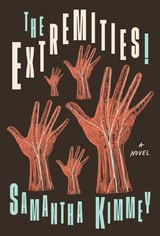
The Extremities!
Samantha Kimmey
University of Iowa Press, 2025

The Flat Woman
A NovelVanessa Saunders
University of Alabama Press, 2025
Asks who gets the right to call themselves a good person in a morally bankrupt world
In The Flat Woman, women exclusively are blamed for the climate crisis. Seagulls drop dead from the sky, and the government, instead of taking responsibility, scapegoats a group of female ecoterrorists. When a girl’s mother is incarcerated for climate crimes, she is forced to raise herself alone. As a young woman, she begins a romance with an environmental activist whose passion makes her question her own role in the world. By turns hilarious, deadly serious, and completely absurd, The Flat Woman asks who gets the right to call themselves a good person in a world ripe with disaster.
Driven by complex academic and moral questions, The Flat Woman is certain to appeal to fans of feminist and experimental literature, as well as fans of Margaret Atwood, Renee Gladman, Bhanu Kapil, Maggie Nelson, Kelly Link, and Anne Carson.
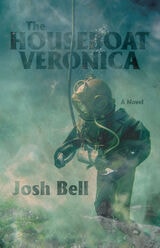
The Houseboat Veronica
A NovelJosh Bell
University of Alabama Press, 2024
A witch, a ward, and a houseboat adrift in time—where beauty and terror share the helm.
The mysterious houseboat Veronica motors across a postapocalyptic freshwater lake, inhabited by a black-haired witch and her young male ward. They explore an unfolding world of shape-shifting moons, vampire moths, and submerged witch cemeteries—a world where voluntary imprisonment holds its own appeal and the heart yearns for the delicate dance between blood and power, beauty and terror.
Neither a pirate nor a mere witch, she is an artist, a master of water and time who shapes reality with her baffling powers. This lyrical and compelling novel beckons readers to explore the enigmatic depths of its prose, inviting them to traverse the waters of wonder and bewilderment. Embrace the bewitching allure of The Houseboat Veronica and lose yourself in its enchanting embrace.
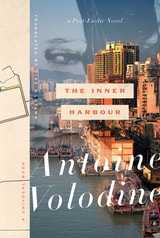
The Inner Harbour
A Post-Exotic NovelAntoine Volodine
University of Minnesota Press, 2025
A beguiling, perspective-shifting story of obsession and loss set in the grimy, late-colonial decadence of Macau at the end of the twentieth century
In The Inner Harbour, Antoine Volodine focuses his literary investigations away from dystopian futures to a specific place at a particular historical moment: Macau on the eve of the Portuguese colony’s transfer to China. In a seedy flat in one of the city’s slums, a hired assassin named Kotter interrogates Breughel, a writer on the run from a mysterious organization code-named Paradise. Breughel has been hiding out in Macau with his lover, Gloria Vancouver, and a significant sum of the organization’s money. But Gloria is dead and the money spent—or so Breughel claims—and now he lives alone in humid squalor.
With increasing severity, Kotter extracts Breughel’s confessions, but are they truth or subterfuge? Or are the confessions an elaborate work of fiction by a writer aware that they are no longer able to differentiate between memory and fantasy? Volodine brilliantly blurs the levels of narration—between what Breughel tells his interrogator, what he remembers or invents, and the stories he has written, including his accounts of Gloria’s hallucinatory visions of an apocalyptic war between military forces and the “chrysalids.”
Interweaving threads of fiction and truth, lies and hallucinations, The Inner Harbour evokes many of the themes found in Volodine’s other “post-exotic” works: the slippage between dreams and reality, the nightmares of history, the exhaustion of literature and politics, and questions about what it means to be faithful to people or ideas long since vanished. But Volodine also uses the setting of Macau’s late-colonial decadence to explore new sensations of foreignness, alienation, and resignation, all of which coalesce into a nesting doll of narrative that houses an unconventional and tragic love story.
Retail e-book files for this title are screen-reader friendly.
The Norther
By Emilio Carballido
University of Texas Press, 1968
Recognized in Mexico as one of the country's most important contemporary dramatists, Emilio Carballido has only recently become known in other countries through his plays and short stories. This translation introduces Carballido as a novelist. In The Norther what makes and breaks human relationships is his central interest as he traces the course of a relationship between a widow and a young man. The characters are created as their emotional and psychological outlines are drawn, and it is in the characterization that the hand of the dramatist is revealed. But it is Carballido's novelistic talent that has made The Norther the object of widely divergent interpretations. The critical conflict aroused by this novel is discussed in an Introduction by the translator, Margaret Sayers Peden.
The Pillow Museum
StoriesClaire Bateman
University of Alabama Press, 2025
A collection of 56 flash fictions, micro-essays, and contemporary fables about the burden on women and families.
The Pillow Museum is a collection of 56 flash fictions, micro-essays, and contemporary fables set in various simulacra of our world. Claire Bateman’s gorgeous prose captures the imagination with closely observed details of people and places that are startlingly familiar yet unreal, where nothing can be taken for granted, including narrative logic: "It was snowing the night they had the fight about the glass piano whose music provided all the light in the house."
In an authoritative voice that offers no apologies or justifications, The Pillow Museum evokes a closely observed slipstream strangeness that refuses to take any moment or detail for granted—a fruitful, delirious disruption.
The Short Cut
Ennio Flaiano
Northwestern University Press, 1992
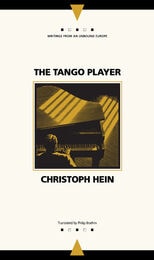
The Tango Player
Christoph Hein
Northwestern University Press, 1994
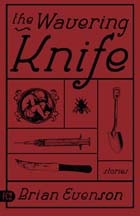
The Wavering Knife
StoriesBrian Evenson
University of Alabama Press, 2004
Where reality fractures and darkness takes shape.
Replete with the brutality, primordial waste, and savage blankness familiar to readers of his earlier works, Evenson's Kafkaesque allegories entice the mind while stubbornly disordering it. In the title story an obsessive consciousness folds back on itself, creating a vertiginous mélange of Poe and Borges, both horrific and metaphysical. Here, as in "Moran's Mexico," and "Greenhouse," the solitary nature of reading and writing leads characters beyond human limits, making the act of putting words to paper a monstrous violation opening onto madness. In "White Square" the representation of humans by dimly colored shapes confirms our feeling that something lies behind these words, while seeming to mock us with the futility of seeking it. Evenson's enigmatic names-Thurm, Bein, Hatcher, Burlun-placeable landscapes, and barren rooms all combine to create a semblance of conceptual abstraction, as though the material universe had come to exist inside someone's head.
Small wonder that Evenson's work has attracted so much attention among philosophers, literary critics, and other speculative intelligences, for it continuously projects a tantalizing absence, as though there were some key or code that, if only we knew it, would illuminate everything. However, the blade of discernment wavers, and we are left to our own groping interpretations.
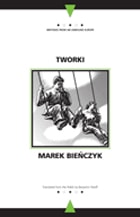
Tworki
Marek Bienczyk
Northwestern University Press, 2008
In Tworki, a village just southwest of Warsaw, there is a psychiatric hospital and in that hospital, the patients and their caretakers are hidden from the war just outside their iron gates. Our hero, Jurek, answers an ad in the paper for a job there and finds himself keeping the books alongside a knockout strawberry blonde named Sonia. They and their group of friends—vital young people like Marcel, an initial rival for Jurek; Olek, Sonia’s chosen love; and Janka, with whom Jurek becomes involved—do their jobs, picnic on the weekends, and dance in the gardens on the grounds of the hospital. Jurek speaks often of, and even in, verse, whether he is talking to his friends or in letters to a distant and admiring cousin. He and his friends live lives that defy the discord and destruction of the war in Europe, striving to rediscover or save whatever beauty they can. Much of this beauty is embodied by Sonia, who is beloved of all the friends and patients at the asylum. But the revitalizing spring they all hope will come for Poland is not to arrive this year. Despite the relative safety of their odd surroundings, the world and the war soon come for the friends. Olek’s absences are longer and unexplained. Marcel is not what he seems, and he and his wife mysteriously disappear, she says, to the gas. And the perfection that Sonia embodies cannot ultimately be kept, by the friends, by the nation, or even by Sonia herself.
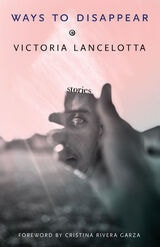
Ways to Disappear
StoriesVictoria Lancelotta, Foreword by Cristina Rivera Garza
University of Alabama Press, 2023
Winner of FC2’s Catherine Doctorow Prize in Innovative Fiction
Some disappearances are chosen. Others are survived.
The stories in Victoria Lancelotta’s Ways to Disappear excavate the unexamined places between dread and desire, promise and threat, where the body is both prison and salvation. Populated by the grieving and the exultant and those who see no difference between the two, by men and women who are only a little bit broken and boys and girls who can’t wait to be, by souls untethered, rootless, yet bound by blood and flesh, Lancelotta’s characters are driven by the irresistible need to be a bigger part of the worlds they each inhabit, by turns strange and commonplace. In language lush and jagged, never sentimental, these stories scrutinize the exhaustion and enchantment of the everyday: houses seething with resentment and devotion, cars dream-full and hurtling the children in them into a world they think they know but can’t imagine; front porches, back yards, luxury hotels, and truck stops. Lancelotta understands that sometimes people check their wounds not to see if they’ve healed, but to be sure they’re still there.
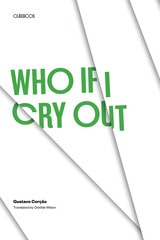
Who if I Cry Out
By Gustavo Corção
University of Texas Press, 1967
Three months to live.
José Maria, a contemplative engineer in late middle age, and now a victim of leukemia, has received a death sentence from his doctor. His life has been a frustrating nonfulfillment of his early hopes, and his musings are many and varied as his life wanes.
The Brazilian writer Corção's remarkable novel is the diary of this thoughtful man facing the imminent prospect of death and trying to find the meaning of life—and of death—while evaluating his own existence.