Results by title
1325 books match the query 'Psychology' and 104 start with a
A Child's Work
The Importance of Fantasy PlayVivian Gussin Paley
University of Chicago Press, 2004
A Child's Work goes inside classrooms around the globe to explore the stunningly original language of children in their role-playing and storytelling. Drawing from their own words, Paley examines how this natural mode of learning allows children to construct meaning in their worlds, meaning that carries through into their adult lives. Proof that play is the work of children, this compelling and enchanting book will inspire and instruct teachers and parents as well as point to a fundamental misdirection in today's educational programs and strategies.
A Clinician's Guide to Progressive Supranuclear Palsy
Golbe, Lawrence I
Rutgers University Press, 2019
A Clinician’s Guide to Progressive Supranuclear Palsy emphasizes early diagnostic signs, medication options, non-pharmacologic management and palliative care. It offers a quick overview of the complications of PSP most likely to prompt an ER visit; a widening spectrum of PSP variants; and ample description of the genetics, epidemiology, natural history, pathology, molecular biology and neurochemistry of PSP. The PSP Rating Scale used in the book is a convenient tool for clinicians in routine practice and the leading PSP clinical measure world-wide. Golbe provides a practical and useful guidebook to help all clinicians learn and battle this complex disorder.
A Cold War State of Mind
Brainwashing and Postwar American SocietyMatthew W. Dunne
University of Massachusetts Press, 2013
First popularized during the 1950s, the concept of “brainwashing” is often viewed as an example of Cold War paranoia, an amusing relic of a bygone era. Yet as Matthew W. Dunne shows in this study, over time brainwashing came to connote much more than a sinister form of Communist mind control, taking on broader cultural and political meanings.
Moving beyond well-known debates over Korean War POWs and iconic cultural texts like The Manchurian Candidate, Dunne explores the impact of the idea of brainwashing on popular concerns about freedom, individualism, loyalty, and trust in authority. By the late 1950s the concept had been appropriated into critiques of various aspects of American life such as an insistence on conformity, the alleged “softening” of American men, and rampant consumerism fueled by corporate advertising that used “hidden” or “subliminal” forms of persuasion. Because of these associations and growing anxieties about the potential misuse of psychology, concerns about brainwashing contributed to a new emphasis on individuality and skepticism toward authority in the 1960s. The notion even played an unusual role in the 1968 presidential race, when Republican frontrunner George Romney's claim that he had been “brainwashed” about the Vietnam War by the Johnson administration effectively destroyed his campaign.
In addition to analyzing the evolving meaning of brainwashing over an extended period of time, A Cold War State of Mind explores the class and gender implications of the idea, such as the assumption that working-class POWs were more susceptible to mind control and that women were more easily taken in by the manipulations of advertisers.
A Desired Past
A Short History of Same-Sex Love in AmericaLeila J. Rupp
University of Chicago Press, 1999
"Most extraordinary about Leila J. Rupp's indeed short, two-hundred-page history of 'same-sex love and sexuality' is not that it manages to account for such a variety of individuals, races, and classes or take in such a broad chronological and thematic range, but rather that it does all this with such verve, lucidity, and analytical rigor. . . . [A]n elegant, inspiring survey." —John Howard, Journal of American History
A Fan's Life
The Agony of Victory and the Thrill of DefeatPaul Campos
University of Chicago Press, 2022
The Pass. The Curse. The Double Doink. A sports fan’s life is not just defined by intense moments on a field, it’s scarred by them. For a real fan, winning isn’t everything—losing is. The true fans, it’s said, are those who have suffered the most, enduring lives defined by irrational obsession, fervid hopes, and equally gut-wrenching misery. And as Paul Campos shows, those deep feelings are windows not just onto an individual fan’s psychology but onto some of our shared concepts of community, identity, and belonging—not all of which are admirable. In A Fan’s Life, he seeks not to exalt a particular team but to explore fandom’s thorniest depths, excavating the deeper meanings of the fan’s inherently unhappy life.
A Fan’s Life dives deep into the experience of being an ardent fan in a world defined more and more by the rhetoric of “winners” and “losers.” In a series of tightly argued chapters that suture together memoir and social critique, Campos chronicles his lifelong passion for University of Michigan football while meditating on fandom in the wake of the unprecedented year of 2020—when, for a time, a global pandemic took away professional and collegiate sports entirely. Fandom isn’t just leisure, he shows; it’s part of who we are, and part of even our politics, which in the age of Donald Trump have become increasingly tribal and bloody. Campos points toward where we might be heading, as our various partisan affiliations—fandoms with a grimly national significance—become all the more intense and bitterly self-defining. As he shows, we’re all fans of something, and making sense of fandom itself might offer a way to wrap our heads around our increasingly divided reality, on and off the field.
A Fatherless Child
Autobiographical Perspectives of African American MenTara T. Green
University of Missouri Press, 2009
Through her analysis, Green emphasizes the role of community as a father-substitute in producing successful black men, the impact of fatherlessness on self-perceptions and relationships with women, and black men’s engagement with healing the pain of abandonment. She also looks at why these four men visited Africa to reclaim a cultural history and identity, showing how each developed a clearer understanding of himself as an American man of African descent.

A Generation Divided
German Children and the Berlin WallThomas A. Davey
Duke University Press, 1987
Thomas Davey conducted interviews with children both sides of the Wall, participated in their daily lives, collected their drawings, talked with their teachers and families and grew aware of just how attentive children can be to moral and political subtleties of national life. The result is a revealing and dramatic portrait of a young generation coming to terms with complex national and historical circumstances of the two cites of East and West Berlin.

A History of Bisexuality
Steven Angelides
University of Chicago Press, 2001
In a book that will become the center of debate about the nature of sexuality for years to come, A History of Bisexuality compels us to rethink contemporary discourses of sexual theory and politics.
A Measure of Success
The Influence of Curriculum-Based Measurement on EducationChristine A. Espin
University of Minnesota Press, 2012
Simple in concept, far-reaching in implementation, Curriculum-Based Measurement (CBM) was developed in the 1980s as an efficient way to assess the progress of struggling students, including those with disabilities. Today, there are few areas of special education policy and practice that have not been influenced by CBM progress monitoring. The impact of CBM is reflected in recent education reforms that emphasize improvements in assessment and data-based decision making. Gathering an international group of leading researchers and practitioners, A Measure of Success provides a comprehensive picture of the past, present, and possible future of CBM progress monitoring. The book will be instrumental for researchers and practitioners in both general and special education, particularly those involved in the rapidly growing Response to Intervention (RTI) approach, an approach used to determine the performance and placement of students with learning difficulties.
A Measure of Success presents a nuanced examination of CBM progress monitoring in reading, math, and content-area learning to assess students at all levels, from early childhood to secondary school, and with a wide range of abilities, from high- and low-incidence disabilities to no disabilities. This study also evaluates how the approach has affected instructional practices, teacher training, psychology and school psychology, educational policy, and research in the United States and beyond.
Timely and unique, this volume will interest anyone in education who wants to harness the potential advantage of progress monitoring to improve outcomes for students.
Contributors: Laurence Bergeron; Lionel A. Blatchley; Renee Bradley; Mary T. Brownell, U of Florida; Todd W. Busch, U of St. Thomas; Heather M. Campbell, St. Olaf College; Ann Casey; Theodore J. Christ, U of Minnesota; Kelli D. Cummings, U of Oregon; Eric Dion, U du Québec à Montréal; Isabelle Dubé, U du Québec à Montréal; Hank Fien, U of Oregon; Anne Foegen, Iowa State U; Douglas Fuchs, Vanderbilt U; Lynn S. Fuchs, Vanderbilt U; Gary Germann; Kim Gibbons; Roland H. Good III, U of Oregon; Anne W. Graves, San Diego State U; John L. Hosp, U of Iowa; Michelle K. Hosp; Joseph R. Jenkins, U of Washington; Ruth A. Kaminski; Panayiota Kendeou, Neapolis U Pafos, Cyprus; Dong-il Kim, Seoul National U, South Korea; Amanda Kloo, U of Pittsburgh; Danika Landry, U du Québec à Montréal; Erica Lembke, U of Missouri; Francis E. Lentz Jr., U of Cincinnati; Sylvia Linan-Thompson, U of Texas at Austin; Charles D. Machesky; Doug Marston; James L. McLeskey, U of Florida; Timothy C. Papadopoulos, U of Cyprus; Kelly A. Powell-Smith; Greg Roberts, U of Texas at Austin; Margaret J. Robinson; Steven L. Robinson, Minnesota State U, Mankato; Catherine Roux, U du Québec à Montréal; Barbara J. Scierka; Edward S. Shapiro, Lehigh U; Jongho Shin, Seoul National U, South Korea; Mark R. Shinn, National Louis U; James G. Shriner, U of Illinois, Urbana-Champaign; Paul T. Sindelar, U of Florida; Deborah L. Speece, U of Maryland; Pamela M. Stecker, Clemson U; Martha L. Thurlow, U of Minnesota; RenátaTichá, U of Minnesota; Gerald Tindal, U of Oregon; Paul van den Broek, Leiden U, the Netherlands; Sharon Vaughn, U of Texas at Austin; Dana L. Wagner, Augsburg College; Teri Wallace, Minnesota State U, Mankato; Jeanne Wanzek, Florida State U; Mary Jane White, U of Minnesota; Mitchell L. Yell, U of South Carolina; Naomi Zigmond, U of Pittsburgh.
A Passion for Specificity
Confronting Inner Experience in Literature and ScienceMarco Caracciolo and Russell Hurlburt
The Ohio State University Press, 2016
A Passion for Specificity, with its personal revelations, unexpected twists, and confrontational style, reads like an epistolary novel, but it is a serious exploration of ideas at the heart of literature and science. It is a thoughtful attempt at advancing the emerging “cognitive humanities,” clarifying a number of core issues in the cross-pollination of literature, psychology, philosophy, and consciousness science.
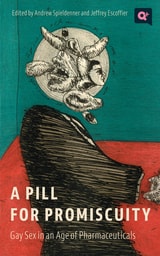
A Pill for Promiscuity
Gay Sex in an Age of PharmaceuticalsAndrew R. Spieldenner
Rutgers University Press, 2023
Finalist for Lambda Literary Award for Best LGBTQ+ Anthology
For a generation of gay men who came of age in the 1980s and 1990s, becoming sexually active meant confronting the dangers of catching and transmitting HIV. In the 21st century, however, the development of viral suppression treatments and preventative pills such as PrEP and nPEP has massively reduced the risk of acquiring HIV. Yet some of the stigma around gay male promiscuity and bareback sex has remained, inhibiting open dialogues about sexual desire, risk, and pleasure.
A Pill for Promiscuity brings together academics, artists, and activists—from different generations, countries, ethnic backgrounds, and HIV statuses—to reflect on how gay sex has changed in a post-PrEP era. Some offer personal perspectives on the value of promiscuity and the sexual communities it fosters, while others critique unequal access to PrEP and the increased role Big Pharma now plays in gay life. With a diverse group of contributors that includes novelist Andrew Holleran, trans scholar Lore/tta LeMaster, cartoonist Steve MacIsaac, and pornographic film director Mister Pam, this book asks provocative questions about how we might reimagine queer sex and sexuality in the 21st century.

A Process Model
Eugene T. Gendlin; Foreword by Robert A. Parker
Northwestern University Press, 2018
A Process Model, Gendlin’s magnum opus, offers no less than a new alternative to the dualism of mind and body. Beginning with living process, the body’s simultaneous interaction and identity with its environment, Gendlin systematically derives nonreductive concepts that offer novel and rigorous ways to think from within lived precision. In this way terms such as body, environment, time, space, behavior, language, culture, situation, and more can be understood with both great force and great subtlety.
Gendlin’s project is relevant to discussions not only in philosophy but in other fields in which life process is central—including biology, environmental management, environmental humanities, and ecopsychology. It provides a genuinely new philosophical approach to complex societal challenges and environmental issues.

A Psychiatric Primer for the Veteran’s Family and Friends
Alexander G. Dumas and Grace Graham Keen
University of Minnesota Press, 1945
A Psychiatric Primer for the Veteran's Family and Friends was first published in 1945. Minnesota Archive Editions uses digital technology to make long-unavailable books once again accessible, and are published unaltered from the original University of Minnesota Press editions.
For the individual as for the nation, war is not done with when the guns stop firing and the soldiers come home. Its continuing effects are easily recognized in the lives of the maimed and the disfigured; they are no less distressingly real for those whose injuries are of the mind and emotions and nerves. And of these a half million or more have been discharged from the armed services.
What can families and friends do to help these men on their road back to health? A Psychiatric Primer answers this question in direct and practical terms. Affection and the best of intentions cannot alone tell one how to deal wisely and effectively with war torn nerves in a husband, son, friend, or fellow worker. One needs also intelligent understanding and a sound knowledge of the truly helpful attitude and behavior in a given situation. It is this understanding and this knowledge that A Psychiatric Primer offers to families and friends of returned servicemen.
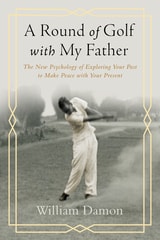
A Round of Golf with My Father
The New Psychology of Exploring Your Past to Make Peace with Your PresentDamon, William
Templeton Press, 2021
Viewing our past through the eyes of maturity can reveal insights that our younger selves could not see. Lessons that eluded us become apparent. Encounters that once felt like misfortunes now become understood as valued parts of who we are. We realize what we’ve learned and what we have to teach. And we’re encouraged to chart a future that is rich with purpose.
In A Round of Golf with My Father, William Damon introduces us to the “life review.” This is a process of looking with clarity and curiosity at the paths we’ve traveled, examining our pasts in a frank yet positive manner, and using what we’ve learned to write purposeful next chapters for our lives.
For Damon, that process began by uncovering the mysterious life of his father, whom he never met and never gave much thought to. What he discovered surprised him so greatly that he was moved to reassess the events of his own life, including the choices he made, the relationships he forged, and the career he pursued.
Early in his life, Damon was led to believe that his father had been killed in World War II. But the man survived and went on to live a second life abroad. He married a French ballerina, started a new family, and forged a significant Foreign Service career. He also was an excellent golfer, a bittersweet revelation for Damon, who wishes that his father had been around to teach him the game.
We follow Damon as he struggles to make sense of his father’s contradictions and how his father, even though living a world apart, influenced Damon’s own development in crucial ways. In his life review, Damon uses what he learned about his father to enhance his own newly emerging self-knowledge.
Readers of this book may come away inspired to conduct informal life reviews for themselves. By uncovering and assembling the often overlooked puzzle pieces of their pasts, readers can seek present-day contentment and look with growing optimism to the years ahead.
A Search for Clarity
Science and Philosophy in Lacan's OeuvreJean-Claude Milner; Translated from the French by Ed Pluth
Northwestern University Press, 2021
In A Search for Clarity, Jean‑Claude Milner argues that although Jacques Lacan’s writing is notoriously obscure his oeuvre is entirely clear. In a discussion that considers the difference between the esoteric and exoteric works of Plato and Aristotle, Milner argues that Lacan’s oeuvre is to be found in his published writings alone, not his transcribed seminars, and that these published writings contain his official doctrine. Thus, Lacan’s oeuvre is already complete, even though many of his seminars remain unpublished.
According to Milner, Lacan’s fundamental idea is that the subject psychoanalysis works on is the subject of science. Milner suggests that this is a supplement to Alexandre Koyré’s and Alexandre Kojève’s accounts of modern science, for which mathematization and a break from the ancient episteme were key.
A Search for Clarity is the definitive statement on how Lacan viewed the relationship between psychoanalysis and science, and on how Lacan’s thinking evolved as he struggled to draw out the consequences of the equation he posited between psychoanalysis and science. Milner’s work on Lacan has been essential reading in French for decades. This English translation will make his illuminating work accessible to a broader audience.
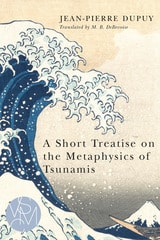
A Short Treatise on the Metaphysics of Tsunamis
Jean-Pierre Dupuy
Michigan State University Press, 2015
Jean-Pierre Dupuy asks whether, from Lisbon to Sumatra, mankind has really learned nothing about evil. When moral crimes are unbearably great, he argues, our ability to judge evil is gravely impaired, and the temptation to regard human atrocity as an attack on the natural order of the world becomes irresistible. This impulse also suggests a kind of metaphysical ruse that makes it possible to convert evil into fate, only a fate that human beings may choose to avoid. Postponing an apocalyptic future will depend on embracing this paradox and regarding the future itself in a radically new way.
The American edition of Dupuy’s classic essay, first published in 2005, also includes a postscript on the 2011 nuclear accident that occurred in Japan, again as the result of a tsunami.
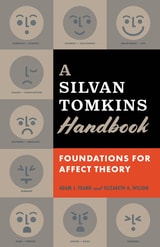
A Silvan Tomkins Handbook
Foundations for Affect TheoryAdam J. Frank
University of Minnesota Press, 2020
An accessible guide to the work of American psychologist and affect theorist Silvan Tomkins
The brilliant and complex theories of psychologist Silvan Tomkins (1911–1991) have inspired the turn to affect in the humanities, social sciences, and elsewhere. Nevertheless, these theories are not well understood. A Silvan Tomkins Handbook makes his theories portable across a range of interdisciplinary contexts and accessible to a wide variety of contemporary scholars and students of affect.
A Silvan Tomkins Handbook provides readers with a clear outline of Tomkins’s affect theory as he developed it in his four-volume masterwork Affect Imagery Consciousness. It shows how his key terms and conceptual innovations can be used to build robust frameworks for theorizing affect and emotion. In addition to clarifying his affect theory, the Handbook emphasizes Tomkins’s other significant contributions, from his broad theories of imagery and consciousness to more focused concepts of scenes and scripts. With their extensive experience engaging and teaching Tomkins’s work, Adam J. Frank and Elizabeth A. Wilson provide a user-friendly guide for readers who want to know more about the foundations of affect studies.
A Thomistic Introduction to Modern Psychology
Leslie Kelley
Catholic University of America Press, 2026
A Thousand Plateaus
Capitalism and SchizophreniaGilles Deleuze
University of Minnesota Press, 1987
A Time for Wisdom
Knowledge, Detachment, Tranquility, TranscendencePaul T. McLaughlin
Templeton Press, 2022
These are volatile times. Fear, suspicion, and cynicism are chronic. A mere tweet inflames the passions of millions while click-bait “hot takes” stoke the amygdalas of everyone with an Internet connection. We treat those not in our tribe as a threat and deem anyone with a different opinion as evil. Mistaking myopia for measure, we lack all sense of proportion in our judgments. We are shortsighted, mired in the present, ignorant of history, and blind to the future. We thought that technology would save us by connecting us to each other and the world’s information. Instead, it enticed our vices, encouraged our biases, and eroded the one virtue we need now more than ever: wisdom.
A Time for Wisdom is for readers who feel beleaguered by the incivility of the modern world, dispirited by its coarse rhetoric and toxic partisanship. It is an invitation to escape the shallow cacophony and restore peace and perspective to our daily lives. Written by two psychologists, the book takes the best scientific research on wisdom and integrates it with timeless concepts that have, for ages, guided troubled souls through life’s hardships. From this foundation, the authors present four steps we can follow to practice wisdom in the 21st Century:
- Receiving knowledge.
- Practicing detachment.
- Experiencing tranquility.
- Cultivating transcendence.
These are profound and spiritual principles that can bring us immense satisfaction when we aspire to live by them.
In A Time for Wisdom, the authors show us how. They commend a course of action towards the Good, the True, and the Beautiful, towards calm and clear moral reasoning. They lead us out of the circus of contemporary life and show us a path beyond our petty self-centeredness. By journeying along that path, we can, like the great sages and scientists before us, rise above the immediacy of the moment and partake of the numinous and the infinite.
A View from Life's Edge
Discovering What Really Matters with Older Women Across the GlobeCorinne G. Dempsey
Rutgers University Press, 2026
Speaking with nearly one hundred women over the age of eighty in four locations—northern Iceland, south India, a retirement community in California, and a convent in upstate New York—Corinne G. Dempsey finds that, as we near life’s end, we gain clarity about what really matters in life. Women’s stories and reflections, in which sorrow and loss are central to a life well lived, help to expand our sense of what it means to be human.
Drawing on the paradoxical wisdom of world religions and mystical traditions to frame late-life tendencies across cultures, Dempsey portrays these accounts as a corrective to mainstream values that defeat and diminish us. Dempsey encourages us to turn away from ageist fears rather than denying life’s inevitable end. Learning from older women’s perspectives, we might move their edge-of-life views closer to the center.
A Violent Embrace
Art and Aesthetics after Representationrenée c. hoogland
Dartmouth College Press, 2014
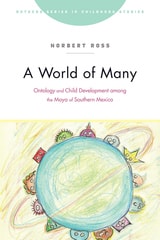
A World of Many
Ontology and Child Development among the Maya of Southern MexicoNorbert Ross
Rutgers University Press, 2023

ALA Guide to Sociology and Psychology Reference
Denise Beaubien Bennett
American Library Association, 2011
Aberrations of Mourning
Laurence A. Rickels
University of Minnesota Press, 2011
Rickels studies mourning and melancholia within and around psychoanalysis, analyzing the writings of such thinkers as Freud, Nietzsche, Lessing, Heinse, Artaud, Keller, Stifter, Kafka, and Kraus. Rickels maintains that we must shift the way we read literature, philosophy, and psychoanalysis to go beyond traditional Oedipal structures.
Aberrations of Mourning argues that the idea of the crypt has had a surprisingly potent influence on psychoanalysis, and Rickels shows how society’s disturbed relationship with death and dying, our inability to let go of loved ones, has resulted in technology to form more and more crypts for the dead by preserving them—both physically and psychologically—in new ways.

Abject Relations
Everyday Worlds of AnorexiaWarin, Megan
Rutgers University Press, 2009
Unraveling anorexia's complex relationships and contradictions, Warin provides a new theoretical perspective rooted in a socio-cultural context of bodies and gender. Abject Relations departs from conventional psychotherapy approaches and offers a different "logic," one that involves the shifting forces of power, disgust, and desire and provides new ways of thinking that may have implications for future treatment regimes.
Absolute Artist
The Historiography of a ConceptCatherine M. Soussloff
University of Minnesota Press, 1997
Analyzes the myth of the artist in western culture.
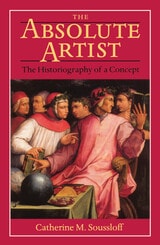
The myth of the artist-genius has long had a unique hold on the imagination of Western culture. Iconoclastic, temperamental, and free from the constraints of society, these towering figures have been treated as fixed icons regardless of historical context or individual situation. In The Absolute Artist, Catherine M. Soussloff challenges this view in an engaging consideration of the social construction of the artist from the fifteenth century to the present.
Traditional art history has held that the concept of the artist-genius arose in the Enlightenment. Soussloff disputes this, arguing that earlier writings—artists’ biographies written as long ago as the early fifteenth century-determined and continue to determine our understanding of the myth of the artist. Moving chronologically, Soussloff shifts from fifteenth-century Florence to nineteenth-century Germany, the birthplace of the discipline of art history in its academic form, and considers the cultural historiography of Aby Warburg and Jacob Burckhardt. She discusses intellectual life in early-twentieth-century Vienna, demonstrating the rich cross-fertilization that occurred between art history and psychoanalysis, and scrutinizes the historical situation of Jewish art historians and psychoanalysts in Vienna in the 1930s, considering the impact of exile and an assimilationist ethic on the discourse of art history. Soussloff concludes with a groundbreaking analysis of one of the earliest and most persistent elements of biography, the “artist anecdote,” demonstrating that it is essential in the construction of the figure of the artist. Singular in its breadth and ambition, The Absolute Artist is the first book to analyze the artist’s biography as a rhetorical form and literary genre rather than as an unassailable source of fact and knowledge.
Accident Prone
A History of Technology, Psychology, and Misfits of the Machine AgeJohn C. Burnham
University of Chicago Press, 2009
Technology demands uniformity from human beings who encounter it. People encountering technology, however, differ from one another. Thinkers in the early twentieth century, observing the awful consequences of interactions between humans and machines—death by automobiles or dismemberment by factory machinery, for example—developed the idea of accident proneness: the tendency of a particular person to have more accidents than most people. In tracing this concept from its birth to its disappearance at the end of the twentieth century, Accident Prone offers a unique history of technology focused not on innovations but on their unintended consequences.
Here, John C. Burnham shows that as the machine era progressed, the physical and economic impact of accidents coevolved with the rise of the insurance industry and trends in twentieth-century psychology. After World War I, psychologists determined that some people are more accident prone than others. This designation signaled a shift in social strategy toward minimizing accidents by diverting particular people away from dangerous environments. By the 1960s and 1970s, however, the idea of accident proneness gradually declined, and engineers developed new technologies to protect all people, thereby introducing a hidden, but radical, egalitarianism.
Lying at the intersection of the history of technology, the history of medicine and psychology, and environmental history, Accident Prone is an ambitious intellectual analysis of the birth, growth, and decline of an idea that will interest anyone who wishes to understand how Western societies have grappled with the human costs of modern life.
Achievement-Related Motives in Children
Charles P. Smith
Russell Sage Foundation, 1969
Addicted to Rehab
Race, Gender, and Drugs in the Era of Mass IncarcerationMcKim, Allison
Rutgers University Press, 2017
Winner of the 2018 Book of the Year Award from the American Society of Criminology's Division on Women and Crime
After decades of the American “war on drugs” and relentless prison expansion, political officials are finally challenging mass incarceration. Many point to an apparently promising solution to reduce the prison population: addiction treatment.
In Addicted to Rehab, Bard College sociologist Allison McKim gives an in-depth and innovative ethnographic account of two such rehab programs for women, one located in the criminal justice system and one located in the private healthcare system—two very different ways of defining and treating addiction. McKim’s book shows how addiction rehab reflects the race, class, and gender politics of the punitive turn. As a result, addiction has become a racialized category that has reorganized the link between punishment and welfare provision. While reformers hope that treatment will offer an alternative to punishment and help women, McKim argues that the framework of addiction further stigmatizes criminalized women and undermines our capacity to challenge gendered subordination. Her study ultimately reveals a two-tiered system, bifurcated by race and class.
Addiction, Inc.
Medication-Assisted Treatment and America's Forgotten War on DrugsEmily Dufton
University of Chicago Press, 2026
How the war on drugs created the gold standard treatment for addiction—until America’s opioid crisis got privatized for profit, to the detriment of patients.
Despite epidemic levels of overdoses in the United States, by 2020, only twenty percent of Americans suffering from opioid use disorder (OUD) received medication-assisted treatment (MAT), the gold standard of addiction treatment, which uses methadone, buprenorphine, or naltrexone to reduce illicit drug use and curb the symptoms of withdrawal. While MAT is the most effective treatment available for OUD, it’s also the most controversial, the most expensive, and the most difficult to access. And yet, the medications at the center of this treatment—and the private industries that distribute them—generate roughly sixteen billion dollars each year, on par with national sales of coffee and pet food.
In Addiction, Inc., historian Emily Dufton explains how this promising avenue of treatment emerged during President Richard Nixon’s war on drugs in 1971 as a radical experiment in public health, when hundreds of federally-funded treatment clinics opened nationwide. Dufton then explores how these nationalized clinics gave way to an immensely profitable private industry that offers poor care at high costs to an insufficient number of people. Drawing on original research and over a hundred interviews with policymakers, medical experts, pharmaceutical lobbyists, and patients and their families, she tells a gripping story of squandered potential and missed opportunities, as MAT transformed from a revolutionary political project launched from the White House itself into a commercial success—and a public health disaster.
Urgent, eye-opening, and deeply human, Addiction, Inc. reveals how, over the past fifty years, the United States built an addiction treatment system that made recovery harder instead of easier, and what it will take to change its course.
Addiction, Inc.
Medication-Assisted Treatment and America’s Forgotten War on DrugsEmily Dufton
University of Chicago Press, 2026
Despite epidemic levels of overdoses in the United States, by 2020, only twenty percent of Americans suffering from opioid use disorder (OUD) received medication-assisted treatment (MAT), the gold standard of addiction treatment, which uses methadone, buprenorphine, or naltrexone to reduce illicit drug use and curb the symptoms of withdrawal. While MAT is the most effective treatment available for OUD, it’s also the most controversial, the most expensive, and the most difficult to access. And yet, the medications at the center of this treatment—and the private industries that distribute them—generate roughly sixteen billion dollars each year, on par with national sales of coffee and pet food.
In Addiction, Inc., historian Emily Dufton explains how this promising avenue of treatment emerged during President Richard Nixon’s war on drugs in 1971 as a radical experiment in public health, when hundreds of federally-funded treatment clinics opened nationwide. Dufton then explores how these nationalized clinics gave way to an immensely profitable private industry that offers poor care at high costs to an insufficient number of people. Drawing on original research and over a hundred interviews with policymakers, medical experts, pharmaceutical lobbyists, and patients and their families, she tells a gripping story of squandered potential and missed opportunities, as MAT transformed from a revolutionary political project launched from the White House itself into a commercial success—and a public health disaster.
Urgent, eye-opening, and deeply human, Addiction, Inc. reveals how, over the past fifty years, the United States built an addiction treatment system that made recovery harder instead of easier, and what it will take to change its course.
Addiction
Entries and ExitsJon Elster
Russell Sage Foundation, 1999
Adolescent Personality and Behavior
MMPI Patterns of Normal, Delinquent, Dropout, and Other OutcomesStarke Hathaway
University of Minnesota Press, 1963

Adolescent Psychiatry, Volume 10
Developmental and Clinical StudiesEdited by Sherman C. Feinstein and Peter L. Giovacchini
University of Chicago Press, 1983
Adolescent Psychiatry, Volume 11
Developmental and Clinical StudiesEdited by Max Sugar
University of Chicago Press, 1984
Adolescent Psychiatry, Volume 12
Developmental and Clinical StudiesEdited by Sherman C. Feinstein, Max Sugar, Aaron H. Esman, John G. Looney, Allan
University of Chicago Press, 1985
Adolescent Psychiatry, Volume 13
Developmental and Clinical StudiesEdited by Sherman C. Feinstein, Max Sugar, Aaron H. Esman, John G. Looney, Allan
University of Chicago Press, 1986
Adolescent Psychiatry, Volume 14
Developmental and Clinical StudiesEdited by Sherman C. Feinstein, Aaron H. Esman, John G. Looney, George H. Orvin,
University of Chicago Press, 1987
Adolescent Psychiatry, Volume 15
Developmental and Clinical StudiesEdited by Sherman C. Feinstein, Aaron H. Esman, John G. Looney, George H. Orvin,
University of Chicago Press, 1988
Adolescent Psychiatry, Volume 16
Developmental and Clinical StudiesEdited by Sherman C. Feinstein
University of Chicago Press, 1989
Adolescent Psychiatry, Volume 17
Developmental and Clinical StudiesEdited by Sherman C. Feinstein
University of Chicago Press, 1990
Adolescent Psychiatry, Volume 18
Edited by Sherman C. Feinstein, Aaron H. Esman, Harvey A. Horowitz, John G. Loon
University of Chicago Press, 1992
Adolescent Psychiatry, Volume 19
Edited by Sherman C. Feinstein and Richard C. Marohn
University of Chicago Press, 1993
Adolescent Psychiatry, Volume 7
Developmental and Clinical StudiesEdited by Sherman C. Feinstein and Peter L. Giovacchini
University of Chicago Press, 1979
Adolescent Psychiatry, Volume 8
Developmental and Clinical StudiesEdited by Sherman C. Feinstein and Peter L. Giovacchini
University of Chicago Press, 1981
Adolescent Psychiatry, Volume 9
Developmental and Clinical StudiesEdited by Sherman C. Feinstein and Peter L. Giovacchini
University of Chicago Press, 1982
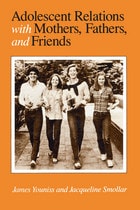
Adolescent Relations with Mothers, Fathers and Friends
James Youniss and Jacqueline Smollar
University of Chicago Press, 1987
"A must for anyone interested in adolescent behavior."—Edward Z. Dager, Contemporary Sociology

Adolf Hitler
A Psychological Interpretation of His Views on Architecture, Art, and MusicSherree Owens Zalampas
University of Wisconsin Press, 1990
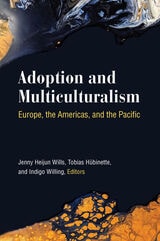
Adoption and Multiculturalism
Europe, the Americas, and the PacificJenny Heijun Wills, Tobias Hübinette, and Indigo Willing, Editors
University of Michigan Press, 2020
The contributors represent a wide range of disciplines, cultures, and connections in relation to the adoption constellation, bringing perspectives from Europe (including Scandinavia), Canada, the United States, and Australia. The book brings together the various methodologies of literary criticism, history, anthropology, sociology, and cultural theory to demonstrate the multifarious and robust ways that adoption and multiculturalism might be studied and considered. Edited by three transnational and transracial adoptees, Adoption and Multiculturalism: Europe, the Americas, and the Pacific offers bold new scholarship that revises popular notions of transracial and transnational adoption as practice and phenomenon.