Results by title

44 books match the query 'Public Finance'

cover of Behavioral Public Finance

Behavioral Public Finance

Edward J. McCaffery

Russell Sage Foundation, 2006

Behavioral economics questions the basic underpinnings of economic theory, showing that people often do not act consistently in their own self-interest when making economic decisions. While these findings have important theoretical implications, they also provide a new lens for examining public policies, such as taxation, public spending, and the provision of adequate pensions. How can people be encouraged to save adequately for retirement when evidence shows that they tend to spend their money as soon as they can? Would closer monitoring of income tax returns lead to more honest taxpayers or a more distrustful, uncooperative citizenry? Behavioral Public Finance, edited by Edward McCaffery and Joel Slemrod, applies the principles of behavioral economics to government's role in constructing economic and social policies of these kinds and suggests that programs crafted with rational participants in mind may require redesign. Behavioral Public Finance looks at several facets of economic life and asks how behavioral research can increase public welfare. Deborah A. Small, George Loewenstein, and Jeff Strnad note that public support for a tax often depends not only on who bears its burdens, but also on how the tax is framed. For example, people tend to prefer corporate taxes over sales taxes, even though the cost of both is eventually extracted from the consumer. James J. Choi, David Laibson, Brigitte C. Madrian, and Andrew Metrick assess the impact of several different features of 401(k) plans on employee savings behavior. They find that when employees are automatically enrolled in a retirement savings plan, they overwhelmingly accept the status quo and continue participating, while employees without automatic enrollment typically take over a year to join the saving plan. Behavioral Public Finance also looks at taxpayer compliance. While the classic economic model suggests that the low rate of IRS audits means far fewer people should voluntarily pay their taxes than actually do, John Cullis, Philip Jones, and Alan Lewis present new research showing that many people do not underreport their incomes even when the probability of getting caught is a mere one percent. Human beings are not always rational, utility-maximizing economic agents. Behavioral economics has shown how human behavior departs from the assumptions made by generations of economists. Now, Behavioral Public Finance brings the insights of behavioral economics to analysis of policies that affect us all.
[more]
cover of Charter School City: What the End of Traditional Public Schools in New Orleans Means for American Education

Charter School City

What the End of Traditional Public Schools in New Orleans Means for American Education

Douglas N. Harris

University of Chicago Press, 2020

In the wake of the tragedy and destruction that came with Hurricane Katrina in 2005, public schools in New Orleans became part of an almost unthinkable experiment—eliminating the traditional public education system and completely replacing it with charter schools and school choice.  Fifteen years later, the results have been remarkable, and the complex lessons learned should alter the way we think about American education.
New Orleans became the first US city ever to adopt a school system based on the principles of markets and economics. When the state took over all of the city’s public schools, it turned them over to non-profit charter school managers accountable under performance-based contracts. Students were no longer obligated to attend a specific school based upon their address, allowing families to act like consumers and choose schools in any neighborhood. The teacher union contract, tenure, and certification rules were eliminated, giving schools autonomy and control to hire and fire as they pleased.
In Charter School City, Douglas N. Harris provides an inside look at how and why these reform decisions were made and offers many surprising findings from one of the most extensive and rigorous evaluations of a district school reform ever conducted. Through close examination of the results, Harris finds that this unprecedented experiment was a noteworthy success on almost every measurable student outcome. But, as Harris shows, New Orleans was uniquely situated for these reforms to work well and that this market-based reform still required some specific and active roles for government. Letting free markets rule on their own without government involvement will not generate the kinds of changes their advocates suggest.
 
Combining the evidence from New Orleans with that from other cities, Harris draws out the broader lessons of this unprecedented reform effort. At a time when charter school debates are more based on ideology than data, this book is a powerful, evidence-based, and in-depth look at how we can rethink the roles for governments, markets, and nonprofit organizations in education to ensure that America’s schools fulfill their potential for all students.

 
[more]
cover of Deficit and Debt in Transition: The Political Economy of Public Finances in Central and Eastern Europe

Deficit and Debt in Transition

The Political Economy of Public Finances in Central and Eastern Europe

Istvan Benczes

Central European University Press, 2014
The adjustment problems of public finance in countries of Central and Eastern Europe (CEE) are often misunderstood and misinterpreted by western scholars. This book contributes to the bridging of the gap between what is being thought by external observers and what the actual public finance reality is, as described by competent local scholars. Popular political economy research has remained biased towards advanced countries and has neglected developing and transition economies. Publications on CEE countries' public finances seem to be reluctant to apply the conceptual framework of standard political economy to these countries because of the assumption that CEE economies are different from their Western peers. But is this really the case? Are CEE economies so much different that none of the well-known "Western" political economy concepts or models can be applied to the analysis of fiscal performance in the region? Benczes demonstrates that they can be safely applied in the context of CEE economies as well. He sees no need to develop a separate or unique theory designed for the study and understanding of (one-time) transition economies.
[more]
cover of Developing Country Debt and Economic Performance, Volume 1: The International Financial System

Developing Country Debt and Economic Performance, Volume 1

The International Financial System

Edited by Jeffrey D. Sachs

University of Chicago Press, 1988

For dozens of developing countries, the financial upheavals of the 1980s have set back economic development by a decade or more. Poverty in those countries has intensified as they struggle under the burden of an enormous external debt. In 1988, more than six years after the onset of the crisis, almost all the debtor countries were still unable to borrow in the international capital markets on normal terms. Moreover, the world financial system has been disrupted by the prospect of widespread defaults on those debts. Because of the urgency of the present crisis, and because similar crises have recurred intermittently for at least 175 years, it is important to understand the fundamental features of the international macroeconomy and global financial markets that have contributed to this repeated instability.

This project on developing country debt, undertaken by the National Bureau of Economic Research, provides a detailed analysis of the ongoing developing country debt crisis. The project focuses on the middle-income developing countries, particularly those in Latin America and East Asia, although many lessons of the study should apply as well to other, poorer debtor countries. The project analyzes the crisis from two perspectives, that of the international financial system as a whole (volume 1) and that of individual debtor countries (volumes 2 and 3).
[more]
cover of Developing Country Debt and Economic Performance, Volume 2: Country Studies--Argentina, Bolivia, Brazil, Mexico

Developing Country Debt and Economic Performance, Volume 2

Country Studies--Argentina, Bolivia, Brazil, Mexico

Edited by Jeffrey D. Sachs

University of Chicago Press, 1990

For dozens of developing countries, the financial upheavals of the 1980s have set back economic development by a decade or more. Poverty in those countries has intensified as they struggle under the burden of an enormous external debt. In 1988, more than six years after the onset of the crisis, almost all the debtor countries were still unable to borrow in the international capital markets on normal terms. Moreover, the world financial system has been disrupted by the prospect of widespread defaults on those debts. Because of the urgency of the present crisis, and because similar crises have recurred intermittently for at least 175 years, it is important to understand the fundamental features of the international macroeconomy and global financial markets that have contributed to this repeated instability.

This project on developing country debt, undertaken by the National Bureau of Economic Research, provides a detailed analysis of the ongoing developing country debt crisis. The project focuses on the middle-income developing countries, particularly those in Latin America and East Asia, although many lessons of the study should apply as well to other, poorer debtor countries. The project analyzes the crisis from two perspectives, that of the international financial system as a whole (volume 1) and that of individual debtor countries (volumes 2 and 3).

This second volume contains lengthy and detailed case studies of four Latin American nations—Argentina, Bolivia, Brazil, and Mexico—providing a wealth of comparative data and new statistics on the general economic development of each nation. The authors explore the various factors that contributed to the debt crisis in each country and analyze how the crisis was managed once it had taken hold. Trenchant economic analyses are enchanced by assessments of the stark political realities behind the policy choices facing each nation.
[more]
cover of Developing Country Debt and Economic Performance, Volume 3: Country Studies--Indonesia, Korea, Philippines, Turkey

Developing Country Debt and Economic Performance, Volume 3

Country Studies--Indonesia, Korea, Philippines, Turkey

Edited by Jeffrey D. Sachs and Susan M. Collins

University of Chicago Press, 1990

For dozens of developing countries, the financial upheavals of the 1980s have set back economic development by a decade or more. Poverty in those countries has intensified as they struggle under the burden of an enormous external debt. In 1988, more than six years after the onset of the crisis, almost all the debtor countries were still unable to borrow in the international capital markets on normal terms. Moreover, the world financial system has been disrupted by the prospect of widespread defaults on those debts. Because of the urgency of the present crisis, and because similar crises have recurred intermittently for at least 175 years, it is important to understand the fundamental features of the international macroeconomy and global financial markets that have contributed to this repeated instability.

This project on developing country debt, undertaken by the National Bureau of Economic Research, provides a detailed analysis of the ongoing developing country debt crisis. The project focuses on the middle-income developing countries, particularly those in Latin America and East Asia, although many lessons of the study should apply as well to other, poorer debtor countries. The project analyzes the crisis from two perspectives, that of the international financial system as a whole (volume 1) and that of individual debtor countries (volumes 2 and 3).

This third volume contains lengthy and detailed case studies of four very different Asian countries—Turkey, Indonesia, Korea, and the Philippines.
[more]
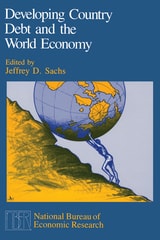
cover of Developing Country Debt and the World Economy

Developing Country Debt and the World Economy

Edited by Jeffrey D. Sachs

University of Chicago Press, 1989

For dozens of developing countries, the financial upheavals of the 1980s have set back economic development by a decade or more. Poverty in those countries have intensified as they struggle under the burden of an enormous external debt. In 1988, more than six years after the onset of the crisis, almost all the debtor countries were still unable to borrow in the international capital markets on normal terms. Moreover, the world financial system has been disrupted by the prospect of widespread defaults on those debts. Because of the urgency of the present crisis, and because similar crises have recurred intermittently for at least 175 years, it is important to understand the fundamental features of the international macroeconomy and global financial markets that have contributed to this repeated instability.

Developing Country Debt and the World Economy contains nontechnical versions of papers prepared under the auspices of the project on developing country debt, sponsored by the National Bureau of Economic Research. The project focuses on the middle-income developing countries, particularly those in Latin America and East Asia, although many lessons of the study should apply as well to other, poorer debtor countries. The contributors analyze the crisis from two perspectives, that of the international financial system as a whole and that of individual debtor countries.

Studies of eight countries—Argentina, Bolivia, Brazil, Indonesia, Mexico, the Philippines, South Korea, and Turkey—explore the question of why some countries succumbed to serious financial crises while other did not. Each study was prepared by a team of two authors—a U.S.-based research and an economist from the country under study. An additional eight papers approach the problem of developing country debt from a global or "systemic" perspective. The topics they cover include the history of international sovereign lending and previous debt crises, the political factors that contribute to poor economic policies in many debtor nations, the role of commercial banks and the International Monetary Fund during the current crisis, the links between debt in developing countries and economic policies in the industrialized nations, and possible new approaches to the global management of the crisis.

[more]
cover of Financing Institutions of Higher Education

Financing Institutions of Higher Education

Edited by John Y. Campbell and Kaye Husbands Fealing

University of Chicago Press, 2026

An insightful, wide-ranging analysis of the economic hurdles facing America’s higher education system.

The US higher education sector faces numerous economic challenges, including the stagnating number of college-age domestic students, geographic mismatch between population growth and the location of colleges and universities, financial pressures, including cutbacks in government support, growing student debt burdens, sticker prices that deter prospective applicants, and the risk of low capital market returns on endowment portfolios. This volume analyzes the responses of students, families, and the financial managers of higher education institutions to these challenges. It presents new insights into the substantial disparities in the financial structure of, and the financial challenges facing, different types of institutions. The volume draws together contributions from financial economics, public finance, and industrial organization, as well as the economics of education.

[more]
cover of Financing Local Government in Indonesia: Mis Sea#84

Financing Local Government in Indonesia

Mis Sea#84

Nick Devas

Ohio University Press, 1989

Considering the size and importance of Indonesia, remarkably little has been published in the West about the society and government of that country. With over 160 million people, it is the fifth most populous country in the world. It is an archipelago of some 13,000 islands, stretching over 5,000 kilometers from from east to west, and contains within it an amazing array of cultures, as well as ethnic, economic, and religious variations.

Not surprisingly in view of the country's great size, vast regional differences, and cultural diversity, local government in Indonesia is on a massive scale. The task of managing and financing a system of local government is a troublesome one; the development needs of different regions are vast and the tasks facing local government are generally far beyond their limited resources. It is the purpose of this book not only to describe the existing system of local government but also to analyze it, identify weaknesses and problems with the present arrangement, and to propose realistic lines of reform. This collection of essays will provide a useful and constructive contribution to the discussion of issues central to the system of local government in Indonesia.

[more]
cover of Financing Low Income Communities

Financing Low Income Communities

Julia Sass Rubin

Russell Sage Foundation, 2007
Access to capital and financial services is crucial for healthy communities.  However, many impoverished individuals and neighborhoods are routinely ignored by mainstream financial institutions.  This neglect led to the creation of community development financial institutions (CDFIs), which provide low-income communities with financial services and act as a conduit to conventional financial organizations and capital markets. Edited by Julia Sass Rubin, Financing Low-Income Communities brings together leading experts in the field to assess what we know about the challenges of bringing financial services and capital to poor communities, map out future lines of research, and propose policy reforms to make these efforts more effective. The contributors to Financing Low-Income Communities distill research on key topics related to community development finance. Daniel Schneider and Peter Tufano examine the obstacles that make saving and asset accumulation difficult for low-income households—such as the fact that tens of millions of low-income and minority adults don't have a bank account—and consider solutions, like making it easier for low-wage workers to enroll in 401(K) plans. Jeanne Hogarth, Jane Kolodinksy, and Marianne Hilgert review evidence showing that community-based financial education programs can be effective in changing families' saving and budgeting patterns.  Lisa Servon proposes strategies for addressing the challenges facing the microenterprise field in the United States.  Julia Sass Rubin discusses ways community loan and venture capital funds have adapted in response to the decreased availability of funding, and considers potential sources of new capital, such as state governments and public pension funds.  Marva Williams explores the evolution and recent performance of community development banks and credit unions.  Kathleen Engel and Patricia McCoy document the proliferation of predatory lenders, who market loans at onerous interest rates to financially vulnerable families and the devastating effects of such lending on communities—from increased crime to falling home values and lower tax revenues. Rachel Bratt reviews the policies and programs used to make rental and owned housing financially accessible.  Rob Hollister proposes a framework for evaluating the contributions of community development financial institutions. Despite the many accomplishments of CDFIs over the last four decades, changing political and economic conditions make it imperative that they adapt in order to survive.  Financing Low-Income Communities charts out new directions for public and private organizations which aim to end the financial exclusion of marginalized neighborhoods.
[more]
cover of Fiscal Federalism: Quantitative Studies

Fiscal Federalism

Quantitative Studies

Edited by Harvey S. Rosen

University of Chicago Press, 1988

We often think of fiscal decisions as being made by a single government, but in the United States the reality is that an astounding number of entities have the power to tax and spend. State, local, and federal governments all play crucial roles in the U.S. fiscal system, and the interrelation has been the source of continuing controversy. This fact is the focus of the seven papers and commentaries presented in this volume, the result of a conference sponsored by the NBER. The contributors use various quantitative tools to study policy issues, obtaining results that will interest policymakers and researchers working in the areas of taxation and public finance.

The first three papers study the distribution of power and responsibilities among the various levels of government. John Joseph Wallis and Wallace E. Oates look at the extend and evolution of decentralization in the state and local sector; Robert P. Inman examines the growth of federal grants and the structure of congressional decision making; and Jeffrey S. Zax investigates the effects of the number of government jurisdictions on aggregate local public debt and expenditures. The next three papers look at the deductibility of state and local taxes on federal tax returns. Using an econometric analysis, Douglas Holtz-Eakin and Harvey S. Rosen examine the effects of deductibility on revenue sources and level of expenditures. Lawrence B. Lindsey looks at how deductibility affects the level and type of taxation. George R. Zodrow uses a two-sector general equilibrium model to investigate revenue effects of deductibility. Finally, Charles R. Hulten and Robert M. Schwab analyze the problem of developing an accurate estimate of income for the state and local sector, finding that conventional accounting procedures have underestimated the income generated by a startling $100 billion.
[more]
cover of JLE vol 61 num 4

JLE vol 61 num 4

The University of Chicago Press

University of Chicago Press Journals, 2018

This is volume 61 issue 4 of The Journal of Law and Economics. Established in 1958, the Journal of Law and Economics publishes research on a broad range of topics, including the economic analysis of law, the economic analysis of regulation and the behavior of regulated firms, industrial organization and antitrust policy, the political economy of legislation and legislative processes, law and finance, and corporate finance and governance. The JLE has published some of the most influential and widely cited articles in these areas. It is an invaluable resource for academics and those interested in cutting-edge analysis of current public policy issues.
[more]
cover of Mayors and Money: Fiscal Policy in New York and Chicago

Mayors and Money

Fiscal Policy in New York and Chicago

Ester R. Fuchs

University of Chicago Press, 1992

Chicago and New York share similar backgrounds but have had strikingly different fates. Tracing their fortunes from the 1930s to the present day, Ester R. Fuchs examines key policy decisions which have influenced the political structures of these cities and guided them into, or clear of, periods of economic crisis.
[more]
cover of Public Management Reform and Innovation: Research, Theory, and Application

Public Management Reform and Innovation

Research, Theory, and Application

H. George Frederickson

University of Alabama Press, 1999

A foundational examination of how research, theory, and innovation shape effective public management and democratic governance.

The subject of reform in the public sector is not new; indeed, its latest rubric, reinventing government, has become good politics. Still, as the contributors ask in this volume, is good politics necessarily good government?

Given the growing desire to reinvent government, there are hard questions to be asked: Is the private sector market model suitable and effective when applied to reforming public and governmental organizations? What are the major political forces affecting reform efforts in public management? How is public management reform accomplished in a constitutional democratic government? How do the values of responsiveness, professionalism, and managerial excellence shape current public management reforms? In this volume, editors H. George Frederickson and Jocelyn M. Johnston bring together scholars with a shared interest in empirical research to confront head-on the toughest questions public managers face in their efforts to meet the demands of reform and innovation.

Throughout the book, the authors consider the bureaucratic resistance that results when downsizing and reinvention are undertaken simultaneously, the dilemma public managers face when elected executives set a reform agenda that runs counter to the law, and the mistaken belief that improved management can remedy flawed policy.



[more]
cover of Rethinking America's Highways: A 21st-Century Vision for Better Infrastructure

Rethinking America's Highways

A 21st-Century Vision for Better Infrastructure

Robert W. Poole Jr.

University of Chicago Press, 2018

Americans spend hours every day sitting in traffic. And the roads they idle on are often rough and potholed, their exits, tunnels, guardrails, and bridges in terrible disrepair. According to transportation expert Robert Poole, this congestion and deterioration are outcomes of the way America provides its highways. Our twentieth-century model overly politicizes highway investment decisions, short-changing maintenance and often investing in projects whose costs exceed their benefits.

In Rethinking America’s Highways, Poole examines how our current model of state-owned highways came about and why it is failing to satisfy its customers. He argues for a new model that treats highways themselves as public utilities—like electricity, telephones, and water supply. If highways were provided commercially, Poole argues, people would pay for highways based on how much they used, and the companies would issue revenue bonds to invest in facilities people were willing to pay for. Arguing for highway investments to be motivated by economic rather than political factors, this book makes a carefully-reasoned and well-documented case for a new approach to highways that is sure to inform future decisions and policies for U.S. infrastructure.

[more]
cover of Retrospectives on Public Finance

Retrospectives on Public Finance

Lorraine Eden, ed.

Duke University Press, 1991

Retrospectives on Public Finance contains original analyses by internationally recognized public finance scholars, including Carl Sumner Shoup, one of the discipline’s most famous practitioners. Shoup, along with Richard Musgrave and his students, pioneered the “prescriptive” or “political economy school” of public finance known for its hands-on approach and its commitment to applying theory to real world problems.
Each contributor provides a retrospective on Shoup’s various contributions to the field, reviewing the literature and assessing its relevance to current problems in public finance theory and policy. The essays highlight and analyze fiscal theory and public policy developments from the 1930s to the present in four areas: the Shoup tax missions to Japan, Venezuela, and Liberia; the tax mix; the expenditure mix; and macro public finance.

Contributors. Lorraine Eden, Carl S. Shoup, Malcolm Gillis, Minoru Nakazato, Charles E. McLure Jr., John Bossons, Richard Goode, William Vickery, Wayne Thirsk, John Graham, Stanley Winer, W. Irwin Gillespie, Melville L. McMillan, Cliff Walsh, John G. Head, Enid Slack, Edwin G. West, Richard M. Bird, Peggy B. Musgrave, Douglas A. L. Auld, John B. Burbidge, Jack M. Mintz, John Sargent, Richard A. Musgrave
[more]
cover of Rules and Restraint: Government Spending and the Design of Institutions

Rules and Restraint

Government Spending and the Design of Institutions

David M. Primo

University of Chicago Press, 2007

Government spending has increased dramatically in the United States since World War II despite the many rules intended to rein in the insatiable appetite for tax revenue most politicians seem to share. Drawing on examples from the federal and state governments, Rules and Restraint explains in lucid, nontechnical prose why these budget rules tend to fail, and proposes original alternatives for imposing much-needed fiscal discipline on our legislators.

One reason budget rules are ineffective, David Primo shows, is that politicians often create and preserve loopholes to protect programs that benefit their constituents. Another reason is that legislators must enforce their own provisions, an arrangement that is seriously compromised by their unwillingness to abide by rules that demand short-term sacrifices for the sake of long-term gain. Convinced that budget rules enacted through such a flawed legislative process are unlikely to work, Primo ultimately calls for a careful debate over the advantages and drawbacks of a constitutional convention initiated by the states—a radical step that would bypass Congress to create a path toward change. Rules and Restraint will be required reading for anyone interested in institutional design, legislatures, and policymaking.

[more]
cover of Social Security Programs and Retirement Around the World: Pension Reforms and the Health Distribution of Retirees

Social Security Programs and Retirement Around the World

Pension Reforms and the Health Distribution of Retirees

Edited by Axel Börsch-Supan and Courtney C. Coile

University of Chicago Press, 2027

A wide-ranging comparative analysis of the effects of pension reforms on health outcomes among retirees.

Pension reforms enacted in many developed economies since the late 1990s have raised statutory retirement ages and reduced benefit generosity, prompting concerns that working longer, especially in physically demanding jobs, could widen health disparities among retirees. Social Security Programs and Retirement Around the World: Pension Reforms and the Health Distribution of Retirees examines whether these reforms have altered the distribution of health outcomes in nine countries—Belgium, Canada, Denmark, Germany, Italy, Japan, the Netherlands, Spain, and the United States. Drawing on harmonized longitudinal data spanning roughly two decades and measuring health along five dimensions—functional, diagnosed, comprehensive, mental, and cognitive—the country studies find a remarkably consistent picture: in every country but the United States, health inequality among retirees has not increased significantly over the period in which benefits fell and retirement ages rose. The United States, in contrast to the other nations, shows rising inequality in functional and comprehensive health, particularly among women. The findings suggest that in most countries, pension reforms have not so far come at the cost of a widening health gap between richer and poorer retirees, although noisy data and the still-short observation window admit the possibility of effects that have yet to fully emerge.

[more]
cover of Social Security Programs and Retirement Around the World: The Effects of Pension Reforms on the Income Distribution of Retirees

Social Security Programs and Retirement Around the World

The Effects of Pension Reforms on the Income Distribution of Retirees

Edited by Axel Börsch-Supan and Courtney C. Coile

University of Chicago Press, 0

A wide-ranging comparative analysis of the effects of pension reforms on the income distribution among retirees.

Pension reforms enacted in many developed economies since the late 1990s increased labor force participation among older workers. Did they also generate greater inequality in retirement income? Social Security Programs and Retirement Around the World: The Effects of Pension Reforms on the Income Distribution of Retirees examines whether these reforms redistributed social security wealth in ways that disproportionately benefited or harmed retirees at different points in the income distribution. The chapters present country-specific analyses for Belgium, Canada, Denmark, France, Germany, Italy, Japan, the Netherlands, Spain, and the United Kingdom. Using microdata and counterfactual simulations, they find a quite varied picture: in six of the ten countries studied, pension reform reduced income inequality among retirees, while in three countries the reforms expanded it. Across countries, benefit-level changes, rather than behavioral responses to altered retirement incentives, account for most of the redistributive impact. In countries that cut benefits uniformly, lower-income retirees suffered more than higher-income retirees due to shorter life expectancies. When new programs supplemented across-the-board cuts with support for lower earners, however, inequality declined.

[more]
cover of Social Security Programs and Retirement around the World: Reforms and Retirement Incentives

Social Security Programs and Retirement around the World

Reforms and Retirement Incentives

Edited by Axel Börsch-Supan and Courtney C. Coile

University of Chicago Press, 2021

This ninth phase of the International Social Security project, which studies the experiences of twelve developed countries, examines the effects of public pension reform on employment at older ages. In the past two decades, men’s labor force participation at older ages has increased, reversing a long-term pattern of decline; participation rates for older women have increased dramatically as well. While better health, more education, and changes in labor-supply behavior of married couples may have affected this trend, these factors alone cannot explain the magnitude of the employment increase or its large variation across countries.

The studies in this volume explore how financial incentives to work at older ages have evolved as a result of public pension reforms since 1980 and how these changes have affected retirement behavior. Utilizing a common template to analyze the developments across countries, the findings suggest that social security reforms have strengthened the financial returns to working at older ages and that these enhanced financial incentives have contributed to the rise in late-life employment.

[more]
cover of Social Security Programs and Retirement around the World: The Effects of Reforms on Retirement Behavior

Social Security Programs and Retirement around the World

The Effects of Reforms on Retirement Behavior

Edited by Axel Börsch-Supan and Courtney C. Coile

University of Chicago Press, 2025

A global analysis of the effects of social security reforms on the retirement incentives and labor force trends of older workers.

Employment among older men and women has increased dramatically in recent years, reversing a downward trend in the closing decades of the twentieth century. Social Security Programs and Retirement around the World examines how changing retirement incentives have reshaped labor force participation trends among older workers. The chapters feature country-specific analyses for Belgium, Canada, Denmark, France, Germany, Italy, Japan, Netherlands, Spain, Sweden, the United Kingdom, and the United States. They find that while there is significant heterogeneity across countries, the reforms of recent decades have generally reduced the implicit tax on work at older ages. These changes correlate positively with labor force participation. The studies exploit the variation in the timing and extent of reforms of retirement incentives and employ microeconometric methods to investigate whether this correlation reflects a causal relationship. Policy changes appear to have contributed to rising labor force activity, but other factors like the role of women in the labor force, improved health, and changes in private pensions likely also play important roles.
[more]
cover of Studies in State and Local Public Finance

Studies in State and Local Public Finance

Edited by Harvey S. Rosen

University of Chicago Press, 1986

In fiscal year 1981-82, state and local government spending actually exceeded federal nondefense spending. However, past research in public finance has focused on federal spending and policies and paid little attention to the economic problems of state and local governments. Studies in State and Local Public Finance goes far in correcting this omission.

Developed from a National Bureau of Economic Research conference on state and local financing, the volume includes papers summarizing and extending recent research as well as commentaries. Covering a wide range of topics, the papers share an empirical orientation and a concern with policy issues. The first two papers look at the role of tax-exempt bonds in local public finance. Their findings suggest that tax policies significantly affect municipal borrowing practices and that financial advantage can be achieved under certain of these practices. Other papers address specific issues related to state and local tax policy: the impact of local taxes on location decisions; efficient road-use charges for trucks; and the relation of income and general sales tax systems over time. Examining issues related to United States federalism, the last paper focuses on the impact of federal grant aid to states.

The research and findings these papers report make an important contribution to the study of local public finance and should be of particular interest to policymakers and those involved in private and public financing at the local, state, or federal level.
[more]
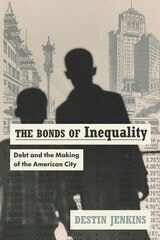
cover of The Bonds of Inequality: Debt and the Making of the American City

The Bonds of Inequality

Debt and the Making of the American City

Destin Jenkins

University of Chicago Press, 2021

Indebtedness, like inequality, has become a ubiquitous condition in the United States. Yet few have probed American cities’ dependence on municipal debt or how the terms of municipal finance structure racial privileges, entrench spatial neglect, elide democratic input, and distribute wealth and power.

In this passionate and deeply researched book, Destin Jenkins shows in vivid detail how, beyond the borrowing decisions of American cities and beneath their quotidian infrastructure, there lurks a world of politics and finance that is rarely seen, let alone understood. Focusing on San Francisco, The Bonds of Inequality offers a singular view of the postwar city, one where the dynamics that drove its creation encompassed not only local politicians but also banks, credit rating firms, insurance companies, and the national municipal bond market. Moving between the local and the national, The Bonds of Inequality uncovers how racial inequalities in San Francisco were intrinsically tied to municipal finance arrangements and how these arrangements were central in determining the distribution of resources in the city. By homing in on financing and its imperatives, Jenkins boldly rewrites the history of modern American cities, revealing the hidden strings that bind debt and power, race and inequity, democracy and capitalism.
 
[more]
cover of The Journal of Law and Economics, volume 65 number 2 (May 2022)

The Journal of Law and Economics, volume 65 number 2 (May 2022)

The University of Chicago Press

University of Chicago Press Journals, 2022

[more]
cover of The Journal of Law and Economics, volume 65 number 3 (August 2022)

The Journal of Law and Economics, volume 65 number 3 (August 2022)

The University of Chicago Press

University of Chicago Press Journals, 2022
[more]
cover of The Journal of Law and Economics, volume 65 number 4 (November 2022)

The Journal of Law and Economics, volume 65 number 4 (November 2022)

The University of Chicago Press

University of Chicago Press Journals, 2022

This is volume 65 issue 4 of The Journal of Law and Economics. Established in 1958, the Journal of Law and Economics publishes research on a broad range of topics, including the economic analysis of law, the economic analysis of regulation and the behavior of regulated firms, industrial organization and antitrust policy, the political economy of legislation and legislative processes, law and finance, and corporate finance and governance. The JLE has published some of the most influential and widely cited articles in these areas. It is an invaluable resource for academics and those interested in cutting-edge analysis of current public policy issues.
[more]
cover of The Journal of Law and Economics, volume 65 number S2 (November 2022)

The Journal of Law and Economics, volume 65 number S2 (November 2022)

The University of Chicago Press

University of Chicago Press Journals, 2022
This is volume 65 issue S2 of The Journal of Law and Economics. Established in 1958, the Journal of Law and Economics publishes research on a broad range of topics, including the economic analysis of law, the economic analysis of regulation and the behavior of regulated firms, industrial organization and antitrust policy, the political economy of legislation and legislative processes, law and finance, and corporate finance and governance. The JLE has published some of the most influential and widely cited articles in these areas. It is an invaluable resource for academics and those interested in cutting-edge analysis of current public policy issues.
[more]
cover of The Journal of Law and Economics, volume 66 number 1 (February 2023)

The Journal of Law and Economics, volume 66 number 1 (February 2023)

The University of Chicago Press

University of Chicago Press Journals, 2023
This is volume 66 issue 1 of The Journal of Law and Economics. Established in 1958, the Journal of Law and Economics publishes research on a broad range of topics, including the economic analysis of law, the economic analysis of regulation and the behavior of regulated firms, industrial organization and antitrust policy, the political economy of legislation and legislative processes, law and finance, and corporate finance and governance. The JLE has published some of the most influential and widely cited articles in these areas. It is an invaluable resource for academics and those interested in cutting-edge analysis of current public policy issues.
[more]
cover of The Journal of Law and Economics, volume 66 number 2 (May 2023)

The Journal of Law and Economics, volume 66 number 2 (May 2023)

The University of Chicago Press

University of Chicago Press Journals, 2023
This is volume 66 issue 2 of The Journal of Law and Economics. Established in 1958, the Journal of Law and Economics publishes research on a broad range of topics, including the economic analysis of law, the economic analysis of regulation and the behavior of regulated firms, industrial organization and antitrust policy, the political economy of legislation and legislative processes, law and finance, and corporate finance and governance. The JLE has published some of the most influential and widely cited articles in these areas. It is an invaluable resource for academics and those interested in cutting-edge analysis of current public policy issues.
[more]
cover of The Journal of Law and Economics, volume 66 number 3 (August 2023)

The Journal of Law and Economics, volume 66 number 3 (August 2023)

The University of Chicago Press

University of Chicago Press Journals, 2023
This is volume 66 issue 3 of The Journal of Law and Economics. Established in 1958, the Journal of Law and Economics publishes research on a broad range of topics, including the economic analysis of law, the economic analysis of regulation and the behavior of regulated firms, industrial organization and antitrust policy, the political economy of legislation and legislative processes, law and finance, and corporate finance and governance. The JLE has published some of the most influential and widely cited articles in these areas. It is an invaluable resource for academics and those interested in cutting-edge analysis of current public policy issues.
[more]
cover of The Journal of Law and Economics, volume 66 number 4 (November 2023)

The Journal of Law and Economics, volume 66 number 4 (November 2023)

The University of Chicago Press

University of Chicago Press Journals, 2023
This is volume 66 issue 4 of The Journal of Law and Economics. Established in 1958, the Journal of Law and Economics publishes research on a broad range of topics, including the economic analysis of law, the economic analysis of regulation and the behavior of regulated firms, industrial organization and antitrust policy, the political economy of legislation and legislative processes, law and finance, and corporate finance and governance. The JLE has published some of the most influential and widely cited articles in these areas. It is an invaluable resource for academics and those interested in cutting-edge analysis of current public policy issues.
[more]
cover of The Journal of Law and Economics, volume 67 number 1 (February 2024)

The Journal of Law and Economics, volume 67 number 1 (February 2024)

The University of Chicago Press

University of Chicago Press Journals, 2024
This is volume 67 issue 1 of The Journal of Law and Economics. Established in 1958, the Journal of Law and Economics publishes research on a broad range of topics, including the economic analysis of law, the economic analysis of regulation and the behavior of regulated firms, industrial organization and antitrust policy, the political economy of legislation and legislative processes, law and finance, and corporate finance and governance. The JLE has published some of the most influential and widely cited articles in these areas. It is an invaluable resource for academics and those interested in cutting-edge analysis of current public policy issues.
[more]
cover of The Journal of Law and Economics, volume 67 number 2 (May 2024)

The Journal of Law and Economics, volume 67 number 2 (May 2024)

The University of Chicago Press

University of Chicago Press Journals, 2024
This is volume 67 issue 2 of The Journal of Law and Economics. Established in 1958, the Journal of Law and Economics publishes research on a broad range of topics, including the economic analysis of law, the economic analysis of regulation and the behavior of regulated firms, industrial organization and antitrust policy, the political economy of legislation and legislative processes, law and finance, and corporate finance and governance. The JLE has published some of the most influential and widely cited articles in these areas. It is an invaluable resource for academics and those interested in cutting-edge analysis of current public policy issues.
[more]
cover of The Journal of Law and Economics, volume 67 number 3 (August 2024)

The Journal of Law and Economics, volume 67 number 3 (August 2024)

The University of Chicago Press

University of Chicago Press Journals, 2024
This is volume 67 issue 3 of The Journal of Law and Economics. Established in 1958, the Journal of Law and Economics publishes research on a broad range of topics, including the economic analysis of law, the economic analysis of regulation and the behavior of regulated firms, industrial organization and antitrust policy, the political economy of legislation and legislative processes, law and finance, and corporate finance and governance. The JLE has published some of the most influential and widely cited articles in these areas. It is an invaluable resource for academics and those interested in cutting-edge analysis of current public policy issues.
[more]
cover of The Journal of Law and Economics, volume 67 number 4 (November 2024)

The Journal of Law and Economics, volume 67 number 4 (November 2024)

The University of Chicago Press

University of Chicago Press Journals, 2024
This is volume 67 issue 4 of The Journal of Law and Economics. Established in 1958, the Journal of Law and Economics publishes research on a broad range of topics, including the economic analysis of law, the economic analysis of regulation and the behavior of regulated firms, industrial organization and antitrust policy, the political economy of legislation and legislative processes, law and finance, and corporate finance and governance. The JLE has published some of the most influential and widely cited articles in these areas. It is an invaluable resource for academics and those interested in cutting-edge analysis of current public policy issues.
[more]
cover of The Journal of Law and Economics, volume 68 number 1 (February 2025)

The Journal of Law and Economics, volume 68 number 1 (February 2025)

The University of Chicago Press

University of Chicago Press Journals, 2025

This is volume 68 issue 1 of The Journal of Law and Economics. Established in 1958, the Journal of Law and Economics publishes research on a broad range of topics, including the economic analysis of law, the economic analysis of regulation and the behavior of regulated firms, industrial organization and antitrust policy, the political economy of legislation and legislative processes, law and finance, and corporate finance and governance. The JLE has published some of the most influential and widely cited articles in these areas. It is an invaluable resource for academics and those interested in cutting-edge analysis of current public policy issues.
[more]
cover of The Journal of Law and Economics, volume 68 number 2 (May 2025)

The Journal of Law and Economics, volume 68 number 2 (May 2025)

The University of Chicago Press

University of Chicago Press Journals, 2025

This is volume 68 issue 2 of The Journal of Law and Economics. Established in 1958, the Journal of Law and Economics publishes research on a broad range of topics, including the economic analysis of law, the economic analysis of regulation and the behavior of regulated firms, industrial organization and antitrust policy, the political economy of legislation and legislative processes, law and finance, and corporate finance and governance. The JLE has published some of the most influential and widely cited articles in these areas. It is an invaluable resource for academics and those interested in cutting-edge analysis of current public policy issues.
[more]
cover of The Journal of Law and Economics, volume 68 number 3 (August 2025)

The Journal of Law and Economics, volume 68 number 3 (August 2025)

The University of Chicago Press

University of Chicago Press Journals, 2025
This is volume 68 issue 3 of The Journal of Law and Economics. Established in 1958, the Journal of Law and Economics publishes research on a broad range of topics, including the economic analysis of law, the economic analysis of regulation and the behavior of regulated firms, industrial organization and antitrust policy, the political economy of legislation and legislative processes, law and finance, and corporate finance and governance. The JLE has published some of the most influential and widely cited articles in these areas. It is an invaluable resource for academics and those interested in cutting-edge analysis of current public policy issues.
[more]
cover of The Journal of Law and Economics, volume 68 number 4 (November 2025)

The Journal of Law and Economics, volume 68 number 4 (November 2025)

The University of Chicago Press

University of Chicago Press Journals, 2025
This is volume 68 issue 4 of The Journal of Law and Economics. Established in 1958, the Journal of Law and Economics publishes research on a broad range of topics, including the economic analysis of law, the economic analysis of regulation and the behavior of regulated firms, industrial organization and antitrust policy, the political economy of legislation and legislative processes, law and finance, and corporate finance and governance. The JLE has published some of the most influential and widely cited articles in these areas. It is an invaluable resource for academics and those interested in cutting-edge analysis of current public policy issues.
[more]
cover of The Journal of Law and Economics, volume 69 number 1 (February 2026)

The Journal of Law and Economics, volume 69 number 1 (February 2026)

The University of Chicago Press

University of Chicago Press Journals, 2026
This is volume 69 issue 1 of The Journal of Law and Economics. Established in 1958, the Journal of Law and Economics publishes research on a broad range of topics, including the economic analysis of law, the economic analysis of regulation and the behavior of regulated firms, industrial organization and antitrust policy, the political economy of legislation and legislative processes, law and finance, and corporate finance and governance. The JLE has published some of the most influential and widely cited articles in these areas. It is an invaluable resource for academics and those interested in cutting-edge analysis of current public policy issues.
[more]
cover of The Journal of Law and Economics, volume 69 number 2 (May 2026)

The Journal of Law and Economics, volume 69 number 2 (May 2026)

The University of Chicago Press

University of Chicago Press Journals, 2026
This is volume 69 issue 2 of The Journal of Law and Economics. Established in 1958, the Journal of Law and Economics publishes research on a broad range of topics, including the economic analysis of law, the economic analysis of regulation and the behavior of regulated firms, industrial organization and antitrust policy, the political economy of legislation and legislative processes, law and finance, and corporate finance and governance. The JLE has published some of the most influential and widely cited articles in these areas. It is an invaluable resource for academics and those interested in cutting-edge analysis of current public policy issues.
[more]
cover of The Journal of Law and Economics, volume 69 number 3 (August 2026)

The Journal of Law and Economics, volume 69 number 3 (August 2026)

The University of Chicago Press

University of Chicago Press Journals, 2026
This is volume 69 issue 3 of The Journal of Law and Economics. Established in 1958, the Journal of Law and Economics publishes research on a broad range of topics, including the economic analysis of law, the economic analysis of regulation and the behavior of regulated firms, industrial organization and antitrust policy, the political economy of legislation and legislative processes, law and finance, and corporate finance and governance. The JLE has published some of the most influential and widely cited articles in these areas. It is an invaluable resource for academics and those interested in cutting-edge analysis of current public policy issues.
[more]
cover of The Public Good and the Brazilian State: Municipal Finance and Public Services in São Paulo, 1822–1930

The Public Good and the Brazilian State

Municipal Finance and Public Services in São Paulo, 1822–1930

Anne G. Hanley

University of Chicago Press, 2018

Who and what a government taxes, and how the government spends the money collected, are questions of primary concern to governments large and small, national and local. When public revenues pay for high-quality infrastructure and social services, citizens thrive and crises are averted. When public revenues are inadequate to provide those goods, inequality thrives and communities can verge into unrest—as evidenced by the riots during Greece’s financial meltdown and by the needless loss of life in Haiti’s collapse in the wake of the earthquake.

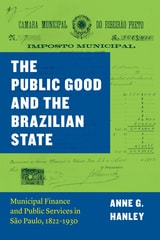
In The Public Good and the Brazilian State, Anne G. Hanley assembles an economic history of public revenues as they developed in nineteenth-century Brazil. Specifically, Hanley investigates the financial life of the municipality—a district comparable to the county in the United States—to understand how the local state organized and prioritized the provision of public services, what revenues paid for those services, and what happened when the revenues collected failed to satisfy local needs. Through detailed analyses of municipal ordinances, mayoral reports, citizen complaints, and financial documents, Hanley sheds light on the evolution of public finance and its effect on the early economic development of Brazilian society. This deeply researched book offers valuable insights for anyone seeking to better understand how municipal finance informs histories of inequality and underdevelopment. 
[more]
cover of Understanding the National Debt: What Every American Needs to Know

Understanding the National Debt

What Every American Needs to Know

Carl Lane

Westholme Publishing, 0

The staggering United States debt has a direct impact on every American, yet few are aware of where the debt came from and how it affects their lives
The United States has a debt problem—we owe more than $18 trillion while our gross domestic product, the value of all goods and services produced in America, is only $17.5 trillion. To pay down the debt, some recommend austerity, cutting federal expenditures. Others suggest increasing taxes, especially on the wealthiest Americans. In Understanding the National Debt: What Every American Needs to Know, economic historian Carl Lane urges that the national debt must be addressed in ways beyond program cuts or tax increase alternatives, but change can only occur when more Americans understand what constitutes our debt and the problems it causes. The gross national debt is composed of two elements: the public debt and “intragovernment holdings.” The public debt consists of bonds, bills, and notes purchased by individuals, banks, insurance companies, hedge and retirement funds, foreign governments, and university endowments. Intragovernment holdings refers to money that the U.S. Treasury borrows from other parts of the government, principally Social Security and Medicare. This accounts for approximately a quarter of the gross national debt, but that is money that we owe to ourselves, not another entity. The more the government borrows, the less is available for private sector investment, creating a “squeeze” effect that inhibits economic growth. The most burdensome problem is the interest due each year on the debt. Every dollar spent on interest is a dollar less for other purposes. Those elements of the federal budget which are termed “discretionary” suffer. The mandatory elements of the budget—Social Security, Medicare, Medicaid, and the interest on the debt—must be provided for, but defense and national security, education, energy, infrastructure repair and development, and other needs wind up with less. By understanding the national debt we have an opportunity to address our real debt challenge—its principal and interest.
[more]