Results by title
37 books match the query 'Public history'
A Cultural Arsenal for Democracy
The World War II Work of US MuseumsClarissa J. Ceglio
University of Massachusetts Press, 2022
Unsurprisingly, exhibitions served as the primary vehicle through which museums, large and small, engaged their publics with wartime topics with fare ranging from displays on the cultures of Allied nations to "living maps" that charted troop movements and exhibits on war preparedness. Clarissa J. Ceglio chronicles debates, experiments, and collaborations from the 1930s to the immediate postwar years, investigating how museums re-envisioned the exhibition as a narrative medium and attempted to reconcile their mission with new modes of storytelling.
A Living Exhibition
The Smithsonian and the Transformation of the Universal MuseumWilliam S. Walker
University of Massachusetts Press, 2013
Since its founding in 1846 “for the increase and diffusion of knowledge,” the Smithsonian Institution has been an important feature of the American cultural landscape. In A Living Exhibition, William S. Walker examines the tangled history of cultural exhibition at the Smithsonian from its early years to the chartering of the National Museum of the American Indian in 1989. He tracks the transformation of the institution from its original ideal as a “universal museum” intended to present the totality of human experience to the variegated museum and research complex of today.
Walker pays particular attention to the half century following World War II, when the Smithsonian significantly expanded. Focusing on its exhibitions of cultural history, cultural anthropology, and folk life, he places the Smithsonian within the larger context of Cold War America and the social movements of the 1960s, '70s, and '80s. Organized chronologically, the book uses the lens of the Smithsonian's changing exhibitions to show how institutional decisions become intertwined with broader public debates about pluralism, multiculturalism, and decolonization.
Yet if a trend toward more culturally specific museums and exhibitions characterized the postwar history of the institution, its leaders and curators did not abandon the vision of the universal museum. Instead, Walker shows, even as the Smithsonian evolved into an extensive complex of museums, galleries, and research centers, it continued to negotiate the imperatives of cultural convergence as well as divergence, embodying both a desire to put everything together and a need to take it all apart.
Ancient Muses
Archaeology and the ArtsEdited by John H. Jameson Jr., John E. Ehrenhard, and Christine A. Finn
University of Alabama Press, 2003
Known widely in Europe as “interpretive narrative archaeology,” the practice of using creative methods to interpret and present current knowledge of the past is gaining popularity in North America. This book is the first compilation of international case studies of the various artistic methods used in this new form of education—one that makes archaeology “come alive” for the nonprofessional. Plays, opera, visual art, stories, poetry, performance dance, music, sculpture, digital imagery—all can effectively communicate archaeological processes and cultural values to public audiences.
The contributors to this volume are a diverse group of archaeologists, educators, and artisans who have direct experience in schools, museums, and at archaeological sites. Citing specific examples, such as the film The English Patient, science fiction mysteries, and hypertext environments, they explain how creative imagination and the power of visual and audio media can personalize, contextualize, and demystify the research process. A 16-page color section illuminates their examples, and an accompanying CD includes relevant videos, music, web sites, and additional color images.
*
Arab American Public History
Edited by Edward E. Curtis IV
Temple University Press, 2026
Arab American Public History is an invitation to engage more deeply with Arab American communities. Chapters examine Arab Americans’ origins, ethnic identities, and efforts to belong in America through case studies of the community’s food cultures, genealogy research, cultural production, and neighborhood enclaves.
The first formal study of Arab American public history, this exciting volume charts various ways Arab Americans have interpreted their past as a source of defiant humanity, cultural enfranchisement, social solidarity, and political power.
Contributors: Reem Awad-Rashmawi, Chloe Bordewich, Richard M. Breaux, Maria F. Curtis, Lydia Harrington, Randa A. Kayyali, Matthew Jaber Stiffler, Rebecca K. Shrum, and the editor
In the series History and the Public
Benjamin Shambaugh and the Intellectual Foundations of Public Hisory
Rebecca Conard
University of Iowa Press, 2001
Beyond Preservation
Using Public History to Revitalize Inner CitiesAuthored by Andrew Hurley
Temple University Press, 2010
Across the United States, historic preservation has become a catalyst for urban regeneration. Entrepreneurs, urban pioneers, and veteran city dwellers have refurbished thousands of dilapidated properties and put them to productive use as shops, restaurants, nightclubs, museums, and private residences. As a result, inner-cities, once disparaged as zones of poverty, crime, and decay have been re-branded as historic districts. Although these preservation initiatives, often supported by government tax incentives and rigid architectural controls, deserve credit for bringing people back to the city, raising property values, and generating tourist revenue, they have been less successful in creating stable and harmonious communities.
Beyond Preservation proposes a framework for stabilizing and strengthening inner-city neighborhoods through the public interpretation of historic landscapes. Its central argument is that inner-city communities can best turn preserved landscapes into assets by subjecting them to public interpretation at the grass-roots. Based on an examination of successful projects in St. Louis, Missouri and other U.S. cities, Andrew Hurley demonstrates how rigorous historical analysis can help communities articulate a local identity and plan intelligently on the basis of existing cultural and social assets.
Black Women Legacies
Public History Sites Seen and UnseenAlexandria Russell
University of Illinois Press, 2024
Intersectional and original, Black Women Legacies explores the memorialization of African American women and its distinctive impact on physical and cultural landscapes throughout the United States.
Branching Out
The Public History of TreesEdited by Leah S. Glaser and Philip Levy
University of Massachusetts Press, 2025
Trees are not just natural resources; they are also cultural ones that present unique challenges and opportunities for public historians. Trees can serve as important objects of memory, recalling past triumphs or tragedies. They can be the last living witness to important events or community stories. Trees can also be objects of preservation, sometimes as individuals, other times as stands or even forests, all of which can take on historical significance for people, sites, and institutions. But as living entities they defy the kind of permanent legal preservation applicable to buildings and other non-living historical objects. Furthermore, their organic fragility can actually make them significant problems for historical sites and local preservation activities. For example, communities have had to cope with extensive tree loss from storm and fire damage, and dying trees can drop limbs or topple over, creating considerable danger to people and resources. Climate-change-driven increasing storm intensity has also highlighted the ways that trees—however historical or beloved—can become considerable threats.
The fourteen new essays in this volume explore the many ways that trees are an integral part of public history practice and sites. The authors draw on a range of approaches and historiographies to look at how memories of race-based hate, patriotic stories, community identities, and changed places have all centered on trees. In addition to contributions from the volume editors, this collection features scholarship by Sonja Dümpelmann Andrew Hurley, Carolyn M. Barske Crawford, Brian Dempsey, Liz Sargent, Sasha Coles, Mariaelena DiBenigno, Evan Haefeli, Krista McCracken, Alena Pirok, Christian Kosmas Mayer Alaina Scapicchio, and David Glassberg.
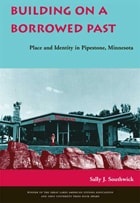
Building on a Borrowed Past
Place and Identity in Pipestone, MinnesotaSally J. Southwick
Ohio University Press, 2005
Why is there a national monument near a small town on the Minnesota prairie? Why do the town’s residents dress as Indians each summer and perform a historical pageant based on a Victorian-era poem? To answer such questions, Building on a Borrowed Past: Place and Identity in Pipestone, Minnesota shows what happens when one culture absorbs the heritage of another for civic advantage.
Founded in 1874, Pipestone was named for the quarries where regional tribes excavated soft stone for making pipes. George Catlin and Henry Wadsworth Longfellow described the place and its tribal history. Promotion by white residents of the quarries as central to America’s Indian heritage helped Pipestone obtain a federal Indian boarding school in the 1890s and a national monument in the 1930s. The annual “Song of Hiawatha” pageant attracted tourists after World War II. Sally J. Southwick’s prizewinning study demonstrates how average, small–town citizens contributed to the generic image of “the Indian” in American culture.
Examining oral histories, memoirs, newspapers, federal documents, civic group records, and promotional literature, Southwick focuses on the role of middle–class individuals in establishing a historical, place–based identity. Building on a Borrowed Past reveals how identities are formed through adaptation of cultural, spiritual, racial, and historical symbols.
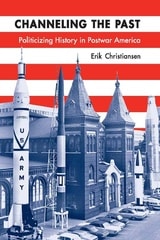
Channeling the Past
Politicizing History in Postwar AmericaErik Christiansen
University of Wisconsin Press, 2013
With insight and wit, Erik Christiansen uncovers in Channeling the Past the ways that powerful corporations rewrote history to strengthen the postwar corporate state, while progressives, communists, and other leftists vied to make their own versions of the past more popular. Christiansen looks closely at several notable initiatives—CBS’s flashback You Are There program; the Smithsonian Museum of American History, constructed in the late 1950s; the Cavalcade of America program sponsored by the Du Pont Company; the History Book Club; and the Freedom Train, a museum on rails that traveled the country from 1947 to 1949 exhibiting historic documents and flags, including original copies of the U.S. Constitution and the Magna Carta.
It is often said that history is written by the victors, but Christiansen offers a more nuanced perspective: history is constantly remade to suit the objectives of those with the resources to do it. He provides dramatic evidence of sophisticated calculations that influenced both public opinion and historical memory, and shows that Americans’ relationships with the past changed as a result.
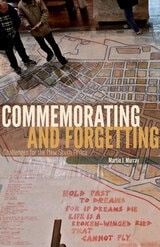
Commemorating and Forgetting
Challenges for the New South AfricaMartin J. Murray
University of Minnesota Press, 2013
When the past is painful, as riddled with violence and injustice as it is in postapartheid South Africa, remembrance presents a problem at once practical and ethical: how much of the past to preserve and recollect and how much to erase and forget if the new nation is to ever unify and move forward? The new South Africa’s confrontation of this dilemma is Martin J. Murray’s subject in Commemorating and Forgetting. More broadly, this book explores how collective memory works—how framing events, persons, and places worthy of recognition and honor entails a selective appropriation of the past, not a mastery of history.
How is the historical past made to appear in the present? In addressing these questions, Murray reveals how collective memory is stored and disseminated in architecture, statuary, monuments and memorials, literature, and art—“landscapes of remembrance” that selectively recall and even fabricate history in the service of nation-building. He examines such vehicles of memory in postapartheid South Africa and parses the stories they tell—stories by turn sanitized, distorted, embellished, and compressed. In this analysis, Commemorating and Forgetting marks a critical move toward recognizing how the legacies and impositions of white minority rule, far from being truly past, remain embedded in, intertwined with, and imprinted on the new nation’s here and now.
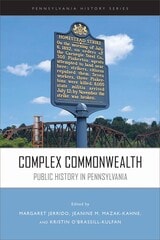
Complex Commonwealth
Public History in PennsylvaniaEdited by Margaret Jerrido, Jeanine M. Mazak-Kahne, and Kristin O'Brassill-Kulfan
Temple University Press, 2027
There are thousands of historic sites across Pennsylvania. The question of whose memories, what histories, and what local heritage deserve preservation has animated historians and communities for centuries. The editors and contributors to Complex Commonwealth provide a collection of accessible essays about public history in Pennsylvania that show how we have commemorated and preserved the state’s material culture, museums, monuments and memorials, parks, archives, libraries, and historic sites over centuries.
Chapters examine the Homestead Steel Strike, the Carlisle Indian School’s Digital Resource Center, and African American cemeteries and burial grounds, among other case studies. The methodologies these public historians use are as diverse as the various histories of labor, gender, religion, and race. It is by shedding light on these underseen histories that Complex Commonwealth affirms the importance of state and regional history to everyday Pennsylvanians.
Complex Commonwealth emphasizes the importance of place and space in shaping how we know what we know about the past and how that collectively shapes our future.
Contributors: Barbara Barksdale, Zachary L. Brodt, Steven Burg, Mary Catherine Foltz, Kelly C. George, James Gerencser, Alexandra Acri Godfrey, Kris Lowrey, Devin C. Manzullo-Thomas, Carol W. Smith, Frank Vitale IV, and the editors
Contested City
Art and Public History as Mediation at New York's Seward Park Urban Renewal AreaGabrielle Bendiner-Viani
University of Iowa Press, 2018
2020 Brendan Gill Prize finalist
For forty years, as New York’s Lower East Side went from disinvested to gentrified, residents lived with a wound at the heart of the neighborhood, a wasteland of vacant lots known as the Seward Park Urban Renewal Area (SPURA). Most of the buildings on the fourteen-square-block area were condemned in 1967, displacing thousands of low-income people of color with the promise that they would soon return to new housing—housing that never came.
Over decades, efforts to keep out affordable housing sparked deep-rooted enmity and stalled development, making SPURA a dramatic study of failed urban renewal, as well as a microcosm epitomizing the greatest challenges faced by American cities since World War II.
Artist and urban scholar Gabrielle Bendiner-Viani was invited to enter this tense community to support a new approach to planning, which she accepted using collaboration, community organizing, public history, and public art. Having engaged her students at The New School in a multi-year collaboration with community activists, the exhibitions and guided tours of her Layered SPURA project provided crucial new opportunities for dialogue about the past, present, and future of the neighborhood.
Simultaneously revealing the incredible stories of community and activism at SPURA, and shedding light on the importance of collaborative creative public projects, Contested City bridges art, design, community activism, and urban history. This is a book for artists, planners, scholars, teachers, cultural institutions, and all those who seek to collaborate in new ways with communities.
Contested Histories in Public Space
Memory, Race, and NationDaniel J. Walkowitz and Lisa Maya Knauer, eds.
Duke University Press, 2009
Several contributors examine how the experiences of indigenous groups and the imperial past are incorporated into public histories in British Commonwealth nations: in Te Papa, New Zealand’s national museum; in the First Peoples’ Hall at the Canadian Museum of Civilization; and, more broadly, in late-twentieth-century Australian culture. Still others focus on the role of governments in mediating contested racialized histories: for example, the post-apartheid history of South Africa’s Voortrekker Monument, originally designed as a tribute to the Voortrekkers who colonized the country’s interior. Among several essays describing how national narratives have been challenged are pieces on a dispute over how to represent Nepali history and identity, on representations of Afrocuban religions in contemporary Cuba, and on the installation in the French Pantheon in Paris of a plaque honoring Louis Delgrès, a leader of Guadeloupean resistance to French colonialism.
Contributors. Paul Amar, Paul Ashton, O. Hugo Benavides, Laurent Dubois, Richard Flores, Durba Ghosh, Albert Grundlingh, Paula Hamilton, Lisa Maya Knauer, Charlotte Macdonald, Mark Salber Phillips, Ruth B. Phillips, Deborah Poole, Anne M. Rademacher, Daniel J. Walkowitz
Framing Public Memory
Edited by Kendall R. Phillips
University of Alabama Press, 2007
A collection of essays by prominent scholars from many disciplines on the construction of public memories
The study of public memory has grown rapidly across numerous disciplines in recent years, among them American studies, history, philosophy, sociology, architecture, and communications. As scholars probe acts of collective remembrance, they have shed light on the cultural processes of memory. Essays contained in this volume address issues such as the scope of public memory, the ways we forget, the relationship between politics and memory, and the material practices of memory.Stephen Browne’s contribution studies the alternative to memory erasure, silence, and forgetting as posited by Hannah Arendt in her classic Eichmann in Jerusalem. Rosa Eberly writes about the Texas tower shootings of 1966, memories of which have been minimized by local officials. Charles Morris examines public reactions to Larry Kramer’s declaration that Abraham Lincoln was homosexual, horrifying the guardians of Lincoln’s public memory. And Barbie Zelizer considers the impact on public memory of visual images, specifically still photographs of individuals about to perish (e.g., people falling from the World Trade Center) and the sense of communal loss they manifest.
Whether addressing the transitory and mutable nature of collective memories over time or the ways various groups maintain, engender, or resist those memories, this work constitutes a major contribution to our understanding of how public memory has been and might continue to be framed.
From Storefront to Monument
Tracing the Public History of the Black Museum MovementAndrea A. Burns
University of Massachusetts Press, 2013
Winner of the 2015 National Council on Public History Book Award
Today well over two hundred museums focusing on African American history and culture can be found throughout the United States and Canada. Many of these institutions trace their roots to the 1960s and 1970s, when the struggle for racial equality inspired a movement within the black community to make the history and culture of African America more “public.”
This book tells the story of four of these groundbreaking museums: the DuSable Museum of African American History in Chicago (founded in 1961); the International Afro-American Museum in Detroit (1965); the Anacostia Neighborhood Museum in Washington, D.C. (1967); and the African American Museum of Philadelphia (1976). Andrea A. Burns shows how the founders of these institutions, many of whom had ties to the Black Power movement, sought to provide African Americans with a meaningful alternative to the misrepresentation or utter neglect of black history found in standard textbooks and most public history sites. Through the recovery and interpretation of artifacts, documents, and stories drawn from African American experience, they encouraged the embrace of a distinctly black identity and promoted new methods of interaction between the museum and the local community.
Over time, the black museum movement induced mainstream institutions to integrate African American history and culture into their own exhibits and educational programs. This often controversial process has culminated in the creation of a National Museum of African American History and Culture, now scheduled to open in the nation's capital in 2015.
Historians in Public
The Practice of American History, 1890-1970Ian Tyrrell
University of Chicago Press, 2005
Tyrrell's elegant history of the practice of American history traces debates, beginning shortly after the profession's emergence in American academia, about history's role in school curricula. He also examines the use of historians in and by the government and whether historians should utilize mass media such as film and radio to influence the general public. As Historians in Public shows, the utility of history is a distinctive theme throughout the history of the discipline, as is the attempt to be responsive to public issues among pressure groups.
A superb examination of the practice of American history since the turn of the century, Historians in Public uncovers the often tangled ways history-makers make history-both as artisans and as actors.
In the House of the Hangman
The Agonies of German Defeat, 1943-1949Jeffrey K. Olick
University of Chicago Press, 2005
In the House of the Hangman chronicles this delicate process, exploring key debates about the Nazi past and German future during the later years of World War II and its aftermath. What did British and American leaders think had given rise to National Socialism, and how did these beliefs shape their intentions for occupation? What rhetorical and symbolic tools did Germans develop for handling the insidious legacy of Nazism? Considering these and other questions, Jeffrey K. Olick explores the processes of accommodation and rejection that Allied plans for a new German state inspired among the German intelligentsia. He also examines heated struggles over the value of Germany's institutional and political heritage. Along the way, he demonstrates how the moral and political vocabulary for coming to terms with National Socialism in Germany has been of enduring significance—as a crucible not only of German identity but also of contemporary thinking about memory and social justice more generally.
Given the current war in Iraq, the issues contested during Germany's abjection and reinvention—how to treat a defeated enemy, how to place episodes within wider historical trajectories, how to distinguish varieties of victimhood—are as urgent today as they were sixty years ago, and In the House of the Hangman offers readers an invaluable historical perspective on these critical questions.
Indigenous Archival Activism
Mohican Interventions in Public History and MemoryRose Miron
University of Minnesota Press, 2024
Who has the right to represent Native history?
The past several decades have seen a massive shift in debates over who owns and has the right to tell Native American history and stories. For centuries, non-Native actors have collected, stolen, sequestered, and gained value from Native stories and documents, human remains, and sacred objects. However, thanks to the work of Native activists, Native history is now increasingly being repatriated back to the control of tribes and communities. Indigenous Archival Activism takes readers into the heart of these debates by tracing one tribe’s fifty-year fight to recover and rewrite their history.
Rose Miron tells the story of the Stockbridge-Munsee Mohican Nation and their Historical Committee, a group of mostly Mohican women who have been collecting and reorganizing historical materials since 1968. She shows how their work is exemplary of how tribal archives can be used strategically to shift how Native history is accessed, represented, written and, most importantly, controlled. Based on a more than decade-long reciprocal relationship with the Stockbridge-Munsee Mohican Nation, Miron’s research and writing is shaped primarily by materials found in the tribal archive and ongoing conversations and input from the Stockbridge-Munsee Historical Committee.
As a non-Mohican, Miron is careful to consider her own positionality and reflects on what it means for non-Native researchers and institutions to build reciprocal relationships with Indigenous nations in the context of academia and public history, offering a model both for tribes undertaking their own reclamation projects and for scholars looking to work with tribes in ethical ways.
Monument Lab
Re:GenerationEdited by Paul M. Farber and Sue Mobley
Temple University Press, 2026
Monument Lab: Re:Generation presents case studies that travel across America, highlighting local commemorative campaigns dedicated to advancing public memory. Featuring articles and artwork from the country’s leading monument makers, each project includes a framing essay that provides insights into the varied contexts of location, culture, form, and subject matter.
Monument Lab: Re:Generation provides innovative, healing, and practical approaches to the United States’ unreconciled past and divided present facing our nation. In doing so, it invites readers to engage with a broader discourse of monuments and public memory.
Contributors: Thomas J. Adams, Kareal Amenumey, Sháńdíín Brown, Jonathan Jae-an Crisman, Kristen Dorsey, Aruna D'Souza, Mariluz Franco Ortiz, Jacqui Germain, Grace Sanders Johnson, Dani R. Merriman, Deirdre Cooper Owens, Naima Murphy Salcido, Kirk Savage, Clint Smith, Tsione Wolde-Michael, Eric Zimmer, and the editors
Museum Diplomacy
Transnational Public History and the U.S. Department of StateRichard J. W. Harker
University of Massachusetts Press, 2020
As more historic sites and museums seek to surmount social, cultural, and economic barriers between themselves and their communities in their exhibitions and programming, the Museums Connect program provides important lessons on how to overcome entrenched hierarchies of power in public history.
Museums, Monuments, and National Parks
Toward a New Genealogy of Public HistoryDenise D. Meringolo
University of Massachusetts Press, 2012
All of these developments included interpretive activities that shaped public understanding of the past. Yet it was not until the emergence of the education-oriented National Park Service history program in the 1920s and 1930s that public history found an institutional home that grounded professional practice simultaneously in the values of the emerging discipline and in government service. Even thereafter, tensions between administrators in Washington and practitioners on the ground at National Parks, monuments, and museums continued to define and redefine the scope and substance of the field. The process of definition persists to this day, according to Meringolo, as public historians establish a growing presence in major universities throughout the United States and abroad.
Preserving Punishment
The Public History of Prison Sites in AmericaC. Morgan Grefe and Megan Cullen Tewell
University of Massachusetts Press, 2027
Examining how former prisons became tourist destinations and what that means for past, present, and future carceral spaces
Beginning in the 1970s, the U.S. War on Drugs and tougher crime policies drove incarceration rates to unprecedented levels, leading to severe prison overcrowding and a surge in prison construction. As new facilities opened, many older prisons, some dating to the nineteenth century, were closed and abandoned. Communities faced difficult decisions about their future. Demolition was expensive, and adaptive reuse was often constrained by the distinctive architecture of confinement.
One response, often inspired by the success of institutions such as Alcatraz Island and Eastern State Penitentiary, has been to preserve former prisons as historic sites and tourist attractions, welcoming visitors and using tours and exhibits to shape public understanding of incarceration. Today former prisons operating as such exist in every region of the United States. For many visitors, these sites provide a primary point of contact with the history and realities of imprisonment.
Yet transforming places of confinement into destinations for tourism and heritage raises important questions. How should these sites interpret difficult histories? For whom? What responsibilities do they have to the formerly incarcerated, previous staff, and affected communities? How can they balance education, commemoration, entertainment, and economic development?
Preserving Punishment offers the first sustained historical study of prison museums in the United States. Examining how these institutions preserve, interpret, and present the history of incarceration, C. Morgan Grefe and Megan Cullen Tewell highlight the role of preservationists and public historians in shaping narratives, addressing ethical challenges, and fostering critical engagement with America's past and present systems of punishment. Grounded in local and regional contexts, they argue that historic prison sites are uniquely positioned to encourage informed public conversations about incarceration, memory, and criminal justice.
Public History, Private Stories
Italian Women’s AutobiographyGraziella Parati
University of Minnesota Press, 1996
Explores the way Italian women writers craft identities through writing.
In this important volume, Graziella Parati examines the ways in which Italian women writers articulate their identities through autobiography—a public act that is also the creation of a private life. Considering autobiographical writings by five women writers from the seventeenth century to the present, Parati draws important connections between self-writing and the debate over women’s roles, both traditional and transgressive.
Parati considers the first prose autobiography written by an Italian woman -Camilla Faà Gonzaga’s 1622 memoir—as her beginning point, citing it as a central “pre-text.” In her memoir, Gonzaga makes explicit her conflict over the public silence imposed on her, yet succeeds in writing herself into history through self-narrative. Parati then examines Enif Robert’s autobiography, in which Robert strives to enter the public sphere of the post-World War I futurist movement by writing about her fight to overcome cancer of the uterus. Next, Parati considers Fausta Cialente’s life story, an account of her family's life in Trieste from World War I through the fascist era, as well as the narrative in which Rita Levi Montalcini describes her life as a woman, a Nobel-Prize winning scientist, and a Jew who lived under fascism in the thirties and forties. Finally, Parati analyzes Luisa Passerini's look back on her involvement with the student movement of 1968. Through her discussion of these women’s writings, Parati demonstrates the complex negotiations over identity contained within them, negotiations that challenge dichotomies between male and female, maternal and paternal, and private and public. Public History, Private Stories is a compelling exploration of the disparate identities created by these women through the act of writing autobiography.
Public Humanities
Engaging Community, Empowering Civic Discourse, and Reshaping AcademiaMolly Todd
Michigan State University Press, 2025
Radical Roots
Public History and a Tradition of Social Justice ActivismDenise D. Meringolo
Amherst College Press, 2021
"This is a much-needed recalibration, as professional organizations and practitioners across genres of public history struggle to diversify their own ranks and to bring contemporary activists into the fold." — Catherine Gudis, University of California, Riverside.
"Taken all together, the articles in this volume highlight the persistent threads of justice work that has characterized the multifaceted history of public history as well as the challenges faced in doing that work."—Patricia Mooney-Melvin, The Public Historian
Remembering the Cajun Past
Memory, Race, and the Politics of Public History in LouisianaMarc David
University of Massachusetts Press, 2025
Exploring how public history creates collective memory of this white ethnic group through memorials
Cajuns arrived in southern Louisiana in the 18th century after the British exiled them from eastern Canada. Also known as Acadians, they retain a unique dialect of French, and their distinctive music, food, and other cultural traits characterized them as an ethnic group. Until the 1960s, authorities viewed them as a serious problem, allegedly blocking the state’s progress as they clung to their antiquated ways. Few Cajun residents in the region remembered the remote past of their ancestors, but by the 1970s, organizations ranging from local non-profits to the National Park Service created sites that commemorated their history, such as the Acadian Memorial in St. Martinville, allowing Cajuns to connect their lives to their past and claim it as their own.
In Remembering the Cajun Past, anthropologist Marc David studies the cultural and political dynamics that reconfigured Cajun memory and identity. Focusing on St. Martinville and the Acadian Memorial, he explores how authorities changed their minds about Cajuns and demonstrates how Cajuns’ historical memories took shape. Part ethnography and part history, David examines the racial aspects of the Memorial’s creation in the wake of the Civil Rights movement and the growth of a new Cajun history, one through which individual Cajuns rejected the label’s connotation of “white trash” and embraced belonging within a storied white ethnic group. Based on decades of fieldwork and deep engagement with public history practices, David explores how historical memory and the historic sites that foster it are intertwined with the politics of civic life.
Remembering the Forgotten War
The Enduring Legacies of the U.S.-Mexican WarMichael Scott Van Wagenen
University of Massachusetts Press, 2012
On February 2, 1848, representatives of the United States and Mexico signed the Treaty of Guadalupe Hidalgo, officially ending hostilities between the two countries and ceding over one-half million square miles of land to the northern victors. In Mexico, this defeat has gradually moved from the periphery of dishonor to the forefront of national consciousness. In the United States, the war has taken an opposite trajectory, falling from its once-celebrated prominence into the shadowy margins of forgetfulness and denial.
Why is the U.S.–Mexican War so clearly etched in the minds of Mexicans and so easily overlooked by Americans? This book investigates that issue through a transnational, comparative analysis of how the tools of collective memory—books, popular culture, historic sites, heritage groups, commemorations, and museums—have shaped the war's multifaceted meaning in the 160 years since it ended. Michael Van Wagenen explores how regional, ethnic, and religious differences influence Americans and Mexicans in their choices of what to remember and what to forget. He further documents what happens when competing memories clash in a quest for dominance and control.
In the end, Remembering the Forgotten War addresses the deeper question of how remembrance of the U.S.–Mexican War has influenced the complex relationship between these former enemies now turned friends. It thus provides a new lens through which to view today's cross-border rivalries, resentments, and diplomatic pitfalls.

Sense of History
The Place of the Past in American LifeDavid Glassberg
University of Massachusetts Press, 2001
As Americans enter the new century, their interest in the past has never been greater. In record numbers they visit museums and historic sites, attend commemorative ceremonies and festivals, watch historically based films, and reconstruct family genealogies. The question is, Why? What are Americans looking for when they engage with the past? And how is it different from what scholars call “history?”
In this book, David Glassberg surveys the shifting boundaries between the personal, public, and professional uses of the past and explores their place in the broader cultural landscape. Each chapter investigates a specific encounter between Americans and their history: the building of a pacifist war memorial in a rural Massachusetts town; the politics behind the creation of a new historical festival in San Francisco; the letters Ken Burns received in response to his film series on the Civil War; the differing perceptions among black and white residents as to what makes an urban neighborhood historic; and the efforts to identify certain places in California as worthy of commemoration. Along the way, Glassberg reflects not only on how Americans understand and use the past, but on the role of professional historians in that enterprise. Combining the latest research on American memory with insights gained from Glassberg's more than twenty years of personal experience in a variety of public history projects, Sense of History offers stimulating reading for all who care about the future of history in America.
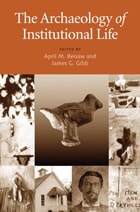
The Archaeology of Institutional Life
Edited by April M. Beisaw and James G. Gibb
University of Alabama Press, 2008
Institutions pervade social life. They express community goals and values by defining the limits of socially acceptable behavior. Institutions are often vested with the resources, authority, and power to enforce the orthodoxy of their time. But institutions are also arenas in which both orthodoxies and authority can be contested. Between power and opposition lies the individual experience of the institutionalized. Whether in a boarding school, hospital, prison, almshouse, commune, or asylum, their experiences can reflect the positive impact of an institution or its greatest failings. This interplay of orthodoxy, authority, opposition, and individual experience are all expressed in the materiality of institutions and are eminently subject to archaeological investigation.
A few archaeological and historical publications, in widely scattered venues, have examined individual institutional sites. Each work focused on the development of a specific establishment within its narrowly defined historical context; e.g., a fort and its role in a particular war, a schoolhouse viewed in terms of the educational history of its region, an asylum or prison seen as an expression of the prevailing attitudes toward the mentally ill and sociopaths. In contrast, this volume brings together twelve contributors whose research on a broad range of social institutions taken in tandem now illuminates the experience of these institutions. Rather than a culmination of research on institutions, it is a landmark work that will instigate vigorous and wide-ranging discussions on institutions in Western life, and the power of material culture to both enforce and negate cultural norms.
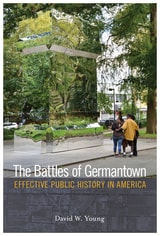
The Battles of Germantown
Effective Public History in AmericaDavid W. Young
Temple University Press, 2019
2020 Philip S. Klein Book Prize Winner, Pennsylvania Historical Association
Known as America’s most historic neighborhood, the Germantown section of Philadelphia (established in 1683) has distinguished itself by using public history initiatives to forge community. Progressive programs about ethnic history, postwar urban planning, and civil rights have helped make historic preservation and public history meaningful. The Battles of Germantown considers what these efforts can tell us about public history’s practice and purpose in the United States.
Author David Young, a neighborhood resident who worked at Germantown historic sites for decades, uses his practitioner’s perspective to give examples of what he calls “effective public history.” The Battles of Germantown shows how the region celebrated “Negro Achievement Week” in 1928 and, for example, how social history research proved that the neighborhood’s Johnson House was a station on the Underground Railroad. These encounters have useful implications for addressing questions of race, history, and memory, as well as issues of urban planning and economic revitalization.
Germantown’s historic sites use public history and provide leadership to motivate residents in an area challenged by job loss, population change, and institutional inertia. The Battles of Germantown illustrates how understanding and engaging with the past can benefit communities today.
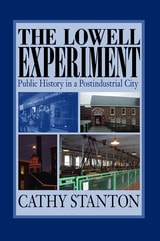
The Lowell Experiment
Public History in a Postindustrial CityCathy Stanton
University of Massachusetts Press, 2006
In the early nineteenth century, Lowell, Massachusetts, was widely studied and emulated as a model for capitalist industrial development. One of the first cities in the United States to experience the ravages of deindustrialization, it was also among the first places in the world to turn to its own industrial and ethnic history as a tool for reinventing itself in the emerging postindustrial economy. The Lowell Experiment explores how history and culture have been used to remake Lowell and how historians have played a crucial yet ambiguous role in that process.
The book focuses on Lowell National Historical Park, the flagship project of Lowell's new cultural economy. When it was created in 1978, the park broke new ground with its sweeping reinterpretations of labor, immigrant, and women's history. It served as a test site for the ideas of practitioners in the new field of public history—a field that links the work of professionally trained historians with many different kinds of projects in the public realm.
The Lowell Experiment takes an anthropological approach to public history in Lowell, showing it as a complex cultural performance shaped by local memory, the imperatives of economic redevelopment, and tourist rituals—all serving to locate the park's audiences and workers more securely within a changing and uncertain new economy characterized by growing inequalities and new exclusions.
The paradoxical dual role of Lowell's public historians as both interpreters of and contributors to that new economy raises important questions about the challenges and limitations facing academically trained scholars in contemporary American culture. As a long-standing and well-known example of “culture-led re-development,” Lowell offers an outstanding site for exploring questions of concern to those in the fields of public and urban history, urban planning, and tourism studies.
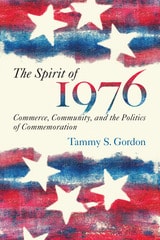
The Spirit of 1976
Commerce, Community, and the Politics of CommemorationTammy S. Gordon
University of Massachusetts Press, 2013
The most important national commemoration of the twentieth century, the 1976 bicentennial celebration gave rise to a broad-ranging debate over how the American Revolution should be remembered and represented. Federal planners seeking an uncritical glorification of the nation's founding came up against an array of constituencies with other interests and objectives. Inspired by the “new social history” that looked at the past “from the bottom up,” Americans who had previously been disenfranchised by traditional national narratives—African Americans, women, American Indians, workers, young people—demanded a voice and representation in the planning. Local communities, similarly suspicious of federal direction, sought control over their own bicentennial events. Corporate representatives promoted an approach that championed the convergence of patriotism and private enterprise, while commercial interests applied the marketing techniques of an expanding consumerism to hawk every imaginable kind of patriotic souvenir to all of these groups.
The end result of these competing efforts, Tammy S. Gordon shows, was a national celebration that reflected some common themes, including a mistrust of federal power, an embrace of decentralized authority, and a new cultural emphasis on the importance of the self. The American Revolution Bicentennial can thus be seen as both a product of the social and political changes of the 1960s and a harbinger of things to come. After 1976, the postwar myth of a consensus view of American history came to an end, ensuring that future national commemorations would continue to be contested.
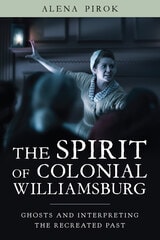
The Spirit of Colonial Williamsburg
Ghosts and Interpreting the Recreated PastAlena Pirok
University of Massachusetts Press, 2022
On any given night, hundreds of guests walk the darkened streets of Colonial Williamsburg looking for ghosts. Since the early 2000s, both the museum and private companies have facilitated these hunts, offering year-round ghost tours. Critics have called these excursions a cash grab, but in truth, ghosts and hauntings have long been at the center of the Colonial Williamsburg project.
The Spirit of Colonial Williamsburg examines how the long-dead past comes alive at this living-history museum. In the early twentieth century, local stories about the ghosts of former residents—among them Revolutionary War soldiers and nurses, tavern owners and prominent attorneys, and enslaved African Americans—helped to turn Williamsburg into a desirable site for historical restoration. But, for much of the twentieth century, the museum tried diligently to avoid any discussion of ghosts, considering them frivolous and lowbrow. Alena Pirok explores why historic sites have begun to embrace their spectral residents in recent decades, arguing that through them, patrons experience an emotional connection to place and a palpable understanding of the past through its people.
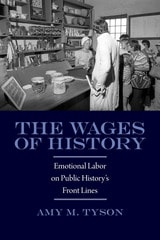
The Wages of History
Emotional Labor on Public History's Front LinesAmy M. Tyson
University of Massachusetts Press, 2013
Although many who are drawn to such work initially see it as a privilege—an opportunity to connect with the public in meaningful ways through the medium of history—the realities of the job almost inevitably alter that view. Not only do interpreters make considerable sacrifices, both emotional and financial, in order to pursue their work, but their sense of special status can lead them to avoid confronting troubling conditions on the job, at times fueling tensions in the workplace.
This case study also offers insights—many drawn from the author's seven years of working as an interpreter at Fort Snelling—into the way gendered roles and behaviors from the past play out among the workers, the importance of creative autonomy to historical interpreters, and the ways those on public history's front lines both resist and embrace the site's more difficult and painful histories relating to slavery and American Indian genocide.
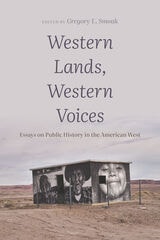
Western Lands, Western Voices
Essays on Public History in the American WestEdited by Gregory E. Smoak
University of Utah Press, 2021
Inspired by the fiftieth anniversary of the University of Utah’s American West Center, the oldest regional studies center in the United States, Western Lands, Western Voices explores the many dimensions of public history. This collection of thirteen essays is rooted in the real-world experiences of the authors and is the first volume to focus specifically on regional public history.
Contributors include tribal government officials, state and federal historians, independent scholars and historical consultants, and academics. Some are distinguished historians of the American West and others are emerging voices that will shape publicly engaged scholarship in the years to come. Among the issues they address are community history and public interpretation, tribal sovereignty, and the importance of historical research for land management. The volume will be indispensable to researchers and general readers interested in museum studies, Native American studies, and public lands history and policy.
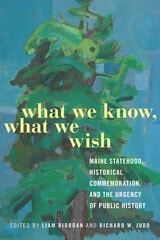
What We Know, What We Wish
Maine Statehood, Historical Commemoration, and the Urgency of Public HistoryEdited by Liam Riordan and Richard W. Judd
University of Massachusetts Press, 2025
Cities, states, and nations are grappling with how best to commemorate historical events and anniversaries in ways that are fair, accurate, and open public dialogue about the often contested past. This volume springs from varied approaches to the historical commemoration of Maine’s state bicentennial in 2020 that involved academics, independent scholars, local and statewide cultural organizations, sovereign Wabanaki nations, and the state itself in the form of the Maine State Bicentennial Commission. While wide-ranging in their goals and values, all sought to take advantage of opportunities for collaboration to contribute to a dynamic and multi-faceted practice of public history. These new essays use Maine’s bicentennial as a focal point to put public history theory into action. Its diverse contributors share stories about the past that move beyond celebration to reflect crucial ways that the past shapes our understanding of the present and our aspirations for the future.
This volume’s core argument is that academics need to collaborate more fully with independent scholars, history-based cultural institutions, and the general public in order for public history to thrive and to improve the quality of civic life. What We Know, What We Wish does this through wide ranging essays that discuss the long statehood era in Maine from the 1770s to 1820s as well as its legacies in the state centennial commemoration of 1920 and museum exhibits from the 2020 bicentennial. The occupational and cultural diversity of the collection’s contributors together with the content of their essays offer a model for how to put public history principles into practice to foreground meaningful historical reflection that is urgently needed in divided communities around the world.
Contributors include the volume editors, as well as Maulian Bryant, Osihkiyol (Zeke) Crofton-Macdonald, Charles H. Lagerbom, Ryan LaRochelle, Stuart Kestenbaum, Michael McVaugh, Kevin D. Murphy, Micah A. Pawling, Jessica Skwire Routhier, Donald Soctomah, Laura Fecych Sprague, Alan Taylor, and Laurel Thatcher Ulrich.