Results by title
237 books match the query 'Race & Ethnic Relations' and 18 start with a
A Critical Synergy
Race, Decoloniality, and World CrisesMeghji, Ali
Temple University Press, 2023
The differences between decolonial thought and CRT, Meghji insists, does not necessarily imply one approach is stronger. Rather, he asserts, they often provide alternative but not incompatible viewpoints of the same social problem. Meghji presents case studies of capitalism, the COVID-19 pandemic, climate crisis, and twenty-first-century far-right populism to show that with both theories, we can understand more, as insights may be lost by using only one.
Meghji is not calling for a universal theoretical synthesis in A Critical Synergy, but rather a practice that can help open sociology and social science to the tradition of pluriversality much more broadly.
A History of Hate in Ohio
Then and NowMichael E. Brooks and Bob Fitrakis with an introduction by Marilyn K. Howard
The Ohio State University Press, 2021
A Nation of Family and Friends?
Sport and the Leisure Cultures of British Asian Girls and WomenAarti Ratna
Rutgers University Press, 2024
Ratna also examines two key cultural objects - the popular films "Bend it Like Beckham" and “Dhan Dhana Dhan Goal” - to examine in detail the gendered representation of South Asian soccer players’ engagement in amateur and elite levels of the sport. She critiques studies of women’s football fandom and sport that fail to acknowledge social differences relating to race, class, age, disability, and sexuality. By linking the social forces (across time and space) that differentially affect their sporting choices and leisure lifestyles, Ratna portrays the women of the South Asian diaspora as active agents in the shaping of their life courses and as skilled navigators of the complexities affecting their own identities. Ultimately Ratna examines the intersections of class, caste, age, generation, gender, and sexuality, to provide a rich and critical exploration of British Asian women's sport and leisure choices, pleasures, and lived realities.
Abolition Of White Democracy
Joel Olson
University of Minnesota Press, 2004
Offers a new way of understanding the tortured relationship between race and democracy in the United States
Racial discrimination embodies inequality, exclusion, and injustice and as such has no place in a democratic society. And yet racial matters pervade nearly every aspect of American life, influencing where we live, what schools we attend, the friends we make, the votes we cast, the opportunities we enjoy, and even the television shows we watch.
Joel Olson contends that, given the history of slavery and segregation in the United States, American citizenship is a form of racial privilege in which whites are equal to each other but superior to everyone else. In Olson’s analysis we see how the tension in this equation produces a passive form of democracy that discourages extensive participation in politics because it treats citizenship as an identity to possess rather than as a source of empowerment. Olson traces this tension and its disenfranchising effects from the colonial era to our own, demonstrating how, after the civil rights movement, whiteness has become less a form of standing and more a norm that cements white advantages in the ordinary operations of modern society. To break this pattern, Olson suggests an “abolitionist-democratic” political theory that makes the fight against racial discrimination a prerequisite for expanding democratic participation.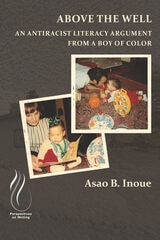
Above the Well
An Antiracist Literacy Argument from a Boy of ColorAsao B. Inoue
University Press of Colorado, 2021
Adoption across Race and Nation
US Histories and LegaciesEdited by Silke Hackenesch
The Ohio State University Press, 2022
African American Travel Narratives from Abroad
Mobility and Cultural Work in the Age of Jim CrowGary Totten
University of Massachusetts Press, 2015
In this book, Gary Totten examines the global travel narratives of a diverse set of African American writers, including Ida B. Wells, Booker T. Washington, Matthew Henson, Jessie Redmon Fauset, and Zora Neale Hurston. While these writers deal with issues of identity in relation to a reimagined sense of self—in a way that we might expect to find in travel narratives—they also push against the constraints and conventions of the genre, reconsidering discourses of tourism, ethnography, and exploration. This book not only offers new insights about African American writers and mobility, it also charts the ideological distinctions and divergent agendas within this group of writers. Totten demonstrates how these travelers and their writings challenged dominant ideologies about African American experience, expression, and identity in a period of escalating racial violence. By setting these texts in their historical context and within the genre of travel writing, Totten presents a nuanced understanding of both popular and recovered work of the period.
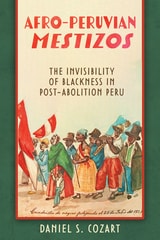
Afro-Peruvian Mestizos
The Invisibility of Blackness in Post-Abolition PeruDaniel S. Cozart
University of Alabama Press, 2025
A transformative study by Daniel S. Cozart, Afro-Peruvian Mestizos redefines the narrative of mestizaje in post-abolition Peru, uncovering the hidden histories and enduring strength of Afro-Peruvian communities.
Afro-Peruvian Mestizos: The Invisibility of Blackness in Post-Abolition Peru by Daniel S. Cozart investigates the ideologies of mestizaje, or racial mixing, that Latin American elites used to construct modern national identities during the nineteenth and twentieth centuries. Through close reading of archival records, legal documents, and literary works, Cozart uncovers the systematic exclusion of Afro-Peruvians from the nation's narrative of progress, revealing how their presence was deliberately omitted from official histories and censuses. The abolition of slavery in 1855 marked the beginning of a process where Afro-Peruvians were marginalized, their identities overshadowed by a national narrative that prioritized Indigenous heritage and whiteness.
Drawing on Michel-Rolph Trouillot's framework of historical production, the book traces the contradictions inherent in liberal and positivist ideologies that sought to forge a "raceless" society, all while silencing Afro-Peruvian voices and erasing their history. The conclusion reflects on the significance of erasure for Afro-Peruvians in the twentieth and twenty-first centuries, as they now demand to be seen. This book is a powerful examination of historical silences and the ongoing struggle for recognition in the face of systemic racism.
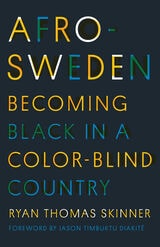
Afro-Sweden
Becoming Black in a Color-Blind CountryRyan Thomas Skinner
University of Minnesota Press, 2022
A compelling examination of Sweden’s African and Black diaspora
Contemporary Sweden is a country with a worldwide progressive reputation, despite an undeniable tradition of racism within its borders. In the face of this contradiction of culture and history, Afro-Swedes have emerged as a vibrant demographic presence, from generations of diasporic movement, migration, and homemaking. In Afro-Sweden, Ryan Thomas Skinner uses oral histories, archival research, ethnography, and textual analysis to explore the history and culture of this diverse and growing Afro-European community.
Skinner employs the conceptual themes of “remembering” and “renaissance” to illuminate the history and culture of the Afro-Swedish community, drawing on the rich theoretical traditions of the African and Black diaspora. Remembering fosters a sustained meditation on Afro-Swedish social history, while Renaissance indexes a thriving Afro-Swedish public culture. Together, these concepts illuminate significant existential modes of Afro-Swedish being and becoming, invested in and contributing to the work of global Black studies.
The first scholarly monograph in English to focus specifically on the African and Black diaspora in Sweden, Afro-Sweden emphasizes the voices, experiences, practices, knowledge, and ideas of these communities. Its rigorously interdisciplinary approach to understanding diasporic communities is essential to contemporary conversations around such issues as the status and identity of racialized populations in Europe and the international impact of Black Lives Matter.
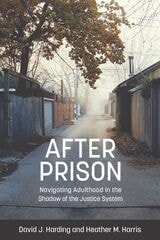
After Prison
Navigating Adulthood in the Shadow of the Justice SystemDavid J. Harding
Russell Sage Foundation, 2020
The transition to young adulthood typically includes school completion, full-time employment, leaving the childhood home, marriage, and childbearing, events that are disrupted by incarceration. While one quarter of the young men who participated in the study successfully transitioned into adulthood—achieving employment and residential independence and avoiding arrest and incarceration—the same number of young men remained deeply involved with the criminal justice system, spending on average four out of the seven years after their initial release re-incarcerated. Not surprisingly, whites are more likely to experience success after prison. The authors attribute this racial disparity to the increased stigma of criminal records for blacks, racial discrimination, and differing levels of social network support that connect whites to higher quality jobs. Black men earn less than white men, are more concentrated in industries characterized by low wages and job insecurity, and are less likely to remain employed once they have a job.
The authors demonstrate that families, social networks, neighborhoods, and labor market, educational, and criminal justice institutions can have a profound impact on young people’s lives. Their research indicates that residential stability is key to the transition to adulthood. Harding and Harris make the case for helping families, municipalities, and non-profit organizations provide formerly incarcerated young people access to long-term supportive housing and public housing. A remarkably large number of men in this study eventually enrolled in college, reflecting the growing recognition of college as a gateway to living wage work. But the young men in the study spent only brief spells in college, and the majority failed to earn degrees. They were most likely to enroll in community colleges, trade schools, and for-profit institutions, suggesting that interventions focused on these kinds of schools are more likely to be effective. The authors suggest that, in addition to helping students find employment, educational institutions can aid reentry efforts for the formerly incarcerated by providing supports like childcare and paid apprenticeships.
After Prison offers a set of targeted policy interventions to improve these young people’s chances: lifting restrictions on federal financial aid for education, encouraging criminal record sealing and expungement, and reducing the use of incarceration in response to technical parole violations. This book will be an important contribution to the fields of scholarly work on the criminal justice system and disconnected youth.
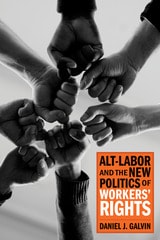
Alt-Labor and the New Politics of Workers' Rights
Daniel J. Galvin
Russell Sage Foundation, 2024
Alt-labor groups have long offered their members services and organizing opportunities to contest their unfair treatment on the job. But many groups have grown frustrated by the limited impact of these traditional strategies and have turned to public policy to scale up their work. They have successfully led campaigns to combat wage theft, raise the minimum wage, improve working conditions, strengthen immigrants’ rights, and more. These successes present something of a puzzle: relative to their larger, wealthier, and better-connected opponents, alt-labor groups are small, poor, and weak. Their members are primarily low-wage immigrant workers and workers of color who are often socially, economically, and politically marginalized. With few exceptions, the groups lack large dues-paying memberships and are dependent on philanthropic foundations and other unpredictable sources of funding. How, given their myriad challenges, have alt-labor groups managed to make gains for their members?
Galvin reveals that alt-labor groups are leveraging their deep roots in local communities, their unique position in the labor movement, and the flexibility of their organizational forms to build their collective power and extend their reach. A growing number of groups have also become more politically engaged and have set out to alter their political environments by cultivating more engaged citizens, influencing candidate selection processes, and expanding government capacities. These efforts seek to enhance alt-labor groups’ probabilities of success in the near term while incrementally shifting the balance of power over the long term.
Alt-Labor and the New Politics of Workers’ Rights comprehensively details alt-labor’s turn to policy and politics, provides compelling insights into the dilemmas the groups now face, and illuminates how their efforts have both invigorated and complicated the American labor movement.
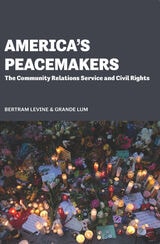
America's Peacemakers
The Community Relations Service and Civil RightsBertram Levine
University of Missouri Press, 2020
Covered in this expanded edition are the post–9/11 efforts of the CRS to prevent violence and hate crimes against those perceived as Middle Eastern. Also discussed are the cross-border Elián González custody dispute and the notable tragedies of Trayvon Martin and Michael Brown, both of which brought police interaction with communities of color back into the spotlight.
The 2009 Matthew Shepard and James Byrd, Jr., Hate Crimes Prevention Act substantially altered CRS’s jurisdiction, which began to focus on gender, gender identity, religion, sexual orientation, and disability in addition to race, color, and national origin. Lum’s documentation of this expanded jurisdiction provides insight into the progression of civil rights. The ongoing story of the Community Relations Service is a crucial component of the national narrative on civil rights and conflict resolution. This new edition will be highly informative to all readers and useful to professionals and academics in the civil rights, dispute resolution, domestic and international peacemaking, and law enforcement-community relations fields.
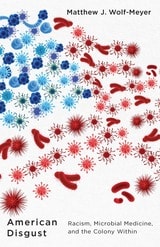
American Disgust
Racism, Microbial Medicine, and the Colony WithinMatthew J. Wolf-Meyer
University of Minnesota Press, 2024
Examining the racial underpinnings of food, microbial medicine, and disgust in America
American Disgust shows how perceptions of disgust and fears of contamination are rooted in the country’s history of colonialism and racism. Drawing on colonial, corporate, and medical archives, Matthew J. Wolf-Meyer argues that microbial medicine is closely entwined with changing cultural experiences of digestion, excrement, and disgust that are inextricably tied to the creation of whiteness.
Ranging from nineteenth-century colonial encounters with Native people to John Harvey Kellogg’s ideas around civilization and bowel movements to mid-twentieth-century diet and parenting advice books, Wolf-Meyer analyzes how embedded racist histories of digestion and disgust permeate contemporary debates around fecal microbial transplants and other bacteriotherapeutic treatments for gastrointestinal disease.
At its core, American Disgust wrestles with how changing cultural notions of digestion—what goes into the body and what comes out of it—create and impose racial categories motivated by feelings of disgust rooted in American settler-colonial racism. It shows how disgust is a changing, yet fundamental, aspect of American subjectivity and that engaging with it—personally, politically, and theoretically—opens up possibilities for conceptualizing health at the individual, societal, and planetary levels.
American Magnitude
Hemispheric Vision and Public Feeling in the United StatesChrista J. Olson
The Ohio State University Press, 2021
Winner, 2023 Rhetoric Society of America Book Award
Winner, 2022 Marie Hochmuth Nichols Award from the National Communication Association
At a moment in US politics when racially motivated nationalism, shifting relations with Latin America, and anxiety over national futures intertwine, understanding the long history of American preoccupation with magnitude and how it underpins national identity is vitally important. In American Magnitude, Christa J. Olson tracks the visual history of US appeals to grandeur, import, and consequence (megethos), focusing on images that use the wider Americas to establish US character. Her sources—including lithographs from the US-Mexican War, pre–Civil War paintings of the Andes, photo essays of Machu Picchu, and WWII-era films promoting hemispheric unity—span from 1845 to 1950 but resonate into the present.
Olson demonstrates how those crafting the appeals that feed the US national imaginary—artists, scientists, journalists, diplomats, and others—have invited US audiences to view Latin America as a foil for the greatness of their own nation and encouraged white US publics in particular to see themselves as especially American among Americans. She reveals how each instance of visual rhetoric relies upon the eyes of others to instantiate its magnitude—and falters as some viewers look askance instead. The result is the possibility of a post-magnitude United States: neither great nor failed, but modest, partial, and imperfect.
America’s New Racial Battle Lines
Protect versus RepairRogers M. Smith and Desmond King
University of Chicago Press, 2024
A sobering portrait of the United States’ divided racial politics.
For nearly two decades, Rogers M. Smith and Desmond King have charted the shifting racial policy alliances that have shaped American politics across different eras. In America’s New Racial Battle Lines, they show that US racial policy debates are undergoing fundamental change. Disputes over colorblind versus race-conscious policies have given way to new lines of conflict. Today’s conservatives promise to protect traditionalist, predominantly white, Christian Americans against what they call the “radical” Left. Meanwhile, today’s progressives seek not just to integrate American institutions but to more fully transform and “repair” pervasive systemic racism.
Drawing on interviews with activists, surveys, social network analyses, and comprehensive reviews of federal, state, and local policies and advocacy groups, Smith and King map the memberships and goals of two rival racial policy alliances and delineate the contrasting stories each side tells. They also show that these increasingly polarized racial policy alliances are substantially funded on both the Left and Right.
Placing today’s conflicts in theoretical and historical perspectives, Smith and King analyze where these intensifying clashes may take the nation in the years ahead. They highlight the great potential for mounting violence, as well as the remaining possibilities for finding common ground.
An Ugly Word
Rethinking Race in Italy and the United StatesAnn Morning
Russell Sage Foundation, 2022
Morning and Maneri interviewed over 150 people across the two countries about differences among what they refer to as “descent-based groups.” Using this concept allowed them to sidestep the language of “race” and “ethnicity,” which can be unnecessarily narrow, poorly defined, or even offensive to some. Drawing on these interviews, the authors find that while ways of speaking about group difference vary considerably across the Atlantic, underlying beliefs about it do not. The similarity in American and Italian understandings of difference was particularly evident when discussing sports. Both groups relied heavily on traditional stereotypes of Black physicality to explain Black athletes’ overrepresentation in sports like U.S. football and their underrepresentation in sports like swimming – contradicting the claims that a biological notion of race is a distinctly American phenomenon.
While American and Italian concepts of difference may overlap extensively, they are not identical. Interviews in Italy were more likely to reveal beliefs about groups’ innate, unchangeable temperaments, such as friendly Senegalese and dishonest Roma. And where physical difference was seen by Italians as superficial and unimportant, cultural difference was perceived as deeply meaningful and consequential. In contrast, U.S. interviewees saw cultural difference as supremely malleable—and often ascribed the same fluidity to racial identity, which they believed stemmed from culture as well as biology. In light of their findings, Morning and Maneri propose a new approach to understanding cross-cultural beliefs about descent-based difference that includes identifying the traits people believe differentiate groups, how they believe those traits are acquired, and whether they believe these traits can change.
An Ugly Word is an illuminating, cross-national examination of the ways in which people around the world make sense of race and difference.
Anglos and Mexicans in the Making of Texas, 1836-1986
By David Montejano
University of Texas Press, 1987
Winner, Frederick Jackson Turner Award, Organization Of American Historians, 1988
American Historical Association, Pacific Branch Book Award, 1989
Texas Institute of Letters Friends Of The Dallas Public Library Award, 1987
Texas Historical Commission T. R. Fehrenbach Award, Best Ethnic, Minority, And Women's History Publication, 1987

Animals and Race
Jonathan W. Thurston-Torres
Michigan State University Press, 2023