Results by title
20 books match the query 'Race in motion pictures'
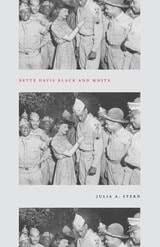
Bette Davis Black and White
Julia A. Stern
University of Chicago Press, 2021
Bette Davis was not only one of Hollywood’s brightest stars, but also one of its most outspoken advocates on matters of race. In Bette Davis Black and White, Julia A. Stern explores this largely untold facet of Davis’s brilliant career.
Bette Davis Black and White analyzes four of Davis’s best-known pictures—Jezebel (1938), The Little Foxes (1941), In This Our Life (1942), and What Ever Happened to Baby Jane? (1962)—against the history of American race relations. Stern also weaves in memories of her own experiences as a young viewer, coming into racial consciousness watching Davis’s films on television in an all-white suburb of Chicago.
Davis’s egalitarian politics and unique collaborations with her Black costars offer Stern a window into midcentury American racial fantasy and the efforts of Black performers to disrupt it. This book incorporates testimony from Davis’s Black contemporaries, including James Baldwin and C. L. R. James, as well as the African American fans who penned letters to Warner Brothers praising Davis’s work. A unique combination of history, star study, and memoir, Bette Davis Black and White allows us to contemplate cross-racial spectatorship in new ways.
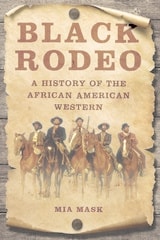
Black Rodeo
A History of the African American WesternMia Mask
University of Illinois Press, 2023
A first-of-its kind survey, Black Rodeo illuminates the figure of the Black cowboy while examining the intersection of African American film history and the western.
Cinema is the Strongest Weapon
Race-Making and Resistance in Fascist ItalyLorenzo Fabbri
University of Minnesota Press, 2023
A deep dive into Italian cinema under Mussolini’s regime and the filmmakers who used it as a means of antifascist resistance
Looking at Italy’s national film industry under the rule of Benito Mussolini and in the era that followed, Cinema Is the Strongest Weapon examines how cinema was harnessed as a political tool by both the reigning fascist regime and those who sought to resist it. Covering a range of canonical works alongside many of their neglected contemporaries, this book explores film’s mutable relationship to the apparatuses of state power and racial capitalism.
Exploiting realism’s aesthetic, experiential, and affective affordances, Mussolini’s biopolitical project employed cinema to advance an idealized vision of life under fascism and cultivate the basis for a homogenous racial identity. In this book, Lorenzo Fabbri crucially underscores realism’s susceptibility to manipulation from diametrically opposed political perspectives, highlighting the queer, Communist, Jewish, and feminist filmmakers who subverted Mussolini’s notion that “cinema is the regime’s strongest weapon” by developing film narratives and film forms that challenged the prevailing ethno-nationalist ideology.
Focusing on an understudied era of film history and Italian cultural production, Fabbri issues an important recontextualization of Italy’s celebrated neorealist movement and the structural ties it shares with its predecessor. Drawing incisive parallels to contemporary debates around race, whiteness, authoritarianism, and politics, he presents an urgent examination into the broader impact of visual media on culture and society.
Retail e-book files for this title are screen-reader friendly with images accompanied by short alt text and/or extended descriptions.
Dames in the Driver's Seat
Rereading Film NoirBy Jans B. Wager
University of Texas Press, 2005
With its focus on dangerous, determined femmes fatales, hardboiled detectives, and crimes that almost-but-never-quite succeed, film noir has long been popular with moviegoers and film critics alike. Film noir was a staple of classical Hollywood filmmaking during the years 1941-1958 and has enjoyed a resurgence in popularity since the 1990s. Dames in the Driver's Seat offers new views of both classical-era and contemporary noirs through the lenses of gender, class, and race. Jans Wager analyzes how changes in film noir's representation of women's and men's roles, class status, and racial identities mirror changes in a culture that is now often referred to as postmodern and postfeminist.
Following introductory chapters that establish the theoretical basis of her arguments, Wager engages in close readings of the classic noirs The Killers, Out of the Past, and Kiss Me Deadly and the contemporary noirs L. A. Confidential, Mulholland Falls, Fight Club, Twilight, Fargo, and Jackie Brown. Wager divides recent films into retro-noirs (made in the present, but set in the 1940s and 1950s) and neo-noirs (made and set in the present but referring to classic noir narratively or stylistically). Going beyond previous studies of noir, her perceptive readings of these films reveal that retro-noirs fulfill a reactionary social function, looking back nostalgically to outdated gender roles and racial relations, while neo-noirs often offer more revisionary representations of women, though not necessarily of people of color.
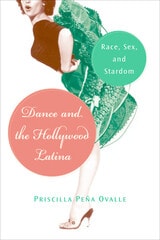
Dance and the Hollywood Latina
Race, Sex, and StardomOvalle, Priscilla P
Rutgers University Press, 2011
Introducing the concepts of "inbetween-ness" and "racial mobility" to further illuminate how racialized sexuality and the dancing female body operate in film, Priscilla Peña Ovalle focuses on the careers of Dolores Del Rio, Rita Hayworth, Carmen Miranda, Rita Moreno, and Jennifer Lopez. Dance and the Hollywood Latina helps readers better understand how the United States grapples with race, gender, and sexuality through dancing bodies on screen.
Film Blackness
American Cinema and the Idea of Black FilmMichael Boyce Gillespie
Duke University Press, 2016
Hollywood at the Intersection of Race and Identity
Delia Malia Caparoso Konzett
Rutgers University Press, 2020
Hollywood's African American Films
The Transition to SoundRyan Friedman
Rutgers University Press, 2011

I'd Just as Soon Kiss a Wookiee
Uncovering Racialized Desire in the Star Wars GalaxyGreg Carter
University of Texas Press, 2025
How the Star Wars trilogies and their fandoms have engaged with and mirrored American beliefs about race and gender.
2026 Award for Best Single Work, Popular Culture Association (MPCA)
The Star Wars saga takes place in a galaxy far, far away, but its social structures—in particular its racial realities—are thoroughly American. So argues Greg Carter in this thought-provoking analysis, which blends historical and theoretical treatments of science fiction cinema and Star Wars fandom to explore the subtle mirroring between fantasy and the communities that create and consume it.
I’d Just as Soon Kiss a Wookiee draws on insights from prominent scholars to examine fictional relationships between groups perceived to be biologically different. Three areas of commonality between the United States and Star Wars arise: stiff regulation of racial mixture; racialized servitude, with nonhumans placed in positions of bondage; and the presumption of white male supremacy. None of these are functions of the of the Star Wars story; rather, they index the expectations of US society. But expectations have also shifted since Star Wars launched in 1977, and the franchise with it. Carter gauges minority and mainstream fan reactions, finding that, while science fiction enthusiasts have a reputation for progressiveness, the truth turns out to be as complicated as US racism itself.
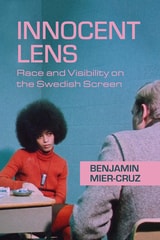
Innocent Lens
Race and Visibility on the Swedish ScreenBenjamin Mier-Cruz
University of Wisconsin Press, 2027
Sweden, like other Nordic countries, prides itself on being “colorblind” or immune to the kinds of racism found in, for example, the United States. In the 1960s and 1970s, white Swedish documentarians, in the fashion of early anthropologists, recorded racial tensions amid the US civil rights movement. More recently, in the twenty-first century, short films produced by Swedes of color have tackled racism and bigotry within Sweden.
Benjamin Mier-Cruz offers a comparative study of these two periods of Swedish documentary filmmaking. “Racially innocent” white documentarians of the mid-twentieth century developed an “aesthetics of altruism” predicated on Sweden’s assumed racial equalitarianism—a notion that their documentaries in turn helped create and maintain. In contemporary films, on the other hand, Swedes of color use the same filmic format to challenge not only their predecessors’ reductionist, pseudo-anthropological presentations but also Sweden’s purportedly colorblind ideology. Mier-Cruz’s close readings of films from both eras demonstrate the possibilities and limitations of the documentary form and the ways in which it is motivated by politics and activism.
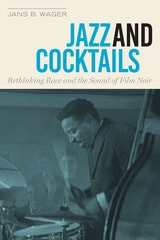
Jazz and Cocktails
Rethinking Race and the Sound of Film NoirBy Jans B. Wager
University of Texas Press, 2017
Film noir showcased hard-boiled men and dangerous femmes fatales, rain-slicked city streets, pools of inky darkness cut by shards of light, and, occasionally, jazz. Jazz served as a shorthand for the seduction and risks of the mean streets in early film noir. As working jazz musicians began to compose the scores for and appear in noir films of the 1950s, black musicians found a unique way of asserting their right to participate fully in American life.
Jazz and Cocktails explores the use of jazz in film noir, from its early function as a signifier of danger, sexuality, and otherness to the complex role it plays in film scores in which jazz invites the spectator into the narrative while simultaneously transcending the film and reminding viewers of the world outside the movie theater. Jans B. Wager looks at the work of jazz composers such as Miles Davis, Duke Ellington and Billy Strayhorn, Chico Hamilton, and John Lewis as she analyzes films including Sweet Smell of Success, Elevator to the Gallows, Anatomy of a Murder, Odds Against Tomorrow, and considers the neonoir American Hustle. Wager demonstrates how the evolving role of jazz in film noir reflected cultural changes instigated by black social activism during and after World War II and altered Hollywood representations of race and music.
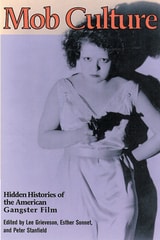
Mob Culture
Hidden Histories of the American Gangster FilmGrieveson, Lee
Rutgers University Press, 2005
Sinister, swaggering, yet often sympathetic, the figure of the gangster has stolen and murdered its way into the hearts of American cinema audiences. Despite the enduring popularity of the gangster film, however, traditional criticism has focused almost entirely on a few canonical movies such as Little Caesar, Public Enemy, and The Godfather trilogy, resulting in a limited and distorted understanding of this diverse and changing genre.
Mob Culture offers a long-awaited, fresh look at the American gangster film, exposing its hidden histories from the Black Hand gangs of the early twentieth century to The Sopranos. Departing from traditional approaches that have typically focused on the "nature" of the gangster, the editors have collected essays that engage the larger question of how the meaning of criminality has changed over time. Grouped into three thematic sections, the essays examine gangster films through the lens of social, gender, and racial/ethnic issues.
Destined to become a classroom favorite, Mob Culture is an indispensable reference for future work in the genre.
Near Black
White-to-Black Passing in American CultureBaz Dreisinger
University of Massachusetts Press, 2008
In the United States, the notion of racial “passing” is usually associated with blacks and other minorities who seek to present themselves as part of the white majority. Yet as Baz Dreisinger demonstrates in this fascinating study, another form of this phenomenon also occurs, if less frequently, in American culture: cases in which legally white individuals are imagined, by themselves or by others, as passing for black.
In Near Black, Dreisinger explores the oft-ignored history of what she calls “reverse racial passing” by looking at a broad spectrum of short stories, novels, films, autobiographies, and pop-culture discourse that depict whites passing for black. The protagonists of these narratives, she shows, span centuries and cross contexts, from slavery to civil rights, jazz to rock to hip-hop. Tracing their role from the 1830s to the present day, Dreisinger argues that central to the enterprise of reverse passing are ideas about proximity. Because “blackness,” so to speak, is imagined as transmittable, proximity to blackness is invested with the power to turn whites black: those who are literally “near black” become metaphorically “near black.”
While this concept first arose during Reconstruction in the context of white anxieties about miscegenation, it was revised by later white passers for whom proximity to blackness became an authenticating badge. As Dreisinger shows, some white-to-black passers pass via self-identification. Jazz musician Mezz Mezzrow, for example, claimed that living among blacks and playing jazz had literally darkened his skin. Others are taken for black by a given community for a period of time. This was the experience of Jewish critic Waldo Frank during his travels with Jean Toomer, as well as that of disc jockey Hoss Allen, master of R&B slang at Nashville's famed WLAC radio. For journalists John Howard Griffin and Grace Halsell, passing was a deliberate and fleeting experiment, while for Mark Twain's fictional white slave in Pudd'nhead Wilson, it is a near-permanent and accidental occurrence.
Whether understood as a function of proximity or behavior, skin color or cultural heritage, self-definition or the perception of others, what all these variants of “reverse passing” demonstrate, according to Dreisinger, is that the lines defining racial identity in American culture are not only blurred but subject to change.
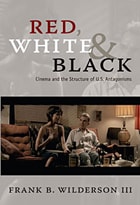
Red, White & Black
Cinema and the Structure of U.S. AntagonismsFrank B. Wilderson III
Duke University Press, 2010
Wilderson provides detailed readings of two films by Black directors, Antwone Fisher (Denzel Washington) and Bush Mama (Haile Gerima); one by an Indian director, Skins (Chris Eyre); and one by a White director, Monster’s Ball (Marc Foster). These films present Red and Black people beleaguered by problems such as homelessness and the repercussions of incarceration. They portray social turmoil in terms of conflict, as problems that can be solved (at least theoretically, if not in the given narratives). Wilderson maintains that at the narrative level, they fail to recognize that the turmoil is based not in conflict, but in fundamentally irreconcilable racial antagonisms. Yet, as he explains, those antagonisms are unintentionally disclosed in the films’ non-narrative strategies, in decisions regarding matters such as lighting, camera angles, and sound.
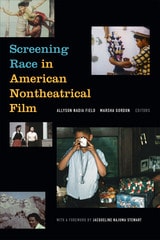
Screening Race in American Nontheatrical Film
Nadia Allyson Field and Marsha Gordon, editors
Duke University Press, 2019
Contributors. Crystal Mun-hye Baik, Jasmyn R. Castro, Nadine Chan, Mark Garrett Cooper, Dino Everett, Allyson Nadia Field, Walter Forsberg, Joshua Glick, Tanya Goldman, Marsha Gordon, Noelle Griffis, Colin Gunckel, Michelle Kelley, Todd Kushigemachi, Martin L. Johnson, Caitlin McGrath, Elena Rossi-Snook, Laura Isabel Serna, Jacqueline Najuma Stewart, Dan Streible, Lauren Tilton, Noah Tsika, Travis L. Wagner, Colin Williamson
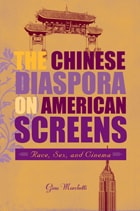
The Chinese Diaspora on American Screens
Race, Sex, and CinemaGina Marchetti
Temple University Press, 2012
The Chinese Diaspora on American Screens looks at the way in which issues of race and sexuality have become central concerns in cinema generated by and about Chinese communities in America after the mid-1990s. This companion volume to Marchetti's From Tian'anmen to Times Square looks specifically at the Chinese diaspora in relation to ethnic, racial, gender, and sexual identity as depicted in the cinema.
Examining films from the United States and Canada, as well as transnational co-productions, The Chinese Diaspora on American Screens includes analyses of films such as The Wedding Banquet and Double Happiness in addition to interviews with celebrated filmmakers such as Wayne Wang.
Marchetti also reflects on how Chinese identity is presented in a multitude of media forms, including commercial cinema, documentaries, experimental films, and hybrid digital media to offer a textured look at representations of the Chinese diasporic experience after Tian'anmen.
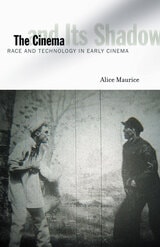
The Cinema and Its Shadow
Race and Technology in Early CinemaAlice Maurice
University of Minnesota Press, 2013
The Cinema and Its Shadow argues that race has defined the cinematic apparatus since the earliest motion pictures, especially at times of technological transition. In particular, this work explores how racial difference became central to the resolving of cinematic problems: the stationary camera, narrative form, realism, the synchronization of image and sound, and, perhaps most fundamentally, the immaterial image—the cinema’s “shadow,” which figures both the material reality of the screen image and its racist past.
Discussing early “race subjects,” Alice Maurice demonstrates that these films influenced cinematic narrative in lasting ways by helping to determine the relation between stillness and motion, spectacle and narrative drive. The book examines how motion picture technology related to race, embodiment, and authenticity at specific junctures in cinema’s development, including the advent of narratives, feature films, and sound. In close readings of such films as The Cheat, Shadows, and Hallelujah!, Maurice reveals how the rhetoric of race repeatedly embodies film technology, endowing it with a powerful mix of authenticity and magic. In this way, the racialized subject became the perfect medium for showing off, shoring up, and reintroducing the cinematic apparatus at various points in the history of American film.
Moving beyond analyzing race in purely thematic or ideological terms, Maurice traces how it shaped the formal and technological means of the cinema.

The White Savior Film
Content, Critics, and ConsumptionMatthew Hughey
Temple University Press, 2014
In The White Savior Film, Matthew Hughey provides a cogent, multipronged analysis of this subgenre of films to investigate the underpinnings of the Hollywood-constructed images of idealized (and often idealistic) white Americans.
Hughey considers the production, distribution, and consumption of white savior films to show how the dominant messages of sacrifice, suffering, and redemption are perceived by both critics and audiences. Examining the content of fifty films, nearly 3,000 reviews, and interviews with viewer focus groups, he accounts for the popularity of this subgenre and its portrayal of "racial progress."
The White Savior Film shows how we as a society create and understand these films and how they reflect the political and cultural contexts of their time.

The Witch's Flight
The Cinematic, the Black Femme, and the Image of Common SenseKara Keeling
Duke University Press, 2007
Keeling draws on the thought of Frantz Fanon, Angela Davis, Karl Marx, Antonio Gramsci, and others in addition to Deleuze. She pursues the elusive figure of the black femme through Haile Gerima’s film Sankofa, images of women in the Black Panther Party, Pam Grier’s roles in the blaxploitation films of the early 1970s, F. Gary Gray’s film Set It Off, and Kasi Lemmons’s Eve’s Bayou.

White Gypsies
Race and Stardom in Spanish MusicalsEva Woods Peiró
University of Minnesota Press, 2012
Little has been written about the Spanish film musical, a genre usually associated with the early Franco dictatorship and dismissed by critics as reactionary, escapist fare. A timely and valuable corrective, White Gypsies shows how the Spanish folkloric musical films of the 1940s and ’50s are inextricably tied to anxious concerns about race—especially, but not only, Gypsiness.
Focusing on the processes of identity formation in twentieth-century Spain—with multifaceted readings of the cinematic construction of class, gender, and sexuality—Eva Woods Peiró explores how these popular films allowed audiences to negotiate and imaginatively, at times problematically, resolve complex social contradictions. The intricate interweaving of race and modernity is particularly evident in her scrutiny of a striking popular phenomenon: how the musicals progressively whitened their stars, even as their story lines became increasingly Andalusianized and Gypsified.
White Gypsies reveals how these imaginary individuals constituted a veritable cultural barometer of how racial thinking was projected and understood across a broad swath of popular Spanish cinema.