Results by title
21 books match the query 'Recording & Reproduction'
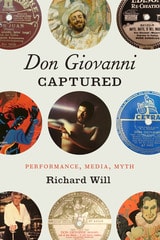
"Don Giovanni" Captured
Performance, Media, MythRichard Will
University of Chicago Press, 2022
Mozart’s opera Don Giovanni has long inspired myths about eros and masculinity. Over time, its performance history has revealed a growing trend toward critique—an increasing effort on the part of performers and directors to highlight the violence and predatoriness of the libertine central character, alongside the suffering and resilience of his female victims.
In “Don Giovanni” Captured, Richard Will sets out to analyze more than a century’s worth of recorded performances of the opera, tracing the ways it has changed from one performance to another and from one generation to the next. Will consults audio recordings, starting with wax cylinders and 78s, as well as video recordings, including DVDs, films, and streaming videos. As Will argues, recordings and other media shape our experience of opera as much as live performance does. Seen as a historical record, opera recordings are also a potent reminder of the refusal of works such as Don Giovanni to sit still. By choosing a work with such a rich and complex tradition of interpretation, Will helps us see Don Giovanni as a standard-bearer for evolving ideas about desire and power, both on and off the stage.
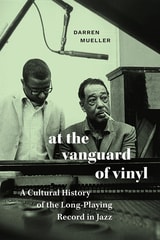
At the Vanguard of Vinyl
A Cultural History of the Long-Playing Record in JazzDarren Mueller
Duke University Press, 2024
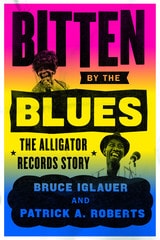
Bitten by the Blues
The Alligator Records StoryBruce Iglauer and Patrick A. Roberts
University of Chicago Press, 2018
Bitten by the Blues is Iglauer’s memoir of a life immersed in the blues—and the business of the blues. No one person was present at the creation of more great contemporary blues music than Iglauer: he produced albums by Koko Taylor, Albert Collins, Professor Longhair, Johnny Winter, Lonnie Mack, Son Seals, Roy Buchanan, Shemekia Copeland, and many other major figures. In this book, Iglauer takes us behind the scenes, offering unforgettable stories of those charismatic musicians and classic sessions, delivering an intimate and unvarnished look at what it’s like to work with the greats of the blues. It’s a vivid portrait of some of the extraordinary musicians and larger-than-life personalities who brought America’s music to life in the clubs of Chicago’s South and West Sides. Bitten by the Blues is also an expansive history of half a century of blues in Chicago and around the world, tracing the blues recording business through massive transitions, as a genre of music originally created by and for black southerners adapted to an influx of white fans and musicians and found a worldwide audience.
Most of the smoky bars and packed clubs that fostered the Chicago blues scene have long since disappeared. But their soul lives on, and so does their sound. As real and audacious as the music that shaped it, Bitten by the Blues is a raucous journey through the world of Genuine Houserockin’ Music.
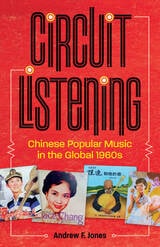
Circuit Listening
Chinese Popular Music in the Global 1960sAndrew F. Jones
University of Minnesota Press, 2020
How the Chinese pop of the 1960s participated in a global musical revolution
What did Mao’s China have to do with the music of youth revolt in the 1960s? And how did the mambo, the Beatles, and Bob Dylan sound on the front lines of the Cold War in Asia? In Circuit Listening, Andrew F. Jones listens in on the 1960s beyond the West, and suggests how transistor technology, decolonization, and the Green Revolution transformed the sound of music around the globe.
Focusing on the introduction of the transistor in revolutionary China and its Cold War counterpart in Taiwan, Circuit Listening reveals the hidden parallels between music as seemingly disparate as rock and roll and Maoist anthems. It offers groundbreaking studies of Mandarin diva Grace Chang and the Taiwanese folk troubadour Chen Da, examines how revolutionary aphorisms from the Little Red Book parallel the Beatles’ “Revolution,” uncovers how U.S. military installations came to serve as a conduit for the dissemination of Anglophone pop music into East Asia, and shows how consumer electronics helped the pop idol Teresa Teng bring the Maoist era to a close, remaking the contemporary Chinese soundscape forever.
Circuit Listening provides a multifaceted history of Chinese-language popular music and media at midcentury. It profiles a number of the most famous and best loved Chinese singers and cinematic icons, and places those figures in a larger geopolitical and technological context. Circuit Listening’s original research and far-reaching ideas make for an unprecedented look at the role Chinese music played in the ’60s pop musical revolution.

Emotional Signals
Auto-Tune, Melodyne, and the Cultural Politics of Pitch CorrectionCatherine Provenzano
University of Michigan Press, 2027
An ethnographic account of the history, development, and cultural impacts of digital tuning software
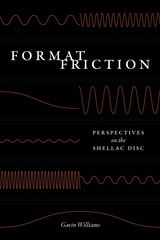
Format Friction
Perspectives on the Shellac DiscGavin Williams
University of Chicago Press, 2024
With the rise of the gramophone around 1900, the shellac disc traveled the world and eventually became the dominant sound format in the first half of the twentieth century. Format Friction brings together a set of local encounters with the shellac disc, beginning with its preconditions in South Asian knowledge and labor, to offer a global portrait of this format.
Spun at seventy-eight revolutions per minute, the shellac disc rapidly became an industrial standard even while the gramophone itself remained a novelty. The very basis of this early sound reproduction technology was friction, an elemental materiality of sound shaped through cultural practice. Using friction as a lens, Gavin Williams illuminates the environments plundered, the materials seized, and the ears entangled in the making of a sound format. Bringing together material, political, and music history, Format Friction decenters the story of a beloved medium, and so explores new ways of understanding listening in technological culture more broadly.
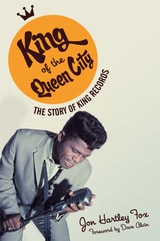
King of the Queen City
The Story of King RecordsJon Hartley Fox. Foreword by Dave Alvin
University of Illinois Press, 2014
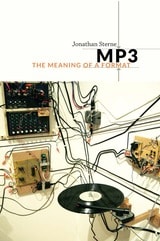
MP3
The Meaning of a FormatJonathan Sterne
Duke University Press, 2012
MP3s are products of compression, a process that removes sounds unlikely to be heard from recordings. Although media history is often characterized as a progression toward greater definition, fidelity, and truthfulness, MP3: The Meaning of a Format illuminates the crucial role of compression in the development of modern media and sound culture. Taking the history of compression as his point of departure, Jonathan Sterne investigates the relationships among sound, silence, sense, and noise; the commodity status of recorded sound and the economic role of piracy; and the importance of standards in the governance of our emerging media culture. He demonstrates that formats, standards, and infrastructures—and the need for content to fit inside them—are every bit as central to communication as the boxes we call "media."
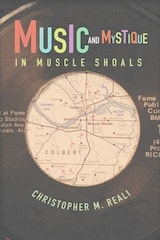
Music and Mystique in Muscle Shoals
Christopher M. Reali
University of Illinois Press, 2022
The forceful music that rolled out of Muscle Shoals in the 1960s and 1970s shaped hits by everyone from Wilson Pickett and Aretha Franklin to the Rolling Stones and Paul Simon. Christopher M. Reali's in-depth look at the fabled musical hotbed examines the events and factors that gave the Muscle Shoals sound such a potent cultural power. Many artists trekked to FAME Studios and Muscle Shoals Sound in search of the sound of authentic southern Black music—and at times expressed shock at the mostly white studio musicians waiting to play it for them. Others hoped to draw on the hitmaking production process that defined the scene. Reali also chronicles the overlooked history of Muscle Shoals's impact on country music and describes the region's recent transformation into a tourism destination.
Multifaceted and informed, Music and Mystique in Muscle Shoals reveals the people, place, and events behind one of the most legendary recording scenes in American history.
Off the Record
The Technology and Culture of Sound Recording in AmericaMorton, David
Rutgers University Press, 1999
David L. Morton examines the process of invention, innovation, and diffusion of communications technology, using the history of sound recording as the focus. Off the Record demonstrates how the history of both the hardware and the ways people used it is essential for understanding why any particular technology became a fixture in everyday life or faded into obscurity. Morton’s approach to the topic differs from most previous works, which have examined the technology’s social impact, but not the reasons for its existence. Recording culture in America emerged, Morton writes, not through the dictates of the technology itself but in complex ways that were contingent upon the actions of users.
Each of the case studies in the book emphasizes one of five aspects of the culture of recording and its relationship to new technology, at the same time telling the story of sound recording history. One of the misconceptions that Morton hopes to dispel is that the only important category of sound recording involves music. Unique in his broad-based approach to sound technology, the five case studies that Morton investigates are :- The phonograph record
- Recording in the radio business
- The dictation machine
- The telephone answering machine, and
- Home taping
Record Cultures
The Transformation of the U.S. Recording IndustryKyle Barnett
University of Michigan Press, 2020
Through an interdisciplinary and intermedial approach to recording industry history, Record Cultures creates new connections between different strands of media research. It will be of interest to scholars of popular music, media studies, sound studies, American culture, and the history of film, television, and radio.

Sound Ideas
Music, Machines, and ExperienceAden Evens
University of Minnesota Press, 2005
Sound Streams
A Cultural History of Radio-Internet ConvergenceAndrew J. Bottomley
University of Michigan Press, 2020
Sound Streams is the first book to historicize radio-internet convergence from the early ’90s through the present, demonstrating how so-called new media represent an evolutionary shift that is nevertheless historically consistent with earlier modes of broadcasting. Various iterations of internet radio, from streaming audio to podcasting, are all new radio practices rather than each being a separate new medium: radio is any sound media that is purposefully crafted to be heard by an audience. Rather than a particular set of technologies or textual conventions, web-based broadcasting combines unique practices and features and ideas from radio history. In addition, there exists a distinctive conversationality and reflexivity to radio talk, including a propensity for personal stories and emotional disclosure, that suits networked digital media culture. What media convergence has done is extend and intensify radio’s logics of connectivity and sharing; sonically mediated personal expression intended for public consideration abounds in online media networks.
Sound Streams marks a significant contribution to digital media and internet studies. Its mix of cultural history, industry research, and genre and formal analysis, especially of contemporary audio storytelling, will appeal to media scholars, radio and podcast practitioners, audio journalism students, and dedicated podcast fans.
Sound
An Acoulogical TreatiseMichel Chion
Duke University Press, 2016
Sound
Dialogue, Music, and EffectsKalinak, Kathryn
Rutgers University Press, 2015

Streaming Music, Streaming Capital
Eric Drott
Duke University Press, 2024
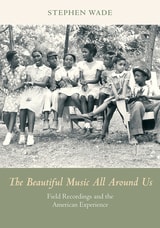
The Beautiful Music All Around Us
Field Recordings and the American ExperienceStephen Wade
University of Illinois Press, 2012
The Beautiful Music All Around Us presents the extraordinarily rich backstories of thirteen performances captured on Library of Congress field recordings between 1934 and 1942 in locations reaching from Southern Appalachia to the Mississippi Delta and the Great Plains. Including the children's play song "Shortenin' Bread," the fiddle tune "Bonaparte's Retreat," the blues "Another Man Done Gone," and the spiritual "Ain't No Grave Can Hold My Body Down," these performances were recorded in kitchens and churches, on porches and in prisons, in hotel rooms and school auditoriums. Documented during the golden age of the Library of Congress recordings, they capture not only the words and tunes of traditional songs but also the sounds of life in which the performances were embedded: children laugh, neighbors comment, trucks pass by.
Musician and researcher Stephen Wade sought out the performers on these recordings, their families, fellow musicians, and others who remembered them. He reconstructs the sights and sounds of the recording sessions themselves and how the music worked in all their lives. Some of these performers developed musical reputations beyond these field recordings, but for many, these tracks represent their only appearances on record: prisoners at the Arkansas State Penitentiary jumping on "the Library's recording machine" in a rendering of "Rock Island Line"; Ora Dell Graham being called away from the schoolyard to sing the jump-rope rhyme "Pullin' the Skiff"; Luther Strong shaking off a hungover night in jail and borrowing a fiddle to rip into "Glory in the Meetinghouse."
Alongside loving and expert profiles of these performers and their locales and communities, Wade also untangles the histories of these iconic songs and tunes, tracing them through slave songs and spirituals, British and homegrown ballads, fiddle contests, gospel quartets, and labor laments. By exploring how these singers and instrumentalists exerted their own creativity on inherited forms, "amplifying tradition's gifts," Wade shows how a single artist can make a difference within a democracy.
Reflecting decades of research and detective work, the profiles and abundant photos in The Beautiful Music All Around Us bring to life largely unheralded individuals--domestics, farm laborers, state prisoners, schoolchildren, cowboys, housewives and mothers, loggers and miners--whose music has become part of the wider American musical soundscape. The hardcover edition also includes an accompanying CD that presents these thirteen performances, songs and sounds of America in the 1930s and '40s.

The Sad Citizen
How Politics Is Depressing and Why It MattersChristopher Ojeda
University of Chicago Press, 2025
For many citizens, politics is depressing. How has this come to be the norm? And, how is it influencing democracy?
From rising polarization to climate change, today’s politics are leaving many Western democracies in the throes of malaise. While anger, anxiety, and fear are loud emotions that powerfully activate voters, depression is quiet, demobilizing, and less visible as a result. Yet its pervasiveness is cause for concern: after all, democracy should empower citizens.
In The Sad Citizen, Christopher Ojeda draws on wide-ranging data from the United States and beyond to explain how politics is depressing, why this matters, and what we can do about it. Integrating insights from political science, sociology, psychology, and other fields, The Sad Citizen exposes the unhappy underbelly of contemporary politics and offers fresh ideas to strengthen democracy and help citizens cope with the stress of politics.
The Voice in the Headphones
David Grubbs
Duke University Press, 2020
The Voice in the Headphones is an experiment in music writing in the form of a long poem centered on the culture of the recording studio. It describes in intricate, prismatic detail one marathon day in a recording studio during which an unnamed musician struggles to complete a film soundtrack. The book extends the form of Grubbs's previous volume Now that the audience is assembled, sharing its goal of musicalizing the language of writing about music. Mulling the insight that “studio is the absence of pushback”—now that no audience is assembled—The Voice in the Headphones details one musician's strategies for applying the requisite pressure to the proceedings, for making it count. The Voice in the Headphones is both a literary work and a meditation on sound recording, delivered at a moment in which the commercial recording studio shades into oblivion. It draws upon Grubbs's own history of several decades as a recording artist, and its location could be described as every studio in which he has set foot.
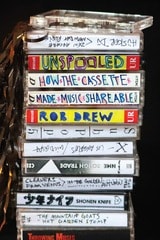
Unspooled
How the Cassette Made Music ShareableRob Drew
Duke University Press, 2024
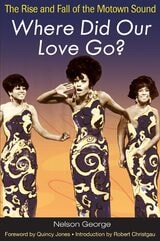
Where Did Our Love Go?
The Rise and Fall of the Motown SoundNelson George. Foreword by Quincy Jones, Introduction by Robert Christgau.
University of Illinois Press, 2007
Gordy's uncanny instinct for finding extraordinary talent--from performers and musicians to songwriters and producers—packed the label's roster with a who's who of historic artists and hitmakers. Here is the story of the Supremes and superstar Diana Ross, of the towering solo acts Marvin Gaye and Stevie Wonder, of vocal groups led by the Temptations and Four Tops, of the phenomenal Jackson Five and Michael Jackson, and of singer/songwriter and Motown executive Smokey Robinson. Up front about Gordy's manipulative and complex relationships with his artists, George reveals the inner workings of how Motown conducted its business. He also offers portraits of the Funk Brothers and other musicians who played the unforgettable songs.
George's preface shows how Motown influenced a later generation of young artists and music moguls, including R. Kelly, D'Angelo, Sean Combs, and Russell Simmons.