Results by title
12 books match the query 'Reputation'

Cardozo
A Study in ReputationRichard A. Posner
University of Chicago Press, 1993
"The present compact and unflaggingly interesting volume . . . is a full-bodied scholarly biography. . . .It is illuminating in itself, and will serve as a significant contribution."—Paul A. Freund, New York Times Book Review
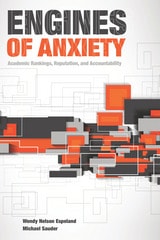
Engines of Anxiety
Academic Rankings, Reputation, and Accountabilityespeland
Russell Sage Foundation, 2016
Students and the public routinely consult various published college rankings to assess the quality of colleges and universities and easily compare different schools. However, many institutions have responded to the rankings in ways that benefit neither the schools nor their students. In Engines of Anxiety, sociologists Wendy Espeland and Michael Sauder delve deep into the mechanisms of law school rankings, which have become a top priority within legal education. Based on a wealth of observational data and over 200 in-depth interviews with law students, university deans, and other administrators, they show how the scramble for high rankings has affected the missions and practices of many law schools.
Engines of Anxiety tracks how rankings, such as those published annually by the U.S. News & World Report, permeate every aspect of legal education, beginning with the admissions process. The authors find that prospective law students not only rely heavily on such rankings to evaluate school quality, but also internalize rankings as expressions of their own abilities and flaws. For example, they often view rejections from “first-tier” schools as a sign of personal failure. The rankings also affect the decisions of admissions officers, who try to balance admitting diverse classes with preserving the school’s ranking, which is dependent on factors such as the median LSAT score of the entering class. Espeland and Sauder find that law schools face pressure to admit applicants with high test scores over lower-scoring candidates who possess other favorable credentials.
Engines of Anxiety also reveals how rankings have influenced law schools’ career service departments. Because graduates’ job placements play a major role in the rankings, many institutions have shifted their career-services resources toward tracking placements, and away from counseling and network-building. In turn, law firms regularly use school rankings to recruit and screen job candidates, perpetuating a cycle in which highly ranked schools enjoy increasing prestige. As a result, the rankings create and reinforce a rigid hierarchy that penalizes lower-tier schools that do not conform to the restrictive standards used in the rankings. The authors show that as law schools compete to improve their rankings, their programs become more homogenized and less accessible to non-traditional students.
The ranking system is considered a valuable resource for learning about more than 200 law schools. Yet, Engines of Anxiety shows that the drive to increase a school’s rankings has negative consequences for students, educators, and administrators and has implications for all educational programs that are quantified in similar ways.

Game Faces
Sport Celebrity and the Laws of ReputationSarah K. Fields
University of Illinois Press, 2016
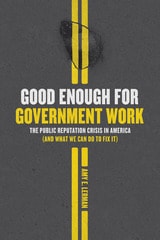
Good Enough for Government Work
The Public Reputation Crisis in America (And What We Can Do to Fix It)Amy E. Lerman
University of Chicago Press, 2019
With Good Enough for Government Work, Lerman uses surveys, experiments, and public opinion data to argue persuasively that the reputation of government is itself an impediment to government’s ability to achieve the common good. In addition to improving its efficiency and effectiveness, government therefore has an equally critical task: countering the belief that the public sector is mired in incompetence. Lerman takes readers through the main challenges. Negative perceptions are highly resistant to change, she shows, because we tend to perceive the world in a way that confirms our negative stereotypes of government—even in the face of new information. Those who hold particularly negative perceptions also begin to “opt out” in favor of private alternatives, such as sending their children to private schools, living in gated communities, and refusing to participate in public health insurance programs. When sufficient numbers of people opt out of public services, the result can be a decline in the objective quality of public provision. In this way, citizens’ beliefs about government can quickly become a self-fulfilling prophecy, with consequences for all. Lerman concludes with practical solutions for how the government might improve its reputation and roll back current efforts to eliminate or privatize even some of the most critical public services.
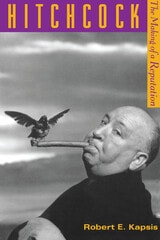
Hitchcock
The Making of a ReputationRobert E. Kapsis
University of Chicago Press, 1992
Through a close examination of Hitchcock's personal papers, scripts, production notes, publicity files, correspondence, and hundreds of British and American reviews, Robert Kapsis here traces Hitchcock's changing critical fortunes. Vertigo, for instance, was considered a flawed film when first released; today it is viewed by many as the signal achievement of a great director. According to Kapsis, this dramatic change occurred because the making of the Hitchcock legend was not solely dependent on the quality of his films. Rather, his elevation to artist was caused by a successful blending of self-promotion, sponsorship by prominent members of the film community, and, most important, changes in critical theory which for the first time allowed for the idea of director as auteur.
Kapsis also examines the careers of several other filmmakers who, like Hitchcock, have managed to cross the line that separates craftsman from artist, and shows how Hitchcock's legacy and reputation shed light on the way contemporary reputations are made. In a chapter about Brian De Palma, the most reknowned thriller director since Hitchcock, Kapsis explores how Hitchcock's legacy has affected contemporary work in—and criticism of—the thriller genre.
Filled with fascinating anecdotes and intriguing excerpts, and augmented by interviews with Hitchcock's associates, this thoroughly documented and engagingly written book will appeal to scholars and film enthusiasts alike.
"Required reading for Hitchcock scholars...scrupulously researched, invaluable material for those who continue to ask: what made the master tick?"—Anthony Perkins

Men of No Reputation
Robert Boatright, the Buckfoot Gang, and the Fleecing of Middle AmericaKimberly Harper
University of Arkansas Press, 2024
Winner, 2025 Missouri Conference on History Book Award
Swindler. Murderer. Scoundrel.
Robert Boatright was one of Middle America’s greatest confidence men. Although little remembered today, his story provides a rare glimpse into America’s criminal past. Working in concert with a local bank and an influential Democratic boss, “this dean of modern confidence men” and his colorful confederacy of con men known as the Buckfoot Gang seemed untouchable. A series of missteps, however, led to a string of court cases across the country that brought Boatright’s own criminal enterprise to an end. And yet, the con continued: Boatright’s successor, John C. Mabray, and his cronies, many of whom had been in the Buckfoot Gang, preyed upon victims across North America in one of the largest midwestern criminal syndicates in history before they were brought to heel.
Like the works of Sinclair Lewis, Boatright’s story exposes a rift in the wholesome midwestern stereotype and furthers our understanding of nineteenth- and twentieth-century American society.

Professor Superstar
Fandom and Anti-Fandom of AcademiaMel Stanfill
University of Michigan Press, 2026
Radicalism and Reputation
The Career of Bronterre O'BrienMichael J. Turner
Michigan State University Press, 2017

Real Gangstas
Legitimacy, Reputation, and Violence in the Intergang EnvironmentLauger, Timothy R
Rutgers University Press, 2012
Street gangs are a major concern for residents in many inner-city communities. However, gangs’ secretive and, at times, delinquent tendencies limit most people’s exposure to the realities of gang life. Based on eighteen months of qualitative research on the streets of Indianapolis, Real Gangstas provides a unique and intimate look at the lives of street gang members as they negotiate a dangerous peer environment in a major midwestern city.
Timothy R. Lauger interviewed and observed a mix of fifty-five gang members, former gang members, and non-gang street offenders. He spent much of his fieldwork time in the company of a particular gang, the “Down for Whatever Boyz,” who allowed him to watch and record many of their day-to-day activities and conversations. Through this extensive research, Lauger is able to understand and explain the reasons for gang membership, including a chaotic family life, poverty, and the need for violent self-assertion in order to foster the creation of a personal identity.
Although the book exposes many troubling aspects of gang life, it is not a simple descriptive or a sensationalistic account of urban despair and violence. Steeped in the tradition of analytical ethnography, the study develops a central theoretical argument: combinations of street gangs within cities shape individual gang member behavior within those urban settings. Within Indianapolis, members of rival gangs interact on a routine basis within an ambiguous and unstable environment. Participants believe that many of their contemporaries claiming gang affiliations are not actually “real” gang members, but instead are imposters who gain access to the advantages of gang membership through fraud and pretense. Consequently, the ability to discern “real” gang members—or to present oneself successfully as a real gang member—is a critical part of gangland Indianapolis.
Real Gangstas offers an objective and fair characterization of active gang members, successfully balancing the seemingly conflicting idea that they generally seem like normal teenagers, yet are abnormally concerned with—and too often involved in—violence. Lauger takes readers to the edge of an actual gang conflict, providing a rare and up-close look at the troubling processes that facilitate hostility and violence.
Reputation
Studies in the Voluntary Elicitation of Good ConductDaniel B. Klein, Editor
University of Michigan Press, 1997
Strategic Communications in Healthcare
Building Trust, Reputation, and ImpactEdited by Rose Glenn and David Jarrard
Michigan Publishing Services, 2027
Strategic Communications in Healthcare: Building Trust, Reputation and Impact is a landmark textbook that combines innovative approaches to communication with the enduring principles that drive effectiveness, influence, and results. Drawing on the real-world expertise of nationally recognized leaders Rose Glenn and David Jarrard—along with a who’s who of senior healthcare communicators and educators—this hands-on guide brings together trust-building, messaging, crisis response, culture, brand, patient experience, research, measurement, AI, and more foundational elements into a cohesive framework for students and professionals alike.

The Reputation of the Roman Merchant
Jane Sancinito
University of Michigan Press, 2024