Results by title
13 books match the query 'Revenge'

Cold
John Smolens
Michigan State University Press, 2017
In the frozen reaches of Michigan’s Upper Peninsula, fierce winter storms hit without warning. The white opacity of one such blizzard allows Norman Haas to walk away from his prison work detail. Dangerously close to freezing to death, Norman is given shelter by Liesl Tiomenen, a middle-aged woman who lives in a house she and her late husband built in the woods. Armed with a rifle, she tries to turn him in, but when they set out on snowshoes, she suffers a fall, allowing him to flee again. Thus begins Norman’s journey back to his past, back to the woman he loved who betrayed him, back to the brother who helped put him away, back to a dangerous web of family allegiances, deceptions, and intrigue.
After finding Liesl injured and abandoned in the woods, Yellow Dog Township’s sole full-time law enforcement officer Del Maki pursues Norman through a storm of mythic proportions.
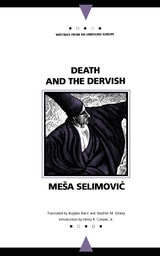
Death and the Dervish
Mesa Selimovic
Northwestern University Press, 1996
Hugely successful when published in the 1960s, Death and the Dervish is an enduring classic made into a feature length film in 1974.

Down and Dirty Down South
Politics and the Art of RevengeRoger Glasgow
Butler Center for Arkansas Studies, 2016
While pursuing a race for district prosecutor in the 1970s, Glasgow had run afoul of the local political machine. The machine later decided to teach Glasgow a lesson even though he’d lost the race. Down and Dirty Down South is Glasgow’s story of how he attempted to clear his name and also track down the people who had set him up for charges of smuggling illegal drugs into the United States.
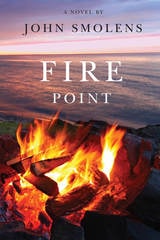
Fire Point
John Smolens
Michigan State University Press, 2017
A story of love, vengeance, and renewal, Fire Point depicts the young couple’s attempt to rebuild their lives. But when Hannah’s former boyfriend Sean Colby returns home after a mysterious early discharge from the army, he cannot accept the fact that she has a new lover and commits a series of increasingly violent acts against Hannah, Martin, and the house that has come to represent their future.
Hamlet
William Shakespeare
Arizona Center for Medieval and Renaissance Studies, 2021
Lovers of Shakespeare’s language take heart: Lisa Peterson’s translation of Hamlet into contemporary American English was guided by the principle of “First, do no harm.” Leaving the most famous parts of Hamlet untouched, Peterson untied the language knots that can make the rest of the play difficult to understand in a single theatrical viewing. Peterson’s translation makes Hamlet accessible to new audiences, drawing out its timeless themes while helping to contextualize "To be, or not to be: that is the question," and “Something is rotten in the state of Denmark,” so that contemporary audiences can feel their full weight.
This translation of Hamlet was written as part of the Oregon Shakespeare Festival’s Play On! project, which commissioned new translations of thirty-nine Shakespeare plays. These translations present work from "The Bard" in language accessible to modern audiences while never losing the beauty of Shakespeare’s verse. Enlisting the talents of a diverse group of contemporary playwrights, screenwriters, and dramaturges from diverse backgrounds, this project reenvisions Shakespeare for the twenty-first century. These volumes make these works available for the first time in print—a new First Folio for a new era.
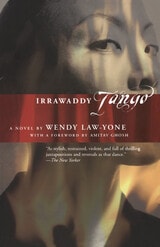
Irrawaddy Tango
Wendy Law-Yone
Northwestern University Press, 2003
Irrawaddy Tango, a pepper-tongued, tango-dancing Asian beauty rises from a village girlhood to become the wife of her country's dictator and then a leader of the rebel forces arrayed against him. Tango captures the attention of an ambitious colonel --the self-proclaimed Supremo--while dancing at a talent contest. Once married, she is forced to endure the cruelties of a ruthless and foolish husband, is kidnapped by rebel forces, recaptured and brutally punished by her husband's military clique, and eventually exiled to America. Her return to the fictional Republic of Daya (clearly Burma) brings about the destruction of her husband and his dictatorship. Irrawaddy Tango tells the unsettling tale of powerful men and powerless women. It evokes as well the harshness of exile, revealing the misunderstandings between East and West and by doing so captures the intensity of living between the two.
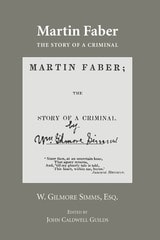
Martin Faber
The Story of a Criminal with "Confessions of a Murder"William Gilmore Simms
University of Arkansas Press, 2006
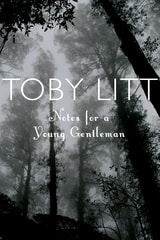
Notes for a Young Gentleman
Toby Litt
Seagull Books, 2017
Told in the form of the pithy, even lyrical advice a young soldier leaves behind after a mission gone wrong, Notes for a Young Gentleman is no exception. Its brilliantly creative form, and the epigrammatic genius Litt displays in its creation, nonetheless can’t hide the powerful, emotional story at its heart: of a young soldier parachuting toward a beautiful, moonlit country house on a mission . . . of betrayal. The house? Marlborough. The target? Winston Churchill, an old friend of his father. A brilliant, at times dizzying but always heartfelt exploration of love, revenge, and the essence of a gentleman, Notes for a Young Gentleman is classic Toby Litt: wholly new and wholly unforgettable.
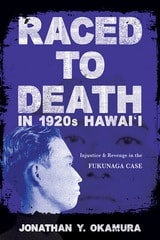
Raced to Death in 1920s Hawai i
Injustice and Revenge in the Fukunaga CaseJonathan Y. Okamura
University of Illinois Press, 2019
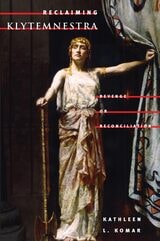
Reclaiming Klytemnestra
REVENGE OR RECONCILIATIONKathleen L. Komar
University of Illinois Press, 2003
By slaying her husband, Klytemnestra exposed the competing ethics of motherhood and matrimony at the beginnings of the Western tradition. In this interdisciplinary study, Kathleen L. Komar first examines the classical archetype of Klytemnestra established by writers such as Aeschylus, Sophocles, and Euripides. Turning to the twentieth century, she investigates the work of modern writers who, since the 1960s, have reconceptualized Klytemnestra’s actions and motivations in the contemporary contexts of dance, fiction, drama, poetry, and the Internet. These revisions include a Martha Graham ballet; a performance piece by multiple authors; a play by Dacia Maraini; novels by Christa Reinig, Nancy Bogen, Christa Wolf, and Marie Cardinal; a short story by Christine Brückner; a poem by Laura Kennelly; a mixed-genre piece by Séverine Auffret; and two Internet presentations.
Eloquent, provocative, and richly detailed, Reclaiming Klytemnestra asks us to reassess the roles women were assigned at the beginnings of Western culture and to reenvision how those roles might be changed in the new millennium.
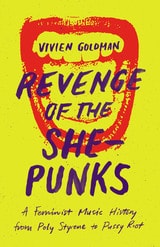
Revenge of the She-Punks
A Feminist Music History from Poly Styrene to Pussy RiotBy Vivien Goldman
University of Texas Press, 2019
As an industry insider and pioneering post-punk musician, Vivien Goldman’s perspective on music journalism is unusually well-rounded. In Revenge of the She-Punks, she probes four themes—identity, money, love, and protest—to explore what makes punk such a liberating art form for women.
With her visceral style, Goldman blends interviews, history, and her personal experience as one of Britain’s first female music writers in a book that reads like a vivid documentary of a genre defined by dismantling boundaries. A discussion of the Patti Smith song “Free Money,” for example, opens with Goldman on a shopping spree with Smith. Tamar-Kali, whose name pays homage to a Hindu goddess, describes the influence of her Gullah ancestors on her music, while the late Poly Styrene's daughter reflects on why her Somali-Scots-Irish mother wrote the 1978 punk anthem “Identity,” with the refrain “Identity is the crisis you can't see.” Other strands feature artists from farther afield (including in Colombia and Indonesia) and genre-busting revolutionaries such as Grace Jones, who wasn't exclusively punk but clearly influenced the movement while absorbing its liberating audacity. From punk's Euro origins to its international reach, this is an exhilarating world tour.
The Long Night
Andrew Lytle
University of Alabama Press, 1988
A first-rate novel that provides vivid descriptions of Alabama during an important period in the state’s history, The Long Night is set in the vicinity of Montgomery, Alabama, between 1850 and 1865. Originally published in 1936, the book is based on a true story related to Lytle by one of his close friends and colleagues at Vanderbilt University, Frank L. Owsley, who later became the chairman of The University of Alabama Department of History. In fact, the novel opens with a letter to Professor Owsley from the author, and Owsley’s son has written the introduction to this edition.
As described by George B. Tindall, The Long Night is “the episodic story of a young Alabamian beset by the moral dilemma of desire for revenge against the persecutors of his father and his larger duty in the war, a story that rose to its climax in the Battle of Shiloh.” The work is rich in its description of the land and people of Black-Belt Alabama during the mid-19th century.
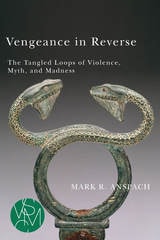
Vengeance in Reverse
The Tangled Loops of Violence, Myth, and MadnessMark R. Anspach
Michigan State University Press, 2017