Results by title
16 books match the query 'Revolution, 1910-1920'
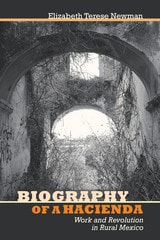
Biography of a Hacienda
Work and Revolution in Rural MexicoElizabeth Terese Newman
University of Arizona Press, 2014
Biography of a Hacienda is a many-voiced reconstruction of events leading up to the Mexican Revolution and the legacy that remains to the present day. Drawing on ethnohistorical, archaeological, and ethnographic data, Elizabeth Terese Newman creates a fascinating model of the interplay between the great events of the Revolution and the lives of everyday people.
In 1910 the Mexican Revolution erupted out of a century of tension surrounding land ownership and control over labor. During the previous century, the elite ruling classes acquired ever-increasingly large tracts of land while peasants saw their subsistence and community independence vanish. Rural working conditions became so oppressive that many resorted to armed rebellion. After the war, new efforts were made to promote agrarian reform, and many of Mexico’s rural poor were awarded the land they had farmed for generations.
Weaving together fiction, memoir, and data from her fieldwork, Newman reconstructs life at the Hacienda San Miguel Acocotla, a site located near a remote village in the Valley of Atlixco, Puebla, Mexico. Exploring people’s daily lives and how they affected the buildup to the Revolution and subsequent agrarian reforms, the author draws on nearly a decade of interdisciplinary study of the Hacienda Acocotla and its descendant community. Newman’s archaeological research recovered information about the lives of indigenous people living and working there in the one hundred years leading up to the Mexican Revolution.
Newman shows how women were central to starting the revolt, and she adds their voices to the master narrative. Biography of a Hacienda concludes with a thoughtful discussion of the contribution of the agrarian revolution to Mexico’s history and whether it has succeeded or simply transformed rural Mexico into a new “global hacienda system.”
Cartucho and My Mother's Hands
By Nellie Campobello
University of Texas Press, 1988
Nellie Campobello, a prominent Mexican writer and "novelist of the Revolution," played an important role in Mexico's cultural renaissance in the 1920s and early 1930s, along with such writers as Rafael Muñoz and Gregorio López y Fuentes and artists Diego Rivera, Orozco, and others. Her two novellas, Cartucho (first published in 1931) and My Mother's Hands (first published as Las manos de Mamá in 1938), are autobiographical evocations of a childhood spent amidst the violence and turmoil of the Revolution in Mexico. Campobello's memories of the Revolution in the north of Mexico, where Pancho Villa was a popular hero and a personal friend of her family, show not only the stark realism of Cartucho but also the tender lyricism of My Mother's Hands. They are noteworthy, too, as a first-person account of the female experience in the early years of the Mexican Revolution and unique in their presentation of events from a child's perspective.
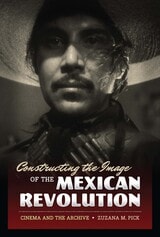
Constructing the Image of the Mexican Revolution
Cinema and the ArchiveBy Zuzana M. Pick
University of Texas Press, 2009
Katherine Singer Kovács Book Award, Society for Cinema and Media Studies, 2011
With a cast ranging from Pancho Villa to Dolores del Río and Tina Modotti, Constructing the Image of the Mexican Revolution demonstrates the crucial role played by Mexican and foreign visual artists in revolutionizing Mexico's twentieth-century national iconography. Investigating the convergence of cinema, photography, painting, and other graphic arts in this process, Zuzana Pick illuminates how the Mexican Revolution's timeline (1910–1917) corresponds with the emergence of media culture and modernity.
Drawing on twelve foundational films from Que Viva Mexico! (1931–1932) to And Starring Pancho Villa as Himself (2003), Pick proposes that cinematic images reflect the image repertoire produced during the revolution, often playing on existing nationalist themes or on folkloric motifs designed for export. Ultimately illustrating the ways in which modernism reinvented existing signifiers of national identity, Constructing the Image of the Mexican Revolution unites historicity, aesthetics, and narrative to enrich our understanding of Mexicanidad.
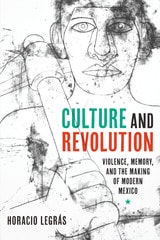
Culture and Revolution
Violence, Memory, and the Making of Modern MexicoBy Horacio Legrás
University of Texas Press, 2017
In the twenty years of postrevolutionary rule in Mexico, the war remained fresh in the minds of those who participated in it, while the enigmas of the revolution remained obscured. Demonstrating how textuality helped to define the revolution, Culture and Revolution examines dozens of seemingly ahistorical artifacts to reveal the radical social shifts that emerged in the war’s aftermath.
Presented thematically, this expansive work explores radical changes that resulted from postrevolution culture, including new internal migrations; a collective imagining of the future; popular biographical narratives, such as that of the life of Frida Kahlo; and attempts to create a national history that united indigenous and creole elite society through literature and architecture. While cultural production in early twentieth-century Mexico has been well researched, a survey of the common roles and shared tasks within the various forms of expression has, until now, been unavailable. Examining a vast array of productions, including popular festivities, urban events, life stories, photographs, murals, literature, and scientific discourse (including fields as diverse as anthropology and philology), Horacio Legrás shows how these expressions absorbed the idiosyncratic traits of the revolutionary movement.
Tracing the formation of modern Mexico during the 1920s and 1930s, Legrás also demonstrates that the proliferation of artifacts—extending from poetry and film production to labor organization and political apparatuses—gave unprecedented visibility to previously marginalized populations, who ensured that no revolutionary faction would unilaterally shape Mexico’s historical process during these formative years.
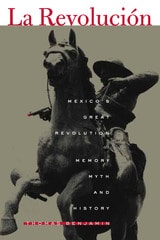
La Revolución
Mexico's Great Revolution as Memory, Myth, and HistoryBy Thomas Benjamin
University of Texas Press, 2000
The 1910 Revolution is still tangibly present in Mexico in the festivals that celebrate its victories, on the monuments to its heroes, and, most important, in the stories and memories of the Mexican people. Yet there has never been general agreement on what the revolution meant, what its objectives were, and whether they have been accomplished.
This pathfinding book shows how Mexicans from 1910 through the 1950s interpreted the revolution, tried to make sense of it, and, through collective memory, myth-making, and history writing, invented an idea called "la Revolución." In part one, Thomas Benjamin follows the historical development of different and often opposing revolutionary traditions and the state's efforts to forge them into one unified and unifying narrative. In part two, he examines ways of remembering the past and making it relevant to the present through fiestas, monuments, and official history. This research clarifies how the revolution has served to authorize and legitimize political factions and particular regimes to the present day. Beyond the Mexican case, it demonstrates how history is used to serve the needs of the present.
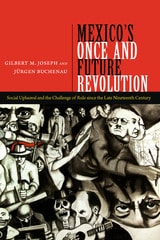
Mexico's Once and Future Revolution
Social Upheaval and the Challenge of Rule since the Late Nineteenth CenturyGilbert M. Joseph and Jürgen Buchenau
Duke University Press, 2013
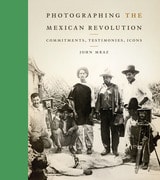
Photographing the Mexican Revolution
Commitments, Testimonies, IconsBy John Mraz
University of Texas Press, 2012
The Mexican Revolution of 1910–1920 is among the world’s most visually documented revolutions. Coinciding with the birth of filmmaking and the increased mobility offered by the reflex camera, it received extraordinary coverage by photographers and cineastes—commercial and amateur, national and international. Many images of the Revolution remain iconic to this day—Francisco Villa galloping toward the camera; Villa lolling in the presidential chair next to Emiliano Zapata; and Zapata standing stolidly in charro raiment with a carbine in one hand and the other hand on a sword, to mention only a few. But the identities of those who created the thousands of extant images of the Mexican Revolution, and what their purposes were, remain a huge puzzle because photographers constantly plagiarized each other’s images.
In this pathfinding book, acclaimed photography historian John Mraz carries out a monumental analysis of photographs produced during the Mexican Revolution, focusing primarily on those made by Mexicans, in order to discover who took the images and why, to what ends, with what intentions, and for whom. He explores how photographers expressed their commitments visually, what aesthetic strategies they employed, and which identifications and identities they forged. Mraz demonstrates that, contrary to the myth that Agustín Víctor Casasola was “the photographer of the Revolution,” there were many who covered the long civil war, including women. He shows that specific photographers can even be linked to the contending forces and reveals a pattern of commitment that has been little commented upon in previous studies (and completely unexplored in the photography of other revolutions).
Religion and State Formation in Postrevolutionary Mexico
Ben Fallaw
Duke University Press, 2012
Ben Fallaw argues that previous scholarship has not appreciated the pervasive influence of Catholics and Catholicism on postrevolutionary state formation. By delving into the history of four understudied Mexican states, he is able to show that religion swayed regional politics not just in states such as Guanajuato, in Mexico's central-west "Rosary Belt," but even in those considered much less observant, including Campeche, Guerrero, and Hidalgo. Religion and State Formation in Postrevolutionary Mexico reshapes our understanding of agrarian reform, federal schooling, revolutionary anticlericalism, elections, the Segunda (a second Cristero War in the 1930s), and indigenism, the Revolution's valorization of the Mesoamerican past as the font of national identity.
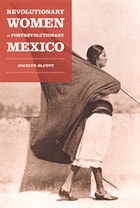
Revolutionary Women in Postrevolutionary Mexico
Jocelyn Olcott
Duke University Press, 2005
Olcott demonstrates an extraordinary grasp of the complexity of postrevolutionary Mexican politics, exploring the goals and outcomes of women’s organizing in Mexico City and the port city of Acapulco as well as in three rural locations: the southeastern state of Yucatán, the central state of Michoacán, and the northern region of the Comarca Lagunera. Combining the strengths of national and regional approaches, this comparative perspective sets in relief the specificities of citizenship as a lived experience.
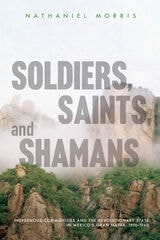
Soldiers, Saints, and Shamans
Indigenous Communities and the Revolutionary State in Mexico's Gran Nayar, 1910–1940Nathaniel Morris
University of Arizona Press, 2020
To make sense of this complex history, Nathaniel Morris offers the first systematic understanding of the participation of the Náayari, Wixárika, O’dam, and Mexicanero peoples in the Mexican Revolution. They are known for being among the least “assimilated” of all Mexico’s Indigenous peoples. It’s often been assumed that they were stuck up in their mountain homeland—“the Gran Nayar”—with no knowledge of the uprisings, civil wars, military coups, and political upheaval that convulsed the rest of Mexico between 1910 and 1940.
Based on extensive archival research and years of fieldwork in the rugged and remote Gran Nayar, Morris shows that the Náayari, Wixárika, O’dam, and Mexicanero peoples were actively involved in the armed phase of the revolution. This participation led to serious clashes between an expansionist, “rationalist” revolutionary state and the highly autonomous communities and heterodox cultural and religious practices of the Gran Nayar’s inhabitants. Morris documents confrontations between practitioners of subsistence agriculture and promoters of capitalist development, between rival Indian generations and political factions, and between opposing visions of the world, of religion, and of daily life. These clashes produced some of the most severe defeats that the government’s state-building programs suffered during the entire revolutionary era, with significant and often counterintuitive consequences both for local people and for the Mexican nation as a whole.
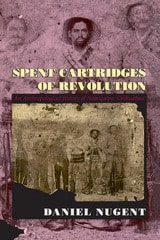
Spent Cartridges of Revolution
An Anthropological History of Namiquipa, ChihuahuaDaniel Nugent
University of Chicago Press, 1993
Daniel Nugent's approach combines an emphasis on peasants' own perceptions of Mexican society after the revolution with an analysis of the organization and formation of state power. He shows that popular discontent in Chihuahua is motivated not only by immediate economic crises but by two centuries of struggle between the people of Northern Mexico and the government.
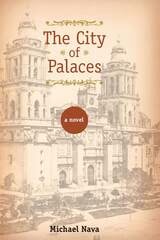
The City of Palaces
A NovelMichael Nava
University of Wisconsin Press, 2014
Against this backdrop, The City of Palaces opens in a Mexico City jail with the meeting of Miguel Sarmiento and Alicia Gavilán. Miguel is a principled young doctor, only recently returned from Europe but wracked by guilt for a crime he committed as a medical student ten years earlier. Alicia is the spinster daughter of an aristocratic family. Disfigured by smallpox, she has devoted herself to working with the city’s destitute. This unlikely pair—he a scientist and atheist and she a committed Christian—will marry. Through their eyes and the eyes of their young son, José, readers follow the collapse of the old order and its bloody aftermath.
The City of Palaces is a sweeping novel of interwoven lives: Miguel and Alicia; José, a boy as beautiful and lonely as a child in a fairy tale; the idealistic Francisco Madero, who overthrows Díaz but is nevertheless destroyed by the tyrant’s political system; and Miguel’s cousin Luis, shunned as a “sodomite.” A glittering mosaic of the colonial past and the wealth of the modern age, The City of Palaces is a story of faith and reason, cathedrals and hovels, barefoot street vendors and frock-coated businessmen, grand opera and silent film, presidents and peasants, the living and the dead.
Winner, International Latino Book Award for Latino Fiction, Latino Literacy Now
Second place, International Latino Book Award for Historical Fiction, Latino Literacy Now
Finalist, Gay Fiction, Lambda Literary Awards
Honorable Mention in Drama, Latino Books into Movies Award, International Latino Book Awards
Best Books for General Audiences, selected by the American Association of School Librarians
Outstanding Book, selected by the Public Library Reviewers
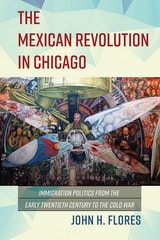
The Mexican Revolution in Chicago
Immigration Politics from the Early Twentieth Century to the Cold WarJohn H Flores
University of Illinois Press, 2018
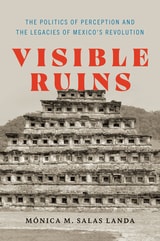
Visible Ruins
The Politics of Perception and the Legacies of Mexico's RevolutionMónica M. Salas Landa
University of Texas Press, 2024
2026 Honorable Mention, Mejor Libro, Historia Reciente y Memoria Section of the Latin American Studies Association
An examination of the failures of the Mexican Revolution through the visual and material records.
The Mexican Revolution (1910–1920) introduced a series of state-led initiatives promising modernity, progress, national grandeur, and stability; state surveyors assessed land for agrarian reform, engineers used nationalized oil for industrialization, archaeologists reconstructed pre-Hispanic monuments for tourism, and anthropologists studied and photographed Indigenous populations to achieve their acculturation. Far from accomplishing their stated goals, however, these initiatives concealed violence, and permitted land invasions, forced displacement, environmental damage, loss of democratic freedom, and mass killings. Mónica M. Salas Landa uses the history of northern Veracruz to demonstrate how these state-led efforts reshaped the region's social and material landscapes, affecting what was and is visible. Relying on archival sources and ethnography, she uncovers a visual order of ongoing significance that was established through postrevolutionary projects and that perpetuates inequality based on imperceptibility.
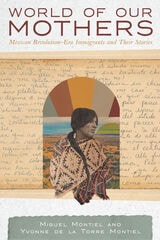
World of Our Mothers
Mexican Revolution–Era Immigrants and Their StoriesMiguel Montiel and Yvonne de la Torre Montiel
University of Arizona Press, 2022
While the women share a historic immigration journey, each story provides unique details and circumstances that testify to the diversity of the immigrant experience. The oral histories, a project more than forty years in the making, let these women speak for themselves, while historical information is added to support and illuminate the women’s voices.
The book, which includes a foreword by Irasema Coronado, director of the School of Transborder Studies, and Chris Marin, professor emeritus, both at Arizona State University, is divided into four parts. Part 1 highlights the salient events of the Revolution; part 2 presents an overview of what immigrants inherited upon their arrival to the United States; part 3 identifies challenges faced by immigrant families; and part 4 focuses on stories by location—Arizona mining towns, Phoenix barrios, and Midwestern colonias—all communities that immigrant women helped create. The book concludes with ideas on how readers can examine their own family histories. Readers are invited to engage with one another to uncover alternative interpretations of the immigrant experience and through the process connect one generation with another.
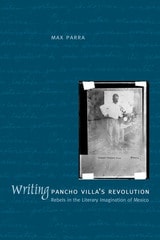
Writing Pancho Villa's Revolution
Rebels in the Literary Imagination of MexicoBy Max Parra
University of Texas Press, 2006
The 1910 Mexican Revolution saw Francisco "Pancho" Villa grow from social bandit to famed revolutionary leader. Although his rise to national prominence was short-lived, he and his followers (the villistas) inspired deep feelings of pride and power amongst the rural poor. After the Revolution (and Villa's ultimate defeat and death), the new ruling elite, resentful of his enormous popularity, marginalized and discounted him and his followers as uncivilized savages. Hence, it was in the realm of culture rather than politics that his true legacy would be debated and shaped.
Mexican literature following the Revolution created an enduring image of Villa and his followers. Writing Pancho Villa's Revolution focuses on the novels, chronicles, and testimonials written from 1925 to 1940 that narrated Villa's grassroots insurgency and celebrated—or condemned—his charismatic leadership. By focusing on works by urban writers Mariano Azuela (Los de abajo) and Martín Luis Guzmán (El águila y la serpiente), as well as works closer to the violent tradition of northern Mexican frontier life by Nellie Campobello (Cartucho), Celia Herrera (Villa ante la historia), and Rafael F. Muñoz (¡Vámonos con Pancho Villa!), this book examines the alternative views of the revolution and of the villistas. Max Parra studies how these works articulate different and at times competing views about class and the cultural "otherness" of the rebellious masses. This unique revisionist study of the villista novel also offers a deeper look into the process of how a nation's collective identity is formed.