Results by title
17 books match the query 'Rilke, Rainer Maria'
Being Here Is Glorious
On Rilke, Poetry, and PhilosophyJames D. Reid
Northwestern University Press, 2015
With a new translation of the Duino Elegies
“Who, if I cried out, would hear me among the angels’/orders?” Rainer Maria Rilke’s Duino Elegies opens with one of the most powerful poetic expressions of the search for meaning in the modern world. Published in 1923, the Elegies would influence important philosophers on the Continent, including Heidegger. But with a few exceptions, Rilke’s poetry has not had an impact on philosophy in the Anglo-American world. In Being Here Is Glorious, James D. Reid offers a fresh translation of the Elegies, which hews to the form of the original and provides his own meditation on the place of poetry in philosophy. Reid makes a convincing case that poetry and philosophy can address the problem of finding things significant and worth affirming in light of various reasons to doubt the value of the world in which we find ourselves cast.

Dear Friend
Rainer Maria Rilke and Paula Modersohn-BeckerEric Torgersen
Northwestern University Press, 2000
Duino Elegies
A Bilingual EditionRainer Maria Rilke
Northwestern University Press, 1998
Five Portraits
Modernity and the Imagination in Twentieth-Century German WritingMichael Bernstein
Northwestern University Press, 2000
Letters around a Garden
Rainer Maria Rilke
Seagull Books, 2024
In July 1921, displaced European poet Rainer Maria Rilke sequestered himself in the chateau of Muzot, a thirteenth-century medieval tower perched in the vineyards above the town of Sierre in the Canton Valais, Switzerland. In this sun-flooded landscape of the Rhone Valley, he found beguiling echoes of Spain and his beloved Provence. Here, the Duino Elegies were famously completed and the Sonnets to Orpheus followed.
During this time, Rilke’s correspondence also bloomed, and Letters around a Garden collects some of those letters together into English for the first time. One intriguing exchange from 1924 to 1926 was with a young aristocratic Swiss woman Antoinette de Bonstetten, a passionate horticulturist who had been recommended as a potential advisor for the redesign and upkeep of the Muzot rose garden. In twenty-two precious letters originally written in French, Rilke relishes the prospect of their elusive meeting, keenly discusses the plans for his garden, and wittily laments the trials of his plants. Beyond the encomium for Paul Valéry and poignant memory of place are passages of exquisite writing, in which Rilke evokes with trademark sensitivity the delicate relationship between the changing seasons and the natural world of his adopted region. We also witness the loving relationship evolve between these sometime-fugitive correspondents and how questions of solitariness and companionship impinge on one who faces unaccustomed challenges as his health tragically declines.
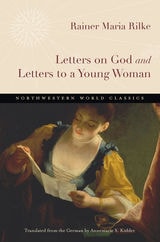
Letters on God and Letters to a Young Woman
Rainer Maria Rilke, Translated from the German by Annemarie S. Kidder
Northwestern University Press, 2012
For Rainer Maria Rilke, letter writing was a discipline and art unto itself. Some seven thousand of his letters have survived, among them works of profound beauty and insight to rival his poems and fiction. For the first time, this volume makes available to an English-speaking audience two of the earliest collections of Rilke letters published after his death, each with a nuanced introduction and notes by Annemarie S. Kidder.
The thematic collection Letters on God contains two letters by Rilke, the first an actual letter written during World War I, in 1915 in Munich, the second a fictional one composed after the war, in 1922 at Muzot in Switzerland. In these letters, Rilke builds on the mystical view of God conceived in The Book of Hours, but he moves beyond it, demonstrating a unique vision of God and Christ, the church and religious experience, friendship and death.
Like his famous Letters to a Young Poet, Rilke’s Letters to a Young Woman presents an intimate series of letters written to a young admirer. The nine letters collected here were written to Lisa Heise over the course of five years, from 1919 to 1924. Though Rilke and Heise never met, the poet emerges in these letters as a compassionate listener and patient teacher who with levelheaded sensitivity affirms and guides the movements of another person’s soul.
Life of a Poet
Rainer Maria RilkeRalph Freedman
Northwestern University Press, 1998
New Poems
A Bilingual EditionRainer Maria Rilke
Northwestern University Press, 1998
On Creaturely Life
Rilke, Benjamin, SebaldEric L. Santner
University of Chicago Press, 2006
Santner traces this theme of creaturely life from its poetic and philosophical beginnings in the first half of the twentieth century to the writings of the enigmatic German novelist W. G. Sebald. Sebald’s entire oeuvre, Santner argues, can be seen as an archive of creaturely life. For Sebald, the work on such an archive was inseparable from his understanding of what it means to engage ethically with another person’s history and pain, an engagement that transforms us from indifferent individuals into neighbors.
An indispensable book for students of Sebald, On Creaturely Life is also a significant contribution to critical theory.
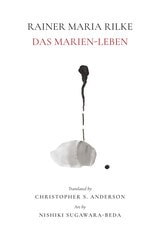
Rainer Maria Rilke
Das Marien-LebenRainer Maria Rilke, translated by Christopher Anderson
Bridwell Press, 2025
Sonnets to Orpheus
Rainer Maria Rilke
University of Scranton Press, 2007

The Best of Rilke
72 Form-True Verse Translations with Facing Originals, Commentary, and Compact BiographyRainer Maria Rilke
Dartmouth College Press, 1991
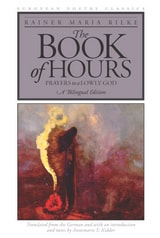
The Book of Hours
Prayers to a Lowly GodRainer Maria Rilke
Northwestern University Press, 2001
Rilke penned The Book of Hours between 1899 and 1903 in three parts. Readers and experts alike consider the collection among Rilke's most important and enduring works.
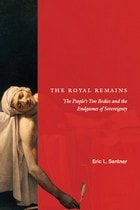
The Royal Remains
The People's Two Bodies and the Endgames of SovereigntyEric L. Santner
University of Chicago Press, 2011
"The king is dead. Long live the king!" In early modern Europe, the king's body was literally sovereign—and the right to rule was immediately transferrable to the next monarch in line upon the king's death. In The Royal Remains, Eric L. Santner argues that the "carnal" dimension of the structures and dynamics of sovereignty hasn't disappeared from politics. Instead, it migrated to a new location—the life of the people—where something royal continues to linger in the way we obsessively track and measure the vicissitudes of our flesh.
Santner demonstrates the ways in which democratic societies have continued many of the rituals and practices associated with kingship in displaced, distorted, and usually, unrecognizable forms. He proposes that those strange mental activities Freud first lumped under the category of the unconscious—which often manifest themselves in peculiar physical ways—are really the uncanny second life of these "royal remains," now animated in the body politic of modern neurotic subjects. Pairing Freud with Kafka, Carl Schmitt with Hugo von Hofmannsthal,and Ernst Kantorowicz with Rainer Maria Rilke, Santner generates brilliant readings of multiple texts and traditions of thought en route to reconsidering the sovereign imaginary. Ultimately, The Royal Remains locates much of modernity—from biopolitical controversies to modernist literary experiments—in this transition from subjecthood to secular citizenship.
This major new work will make a bold and original contribution to discussions of politics, psychoanalysis, and modern art and literature.
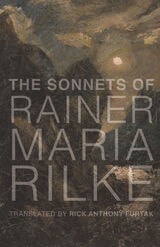
The Sonnets of Rainer Maria Rilke
Rainer Maria Rilke
St. Augustine's Press, 2021
In an expanded collection of Rilke’s sonnets, Rick Anthony Furtak not only makes this lyrical masterpiece accessible to the English reader, but he proves himself a master of sorts as well. His introduction that elaborates on Rilke’s marriage of vision and voice, intention and enigma, haunted companionship and abandonment is a stand-alone marvel for the reader. Furtak’s praised translation of Sonnets to Orpheus (University of Chicago Press, 2008) is surpassed in this much broader collection of verse that also includes the original German text. It is Furtak’s great achievement that Rilke resonates with the contemporary reader, who uncertain and searching wants to believe that the vision of existence can mirror much more than his own consciousness. In his feat of rendering Rilke in English, contextualizing the philosophical meanings of verse, and presenting literary romanticism, Furtak provides a formidable contribution to the vindication of true poetic voice.

The Unknown Rilke
Selected PoemsRainer Maria Rilke
Oberlin College Press, 1990
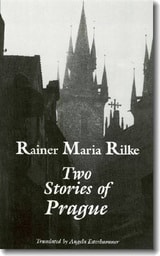
Two Stories of Prague
King Bohush The SiblingsRainer Maria Rilke
Brandeis University Press, 1996