Results by title
48 books match the query 'River'
A Voice from the River
A NovelDan Gerber
Michigan State University Press, 2005
This novel is one of Dan Gerber's triumphs. From the author of American Atlas, Out of Control, and Grass Fires, Gerber's A Voice From the River followed Grass Fires to prominence on national bestseller lists. This novel once again affirms the Gerber's solid reputation for writing about the confrontation of the Spirit World and what some consider to be the Last of Days.
Between Desert and River
Hohokam Settlement and Land Use in the Los Robles CommunityChristian E. Downum
University of Arizona Press, 1993
"Downum's carefully done volume is an important contribution to Hohokam archaeology. . . . Clearly written and illustrated."—AM Indian Quarterly
Between a River and a Mountain
The AFL-CIO and the Vietnam WarEdmund F. Wehrle
University of Michigan Press, 2010
"Stunning in its research and sophisticated in its analysis, Between a River and a Mountain is one of the best studies we have of labor and the Vietnam War."
--Robert K. Brigham, Shirley Ecker Boskey Professor of History and International Relations, Vassar College
"Skillfully blending diplomatic and labor history, Wehrle's book is a valuable contribution to the ever-widening literature on the Vietnam War."
--George Herring, University of Kentucky
"Wehrle has written a compelling and original study of the AFL-CIO, the South Vietnamese labor movement and the Vietnam War."
--Judith Stein, Professor of History, City College and Graduate School of the City University of New York
"With this important book, Edmund Wehrle gives us the first full-fledged scholarly examination of organized labor's relationship to the Vietnam War. Based on deep research in U.S. and foreign archives, and presented in clear and graceful prose, Between a River and a Mountain adds a great deal to our understanding of how the AFL-CIO approached the war and in turn was fundamentally altered by its staunch support for Americanization. Nor is it merely an American story that Wehrle tells, for he also presents fascinating information on the Vietnamese Confederation of Labor and its sometimes-strained relations with U.S. labor."
--Fredrik Logevall, Cornell University
Edmund F. Wehrle is Assistant Professor of History, Eastern Illinois University.
Beyond the River, Under the Eye of Rome
Timothy C. Hart
University of Michigan Press, 2024
Drawing on textual, inscriptional, and archaeological evidence, Hart illustrates how Roman ethnic and ecological stereotypes were employed in the Danubian borderland to support the imperial frontier edifice fundamentally at odds with the region’s natural topography. Distorted Roman perceptions of these Danubian neighbors resulted in disastrous mismanagement of border wars and migrant crises throughout the first five centuries CE. Beyond the River demonstrates how state-supported stereotypes, when coupled with Roman military and economic power, exerted strong influences on the social structures and evolving group identities of the peoples dwelling in the borderland.
Brushed by Cedar, Living by the River
Coast Salish Figures of PowerCrisca Bierwert
University of Arizona Press, 1999
Crisca Bierwert has created a fresh poststructural ethnography that offers new insights into Coast Salish cultures. Arguing against the existence of a master narrative, she presents her understanding of these Native American peoples of Washington state and British Columbia, Canada, through poetic bricolage, offering the reader a pastiche of rich cultural images. Bierwert employs postmodern literary and social analyses to examine many aspects of Salish culture: legends and their storytellers; domestic violence; longhouse ceremonies; the importance and power of place; and disputes over fishing rights. Her reflections overlap as a dialogue would, weaving throughout the book significant threads of Salish knowledge and creating a nonauthoritative text that nonetheless speaks knowingly.
This book represents the future of contemporary anthropology. Unlike traditional ethnography, it makes no attempt to portray a complete picture of the Coast Salish. Instead, Bierwert utilizes a critical and diffuse approach that defies colonial, syncretic, and hegemonic structures and applies advanced literary theory to the creation of ethnography.
Brushed by Cedar is an important guideline for anyone who writes about other cultures and will be expecially useful to classes in the methodology and history of ethnography, as well as to scholars specializing in Native American studies or oral literatures.
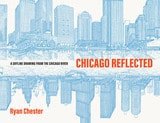
Chicago Reflected
A Skyline Drawing from the Chicago RiverRyan Chester
University of Chicago Press, 2023
As completed, Chester’s two-foot-high, fifty-five-foot-long drawing is a unique vision. In addition to dozens of accurately depicted buildings, Chester included pieces of Chicago’s past, including the Union Station Concourse Building that was demolished in 1969 and the immense SS Eastland, which sank in the river in 1915, killing hundreds of people. Recent architecture is featured as well, including Studio Gang’s St. Regis Chicago tower and the Bank of America Tower by Goettsch Partners.
An essay by acclaimed writer Thomas Dyja accompanies the accordion-fold presentation of Chester’s drawing, enhancing this remarkable volume that will delight any fan of Chicago, architecture, or art. Chicago Reflected opens up fresh vistas of the stunning, ever-evolving architectural landscape that can be found only in Chicago.
Confederate Cavalry West of the River
By Stephen B. Oates
University of Texas Press, 1961
Another Confederate cavalry raid impends. You hear the snort of an impatient horse, the leathery squeaking of saddles, the low-voiced commands of officers, the muffled cluck of guns cocked in preparation—then the sudden rush of motion, the din of another attack.
This classic story seeks to illuminate a little-known theater of the Civil War—the cavalry battles of the Trans-Mississippi West, a region that included Missouri, Arkansas, Texas, the Indian Territory, and part of Louisiana. Stephen B. Oates traces the successes and defeats of the cavalry; its brief reinvigoration under John S. "Rip" Ford, who fought and won the last battle of the war at Palmetto Ranch; and finally, the disintegration of this once-proud fighting force.
Crossing the Hudson
Historic Bridges and Tunnels of the RiverWolf, Donald
Rutgers University Press, 2010
Crossing the Hudson continues this story soon after the end of the war, in 1805, when the first bridge was completed. Donald E. Wolf simultaneously tracks the founding of the towns and villages along the water's edge and the development of technologies such as steam and internal combustion that demanded new ways to cross the river. As a result, innovative engineering was created to provide for these resources.
From hybrid, timber arch, and truss bridges on stone piers to long-span suspension and cantilevered bridges, railroad tunnels, and improvements in iron and steel technology, the construction feats that cross the Hudson represent technical elegance and physical beauty. Crossing the Hudson reveals their often multileveled stories--a history of where, why, when, and how these structures were built; the social, political, and commercial forces that influenced decisions to erect them; the personalities of the planners and builders; the unique connection between a builder and his bridge; and the design and construction techniques that turned mythical goals into structures of utility and beauty.
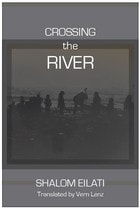
Crossing the River
Shalom Eilati
University of Alabama Press, 2009
A child’s journey through war, memory, and survival—told with haunting clarity and poetic grace.
Crossing the River is a personal memoir—and more. Against the backdrop of Lithuania’s occupation—first by the Red Army, next by the Germans, and then again by the Russians—it is a story reflected through the prism of a sharp-eyed young child, Shalom Eilati. His story starts in the occupied Kovno Ghetto and ends with his flight across the Soviet border, through Poland and Germany and finally, his arrival in Palestine.
The adult survivor, while recalling the terrorized child that he was and how he then perceived the adult world, also takes stock of his present life. Throughout the memoir, Eilati attempts to reconcile his present life as a husband, father, scientist, and writer, with the images, feelings, and thoughts from the past that have left an indelible mark on his life and that continue to haunt him.
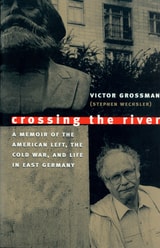
Crossing the River
A Memoir of the American Left, the Cold War, and Life in East GermanyVictor Grossman
University of Massachusetts Press, 2003
What could possibly impel a relatively privileged twenty-four-year-old American-serving in the U.S. Army in Germany in 1952 to swim across the Danube River to what was then referred to as the Soviet Zone? How are we to understand his decision to forsake the land of his birth and build a new life in the still young German Democratic Republic? These are the questions at the core of this memoir by Victor Grossman, who was born Stephen Wechsler but changed his name after defecting to the GDR.
A child of the Depression, Grossman witnessed firsthand the dislocations wrought by the collapse of the U.S. economy during the 1930s. Widespread unemployment and poverty, CIO sit-down strikes, and the fight to save Republican Spain from fascism-all made an indelible impression as he grew up in an environment that nurtured a commitment to left-wing causes. He continued his involvement with communist activities as a student at Harvard in the late 1940s and after graduation, when he took jobs in two factories in Buffalo, New York, and tried to organize their workers.
Fleeing McCarthyite America and potential prosecution, Grossman worked in the GDR with other Western defectors and eventually became, as he notes, the “only person in the world to attend Harvard and Karl Marx universities.” Later, he was able to establish himself as a freelance journalist, lecturer, and author. Traveling throughout East Germany, he evaluated the failures as well as the successes of the GDR's “socialist experiment.” He also recorded his experiences, observations, and judgments of life in East Berlin after reunification, which failed to bring about the post-Communist paradise so many had expected.
Written with humor as well as candor, Crossing the River provides a rare look at the Cold War from the other side of the ideological divide.
Mark Solomon, a distinguished historian of the American left, provides a historical afterword that places Grossman's experiences in a larger Cold War context.
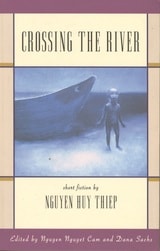
Crossing the River
Short Fiction by Nguyen Huy ThiepNguyen Huy Thiep
Northwestern University Press, 2002
Crossing the River presents a wide range of Nguyen Huy Thiep's short fiction, both realistic stories in contemporary settings and retellings of folk myths that serve as contemporary parables. When Thiep's stories first appeared in the 1980s, they set off a chain of debate, not only within intellectual and political circles, but also within the society at large. Typically, the struggles of his characters were about survival, not survival in the context of war or revolution, but survival in the context of the emotional and psychological strength it takes to live within the harsh confines of post-war Vietnamese society. Thiep captured the emotional quality of Vietnamese life in a way no other author had done, and his importance can be recognized today by his enormous influence on younger writers.
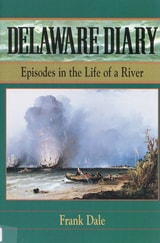
Delaware Diary
Episodes in the Life of a RiverFrank Dale
Rutgers University Press, 1996
Frank Dale, who has lived near the Delaware all of his life, has burrowed into old newspaper files and archives and traced down eyewitnesses o the life of the Delaware. Rivers were the highways of choice in early America, and the Delaware presented much greater challenges than the nearby Hudson. Filled with rapid, falls, and inconvenient rocks, the river refused to accommodate itself easily to the needs of commerce. The rivermen who ventured down the Delaware on massive timber rafts or Durham boats filled with iron ore earned a deserved reputation for pure ornery courage. Later entrepreneurs tried steamboats, canals, and bridges to attempt to harness and exploit this most unexploitable river, with decidedly mixed results. In recent times, the Tocks Island Dam was defeated by a community that had come to admire the river's stubborn resistance to being conquered and harnesses to human ends. Canoeists and waterside strollers can now appreciate its unspoiled beauties.

Down the River
or Practical Lessons Under The Code DuelloGeorge W Hooper
University of Alabama Press, 2007
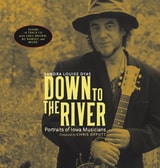
Down to the River
Portraits of Iowa MusiciansSandra Louise Dyas
University of Iowa Press, 2007
Dyas’s photographs present both the sweaty intensity of live performances and the more contemplative moments of individual portraits. They are complemented by Chris Offutt’s empathetic essay, which also encapsulates the experience of connecting with a new home through its music. A companion CD with eighteen tracks by Iowa’s finest singer/songwriters, including Dave Moore, Greg Brown, Bo Ramsey, David Zollo, and Pieta Brown, add up to an unmatched perspective on Iowa music and musicians.
CD Tracks
1. Iowa Crawl, Joe Price
2. Poor Back Slider, Greg Brown
3. Parnell, David Zollo
4. #807, Pieta Brown
5. Wheels of Steel, Radoslav Lorkovic
6. Down to the River, Dave Moore
7. Lucy and Andy Drive to Arkansas, Kevin Gordon
8. Chuck Brown, Mike and Amy Finders
9. Nobody But You, Joe Price
10. Earleton, BeJae Fleming
11. Ceremonial Child, High and Lonesome
12. Sidetrack Lounge, Bo Ramsey
13. On the Edge, Pieta Brown
14. One Wrong Turn, Greg Brown
15. Not in Iowa, Kelly Pardekooper
16. Living in a Cornfield, Bo Ramsey
17. ’57 Chevy, Tom Jessen’s Dimestore Outfit
18. Roll on John, the Pines
Finding the River
An Environmental History of the ElwhaJeff Crane
Oregon State University Press, 2011

Han
People of the RiverCraig Mishler
University of Alaska Press, 2004
The history of the upper Yukon valley from the earliest Western contact with the Han in the 1840s has been one of continuous change. As a result of the gold rush, the Han suddenly became homeless in their own homeland. This book tells the story of that displacement and of current efforts by the Han to reclaim their lands and restore a vibrant way of life. In-depth profiles of Chief Isaac, Chief Charley, and others illustrate the critical importance of traditional leadership in stressful times.
Mishler and Simeone have carefully researched and compiled new information from historic records, adding their own, firsthand field observations and oral interviews with Elders during the 1970s, 1980s, and 1990s. They present detailed historical data on the fur trade, missionization, and the gold rush, as well as an analysis of Han social structure, settlement patterns, religion, subsistence, and expressive culture. The final chapter illustrates contemporary life in Eagle Village with two vivid ethnographic snapshots- a Christmas eve dance in 1972 and a long summer day in 1997. Appendices include a methodological essay, a historic chronology, rules for Han card games, and genealogies for many Han families. As a model of innovative ethnographic and ethnohistorical work, Han, People of the River makes an important contribution to anthropological and indigenous studies literature. As a vivid and deeply thoughtful depiction of the past, present, and future of the Han, it is meant for all Alaskans and everyone who cares about Alaska history and Alaska Native peoples.
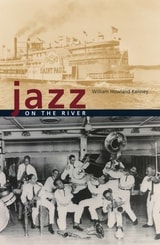
Jazz on the River
William Howland Kenney
University of Chicago Press, 2005
Simply put, when jazz went upstream, it went mainstream, and in Jazz on the River, William Howland Kenney brings to life the vibrant history of this music and its seduction of the men and women along America's inland waterways. Here for the first time readers can learn about the lives and music of the levee roustabouts promoting riverboat jazz and their relationships with such great early jazz adventurers as Louis Armstrong, Fate Marable, Warren "Baby" Dodds, and Jess Stacy. Kenney follows the boats from Memphis to St. Louis, where new styles of jazz were soon produced, all the way up the Ohio River, where the music captivated audiences in Cincinnati and Pittsburgh alike.
Jazz on the River concludes with the story of the decline of the old paddle wheelers-and thus riverboat jazz-on the inland waterways after World War II. The enduring silence of our rivers, Kenney argues, reminds us of the loss of such a distinctive musical tradition. But riverboat jazz still lives on in myriad permutations, each one in tune with our own times.
Once a River
Bird Life and Habitat Changes on the Middle GilaAmadeo M. Rea
University of Arizona Press, 1983
It is no mystery how the desert swallowed up the Gila. Beaver trapping, overgrazing, and woodcutting first ruined natural watersheds, then damming confined the last drops of its surface flow. Historical sources and archaeological data inform us of the Gila's past, but its bird life further testifies to the changes.
Amadeo Rea traces the decline of bird life on the Middle Gila in a book that addresses the broader issue of habitat deterioration. Bird lovers will find it a storehouse of data on avian migration patterns and on ornithological classification based on skeletal structure. Anthropologists can draw on its Piman ethnoclassification of birds, which links the Gila River tribe with various other Uto-Aztecan peoples of Mexico's west coast.
But for all concerned with protecting our environment, Once a River offers evidence of change that might be apprehended elsewhere. It is a case history of a loss that perhaps need never have occurred.
Raven and River
Nancy White Carlstrom
University of Alaska Press, 2011
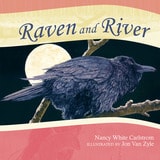
Raven and River leads young readers on a fantastical journey with a raven across the icy Alaska landscape on the verge of spring. Along the way, the raven’s sonorous cry wakes a cast of sleeping woodland creatures, including a bear, a beaver, a hare, and a squirrel—all of whom join him in imploring the still-frozen river to melt and thereby initiate the change of seasons. Packed with information and featuring vibrant full-color illustrations by Jon Van Zyle, Raven and River brings to life these two important harbingers of Alaska’s spring.
Reading the River
A Voyage Down the YukonJohn Hildebrand
University of Wisconsin Press, 1997
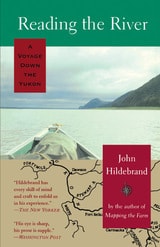
“John Hildebrand sets out in a canoe . . . to explore the great riverway of northwestern Canada and Alaska. . . . The geography is closely rendered and the characters especially sharply drawn. The country is filled with mad dropouts at river fish camps, good-hearted girls in the towns, sullen natives in tumbledown villages, cranky old-timers, terrible drunks and worse moralizers who live off the wild landscape and its abundant resources. . . . This is a fine work, and Hildebrand is a fine writer.”—Charles E. Little, Wilderness
Reigning the River
Urban Ecologies and Political Transformation in KathmanduAnne M. Rademacher
Duke University Press, 2011
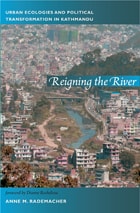
Rademacher conducted research during a volatile period in Nepal’s political history. As clashes between Maoist revolutionaries and the government intensified, the riverscape became a site of competing claims to a capital city that increasingly functioned as a last refuge from war-related violence. In this time of intense flux, efforts to ensure, create, or imagine ecological stability intersected with aspirations for political stability. Throughout her analysis, Rademacher emphasizes ecology as an important site of dislocation, entitlement, and cultural meaning.
Rim to River
Looking into the Heart of ArizonaTom Zoellner
University of Arizona Press, 2023
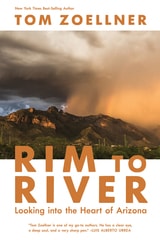
Rim to River is the story of this extraordinary journey through redrock country, down canyons, up mesas, and across desert plains to the obscure valley in Mexico that gave the state its enigmatic name. The trek is interspersed with incisive essays that pick apart the distinctive cultural landscape of Arizona: the wine-colored pinnacles and complex spirituality of Navajoland, the mind-numbing stucco suburbs, desperate border crossings, legislative skullduggery, extreme politics, billion-dollar copper ventures, dehydrating rivers, retirement kingdoms, old-time foodways, ghosts of old wars, honky-tonk dreamers, murder mysteries, and magical Grand Canyon reveries.
In Rim to River, Zoellner does for Arizona what Larry McMurtry did for Texas in In a Narrow Grave and what Wallace Stegner did for Utah in Mormon Country: paint an enduring portrait of a misunderstood American state. An indictment, a love letter, and a homecoming story all at once.
River in the City
Janet Skrbina
Michigan Publishing Services, 2019
River of Books
Donna Seaman
Prickly Paradigm Press, 2024
With the infectious curiosity of an inveterate bibliophile and the prose of a fine stylist, Donna Seaman charts the course of her early reading years in a book-by-book chronicle of the significance books have held in her life. River of Books recounts Seaman’s journey in becoming an editor for Booklist, a reviewer, an author, and a literary citizen, and lays bare how she nourished both body and soul in working with books. Seaman makes palpable the power and self-recognition that she discovered in a life dedicated to reading.
River of Hope
Forging Identity and Nation in the Rio Grande BorderlandsOmar S. Valerio-Jiménez
Duke University Press, 2012
Diverse influences transformed the borderlands as Spain, Mexico, and the United States competed for control of the region. Indian slaves joined Spanish society; Mexicans allied with Indians to defend river communities; Anglo Americans and Mexicans intermarried and collaborated; and women sued to confront spousal abuse and to secure divorces. Drawn into multiple conflicts along the border, Mexican nationals and Mexican Texans (tejanos) took advantage of their transnational social relations and ambiguous citizenship to escape criminal prosecution, secure political refuge, and obtain economic opportunities. To confront the racialization of their cultural practices and their increasing criminalization, tejanos claimed citizenship rights within the United States and, in the process, created a new identity.
Published in cooperation with the William P. Clements Center for Southwest Studies, Southern Methodist University.
River of Light
A Conversation with KabirJohn Morgan
University of Alaska Press, 2014
River of Light: A Conversation with Kabir is centered in one man’s meditations and revelations while traveling on a river. John Morgan spent a week traveling the Copper River in Southcentral Alaska, and the resulting encounters form the heart of this book-length poem. The river’s shifting landscape enriches the poem’s meditative mood while currents shape the poem and the pacing of its lines. The mystic poet Kabir is Morgan’s internal guide and serves as a divine foil through quiet stretches that bring to mind questions about war and human nature. Artwork by distinguished Alaska artist Kesler Woodward is a sublime companion to the text.
A combination of adventurer’s tale and spiritual quest, River of Light: A Conversation with Kabir takes the reader on a soulful journey that is both deeply personal and profoundly universal.
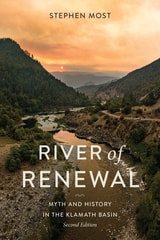
River of Renewal
Myth and History in the Klamath BasinStephen Most
Oregon State University Press, 2024
The only history of the entire Klamath Basin, River of Renewal tells the stories of the region’s diverse communities and stakeholders, including the government agencies that manage most of its land. Based on author Stephen Most’s original research and interviews with tribal leaders, ranchers, farmers, fishermen, forest managers, and others, River of Renewal is a political as well as an environmental history, one that underscores the power of commitment to a place and the vital importance of traditional knowledge in ecological stewardship. It offers an indispensable resource for anyone who wishes to better understand the peoples of the Klamath Basin and their extraordinary accomplishment of bringing about the removal of the four hydroelectric dams that harmed their cultures, economies, and environment for a century.
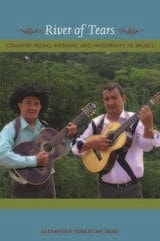
River of Tears
Country Music, Memory, and Modernity in BrazilAlexander Sebastian Dent
Duke University Press, 2009
Since 1998, Alexander Sebastian Dent has analyzed rural music in the state of São Paulo, interviewing and spending time with listeners, musicians, songwriters, journalists, record-company owners, and radio hosts. Dent not only describes the production and reception of this music, he also explains why the genre experienced such tremendous growth as Brazil transitioned from an era of dictatorship to a period of intense neoliberal reform. Dent argues that rural genres reflect a widespread anxiety that change has been too radical and has come too fast. In defining their music as rural, Brazil’s country musicians—whose work circulates largely in cities—are criticizing an increasingly inescapable urban life characterized by suppressed emotions and an inattentiveness to the past. Their performances evoke a river of tears flowing through a landscape of loss—of love, of life in the countryside, and of man’s connections to the natural world.
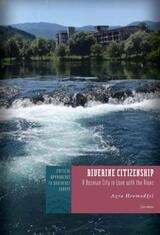
Riverine Citizenship
A Bosnian City in Love with the RiverAzra Hromadžic
Central European University Press, 2024
Water potential is a significant natural wealth of most parts of the Balkans, and it has given rise to a surge in hydropower investments unparalleled across Europe. As part of the process, a dam was planned to be built on the Una River, which runs through the Bosnian town of Bihać. This prospect alarmed the city’s residents, culminating in a protest in 2015. The book begins with this protest, and it explores how the threat of dam construction transformed the seemingly apolitical love of the river into a powerful political force around which thousands of people mobilized: riverine citizenship.
The book is based on interviews with participants, archival research, and over twenty years of ethnographic research. Azra Hromadžić focuses on the tension between ecological sustainability efforts in favor of renewable energy, on the one hand, and citizens’ historically shaped, deeply-felt, love for the river, on the other. She shows how the language and promises of green transition can mask the forces of capitalist accumulation that drive this change — whether in the form of building hydroelectric dams or promoting eco-tourism — and thus set in motion another cycle of environmental degradation, social dispossession, and economic exploitation.
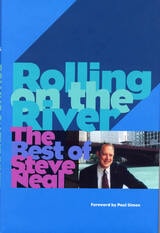
Rolling on the River
The Best of Steve NealSteve Neal. Foreword by Paul Simon
Southern Illinois University Press, 1999
The longtime political columnist for the Chicago Sun-Times, Neal covered Jane M. Byrne's election in 1979 as the city's first woman mayor and Harold Washington's 1983 triumph as Chicago's first African American mayor. Even people who are not interested in politics are drawn to Neal's column because of his hard-hitting style and lucid insights. Rolling on the River is the first published collection of his work.
In these pages, you'll meet the state legislator who never met a special interest he did not like, an alderman groveling to a mob boss, and the prosecutor who gained notoriety as a publicity hound. Of a junketing congressman, Neal writes: "Instead of sending out a congressional newsletter, [he] ought to be sending his constituents 'Wish you were here' postcards of sandy beaches."
Neal's beat is politics, but his interests are rich and varied. He also writes about sports, music, literature, and film with a point of view that is fresh and original. Neal shows how Muhammad Ali became the heavyweight champion who transcended sports and how Sid Luckman changed football. He writes of Kenny Washington's importance in breaking professional football's color barrier and Steve Prefontaine's courage in taking on the little gray men of the sports establishment. Neal chronicles Paul Robeson's struggles: "His name became a great whisper. . . . The injustices against Paul Robeson have not been righted."
Nobel laureate Saul Bellow tells Neal that comedy is the bright hope of American fiction because it is too difficult for writers in this country to grasp the worst of the human condition. Neal tells why Frank Sinatra called Chicago his kind of town and also shows how the city inspires the poetry of Gwendolyn Brooks.
Neal, a former White House correspondent, shares his perspective as one of the few reporters to have interviewed Ronald Reagan in four different decades. He recalls spending an evening with Richard M. Nixon, defends Harry Truman's most controversial decision, and writes from Ireland of John F. Kennedy's enduring legacy in the nation of his ancestors. Neal portrays William Jefferson Clinton as the "world's oldest teenager."
With vivid imagery, Neal makes his subjects come alive. Mayor Richard M. Daley is likened to Forrest Gump, and the legendary boxing announcer Ben Bentley is hailed as the last of the Damon Runyon characters.
Tough but fair. Illuminating. Compassionate. That's the best of Steve Neal.
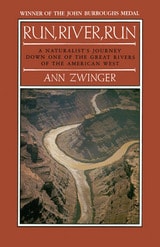
Run, River, Run
A Naturalist's Journey Down One of the Great Rivers of the WestAnn Zwinger
University of Arizona Press, 1984
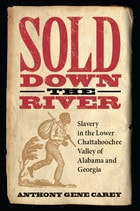
Sold Down the River
Slavery in the Lower Chattahoochee Valley of Alabama and GeorgiaAnthony Gene Carey
University of Alabama Press, 2023
Examines a small part of slavery’s North American domain, the lower Chattahoochee River Valley between Alabama and Georgia
In the New World, the buying and selling of slaves and of the commodities that they produced generated immense wealth, which reshaped existing societies and helped build new ones. From small beginnings, slavery in North America expanded until it furnished the foundation for two extraordinarily rich and powerful slave societies, the United States of America and then the Confederate States of America. The expansion and concentration of slavery into what became the Confederacy in 1861 was arguably the most momentous development after nationhood itself in the early history of the American republic.
This book examines a relatively small part of slavery’s North American domain, the lower Chattahoochee river Valley between Alabama and Georgia. Although geographically at the heart of Dixie, the valley was among the youngest parts of the Old South; only thirty-seven years separate the founding of Columbus, Georgia, and the collapse of the Confederacy. In those years, the area was overrun by a slave society characterized by astonishing demographic, territorial, and economic expansion. Valley counties of Georgia and Alabama became places where everything had its price, and where property rights in enslaved persons formed the basis of economic activity. Sold Down the River examines a microcosm of slavery as it was experienced in an archetypical southern locale through its effect on individual people, as much as can be determined from primary sources.
Published in cooperation with the Historic Chattahoochee Commission and the Troup County Historical Society.
Something Small of How to See a River
Teresa Dzieglewicz
Tupelo Press, 2025
Something Small of How to See a River interrogates the idea of narrative. Who gets to tell a story and what does it mean when the official story, the story told by the governor, the police, or the local media, is a fundamentally dishonest one? The poems collected here meditate on failure: how systems fail us and our environment, how whiteness fails to hold itself accountable, how future generations and the land are being failed—and how, in the face of all this, the Standing Rock movement was not a failure. At the heart of this collection is the strength, care, and radical joy of the movement, which shines through and against the violence.
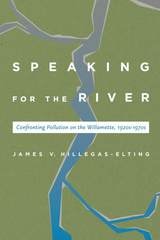
Speaking for the River
Confronting Pollution on the Willamette, 1920s-1970sJames V. Hillegas-Elting
Oregon State University Press, 2018
Willamette River cleanup efforts between 1926 and 1975 centered on a struggle between abatement advocates and the two primary polluters in the watershed, the City of Portland and the pulp and paper industry. Beginning in 1926, clean streams advocates created ad hoc groups of public health experts, sanitary engineers, conservationists, sportsmen, and others to pressure Portland officials and industry representatives to cease polluting the river. By the late 1960s, these grassroots initiatives found political footholds at the state level. As governor between 1967 and 1975, Tom McCall took the issue of environmental protection personally, providing the charisma and leadership that was needed to finally make substantive progress toward cleaning the Willamette.
Speaking for the River is the first book to describe the historical roots of Willamette River pollution, providing important context for understanding the political, fiscal, and technological antecedents to the present-day conundrum. Hillegas-Elting’s contribution to the academic literature on environmental and urban history in Oregon will be welcomed by policy makers, environmentalists, and concerned citizens alike.
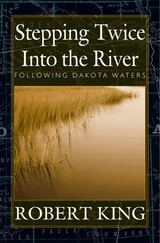
Stepping Twice Into the River
Following Dakota WatersRobert King
University Press of Colorado, 2005
Blending travel narrative and poetic reflection, Stepping Twice Into the River takes readers on a journey through time, revealing both stability and change and offering prairie wisdom. An affectionate and shrewd observer, King illuminates the ordinary from the perspectives of history, science, and literature. In the hands of this gifted thinker and writer, local facts yield universal metaphor.
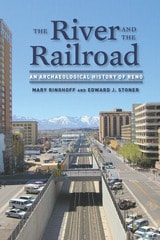
The River and the Railroad
An Archaeological History of RenoMary Ringhoff
University of Nevada Press, 2011
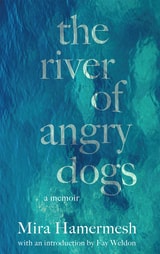
The River of Angry Dogs
A MemoirMira Hamermesh
Pluto Press, 2004
As a young Jewish teenager Hamermesh escaped the horrors of German-occupied Poland and was spared the experience of the ghetto and the concentration camp that claimed most of her family. Mira shows how her status as a refugee has continued to influence her throughout her life. The journey led her across Europe and eventually to Palestine in 1941; her account of that region, before the establishment of Israel, provides a fascinating insight into the historical setting for today's conflict.
Having settled in London where she studied art and married, she eventually won a place at the celebrated Polish Film School in Lodz. At the height of the Cold War Mira Hamermesh commuted across the Iron Curtain – her experience of a divided Europe offers many insights into the political factors that affected people's everyday lives. Mira's theme of political conflict, so often explored in her films, is brought to life here in an intimate account that will live long in the memory.
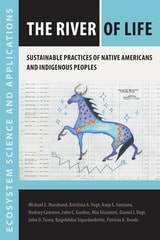
The River of Life
Sustainable Practices of Native Americans and Indigenous PeoplesMichael E. Marchand
Michigan State University Press, 2014
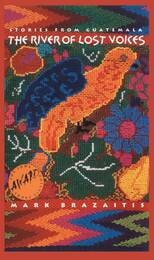
The River of Lost Voices
Stories from GuatemalaMark Brazaitis
University of Iowa Press, 1998
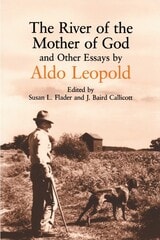
The River of the Mother of God
and other Essays by Aldo LeopoldAldo Leopold; Edited by J. Baird Callicott and Susan L. Flader
University of Wisconsin Press, 1992
His name is inextricably linked with a single work, A Sand County Almanac, a classic of natural history literature and the conservationist's bible. This book brings together the best of Leopold's essays.
The Voice of the River
A NovelMelanie Rae Thon
University of Alabama Press, 2011
The Wisconsin
River of a Thousand IslesAugust Derleth
University of Wisconsin Press, 1985
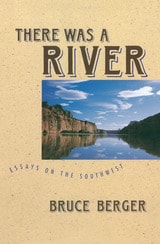
There Was a River
Bruce Berger
University of Arizona Press, 1994
The Southwest Berger sees is an unusual, even odd, place, with inhabitants that are just as strange. In this collection of essays he introduces us to people and places that define a region and a way of life. We meet eccentric desert dwellers like Cactus Pete, who claimed to have mapped the mountains of Venus long before NASA penetrated its clouds. We chart the canals of Phoenix, which have created a Martian landscape out of an irrigation system dating back to the ancient Hohokam; stay at a "wigwam" motel in Holbrook, whose kitsch appeals even to Hopis; and dim our lights for the International Dark-Sky Association's efforts to keep night skies safe for astronomy.
Focusing on the interaction of people with the environment, Berger reveals an original vision of the Southwest that encompasses both city and wilderness. In a concluding essay centering on the sale of his mother's estate in Phoenix, he concedes that "our intention to leave the desert alone has resulted, unwittingly, in loss after loss, simply by our being here." Sometimes there are losses—a canyon, a house—but Berger attunes us to the prodigies of change.
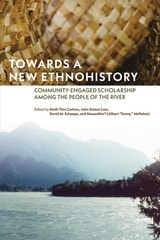
Towards a New Ethnohistory
Community-Engaged Scholarship among the People of the RiverKeith Thor Carlson
University of Manitoba Press, 2018
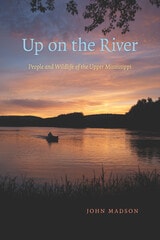
Up on the River
People and Wildlife of the Upper MississippiMadson, John
University of Iowa Press, 1985
@font-face { font-family: "Times";}@font-face { font-family: "Verdana";}@font-face { font-family: "Palatino";}p.MsoNormal, li.MsoNormal, div.MsoNormal { margin: 0in 0in 0.0001pt; font-size: 12pt; font-family: "Times New Roman"; }div.Section1 { page: Section1; }
Up on the River is John Madson’s loving and often hilarious tribute to the people, animal life, and places of the Upper Mississippi. Madson’s Upper Mississippi is the part “between the saints,” from St. Louis to St. Paul, where for thirty years he explored the bright waters of the upper reaches of the mighty river itself as well as the tangled multitude of sloughs, cuts, and side channels that wander through its wooded islands and floodplain forests.
“Some of my best time on the River has been in the company of game wardens, biologists, commercial fishermen, clammers, trappers, hunters, and a smelly, mud-smeared coterie of river rats in general, and my views of the River are far more likely to reflect theirs than those of the transportation industry,” Madson writes of his thirty-year acquaintance with the Mississippi. Traveling mainly by canoe and johnboat, he tells of encounters between archetypal commercial fishermen and archetypal game wardens over hot fish chowder, fishing for crappies in the tops of submerged trees and for walleyes amid gale force winds, nesting and migrating herons and ducks and eagles, the histories of river logging and pearling and button making, and towboats and barges and the lives of the “ramstugenous” people who move freight on the river.
Learning about the Upper Mississippi via the wry tutelage of John Madson, who discovered that “whenever I am out on a river some of its freeness rubs off on me,” readers of this classic book will also come under the spell of this freeness.
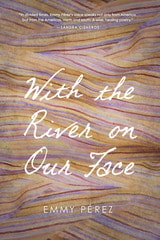
With the River on Our Face
Emmy Pérez
University of Arizona Press, 2016
Pérez reveals the strengths and nuances of a universe where no word is “foreign.” Her fast-moving, evocative words illuminate the prayers, gasps, touches, and gritos born of everyday discoveries and events. Multiple forms of reference enrich the poems in the form of mantra: ecologist’s field notes, geopolitical and ecofeminist observations, wildlife catalogs, trivia, and vigil chants.
“What is it to love / within viewing distance of night / vision goggles and guns?” is a question central to many of these poems.
The collection creates a poetic confluence of the personal, political, and global forces affecting border lives. Whether alluding to El Valle as a place where toxins now cross borders more easily than people or wildlife, or to increased militarization, immigrant seizures, and twenty-first-century wall-building, Pérez’s voice is intimate and urgent. She laments, “We cannot tattoo roses / On the wall / Can’t tattoo Gloria Anzaldúa’s roses / On the wall”; yet, she also reaffirms Anzaldúa’s notions of hope through resilience and conocimiento.
With the River on Our Face drips deep like water, turning into amistad—an inquisition into human relationships with planet and self.
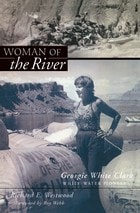
Woman Of The River
Georgie White Clark, Whitewater PioneerRichard Westwood
Utah State University Press, 1997
Georgie White Clark-adventurer, raconteur, eccentric--first came to know the canyons of the Colorado River by swimming portions of them with a single companion. She subsequently hiked and rafted portions of the canyons, increasingly sharing her love of the Colorado River with friends and acquaintances. At first establishing a part-time guide service as a way to support her own river trips, she went on to become perhaps the canyons' best-known river guide, introducing their rapids to many others-on the river, via her large-capacity rubber rafts, and across the nation, via magazine articles and movies. Georgie Clark saw the river and her sport change with the building of Glen Canyon Dam, enormous increases in the popularity of river running, and increased National Park Service regulation of rafting and river guides. Adjusting, though not always easily, to the changes, she helped transform an elite adventure sport into a major tourist activity.
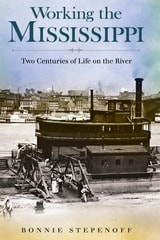
Working the Mississippi
Two Centuries of Life on the RiverBonnie Stepenoff
University of Missouri Press, 2015
The Mississippi River occupies a sacred place in American culture and mythology. Often called The Father of Rivers, it winds through American life in equal measure as a symbol and as a topographic feature. To the people who know it best, the river is life and a livelihood. River boatmen working the wide Mississippi are never far from land. Even in the dark, they can smell plants and animals and hear people on the banks and wharves.
Bonnie Stepenoff takes readers on a cruise through history, showing how workers from St. Louis to Memphis changed the river and were in turn changed by it. Each chapter of this fast-moving narrative focuses on representative workers: captains and pilots, gamblers and musicians, cooks and craftsmen. Readers will find workers who are themselves part of the country’s mythology from Mark Twain and anti-slavery crusader William Wells Brown to musicians Fate Marable and Louis Armstrong.