Results by title
25 books match the query 'Rome (Italy)'

A Coin in Nine Hands
A NovelMarguerite Yourcenar
University of Chicago Press, 1994
"A Coin in Nine Hands has . . . passages that move close to poetry and a story that belongs in both literature and history."—Doris Grumbach, Los Angeles Times Book Review
"What lingers at the end of A Coin in Nine Hands is the shadowiness and puppetlike vagueness of the Dictator, and the compelling specificity of the so-called 'common people' revolving all around him."—Anne Tyler, The New Republic
"Within a few pages we have met half the major characters in this haunting, brilliantly constructed novel. . . . The studied perfection, the structural intricacy and brevity remind one of Camus. Yet by comparison, Yourcenar's prose is lavish, emotional and imagistic."—Cynthia King, Houston Post
"Transcends its specific time and place to become a portrait of vividly delineated characters caught in the vise of a tragically familiar political situation."—Publisher's Weekly
Best known as the author of Memoirs of Hadrian and The Abyss, Marguerite Yourcenar (1903-87) achieved countless literary honors and was the first woman ever elected to the Académie Française.
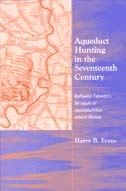
Aqueduct Hunting in the Seventeenth Century
Raffaele Fabretti's De aquis et aquaeductibus veteris RomaeHarry B. Evans
University of Michigan Press, 2002
Fabretti's treatise, De aquis et aquaeductibus veteris Romae dissertationes tres, is cited as a matter of course by all later scholars working in the area of Roman topography. Its findings--while updated and supplemented by more recent archaeological efforts--have never been fully superseded. Yet despite its enormous importance and impact on scholarly efforts, the De aquis has never yet been translated from the original Latin. Aqueduct Hunting in the Seventeenth Century provides a full translation of and commentary on Fabretti's writings, making them accessible to a broad audience and carefully assessing their scholarly contributions.
Harry B. Evans offers his reader an introduction to Fabretti and his scholarly world. A complete translation and a commentary that focuses primarily on the topographical problems and Fabretti's contribution to our understanding of them are also provided. Evans also assesses the contributions and corrections of later archaeologists and topographers and places the De aquis in the history of aqueduct studies.
Evans demonstrates that Fabretti's conclusions, while far from definitive, are indeed significant and merit wider attention than they have received to date. This book will appeal to classicists and classical archaeologists, ancient historians, and readers interested in the history of technology, archaeology, and Rome and Italy in the seventeenth century.
Harry B. Evans is Professor of Classics, Fordham University.
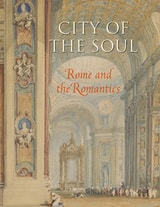
City of the Soul
Rome and the RomanticsJohn A. Pinto
University Press of New England, 2016
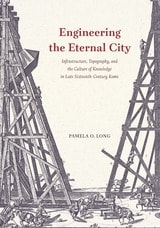
Engineering the Eternal City
Infrastructure, Topography, and the Culture of Knowledge in Late Sixteenth-Century RomePamela O. Long
University of Chicago Press, 2018
This portrait of an early modern Rome examines the many conflicts, failures, and successes that shaped the city, as decision-makers tried to control not only Rome’s structures and infrastructures but also the people who lived there. Taking up visual images of the city created during the same period—most importantly in maps and urban representations, this book shows how in a time before the development of modern professionalism and modern bureaucracies, there was far more wide-ranging conversation among people of various backgrounds on issues of engineering and infrastructure than there is in our own times. Physicians, civic leaders, jurists, cardinals, popes, and clerics engaged with painters, sculptors, architects, printers, and other practitioners as they discussed, argued, and completed the projects that remade Rome.
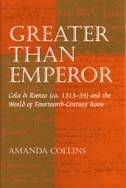
Greater than Emperor
Cola di Rienzo (ca. 1313-54) and the World of Fourteenth-Century RomeAmanda Collins
University of Michigan Press, 2002
Greater than Emperor charts the remarkable process by which Rome tried to forge a new civic identity, similar in constitution to contemporary city-republics but conceptually much greater. At the forefront of the process stood the idiosyncratic and astonishing young notary Cola di Rienzo. On May 21, 1347, Cola staged a bloodless coup. Rome entered a new age that would witness both the resurrection of the ancient power of the Empire and Rome's apotheosis as God's chosen city. Yet within seven months, the theatricality and violence of Cola's regime led to exile. Cola's triumphal return some years later ended in his assassination.
Cola was eventually resurrected as a hero of nineteenth-century nationalism, leaving the realities of Trecento Rome far behind. Yet it is only in terms of the very real models and methods that Cola welded together that his revolution can be understood.
Greater than Emperor describes Cola's reliance on the past of rhetoric, pageantry, and Roman law. It then discusses the future, tracing the dynamic contemporary influences of apocalyptic fervor, prophetic literature, and radical Franciscan imagery of Cola's world. Amanda Collins assesses Cola's legal and political career within both the complex mechanics of municipal administration and the multiple hierarchies of Roman society.
Amanda Collins offers a new assessment of the dramatic events of 1347 and an analysis of Cola within his late medieval Roman context. Bringing depth and substance to Cola's backdrop, Trecento Rome and the economic and spiritual ambitions of its citizen body, Collins provides information crucial to understanding the longer-term economic and political drive to civic autonomy in Rome before 1400.
Historians and generalists alike will relish the story of a remarkable individual, set within the cultural climate of a famous and fascinating city, during an often-overlooked period. This book sheds new light on a crucial political figure that brought a dazzling civil independence to Rome.
Amanda Collins held the Junior Research Fellowship in Intellectual History at Wolfson College, Oxford from 1997-2000, and has more recently been employed at the University of Sussex.
Gusto for Things
A History of Objects in Seventeenth-Century RomeRenata Ago
University of Chicago Press, 2013
Her Husband
Luigi Pirandello
Duke University Press, 2000
Evoking in vivid detail the literary world in Rome at the turn of the century, Her Husband tells the story of Silvia Roncella, a talented young female writer, and her husband Giustino Boggiolo. The novel opens with their arrival in Rome after having left their provincial southern Italian hometown following the success of Silvia’s first novel, the rather humorously titled House of Dwarves. As his wife’s self-appointed (and self-important) promoter, protector, counselor, and manager, Giustino becomes the primary target of Pirandello’s satire. But the couple’s relationship—and their dual career—is also complicated by a lively supporting cast of characters, including literary bohemians with avant-garde pretensions and would-be aristocratic esthetes who are all too aware of the newly acquired power of journalists and the publishing establishment to make or break their careers. Having based many of the characters—including Silvia and Giustino—on actual literary acquaintances of his, Pirandello reacted to the novel’s controversial reception by not allowing it to be reprinted after the first printing sold out. Not until after his death were copies again made available in Italy.
Readers will find Her Husband eerily evocative of the present in myriad ways—not the least of which is contemporary society’s ongoing transformation wrought by the changing roles of men and women, wives and husbands.
Imperial City
Rome under NapoleonSusan Vandiver Nicassio
University of Chicago Press, 2009
In 1798, the armies of the French Revolution tried to transform Rome from the capital of the Papal States to a Jacobin Republic. For the next two decades, Rome was the subject of power struggles between the forces of the Empire and the Papacy, while Romans endured the unsuccessful efforts of Napoleon’s best and brightest to pull the ancient city into the modern world. Against this historical backdrop, Nicassio weaves together an absorbing social, cultural, and political history of Rome and its people. Based on primary sources and incorporating two centuries of Italian, French, and international research, her work reveals what life was like for Romans in the age of Napoleon.
“A remarkable book that wonderfully vivifies an understudied era in the history of Rome. . . . This book will engage anyone interested in early modern cities, the relationship between religion and daily life, and the history of the city of Rome.”—Journal of Modern History
“An engaging account of Tosca’s Rome. . . . Nicassio provides a fluent introduction to her subject.”—History Today
“Meticulously researched, drawing on a host of original manuscripts, memoirs, personal letters, and secondary sources, enabling [Nicassio] to bring her story to life.”—History
Imperium and Cosmos
Augustus and the Northern Campus MartiusPaul Rehak; Edited by John G. Younger
University of Wisconsin Press, 2006
Rehak closely examines the artistic imagery on these monuments, providing numerous illustrations, tables, and charts. In an analysis firmly contextualized by a thorough discussion of the earlier models and motifs that inspired these Augustan monuments, Rehak shows how the princeps used these on such an unprecedented scale as to truly elevate himself above the common citizen.
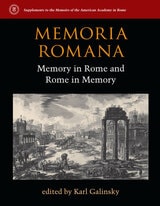
Memoria Romana
Memory in Rome and Rome in Memoryedited by Karl Galinsky
University of Michigan Press, 2014
Concern with memory permeated Roman literature, history, rhetorical training, and art and architecture. This is the first book to look at the phenomenon from a variety of perspectives, including cognitive science. There is no orthodoxy in memory studies and the approaches are both empirical and theoretical. A central issue is: who and what preserved and shaped cultural memory in Rome, and how did that process work? Areas and subjects covered include the Romans' view of the changing physical fabric of the city, monuments (by etymology related to memory) such as the Arch of Constantine, memory and the Roman triumph, Roman copies of Greek sculpture and their relation to memory, the importance of written information and of continuing process, the creation of memory in Republican memoirs and Flavian poetry, the invention of traditions, and the connection of cultural and digital memory.
The ten chapters present original findings that complement earlier scholarship from the perspective of memory and open up new horizons for inquiry. The introduction by volume editor Karl Galinsky situates the work within current studies on cultural and social memory, and the concluding chapter by Daniel Libeskind provides the perspective of a contemporary practitioner.
Additional contributors include Richard Jenkyns, Harriet I. Flower, T. P. Wiseman, Karl-J. Hölkeskamp, Gianpiero Rosati, Diane Favro, Jessica Hughes, Anna Anguissola, Lisa Marie Mignone, and Bernard Frischer.
Pierio Valeriano on the Ill Fortune of Learned Men
A Renaissance Humanist and His WorldJulia Haig Gaisser
University of Michigan Press, 1999
Roman Holidays
American Writers and Artists in Nineteenth-Century ItalyRobert K. Martin
University of Iowa Press, 2001
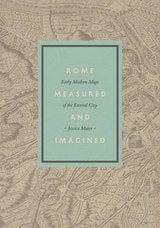
Rome Measured and Imagined
Early Modern Maps of the Eternal CityJessica Maier
University of Chicago Press, 2015
In Rome Measured and Imagined, Jessica Maier explores the history of this genre—which merged the accuracy of scientific endeavor with the imaginative aspects of art—during the rise of Renaissance print culture. Through an exploration of works dating from the fifteenth to the eighteenth centuries, her book interweaves the story of the city portrait with that of Rome itself.
Highly interdisciplinary and beautifully illustrated with nearly one hundred city portraits, Rome Measured and Imagined advances the scholarship on Renaissance Rome and print culture in fascinating ways.
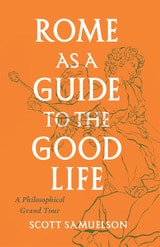
Rome as a Guide to the Good Life
A Philosophical Grand TourScott Samuelson
University of Chicago Press, 2023
This is a guidebook to Rome for those interested in both la dolce vita and what the ancient Romans called the vita beata—the good life. Philosopher Scott Samuelson offers a thinker’s tour of the Eternal City, rooting ideas from this philosophical tradition within the geography of the city itself. As he introduces the city’s great works of art and its most famous sites—the Colosseum, the Forum, the Campo de’ Fiori—Samuelson also gets to the heart of the knotty ethical and emotional questions they pose. Practicing philosophy in place, Rome as a Guide to the Good Life tackles the profound questions that most tours of Rome only bracket. What does all this history tell us about who we are?
In addition to being a thoughtful philosophical companion, Samuelson is also a memorable tour guide, taking us on plenty of detours and pausing to linger over an afternoon Negroni, sample four classic Roman pastas, or explore the city’s best hidden gems. With Samuelson’s help, we understand why Rome has inspired philosophers such as Lucretius and Seneca, poets and artists such as Horace and Caravaggio, filmmakers like Fellini, and adventurers like Rosa Bathurst. This eclectic guidebook to Roman philosophy is for intrepid wanderers and armchair travelers alike—anyone who wants not just a change of scenery, but a change of soul.
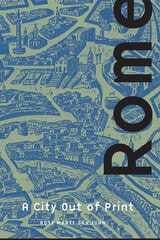
Rome
A City out of PrintRose Marie San Juan
University of Minnesota Press, 2001
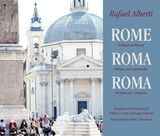
Rome
Pedestrians BewareRafael Alberti
Swan Isle Press, 2024
After his long exile in France and Argentina following the Spanish Civil War, Rafael Alberti’s final home in exile was Rome, where he wrote Roma: Peligro para caminantes (Rome: Pedestrians Beware). There, Romulus and Remus sneak down to the Tiber to suckle on feral cats, a jack of all trades pisses on the poet’s shoes, whistling as he walks away, and in the Campo de’ Fiori the poet compares sonnets with the wandering spirit of Giuseppe Gioachino Belli, all in the shadow of the glory of Rome’s imperial ruins.
Two suites of sonnets open and close the book, while in between, Alberti displays masterful poems in metered and free verse, rhyming couplets, and a numbered series of short poems. The blending of classical tradition with post-modern echoes the darkness and luminosity that exist within the poems, tinged with longing, nostalgia, love, as well as hope. In the end, the Eternal City is a refuge for Alberti:”I left for you all that I once held dear. / Oh Rome, my sorrow pleads, hold out your hands / and give me everything I left for you.”
This unique trilingual edition features exquisite and nuanced translations in English and Italian from the original Spanish by Anthony Geist and Giuseppe Leporace alongside visually evocative photographs of Rome by Adam Weintraub. Readers will want to take this poetic walk in Rome since what sometimes elicits caution, an aspect of danger, also becomes a destination for discovery.
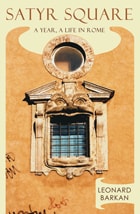
Satyr Square
A Year, a Life in RomeLeonard Barkan
Northwestern University Press, 2008
Part memoir, part literary criticism, part culinary and aesthetic travelogue, this loving reflection is a poignant, funny narrative about an American professor spending a year in Rome. A scarred veteran of academic culture wars retreating to a cradle of culture, Barkan is at first hungry, lonely, and uncertain of his intellectual mission. But soon he is appointed unofficial mascot of an eccentric community of gastronomes, becomes virtually bilingual, and falls in love. As the year progresses, he finds his voice as a writer, loses his lover, and definitively returns to America with heart, mind, and body. His memoir is the celebration of a life lived in the uncanny spaces where art and real people intersect.
Barkan’s reminiscence is not just about the Renaissance and ancient statuary, or Shakespeare and Mozart, Charles Bukowski and Paul de Man, eggplant antipasto and Brunello di Montalcino, foot fetishism and sulfur baths. At the heart of the narrative—beneath that beguiling surface of irony, humor, and misdirection—is a man of genuine ardor, struggling with what it means to be a homosexual and a Jew, trying to rediscover or reinvent his own intellectual passions. Hilarious, erudite, and lusciously rendered, Satyr Square gives us the whole of a life made up from fragments of Italy, art, food, and longing.
Stupendous, Miserable City
Pasolini’s RomeJohn David Rhodes
University of Minnesota Press, 2007
John David Rhodes places the city of Rome at the center of this original and in-depth examination of the work of Italian director Pier Paolo Pasolini—but it’s not the classical Rome you imagine. Stupendous, Miserable City situates Pasolini within the history of twentieth-century Roman urban development. The book focuses first on the Fascist period, when populations were moved out of the urban center and into public housing on the periphery of the city, called the borgate, and then turns to the progressive social housing experiments of the 1950s. These environments were the settings of most of Pasolini’s films of the early to mid-1960s.
Discussing films such as Accattone, Mamma Roma, and The Hawks and the Sparrows, Rhodes shows how Pasolini used the borgate to critique Roman urban planning and neorealism and to draw attention to the contemptuous treatment of Rome’s poor. To Pasolini, the borgate, rich in human incident, linguistic difference, and squalor, “were life”—and now his passion can be appreciated fully for the first time.
Carefully tracing Pasolini’s surprising engagement with this part of Rome and looking beyond his films to explore the interrelatedness of all of Pasolini’s artistic output in the 1950s and 1960s—including his poetry, fiction, and journalism—Rhodes opens up completely new ways of understanding Pasolini’s work and proves how connected Pasolini was to the political and social upheavals in Italy at the time.
John David Rhodes is lecturer in literature and visual culture at the University of Sussex.
The Eternal City
A History of Rome in MapsJessica Maier
University of Chicago Press, 2020
In this unique and visually engaging book, Jessica Maier considers Rome through the eyes of mapmakers and artists who have managed to capture something of its essence over the centuries. Viewing the city as not one but ten “Romes,” she explores how the varying maps and art reflect each era’s key themes. Ranging from modest to magnificent, the images comprise singular aesthetic monuments like paintings and grand prints as well as more popular and practical items like mass-produced tourist plans, archaeological surveys, and digitizations. The most iconic and important images of the city appear alongside relatively obscure, unassuming items that have just as much to teach us about Rome’s past. Through 140 full-color images and thoughtful overviews of each era, Maier provides an accessible, comprehensive look at Rome’s many overlapping layers of history in this landmark volume.
The first English-language book to tell Rome’s rich story through its maps, The Eternal City beautifully captures the past, present, and future of one of the most famous and enduring places on the planet.
The Republican Aventine and Rome’s Social Order
Lisa Marie Mignone
University of Michigan Press, 2016
The myth of the “plebeian Aventine” became embedded not only in classical scholarship, but also in modern political and cultural consciousness; it has even been used by modern figures to support their political agenda. Yet The Republican Aventine and Rome’s Social Order makes bold new claims regarding the urban design and social history of ancient Rome and raises a significant question about ancient urbanism and social stability more generally: Did social integration reduce violence in premodern cities and promote urban concord?
The Restoration of the Roman Forum in Late Antiquity
Transforming Public SpaceBy Gregor Kalas
University of Texas Press, 2015
In The Restoration of the Roman Forum in Late Antiquity, Gregor Kalas examines architectural conservation during late antiquity period at Rome’s most important civic center: the Roman Forum. During the fourth and fifth centuries CE—when emperors shifted their residences to alternate capitals and Christian practices overtook traditional beliefs—elite citizens targeted restoration campaigns so as to infuse these initiatives with political meaning. Since construction of new buildings was a right reserved for the emperor, Rome’s upper echelon funded the upkeep of buildings together with sculptural displays to gain public status. Restorers linked themselves to the past through the fragmentary reuse of building materials and, as Kalas explores, proclaimed their importance through prominently inscribed statues and monuments, whose placement within the existing cityscape allowed patrons and honorees to connect themselves to the celebrated history of Rome.
Building on art historical studies of spolia and exploring the Forum over an extended period of time, Kalas demonstrates the mutability of civic environments. The Restoration of the Roman Forum in Late Antiquity maps the evolution of the Forum away from singular projects composed of new materials toward an accretive and holistic design sensibility. Overturning notions of late antiquity as one of decline, Kalas demonstrates how perpetual reuse and restoration drew on Rome’s venerable past to proclaim a bright future.
The Twilight of Rome's Papal Nobility
The Life of Agnese Borghese Boncompagni LudovisiUgo Boncompagni Ludovisi (1856–1935)
Rutgers University Press, 2025
First privately published in 1921, The Twilight of Rome's Papal Nobility provides an intimate look at a family who grew up accustomed to almost unimaginable wealth, power, and glamour. A descendant of two popes, Ugo Boncompagni Ludovisi recounts the life story of his mother Agnese, who was raised in a palace full of priceless artwork, including pieces by Caravaggio and Michelangelo. We get a window into Agnese's private life—her girlhood, marriage, and raising of several children—as her public life becomes increasingly tumultuous amid the family’s struggles to retain its property. A tender elegy to a bygone era, Boncompagni Ludovisi's story provides a unique perspective on Italian history and Rome’s urban redevelopment.
Tiber
Eternal River of RomeBruce Ware Allen
University Press of New England, 2018
Tosca's Rome
The Play and the Opera in Historical PerspectiveSusan Vandiver Nicassio
University of Chicago Press, 1999
By far the most "historical" opera in the active repertoire, Tosca is set in a very specific time and place: Rome, from June 17 to 18, 1800. But as Nicassio demonstrates, history in Tosca is distorted by nationalism and by the vehement anticlerical perceptions of papal Rome shared by Sardou, Puccini, and the librettists. To provide the historical background necessary for understanding Tosca, Nicassio takes a detailed look at Rome in 1800 as each of Tosca's main characters would have seen it—the painter Cavaradossi, the singer Tosca, and the policeman Scarpia. Finally, she provides a scene-by-scene musical and dramatic analysis of the opera.
"[Nicassio] must be the only living historian who can boast that she once sang the role of Tosca. Her deep knowledge of Puccini's score is only to be expected, but her understanding of daily and political life in Rome at the close of the 18th century is an unanticipated pleasure. She has steeped herself in the period and its prevailing culture-literary, artistic, and musical-and has come up with an unusual, and unusually entertaining, history."—Paul Bailey, Daily Telegraph
"In Tosca's Rome, Susan Vandiver Nicassio . . . orchestrates a wealth of detail without losing view of the opera and its pleasures. . . . Nicassio aims for opera fans and for historians: she may well enthrall both."—Publishers Weekly
"This is the book that ranks highest in my estimation as the most in-depth, and yet highly entertaining, journey into the story of the making of Tosca."—Catherine Malfitano
"Nicassio's prose . . . is lively and approachable. There is plenty here to intrigue everyone-seasoned opera lovers, musical novices, history buffs, and Italophiles."—Library Journal
Voice Machines
The Castrato, the Cat Piano, and Other Strange SoundsBonnie Gordon
University of Chicago Press, 2023
Italian courts and churches began employing castrato singers in the late sixteenth century. By the eighteenth century, the singers occupied a celebrity status on the operatic stage. Constructed through surgical alteration and further modified by rigorous training, castrati inhabited human bodies that had been “mechanized” to produce sounds in ways that unmechanized bodies could not. The voices of these technologically enhanced singers, with their unique timbre, range, and strength, contributed to a dramatic expansion of musical vocabulary and prompted new ways of imagining sound, the body, and personhood.
Connecting sometimes bizarre snippets of history, this multi-disciplinary book moves backward and forward in time, deliberately troubling the meaning of concepts like “technology” and “human.” Voice Machines attends to the ways that early modern encounters and inventions—including settler colonialism, emergent racialized worldviews, the printing press, gunpowder, and the telescope—participated in making castrati. In Bonnie Gordon’s revealing study, castrati serve as a critical provocation to ask questions about the voice, the limits of the body, and the stories historians tell.