Results by title
30 books match the query 'Rules'

Animals at Play
Rules of the GameMarc Bekoff
Temple University Press, 2008
What can we learn from watching animals play? Dogs chase each other and wrestle. Cats pounce and bite. These animals may look like they are fighting, but if you pay close attention— as world-renowned biologist Marc Bekoff does—you can see they are playing and learning the rules of their games. In Animals at Play, Bekoff shows us how animals behave when they play, with full-color illustrations showing animals in action and having fun—from squirrels climbing up a tree to polar bears somersaulting in the snow.
Bekoff emphasizes how animals communicate, cooperate and learn to play fair and what happens when they break the rules. He uses lively illustrations and simple explanations of what it means when a sea lion swims with kelp in its mouth or when two dogs bow to each other. Bekoff also describes what happens when animals become too aggressive and how they apologize, forgive and learn to trust one another. This entertaining and informative book will delight every child and show readers how animals—and humans—interact when they are having fun.
Architectures, Rules, and Preferences
Variations on Themes by Joan W. BresnanEdited by Annie Zaenen
CSLI, 2007

Before Journalism Schools
How Gilded Age Reporters Learned the RulesRandall S. Sumpter
University of Missouri Press, 2018
Bending the Rules
Procedural Politicking in the BureaucracyRachel Augustine Potter
University of Chicago Press, 2019
With Bending the Rules, Rachel Augustine Potter shows that rulemaking is not the rote administrative activity it is commonly imagined to be but rather an intensely political activity in its own right. Because rulemaking occurs in a separation of powers system, bureaucrats are not free to implement their preferred policies unimpeded: the president, Congress, and the courts can all get involved in the process, often at the bidding of affected interest groups. However, rather than capitulating to demands, bureaucrats routinely employ “procedural politicking,” using their deep knowledge of the process to strategically insulate their proposals from political scrutiny and interference. Tracing the rulemaking process from when an agency first begins working on a rule to when it completes that regulatory action, Potter shows how bureaucrats use procedures to resist interference from Congress, the President, and the courts at each stage of the process. This exercise reveals that unelected bureaucrats wield considerable influence over the direction of public policy in the United States.

Concise AACR2
Michael Gorman
American Library Association, 2004
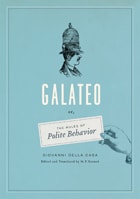
Galateo
Or, The Rules of Polite BehaviorGiovanni Della Casa
University of Chicago Press, 2013
So begins Galateo, a treatise on polite behavior written by Giovanni Della Casa (1503–56) for the benefit of his nephew, a young Florentine destined for greatness.

Herlands
Inside Societies Where Women Make the RulesMegha Mohan
Michigan State University Press, 2027
In this vital and groundbreaking book, Megha Mohan introduces readers to a range of fascinating, women-led societies. Inspired by her great-grandmother’s matrilineal community in South India, Mohan explores communities around the globe—from controversial feminist online troll networks in South Korea to older women co-housing in Paris and North London to the Rain Queens of South Africa. The result is a vivid, global portrait of women’s communities.
Through extensive research and exclusive first-hand reporting, Mohan goes in search of the roots of women-led societies, revealing a vibrant global history brought together for the first time. She also takes us into modern spaces where women live on their own terms, showing us how we can rethink society for new ways of living, working, and collaborating.
For anyone interested in our collective histories, cultures, economics, and governance, Herlands shows the power and possibility of new ways of living—and leading—for us all. It’s an important landmark exploration for our times that not only explores fascinating ways of living but also addresses broader questions about new ways to think and govern and why it matters.
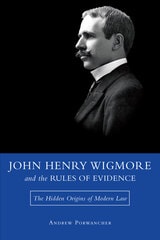
John Henry Wigmore and the Rules of Evidence
The Hidden Origins of Modern LawAndrew Porwancher
University of Missouri Press, 2024
Honorable Mention, 2017 Scribes Book Award, The American Society of Legal Writers
At the dawn of the twentieth century, the United States was reeling from the effects of rapid urbanization and industrialization. Time-honored verities proved obsolete, and intellectuals in all fields sought ways to make sense of an increasingly unfamiliar reality. The legal system in particular began to buckle under the weight of its anachronism. In the midst of this crisis, John Henry Wigmore, dean of the Northwestern University School of Law, single-handedly modernized the jury trial with his 1904-5 Treatise onevidence, an encyclopedic work that dominated the conduct of trials. In so doing, he inspired generations of progressive jurists—among them Oliver Wendell Holmes, Jr., Benjamin Cardozo, and Felix Frankfurter—to reshape American law to meet the demands of a new era. Yet Wigmore’s role as a prophet of modernity has slipped into obscurity. This book provides a radical reappraisal of his place in the birth of modern legal thought.

Living by the Rules of the Sea
David M. Bush, Orrin H. Pilkey and William J. Neal
Duke University Press, 1996
Living by the Rules of the Sea is a primer for people living along the nation's coastlines, those considering moving to the coast, or those who want a greater understanding of the risks and dangers posed by living at the seacoast. Published as part of Duke University Press's Living with the Shore series, but without a direct focus on the coastline of one particular state, this book is intended as an overall guide to coastal physical processes, risk assessment of potential property damage from coastal natural hazards, and property damage mitigation.
Over the past twenty years, the authors have mapped and studied most of the barrier islands in the United States and have experienced coastal processes such as storms and shoreline retreat at close range. They represent a coastal geology/oceanographic perspective that is decidedly in favor of preserving the natural protective capabilities of the native coastal environment. While strongly anti-engineering in outlook, Living by the Rules of the Sea does provide a review of coastal engineering techniques. It also examines methods of repairing damage to the natural environment that lessen the prospect of further property damage. Finally, it employs a more inclusive "coastal zone" approach rather than simply concentrating on a more narrowly defined shoreline. Barrier islands are viewed as part of a larger system in which changes in one part of the system—for example, the mining of sand dunes or dredging offshore for beach replenishment sand—can have profound effects on another part of the system, predictable effects even though they may not be visible for years or decades.
A comprehensive handbook with references to recent storms including hurricanes Andrew, Gilbert, Hugo, Emily, and Opal, Living by the Rules of the Sea is designed to help people make better and more informed choices about where or if to live at the coast.
Maxwell's Handbook for AACR2
Explaining and Illustrating the Anglo-American Cataloguing Rules through the 2003 UpdateRobert L. Maxwell
American Library Association, 2004
Parties, Rules, and the Evolution of Congressional Budgeting
Lance T. LeLoup
The Ohio State University Press, 2005
Phonology in the Twentieth Century
Theories of Rules and Theories of RepresentationsStephen R. Anderson
University of Chicago Press, 1985

Rules and Precepts of the Jesuit Missions of Northwestern New Spain
Charles W. Polzer
University of Arizona Press, 1976
Rules and Processes
John L. Comaroff and Simon Roberts
University of Chicago Press, 1986
"A work of impressive scholarship in which theoretical sophistication and ethnographic richness are convincingly matched."—Ian Hamnett, Times Higher Education Supplement.
Rules and Restraint
Government Spending and the Design of InstitutionsDavid M. Primo
University of Chicago Press, 2007
One reason budget rules are ineffective, David Primo shows, is that politicians often create and preserve loopholes to protect programs that benefit their constituents. Another reason is that legislators must enforce their own provisions, an arrangement that is seriously compromised by their unwillingness to abide by rules that demand short-term sacrifices for the sake of long-term gain. Convinced that budget rules enacted through such a flawed legislative process are unlikely to work, Primo ultimately calls for a careful debate over the advantages and drawbacks of a constitutional convention initiated by the states—a radical step that would bypass Congress to create a path toward change. Rules and Restraint will be required reading for anyone interested in institutional design, legislatures, and policymaking.
Rules of Descent
Studies in the Sociology of ParentageGuy E. Swanson
University of Michigan Press, 1969

Rules of Origin in International Trade
A Comparative StudyEdwin Vermulst, Jacques Bourgeois, and Paul Waer, Editors
University of Michigan Press, 1994
Rules, Games, and Common-Pool Resources
Elinor Ostrom, Roy Gardner, and James Walker
University of Michigan Press, 1994
Explores ways that the tragedy of the commons can be avoided by people who use common-property resources

Secrets, Sex, and Spectacle
The Rules of Scandal in Japan and the United StatesMark D. West
University of Chicago Press, 2006
A leader of a global superpower is betrayed by his mistress, who makes public the sordid details of their secret affair. His wife stands by as he denies the charges. Debates over definitions of moral leadership ensue. Sound familiar? If you guessed Clinton and Lewinsky, try again. This incident involved former Japanese prime minister Sosuke Uno and a geisha.
In Secrets, Sex, and Spectacle, Mark D. West organizes the seemingly random worlds of Japanese and American scandal—from corporate fraud to baseball cheaters, political corruption to celebrity sexcapades—to explore well-ingrained similarities and contrasts in law and society. In Japan and the United States, legal and organizational rules tell us what kind of behavior is considered scandalous. When Japanese and American scandal stories differ, those rules—rules that define what’s public and what’s private, rules that protect injuries to dignity and honor, and rules about sex, to name a few—often help explain the differences. In the cases of Clinton and Uno, the rules help explain why the media didn’t cover Uno’s affair, why Uno’s wife apologized on her husband’s behalf, and why Uno—and not Clinton—resigned.
Secrets, Sex, and Spectacle offers a novel approach to viewing the phenomenon of scandal—one that will be applauded by anyone who has obsessed over (or ridiculed) these public episodes.

The Office and Authority of the Local Prior in the Order of Saint Augustine
Robert F. Prevost
Catholic University of America Press, 2025
The Professions
Roles and RulesWilbert Ellis Moore
Russell Sage Foundation, 1970
The Rule of Rules
Morality, Rules, and the Dilemmas of LawLarry Alexander and Emily Sherwin
Duke University Press, 2001
Once the importance of this moral and practical conflict is acknowledged, the authors argue, authoritative rules become the central problems of jurisprudence. The inevitable gap between rules and background morality cannot be bridged, they claim, although many contemporary jurisprudential schools of thought are misguided attempts to do so. Alexander and Sherwin work through this dilemma, which lies at the heart of such ongoing jurisprudential controversies as how judges should reason in deciding cases, what effect should be given to legal precedent, and what status, if any, should be accorded to “legal principles.” In the end, their rigorous discussion sheds light on such topics as the nature of interpretation, the ancient dispute among legal theorists over natural law versus positivism, the obligation to obey law, constitutionalism, and the relation between law and coercion.
Those interested in jurisprudence, legal theory, and political philosophy will benefit from the edifying discussion in The Rule of Rules.
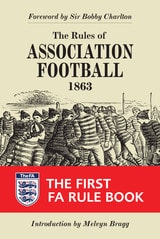
The Rules of Association Football, 1863
The Bodleian Library
Bodleian Library Publishing, 2006
In 1863 a group of Victorian Oxbridge graduates, frustrated by the confusing riot of competing rules that characterized the game of British football, began meeting at the Freemason’s Tavern in Lincoln’s Inn Fields, London, to codify the rules of the game. They quickly drew up the standard set of rules, creating the First Rule Book of the Football Association, reprinted here in its entirety alongside illustrations and drawings of the game.

The Rules of Golf in Plain English
Jeffrey S. Kuhn and Bryan A. Garner
University of Chicago Press, 2004
The hopes of renowned writer and golfer Henry Longhurst—and millions of golfers before and after him—have finally been realized. In The Rules of Golf in Plain English, Bryan A. Garner, American English language and usage expert, and Jeffrey S. Kuhn, volunteer USGA rules official, have translated the knotty Rules with the encouragement and permission of the United States Golf Association. The result is a modern, readable version that offers, for the first time, clear guidance to both amateurs and professionals.
Based on a 338-word set of thirteen rules written in 1744, the official Rules have grown, over two and a half centuries, to 40,000 words. Numerous contributors and a complex revision process have rendered these Rules so opaque and stylistically inconsistent that a companion volume—the 600-page Decisions on the Rules of Golf—has been published to help golfers navigate them.
Both lawyers and avid golfers, Kuhn and Garner recognized the difficulties that the language of the Rules of Golf created, especially in a sport that expects players to call penalties on themselves. By reworking the Rules line by line, word by word, they have produced an accessible resource that no golfer—from the duffer to the pro—should be without.

The Rules of Golf in Plain English, Fourth Edition
Jeffrey S. Kuhn and Bryan A. Garner
University of Chicago Press, 2016
Two hundred years of revisions have rendered these Rules opaque and stylistically inconsistent. Those intricacies can be intimidating for anyone hoping to pick up the game and frustrating for longtime players who just want to settle a dispute. Both lawyers and avid golfers, Jeffrey S. Kuhn and Bryan A. Garner recognized the difficulties that the language of the Rules of Golf has created, especially in a sport that expects players to call penalties on themselves. By reworking the Rules line by line, word by word, they have produced an accessible resource that no golfer—from the duffer to the pro—should be without.
This new edition of The Rules of Golf in Plain English is fully aligned with the latest United States Golf Association updates and continues to be published with their permission and encouragement. Clear and concise, this reference will allow players to spend more time playing through and less time scratching their heads.

The Rules of Golf in Plain English, Second Edition
Jeffrey S. Kuhn and Bryan A. Garner
University of Chicago Press, 2008
The hopes of renowned writer and golfer Henry Longhurst—and millions of golfers before and after him—have finally been realized. In The Rules of Golf in Plain English, Bryan A. Garner, American English language and usage expert, and Jeffrey S. Kuhn, volunteer USGA rules official, have translated the knotty Rules with the encouragement and permission of the United States Golf Association. The result is a modern, readable version that offers, for the first time, clear guidance to both amateurs and professionals.
Based on a 338-word set of thirteen rules written in 1744, the official Rules have grown, over two and a half centuries, to 40,000 words. Numerous contributors and a complex revision process have rendered these Rules so opaque and stylistically inconsistent that a companion volume—the 600-page Decisions on the Rules of Golf—has been published to help golfers navigate them.
Both lawyers and avid golfers, Kuhn and Garner recognized the difficulties that the language of the Rules of Golf created, especially in a sport that expects players to call penalties on themselves. By reworking the Rules line by line, word by word, they have produced an accessible resource that no golfer—from the duffer to the pro—should be without.

The Rules of Golf in Plain English, Third Edition
Jeffrey S. Kuhn and Bryan A. Garner
University of Chicago Press, 2012
The hopes of renowned writer and golfer Henry Longhurst—and millions of golfers before and after him—have finally been realized. In The Rules of Golf in Plain English, Bryan A. Garner, American English language and usage expert, and Jeffrey S. Kuhn, volunteer USGA rules official, have translated the knotty Rules with the encouragement and permission of the United States Golf Association. The result is a modern, readable version that offers, for the first time, clear guidance to both amateurs and professionals.
Based on a 338-word set of thirteen rules written in 1744, the official Rules have grown, over two and a half centuries, to 40,000 words. Numerous contributors and a complex revision process have rendered these Rules so opaque and stylistically inconsistent that a companion volume—the 600-page Decisions on the Rules of Golf—has been published to help golfers navigate them.
Both lawyers and avid golfers, Kuhn and Garner recognized the difficulties that the language of the Rules of Golf created, especially in a sport that expects players to call penalties on themselves. By reworking the Rules line by line, word by word, they have produced an accessible resource that no golfer—from the duffer to the pro—should be without.
The Rules of the Global Game
A New Look at US International Economic PolicymakingKenneth W. Dam
University of Chicago Press, 2001
In The Rules of the Global Game, Dam first lays out what US international economic policies are and compares them to what they should be based on how they affect US per capita income. With this foundation in place, Dam then develops and applies principles for elucidating the major components of economic policy, such as foreign trade and investment, international monetary and financial systems, and current controversial issues, including intellectual property and immigration. Underlying his explanations is a belief in the importance of worldwide free trade and open markets as well as a crucial understanding of the political forces that shape decision making. Because economic policy is not created in a political vacuum, Dam argues, sound policymaking requires an understanding of "statecraft"-the creation and use of institutions that channel the efforts of interest groups and political forces in directions that encourage good economic outcomes.
Dam's vast experience with the politics and practicalities of economic policy translates into a view of policy that is neither academic nor abstract. Rather, Dam shows us how policy is actually made, who makes it, and why, using examples such as GATT, NAFTA, the US-Japan semiconductor agreement, and the Asian financial crisis. A rare book that can be read with pleasure and profit by layperson and economist alike, The Rules of the Global Game allows readers to understand the policies that shape our economy and our lives.
The Theory of Rules
Karl N. Llewellyn
University of Chicago Press, 2011
Karl N. Llewellyn was one of the founders and major figures of legal realism, and his many keen insights have a central place in American law and legal understanding. Key to Llewellyn’s thinking was his conception of rules, put forward in his numerous writings and most famously in his often mischaracterized declaration that they are “pretty playthings.” Previously unpublished, The Theory of Rules is the most cogent presentation of his profound and insightful thinking about the life of rules.
This book frames the development of Llewellyn’s thinking and describes the difference between what rules literally prescribe and what is actually done, with the gap explained by a complex array of practices, conventions, professional skills, and idiosyncrasies, most of which are devoted to achieving a law’s larger purpose rather than merely following the letter of a particular rule. Edited, annotated, and with an extensive analytic introduction by leading contemporary legal scholar Frederick Schauer, this rediscovered work contains material not found elsewhere in Llewellyn’s writings and will prove a valuable contribution to the existing literature on legal realism.
Their System, Our Game
Homebrew and the Worlds of PathfinderScott DeJong and Marc Lajeunesse
University of Michigan Press, 2026
Our favorite tabletop role-playing games (TTRPGs) provide a chance to act out a fantasy. It might be the desire to wipe out foes with a single strike, the ability to charm even the most curmudgeonly townsfolk, or maybe even just the aspiration to adventure as a potted plant. Since game systems don’t always let players craft the kinds of games they want to experience, this is when they turn to the “homebrew” process to create personal rules and worlds. While Pathfinder has a history of being an underdog to the longtime industry leader Dungeons & Dragons, it has an ethos of open game design that inspires players, indie makers, and third-party content creators to brew up new rules, characters, classes, and game settings.
Their System, Our Game looks at the history of Pathfinder and how it encourages aspiring makers to break into the game design space. Through interviews with player-creators and third party makers, the authors use a range of perspectives to define homebrew for TTRPGs. Taking a closer look at homebrew design, they create two homebrew campaigns (available as free downloads) collaboratively with two different groups of players. Player accounts of gameplay and designer reflections of how their homebrew actually played out at the game table outline some of the challenges and perks of designing on the fly, creating customized settings, and bending or breaking rules. The book concludes by going through the research, interviews, design, and play analysis to show what homebrew and Pathfinder mean together. Ultimately Their System, Our Game is a celebration of how players use homebrew to explore creation and expression in their own TTRPGs.