Results by title

28 books match the query 'Rural-urban migration'
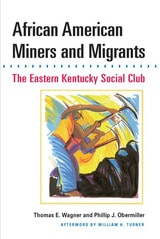
cover of African American Miners and Migrants: THE EASTERN KENTUCKY SOCIAL CLUB

African American Miners and Migrants

THE EASTERN KENTUCKY SOCIAL CLUB

Thomas E. Wagner and Phillip J. Obermiller; Afterword by William H. Turner

University of Illinois Press, 2004

Thomas E. Wagner and Phillip J. Obermiller's African American Miners and Migrants documents the lives of Eastern Kentucky Social Club (EKSC) members, a group of black Appalachians who left the eastern Kentucky coalfields and their coal company hometowns in Harlan County.

Bound together by segregation, the inherent dangers of mining, and coal company paternalism, it might seem that black miners and mountaineers would be eager to forget their past. Instead, members of the EKSC have chosen to celebrate their Harlan County roots. African American Miners and Migrants uses historical and archival research and extensive personal interviews to explore their reasons and the ties that still bind them to eastern Kentucky. The book also examines life in the model coal towns of Benham and Lynch in the context of Progressive Era policies, the practice of welfare capitalism, and the contemporary national trend of building corporate towns and planned communities.

[more]
cover of Alley Life in Washington: Family, Community, Religion, and Folklife in the City, 1850-1970

Alley Life in Washington

Family, Community, Religion, and Folklife in the City, 1850-1970

James Borchert

University of Illinois Press, 1980
Forgotten today, established Black communities once existed in the alleyways of Washington, D.C., even in neighborhoods as familiar as Capitol Hill and Foggy Bottom. James Borchert's study delves into the lives and folkways of the largely alley dwellers and how their communities changed from before the Civil War, to the late 1890s era when almost 20,000 people lived in alley houses, to the effects of reform and gentrification in the mid-twentieth century.
[more]
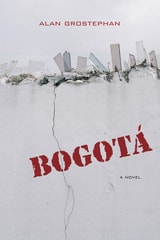
cover of Bogotá: A Novel

Bogotá

A Novel

Alan Grostephan

Northwestern University Press, 2013

In Bogotá, a taut, moving novel set in present-day Colombia, Wilfredo decides to uproot his family from their small town, where his ferry service on the river subjects him to the gruesome errands demanded by the local paramilitary. Moving in with relatives in a slum in Bogotá, the family tries desperately to achieve the smallest measure of comfort and hope in a world of almost total ruin, wracked by deprivation, fear, and ceaseless violence. 

Alan Grostephan depicts with startling immediacy an urban landscape of extreme harshness and oppressive instability. The tension between the desperate conditions surrounding his characters and their efforts to hold on to their humanity gives Bogotá a ferocious energy. As Wilfredo and his family fight to stay alive and stay together, their plight emerges as equally enraging and uplifting, constituting a portrait of a society always on the verge of disintegration.
[more]
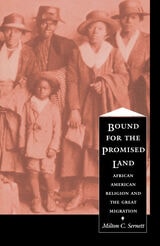
cover of Bound For the Promised Land: African American Religion and the Great Migration

Bound For the Promised Land

African American Religion and the Great Migration

Milton C. Sernett

Duke University Press, 1997

Bound for the Promised Land is the first extensive examination of the impact on the American religious landscape of the Great Migration—the movement from South to North and from country to city by hundreds of thousands of African Americans following World War I. In focusing on this phenomenon’s religious and cultural implications, Milton C. Sernett breaks with traditional patterns of historiography that analyze the migration in terms of socioeconomic considerations.
Drawing on a range of sources—interviews, government documents, church periodicals, books, pamphlets, and articles—Sernett shows how the mass migration created an institutional crisis for black religious leaders. He describes the creative tensions that resulted when the southern migrants who saw their exodus as the Second Emancipation brought their religious beliefs and practices into northern cities such as Chicago, and traces the resulting emergence of the belief that black churches ought to be more than places for "praying and preaching." Explaining how this social gospel perspective came to dominate many of the classic studies of African American religion, Bound for the Promised Land sheds new light on various components of the development of black religion, including philanthropic endeavors to "modernize" the southern black rural church. In providing a balanced and holistic understanding of black religion in post–World War I America, Bound for the Promised Land serves to reveal the challenges presently confronting this vital component of America’s religious mosaic.
[more]
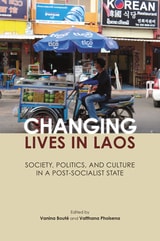
cover of Changing Lives in Laos: Society, Politics, and Culture in a Post-Socialist State

Changing Lives in Laos

Society, Politics, and Culture in a Post-Socialist State

Edited by Vanina Bouté and Vatthana Pholsena

National University of Singapore Press, 2017
During the last two decades, Laos has undergone major transformations due to a massive influx of foreign investment. Improved communications and new forms of mobility have dramatically altered rural life. Changing Lives in Laos brings together contributions from young scholars that look closely at these transitions and the resulting rise of a new social, cultural, and economic order. The essays in this volume draw on original fieldwork and provide fresh analyses of topics such as the structures of power, the politics of territoriality, and new forms of sociability in emerging urban spaces.
 
[more]
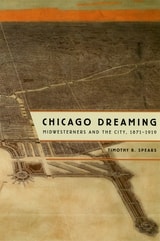
cover of Chicago Dreaming: Midwesterners and the City, 1871-1919

Chicago Dreaming

Midwesterners and the City, 1871-1919

Timothy B. Spears

University of Chicago Press, 2005

During the late nineteenth century, Chicago's population grew at an astonishing rate, with an estimated growth of 900,000 people between 1860 and 1890. Drawn to the opportunities generated by an expansive economy, hinterland migrants from the rural Midwest flocked to the city, their visions of prosperity creating a thriving modern urban culture. The hopes of these newcomers are the subject of Timothy B. Spears's book Chicago Dreaming—the story of Chicago's growth and the transplanted Midwesterners who so decisively shaped the young city's identity.

Through innovative readings of Theodore Dreiser, Willa Cather, and Richard Wright, Spears argues that the migratory perspective was crucial to the rise of Chicago's emerging literary culture. In following the paths of several well-known migrants, including Jane Addams, cartoonist John T. McCutcheon, and businessman John Glessner, Spears also shows how the view from the hinterland permeated urban culture and informed the development of key Chicago institutions. Further exploring the notion of dreaming, he brings to light the internal desires that lured Midwestern migrants to the city as well as the nostalgia that led them to dream of the homes they left behind.

With this fascinating new take on the rise of Chicago, Chicago Dreaming blurs the line between country and city to reveal the provincial character of modern urban culture.
[more]
cover of China's Left-Behind Children: Caretaking, Parenting, and Struggles

China's Left-Behind Children

Caretaking, Parenting, and Struggles

Xiaojin Chen

Rutgers University Press, 2024
One unintended consequence of the unprecedented rural-to-urban migration in China over the past three decades is the exponentially increased number of "left-behind" children—children whose parents migrated to more developed areas and who live with one parent or other extended family members. The daily lives of these children, including their caretaking arrangements, parent-child bonding and communication, and schooling, are fraught with distractions and uncertainties. Paying special attention to this marginalized group, this book investigates the role of parental migration and the left-behind status in shaping Chinese family dynamics and children’s general wellbeing, including their school performance, delinquency, resilience, feelings of ambiguous loss, and other psychological problems. Blending theory, empirical research, and real-world interviews with left-behind children, China's Left-Behind Children provides a uniquely close look at these children's lives while also providing the larger national context that defines and shapes their everyday lives.    
 
[more]
cover of Cultural Capital: Mountain Zapotec Migrant Associations in Mexico City

Cultural Capital

Mountain Zapotec Migrant Associations in Mexico City

Lane Ryo Hirabayashi

University of Arizona Press, 1993
This book shows how Zapotec peasants migrating to Mexico City utilize paisanazgo--which prescribes solidarity among people from the same locale--as the basis for cooperation and mutual aid within a new environment. This study focuses on three groups of Mountain Zapotecs to explain why migrant associations were created and why they took different forms, citing regional variations in ethnicity, solidarity, occupational pursuits, and sociopolitical articulation to the nation in the three points of origin.
[more]
cover of Every Day We Live Is the Future: Surviving in a City of Disasters

Every Day We Live Is the Future

Surviving in a City of Disasters

By Douglas Haynes

University of Texas Press, 2017

When she was only nine, Dayani Baldelomar left her Nicaraguan village with nothing more than a change of clothes. She was among tens of thousands of rural migrants to Managua in the 1980s and 1990s. After years of homelessness, Dayani landed in a shantytown called The Widows, squeezed between a drainage ditch and putrid Lake Managua. Her neighbor, Yadira Castellón, also migrated from the mountains. Driven by hope for a better future for their children, Dayani, Yadira, and their husbands invent jobs in Managua’s spreading markets and dumps, joining the planet’s burgeoning informal economy. But a swelling tide of family crises and environmental calamities threaten to break their toehold in the city.

Dayani’s and Yadira’s struggles reveal one of the world’s biggest challenges: by 2050, almost one-third of all people will likely live in slums without basic services, vulnerable to disasters caused by the convergence of climate change and breakneck urbanization. To tell their stories, Douglas Haynes followed Dayani’s and Yadira’s families for five years, learning firsthand how their lives in the city are a tightrope walk between new opportunities and chronic insecurity. Every Day We Live Is the Future is a gripping, unforgettable account of two women’s herculean efforts to persevere and educate their children. It sounds a powerful call for understanding the growing risks to new urbanites, how to help them prosper, and why their lives matter for us all.

[more]
cover of I Give You Half the Road

I Give You Half the Road

Carol Spindel

University of Wisconsin Press, 2021

In Ivory Coast, the farewell “I give you half the road” is an expression of hospitality, urging a departing guest to come back again. After their first stay in a welcoming rural community in 1981, Carol Spindel and her husband did just that. Over the course of decades, they built a house and returned frequently, deepening their relationships with neighbors.

Once considered the most stable country in West Africa, Ivory Coast was split by an armed rebellion in 2002 and endured a decade of instability and a violent conflict. Spindel provides an intimate glimpse into this turbulent period by weaving together the daily lives and paths of five neighbors. Their stories reveal Ivorians determined to reunite a divided country through reliance on mutual respect and obligation even while power-hungry politicians pursued xenophobic and anti-immigrant platforms for personal gain. Illuminating democracy as a fragile enterprise that must be continually invented and reinvented, I Give You Half the Road emphasizes the importance of connection, generosity, and forgiveness.
[more]
cover of Indigenous Migration and Social Change: The Foresteros of Cuzco, 1570-1720

Indigenous Migration and Social Change

The Foresteros of Cuzco, 1570-1720

Ann M. Wightman

Duke University Press, 1990

Many observers in colonial Spanish America—whether clerical, governmental, or foreign—noted the large numbers of forasteros, or Indians who were not seemingly attached to any locality. These migrants, or “wanderers,” offended the bureaucratic sensibilities of the Spanish administration, as they also frustrated their tax and revenue efforts. Ann M. Wightman’s research on these early “undocumentals” in the Cuzco region of Peru reveals much of importance on Andean society and its adaptation and resistance to Spanish cultural and political hegemony. The book thereby informs our understanding of social change in the colonial period.
Wightman shows that the dismissal of the forasteros as marginalized rural poor is superficial at best, and through laborious and painstaking archival research she presents a clear picture of the transformation of traditional society as the native populations coped with the disruptions of the conquest—and in doing so, reveals the reciprocal adaptations of the colonial power. Her choice of Cuzco is particularly appropriate, as this was a “heartland” region crucial to both the Incan and Spanish empires. The questions addressed by Wightman are of great concern to current Andean ethnohistory, one of the liveliest areas of such research, and are sure to have an important impact.
[more]
cover of Learning to Leave: The Irony of Schooling in a Coastal Community

Learning to Leave

The Irony of Schooling in a Coastal Community

Michael Corbett

West Virginia University Press, 2020

Published with a new preface, this innovative case study from Nova Scotia analyzes the relationship between rural communities and contemporary education. Rather than supporting place-sensitive curricula and establishing networks within community populations, the rural school has too often stood apart from local life, with the generally unintended consequence that many educationally successful rural youth come to see their communities and lifestyles as places to be left behind. They face what Michael Corbett calls a mobility imperative, which, he shows, has been central to contemporary schooling. Learning to Leave argues that if education is to be democratic and serve the purpose of economic, social, and cultural development, then it must adapt and respond to the specificity of its locale, the knowledge practices of the people, and the needs of those who struggle to remain in challenged rural places.
[more]
cover of Lord, Please Don't Take Me in August: African-Americans in Newport and Saratoga Springs, 1870-1930

Lord, Please Don't Take Me in August

African-Americans in Newport and Saratoga Springs, 1870-1930

Myra B. Young Armstead

University of Illinois Press, 1999

The lives built by Black Americans in a pair of summer resort towns

In the late nineteenth and early twentieth centuries, northern resort towns were in their heyday as celebrated retreats for America's wealthy. Lord, Please Don't Take Me in August documents the experiences of African Americans in Saratoga Springs, New York, and Newport, Rhode Island--towns that provided a recurring season of expanded employment opportunities, enhanced social life, cosmopolitan experience, and, in a good year, enough money to last through the winter.

Affirming that the decision to live in their tiny resort communities was conscious and deliberate, Myra B. Young Armstead shows how Afro-Saratogians and Afro-Newporters organized their rhythms, their routines, and their communities to create meaningful identities for themselves. Living on streets close to their churches, developing social organizations that promoted their standards of gentility and respectability, and lobbying for wider opportunities, these African Americans actively shaped their lives within the structures and limitations imposed on them.

Armstead situates the resort town between the poles of the rural South and the large industrial cities of the North. She shows how these small northern towns, with their seasonal economic rhythms and domestic wage work, permitted an important continuity between rural and urban lifestyles and a path from rural South to urban North besides the jarring, disruptive journey that often ended in the ghetto.

"Lord, Please Don't Take Me in August" tells a story that is at once American and uniquely African American: a story of economic imperatives and enlarged social aspirations culminating in a season--June, July, and August--that brought Blacks as close as they could get to the American Dream.

[more]
cover of Making Their Own Way: Southern Blacks' Migration to Pittsburgh, 1916-30

Making Their Own Way

Southern Blacks' Migration to Pittsburgh, 1916-30

Peter Gottlieb

University of Illinois Press, 1987

      "A model study, one of two or three genuinely indispensable books
        on that momentous movement historians know as the Great Migration. Peter
        Gottlieb shatters the received portrait of southern migrants as bewildered,
        premodern folk, 'utterly unprepared' for the complexities of urban life.
        African Americans in his account emerge as complex, creative agents, exploiting
        old solidarities and building new ones, transforming the urban landscape
        even as it transformed them." -- James Campbell, Northwestern University
      "Engagingly written and well organized. . . . A major addition to
        the fields of Afro-American, urban, and working-class history." --
        Howard N. Rabinowitz, Georgia Historical Quarterly
      "Gottlieb uses oral histories, corporate records, and primary and
        secondary scholarship to present a useful picture of an important part
        of the Great Migration that followed World War I." -- George Lipsitz,
        Choice
      "Sensitive and yet also incisive. . . . clear and often compelling.
        An outstanding study." -- James R. Barrett, Journal of American
        Ethnic History
      Publication of this work was supported in part by a grant from the
        Andrew W. Mellon Foundation.
 
[more]
cover of Mieres Reborn: The Reinvention of a Catalan Community

Mieres Reborn

The Reinvention of a Catalan Community

A. F. Robertson

University of Alabama Press, 2012

Mieres Reborn reveals how patient observation and an analysis of one small community have much to tell us about human progress more generally.

Not long ago Mieres, a village in the eastern foothills of the Pyrenees, seemed destined to die. As in countless thousands of rural communities around the world, young people in Mieres over the years have moved to the towns and cities, leaving behind abandoned fields and meadows, derelict houses, and their aging and disconsolate parents and grandparents.

Close observation of this social microcosm over two decades reveals the capacity of ordinary people in a locality to reinvent themselves, reconstruct relationships with the wider world, and confront new threats to their collective survival. A. F. Robertson describes how the determination that Mieres should survive is most evident in a vigorous round of fiestas, fairs, and other public events in which natives, exiles, and newcomers work to create a lively sense of belonging. Since the 1980s, Mieres has been enlivened by a reverse flow of migrants from the cities, new settlers who have brought an infusion of youth to the community, devised new livelihoods, revitalized the village school, energized the native ”Mierencs,” and provided the impetus for a rediscovery of historical roots and political identity.

The regeneration of life in the countryside, in part a reaction to urban expansion and decay, is a global phenomenon of increasing political, economic, and social significance.
[more]
cover of Mobility and Modernity: Migration in Germany, 1820-1989

Mobility and Modernity

Migration in Germany, 1820-1989

Steve Hochstadt

University of Michigan Press, 1999
Mobility and Modernity uses voluminous German data on migrations over the past two centuries to demonstrate why conventional assumptions about the relationship between mobility and modernity must be revised.
 
Thus far the changing total volume of migration has not been traced over a long period for any country. Unique migration registration statistics, both detailed and broadly geographical in coverage, allow the precise plotting of migration rates in Germany since 1820. Steve Hochstadt combines careful quantitative methods, easily understood numerical data, and social analysis based upon broad reading in German social history to show that current beliefs about the direction and timing of changes in German mobility, which have been based on late nineteenth-century anxieties about urbanization and industrialization, do not match the data.
 
Migration rates in Germany rose continuously throughout the nineteenth century, and have fallen during the twentieth century. Mobility, Hochstadt argues, was not an unprecedented accompaniment to industrialization, but a traditional rural response to specific economic changes. Hochstadt's more precise analysis of urban in- and outmigration shows the mechanism of urbanization to have been the migration of families rather than the much greater, but also more circular, migration of single men and women.
 
Hochstadt demonstrates the importance of examining historical behavior, powerfully justifying the methods of historical demography as a path to social understanding. The data and specific conclusions are German, but the methods and reinterpretaion of migration history have much wider application, both to other modern European nations and to currently developing countries. Those who study the modern social history of Europe, the mechanisms that formed urban working classes, and the methods of historical demography will be interested in Hochstadt's work.
[more]
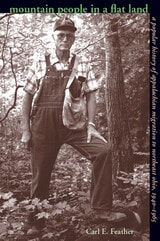
cover of Mountain People in a Flat Land: A Popular History of Appalachian Migration to Northeast Ohio, 1940–1965

Mountain People in a Flat Land

A Popular History of Appalachian Migration to Northeast Ohio, 1940–1965

Carl E. Feather

Ohio University Press, 1998

In the early 1940s, $10 bought a bus ticket from Appalachia to a better job and promise of prosperity in the flatlands of northeast Ohio. A mountaineer with a strong back and will to work could find a job within twenty-four hours of arrival.

But the cost of a bus ticket was more than a week's wages in a lumber camp, and the mountaineer paid dearly in loss of kin, culture, homeplace, and freedom.

Numerous scholarly works have addressed this migration that brought more than one million mountaineers to Ohio alone. But Mountain People in a Flat Land is the first popular history of Appalachian migration to one community — Ashtabula County, an industrial center in the fabled “best location in the nation.”

These migrants share their stories of life in Appalachia before coming north. There are tales of making moonshine, colorful family members, home remedies harvested from the wild, and life in coal company towns and lumber camps.

The mountaineers explain why, despite the beauty of the mountains and the deep kinship roots, they had to leave Appalachia.

Stories of their hardships, cultural clashes, assimilation, and ultimate successes in the flatland provide a moving look at an often stereotyped people.
[more]
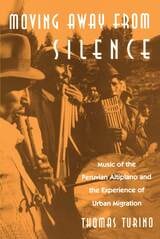
cover of Moving Away from Silence: Music of the Peruvian Altiplano and the Experience of Urban Migration

Moving Away from Silence

Music of the Peruvian Altiplano and the Experience of Urban Migration

Thomas Turino

University of Chicago Press, 1993

Increasingly popular in the United States and Europe, Andean panpipe and flute music draws its vitality from the traditions of rural highland villages and of rural migrants who have settled in Andean cities. In Moving Away from Silence, Thomas Turino describes panpipe and flute traditions in the context of this rural-urban migration and the turbulent politics that have influenced Peruvian society and local identities throughout this century.

Turino's ethnography is the first large-scale study to concentrate on the pervasive effects of migration on Andean people and their music. Turino uses the musical traditions of Conima, Peru as a unifying thread, tracing them through the varying lives of Conimeos in different locales. He reveals how music both sustains and creates meaning for a people struggling amid the dramatic social upheavals of contemporary Peru.

Moving Away from Silence contains detailed interpretations based on comparative field research of Conimeo musical performance, rehearsals, composition, and festivals in the highlands and Lima. The volume will be of great importance to students of Latin American music and culture as well as ethnomusicological and ethnographic theory and method.
[more]
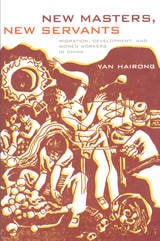
cover of New Masters, New Servants: Migration, Development, and Women Workers in China

New Masters, New Servants

Migration, Development, and Women Workers in China

Yan Hairong

Duke University Press, 2008

On March 9, 1996, tens of thousands of readers of a daily newspaper in China’s Anhui province saw a photograph of two young women at a local long-distance bus station. Dressed in fashionable new winter coats and carrying luggage printed with Latin letters, the women were returning home from their jobs in one of China’s large cities. As the photo caption indicated, the image represented the “transformation of migrant women”; the women’s “transformation” was signaled by their status as consumers. New Masters, New Servants is an ethnography of class dynamics and the subject formation of migrant domestic workers. Based on her interviews with young women who migrated from China’s Anhui province to the city of Beijing to engage in domestic service for middle-class families, as well as interviews with employers, job placement agencies, and government officials, Yan Hairong explores what these migrant workers mean to the families that hire them, to urban economies, to rural provinces such as Anhui, and to the Chinese state. Above all, Yan focuses on the domestic workers’ self-conceptions, desires, and struggles.

Yan analyzes how the migrant women workers are subjected to, make sense of, and reflect on a range of state and neoliberal discourses about development, modernity, consumption, self-worth, quality, and individual and collective longing and struggle. She offers keen insight into the workers’ desire and efforts to achieve suzhi (quality) through self-improvement, the way workers are treated by their employers, and representations of migrant domestic workers on television and the Internet and in newspapers and magazines. In so doing, Yan demonstrates that contestations over the meanings of migrant workers raise broad questions about the nature of wage labor, market economy, sociality, and postsocialism in contemporary China.
[more]
cover of Rural and Small Town America

Rural and Small Town America

Glenn V. Fuguitt

Russell Sage Foundation, 1989

Important differences persist between rural and urban America, despite profound economic changes and the notorious homogenizing influence of the media. As Glenn V. Fuguitt, David L. Brown, and Calvin L. Beale show in Rural and Small Town America, the much-heralded disappearance of small town life has not come to pass, and the nonmetropolitan population still constitutes a significant dimension of our nation's social structure. Based on census and other recent survey data, this impressive study provides a detailed and comparative picture of rural America. The authors find that size of place is a critical demographic factor, affecting population composition (rural populations are older and more predominantly male than urban populations), the distribution of poverty (urban poverty tends to be concentrated in neighborhoods; rural poverty may extend over large blocks of counties), and employment opportunities (job quality and income are lower in rural areas, though rural occupational patterns are converging with those of urban areas). In general, rural and small town America still lags behind urban America on many indicators of social well-being. Pointing out that rural life is no longer synonymous with farming, the authors explore variations among nonmetropolitan populations. They also trace the impact of major national trends—the nonmetropolitan growth spurt of the 1970s and its current reversal, for example, or changing fertility rates—on rural life and on the relationship between metropolitan and nonmetropolitan communities. By describing the special characteristics and needs of rural populations as well as the features they share with urban America, this book clearly demonstrates that a more accurate picture of nonmetropolitan life is essential to understanding the larger dynamics of our society. A Volume in the Russell Sage Foundation Census Series
[more]
cover of Siaya: The Historical Anthropology of an African Landscape

Siaya

The Historical Anthropology of an African Landscape

David William Cohen

Ohio University Press, 1989

The authors of this highly original book set out to remove the persistent boundary between the authors and readers of ethnography on one hand and the subjects of ethnography on the other – those who observe and those who are observed.

The authors use stories to reveal Siaya, the Luo-speaking area of Western Kenya down near the Lake but still surprisingly vulnerable to drought. There are the stories of survival by a woman with her carpenter husband in Nairobi, there is the launching of a boat as bride into the Lake and there is the great Boro Christmas disco riot. The book finishes with an Afterword on the burial of the lawyer S. M. Otiono that divided its whole of Kenya.

It is both written about and for the Luo. It brings together Luo ideas and debates about their own past and present with findings, arguments and questions produced about this “other people;” by outside scholars writing in their own disciplines. Among the Luo, what constitutes culture, what is correct behavior, what is history, are questions that are heavily fought over.

This is one of those rare books that makes students and other interested individuals question their own cultural preconceptions and what are the genuine concerns of academic disciplines.
[more]
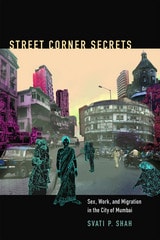
cover of Street Corner Secrets: Sex, Work, and Migration in the City of Mumbai

Street Corner Secrets

Sex, Work, and Migration in the City of Mumbai

Svati P. Shah

Duke University Press, 2014

Street Corner Secrets challenges widespread notions of sex work in India by examining solicitation in three spaces within the city of Mumbai that are seldom placed within the same analytic frame—brothels, streets, and public day-wage labor markets (nakas), where sexual commerce may be solicited discretely alongside other income-generating activities. Focusing on women who migrated to Mumbai from rural, economically underdeveloped areas within India, Svati P. Shah argues that selling sexual services is one of a number of ways women working as laborers may earn a living, demonstrating that sex work, like day labor, is a part of India's vast informal economy. Here, various means of earning—legitimized or stigmatized, legal or illegal—overlap or exist in close proximity to one another, shaping a narrow field of livelihood options that women navigate daily. In the course of this rich ethnography, Shah discusses policing practices, migrants' access to housing and water, the idea of public space, critiques of states and citizenship, and the discursive location of violence within debates on sexual commerce. Throughout, the book analyzes the epistemology of prostitution, and the silences and secrets that constitute the discourse of sexual commerce on Mumbai's streets.
[more]
cover of The Big Boxcar

The Big Boxcar

Alfred Maund

University of Illinois Press, 1957

Five men and a woman, all African Americans, huddle in the rattling darkness of a boxcar headed north, away from a brutal South, seeking freedom and opportunity. They are joined by a white intruder whose own quest puts them all in great danger. Like Chaucer's pilgrims in The Canterbury Tales, each of these travelers has a story to tell, and these stories—of humor and humiliation, of prostitution and pride, of love and murder—unfold in the course of the journey. They reveal the lives and secrets of the tellers and give this transient community self-respect and solidarity as it hurtles toward arrest or worse.
 The Big Boxcar, written from a totally black perspective by a white author, bears witness to the structural racism of a social order that sets ordinary people of different colors against each other to the disadvantage of all. Alan Wald's introduction documents Maund's life of activism and his uncompromising commitment to social emancipation.
 
[more]
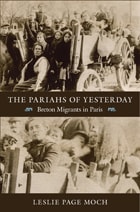
cover of The Pariahs of Yesterday: Breton Migrants in Paris

The Pariahs of Yesterday

Breton Migrants in Paris

Leslie Page Moch

Duke University Press, 2012
Beginning in the 1870s, a great many Bretons—men and women from Brittany, a region in western France—began arriving in Paris. Every age has its pariahs, and in 1900, the “pariahs of Paris” were the Bretons, the last distinct group of provincials to come en masse to the capital city. The pariah designation took hold in Paris, in Brittany, and among historians. Yet the derision of recent migrants can be temporary. Tracing the changing status of Bretons in Paris since 1870, Leslie Page Moch demonstrates that state policy, economic trends, and the attitudes of established Parisians and Breton newcomers evolved as the fortunes of Bretons in the capital improved. The pariah stereotype became outdated. Drawing on demographic records and the writings of physicians, journalists, novelists, lawyers, and social scientists, Moch connects internal migration with national integration. She interprets marriage records, official reports on employment, legal and medical theses, memoirs, and writings from secular and religious organizations in the Breton community. As the pariahs of yesterday, Bretons are an example of successful integration into Parisian life. At the same time, their experiences show integration to be a complicated and lengthy process.
[more]
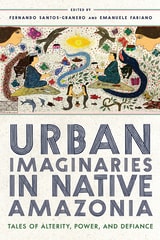
cover of Urban Imaginaries in Native Amazonia: Tales of Alterity, Power, and Defiance

Urban Imaginaries in Native Amazonia

Tales of Alterity, Power, and Defiance

Fernando Santos-Granero

University of Arizona Press, 2023

Urban life has long intrigued Indigenous Amazonians, who regard cities as the locus of both extraordinary power and danger. Modern and ancient cities alike have thus become models for the representation of extreme alterity under the guise of supernatural enchanted cities. This volume seeks to analyze how these ambiguous urban imaginaries—complex representations that function as cognitive tools and blueprints for social action—express a singular view of cosmopolitical relations, how they inform and shape forest-city interactions, and the history of how they came into existence.

Featuring analysis from historical, ethnological, and philosophical perspectives, contributors seek to explain the imaginaries’ widespread diffusion, as well as their influence in present-day migration and urbanization. Above all, it underscores how these urban imaginaries allow Indigenous Amazonians to express their concerns about power, alterity, domination, and defiance.

Contributors
Natalia Buitron
Philippe Erikson
Emanuele Fabiano
Fabiana Maizza
Daniela Peluso
Fernando Santos-Granero
Pirjo Kristiina Virtanen
Robin M. Wright
[more]
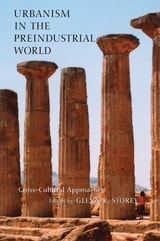
cover of Urbanism in the Preindustrial World: Cross-Cultural Approaches

Urbanism in the Preindustrial World

Cross-Cultural Approaches

Edited by Glenn R. Storey

University of Alabama Press, 2006

A baseline study of the growth of preindustrial cities worldwide.

This work employs a subset of preindustrial cities on many continents to answer questions archaeologists grapple with concerning the populating and growth of cities before industrialization. It further explores how scholars differently conceive and execute their research on the population of cities. The subject cities are in Greece, Mesoamerica, the Andes, Italy, Egypt, Africa, United States, Denmark, and China. This broad sample provides a useful framework for answers to such questions as “Why did people agglomerate into cities?” and “What population size and what age of endurance constitute a city?”

The study covers more than population magnitude and population makeup, the two major frameworks of urban demography. The contributors combine their archaeological and historical expertise to reveal commonalities, as well as theoretical extrapolations and methodological approaches, at work here and outside the sample.

Urbanism in the Preindustrial World is a unique study revealing the variety of factors involved in the coalescing and dispersal of populations in preindustrial times.
 
[more]
cover of Van Gogh on Demand: China and the Readymade

Van Gogh on Demand

China and the Readymade

Winnie Won Yin Wong

University of Chicago Press, 2014
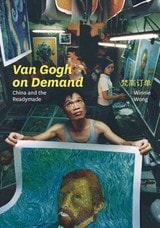
In a manufacturing metropolis in south China lies Dafen, an urban village that famously houses thousands of workers who paint van Goghs, Da Vincis, Warhols, and other Western masterpieces for the world market, producing an astonishing five million paintings a year. To write about work and life in Dafen, Winnie Wong infiltrated this world, first investigating the work of conceptual artists who made projects there; then working as a dealer; apprenticing as a painter; surveying wholesalers and retailers in Europe, East Asia and North America; establishing relationships with local leaders; and organizing a conceptual art exhibition for the Shanghai World Expo. The result is Van Gogh on Demand, a fascinating book about a little-known aspect of the global art world—one that sheds surprising light on the workings of art, artists, and individual genius.
 
Confronting big questions about the definition of art, the ownership of an image, and the meaning of originality and imitation, Wong describes an art world in which idealistic migrant workers, lofty propaganda makers, savvy dealers, and international artists make up a global supply chain of art and creativity. She examines how Berlin-based conceptual artist Christian Jankowski, who collaborated with Dafen’s painters to reimagine the Dafen Art Museum, unwittingly appropriated the work of a Hong Kong-based photographer Michael Wolf. She recounts how Liu Ding, a Beijing-based conceptual artist, asked Dafen “assembly-line” painters to perform at the Guangzhou Triennial, neatly styling himself into a Dafen boss. Taking the Shenzhen-based photojournalist Yu Haibo’s award-winning photograph from the Amsterdam's World Press Photo organization, she finds and meets the Dafen painter pictured in it and traces his paintings back to an unlikely place in Amsterdam. Through such cases, Wong shows how Dafen’s painters force us to reexamine our preconceptions about creativity, and the role of Chinese workers in redefining global art.
 
Providing a valuable account of art practices in an ascendant China, Van Gogh on Demand is a rich and detailed look at the implications of a world that can offer countless copies of everything that has ever been called “art.”
[more]
cover of Zapotecs on the Move: Cultural, Social, and Political Processes in Transnational Perspective

Zapotecs on the Move

Cultural, Social, and Political Processes in Transnational Perspective

Cruz-Manjarrez, Adriana

Rutgers University Press, 2013

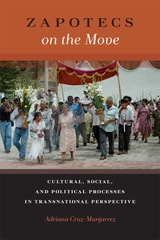
Through interviews with three generations of Yalálag Zapotecs (“Yaláltecos”) in Los Angeles and Yalálag, Oaxaca, this book examines the impact of international migration on this community. It traces five decades of migration to Los Angeles in order to delineate migration patterns, community formation in Los Angeles, and the emergence of transnational identities of the first and second generations of Yalálag Zapotecs in the United States, exploring why these immigrants and their descendents now think of themselves as Mexican, Mexican Indian immigrants, Oaxaqueños, and Latinos—identities they did not claim in Mexico.

Based on multi-site fieldwork conducted over a five-year period, Adriana Cruz-Manjarrez analyzes how and why Yalálag Zapotec identity and culture have been reconfigured in the United States, using such cultural practices as music, dance, and religious rituals as a lens to bring this dynamic process into focus. By illustrating the sociocultural, economic, and political practices that link immigrants in Los Angeles to those left behind, the book documents how transnational migration has reflected, shaped, and transformed these practices in both their place of origin and immigration.
[more]