Results by title
35 books match the query 'Sacred'
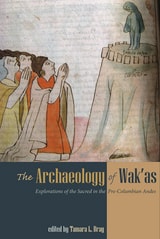
Archaeology of Wak'as
Explorations of the Sacred in the Pre-Columbian AndesTamara L. Bray
University Press of Colorado, 2014
Wak'as were understood as agentive, nonhuman persons within many Andean communities and were fundamental to conceptions of place, alimentation, fertility, identity, and memory and the political construction of ecology and life cycles. The ethnohistoric record indicates that wak'as were thought to speak, hear, and communicate, both among themselves and with humans. In their capacity as nonhuman persons, they shared familial relations with members of the community, for instance, young women were wed to local wak'as made of stone and wak'as had sons and daughters who were identified as the mummified remains of the community's revered ancestors.
Integrating linguistic, ethnohistoric, ethnographic, and archaeological data, The Archaeology of Wak'as advances our understanding of the nature and culture of wak'as and contributes to the larger theoretical discussions on the meaning and role of–"the sacred” in ancient contexts.
As Sacred to Us
Simon Pokagon’s Birch Bark Stories in Their ContextsBlaire Morseau
Michigan State University Press, 2023

Authors of the Impossible
The Paranormal and the SacredJeffrey J. Kripal
University of Chicago Press, 2010
Most scholars dismiss research into the paranormal as pseudoscience, a frivolous pursuit for the paranoid or gullible. Even historians of religion, whose work naturally attends to events beyond the realm of empirical science, have shown scant interest in the subject. But the history of psychical phenomena, Jeffrey J. Kripal contends, is an untapped source of insight into the sacred and by tracing that history through the last two centuries of Western thought we can see its potential centrality to the critical study of religion.
Kripal grounds his study in the work of four major figures in the history of paranormal research: psychical researcher Frederic Myers; writer and humorist Charles Fort; astronomer, computer scientist, and ufologist Jacques Vallee; and philosopher and sociologist Bertrand Méheust. Through incisive analyses of these thinkers, Kripal ushers the reader into a beguiling world somewhere between fact, fiction, and fraud. The cultural history of telepathy, teleportation, and UFOs; a ghostly love story; the occult dimensions of science fiction; cold war psychic espionage; galactic colonialism; and the intimate relationship between consciousness and culture all come together in Authors of the Impossible, a dazzling and profound look at how the paranormal bridges the sacred and the scientific.
Be Not Deceived
The Sacred and Sexual Struggles of Gay and Ex-gay Christian MenWolkomir, Michelle
Rutgers University Press, 2006
Homosexuality has become increasingly accepted in mainstream America over the past two decades. Yet despite indications of progress that can be found everywhere from academia to popular culture, gay men and women remain the target of much discrimination and stigma, particularly within conservative Christianity.
In Be Not Deceived, Michelle Wolkomir explores the difficult dilemma that gay Christians face in their attempts to reconcile their religious and sexual identities. She introduces the ideologies and practices of two alternative and competing ministries that offer solutions for Christians who experience homosexual desire.
One organization—the Universal Fellowship of Metropolitan Community Churches—believes that God made people gay to suit divine purposes. Changing one’s sexuality is therefore impossible and a defiance of God. In contrast, Exodus International preaches that homosexuality is a sin and a symptom of disordered psychological development—one that can be cured through redemptive prayer. By comparing participant experiences in these ministries, Wolkomir explores the paths and processes by which members learn to become gay or ex-gay Christians.
Through careful analysis of the groups’ ideologies, interactions, and symbolic resources, Be Not Deceived goes far beyond the obvious differences between the ministries to uncover their similarities, namely that both continue to define heterosexuality as the normative and dominant lifestyle.
Can We Survive Our Origins?
Readings in René Girard's Theory of Violence and the SacredPierpaolo Antonello
Michigan State University Press, 2015
Castle and Cathedral
Longing for the Sacred in a Skeptical AgeBruce R. Berglund
Central European University Press, 2017
Circuits of the Sacred
A Faggotology in the Black Latinx CaribbeanCarlos Ulises Decena
Duke University Press, 2023
Defending Rumba in Havana
The Sacred and the Black Corporeal UndercommonsMaya J. Berry
Duke University Press, 2025
Ecology and the Sacred
Engaging the Anthropology of Roy A. RappaportEllen Messer and Michael Lambek, Editors
University of Michigan Press, 2001
At a time when anthropology is fractured by debates over whether it is a science or a humanistic tradition, theoretical or applied, this festschrift testifies that a unified anthropology is both possible and necessary for the understanding of humanity and global transformations. The volume will be of interest not only to anthropologists, but to geographers, sociologists, scholars in science-studies, historians, and experts and practitioners in religious studies, as well.
Ellen Messer is Visiting Associate Professor, Tufts University. Michael Lambek is Professor of Anthropology, University of Toronto.
Embodying the Sacred
Women Mystics in Seventeenth-Century LimaNancy E. van Deusen
Duke University Press, 2018
Embracing the Void
Rethinking the Origin of the SacredRichard Boothby
Northwestern University Press, 2023
A radical reinterpretation of the origin of religion through a psychoanalytic theorization of the unknown
Renowned psychoanalytic philosopher Richard Boothby puts forward a novel theory of religion inspired by Jacques Lacan’s theory of das Ding, the disquieting, inaccessible dimension of fellow human beings. This notion of an unfathomable excess, originally encountered in the figure of the mother, led Lacan to break with Freud’s formulation of the Oedipus complex and underlies Lacan’s distinctive conception of unconscious dynamics. Leaning on this account, Boothby shows how our sense of the sacred arises from our relation to what we do not know.
Embracing the Void lays out the range of Freud’s attempts at a psychoanalytic theory of religion and then sketches the rough contours of Lacan’s contrasting approach. From there, Boothby offers the theoretical tools for interpreting the religious impulse and analyzes key religious traditions, from ancient Greek polytheism to Judaism and Christianity, and from Hinduism and Buddhism to Islam, finally turning to modern capitalist culture and the seductive deity that dominates it—money. Lucid, accessible, and compelling, the book provides a cogent intervention in one of the psychoanalytic tradition’s most contentious topics and offers a new approach to our understanding of religion.
For Money and Elders
Ritual, Sovereignty, and the Sacred in KenyaRobert W. Blunt
University of Chicago Press, 2019
In For Money and Elders, Robert W. Blunt addresses these questions by turning to the political, economic, and religious signs in circulation in Kenya today. He examines how Kenyans attempt to make sense of political instability caused by the uncertainty of authority behind everything from currency to title deeds. When the symbolic order of a society is up for grabs, he shows, violence may seem like an expedient way to enforce the authority of signs. Drawing on fertile concepts of sovereignty, elderhood, counterfeiting, acephaly, and more, Blunt explores phenomena as diverse as the destabilization of ritual “oaths,” public anxieties about Satanism with the advent of democratic reform, and mistrust of official signs. The result is a fascinating glimpse into Kenya’s past and present and a penetrating reflection on meanings of violence in African politics.
Globalizing the Sacred
Religion Across the AmericasVásquez, Manuel A
Rutgers University Press, 2003
French and German tourists join Mexican migrant workers to venerate the image of the Virgin Mary at a strip mall in Florida; Latino gang members, deported from the United States to home countries they barely know, find Jesus in transnational churches; U.S. evangelicals use electronic media to preach a “neo liberal” gospel of wealth and health to landless peasants in remote indigenous villages in Guatemala. These are just some examples of how religion in the Americas today intersects in complex ways with the economic, political, and cultural dimensions of globalization.
Drawing on case studies in the United States and Latin America, Manuel A. Vásquez and Marie Friedmann Marquardt explore the evolving roles of religion in the Americas in the face of globalization, transnational migration, the rapid growth of culture industries, the rise of computer mediated technologies, and the crisis of modernity. Combining ethnographic research in local congregations, studies of material culture and sacred space, textual analyses, and approaches to mass and electronic media, the authors challenge dominant paradigms in sociology of religion, such as the secularization and rational choice models. Further, the book offers alternative theoretical and methodological tools to understand the increasing complexity of religious life in the Americas.
By illustratingthe challenges that scholars and students must confront in order to understand the complexity of today’s religious landscape, Globalizing the Sacred makes both important theoretical and methodological contributions to the study of religion’s role in social change.
Man and the Sacred
Roger Caillois
University of Illinois Press, 1959
Drawing on a diverse array of ethnographic contexts, including the sexual rituals of the Ba-Thong of South Africa and evidence drawn from aboriginal Australian, Eskimo, and traditional Chinese social systems, Caillois analyzes the role of the forbidden in the social cohesion of the group. He examines the character of the sacred in the light of specific instances of taboos and transgressions, exploring wide differences in attitudes toward diet and sex and extreme behaviors associated with the sacred, such as rapture and paroxysm. He also discusses the festival--an exuberant explosion following a period of strict repression--and compares its functions with those of modern war.
A classic study of one of the most fundamental aspects of human social and spiritual life, Man and the Sacred--presented here in Meyer Barash's superb English translation--is a companion volume to Caillois's Man, Play and Games.
Mormon Garments
Sacred and SecretNancy Ross, Jessica Finnigan, and Larissa Kanno Kindred
University of Illinois Press, 2026
On Mount Vision
Forms of the Sacred in Contemporary American PoetryNorman Finkelstein
University of Iowa Press, 2010
Plumbing what the poet Michael Palmer calls “the dimension of the Spirit, with that troublesome, rebarbative capital letter,” Norman Finkelstein’s On Mount Vision asks how and why the sacred has remained a basic concern of contemporary experimental poets in our secular age. By charting the wandering, together and apart, of poetry and belief, Finkelstein illustrates the rich tapestry formed by the warp and woof of poetry, and the play of Gnosticism, antinomianism, spiritualism, and shamanism, which have commonly been regarded as heretical and sometimes been outright suppressed.
This beautifully written work begins with an overview of the spiritual problematics found in nineteenth- and early twentieth-century American poetry. Traveling slightly outside of the realm of the contemporary, Finkelstein’s discussions of Emerson, Whitman, and Eliot yield to close readings of the works of Robert Duncan, Jack Spicer, Ronald Johnson, Michael Palmer, Susan Howe, Nathaniel Mackey, and Armand Schwerner. In restoring verse to its place alongside scripture, Finkelstein reminds us why the sacred remains crucial to our understanding of postmodern American poetry.
Pedagogies of Crossing
Meditations on Feminism, Sexual Politics, Memory, and the SacredM. Jacqui Alexander
Duke University Press, 2005
In these meditations, Alexander deftly unites large, often contradictory, historical processes across time and space. She focuses on the criminalization of queer communities in both the United States and the Caribbean in ways that prompt us to rethink how modernity invents its own traditions; she juxtaposes the political organizing and consciousness of women workers in global factories in Mexico, the Caribbean, and Canada with the pressing need for those in the academic factory to teach for social justice; she reflects on the limits and failures of liberal pluralism; and she presents original and compelling arguments that show how and why transgenerational memory is an indispensable spiritual practice within differently constituted women-of-color communities as it operates as a powerful antidote to oppression. In this multifaceted, visionary book, Alexander maps the terrain of alternative histories and offers new forms of knowledge with which to mold alternative futures.
Preserving the Sacred
Historical Perspectives on the Ojibwa MidewiwinMichael Angel
University of Manitoba Press, 2002

Producing the Sacred
AN ESSAY ON PUBLIC RELIGIONRobert Wuthnow
University of Illinois Press, 1994
Wuthnow uses as a guiding assumption the idea that cultural expressions, religious or otherwise, do not simply happen but are produced. He considers the major kinds of organizations that produce public religion--congregations, hierarchies, special interests, academies, and public rituals--showing how these organizational vehicles shape public religion's messages and how specific types of religious organization draw resources from their environments. He also reveals the implicit and unintended ways in which sacredness is expressed in modern society.
A volume in the series Public Expressions of Religion in America
Sacred and Secular Transactions in the Age of Shakespeare
Edited by Katherine Steele Brokaw and Jay Zysk
Northwestern University Press, 2019
The term “secular” inspires thinking about disenchantment, periodization, modernity, and subjectivity. The essays in Sacred and Secular Transactions in the Age of Shakespeare argue that Shakespeare’s plays present “secularization” not only as a historical narrative of progress but also as a hermeneutic process that unleashes complex and often problematic transactions between sacred and secular. These transactions shape ideas about everything from pastoral government and performative language to wonder and the spatial imagination.
Thinking about Shakespeare and secularization also involves thinking about how to interpret history and temporality in the contexts of Shakespeare’s medieval past, the religious reformations of the sixteenth century, and the critical dispositions that define Shakespeare studies today. These essays reject a necessary opposition between “sacred” and “secular” and instead analyze how such categories intersect. In fresh analyses of plays ranging from Hamlet and The Tempest to All’s Well that Ends Well and All Is True, secularization emerges as an interpretive act that explores the cultural protocols of representation within both Shakespeare’s plays and the critical domains in which they are studied and taught.
The volume’s diverse disciplinary perspectives and theoretical approaches shift our focus from literal religion and doctrinal issues to such aspects of early modern culture as theatrical performance, geography, race, architecture, music, and the visual arts.
Securing the Sacred
Religion, National Security, and the Western StateRobert M. Bosco
University of Michigan Press, 2014
Despite significant theoretical distinctions between securitization on the domestic and the international levels, he finds that the outcome of addressing religion within the context of security hinges upon partnerships. Whereas states may harness the power of international allies, they cannot often find analogous domestic allies; therefore, states that attempt to securitize religion at home are more vulnerable to counterattack and more likely to abandon their efforts. Securing the Sacred makes a significant contribution to the fields of political theory, international relations, Islamic studies, and security/military studies.
Slandering the Sacred
Blasphemy Law and Religious Affect in Colonial IndiaJ. Barton Scott
University of Chicago Press, 2023
Why is religion today so often associated with giving and taking offense? To answer this question, Slandering the Sacred invites us to consider how colonial infrastructures shaped our globalized world. Through the origin and afterlives of a 1927 British imperial law (Section 295A of the Indian Penal Code), J. Barton Scott weaves a globe-trotting narrative about secularism, empire, insult, and outrage. Decentering white martyrs to free thought, his story calls for new histories of blasphemy that return these thinkers to their imperial context, dismantle the cultural boundaries of the West, and transgress the borders between the secular and the sacred as well as the public and the private.
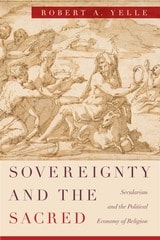
Sovereignty and the Sacred
Secularism and the Political Economy of ReligionRobert A. Yelle
University of Chicago Press, 2018
Developing this close analogy between two elemental domains of society, Sovereignty and the Sacred offers a new theory of religion while suggesting alternative ways of organizing our political and economic life. By rethinking the transcendent foundations and liberating potential of both religion and politics, Yelle points to more hopeful and ethical modes of collective life based on egalitarianism and popular sovereignty. Deliberately countering the narrowness of currently dominant economic, political, and legal theories, he demonstrates the potential of a revived history of religions to contribute to a rethinking of the foundations of our political and social order.
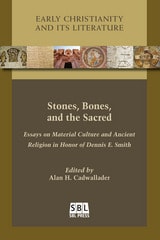
Stones, Bones, and the Sacred
Essays on Material Culture and Ancient Religion in Honor of Dennis E.Alan H. Cadwallader
SBL Press, 2016
A crucial text for any university course on the interaction of archaeology and the Bible
The world of early Christians was not a world lived in texts; it was a world saturated with material reality and concerns: what, where and when to eat or drink; how to present oneself in the space of bodily life and that of death; how to move from one place to another; what impacted status or the adjudication of legal charges. All these and more controlled so much of life in the ancient world. The Christians were not immune from the impact of these realities. Sometimes they absorbed their surrounds; sometimes they quite explicitly rejected the material practices bearing in on them; frequently they modified the practice and the rationale to create a significant Christian alternative. The collection of essays in this volume come from a range of international scholars who, for all their different interests and critical commitments, are yet united in treasuring research into the Greek and Roman worlds in which Christians sought to make their way. They offer these essays in honor of one who has made a lifetime's work in mining ancient material culture to extract nuggets of insight into early Christian dining practices: Dennis E. Smith.
Features
- Rich examples of method in the utilization of ancient material culture for biblical interpretation.
- Thirteen essays with a response from Dennis E. Smith
- Maps, diagrams, and plates
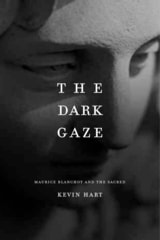
The Dark Gaze
Maurice Blanchot and the SacredKevin Hart
University of Chicago Press, 2004
The result is not a mere introduction to Blanchot but rather a profound reconsideration of how his work figures theologically in some of the major currents of twentieth-century thought. Hart reveals Blanchot to be a thinker devoted to the possibilities of a spiritual life; an atheist who knew both the Old and New Testaments, especially the Hebrew Bible; and a philosopher keenly interested in the relation between art and religion, the nature of mystical experience, the link between writing and the sacred, and the possibilities of leading an ethical life in the absence of God.
The Disturbing Profane
Hip Hop, Blackness, and the SacredJoseph R. Winters
Duke University Press, 2025
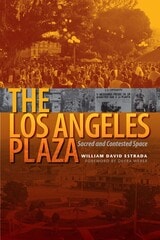
The Los Angeles Plaza
Sacred and Contested SpaceBy William David Estrada
University of Texas Press, 2008
2008 — Gold Award in Californiana – California Book Awards – Commonwealth Club of California
2010 — NACCS Book Award – National Association for Chicana and Chicano Studies
City plazas worldwide are centers of cultural expression and artistic display. They are settings for everyday urban life where daily interactions, economic exchanges, and informal conversations occur, thereby creating a socially meaningful place at the core of a city.
At the heart of historic Los Angeles, the Plaza represents a quintessential public space where real and imagined narratives overlap and provide as many questions as answers about the development of the city and what it means to be an Angeleno. The author, a social and cultural historian who specializes in nineteenth- and early twentieth-century Los Angeles, is well suited to explore the complex history and modern-day relevance of the Los Angeles Plaza. From its indigenous and colonial origins to the present day, Estrada explores the subject from an interdisciplinary and multiethnic perspective, delving into the pages of local newspapers, diaries and letters, and the personal memories of former and present Plaza residents, in order to examine the spatial and social dimensions of the Plaza over an extended period of time.
The author contributes to the growing historiography of Los Angeles by providing a groundbreaking analysis of the original core of the city that covers a long span of time, space, and social relations. He examines the impact of change on the lives of ordinary people in a specific place, and how this change reflects the larger story of the city.
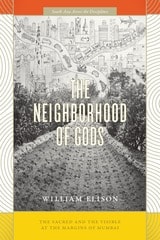
The Neighborhood of Gods
The Sacred and the Visible at the Margins of MumbaiWilliam Elison
University of Chicago Press, 2018
The Neighborhood of Gods explores this question, bringing an ethnographic lens to a range of visual and spatial practices: from the shrine construction that encroaches on downtown streets, to the “tribal art” practices of an indigenous group facing displacement, to the work of image production at two Bollywood film studios. A pioneering ethnography, this book offers a creative intervention in debates on postcolonial citizenship, urban geography, and visuality in the religions of India.
The Real and the Sacred
Picturing Jesus in Nineteenth-Century FictionJefferson J. A. Gatrall
University of Michigan Press, 2014
To Scorch or Freeze
Poems about the SacredDonald Davie
University of Chicago Press, 1988
"Few modern poets have managed to achieve Donald Davie's sense of human worth."—Times Higher Educational Supplement
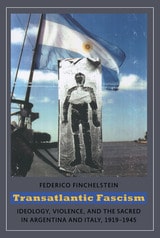
Transatlantic Fascism
Ideology, Violence, and the Sacred in Argentina and Italy, 1919-1945Federico Finchelstein
Duke University Press, 2010
As Finchelstein explains, nacionalismo, the right-wing ideology that developed in Argentina, was not the wholesale imitation of Italian fascism that Mussolini wished it to be. Argentine nacionalistas conflated Catholicism and fascism, making the bold claim that their movement had a central place in God’s designs for their country. Finchelstein explores the fraught efforts of nationalistas to develop a “sacred” ideological doctrine and political program, and he scrutinizes their debates about Nazism, the Spanish Civil War, imperialism, anti-Semitism, and anticommunism. Transatlantic Fascism shows how right-wing groups constructed a distinctive Argentine fascism by appropriating some elements of the Italian model and rejecting others. It reveals the specifically local ways that a global ideology such as fascism crossed national borders.
Transforming the Personal, Political, Historical and Sacred in Theory and Practice
Personal, Political, Historical, and SacredManfred Halpern
University of Scranton Press, 2009
Violence, the Sacred, and Things Hidden
A Discussion with René Girard at Esprit (1973)René Girard
Michigan State University Press, 2022
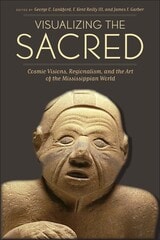
Visualizing the Sacred
Cosmic Visions, Regionalism, and the Art of the Mississippian WorldEdited by George E. Lankford, F. Kent Reilly III, and James F. Garber
University of Texas Press, 2011
The prehistoric native peoples of the Mississippi River Valley and other areas of the Eastern Woodlands of the United States shared a complex set of symbols and motifs that constituted one of the greatest artistic traditions of the pre-Columbian Americas. Traditionally known as the Southeastern Ceremonial Complex, these artifacts of copper, shell, stone, clay, and wood were the subject of the groundbreaking 2007 book Ancient Objects and Sacred Realms: Interpretations of Mississippian Iconography, which presented a major reconstruction of the rituals, cosmology, ideology, and political structures of the Mississippian peoples.
Visualizing the Sacred advances the study of Mississippian iconography by delving into the regional variations within what is now known as the Mississippian Iconographic Interaction Sphere (MIIS). Bringing archaeological, ethnographic, ethnohistoric, and iconographic perspectives to the analysis of Mississippian art, contributors from several disciplines discuss variations in symbols and motifs among major sites and regions across a wide span of time and also consider what visual symbols reveal about elite status in diverse political environments. These findings represent the first formal identification of style regions within the Mississippian Iconographic Interaction Sphere and call for a new understanding of the MIIS as a network of localized, yet interrelated religious systems that experienced both continuity and change over time.
What Color Is the Sacred?
Michael Taussig
University of Chicago Press, 2009
Over the past thirty years, visionary anthropologist Michael Taussig has crafted a highly distinctive body of work. Playful, enthralling, and whip-smart, his writing makes ingenious connections between ideas, thinkers, and things. An extended meditation on the mysteries of color and the fascination they provoke, What Color Is the Sacred? is the next step on Taussig’s remarkable intellectual path.
Following his interest in magic and surrealism, his earlier work on mimesis, and his recent discussion of heat, gold, and cocaine in My Cocaine Museum,this book uses color to explore further dimensions of what Taussig calls “the bodily unconscious” in an age of global warming. Drawing on classic ethnography as well as the work of Benjamin, Burroughs, and Proust, he takes up the notion that color invites the viewer into images and into the world. Yet, as Taussig makes clear, color has a history—a manifestly colonial history rooted in the West’s discomfort with color, especially bright color, and its associations with the so-called primitive. He begins by noting Goethe’s belief that Europeans are physically averse to vivid color while the uncivilized revel in it, which prompts Taussig to reconsider colonialism as a tension between chromophobes and chromophiliacs. And he ends with the strange story of coal, which, he argues, displaced colonial color by giving birth to synthetic colors, organic chemistry, and IG Farben, the giant chemical corporation behind the Third Reich.
Nietzsche once wrote, “So far, all that has given colour to existence still lacks a history.” With What Color Is the Sacred? Taussig has taken up that challenge with all the radiant intelligence and inspiration we’ve come to expect from him.