Results by title
24 books match the query 'Sciences'

Discourse on the Sciences and Arts (First Discourse) and Polemics
Jean-Jacques Rousseau
Dartmouth College Press, 1992
Eating the Enlightenment
Food and the Sciences in Paris, 1670-1760E. C. Spary
University of Chicago Press, 2012
Fireworks
Pyrotechnic Arts and Sciences in European HistorySimon Werrett
University of Chicago Press, 2010
Fireworks are synonymous with celebration in the twenty-first century. But pyrotechnics—in the form of rockets, crackers, wheels, and bombs—have exploded in sparks and noise to delight audiences in Europe ever since the Renaissance. Here, Simon Werrett shows that, far from being only a means of entertainment, fireworks helped foster advances in natural philosophy, chemistry, mathematics, and many other branches of the sciences.
Fireworks brings to vibrant life the many artful practices of pyrotechnicians, as well as the elegant compositions of the architects, poets, painters, and musicians they inspired. At the same time, it uncovers the dynamic relationships that developed between the many artists and scientists who produced pyrotechnics. In so doing, the book demonstrates the critical role that pyrotechnics played in the development of physics, astronomy, chemistry and physiology, meteorology, and electrical science. Richly illustrated and drawing on a wide range of new sources, Fireworks takes readers back to a world where pyrotechnics were both divine and magical and reveals for the first time their vital contribution to the modernization of European ideas.
From Natural Philosophy to the Sciences
Writing the History of Nineteenth-Century ScienceEdited by David Cahan
University of Chicago Press, 2003
In this book, eleven leading historians of science assess what their field has taught us about this exciting time and identify issues that remain unexamined or require reconsideration. They treat both scientific disciplines—biology, physics, chemistry, the earth sciences, mathematics, and the social sciences—in their specific intellectual and sociocultural contexts as well as the broader topics of science and medicine; science and religion; scientific institutions and communities; and science, technology, and industry.
Providing a much-needed overview and analysis of a rapidly expanding field, From Natural Philosophy to the Sciences will be essential for historians of science, but also of great interest to scholars of all aspects of nineteenth-century life and culture.
Contributors:
Bernadette Bensaude-Vincent, Jed Z. Buchwald, David Cahan, Joseph Dauben, Frederick Gregory, Michael Hagner, Sungook Hong, David R. Oldroyd, Theodore M. Porter, Robert J. Richards, Ulrich Wengenroth
Fundamentalisms and Society
Reclaiming the Sciences, the Family, and EducationEdited by Martin E. Marty and R. Scott Appleby
University of Chicago Press, 1993
Edited by Martin E. Marty and R. Scott Appleby
Around the world, fundamentalist movements are profoundly
affecting the way we live. Misinformation and misperception
about fundamentalism exacerbate conflicts at home and abroad.
Yet policymakers, journalists, students, and others have
lacked any comprehensive resource on the explosive phenomenon
of fundamentalism. Now the Fundamentalism Project has
assembled an international team of scholars for a multivolume
assessment of the history, scope, sources, character, and
impact of fundamentalist movements within the world's major
religious traditions.
Fundamentalisms and Society shows how fundamentalist
movements have influenced human relations, education, women's
rights, and scientific research in over a dozen nations and
within the traditions of Islam, Judaism, Christianity,
Buddhism, and Hinduism. Drawn from the fields of
anthropology, sociology, history of religion, and history of
science, the contributors cover topics such as the
educational structures of Hindu revivalism, women in
fundamentalist Iran and Pakistan, and the creationist cosmos
of Protestant fundamentalism. In a concluding essay, William
H. McNeill situates contemporary fundamentalisms within a
world historical context.
The Fundamentalism Project, Volume 2
Martin E. Marty and R. Scott Appleby direct the
Fundamentalism Project. Marty, the Fairfax M. Cone
Distinguished Service Professor of the History of Modern
Christianity at the University of Chicago, is the senior
editor of the Christian Century and the author of
numerous books, including the multivolume Modern American
Religion, also published by the University of
Chicago Press. Appleby, a research associate at the
University of Chicago, is the author of “Church and
Age Unite!” The Modernist Impulse in American
Catholicism.
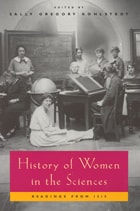
History of Women in the Sciences
Readings from IsisEdited by Sally Gregory Kohlstedt
University of Chicago Press, 2000
This book features some of the most influential and pioneering studies of women in the sciences, with a special focus on patterns of education, access, barriers, and opportunities for women's work in science. Spanning the 17th through the 20th centuries, the book demonstrates the meaning and power of gender experienced by women in the sciences.
Individual chapters focus on exceptional women whose unusual initiativee and particular circumstance led them to engage in science: Laura Bassi, Nettie Stevens, Maria Winkelmann, and others. Chapters on women's access to science discuss collaboration with family members in the domestic sphere, the impact of primers and popular science writing, and formal education in public schools and advanced research institutions. There are examinations of the reasons for clusters of women working in "female friendly" sciences such as botany and physiology in the 19th century and astronomy in the U.S. during the early 20th century.
This important and useful book provides a thoughtful and detailed overview for scholars and students in the history of science, as well as for feminist historians, scientists, and others who who want a comparative and historical analysis of women in the sciences.
Contributors include Janet Browne, Paula Findlen, Peggy Aldrich Kidwell, Ann Hibner Koblitz, M. Susan Lindee, Carolyn Merchant, Margaret W. Rossiter, Londa Schiebinger, Nancy Leys Stepan, and Deborah Jean Warner.
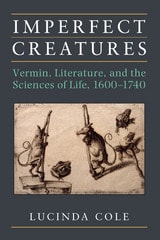
Imperfect Creatures
Vermin, Literature, and the Sciences of Life, 1600-1740Lucinda Cole
University of Michigan Press, 2016
As Cole illustrates, human health and demographic problems—notably those of feeding populations periodically stricken by hunger, disease, and famine—were tied to larger questions about food supplies, property laws, national identity, and the theological imperatives that underwrote humankind’s claim to dominion over the animal kingdom. In this context, Cole’s study indicates, so-called “vermin” occupied liminal spaces between subject and object, nature and animal, animal and the devil, the devil and disease—even reason and madness. This verminous discourse formed a foundational category used to carve out humankind’s relationship to an unpredictable, irrational natural world, but it evolved into a form for thinking about not merely animals but anything that threatened the health of the body politic—humans, animals, and even thoughts.

Life, War, Earth
Deleuze and the SciencesJohn Protevi
University of Minnesota Press, 2013
A deep exploration of the many possibilities inherent in linking Gilles Deleuze’s philosophy to contemporary science, John Protevi’s Life, War, Earth demonstrates how Deleuze’s ontology of the virtual, intensive, and actual can enhance our understanding of important issues in cognitive science, biology, and geography. Protevi illustrates how a Deleuzian approach can illuminate a wide range of concerns and subjects, including ancient and contemporary warfare, human individuation processes, the “granularity problem,” panpsychism, the E. coli bacterium, the assassination attempt on U.S. representative Gabrielle Giffords, and the affective dimensions of the Occupy movement.
Frequently ambitious but always rooted in the empirical, Life, War, Earth shows how the social and the somatic are not opposed to each other but are interwoven on three time scales—the evolutionary, the developmental, and the behavioral—and on three political scales—the geopolitical, the bio-neuro-political, and the technopolitical.
Deeply attuned to the internalities of the thought of Deleuze, the book offers a unique reading of his corpus and a useful method for applying Deleuzian techniques to the natural sciences, the social sciences, political phenomena, and contemporary events.
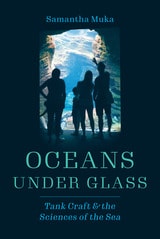
Oceans under Glass
Tank Craft and the Sciences of the SeaSamantha Muka
University of Chicago Press, 2023
Atlantic coral is rapidly disappearing in the wild. To save the species, they will have to be reproduced quickly in captivity, and so for the last decade conservationists have been at work trying to preserve their lingering numbers and figure out how to rebuild once-thriving coral reefs from a few survivors. Captive environments, built in dedicated aquariums, offer some hope for these corals. This book examines these specialized tanks, charting the development of tank craft throughout the twentieth century to better understand how aquarium modeling has enhanced our knowledge of the marine environment.
Aquariums are essential to the way we understand the ocean. Used to investigate an array of scientific questions, from animal behavior to cancer research and climate change, they are a crucial factor in the fight to mitigate the climate disaster already threatening our seas. To understand the historical development of this scientific tool and the groups that have contributed to our knowledge about the ocean, Samantha Muka takes up specialty systems—including photographic aquariums, kriesel tanks (for jellyfish), and hatching systems—to examine the creation of ocean simulations and their effect on our interactions with underwater life. Lively and engaging, Oceans under Glass offers a fresh history about how the aquarium has been used in modern marine biology and how integral it is to knowing the marine world.

Osiris, Volume 35
Food Matters: Critical Histories of Food and the SciencesEdited by E. C. Spary and Anya Zilberstein
University of Chicago Press Journals, 2020
The essays delve into a range of topics, from early modern dietetics and debates about cannibalism to modern ready-to-eat rations and Ayurvedic recipes, from analyses of hungry model organisms to the dining rituals of Silicon Valley entrepreneurs and their patrons. As Food Matters shows, the history of knowledge about food has always raised debates about the shifting definition and boundaries of expertise: between traditional recipes and experimental protocols; between domestic craft skill and laboratory procedure; between the management and redistribution of resources for the social body on the one hand, and the subjective experiences of individual bodies on the other. At a moment when the authority of science is being questioned by a variety of publics, Food Matters is a timely reminder that such tensions, always present in food-related domains, reflect broader historical developments through which science became a prevalent force in shaping all aspects of public and private life.
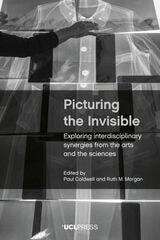
Picturing the Invisible
Exploring Interdisciplinary Synergies from the Arts and the SciencesEdited by Paul Coldwell and Ruth M. Morgan
University College London, 2022
Picturing the Invisible presents different disciplinary approaches to articulating the invisible, that which is not known or not provable. The challenge is how to articulate these concepts, not only to those within a particular academic field but beyond, to other disciplines and society at large. As our understanding of the complexity of the world grows incrementally, so does our realization that issues and problems can rarely be resolved within neat demarcations. Therefore, the authors argue, the importance of finding means of communicating across disciplines and fields must become a priority. This book brings together insights from leading academics from a wide range of disciplines, including art and design, curatorial practice, literature, forensic science, medical science, psychoanalysis and psychotherapy, philosophy, astrophysics, and architecture, who share an interest in exploring how in each discipline we strive to find expression for the invisible or unknown and to draw out and articulate some of the explicit and tacit ways of communicating those concepts that transcend traditional disciplinary boundaries.
Reading the Book of Nature
How Eight Best Sellers Reconnected Christianity and the Sciences on the Eve of the Victorian AgeJonathan R. Topham
University of Chicago Press, 2022
When Charles Darwin returned to Britain from the Beagle voyage in 1836, the most talked-about scientific books of the day were the Bridgewater Treatises. This series of eight works was funded by a bequest of the last Earl of Bridgewater and written by leading men of science appointed by the president of the Royal Society to explore "the Power, Wisdom, and Goodness of God, as manifested in the Creation." Securing public attention beyond all expectations, the series offered Darwin’s generation a range of approaches to one of the great questions of the age: how to incorporate the newly emerging disciplinary sciences into Britain’s overwhelmingly Christian culture.
Drawing on a wealth of archival and published sources, including many unexplored by historians, Jonathan R. Topham examines how and to what extent the series contributed to a sense of congruence between Christianity and the sciences in the generation before the fabled Victorian conflict between science and religion. Building on the distinctive insights of book history and paying close attention to the production, circulation, and use of the books, Topham offers new perspectives on early Victorian science and the subject of science and religion as a whole.

Ribbon of Darkness
Inferencing from the Shadowy Arts and SciencesBarbara Maria Stafford
University of Chicago Press, 2019
Stafford organizes these essays around three concepts that structure the book: inscrutability, ineffability, and intuitability. All three, she explains, allow us to examine how both the arts and the sciences imaginatively infer meaning from the “veiled behavior of matter,” bringing these historically divided subjects into a shared intellectual inquiry and imbuing them with an ethical urgency. A vanguard work at the intersection of the arts and sciences, this book will be sure to guide readers from either realm into unfamiliar yet undeniably fertile territory.
Sciences from Below
Feminisms, Postcolonialities, and ModernitiesSandra Harding
Duke University Press, 2008
Describing the work of the post-Kuhnian science studies scholars Bruno Latour, Ulrich Beck, and the team of Michael Gibbons, Helga Nowtony, and Peter Scott, Harding reveals how, from different perspectives, they provide useful resources for rethinking the modernity versus tradition binary and its effects on the production of scientific knowledge. Yet, for the most part, they do not take feminist or postcolonial critiques into account. As Harding demonstrates, feminist science studies and postcolonial science studies have vital contributions to make; they bring to light not only the male supremacist investments in the Western conception of modernity and the historical and epistemological bases of Western science but also the empirical knowledge traditions of the global South. Sciences from Below is a clear and compelling argument that modernity studies and post-Kuhnian, feminist, and postcolonial sciences studies each have something important, and necessary, to offer to those formulating socially progressive scientific research and policy.
Teaching and Mentoring Writers in the Sciences
An Evidence-Based ApproachBethann Garramon Merkle and Stephen B. Heard
University of Chicago Press, 2025
Every scientist eventually teaches scientific writing or mentors junior scientists as they develop their writing skills—only to discover that the task is both challenging and remarkably time-consuming. If you are in this position, Teaching and Mentoring Writers in the Sciences is the resource you need, offering approaches that will help you help writers develop their skills more effectively and with less time and effort.
Bethann Garramon Merkle and Stephen B. Heard, both experts in scientific communication, offer evidence-based advice that draws on their own extensive experience as well as on proven tactics from writing studies, science studies, and rhetoric and composition. Shorn of the unfamiliar and off-putting jargon that much pedagogy literature adopts, their advice is engaging and accessible to scientists. As you read, you’ll see where developing writers are coming from; how mastering scientific writing matters to the careers of students who do and don’t continue in academia; how writing occurs and is taught in both undergraduate and graduate curricula; how to find and harness teaching resources that help share the workload; how to teach writing to students who speak English as an additional language; and how to navigate the use (by yourself and by developing writers) of tools from pencils and dictionaries to AI writing assistants. If you teach or mentor scientific writers, this book will help you deliver what your students and mentees need most: clear, effective writing guidance.
The Concept of the Social in Uniting the Humanities and Social Sciences
Michael E. Brown
Temple University Press, 2015
In this book, Michael Brown provides original and critical analysis of the state of the social sciences and the humanities. He examines the different disciplines that address human affairs--from sociology, philosophy, political science, and anthropology to the humanities in general--to understand their common ground. He probes the ways in which we investigate the meaning of individuality in a society for which individuals are not the agents of the activities in which they participate, and he develops a critical method for studying the relations among activities, objects, and situations.
The Concept of the Social in Uniting the Humanities and Social Sciences restores the centrality of sociality to all disciplines that provide for and depend on the social dimension of human life. Ultimately, he establishes a theory of the unity of the human sciences that will surely make readers rethink the current state and future of theory in those fields for years to come.
The Idea of the Sciences in the French Enlightenment
A ReinterpretationG. Matthew Adkins
University of Delaware Press, 2014
Published by University of Delaware Press. Distributed worldwide by Rutgers University Press.

The Man Who Flattened the Earth
Maupertuis and the Sciences in the EnlightenmentMary Terrall
University of Chicago Press, 2002
Beginning his scientific career as a mathematician in Paris, Maupertuis entered the public eye with a much-discussed expedition to Lapland, which confirmed Newton's calculation that the earth was flattened at the poles. He also made significant, and often intentionally controversial, contributions to physics, life science, navigation, astronomy, and metaphysics. Called to Berlin by Frederick the Great, Maupertuis moved to Prussia to preside over the Academy of Sciences there. Equally at home in salons, cafés, scientific academies, and royal courts, Maupertuis used his social connections and his printed works to enhance a carefully constructed reputation as both a man of letters and a man of science. His social and institutional affiliations, in turn, affected how Maupertuis formulated his ideas, how he presented them to his contemporaries, and the reactions they provoked.
Terrall not only illuminates the life and work of a colorful and important Enlightenment figure, but also uses his story to delve into many wider issues, including the development of scientific institutions, the impact of print culture on science, and the interactions of science and government. Smart and highly readable, Maupertuis will appeal to anyone interested in eighteenth-century science and culture.
The Open Mind
Cold War Politics and the Sciences of Human NatureJamie Cohen-Cole
University of Chicago Press, 2013

The Sciences in Enlightened Europe
Edited by William Clark, Jan Golinski, and Simon Schaffer
University of Chicago Press, 1999
The contributors examine the production of new disciplines through work with instruments and techniques; consider how institutions of public taste and conversation helped provide a common frame for the study of human and nonhuman natures; and explore the regional operations of scientific culture at the geographical fringes of Europe.
Implicated in the rise of both fascism and liberal secularism, the moral and political values that shaped the Enlightenment remain controversial today. Through careful scrutiny of how these values influenced and were influenced by the concrete practices of its sciences, this book gives us an entirely new sense of the Enlightenment.
The Sciences of the Democracies
Jean-Paul Gagnon and Benjamin Abrams
University College London, 2025
The Sciences of the Democracies issues a direct challenge to one of the most influential advice books on democracy ever published—the (in)famous “Trilateral Report” written in 1975, better known as The Crisis of Democracy—on the occasion of its fiftieth anniversary. This collaborative project is ambitious, aiming not only to capture the great diversity of democratic practices and institutions but also to introduce a new theory of democracy altogether. The contributors propose a holistic approach to democracy that draws on five sources of knowledge: individual people, groups of people, non-textual media, texts, and non-humans. The outcome is both an innovative account of democratic history and a practical guide for future democracy scholars.
The Sciences of the Soul
The Early Modern Origins of PsychologyFernando Vidal
University of Chicago Press, 2011
Fernando Vidal’s trailblazing text on the origins of psychology traces the development of the discipline from its appearance in the late sixteenth century to its redefinition at the end of the seventeenth and its emergence as an institutionalized field in the eighteenth. Originally published in 2011, The Sciences of the Soul continues to be of wide importance in the history and philosophy of psychology, the history of the human sciences more generally, and in the social and intellectual history of eighteenth-century Europe.
Thinking with Sound
A New Program in the Sciences and Humanities around 1900Viktoria Tkaczyk
University of Chicago Press, 2023
When the outside world is silent, all sorts of sounds often come to mind: inner voices, snippets of past conversations, imaginary debates, beloved and unloved melodies. What should we make of such sonic companions? Thinking with Sound investigates a period when these and other newly perceived aural phenomena prompted a far-reaching debate. Through case studies from Paris, Vienna, and Berlin, Viktoria Tkaczyk shows that the identification of the auditory cortex in late nineteenth-century neuroanatomy affected numerous academic disciplines across the sciences and humanities. “Thinking with sound” allowed scholars and scientists to bridge the gaps between theoretical and practical knowledge, and between academia and the social, aesthetic, and industrial domains. As new recording technologies prompted new scientific questions, new auditory knowledge found application in industry and the broad aesthetic realm. Through these conjunctions, Thinking with Sound offers a deeper understanding of today’s second “acoustic turn” in science and scholarship.
What Are the Arts and Sciences?
A Guide for the CuriousEdited by Dan Rockmore
Dartmouth College Press, 2017