Results by title

20 books match the query 'Secrecy'
cover of Citizens of Scandal: Journalism, Secrecy, and the Politics of Reckoning in Mexico

Citizens of Scandal

Journalism, Secrecy, and the Politics of Reckoning in Mexico

Vanessa Freije

Duke University Press, 2020
In Citizens of Scandal, Vanessa Freije explores the causes and consequences of political scandals in Mexico from the 1960s through the 1980s. Tracing the process by which Mexico City reporters denounced official wrongdoing, she shows that by the 1980s political scandals were a common feature of the national media diet. News stories of state embezzlement, torture, police violence, and electoral fraud provided collective opportunities to voice dissent and offered an important, though unpredictable and inequitable, mechanism for political representation. The publicity of wrongdoing also disrupted top-down attempts by the ruling Partido Revolucionario Institucional to manage public discourse, exposing divisions within the party and forcing government officials to grapple with popular discontent. While critical reporters denounced corruption, they also withheld many secrets from public discussion, sometimes out of concern for their safety. Freije highlights the tensions—between free speech and censorship, representation and exclusion, and transparency and secrecy—that defined the Mexican public sphere in the late twentieth century.
[more]
cover of Conspiracy Theories: Secrecy and Power in American Culture

Conspiracy Theories

Secrecy and Power in American Culture

Mark Fenster

University of Minnesota Press, 2001
JFK, Karl Marx, the Pope, Aristotle Onassis, Queen Elizabeth II, Howard Hughes, Fox Mulder, Bill Clinton--all have been linked to vastly complicated global (or even galactic) intrigues. In this enlightening tour of conspiracy theories, Mark Fenster guides readers through this shadowy world and analyzes its complex role in American culture and politics. Fenster argues that conspiracy theories are a form of popular political interpretation and contends that understanding how they circulate through mass culture helps us better understand our society as a whole. To that end, he discusses Richard Hofstadter's The Paranoid Style in American Politics, the militia movement, The X-Files, popular Christian apocalyptic thought, and such artifacts of suspicion as The Turner Diaries, the Illuminatus! trilogy, and the novels of Richard Condon. Fenster analyzes the "conspiracy community" of radio shows, magazine and book publishers, Internet resources, and role-playing games that promote these theories. In this world, the very denial of a conspiracy's existence becomes proof that it exists, and the truth is always "out there." He believes conspiracy theory has become a thrill for a bored subculture, one characterized by its members' reinterpretation of "accepted" history, their deep cynicism about contemporary politics, and their longing for a utopian future. Fenster's progressive critique of conspiracy theories both recognizes the secrecy and inequities of power in contemporary politics and economics and works toward effective political engagement. Probing conspiracy theory's tendencies toward scapegoating, racism, and fascism, as well as Hofstadter's centrist acceptance of a postwar American "consensus," he advocates what conspiracy theory wants but cannot articulate: a more inclusive, engaging political culture. "Fenster, a lone writer (the literary equivalent of a lone gunman, perhaps), segues from the novels of Thomas Pynchon to the Clinton Death List. . . . Conspiracy Theories is a dangerous book. I suspect 'they' (and you know who I mean, of course) will take care of this lone writer any day now."--Bookforum "Fenster makes a powerful argument for regarding conspiracism as an integral product of the political system, reflecting inadequacies the establishment itself is blind to and expressing strong desires for the realization of frustrated ideals. Conspiracy Theories is a fascinating look at an important, little-studied topic. Informative and thought-provoking." --Philadelphia City Paper "Fenster culls the liveliest counterintelligences out there--the Michigan Militia, religious millennialists, Chris Carter, even Oliver Stone--and sets them up as the last idealists. They might be obsessive and maniacal, but they're after a transparent political system, where big business and the government can be held accountable. Their 'paranoid style,' according to Fenster, is just old-school populism refitted for the media age." --Voice Literary Supplement "Fenster makes a powerful argument for regarding conspiracism as an integral product of the political system, reflecting inadequacies the establishment itself is blind to and expressing strong desires for the realization of frustrated ideals. Conspiracy Theories is a fascinating look at an important, little-studied topic. Informative and thought-provoking." Philadelphia City Paper "Fenster's careful examination of conspiratorial beliefs as evidence by right-wing groups, by various media, and even by those who devise such theories as a form of ludic or satiric endeavor (like Robert Anton Wilson) is revealing. And his articulation of the set of political-rather than pathological-reasons for their behavior is salutary." --American Book Review "Fenster's extensive and impressive research provided a means of coming to terms with the radical disjunction between the interpretive framework which I used to understand events such as the one at Littleton, and a framework at odds with my own which was now confronting me on a daily basis." --Canadian Journal of Communication "In this lively and wide-ranging critique, Fenster argues that conspiracy theories are attempts to engage in a more inclusive political culture." --Religious Studies Review "Mark Fenster has provided a solid and illuminating study of the public's fascination with conspiracy theories and sets forth a stimulating correlation between the popularity of such theories and the social and political values of our society. This is a comprehensive and intriguing analysis of our often obsessive interest in conspiracy theories." --Gerald Posner, author of Killing the Dream : James Earl Ray and the Assassination of Martin Luther King, Jr. and Case Closed : Lee Harvey Oswald and the Assassination of JFK "I find the issue of conspiracy theory compelling and appreciate Fenster's fruitful approach to what has been mysteriously ignored by the academy." --Barbie Zelizer, author of Covering the Body: The Kennedy Assassination, the Media, and the Shaping of Collective Memory "Fenster shines a powerful light on the fantasies of secrecy that pervade American culture, illuminating both the way they originate and how they work. His analysis is theoretically acute, his criticism of previous scholarly studies is compelling, and he offers razor-sharp readings of an impressive array of movements, events, and cultural practices. He stands out, above all, for his ability to capture the power and appeal of conspiratorial understandings of politics even as he explains their fundamental political limitations. The only thing that can keep this book from having the impact it deserves is a vast, academic conspiracy." --Mark T. Reinhardt, Williams College Mark Fenster received his Ph.D. in communication from the University of Illinois and his law degree from Yale University. He currently lives in Denver.
[more]
cover of Conspiracy Theories: Secrecy and Power in American Culture

Conspiracy Theories

Secrecy and Power in American Culture

Mark Fenster

University of Minnesota Press, 2008

 JFK, Karl Marx, the Pope, Aristotle Onassis, Howard Hughes, Fox Mulder, Bill Clinton, both George Bushes—all have been linked to vastly complicated global (or even galactic) intrigues. Two years after Mark Fenster first published Conspiracy Theories, the attacks of 9/11 stirred the imaginations of a new generation of believers. Before the black box from United 93 had even been found, there were theories put forth from the implausible to the offensive and outrageous. 

In this new edition of the landmark work, and the first in-depth look at the conspiracy communities that formed to debunk the 9/11 Commission Report, Fenster shows that conspiracy theories play an important role in U.S. democracy. Examining how and why they circulate through mass culture, he contends, helps us better understand society as a whole. Ranging from The Da Vinci Codeto the intellectual history of Richard Hofstadter, he argues that dismissing conspiracy theories as pathological or marginal flattens contemporary politics and culture because they are—contrary to popular portrayal—an intense articulation of populism and, at their essence, are strident calls for a better, more transparent government. Fenster has demonstrated once again that the people who claim someone’s after us are, at least, worth hearing.

[more]
cover of Gender and Secrecy, Volume 30

Gender and Secrecy, Volume 30

Ann Marie Rasmussen

Duke University Press, 0
This special issue of the Journal of Medieval and Early Modern Studies examines the connections between secrecy, domesticity, subjectivity, and gender. The issue considers a variety of different sources and contexts, from gossip to the confessional, and from gynecological texts to court records. One article considers the trial and execution of a woman charged with "female sodomy," and another analyses the linguistic dyads that helped define gender roles and norms. Finding that ideas about secrecy and privacy are inextricably linked to notions of gender, the articles collected here tackle the intricacies surrounding social, intellectual, sexual, literary modes of inclusion and exclusion.
[more]
cover of Haunting the Korean Diaspora: Shame, Secrecy, and the Forgotten War

Haunting the Korean Diaspora

Shame, Secrecy, and the Forgotten War

Grace M. Cho

University of Minnesota Press, 2008

Since the Korean War—the forgotten war—more than a million Korean women have acted as sex workers for U.S. servicemen. More than 100,000 women married GIs and moved to the United States. Through intellectual vigor and personal recollection, Haunting the Korean Diaspora explores the repressed history of emotional and physical violence between the United States and Korea and the unexamined reverberations of sexual relationships between Korean women and American soldiers. 

Grace M. Cho exposes how Koreans in the United States have been profoundly affected by the forgotten war and uncovers the silences and secrets that still surround it, arguing that trauma memories have been passed unconsciously through a process psychoanalysts call “transgenerational haunting.” Tracing how such secrets have turned into “ghosts,” Cho investigates the mythic figure of the yanggongju, literally the “Western princess,” who provides sexual favors to American military personnel. She reveals how this figure haunts both the intimate realm of memory and public discourse, in which narratives of U.S. benevolence abroad and assimilation of immigrants at home go unchallenged. Memories of U.S. violence, Cho writes, threaten to undo these narratives—and so they have been rendered unspeakable.

At once political and deeply personal, Cho’s wide-ranging and innovative analysis of U.S. neocolonialism and militarism under contemporary globalization brings forth a new way of understanding—and remembering—the impact of the Korean War.

[more]
cover of History on the Run: Secrecy, Fugitivity, and Hmong Refugee Epistemologies

History on the Run

Secrecy, Fugitivity, and Hmong Refugee Epistemologies

Ma Vang

Duke University Press, 2021

During its secret war in Laos (1961–1975), the United States recruited proxy soldiers among the Hmong people. Following the war, many of these Hmong soldiers migrated to the United States with refugee status. In History on the Run Ma Vang examines the experiences of Hmong refugees in the United States to theorize refugee histories and secrecy, in particular those of the Hmong. Vang conceptualizes these histories as fugitive histories, as they move and are carried by people who move. Charting the incomplete archives of the war made secret through redacted US state documents, ethnography, film, and literature, Vang shows how Hmong refugees tell their stories in ways that exist separately from narratives of U.S. empire and that cannot be traditionally archived. In so doing, Vang outlines a methodology for writing histories that foreground refugee epistemologies despite systematic attempts to silence those histories.
[more]
cover of INVENTION OF SECRECY

INVENTION OF SECRECY

David Citino

The Ohio State University Press, 2001

In The Invention of Secrecy, his eleventh collection of poetry, David Citino searches near and far—in his native Ohio, illuminated suddenly by a cosmic messenger; in Italy and Egypt, ancient and new; in Tibet; even in prehistoric and preliterary times—seeking answers to the most human of questions: What did we reverence in the past? What are our present obsessions? What does it mean to read one another? Must we always speak in our parents’ voices?

The underlying concern of these poems is the very notion of secrecy, and in his explorations Citino investigates the lives, and credentials, of our saints—both secular and otherworldly. Ramses the Great, the prophet Hosea, the Roman emperor Vespasian, Caravaggio, the Wicked Witch of the West, Padre Pio, Mario Lanza, and Princess Diana are among the larger-than-life personages materializing on these pages. Continually in these poems, the past is read by light of the present and the present from perspectives of the past.

Accessible yet ambitious, and treating all of history as the concern of those living today, these poems seek to measure the span of our lives and the distance that separates one life from another.

[more]
cover of In Darkness and Secrecy: The Anthropology of Assault Sorcery and Witchcraft in Amazonia

In Darkness and Secrecy

The Anthropology of Assault Sorcery and Witchcraft in Amazonia

Neil L. Whitehead and Robin Wright, eds.

Duke University Press, 2004

In Darkness and Secrecy brings together ethnographic examinations of Amazonian assault sorcery, witchcraft, and injurious magic, or “dark shamanism.” Anthropological reflections on South American shamanism have tended to emphasize shamans’ healing powers and positive influence. This collection challenges that assumption by showing that dark shamans are, in many Amazonian cultures, quite different from shamanic healers and prophets. Assault sorcery, in particular, involves violence resulting in physical harm or even death. While highlighting the distinctiveness of such practices, In Darkness and Secrecy reveals them as no less relevant to the continuation of culture and society than curing and prophecy. The contributors suggest that the persistence of dark shamanism can be understood as a form of engagement with modernity.

These essays, by leading anthropologists of South American shamanism, consider assault sorcery as it is practiced in parts of Brazil, Guyana, Venezuela, and Peru. They analyze the social and political dynamics of witchcraft and sorcery and their relation to cosmology, mythology, ritual, and other forms of symbolic violence and aggression in each society studied. They also discuss the relations of witchcraft and sorcery to interethnic contact and the ways that shamanic power may be co-opted by the state. In Darkness and Secrecy includes reflections on the ethical and practical implications of ethnographic investigation of violent cultural practices.

Contributors. Dominique Buchillet, Carlos Fausto, Michael Heckenberger, Elsje Lagrou, E. Jean Langdon, George Mentore, Donald Pollock, Fernando Santos-Granero, Pamela J. Stewart, Andrew Strathern, Márnio Teixeira-Pinto, Silvia Vidal, Neil L. Whitehead, Johannes Wilbert, Robin Wright
[more]
cover of Modern Occult Rhetoric: Mass Media and the Drama of Secrecy in the Twentieth Century

Modern Occult Rhetoric

Mass Media and the Drama of Secrecy in the Twentieth Century

Joshua Gunn

University of Alabama Press, 2005

Uncovering how secrecy, symbolism, and hidden meanings shape modern culture and communication.

The occult has traditionally been understood as the study of secrets of the practice of mysticism or magic. This book broadens our understanding of the occult by treating it as a rhetorical phenomenon tied to language and symbols and more central to American culture than is commonly assumed.

Joshua Gunn approaches the occult as an idiom, examining the ways in which acts of textual criticism and interpretation are occultic in nature, as evident in practices as diverse as academic scholarship, Freemasonry, and television production. Gunn probes, for instance, the ways in which jargon employed by various social and professional groups creates barriers and fosters secrecy. From the theory wars of cultural studies to the Satanic Panic that swept the national mass media in the late 1980s and early 1990s, Gunn shows how the paradox of a hidden, buried, or secret meaning that cannot be expressed in language appears time and time again in Western culture.

These recurrent patterns, Gunn argues, arise from a generalized, popular anxiety about language and its limitations. Ultimately, Modern Occult Rhetoric demonstrates the indissoluble relationship between language, secrecy, and publicity, and the centrality of suspicion in our daily lives.
 

[more]
cover of Philosophy Between the Lines: The Lost History of Esoteric Writing

Philosophy Between the Lines

The Lost History of Esoteric Writing

Arthur M. Melzer

University of Chicago Press, 2014

Philosophical esotericism—the practice of communicating one’s unorthodox thoughts “between the lines”—was a common practice until the end of the eighteenth century. The famous Encyclopédie of Diderot, for instance, not only discusses this practice in over twenty different articles, but admits to employing it itself. The history of Western thought contains hundreds of such statements by major philosophers testifying to the use of esoteric writing in their own work or others’. Despite this long and well-documented history, however, esotericism is often dismissed today as a rare occurrence. But by ignoring esotericism, we risk cutting ourselves off from a full understanding of Western philosophical thought.
           
Arthur M. Melzer serves as our deeply knowledgeable guide in this capacious and engaging history of philosophical esotericism. Walking readers through both an ancient (Plato) and a modern (Machiavelli) esoteric work, he explains what esotericism is—and is not. It relies not on secret codes, but simply on a more intensive use of familiar rhetorical techniques like metaphor, irony, and insinuation. Melzer explores the various motives that led thinkers in different times and places to engage in this strange practice, while also exploring the motives that lead more recent thinkers not only to dislike and avoid this practice but to deny its very existence. In the book’s final section, “A Beginner’s Guide to Esoteric Reading,” Melzer turns to how we might once again cultivate the long-forgotten art of reading esoteric works.

Philosophy Between the Lines is the first comprehensive, book-length study of the history and theoretical basis of philosophical esotericism, and it provides a crucial guide to how many major writings—philosophical, but also theological, political, and literary—were composed prior to the nineteenth century.
[more]
cover of Secrecy and Cultural Reality: Utopian Ideologies of the New Guinea Men's House

Secrecy and Cultural Reality

Utopian Ideologies of the New Guinea Men's House

Gilbert Herdt

University of Michigan Press, 2003
Gilbert Herdt is Director of the Program in Human Sexuality Studies at San Francisco State University, where he is also Professor of Human Sexuality Studies and Anthropology.
[more]
cover of Secrecy and Insurgency: Socialities and Knowledge Practices in Guatemala

Secrecy and Insurgency

Socialities and Knowledge Practices in Guatemala

Silvia Posocco

University of Alabama Press, 2014

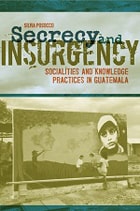
Secrecy and Insurgency deals with the experiences of guerrilla combatants of the Fuerzas Armadas Rebeldes (Rebel Armed Forces) in the aftermath of the peace accords signed in December 1996 between the Guatemalan government and guerrilla insurgents.

Drawing on a broad field of contemporary theory, Silvia Posocco’s Secrecy and Insurgency presents a vivid ethnographic account of secrecy as both sociality and a set of knowledge practices. Informed by multi-sited anthropological fieldwork among displaced communities with experiences of militancy in the guerrilla organization Fuerzas Armadas Rebeldes, the book traces the contours of dispersed and intermittent guerrilla social relations, unraveling the gendered dimensions of guerrilla socialities and subjectivities in a local context marked by violence and rapid social change.

The chapters chart shifting regimes of governance in the northern departamento of Petén; the inception of violence and insurgency; guerrilla practices of naming and secret relations; moral orders based on sameness and sharing; and forms of relatedness, embodiment, and subjectivity among the combatants. The volume develops new critical idioms for grappling with partiality, perspective, and incompleteness in ethnography and contributes to new thinking on the anthropology of Guatemala.

Secrecy and Insurgency will be of interest to social and cultural anthropologists, human geographers, and scholars in Latin American studies, human rights, women’s studies, and gender studies.
[more]
cover of Secrecy, Magic, and the One-Act Plays of Harlem Renaissance Women Writers

Secrecy, Magic, and the One-Act Plays of Harlem Renaissance Women Writers

Taylor Hagood

The Ohio State University Press, 2010

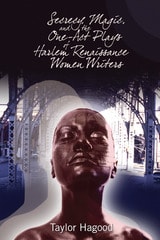
Secrecy, Magic, and the One-Act Plays of Harlem Renaissance Women Writers seeks to rescue the plays of eight black women, Marita Bonner, Mary P. Burrill, Thelma Duncan, Shirley   Graham, Zora Neale Hurston, Georgia Douglas Johnson, May Miller, and Eulalie Spence, from obscurity. This volume is the first book-length treatment to address these plays and their authors exclusively rather than as part of a discussion of other African American playwrights from different eras. It is also one of the few to carry out an extensive discussion of secrecy’s role in both literary representation and social interaction.
 
Exploring secrecy from the standpoints of poststructuralist language theory and game theory as well as dramatic performance, Taylor Hagood argues that the secret—a thing visible for its very invisibility—is a fundamental cog in the machinery of society, employed as a tool for both oppression and subversion. The many facets of secrecy have been particularly salient in African American culture, informing everything from the Underground Railroad to the subtle coding of Signifying. Most devastatingly, people on both sides of the color line are caught within a web of secrecy that is the result of centuries of distrust, doubt, and fear, a fact that is powerfully manifest not only in these one-act plays but in the reader’s/spectator’s interactions with them.
 
[more]
cover of Secrecy: Silence, Power, and Religion

Secrecy

Silence, Power, and Religion

Hugh B. Urban

University of Chicago Press, 2021

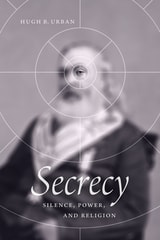
The powers of political secrecy and social spectacle have been taken to surreal extremes recently. Witness the twin terrors of a president who refuses to disclose dealings with foreign powers while the private data of ordinary citizens is stolen and marketed in order to manipulate consumer preferences and voting outcomes. We have become accustomed to thinking about secrecy in political terms and personal privacy terms. In this bracing, new work, Hugh Urban wants us to focus these same powers of observation on the role of secrecy in religion.

With Secrecy, Urban investigates several revealing instances of the power of secrecy in religion, including nineteenth-century Scottish Rite Freemasonry, the sexual magic of a Russian-born Parisian mystic; the white supremacist BrüderSchweigen or “Silent Brotherhood” movement of the 1980s, the Five Percenters, and the Church of Scientology. An electrifying read, Secrecy is the culmination of decades of Urban’s reflections on a vexed, ever-present subject.

 
[more]
cover of Secret Spaces of Childhood

Secret Spaces of Childhood

Elizabeth Goodenough, Editor

University of Michigan Press, 2003
Whether it's real or imaginary, every child has a secret space, and this remarkable book explores them all. For some it's a treehouse or a hidden spot beneath a bush; for others it's a private psychic refuge--a favorite book, or a dollhouse that becomes a stage for a young imagination. As the more than four dozen pieces collected here reveal, such spaces play a key role in a child's development and retain a symbolic power that resonates throughout our adult lives. No reader will put this book down without experiencing a rush of familiar memories and new insights into that bygone world.
Poet Diane Ackerman evokes that "parallel universe behind the eyes / which no one shared, or dare discover"; Paul Brodeur recalls the "fort" where he and his brother defended Cape Cod against invaders in World War II; Nobelist Wole Soyinka offers a poignant verse portrait of Africa's lost children; and Paul West remembers youthful encounters with his eccentric neighbors Edith and Osbert Sitwell. Elsewhere, Robert Coles summons up memories of his first years as a doctor and a wise young patient who taught him a lesson he has never forgotten, and Mary Galbraith shows how childhood loss is transformed into art in Ludwig Bemelmans's classic Madeline. And these are just a few of the gems in a treasury that includes Anne Frank, the controversial photographs of Sally Mann and the crudely eloquent drawings of young South African refugees, clinical case studies and profoundly personal imagery.
A perceptive, thought-provoking work for general readers, Secret Spaces of Childhood opens a wonderful window on the world of the young.
Elizabeth Goodenough is Lecturer in Comparative Literature, the Residential College, University of Michigan.
[more]
cover of Six Days in Marapore: A Novel

Six Days in Marapore

A Novel

Paul Scott

University of Chicago Press, 1953

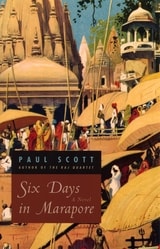
A moving novel of the last days of British imperial rule in India

In this swiftly paced and lyrical novel about British expatriates at the time of Indian independence, Paul Scott grapples with the themes of race, possession, and history that dominate all four novels of his masterpiece, The Raj Quartet, especially The Jewel in the Crown. As always, Scott fills his book with vivid characters: the seductive, bigoted war widow; the sophisticated, wily Hindu politician; and the athletic young American who only gradually begins to understand the legacy of pain and hatred veiling the woman he has come to rescue. Set against the backdrop of a nation in violent transition—a climate of exhilaration and shifting loyalties—Six Days in Marapore unfolds amidst the possibility of reconciliation, freedom, and healing.
 
[more]
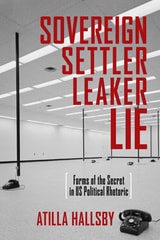
cover of Sovereign, Settler, Leaker, Lie: Forms of the Secret in US Political Rhetoric

Sovereign, Settler, Leaker, Lie

Forms of the Secret in US Political Rhetoric

Atilla Hallsby

The Ohio State University Press, 2026

In Sovereign, Settler, Leaker, Lie, Atilla Hallsby argues that secrets play a pivotal role in organizing political discourse in the United States. Hallsby takes up contemporary case studies—ranging from the Valerie Plame scandal during the George W. Bush presidency, to the use of Saul Alinsky’s name as a partisan codeword for politicizing Obama’s Blackness, to Chelsea Manning’s public naming and outing—to show how dramatic revelations increasingly fail to produce meaningful change and instead reproduce entrenched racial, gendered, and colonial hierarchies.

The core feature of these interlinked moments of crisis is the secret: a rhetorical patterning of political life organized by specific forms, each one lending a familiar shape to the shadows of American empire. These forms, theorized here as tropes, connect decades of secrets, linking the George W. Bush administration’s War on Terror to the Trump-era reemergence of “deep state” conspiracy theories. As an extension of secrecy and surveillance studies, and with the aim of attaining a more accountable and just form of US governmentality, Sovereign, Settler, Leaker, Lie explains how still-unfolding political realities in the United States emerged, transformed, and regenerate.
[more]
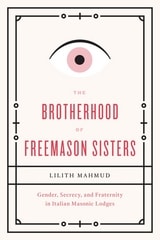
cover of The Brotherhood of Freemason Sisters: Gender, Secrecy, and Fraternity in Italian Masonic Lodges

The Brotherhood of Freemason Sisters

Gender, Secrecy, and Fraternity in Italian Masonic Lodges

Lilith Mahmud

University of Chicago Press, 2014

From its traces in cryptic images on the dollar bill to Dan Brown’s The Lost Symbol, Freemasonry has long been one of the most romanticized secret societies in the world. But a simple fact escapes most depictions of this elite brotherhood: There are women Freemasons, too. In this groundbreaking ethnography, Lilith Mahmud takes readers inside Masonic lodges in contemporary Italy, where she observes the many ritualistic and fraternal bonds forged among women initiates of this elite and esoteric society.

Offering a tantalizing look behind lodge doors, The Brotherhood of Freemason Sisters unveils a complex culture of discretion in which Freemasons simultaneously reveal some truths and hide others. Women—one of Freemasonry’s best-kept secrets—are often upper class and highly educated but paradoxically antifeminist, and their self-cultivation through the Masonic path is an effort to embrace the deeply gendered ideals of fraternity. Mahmud unravels this contradiction at the heart of Freemasonry: how it was at once responsible for many of the egalitarian concepts of the Enlightenment and yet has always been, and in Italy still remains, extremely exclusive.  The result is not only a thrilling look at an unfamiliar—and surprisingly influential—world, but a reevaluation altogether of the modern values and ideals that we now take for granted.

[more]
cover of The Family Jewels: The CIA, Secrecy, and Presidential Power

The Family Jewels

The CIA, Secrecy, and Presidential Power

By John Prados

University of Texas Press, 2014

In December 1974, a front-page story in the New York Times revealed the explosive details of illegal domestic spying by the Central Intelligence Agency. This included political surveillance, eavesdropping, detention, and interrogation. The revelation of illegal activities over many years shocked the American public and led to investigations of the CIA by a presidential commission and committees in both houses of Congress, which found evidence of more abuse, even CIA plans for assassinations. Investigators and the public soon discovered that the CIA abuses were described in a top-secret document agency insiders dubbed the “Family Jewels.” That document became ground zero for a political firestorm that lasted more than a year. The “Family Jewels” debacle ultimately brought about greater congressional oversight of the CIA, but excesses such as those uncovered in the 1970s continue to come to light.

The Family Jewels probes the deepest secrets of the CIA and its attempts to avoid scrutiny. John Prados recounts the secret operations that constituted “Jewels” and investigators’ pursuit of the truth, plus the strenuous efforts—by the agency, the executive branch, and even presidents—to evade accountability. Prados reveals how Vice President Richard Cheney played a leading role in intelligence abuses and demonstrates that every type of “Jewel” has been replicated since, especially during the post-9/11 war on terror. The Family Jewels masterfully illuminates why these abuses are endemic to spying, shows that proper relationships are vital to control of intelligence, and advocates a system for handling “Family Jewels” crises in a democratic society.

With a new epilogue that discusses former CIA employee Edward Snowden’s revelation of massive covert surveillance by the NSA, this powerful accounting of intelligence abuses committed by the CIA from the Cold War through the war on terror reveals why such abuses and attempts to conceal them are endemic to spying and proposes how a democratic nation can rein in its spymasters.
[more]
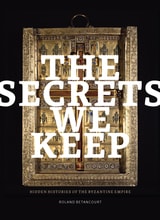
cover of The Secrets We Keep: Hidden Histories of the Byzantine Empire

The Secrets We Keep

Hidden Histories of the Byzantine Empire

Roland Betancourt

J. Paul Getty Trust, The, 2024

An intriguing look at secrecy during the Byzantine Empire and the role of the art historian in seeking truth.

Secrecy has played a role throughout human history and continues to capture the popular imagination. Some of the most seductive aspects of the Byzantine Empire—such as the relics of the imperial palace and the military uses of Greek fire—have been shrouded in mystery for centuries. This book provides a brief history of secrecy in Byzantium and examines the role of the art historian in uncovering the truth, demonstrating how visual evidence can not only reveal new findings but also purposely conceal answers.

Art historians face many challenges in their search for hidden knowledge, including accessing accounts preserved in fragmentary glimpses and reconciling how practices of speculation and reconstruction result in different, and sometimes contradictory, understandings. With pressing urgency, this book asks scholars to consider their role in articulating the stories of marginalized people, particularly for queer and trans history.

At the core of these investigations is the quest to discover how clandestine knowledge was transmitted and how relationships were strengthened by collective secret keeping, as well as how concealment is used as a strategy for exercising power. With insights into the religious, imperial, military, and cultural uses of secrecy, this book offers an intriguing look at the ways secrecy manifested itself during the Byzantine Empire and the implications it has for the issues we face today.
[more]