Results by title
11 books match the query 'Selected Stories'
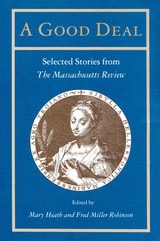
A Good Deal
Selected Stories from "The Massachusetts Review"Mary Heath
University of Massachusetts Press, 1988
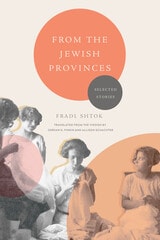
From the Jewish Provinces
Selected StoriesFradl Shtok; Translated from the Yiddish by Jordan D. Finkin and Allison Schachter
Northwestern University Press, 2022
From the Jewish Provinces showcases a brilliant and nearly forgotten voice in Yiddish letters. An insistently original writer whose abrupt departure from the literary scene is the stuff of legend, Fradl Shtok composed stories that describe the travails of young women looking for love and desire in a world that spurns them. These women struggle with disability, sexual violence, and unwanted marriage, striving to imagine themselves as artists or losing themselves in fantasy worlds. The men around them grapple with their own frustrations and failures to live up to stifling social expectations. Through deft portraits of her characters’ inner worlds Shtok grants us access to unnoticed corners of the Jewish imagination.
Set alternately in the Austro‑Hungarian borderlands and in New York City, Shtok’s stories interpret the provincial worlds of the Galician shtetl and the Lower East Side with literary sophistication, experimenting with narrative techniques that make her stories expertly alive to women’s aesthetic experiences.
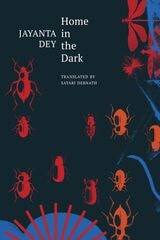
Home in the Dark
Selected StoriesJayanta Dey
Seagull Books, 2025
Home in the Dark peels back the polished surface of middle-class life to expose the shadows lurking underneath: violence, betrayal, and the unsettling truths we refuse to see. In these fifteen gripping stories, Jayanta Dey weaves a world where desperation takes strange forms: a woman on the brink of suicide finds an unlikely savior in a rat, a stolen clock carries the weight of communal hatred, and a writer–publisher duo rides the highs of literary success—until their lucrative business in pornography turns against them.
Set in Calcutta and its suburbs, these tales decipher the moral and psychological conflicts simmering beneath genteel facades, where people will do anything to survive. With elements of the macabre and the psychological, Home in the Dark delivers sharp twists that unsettle as much as they illuminate. Translated from Bengali by Sayari Debnath, this collection brings a new and daring voice to readers, offering a rare glimpse into the dark undercurrents of contemporary urban life in India.
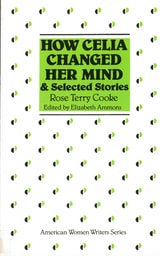
How Celia Changed Her Mind and Selected Stories
Rose Terry CookeAmmons, Elizabeth
Rutgers University Press, 1986
Cooke's stories are rich literarily and historically; her command of dialect, ear for dialogue, dramatic sense, and ability to draw interesting, memorable characters all distinguish her work. This reissue of some of her best work represents an important contribution to the canon of American literature.
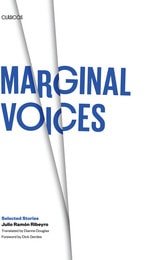
Marginal Voices
Selected StoriesBy Julio Ramón Ribeyro
University of Texas Press, 1993
Julio Ramón Ribeyro has been widely acclaimed Peru's master storyteller. Until now, however, few of his stories have been translated into English. This volume brings together fifteen stories written during the period 1952-1975, which were collected in the three volumes of La palabra del mudo.
Ribeyro's stories treat the social problems brought about by urban expansion, including poverty, racial and sexual discrimination, class struggles, alienation, and violence. At the same time, elements of the fantastic playfully interrupt some of the stories. As Ribeyro's characters become swept up in circumstances beyond their understanding, we see that the only freedom or dignity left them comes from their own imaginations.
The fifteen stories included here are "Terra Incognita," "Barbara," "The Featherless Buzzards," "Of Modest Color," "The Substitute Teacher," "The Insignia," "The Banquet," "Alienation (An Instructive Story with a Footnote)," "The Little Laid Cow," "The Jacaranda Trees," "Bottles and Men," "Nothing to Do, Monsieur Baruch," "The Captives," "The Spanish," and "Painted Papers."
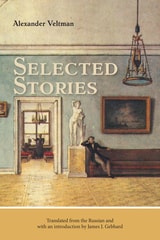
Selected Stories
A. F. Veltman
Northwestern University Press, 2026
In 1830s and ’40s Russia, A. F. Veltman’s eccentric writings were a fixture on the bookshelves of the reading public. In his era, his work influenced writers including Pushkin, Gogol, and Dostoevsky. The five stories collected here, united by themes of social satire, display Veltman’s characteristic pivots between the tragic, comic, and grotesque.
“Erotida” riffs on the genre of the society tale with linguistic puns and a bizarre plot resolution. In “Roland the Furious,” provincial officials mistake a traveler for a high-ranking government functionary. “Travel Impressions, and, among Other Things, a Pot of Geraniums” plays on the travelogue genre and includes what may be the first description in Russian literature of journey by railroad. “A Traveler from the Provinces; or, A Commotion in the Capital” parodies the Moscow literary salons of Veltman’s day. Finally, “It’s Not a House, but a Plaything!” toys with yet another storytelling convention of the time—the Russian folkloric tradition of “house spirits.”
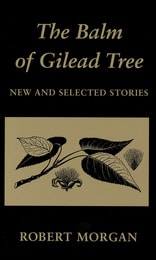
The Balm of Gilead Tree
New and Selected StoriesRobert Morgan
Ohio University Press, 1999
Published in 1999 by Gnomon Press
In The Balm of Gilead Tree, acclaimed author and poet Robert Morgan presents a masterful collection of seventeen short stories—ten new and seven selected from earlier volumes—that illuminate the lives of working-class people in the American South, particularly in the Appalachian region. With lyrical precision and deep empathy, Morgan explores themes of hardship, resilience, and transformation across generations.
From the haunting historical imagination of “The Tracks of Chief de Soto” to the visceral immediacy of “The Ratchet,” where a truck driver faces a terrifying descent with failed brakes, Morgan’s stories are rich in sensory detail and emotional depth. Characters grapple with environmental peril, economic uncertainty, and the quiet dramas of rural life, all rendered with Morgan’s signature clarity and reverence for the natural world.
This collection affirms Morgan’s place as a vital voice in Southern literature, offering readers both the balm of storytelling and the grit of lived experience.
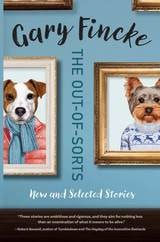
The Out-of-Sorts
New and Selected StoriesGary Fincke
West Virginia University Press, 2017
These stories are often set against large, significant events like the Cold War, Vietnam, and the Kent State shootings, but are always uniquely local. A mother fends off the police by brandishing copperhead snakes. A woman cares for the dog of an alleged double murderer. A husband who has lost his job works at trying to save his wife from a debilitating phobia.
This extensive collection by Gary Fincke, an accomplished poet and writer of fiction, gives rise to ordinary people living lives made fascinating by attention to the particulars of voice, place, and character. With precise language, surprising imagery, and sharp, evocative dialogue, these stories deepen beyond the oddities of their characters, who are scarred and defeated by circumstance and choice, but also attain moments of grace, compassion, and generosity of the spirit.

The Selected Stories of Ann Scott-Moncrief
Ann Scott-Moncrief
Catholic University of America Press, 2026
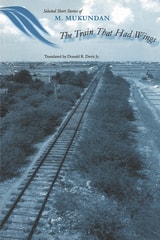
The Train That Had Wings
Selected Stories of M. MukundanM. Mukundan; Translated from the Malayalam by Donald R. Davis Jr.
University of Michigan Press, 2005
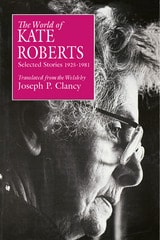
The World of Kate Roberts
Selected Stories, 1925-1981Joseph Clancy
Temple University Press, 1991