Results by title
12 books match the query 'Senate'
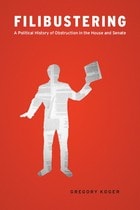
Filibustering
A Political History of Obstruction in the House and SenateGregory Koger
University of Chicago Press, 2010
In the modern Congress, one of the highest hurdles for major bills or nominations is gaining the sixty votes necessary to shut off a filibuster in the Senate. But this wasn’t always the case. Both citizens and scholars tend to think of the legislative process as a game played by the rules in which votes are the critical commodity—the side that has the most votes wins. In this comprehensive volume,Gregory Koger shows, on the contrary, that filibustering is a game with slippery rules in which legislators who think fast and try hard can triumph over superior numbers.
Filibustering explains how and why obstruction has been institutionalized in the U.S. Senate over the last fifty years, and how this transformation affects politics and policymaking. Koger also traces the lively history of filibustering in the U.S. House during the nineteenth century and measures the effects of filibustering—bills killed, compromises struck, and new issues raised by obstruction. Unparalleled in the depth of its theory and its combination of historical and political analysis, Filibustering will be the definitive study of its subject for years to come.
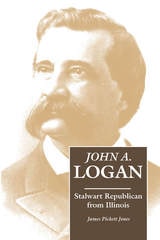
John A. Logan
Stalwart Republican from IllinoisJames Pickett Jones
Southern Illinois University Press, 2001
Not available.
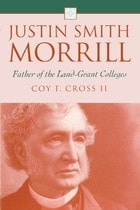
Justin Smith Morrill
Father of the Land-Grant CollegesCoy F. Cross II
Michigan State University Press, 1999
Smith Morrill: Almost every land-grant college or university in the United States has a building named for him; but are his contributions truly recognized and understood? Here is the first biography on this renowned statesman in six decades. Representative and then senator from Vermont, Morrill began his tenure in Congress in 1855 and served continuously for forty-three years. His thirty- one years in the upper chamber alone earned him the title "Father of the Senate." Coy F. Cross reveals a complex and influential political figure who, as chair of the House Ways and Means Committee, and then the Senate Finance Committee, influenced American economic policy for nearly fifty years.
Morrill's most-recognized achievements are the pieces of legislation that bear his name: the Morrill land-grant college acts of 1862 and 1890. His legacy, inspired by the Jeffersonian ideal of an educated electorate, revolutionized American higher education. Prior to this legislation, colleges and universities were open primarily to affluent white men and studies were limited largely to medicine, theology, and philosophy. Morrill's land-grant acts eventually opened American higher education to the working class, women, minorities, and immigrants. Since 1862, more than 20 million people have graduated from the 104 land-grant colleges and universities spawned by his grand vision. In this long-overdue study, Cross shows the "Father of Land-Grant Colleges" to be one of America's formative nineteenth- century political figures.
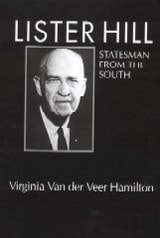
Lister Hill
Statesman from the SouthVirginia Van der Veer Hamilton
University of Alabama Press, 2004
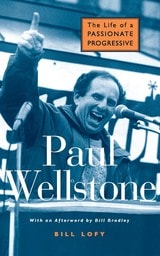
Paul Wellstone
The Life of a Passionate ProgressiveBill Lofy
University of Michigan Press, 2005
---Arianna Huffington, columnist and editor of HuffingtonPost.com
"This book captures the vibrant spirit of my friend Paul Wellstone---the fierce commitment to justice that defined his life, and that shapes his enduring legacy."
---U.S. Senator Russ Feingold
"Paul Wellstone was a great leader because he fused progressive idealism with a stubbornly pragmatic politics. Bill Lofy's book captures that dual commitment in his story of Wellstone's life, and also shows us the extraordinary human appeal that Wellstone emanated in his relationships with people in all walks of life. This book is an engaging read that also tells us a lot about the political practice to which we should aspire."
---Frances Fox Piven, author of The War at Home
"This vividly written book captures the life and personal qualities of the late Senator Paul Wellstone. In so doing it provides an illuminating gloss on Max Weber's seminal exposition of the political vocation. It is a jewel of a book."
-Fred Greenstein, Princeton University
Bill Lofy's fast-paced and readable biography tells the inspirational story of one of the most compelling figures in the history of American politics---Senator Paul Wellstone.
Yet Lofy's book is more than just the chronicle of Wellstone's life and political career; it's also an indispensable guide to what ails political life today. Readers politically inclined or not will find in its pages a handbook to the uncertain and often treacherous business of politics and a stirring example for living a courageous and honest life---whether as public servant or private individual.
Philip Hart
the conscience of the SenateMichael O'Brien
Michigan State University Press, 1995
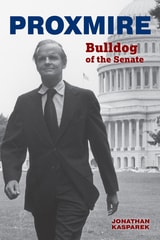
Proxmire
Bulldog of the SenateJonathan Kasparek
Wisconsin Historical Society Press, 2019
Senate and Treaties, 1789-1817
The Development of the Treaty-Making Functions of the United States Senate During Their Formative PeriodRalston Hayden, Ph.D.
University of Michigan Press, 1920
Sizing Up the Senate
The Unequal Consequences of Equal RepresentationFrances E. Lee and Bruce I. Oppenheimer
University of Chicago Press, 1999
But does it matter that California's 32 million people have the same number of Senate votes as Wyoming's 480,000? Frances Lee and Bruce Oppenheimer systematically show that the Senate's unique apportionment scheme profoundly shapes legislation and representation. The size of a state's population affects the senator-constituent relationship, fund-raising and elections, strategic behavior within the Senate, and, ultimately, policy decisions. They also show that less populous states consistently receive more federal funding than states with more people. In sum, Lee and Oppenheimer reveal that Senate apportionment leaves no aspect of the institution untouched.
This groundbreaking book raises new questions about one of the key institutions of American government and will interest anyone concerned with issues of representation.

The House and Senate in the 1790s
Petitioning, Lobbying, and Institutional DevelopmentKenneth R. Bowling
Ohio University Press, 2002
Amid the turbulent swirl of foreign intrigue, external and internal threats to the young nation’s existence, and the domestic partisan wrangling of the 1790s, the United States Congress solidified its role as the national legislature. The ten essays in The House and Senate in the 1790s demonstrate the mechanisms by which this bicameral legislature developed its institutional identity. The first essay sets the scene for the institutional development of Congress by examining its constitutional origins and the efforts of the Founders to empower the new national legislature. The five following essays focus on two related mechanisms—petitioning and lobbying—by which citizens and private interests communicated with national lawmakers.
Although scholars tend to see lobbying as a later nineteenth-century development, the papers presented here clearly demonstrate the existence of lobbyists and lobbying in the 1790s. The final four papers examine other aspects of the institutional development of the House and the Senate, including the evolution of political parties and congressional leadership.
The essays in this collection, the third volume in the series Perspectives on the History of Congress, 1789-1801, originated in a series of conferences held by the United States Capitol Historical Society from 1994 to 2001.
The Politics of Fear
Joseph R. McCarthy and the SenateRobert Griffith
University of Massachusetts Press, 1970
Winner of the Organization of American Historians’ Frederick Jackson Turner Award
Originally published in 1970, and now a classic in its field, The Politics of Fear traces the rise and fall of one of America’s most notorious political demagogues. Robert Griffith concludes that McCarthy’s enormous power owed less to the force of the senator’s unique personality than to the issues and symbols with which he identified and that McCarthy was the product, not the progenitor, of the postwar politics of anticommunism. For this edition, Griffith has provided a new introduction covering the recent literature on McCarthyism and the changing views on the topic.
Why Not Parties?
Party Effects in the United States SenateEdited by Nathan W. Monroe, Jason M. Roberts, and David W. Rohde
University of Chicago Press, 2008