Results by title
22 books match the query 'Settlement'

Communal Solidarity
Immigration, Settlement, and Social Welfare in Winnipeg's Jewish Community, 1882–1930Arthur Ross
University of Manitoba Press, 2019

Finns in the United States
A History of Settlement, Dissent, and IntegrationAuvo Kostiainen
Michigan State University Press, 2014
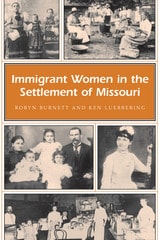
Immigrant Women in the Settlement of Missouri
Robyn Burnett & Ken Luebbering
University of Missouri Press, 2005
Because it examines the lives of women from many social classes and ethnic backgrounds, Immigrant Women in the Settlement of Missouri does much to explain the rich cultural diversity Missouri enjoys today. The photographs and narratives relating to Czech, French, German, Hungarian, Irish, Italian, and Polish life will remind descendants of immigrants that many customs and traditions they grew up practicing have roots in their home countries and will also promote understanding of the customs of other cultures. In addition to the ethnic and class differences that affected these women’s lives, the book also notes the impact of the various eras in which they lived, their education, the circumstances of their migrations, and their destinations across Missouri.
With their engaging and straightforward narrative, Burnett and Luebbering take the reader chronologically through the history of the state from the colonial period to the Civil War and industrialization. Like all Missouri Heritage Readers, this one is presented in an accessible format with abundant illustrations, and it is sure to please both general readers and those engaged in immigrant and women’s studies.

Independent Immigrants
A Settlement of Hanoverian Germans in Western MissouriRobert W. Frizzell
University of Missouri Press, 2007
Between 1838 and the early 1890s, German peasant farmers from the Kingdom of Hanover made their way to Lafayette County, Missouri, to form a new community centered on the town of Concordia. Their story has much to tell us about the American immigrant experience—and about how newcomers were caught up in the violence that swept through their adoptive home.
Robert Frizzell grew up near Concordia, and in this first book-length history of the German settlement, he chronicles its life and times during those formative years. Founded by Hanoverian Friedrich Dierking—known as “Dierking the Comforter” for the aid he gave his countrymen—the Concordia settlement blossomed from 72 households in 1850 to 375 over the course of twenty years. Frizzell traces that growth as he examines the success of early agricultural efforts, but he also tells how the community strayed from the cultural path set by its freethinker founder to become a center of religious conservatism.
Drawing on archival material from both sides of the Atlantic, Frizzell offers a compelling account for scholars and general readers alike, showing how Concordia differed from other German immigrant communities in America. He also explores the conditions in Hanover—particularly the village of Esperke, from which many of the settlers hailed—that caused people to leave, shedding new light on theological, political, and economic circumstances in both the Old World and the New.
When the Civil War came, the antislavery Hanoverians found themselves in the Missouri county with the greatest number of slaves, and the Germans supported the Union while most of their neighbors sympathized with Confederate guerrillas. Frizzell tells how the notorious “Bloody Bill” Anderson attacked the community three times, committing atrocities as gruesome as any recorded in the state—then how the community flourished after the war and even bought out the farmsteads of former slaveholders.
Frizzell’s account challenges many historians’ assumptions about German motives for immigration and includes portraits of families and individuals that show the high price in toil and blood required to meet the challenges of making a home in a new land. Independent Immigrants reveals the untold story of these newcomers as it reveals a little-known aspect of the Civil War in Missouri.
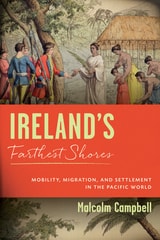
Ireland's Farthest Shores
Mobility, Migration, and Settlement in the Pacific WorldMalcolm Campbell
University of Wisconsin Press, 2022
Malcolm Campbell examines the rich history of Irish experiences on land and at sea, offering new perspectives on migration and mobility in the Pacific world and of the Irish role in the establishment and maintenance of the British Empire. This volume investigates the extensive transnational connections that developed among Irish immigrants and their descendants across this vast and unique oceanic space, ties that illuminate how the Irish participated in the making of the Pacific world and how the Pacific world made them.
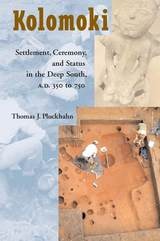
Kolomoki
Settlement, Ceremony, and Status in the Deep South, A.D. 350 to 750Thomas J. Pluckhahn
University of Alabama Press, 2003
A Dan Josselyn Memorial Publication
The first comprehensive and systematic investigation of a Woodland period ceremonial center.
Kolomoki, one of the most impressive archaeological sites in the southeastern United States, includes at least nine large earthen mounds in the lower Chattahoochee River valley of southwest Georgia. The largest, Mound A, rises approximately 20 meters above the terrace that borders it. From its flat-topped summit, a visitor can survey the string of smaller mounds that form an arc to the south and west.
Archaeological research had previously placed Kolomoki within the Mississippian period (ca. A.D. 1000-1500) primarily because of the size and form of the mounds. But this book presents data for the main period of occupation and mound construction that confirm an earlier date, in the Woodland period (ca. A.D. 350-750). Even though the long-standing confusion over Kolomoki’s dating has now been settled, questions remain regarding the lifeways of its inhabitants. Thomas Pluckhahn's research has recovered evidence concerning the level of site occupation and the house styles and daily lives of its dwellers. He presents here a new, revised history of Kolomoki from its founding to its eventual abandonment, with particular attention to the economy and ceremony at the settlement.
This study makes an important contribution to the understanding of middle range societies, particularly the manner in which ceremony could both level and accentuate status differentiation within them. It provides a readable overview of one of the most important but historically least understood prehistoric Native American sites in the United States.
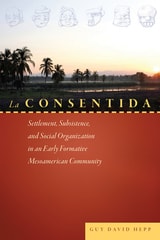
La Consentida
Settlement, Subsistence, and Social Organization in an Early Formative Mesoamerican CommunityGuy David Hepp
University Press of Colorado, 2019
La Consentida explores Early Formative period transitions in residential mobility, subsistence, and social organization at the site of La Consentida in coastal Oaxaca, Mexico. Examining how this site transformed during one of the most fundamental moments of socioeconomic change in the ancient Americas, the book provides a new way of thinking about the social dynamics of Mesoamerican communities of the period.
Guy David Hepp summarizes the results of several seasons of fieldwork and laboratory analysis under the aegis of the La Consentida Archaeological Project, drawing on various forms of evidence—ground stone tools, earthen architecture, faunal remains, human dental pathologies, isotopic indicators, ceramics, and more— to reveal how transitions in settlement, subsistence, and social organization at La Consentida were intimately linked. While Mesoamerica is too diverse for research at a single site to lay to rest ongoing debates about the Early Formative period, evidence from La Consentida should inform those debates because of the site’s unique ecological setting, its relative lack of disturbance by later occupations, and because it represents the only well-documented Early Formative period village in a 300-mile stretch of Mexico’s Pacific coast.
One of the only studies to closely document multiple lines of evidence of the transition toward a sedentary, agricultural society at an individual settlement in Mesoamerica, La Consentida is a key resource for understanding the transition to settled life and social complexity in Mesoamerican societies.
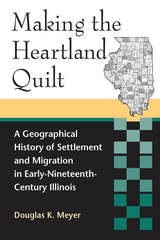
Making the Heartland Quilt
A Geographical History of Settlement and Migration in Early-Nineteenth-Century IllinoisDouglas K. Meyer
Southern Illinois University Press, 2000
In Making the Heartland Quilt, Douglas K. Meyer reconstructs the settlement patterns of thirty-three immigrant groups and confirms the emergence of discrete culture regions and regional way stations. Meyer argues that midcontinental Illinois symbolizes a historic test strip of the diverse population origins that unfolded during the Great Migration. Basing his research on the 1850 U.S. manuscript schedules, Meyer dissects the geographical configurations of twenty-three native and ten foreign-born adult male immigrant groups who peopled Illinois. His historical geographical approach leads to the comprehension of a new and clearer map of settlement and migration history in the state.
Meyer finds that both cohesive and mixed immigrant settlements were established. Balkan-like immigrant enclaves or islands were interwoven into evolving local, regional, and national settlement networks. The midcontinental location of Illinois, its water and land linkages, and its lengthy north-south axis enhanced cultural diversity. The barrier effect of Lake Michigan contributed to the convergence and mixing of immigrants. Thus, Meyer demonstrates, Illinois epitomizes midwestern dichotomies: northern versus southern; native-born versus foreign-born; rural versus urban; and agricultural versus manufacturing.

Mass Torts in a World of Settlement
Richard A. Nagareda
University of Chicago Press, 2007
The traditional definition of torts involves bizarre, idiosyncratic events where a single plaintiff with a physical impairment sues the specific defendant he believes to have wrongfully caused that malady. Yet public attention has focused increasingly on mass personal-injury lawsuits over asbestos, cigarettes, guns, the diet drug fen-phen, breast implants, and, most recently, Vioxx. Richard A. Nagareda’s Mass Torts in a World of Settlement is the first attempt to analyze the lawyer’s role in this world of high-stakes, multibillion-dollar litigation.
These mass settlements, Nagareda argues, have transformed the legal system so acutely that rival teams of lawyers operate as sophisticated governing powers rather than litigators. His controversial solution is the replacement of the existing tort system with a private administrative framework to address both current and future claims. This book is a must-read for concerned citizens, policymakers, lawyers, investors, and executives grappling with the changing face of mass torts.
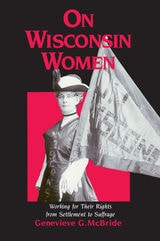
On Wisconsin Women
Working for Their Rights from Settlement to SuffrageGenevieve C. McBride
University of Wisconsin Press, 1993
In On Wisconsin Women, Genevieve McBride traces women’s work in reform movements in the state’s politics and especially in its press. Even before Wisconsin became a state in 1848, women’s news and opinions appeared in abolitionist journals and “temperance sheets,” if often anonymously. But the first paper in Wisconsin published under a woman’s name, however, was boycotted by Milwaukee printers and failed in 1853.
From the passage of the Fourteenth Amendment in 1866 to the state’s historic ratification of the Nineteenth Amendment in 1919, Wisconsin women were never at a loss for words nor a newspaper to print them. Among women who would be heard were Mathilde Fransziska Anneke, Emma Brown, Lavinia Goodell, Emma Bascom, Olympia Brown, Belle Case La Follette, Ada L. James, and Theodora Winton Youmans. McBride brings their voices vividly to life, in their own words on their lifelong work for woman’s rights.
Nowhere was “the struggle” fought for so long and so hard as in Wisconsin. While women elsewhere sang suffrage hymns, women in the Badger State marched to a “fight song” with a familiar tune but sung in their own words—lyrics too long forgotten until now.
Pulltrouser Swamp - Paper
Ancient Maya Habitat Agriculture and Settlement in Northern BelizePeter D Harrison
University of Utah Press, 2000
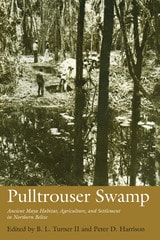
Pulltrouser Swamp
Ancient Maya Habitat, Agriculture, and Settlement in Northern BelizeEdited by B. L. Turner and Peter D. Harrison
University of Texas Press, 1983
Among Mesoamericanists, the agricultural basis of the ancient Maya civilization of the Yucatan Peninsula has been an important topic of research—and controversy. Interest in the agricultural system of the Maya greatly increased as new discoveries showed that the lowland Maya were not limited to slash-and-burn technology, as had been previously believed, but used a variety of more sophisticated agricultural techniques and practices, including terracing, raised fields, and, perhaps, irrigation. Because of the nature of the data and because this form of agricultural technology had been key to explanations of state formation elsewhere in Mesoamerica, raised-field agriculture became a particular focus of investigation.
Pulltrouser Swamp conclusively demonstrates the existence of hydraulic, raised-field agriculture in the Maya lowlands between 150 B.C. and A.D. 850. It presents the findings of the University of Oklahoma's Pulltrouser SwampProject, an NSF-supported interdisciplinary study that combined the talents of archaeologists, anthropologists, geographers, paleobotanists, biologists, and zoologists to investigate the remains of the Maya agricultural system in the swampy region of northern Belize.
By examining soils, fossil pollen and other plant remains, gastropods, relic settlements, ceramics, lithics, and other important evidence, the Pulltrouser Swamp team has clearly demonstrated that the features under investigation are relics of Maya-made raised and channelized fields and associated canals. Other data suggest the nature of the swamps in which the fields were constructed, the tools used for construction and cultivation, the possible crops cultivated, and at least one type of settlement near the fields, with its chronology. This verification of raised fields provides dramatic evidence of a large and probably organized workforce engaged in sophisticated and complex agricultural technology. As record of this evidence, Pulltrouser Swamp is a work of seminal importance for all students and scholars of New World prehistory.

Russian Refuge
Religion, Migration, and Settlement on the North American Pacific RimSusan Wiley Hardwick
University of Chicago Press, 1993
Russian Refuge is a comprehensive account of the Russian immigrant experience in California, Oregon, Washington, Alaska, and British Columbia since the first settlements over two hundred years ago. Susan Hardwick focuses on six little-studied Christian groups—Baptists, Pentecostals, Molokans, Doukhobors, Old Believers, and Orthodox believers—to study the role of religion in their decisions to emigrate and in their adjustment to American culture.
Hardwick deftly combines ethnography and cultural geography, presenting narratives and other data collected in over 260 personal interviews with recent immigrants and their family members still in Russia. The result is an illuminating blend of geographic analysis with vivid portrayals of the individual experience of persecution, migration, and adjustment.
Russian Refuge will interest cultural geographers, historians, demographers, immigration specialists, and anyone concerned with this virtually untold chapter in the story of North American ethnic diversity.
Settlement, Subsistence, and Change Among the Labrador Inuit
David Natcher
University of Manitoba Press, 2012
Settlement, Subsistence, and Society in Late Zuni Prehistory
Keith W. Kintigh
University of Arizona Press, 1985
Keith W. Kintigh demonstrates how changing agricultural strategies and developing mechanisms of social integration contributed to these population shifts. In particular, he argues that occupants of the earliest large pueblos relied on runoff agriculture, but that gradually spring-and river-fed irrigation systems were adopted. Resultant strengthening of the mechanisms of social integration allowed the increased occupational stability of the protohistorical Zuni towns.
The Archaeology of Arcuate Communities
Spatial Patterning and Settlement in the Eastern WoodlandsEdited by Martin Menz, Analise Hollingshead, and Haley Messer
University of Alabama Press, 2024
A comparative archaeological synthesis examining the spatial, social, and ceremonial logics underpinning circular community formations across the Eastern Woodlands from 10,000 BC to the sixteenth century.
The Archaeology of Arcuate Communities is an edited collection of ten essays that illuminate how Indigenous communities of the Eastern Woodlands, from 10,000 BC to the 1550s, are analyzed and interpreted by archaeologists today. Volume editors Martin Menz, Analise Hollingshead, and Haley Messer define the persistent circular or “arcuate” pattern of Native settlements in this region as a spatial manifestation of community activities that reinforced group identity alongside plazas, mounds, and other architectural features.
The varied case studies in this volume focus on specific communities, how they evolved, and the types of archaeological data that have been used to assess them. Part I, “Defining the Domestic Unit in Arcuate Communities,” reveals social distinctions between households and household clusters in arcuate communities, how they differ in terms of stylistic patterns and exchange, and how they combined to form distinct social groups at different scales within a broader community. Part II, “Organizing Principles of Arcuate Communities,” broadens the scope to identify the organizing principles of entire arcuate communities, such as the central role of plazas in structuring their development, how the distribution of households and central features within communities was contested and reorganized, and the importance of mounds in both delineating arcuate communities and marking their position on the landscape. Part III, “Comparison and Change in Arcuate Communities,” comprises case studies that examine changes in the organization of arcuate communities over time. Rounding out the volume is a concluding chapter that assesses how and why communities around the world formed in circular patterns.
A valuable resource for archaeologists, this collection will also be of interest to those seeking to learn about Native North American settlement, ceremony, and community organization.
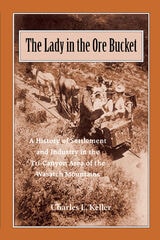
The Lady In The Ore Bucket
A History of Settlement and Industry in the Tri-Canyon Area of the Wasatch MountainsCharles L Keller
University of Utah Press, 2001
These place names, as well as the physcial traces and artifacts that persist in three Wasatch canyons—Mill Creek, Big Cottonwood, and Little Cottonwood—tantalize with what they suggest, but do not tell, about the history of settlement and development in the canyons. Charles Keller has extracted a wealth of information to create The Lady in the Ore Bucket, a faxcinating history of the lumber, mining, and hydropower industries built from the rich natural resources of the canyons. With more than six dozen photographs and maps, the book is alive with details concerning the personalities, politics, pacts, and peregrinations of local leaders from white settlement in 1847 through the early 1900s. It will delight any reader with an interest in the magnificent canyones that open onto the modern Wasatch Front.
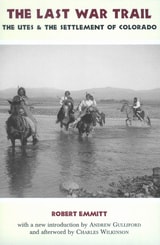
The Last War Trail
The Utes and the Settlement of ColoradoRobert Emmitt
University Press of Colorado, 2000
Written with the care and precision of a finely crafted novel, The Last War Trail was nominated for the Pulitzer Prize when it was first published in 1954. Long out of print and now brought back with new rare photographs and illustrations, The Last War Trail will be eagerly read by anyone trying to understand conflicts of the nineteenth century between Native American and encroaching settlers.
The Road to Marion Town
The Settlement of Osceola County, State of MichiganJ. August Lithen
Parkhurst Brothers, Inc., 2018
The Settlement of the American Continents
A Multidisciplinary Approach to Human BiogeographyEdited by C. Michael Barton, Geoffrey A. Clark, David R. Yesner, and Georges A. Pearson
University of Arizona Press, 2004
This book approaches the human settlement of the Americas from a biogeographical perspective in order to provide a better understanding of the mechanisms and consequences of this unique event. It considers many of the questions that continue to surround the peopling of the Western Hemisphere, focusing not on sites, dates, and artifacts but rather on theories and models that attempt to explain how the colonization occurred.
Unlike other studies, this book draws on a wide range of disciplines—archaeology, human genetics and osteology, linguistics, ethnology, and ecology—to present the big picture of this migration. Its wide-ranging content considers who the Pleistocene settlers were and where they came from, their likely routes of migration, and the ecological role of these pioneers and the consequences of colonization. Comprehensive in both geographic and topical coverage, the contributions include an explanation of how the first inhabitants could have spread across North America within several centuries, the most comprehensive review of new mitochondrial DNA and Y-chromosome data relating to the colonization, and a critique of recent linguistic theories.
Although the authors lean toward a conservative rather than an extreme chronology, this volume goes beyond the simplistic emphasis on dating that has dominated the debate so far to a concern with late Pleistocene forager adaptations and how foragers may have coped with a wide range of environmental and ecological factors. It offers researchers in this exciting field the most complete summary of current knowledge and provides non-specialists and general readers with new answers to the questions surrounding the origins of the first Americans.
They Sought a Land
A Settlement in the Arkansas River Valley, 1840–1870William Oates Ragsdale
University of Arkansas Press, 1997
Pisgah grew and prospered, developing increasingly successful farming practices, landholding patterns, and trading strategies. But the Civil War took a heavy toll, taking workers away from farms, subjecting those left on the home front to deprivation and violence, and creating division in the community. By 1870, the people of Pisgah had dispersed into Arkansas’s larger developing society.
Absorbing to read and rich with colorful detail, They Sought a Land is an important story of the westward expansion of the United States and the settling of the American South during the nineteenth century.
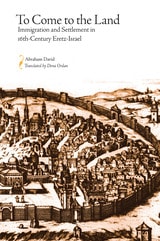
To Come to the Land
Immigration and Settlement in 16th-Century Eretz-IsraelAbraham David, translated by Dena Ordan
University of Alabama Press, 1999
To Come to the Land makes available in English a vast body of research,
previously available only in Hebrew, on the early history of the land now
known as Israel.
Abraham David here focuses on the Spanish and Portuguese Jews who fled
the Iberian Peninsula during the 16th century, tracing the beginnings of
Sephardic influence in the land of Israel.
After the Ottoman Turks conquered Syria, Palestine, and Egypt in 1516,
the Ottoman regime, unlike their Mamluk predecessors, encouraged economic
development and settlement throughout the region. This openness to immigration
offered a solution to the crisis Iberian Jews were undergoing as a result
of their expulsion from Spain and the forced conversions in Portugal. Within
a few years of the Ottoman conquest, Jews of Spanish extraction, many of
them clustered in urban areas, dominated the Jewish communities of Eretz-Israel.
In this carefully researched study, David examines the lasting impression
made by these enterprising Jewish settlers on the commercial, social, and
intellectual life of the area under early Ottoman rule. Of particular interest
is his examination of the cities of Jerusalem and Safed and David's succinct
biographies of leading Jewish personalities throughout the region.
This first English translation of a ground-breaking Hebrew work provides
a comprehensive overview of a significant chapter in the history of Israel
and explores some of the factors that brought to it the best minds of the
age. Essential for scholars of late Medieval Jewish history, To Come to
the Land will also be an important resource for scholars of intellectual
history, as it provides background crucial to an understanding of the intellectual
flourishing of the period.