Results by title
38 books match the query 'Short Stories'
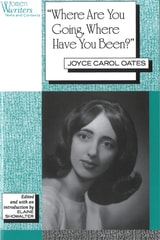
'Where Are You Going, Where Have You Been?'
Joyce Carol OatesShowalter, Elaine
Rutgers University Press, 1994
Joyce Carol Oates’s prize-winning story “Where Are You Going, Where Have You Been?” takes up troubling subjects that continue to occupy her in her fiction: the romantic longings and limited options of adolescent women; the tensions between mothers and daughters; the sexual victimization of women; and the American obsession with violence. Inspired by a magazine story about a serial killer, its remarkable portrait of the dreamy teenager Connie has made it a feminist classic. Connie’s life anticipates the emergence of American society from the social innocence of the fifties into the harsher contemporary realities of war, random violence, and crime. The story was the basis for the movie Smooth Talk, which became the subject of much feminist debate.
This casebook includes an introduction by the editor, a chronology of Oates’s life, an authoritative text of “Where Are You Going, Where Have You Been,” an essay by Oates on Smooth Talk, the original Life article about the serial killer, ten critical essays (including two about the film), and a bibliography.
The contributors are Brenda O. Daly, Christina Marsden Gillis, Don Moser, Tom Quirk, B. Ruby Rich, R.J.R. Rockwood, Larry Rubin, Gretchen Schulz, Marie Mitchell Oleson Urbanski, Joyce M. Wegs, Marilyn C. Wesley, and Joan D. Winslow.
A Letter to Harvey Milk
Short StoriesLesléa Newman
University of Wisconsin Press, 2004
A Theology of Sense
John Updike, Embodiment, and Late Twentieth-Century American LiteratureScott Dill
The Ohio State University Press, 2018
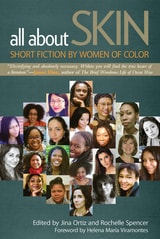
All about Skin
Short Fiction by Women of ColorEdited by Jina Ortiz and Rochelle Spencer, Foreword by Helena María Viramontes
University of Wisconsin Press, 2014
The stories are by American writers Aracelis González Asendorf, Jacqueline Bishop, Glendaliz Camacho, Learkana Chong, Jennine Capó Crucet, Ramola D., Patricia Engel, Amina Gautier, Manjula Menon, ZZ Packer, Princess Joy L. Perry, Toni Margarita Plummer, Emily Raboteau, Ivelisse Rodriguez, Metta Sáma, Joshunda Sanders, Renee Simms, Mecca Jamilah Sullivan, Hope Wabuke, and Ashley Young; Nigerian writers Unoma Azuah and Chinelo Okparanta; and Chinese writer Xu Xi.
Best Books for General Audiences, selected by the American Association of School Librarians
Best Books for General Audiences, selected by the Public Library Reviewers

American Homes
Ryan Ridge
University of Michigan Press, 2014
From the nostalgia of front porches to the hidden mysteries of basements, Ridge turns ordinary spaces into insightful meditations on homeownership, personal identity, and cultural expectations. American Homes is as much an architectural guidebook as it is a critique of consumerism, presenting a vivid portrait of how we live and the structures that define us. The result is a thought-provoking, humorous, and occasionally surreal commentary on what it means to call a place "home" in America.
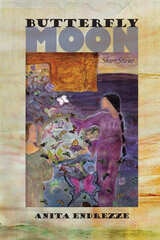
Butterfly Moon
Short StoriesAnita Endrezze
University of Arizona Press, 2012
Anita Endrezze has deep memories. Her father was a Yaqui Indian. Her mother traced her heritage to Slovenia, Germany, Romania, and Italy. And her stories seem to bubble up from this ancestral cauldron. Butterfly Moon is a collection of short stories based on folk tales from around the world. But its stories are set in the contemporary, everyday world. Or are they?
Endrezze tells these stories in a distinctive and poetic voice. Fantasy often intrudes into reality. Alternate “realities” and shifting perspectives lead us to question our own perceptions. Endrezze is especially interested in how humans hide feelings or repress thoughts by developing shadow selves. In “Raven’s Moon,” she introduces the shadow concept with a Black Moon, the “unseen reflection of the known.” (Of course the story is about a witch couple who seem very much in love.) The title character in “The Wife Who Lived on Wind” is an ogress who lives in a world somewhat similar to our own, but only somewhat. “The Vampire and the Moth Woman” reveals shape-shifters living among us.
Not surprisingly, Trickster appears in these tales. As in Native American stories, Trickster might be a fox or a coyote or a raven or a human—or something in between. “White Butterflies” and “Where the Bones Are” both deal with devastating diseases that swept through Yaqui country in the 1530s. Underneath their surfaces are old Yaqui folktales that feature the greatest Trickster of all: Death (and his little brother Fate).
Enjoyably disturbing, these stories linger—deep in our memory.
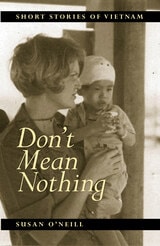
Don't Mean Nothing
Short Stories of VietnamSusan O'Neill
University of Massachusetts Press, 2004
For American nurses in Vietnam, and the men among whom they worked and lived, a common defense against the steady onslaught of dead and dying, wounded and maimed, was a feigned indifference—the irony of the powerless. With the assistance of alcohol, drugs, and casual sex, "Don't mean nothing" became their mantra, a means of coping with the other war—the war against total mental breakdown.
Each or these tales offers new and profound insight into the ways the war in Vietnam forever changed the lives of everyone who served there.
For You, I'd Steal a Goat
Short StoriesNiq Mhlongo
Ohio University Press, 2025
For You, I’d Steal a Goat is a vibrant collection of short stories filled with memorable characters, intriguing plots, and twist endings. It explores a wide range of themes, such as corruption, racial bias, family troubles, and lovers’ spats, to name a few. In his stories about queer relationships, Niq Mhlongo surfaces the complexities of a community whose narratives have been silenced. With his keen observations and insights into human nature, Mhlongo explores the things that people do for each other, but also to each other, including acts of injustice and exploitation as well as of love and desire. Mhlongo’s stories are critical, erudite, and masterfully crafted using satire and careful deliberation to connect to the quotidian lived experiences of readers. With a sense of humor, Mhlongo reflects on some of the greatest transformations South Africans have faced in recent times and engages with crucial matters in the present.
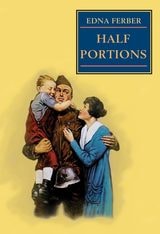
Half Portions
Edna Ferber
University of Illinois Press, 2002
A collection of short stories from Pultizer Prize winner, Edna Ferber
The short stories in this collection take the reader from small-town Wisconsin to the bustling streets of New York and Chicago and back again. While they range greatly in length and tone, they all share the trademark wit and affectionate insight of Edna Ferber.
Showcasing the facility with words that made her a mainstay at the Algonquin round table, Ferber explores some of her favorite themes: the role of women (especially strong or unconventional women) in modern society, the mores of the midwestern small town, and the changes over time in relationships between parents and children.
In “The Maternal Feminine,” a plain, overlooked child grows into a strong, resourceful businesswoman and forms a strong motherly bond with the children of her more attractive sister. In “April 25th, As Usual,” an aging Wisconsin couple reluctantly join their successful daughter in New York, where they try to adjust to a very different lifestyle. “Old Lady Mandle” is a bittersweet tale about an elderly Chicago mother coming to terms with the fact that she is no longer the most important woman in the life of her grown son. “One Hundred Per Cent” features Ferber’s celebrated heroine Emma McChesney, now re-married, seeing her husband off to war.
The stories gathered here are beautifully observed chronicles of early twentieth-century life and are filled with characters who, despite their very human foibles, are all bestowed by Ferber with warmth and dignity.

Har Mar
StoriesHilal Isler
Northwestern University Press, 2026
Journeying through the emotional migrations of women living in the in-between
In Hilal Isler’s gripping debut story collection, Har Mar, women in the early twenty-first century navigate the complex spaces between countries, families, languages, and selves. Isler’s characters are all on the verge of something—success, rebellion, revelation—and they want to disappear as much as they want to be seen. Moving back and forth between Turkey and the United States, these stories trace migrations both physical and emotional: a nanny plots to flee the wealthy family she cares for in the Grand Bazaar of Istanbul; in Har Mar, a quiet mall tucked in the suburbs of Minneapolis, a bookseller escapes her grief in a complicated relationship with a wig retailer; an actress is hired by a famous American novelist to portray her at public events.
The women in Har Mar don’t always make sound decisions, and they’re not trying to be heroes. But they are reaching—imperfectly, but fiercely—for connection, truth, and home. With moving prose and a deep sense of longing, this collection explores what it means to grow up in the margins, to live in translation, and to build a life at the edge of belonging.
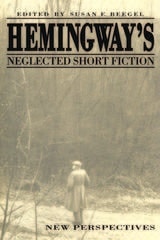
Hemingway's Neglected Short Fiction
New PerspectivesSusan F. Beegel
University of Alabama Press, 1991
“This critical anthology is the result of a brilliant idea….A volume which not only will lead most readers to place more value on a number of stories previously passed over but that will likely extend the reader’s sense of Hemingway’s artistry.” —Studies in American Fiction
Hemingway’s Neglected Short Fiction is a groundbreaking exploration of Ernest Hemingway’s least‑examined stories, works long overshadowed by the towering fame of his novels. The collection reveals how many of Hemingway’s short stories have been cursorily summarized, misread, or simply ignored. Through twenty‑five original essays, leading scholars illuminate the breadth, experimentation, irony, and emotional range found in over thirty stories—tales that challenge the conventional “code hero” paradigm and expose a richer, more complex Hemingway. What emerges is a vivid portrait of an artist whose most overlooked pieces frequently contain his sharpest innovations and deepest moral provocations.
Structured with historical awareness and critical freshness, the volume ranges from Hemingway’s earliest apprentice fiction (“The Mercenaries,” “Up in Michigan,” “My Old Man”) to his experimental, metafictional, or posthumously published works (“A Natural History of the Dead,” “Get a Seeing‑Eyed Dog,” “A Man of the World”). Contributors draw from an impressive range of approaches—rhetorical theory, linguistics, psychoanalysis, semiotics, religious studies, Bakhtinian dialogism, and close textual analysis. Along the way, they revisit stories distorted by biography (“Out of Season,” “Mr. and Mrs. Elliot”), reconsider stories dismissed as trivial (“A Pursuit Race,” “A Day’s Wait”), and restore neglected gems such as “Wine of Wyoming,” “The Sea Change,” and “Homage to Switzerland.”
This book will captivate scholars of modernism, Hemingway specialists, teachers seeking fresh classroom material, and general readers who want to discover the Hemingway hidden between the lines. It is essential reading for anyone interested in the evolution of a major American writer and the vibrant life of the short story form.
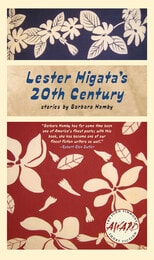
Lester Higata's 20th Century
Barbara Hamby
University of Iowa Press, 2010
“Lester Higata knew his life was about to end when he walked out on the lanai behind his house in Makiki and saw his long-dead father sitting in a lawn chair near the little greenhouse where Lester kept his orchids.” Thus begins Barbara Hamby’s magical narrative of the life of a Japanese American man in Honolulu. The quietly beautiful linked stories in Lester Higata’s 20th Century bring us close to people who could be, and should be, our friends and neighbors and families.
Starting in 1999 with his conversation with his father, continuing backward in time throughout his life with his wife, Katherine, and their children in Hawai‘i, and ending with his days in the hospital in 1946, as he heals from a wartime wound and meets the woman he will marry, Hamby recreates not just one but any number of the worlds that have shaped Lester. The world of his mother, as stubbornly faithful to Japan and Buddhism as Katherine’s mother is to Ohio and conservative Christianity; the world of his children, whose childhoods and adulthoods are vastly different from his own; the world after Pearl Harbor and Vietnam; the world of a professional engineer and family man: the worlds of Lester Higata’s 20th Century are filled with ordinary people living extraordinary lives, moving from farms to classrooms and offices, from racism to acceptance and even love, all in a setting so paradisal it should be heaven on earth.
Never forgetting the terrors of wartime—“We wake one morning with the wind racing toward us like an animal, and nothing is ever the same”—but focusing on the serene joys of peacetime, Lester populates his worlds with work, faith, and family among the palm trees and blue skies of the island he loves.
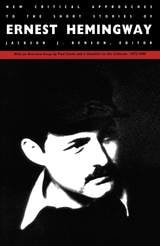
New Critical Approaches to the Short Stories of Ernest Hemingway
Jackson J. Benson, ed.
Duke University Press, 1990
New Critical Approaches to the Short Stories of Ernest Hemingway is an all-new sequel to Benson’s highly acclaimed 1975 book, which provided the first comprehensive anthology of criticism of Ernest Hemingway’s masterful short stories. Since that time the availability of Hemingway’s papers, coupled with new critical and theoretical approaches, has enlivened and enlarged the field of American literary studies. This companion volume reflects current scholarship and draws together essays that were either published during the past decade or written for this collection.
The contributors interpret a variety of individual stories from a number of different critical points of view—from a Lacanian reading of Hemingway’s “After the Storm” to a semiotic analysis of “A Very Short Story” to an historical-biographical analysis of “Old Man at the Bridge.” In identifying the short story as one of Hemingway’s principal thematic and technical tools, this volume reaffirms a focus on the short story as Hemingway’s best work. An overview essay covers Hemingway criticism published since the last volume, and the bibliographical checklist to Hemingway short fiction criticism, which covers 1975 to mid-1989, has doubled in size.
Contributors. Debra A. Moddelmog, Ben Stotzfus, Robert Scholes, Hubert Zapf, Susan F. Beegel, Nina Baym, William Braasch Watson, Kenneth Lynn, Gerry Brenner, Steven K. Hoffman, E. R. Hagemann, Robert W. Lewis, Wayne Kvam, George Monteiro, Scott Donaldson, Bernard Oldsey, Warren Bennett, Kenneth G. Johnston, Richard McCann, Robert P. Weeks, Amberys R. Whittle, Pamela Smiley, Jeffrey Meyers, Robert E. Fleming, David R. Johnson, Howard L. Hannum, Larry Edgerton, William Adair, Alice Hall Petry, Lawrence H. Martin Jr., Paul Smith
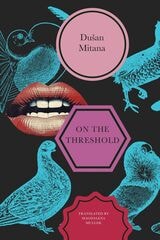
On the Threshold
Short StoriesDušan Mitana
Seagull Books, 2024
An unhappily married woman is impregnated by her elderly neighbor who lives in a building across the street and with whom she has never had any physical contact. Just as his attention creates life within her, his own life waxes and wanes with her gaze and attention.
A man finds himself trapped in a pub on a sweltering afternoon after refusing to buy a beer with his cigarettes. Guarded by a vigilante bartender and his beer-obsessed patrons, his every attempt at escape is foiled until their life-giving elixir, the beer, runs out.
This collection introduces English-language readers to the work of Dušan Mitana, a cult figure in contemporary Central European literature. In Mitana’s stories, appearing in English for the first time, the rational and the irrational are indistinguishable. His tales infect a banal, quotidian realism with mystical and supernatural distortions. Tinged with Hitchcockian paranoia and full of unexpected turns, the seventeen stories collected here offer a glimpse into Mitana’s trademark absurdist style.
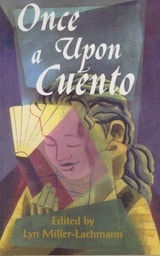
Once Upon a Cuento
Edited by Lyn Miller-Lachmann
Northwestern University Press, 2003
The stories are grouped by theme—heritage, holidays, and contemporary culture; family life; friends and other relationships; and dealing with differences. Individual stories explore additional themes such as the challenge of making do with little money, the process of moving to a new country and learning English, and young people's relationships to animals and to the natural world. Each story contains an introduction that offers historical, cultural, and biographical information. A general introduction and list of works by the thirteen contributors offer further avenues for research and discussion.

Orders of Protection
Jenn Hollmeyer
University of North Texas Press, 2019
PRESCRIPTION FOR ADVERSITY
THE MORAL ART OF AMBROSE BIERCELAWRENCE BERKOVE
The Ohio State University Press, 2002
A Prescription for Adversity makes the revolutionary case that Ambrose Bierce, far from being a bitter misanthrope, was instead both a compassionate and moral author. Berkove, focusing on Bierce's short fiction, establishes the necessity of recognizing the pattern of his intellectual and literary development over the course of his career. The author shows that Bierce, probably the American author with the most extensive experience of the Civil War, turned to classical Stoicism and English and French Enlightenment literature in his postwar search for meaning. Bierce's fiction arose from his ultimately unsatisfying encounters with the philosophies those sources offered, but the moral commitment as well as the literary techniques of heir authors, particularly Jonathan Swift, inspired him. Dating Bierce's fiction, and introducing uncollected journalism, correspondence, and important new literary history and biographical information, Berkove brings new insights to a number of stories, including "A Son of the Gods" and "A Horseman in the Sky," but especially "An Occurrence at Owl Creek Bridge," and presents compelling readings of the Parenticide Club tales and "Moxon's Master." A Prescription for Adversity substantiates how Bierce at his best is one of the few American authors who rises to the level of Mark Twain, and the only one who touches Jonathan Swift.
A work of both biography and literary criticism, this book rescues Ambrose Bierce and his literature from the neglect to which it has been assigned by "ill-founded, obtuse and unproductive approaches based on skewed notions of his personality and forced or facile readings of individual stories."
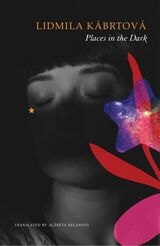
Places in the Dark
Short StoriesLidmila Kábrtová
Seagull Books, 2025
Following her divorce, Tereza shuts off emotionally and flits from one faceless lover to the next, until an unexpected visitor shakes her existence to the core. Klara is a bird trapped in a golden cage slowly suffocating her. Eva has sacrificed herself for her children and family. Life is one big party for Karla—or is it? Alice is doing everything she can not to be a crybaby like her mother. Petra has finally had enough and takes drastic measures. Magdalena’s true yearnings bubble up to the surface.
The stories of these six characters may be different, but these women’s paths converge throughout Places in the Dark, weaving a vivid tapestry of interconnected lives. Czech author Lidmila Kábrtová is a master of writing stories of astonishing clarity. Echoing the brilliance of Alice Munro, Kábrtová’s words act as translucent veils, allowing the essential truths to shimmer through. Moments move about on tectonic plates somewhere beneath the surface of the everyday, and nothing will be as it used to be. Yet, in this kaleidoscope of narratives, the question lingers: Was it ever truly as it seemed?
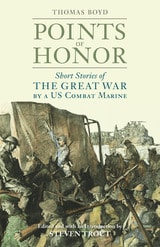
Points of Honor
Short Stories of the Great War by a US Combat MarineThomas Boyd, Edited and with an Introduction by Steven Trout
University of Alabama Press, 2018
Points of Honor: Short Stories of the Great War by a US Combat Marine is based on author Thomas Alexander Boyd’s personal experiences as an enlisted Marine. First published in 1925 and long out of print, this edition rescues from obscurity a vivid, kaleidoscopic vision of American soldiers, US Marines mostly, serving in a global conflict a century ago. It is a true forgotten masterpiece of World War I literature.
The stories in Points of Honor deal almost entirely with Marines in the midst of battle—or faced with the consequences of military violence. The eleven stories in this collection offer a panoramic view of war experience and its aftermath, what Boyd described as “a mass of more human happenings.” The themes are often antiheroic: dehumanization, pettiness, betrayal by loved ones at home, and the cruelty of military justice. But Boyd’s vision also accommodates courage and loyalty. Like all great works of war literature, this collection underscores the central paradox of armed conflict—its ability to bring out both the best and worst in human beings.
This reissue of Points of Honor is edited, annotated, and introduced by Steven Trout. Trout provides an overview of Thomas Boyd’s war experience and writing career and situates the stories within the broader context of World War I American literature.
Points of Honor received strong reviews at the time of its initial publication and remains an overwhelming reading experience today. While each of the stories is a freestanding work of art, when read together they carry the force of a novel.
Radical Empathy
Robin Romm
Four Way Books, 2024
Send Me Work
StoriesKatherine Karlin
Northwestern University Press, 2011
Unlike the heroines of domestic fiction, Katherine Karlin's women face their biggest challenges outside of the house. The characters in this debut collection encompass a broad range of contemporary American experiences: a struggling young woman in post-Katrina New Orleans persuades a welder to teach her his trade; an orchestra oboist hears a confession from a beloved teacher; an idealistic aerobics instructor decamps for revolution- era Nicaragua to pick coffee on a farming collective.
In each of these stories, Karlin offers rare insight into the place of work in the lives of women, her narrators keenly observant and attuned to the humor that arises when life doesn't turn out as planned. But even more remarkable is the fullness with which she renders characters who make us wonder how they've escaped the notice of other writers. In unadorned prose that evokes complete worlds with deceptive ease, Karlin shows us people immersed in the negotiations of survival, just at the edge of being able to make sense of their lives.
Short Stories
Five DecadesIrwin Shaw
University of Chicago Press, 2000
Sky Blue Water
Great Stories for Young ReadersJay D. Peterson
University of Minnesota Press, 2016
A one-of-a-kind collection of short stories for adolescent readers that celebrates Minnesota’s vibrant storytelling tradition—now in paperback
From the Dakota people who first inhabited the state to its generations of immigrants and today’s residents, Minnesota has long had a vibrant and unique storytelling tradition. A rich and often under appreciated part of this tradition is youth storytelling—a movement of which Minnesota is a national forerunner. Here, for the first time, two of the state’s beloved independent booksellers collect a wide array of short stories for young readers that pay homage to Minnesota's diverse cultures and stunning landscapes.
Sky Blue Water celebrates young adult and intermediate fiction from some of Minnesota’s most beloved and award-winning authors to emerging talents and many more. With each turn of the page, every young reader will find a poignant and relatable story: tales of discovering hidden truths about one’s family, dealing with a difficult bully, and falling for the new kid who dresses like a cowboy, as well as settings from Rainy Lake to Lake Calhoun and time periods from Prohibition to the present day. Featuring primarily never-published stories, this anthology beautifully captures the essence of a Minnesota adolescence in twenty short stories and poems. Sky Blue Water features a Q&A between Minnesota classrooms and the contributing authors as well as curriculum materials for families, teachers, and students.
This collection embodies passion for fostering literacy in young readers. A portion of the proceeds from Sky Blue Water will go to the Mid-Continent Oceanographic Institute, a Twin Cities organization offering free tutoring and writing assistance for students ages six to eighteen.
Contributors: William Alexander; Swati Avasthi; Kelly Barnhill; Mary Casanova; John Coy; Kirstin Cronn-Mills; Anika Fajardo; Shannon Gibney; Pete Hautman; Lynne Jonell; Kevin Kling; Margi Preus; Marcie Rendon; Kurtis Scaletta; Julie Schumacher; Joyce Sidman; Phuoc Thi Minh Tran; Anne Ursu; Sarah Warren; Stephanie Watson; Kao Kalia Yang.
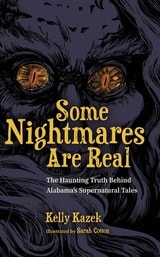
Some Nightmares Are Real
The Haunting Truth Behind Alabama’s Supernatural Talesby Kelly Kazek, illustrated by Sarah Cotton
University of Alabama Press, 2024
Southern writer and folklorist Kelly Kazek’s collection of eerie and enigmatic Alabama ghost stories
Dark secrets lurk beneath the sleepy surface of Alabama. Ghosts and grisly creatures haunt the towns and forests. In the great Southern ghost-story tradition, famed Alabama storyteller Kelly Kazek weaves a gothic tapestry of ten stories drawn from real people and legendary creatures, cursed places, and harrowing events.
Each story or legend takes readers to a different place in Alabama. Read about the bestial Wolf Woman who terrified Mobilians in the haunted old port city. In the northern city of Huntsville, visit the Dead Children’s Playground in gloomy Maple Hill Cemetery. In Jacksonville, feel the cold grip of the Old Mill Witch, rumored to protect the workers at the rickety cotton yarn mill. Hear about the mysterious green light that drifts along the Alabama River in the Black Belt hamlet of Gee’s Bend and learn about the role the Gee’s Bend Ferry played in the Civil Rights Movement.
Unlike most ghost-story collections, Some Nightmares Are Real includes an appendix of facts, historical resources, and information about how to visit the locations. These contemporary stories embrace a beloved Southern folkloric tradition for a new generation of young readers. The tales will terrify and ensnare ghost-story lovers of all ages. So settle in, pull the covers up tight, and maybe turn on the light, because the truth is: Some Nightmares Are Real.
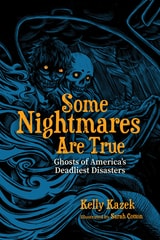
Some Nightmares Are True
Ghosts of America's Deadliest Disastersby Kelly Kazek, illustrated by Sarah Cotton
University of Alabama Press, 2025
Digging up the eerie aftermath of America’s deadliest disasters—where ghost stories take root, history lingers in the shadows, and the past refuses to stay buried.
In this haunting follow-up to Some Nightmares Are Real: The Haunting Truth Behind Alabama’s Supernatural Tales, journalist and storyteller Kelly Kazek investigates supernatural folklore grounded in historical catastrophe. This time, she ventures far beyond Alabama, unearthing the eerie legends born from their aftermath of nine of America’s most infamous disasters. From the strangling suffocation of the Boston Molasses Flood and the terror of Galveston’s notorious Great Storm, to flames blasting from the Triangle Shirtwaist Factory disaster, Some Nightmares Are True examines ghost stories that have haunted communities long after the news headlines stopped.
Each spooky story blends vivid storytelling with meticulous research, connecting real events to the ghostly lore they inspired. Kazek explores not just the moment of disaster, but how grief, resilience, and remembrance shape the way stories live on—through newspaper archives, folklore, and generations of retelling.
With both wry Southern sensibility and journalistic rigor, Kazek explores how moments of tragedy like the Dixie Tornado Outbreak in Alabama, the capsizing of the SS Eastland in Chicago, and the haunting aftermath of the Schoolchildren’s Blizzard in Nebraska leave lasting imprints on generational memory. These sites of devastation become more than historical footnotes; they transform into hallowed grounds where grief lingers, legends remain, and the line between fact and folklore dissolves.
For ghost hunters, or simply those brave enough to follow their curiosity into learning more about the stories’ historical facts, Kazek has compiled a robust appendix that provides context, source materials, and location details, making this a perfect pick to toss in the car for that late-night road trip adventure. But remember, Some Nightmares Are True.
Still Life with Plums
Short StoriesMarie Manilla
West Virginia University Press, 2010
Story and Situation
Narrative Seduction and the Power of FictionRoss Chambers
University of Minnesota Press, 1984
Ross Chambers shifs the emphasis to precisely the play of authority and mastery by focusing on the narrative situation or the “point” of telling a story in given context. He studies the relation between teller and listener in a set of French, English, and American short stories from the nineteenth and early twentieth centuries and detects in that relationship the key to the power of fiction. In each of these stories, the author identifies the narrative situation by recourse to the metaphor of seduction, a phenomenon Chambers finds characteristic of literary production in the modern period.
“Story and Situation is a powerful work of criticism, the best work in short narrative I know, and will redirect critics’ attention to a form which has always engaged readers but has recently been neglected by literary theorists. . . . It is clear, assured, and intelligently paced.”-Jonathan Culler, Cornell University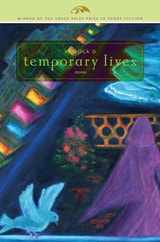
Temporary Lives
StoriesRamola Dharmaraj
University of Massachusetts Press, 2010
In the title story, Rose Ammal, who married young and bore numerous children, survives her husband's betrayal and religious conversion by creating her own private redemptions and conversions. "The Next Corpse Collector" chronicles significant moments in the lives of two young brothers, Anwar and Amir, who seek to escape the destiny of corpse
collector, the job their father is determined to bequeath to them. "What the Watchman Saw" offers a glimpse into the life of Venkatesh, a longtime watchman who is faced with the dilemma of whether to report the theft of stolen antiquities from the house of his new neighbor.
"Esther" is a tale of the haunting, troubled spirit of Leeza's grandmother, who lingers in Leeza's childhood home and unexpectedly helps her during the summer her grandfather dies as she wakes to an adolescent infatuation with a neighbor boy. In "The Couple in the Park," a young middle-class wife, Laura, in a constrictive arranged marriage, finds comfort in watching a couple in the park who remind her of her own grandparents as she tips over the edge into schizophrenia. "The Man on the Veranda" traces a significant day in the life of retired government-worker Parameswaran—the day his wife finally leaves him.
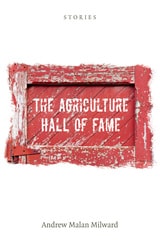
The Agriculture Hall of Fame
StoriesAndrew Malan Milward
University of Massachusetts Press, 2012
These powerful stories limn the complexities and dilemmas of life in Kansas, a state at “the center of the center of America,” as a billboard in one story announces. Andrew Malan Milward explores the less visible aspects of the Kansas experience—where its agrarian past comes into conflict with the harsh present reality of drugs, fundamentalism, and corporatism, relegating its agrarian identity to museums and amusement parks.
Presented in a triptych, the stories in Milward's debut collection range across a varied terrain, from tumbledown rural barns to modern urban hospitals, revealing the secrets contained therein.
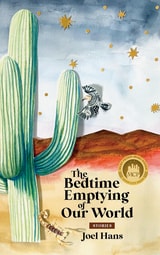
The Bedtime Emptying of Our World
Short StoriesJoel Hans
Moon City Press, 2026
The 2024 Moon City Short Fiction Award
In a future facsimile of the Sonoran Desert, a girl and grandfather rebirth weather itself. Fathers watch children transform into minerals, tend pain-wracked saguaros, offer treasures to the Gulf for lost sons. A girl escapes her apple prison; a man struggles against choices his parents coded into his being. These twenty-two speculative fairy tales ask: How do we navigate parenthood's impossible permutations? When will our helpers rescue us? Can we return from the void that swallowed all we love—and would we even try?
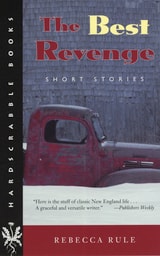
The Best Revenge
Short StoriesRebecca Rule
University of New Hampshire Press, 2004
Twice nominated for the Pushcart Prize, Rule captures the essence of small-town New England life as she paints with a sure hand the fallings-out and friendships, the trials and triumphs of the New England microcosm. In Yankee Curse, elderly Miranda knits placidly at a town meeting, pondering an amazing string of unspoken invective against an enemy but stopping short at a curse she would never levy, not even on Mort Wallace: to live too long. In Minna Runs for Selectman, a middle-aged woman's battlefield is the strange, incestuous politics of this eccentric little town but her real opponent is her own insecurity. In Jim's Boat a young couple wages a silent struggle over priorities in their marriage; in Fishing with George a small girl worries that there's a hole in our family that gets bigger every time her parents argue; and in the title story a mother copes with a hated neighbor through a sculpture that makes her laugh the kind of laugh that doesn't end in a sob. Children and grandmothers, trappers and college professors, lifetime Yankees or transplanted Flatlanders: each finds the truth in Rule's observation that revenge takes many forms -- some of which can heal.
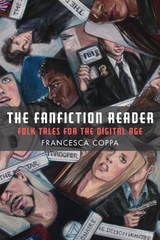
The Fanfiction Reader
Folk Tales for the Digital AgeFrancesca Coppa
University of Michigan Press, 2017

The New Short Story Theories
Charles E. May
Ohio University Press, 1994
The first edition of May’s Short Story Theories (1976) opened with an essay entitled “The Short Story: An Underrated Art.” Almost two decades later, the short story suffers no such slight. Publishers and critics have become increasingly interested in the form, which has enjoyed a renaissance led by such writers as Raymond Carver, Tobias Wolff, Ann Beattie, Bobbie Ann Mason, and Mary Robison. An important part of this revival of interest, Short Story Theories has continued to attract a strong and loyal audience among students and teachers.
The New Short Story Theories includes a few basic pieces from the earlier volume—Poe’s Hawthorne review, Brander Matthew’s extension and formalization of Poe’s theories, and essays by Randall Jarrell, Elizabeth Bowen, and Nadine Gordimer—but most of the essays are new to the collection.
Addressing problems of definition, historical considerations, issues of technique, and cognitive approaches, essays include:
“The Tale as Genre in Short Story Fiction,” by W. S. Penn
“O. Henry and the Theory of the Short Story,” by Suzanne C. Ferguson
“On Writing,” by Raymond Carver
“From Tale to Short Story,” by Robert F. Marler
“A Cognitive Approach to Storyness,” by Susan Lohafer
May’s new collection will continue to highlight the short story, to provoke debate, and to enrich our experience of a demanding and rewarding literary form.
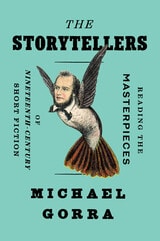
The Storytellers
Reading the Masterpieces of Nineteenth-Century Short FictionMichael Gorra
University of Chicago Press, 2026
Tracing the origins of the modern short story, Michael Gorra provides the first fully realized picture of a century’s worth of great tales.
The Storytellers offers a far-reaching account of the rich tradition of short narratives that flourished in nineteenth-century Europe and America, one that both prepared for and eventually gave way to the modern short story. Tracing unexpected resemblances across languages and decades, Michael Gorra restores a wide-angle view of the form in which works usually treated as stand-alone classics reveal themselves as parts of a single, lively conversation.
What unites these tales, Gorra argues, is their blend of novelty and unity. The book’s heart lies in a series of accessible readings of great tales by Herman Melville, Nikolai Gogol, Ivan Turgenev, E. T. A. Hoffmann, Guy de Maupassant, Nathaniel Hawthorne, Arthur Conan Doyle, Sarah Orne Jewett, Charles Chesnutt, and many more. Beyond its consideration of individual works, The Storytellers examines the formal and thematic concerns that bind the century together: the use of frame tales, accounts of social marginality, and an abundance of ghosts and uncanny coincidences. Over time, Gorra shows, these qualities yielded to a cooler realism, with Anton Chekhov as the key transitional figure. His compressed studies of ordinary lives inspired the modern short story and consigned the gothic flourishes of earlier tales to genre fiction.
What do we want from a story? What makes a tale worth telling? The nineteenth-century tale sought not the grand “meaning of life” promised by the novel, Gorra shows, but sudden revelations from singular events. The Storytellers gives readers an incomparable guide to a vast body of tales that still has the power to thrill and entertain.
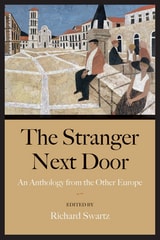
The Stranger Next Door
An Anthology from the Other EuropeRichard Swartz
Northwestern University Press, 2013
The Balkans have been so troubled by violence and misunderstanding that we have the verb “balkanize,” meaning to break up into smaller, warring components. While some of the region’s artists and thinkers have invariably fallen into nationalistic tendencies, the twenty-two prominent authors represented here, from the erstwhile Yugoslavia and its neighbors Albania and Bulgaria, have chosen to attempt to bridge these divides. The essays, biographical sketches, and stories in The Stranger Next Door form a project of understanding that picks up where politics fail. The English-language translation joins editions of the book that appeared concurrently in all of the participating countries.

The Wine of Eternity
Short Stories from the LatvianKnuts Lesins
University of Minnesota Press, 1957
The Wine of Eternity was first published in 1957. Minnesota Archive Editions uses digital technology to make long-unavailable books once again accessible, and are published unaltered from the original University of Minnesota Press editions.
Ever since the small Baltic nation of Latvia became a part of the Soviet Union in 1940, its identity has been blurred to Western eyes. Many of its people have left their country in voluntary or forced exile. But, wherever they are today, the Latvians still cherish and preserve a rich national heritage of folklore and culture. Much of this is revealed in these stories, the work of an established Latvian writer who became a wartime refugee from his country.
This volume makes the work of Knuts Lesins available in English for the first time, although his writing has been published extensively in Europe in the original Latvian. In addition to the stories, the author provides a background sketch of the history and culture of Latvia. While much of the fascinating folklore of the country is interwoven in the stories, they are not primarily folk tales. They are perhaps best described as penetrating glimpses into human lives at moments of crisis or decision which reveal an individual's character and philosophy.

Trigger Man
More Tales of the Motor CityJim Ray Daniels
Michigan State University Press, 2011
Trigger Man is a superb collection of stories capturing the gritty spirit of Detroit and the sometimes grim circumstances of the characters shaped by its industry and economics. Grounded on the bleak streets of the Motor City, these stories also explore the mythical “Up North,” the idealized country of many Detroit workers’ fantasy—an escape from the concrete and metal reality of their daily lives. Daniels’ characters are resilient and defiant, inhabiting a world that has often placed them on the margins of society, scouring a declining region for spiritual providence. Building on Daniels’ earlier collections of stories, Trigger Man brings vivid life to individuals struggling both to remain in and to flee the city that once sustained them.

WHITE TATTOO
A COLLECTION OF SHORT STORIESWilliam J. Cobb
The Ohio State University Press, 2002
The White Tattoo is a smart, always surprising collection of American stories. William J. Cobb knows and loves his character and places. His first collection of short stories, The White Tattoo, revels in the undeniable allure of the physical world even as it is juxtaposed with the twists and kinks of psychological and emotional pain. At one extreme is the tense, torturous psychology of “Motel Ice,” whose narrative voice emerges from the mind of a mentally disturbed Jehovah’s Witness gazing out on a world of temptation and redemption. Similarly hyperdramatic in its conclusion and its arc of betrayal and violent aftermath, “For All You Dorks, Blah Blah Blah” conjures up a sleepwalking, murderous father who is less culpable in the harm he causes but all the while most destructive.
Stylistically, the stories crackle, snap, and zing. Several of them, including “The Wishes,” “The Atmosphere of Vienna,” and “Dark Matter,” use an idiosyncratic, Tilt-O-Whirl narrative marked by a swirling, shifting focus and point of view, trying to create a multifaceted, complex vision of the world by dipping in and out of the consciousness of various characters.