Results by title
862 books match the query 'Social History' and 81 start with a
A Bibliography of East European Travel Writing on Europe
Wendy Bracewell
Central European University Press, 2008
The bibliography volume of the three-volume East Looks West: East European Travel Writing in Europe collates travel writing published in book form by east Europeans travelling in Europe from ca. 1550 to 2000. It is intended as a fundamental research tool, collecting together travel writings within each national/linguistic tradition, and enabling comparative analysis of such material. It fills an important gap in the existing reference literature, both in western and east European languages, and will be of use to those working in the growing fields of comparative travel writing, regional and national identities, and postcolonialism.
These texts exist in surprisingly large numbers, and include writings of high literary quality as well as of historical interest, but they have been relatively little studied as a genre. Much of this material is rare and difficult to find, even in national libraries. As a result, there are few bibliographical surveys of the literature of east European travel and self-representation, and none that are region-wide or comparative in scope.
This is the third volume of a three-part set of East Looks West.
Vol. 1. Orientations. An Anthology of East European Travel Writing on Europe.
Vol. 2. Undern Eastern Eyes. A Comparative Introduction to East European Travel Writing on Europe.
A Collective Pursuit
Teachers' Unions and Education ReformLesley Lavery
Temple University Press, 2020
Teachers’ unions are the organizations responsible for safeguarding the conditions of teachers’ employment. Union supporters claim strong synergies between teachers’ interests and students’ interests, but critics of unions insist that the stance of teachers in collective bargaining may disadvantage students as unions reduce the power of administrators to manage, remove, reward or retain excellent teachers.
In A Collective Pursuit, Lesley Laveryunpacks how teachers’ unions today are fighting for contracts that allow them to earn a decent living and build “schools all students deserve.” She explains the form and function of the nation’s largest teachers’ unions. Lavery then explores unionization campaigns in the Twin Cities charter schools. A Collective Pursuit also examines teacher strikes and contract negotiations, school finance and finance reform, and district and union attempts to address racial achievement gaps, to provide a context for understanding the economic, political, and demographic forces that inspire teachers to improve conditions for students.
A Collective Pursuit emphasizes that while teachers’ unions serve a traditional, economic role, they also provide a vast array of valuable services to students, educators, parents, and community members.

A Country of Defiance
Mapping the Casamance in SenegalMark W. Deets
Ohio University Press, 2023

A Cultural History of the Disneyland Theme Parks
Middle Class KingdomsSabrina Mittermeier
Intellect Books, 2020
When the first Disneyland opened its doors in 1955, it reinvented the American amusement park and transformed the travel, tourism, and entertainment industries forever. Now a global vacation empire, the original park in Anaheim, California, has been joined by massive complexes in Florida, Tokyo, Paris, Hong Kong, and Shanghai.
Spanning six decades, three continents, and five distinct cultures, Sabrina Mittermeier presents an interdisciplinary examination of the parks, situating them in their proper historical context and exploring the distinct cultural, social, and economic landscapes that defined each one at the time of its construction. Mittermeier then spotlights the central role of class in the subsequent success or failure of each venture. The first comparative study of the Disney theme parks, the book closes a significant gap in existing research and is an important new contribution to the field.
A David Montgomery Reader
Essays on Capitalism and Worker ResistanceDavid Montgomery. Edited by Shelton Stromquist and James R. Barrett
University of Illinois Press, 2024
A foundational figure in modern labor history, David Montgomery both redefined and reoriented the field. This collection of Montgomery’s most important published and unpublished articles and essays draws from the historian’s entire five-decade career.
Taken together, the writings trace the development of Montgomery’s distinct voice and approach while providing a crucial window into an era that changed the ways scholars and the public understood working people’s place in American history. Three overarching themes and methods emerge from these essays: that class provided a rich reservoir of ideas and strategies for workers to build movements aimed at claiming their democratic rights; that capital endured with the power to manage the contours of economic life and the capacities of the state but that workers repeatedly and creatively mounted challenges to the terms of life and work dictated by capital; and that Montgomery’s method grounded his gritty empiricism and the conceptual richness of his analysis in the intimate social relations of production and of community, neighborhood, and family life.
A Fair Chance in the Race of Life
The Role of Gallaudet University in Deaf HistoryBrian H. Greenwald
Gallaudet University Press, 2008
Despite its prominence as a world cultural center and a locus of research on deaf culture, history, education, and language for more than 150 years, Gallaudet University has only infrequently been the focal point of historical study. Eminent historians Brian H. Greenwald and John Vickrey Van Cleve have remedied this scarcity with A Fair Chance in the Race of Life: The Role of Gallaudet University in Deaf History. In this collection, a remarkable cast of scholars examine the university and its various roles through time, many conducting new research in the Gallaudet University Archives, an unsurpassed repository of primary sources of deaf history.
Pulitzer-Prize-winning historian James M. McPherson sets the stage in his essay “A Fair Chance in the Race of Life,” President Abraham Lincoln’s statement when he chartered the first college for deaf students. The papers that follow scrutinize Gallaudet’s long domination by hearing presidents, its struggle to find a place within higher education, its easy acquiescence to racism, its relationship with the federal government, and its role in creating, shaping, and nurturing the deaf community.
These studies do more than simply illuminate the university, however. They also confront broad issues that deal with the struggles of social conformity versus cultural distinctiveness, minority cohesiveness, and gender discrimination. “Deaf” themes, such as the role of English in deaf education, audism, and the paternalism of hearing educators receive analysis as well.
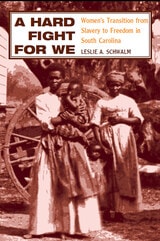
A Hard Fight for We
Women's Transition from Slavery to Freedom in South CarolinaLeslie A. Schwalm
University of Illinois Press, 1997
African-American women fought for their freedom with courage and vigor during and after the Civil War. Leslie Schwalm explores the vital roles of enslaved and formerly enslaved women on the rice plantations of lowcountry South Carolina, both in antebellum plantation life and in the wartime collapse of slavery. From there, she chronicles their efforts as freedwomen to recover from the impact of the war while redefining their lives and labor.
Freedwomen asserted their own ideas of what freedom meant and insisted on important changes in the work they performed both for white employers and in their own homes. As Schwalm shows, these women rejected the most unpleasant or demeaning tasks, guarded the prerogatives they gained under the South's slave economy, and defended their hard-won freedoms against unwanted intervention by Northern whites and the efforts of former owners to restore slavery's social and economic relations during Reconstruction. A bold challenge to entrenched notions, A Hard Fight for We places African American women at the center of the South's transition from a slave society.

A History of Disability
Henri-Jacques Stiker
University of Michigan Press, 2019
This new edition of the classic volume features a new foreword by David T. Mitchell and Sharon L. Snyder that assesses the impact of Stiker’s history on Disability Studies and beyond, twenty years after the book’s translation into English. The book will be of interest to scholars of disability, historians, social scientists, cultural anthropologists, and those who are intrigued by the role that culture plays in the development of language and thought surrounding people with disabilities.

A History of Roads in 100 Maps
Jeremy Black
University of Chicago Press, 2026
A beautifully illustrated, first-of-its-kind chronicle of road maps through the ages.
Road maps are the most common form of map that most of us regularly interact with while we all seek to find our way from here to there. Today, the digital maps on our devices are just the latest in a series of cartographic innovations designed to make transportation of people and goods easier and more predictable. Whether traveling on foot, in a vehicle, or by animal, people have long created and relied on roads, and efforts to map these overland routes predate the invention of the printing press. Yet the vast majority of road maps have been produced only within the last five hundred years—and even more specifically within the last century.
Historian Jeremy Black is the first to chart the tale of road maps, beginning with the "Peutinger Map," which illustrated the roads famously connecting the Roman Empire. From the time of antiquity, Black guides the reader through the centuries all the way to the modern age, when the invention of the automobile spurred the creation of roads and road maps like nothing before. Over the course of this journey, Black illuminates the integral role maps played in the development of government infrastructures through time and across all the inhabited continents. And, arriving in the present day, Black shows how technology may soon make the paper road map obsolete even as it builds on the conventions of the preceding centuries.
Featuring a series of full-color maps from the British Library's collection and beyond, A History of Roads in 100 Maps is an eye-opening visual story of how modern civilizations traversed, constructed, and connected their worlds.

A History of the Ozarks, Volume 2
The Conflicted OzarksBrooks Blevins
University of Illinois Press, 2019
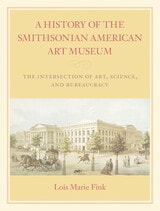
A History of the Smithsonian American Art Museum
The Intersection of Art, Science, and BureaucracyLois Marie Fink
University of Massachusetts Press, 2007
Dedicated to the art of the United States, the Smithsonian American Art Museum contains works by more than 7,000 artists and is widely regarded as an invaluable resource for the study and preservation of the nation's cultural heritage. But as Lois Marie Fink shows in this probing narrative, the history of the museum is hardly one of steady progress. Instead, it reads like a nineteenth-century melodrama, replete with villains and heroes, destruction by fire, dashed hopes, and periods of subsistence survival—all leading eventually to a happy ending.
Originating as the art gallery stipulated in the 1846 founding legislation of the Smithsonian, the museum developed within an institution that was essentially controlled by scientists. In its early years, the museum's holdings included a diverse selection of art and artifacts, mostly donated from private collections. Government support varied in response to shifting attitudes of officials and the public toward American art, ranging from avid admiration at the turn of the twentieth century to a tepid response and an almost total withdrawal of funding a generation later in favor of European masterworks. For decades the museum followed scientific organizational principles in exhibitions and collection strategies. Far into the twentieth century, accessions remained tied to nineteenth-century figurative art, reflecting the strength and influence of anthropology and biological sciences at the Smithsonian. A key breakthrough for modern art came in 1964 with the appointment of Smithsonian secretary Dillon Ripley, a scientist who strongly promoted the art side of the institution. With renewed support for expanding the collection and programs, the museum moved in 1968 to its present location in the Patent Office Building.
In recounting the history of the museum from 1846 to 1980, Fink unravels the various levels of institutional authority, power, governance, and bureaucracy and shows how people at each level influenced the fortunes of the collection. She also places changing concepts of art and museum practice in the context of national ideals and Washington realities.

A Life Worthy of the Gods
The Materialist Psychology of EpicurusDavid Konstan
Parmenides Publishing, 2008

A Life under Russian Serfdom
The Memoirs of Savva Dmitrievich Purlevskii, 1800–68Boris B. Gorshkov
Central European University Press, 2005
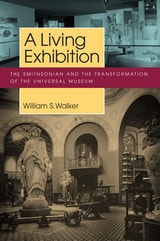
A Living Exhibition
The Smithsonian and the Transformation of the Universal MuseumWilliam S. Walker
University of Massachusetts Press, 2013
Since its founding in 1846 “for the increase and diffusion of knowledge,” the Smithsonian Institution has been an important feature of the American cultural landscape. In A Living Exhibition, William S. Walker examines the tangled history of cultural exhibition at the Smithsonian from its early years to the chartering of the National Museum of the American Indian in 1989. He tracks the transformation of the institution from its original ideal as a “universal museum” intended to present the totality of human experience to the variegated museum and research complex of today.
Walker pays particular attention to the half century following World War II, when the Smithsonian significantly expanded. Focusing on its exhibitions of cultural history, cultural anthropology, and folk life, he places the Smithsonian within the larger context of Cold War America and the social movements of the 1960s, '70s, and '80s. Organized chronologically, the book uses the lens of the Smithsonian's changing exhibitions to show how institutional decisions become intertwined with broader public debates about pluralism, multiculturalism, and decolonization.
Yet if a trend toward more culturally specific museums and exhibitions characterized the postwar history of the institution, its leaders and curators did not abandon the vision of the universal museum. Instead, Walker shows, even as the Smithsonian evolved into an extensive complex of museums, galleries, and research centers, it continued to negotiate the imperatives of cultural convergence as well as divergence, embodying both a desire to put everything together and a need to take it all apart.
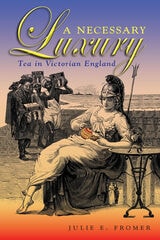
A Necessary Luxury
Tea in Victorian EnglandJulie E. Fromer
Ohio University Press, 2008
In A Necessary Luxury: Tea in Victorian England, Julie E. Fromer analyzes tea histories, advertisements, and nine Victorian novels, including Alice’s Adventures in Wonderland, Wuthering Heights, and Portrait of a Lady. Fromer demonstrates how tea functions within the literature as an arbiter of taste and middle-class respectability, aiding in the determination of class status and moral position. She reveals the way in which social identity and character are inextricably connected in Victorian ideology as seen through the ritual of tea.
Drawing from the fields of literary studies, cultural studies, history, and anthropology, A Necessary Luxury offers in-depth analysis of both visual and textual representations of the commodity and the ritual that was tea in nineteenth-century England.
A New Deal for All?
Race and Class Struggles in Depression-Era BaltimoreAndor Skotnes
Duke University Press, 2012
A New Language, A New World
Italian Immigrants in the United States, 1890-1945Nancy C. Carnevale
University of Illinois Press, 2012

A People's History of Tennis
David Berry
Pluto Press, 2020
From the birth of modern tennis in Victorian Britain to the present day, we bear witness to struggles around sexuality, gender, race and class that have transformed the nature of tennis and sport itself. A People's History of Tennis is populated by diverse voices, recounting the sport's gay origins, 'Workers' Wimbledon', battles for gender equality and more.
Going beyond center court, this book reveals the hidden history of the game, providing a rich account of the challenges faced and victories won.

A People's History of the New Boston
Jim Vrabel
University of Massachusetts Press, 2014
Credit for the city's turnaround since that time is often given to a select group of people, all of them men, all of them white, and most of them well off. In fact, a large group of community activists, many of them women, people of color, and not very well off, were also responsible for creating the Boston so many enjoy today. This book provides a grassroots perspective on the tumultuous 1960s and 1970s, when residents of the city's neighborhoods engaged in an era of activism and protest unprecedented in Boston since the American Revolution.
Using interviews with many of those activists, contemporary news accounts, and historical sources, Jim Vrabel describes the demonstrations, sit-ins, picket lines, boycotts, and contentious negotiations through which residents exerted their influence on the city that was being rebuilt around them. He includes case histories of the fights against urban renewal, highway construction, and airport expansion; for civil rights, school desegregation, and welfare reform; and over Vietnam and busing. He also profiles a diverse group of activists from all over the city, including Ruth Batson, Anna DeFronzo, Moe Gillen, Mel King, Henry Lee, and Paula Oyola. Vrabel tallies the wins and losses of these neighborhood Davids as they took on the Goliaths of the time, including Boston's mayors. He shows how much of the legacy of that activism remains in Boston today.
A Place of Their Own
Creating the Deaf Community in AmericaJohn Vickrey Van Cleve
Gallaudet University Press, 1989
Using original sources, this unique book focuses on the Deaf community during the 19th century. Largely through schools for the deaf, deaf people began to develop a common language and a sense of community.
A Place of Their Own brings the perspective of history to bear on the reality of deafness and provides fresh and important insight into the lives of deaf Americans.
A Radical History of the World
Neil Faulkner
Pluto Press, 2018
“Staggeringly ambitious.”―New Internationalist
“One of the finest historians on the left.”—John Newsinger, author, The Blood Never Dried
Rejecting the top-down approach of conventional history, Neil Faulkner contends that it is the mass action of ordinary people that drives the transformative events of our many histories. This is a history of power, abuse, and greed, but also one of liberation, progress, and solidarity.
From the hunter-gatherers two million years ago to the ancient empires of Persia and China, and from the Russian Revolution to modern imperialism, humans have always struggled to create a better society than what came before. All over the world at numerous points in the past, a different way of life has become an absolute necessity, over and over again. This is a history of the humans in these struggles—the hominid and the hunter, the emperor and the slave, the dictator and the revolutionary.
Reading against the grain of mainstream histories, Neil Faulkner reveals that what happened in the past has never been predetermined. From antiquity to feudalism, and from fascism to our precarious political present, choices have always been numerous and complex, and the possible outcomes have ranged broadly between liberation and barbarism. His chapters include:
*Hunters and Farmers
*The First Class Societies
*Ancient Empires
*The Medieval World
*European Feudalism
*The First Wave of Bourgeois Revolutions
*Absolutist Europe and Capitalist Globalization
*The Rise of Industrial Capitalism
*The Revolutionary Wave
*The Great Depression and the Rise of Fascism
*World War and Cold War
*The New World Disorder
*Capitalism’s Greatest Crisis? The Early Twenty-First Century
In our fraught political present—as we face the loss of civil liberties and environmental protections, the rise of ethnonationalism, and the looming threat of nuclear war—we need the perspective of these histories now more than ever. The lesson of A Radical History of the World is that, if we created our past, we can also create a better future.
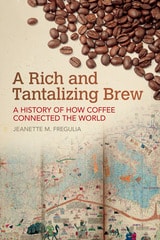
A Rich and Tantalizing Brew
A History of How Coffee Connected the WorldJeanette M. Fregulia
University of Arkansas Press, 2019
The history of coffee is much more than the tale of one luxury good—it is a lens through which to consider various strands of world history, from food and foodways to religion and economics and sociocultural dynamics.
A Rich and Tantalizing Brew traces the history of coffee from its cultivation and brewing first as a private pleasure in the highlands of Ethiopia and Yemen through its emergence as a sought-after public commodity served in coffeehouses first in the Muslim world, and then traveling across the Mediterranean to Italy, to other parts of Europe, and finally to India and the Americas. At each of these stops the brew gathered ardent aficionados and vocal critics, all the while reshaping patterns of socialization.
Taking its conversational tone from the chats often held over a steaming cup, A Rich and Tantalizing Brew offers a critical and entertaining look at how this bitter beverage, with a little help from the tastes that traveled with it—chocolate, tea, and sugar—has connected people to each other both within and outside of their typical circles, inspiring a new context for sharing news, conducting business affairs, and even plotting revolution.

A Room of His Own
A Literary-Cultural Study of Victorian ClublandBarbara Black
Ohio University Press, 2012
In nineteenth-century London, a clubbable man was a fortunate man, indeed. The Reform, the Athenaeum, the Travellers, the Carlton, the United Service are just a few of the gentlemen’s clubs that formed the exclusive preserve known as “clubland” in Victorian London—the City of Clubs that arose during the Golden Age of Clubs. Why were these associations for men only such a powerful emergent institution in nineteenth-century London? Distinctly British, how did these single-sex clubs help fashion men, foster a culture of manliness, and assist in the project of nation building? What can elite male affiliative culture tell us about nineteenth-century Britishness?
A Room of His Own sheds light on the mysterious ways of male associational culture as it examines such topics as fraternity, sophistication, nostalgia, social capital, celebrity, gossip, and male professionalism. The story of clubland (and the literature it generated) begins with Britain’s military heroes home from the Napoleonic campaign and quickly turns to Dickens’s and Thackeray’s acrimonious Garrick Club Affair. It takes us to Richard Burton’s curious Cannibal Club and Winston Churchill’s The Other Club; it goes underground to consider Uranian desire and Oscar Wilde’s clubbing and resurfaces to examine the problematics of belonging in Trollope’s novels. The trespass of French socialist Flora Tristan, who cross-dressed her way into the clubs of Pall Mall, provides a brief interlude. London’s clubland—this all-important room of his own—comes to life as Barbara Black explores the literary representations of clubland and the important social and cultural work that this urban site enacts. Our present-day culture of connectivity owes much to nineteenth-century sociability and Victorian networks; clubland reveals to us our own enduring desire to belong, to construct imagined communities, and to affiliate with like-minded comrades.

A Room of His Own
A Literary-Cultural Study of Victorian ClublandBarbara Black
Ohio University Press, 0
A Room of His Own sheds light on the mysterious ways of male associational culture as it examines such topics as fraternity, sophistication, nostalgia, social capital, celebrity, gossip, and male professionalism. The story of clubland (and the literature it generated) begins with Britain’s military heroes home from the Napoleonic campaign and quickly turns to Dickens’s and Thackeray’s acrimonious Garrick Club Affair. It takes us to Richard Burton’s curious Cannibal Club and Winston Churchill’s The Other Club; it goes underground to consider Uranian desire and Oscar Wilde’s clubbing and resurfaces to examine the problematics of belonging in Trollope’s novels. The trespass of French socialist Flora Tristan, who cross-dressed her way into the clubs of Pall Mall, provides a brief interlude. London’s clubland—this all-important room of his own—comes to life as Barbara Black explores the literary representations of clubland and the important social and cultural work that this urban site enacts. Our present-day culture of connectivity owes much to nineteenth-century sociability and Victorian networks; clubland reveals to us our own enduring desire to belong, to construct imagined communities, and to affiliate with like-minded comrades.

A Rumor of Revolt
The "Great Negro Plot" in Colonial New YorkT. J. Davis
University of Massachusetts Press, 1990
This groundbreaking historical examination analyzes the 1741 New York Conspiracy trials: a pivotal moment in colonial American history when the city's legal system prosecuted an alleged slave conspiracy with severe and controversial consequences. Thomas J. Davis meticulously reconstructs the trials and executions that resulted from this supposed uprising, providing crucial insights into the intersection of race, ethnicity, legal practice, and social control in colonial New York.
During the spring and summer of 1741, New York authorities conducted dramatic trials in response to fears of a coordinated slave rebellion. Between May 11 and August 29, 1741, the city executed 35 individuals: thirteen Black men were burned at the stake, seventeen Black men were hanged, and two white men and two white women were also executed. These brutal punishments reflected the city's intense fear and the racialized nature of colonial justice.
Davis's analysis examines the primary source material to investigate what this historical episode reveals about colonial New York's racial hierarchies, ethnic tensions, and legal systems. The work scrutinizes the trials themselves, asking critical questions: Was there truly a conspiracy, or was the event primarily a product of hysteria and rumor? How did racial prejudices, economic anxieties, and the structure of colonial authority shape legal proceedings?
Beyond the courtroom drama, Davis explores the broader implications of these trials for understanding slavery in northern colonies, where enslaved people were not as visible but equally integral to colonial society. The book demonstrates how fear, whether grounded in reality or stoked by rumor, could mobilize entire communities and transform legal systems into instruments of racialized control. This work has become essential reading for understanding how colonial societies constructed narratives of racial threat and employed legal mechanisms to enforce racial subordination.

A Social History of Iranian Cinema, Volume 1
The Artisanal Era, 1897-1941Hamid Naficy
Duke University Press, 2011
Volume 1 depicts and analyzes the early years of Iranian cinema. Film was introduced in Iran in 1900, three years after the country’s first commercial film exhibitor saw the new medium in Great Britain. An artisanal cinema industry sponsored by the ruling shahs and other elites soon emerged. The presence of women, both on the screen and in movie houses, proved controversial until 1925, when Reza Shah Pahlavi dissolved the Qajar dynasty. Ruling until 1941, Reza Shah implemented a Westernization program intended to unite, modernize, and secularize his multicultural, multilingual, and multiethnic country. Cinematic representations of a fast-modernizing Iran were encouraged, the veil was outlawed, and dandies flourished. At the same time, photography, movie production, and movie houses were tightly controlled. Film production ultimately proved marginal to state formation. Only four silent feature films were produced in Iran; of the five Persian-language sound features shown in the country before 1941, four were made by an Iranian expatriate in India.
A Social History of Iranian Cinema
Volume 1: The Artisanal Era, 1897–1941
Volume 2: The Industrializing Years, 1941–1978
Volume 3: The Islamicate Period, 1978–1984
Volume 4: The Globalizing Era, 1984–2010
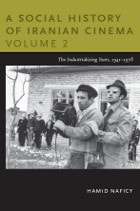
A Social History of Iranian Cinema, Volume 2
The Industrializing Years, 1941–1978Hamid Naficy
Duke University Press, 2011
Volume 2 spans the period of Mohammad Reza Shah’s rule, from 1941 until 1978. During this time Iranian cinema flourished and became industrialized, at its height producing more than ninety films each year. The state was instrumental in building the infrastructures of the cinema and television industries, and it instituted a vast apparatus of censorship and patronage. During the Second World War the Allied powers competed to control the movies shown in Iran. In the following decades, two distinct indigenous cinemas emerged. The more popular, traditional, and commercial filmfarsi movies included tough-guy films and the “stewpot” genre of melodrama, with plots reflecting the rapid changes in Iranian society. The new-wave cinema was a smaller but more influential cinema of dissent, made mostly by foreign-trained filmmakers and modernist writers opposed to the regime. Ironically, the state both funded and censored much of the new-wave cinema, which grew bolder in its criticism as state authoritarianism consolidated. A vital documentary cinema also developed in the prerevolutionary era.
A Social History of Iranian Cinema
Volume 1: The Artisanal Era, 1897–1941
Volume 2: The Industrializing Years, 1941–1978
Volume 3: The Islamicate Period, 1978–1984
Volume 4: The Globalizing Era, 1984–2010

A Social History of Iranian Cinema, Volume 3
The Islamicate Period, 1978–1984Hamid Naficy
Duke University Press, 2012
In Volume 3, Naficy assesses the profound effects of the Islamic Revolution on Iran's cinema and film industry. Throughout the book, he uses the term Islamicate, rather than Islamic, to indicate that the values of the postrevolutionary state, culture, and cinema were informed not only by Islam but also by Persian traditions. Naficy examines documentary films made to record events prior to, during, and in the immediate aftermath of the revolution. He describes how certain institutions and individuals, including prerevolutionary cinema and filmmakers, were associated with the Pahlavi regime, the West, and modernity and therefore perceived as corrupt and immoral. Many of the nation's moviehouses were burned down. Prerevolutionary films were subject to strict review and often banned, to be replaced with films commensurate with Islamicate values. Filmmakers and entertainers were thrown out of the industry, exiled, imprisoned, and even executed. Yet, out of this revolutionary turmoil, an extraordinary Islamicate cinema and film culture emerged. Naficy traces its development and explains how Iran's long war with Iraq, the gendered segregation of space, and the imposition of the veil on women encouraged certain ideological and aesthetic trends in film and related media. Finally, he discusses the structural, administrative, and regulatory measures that helped to institutionalize the new evolving cinema.
A Social History of Iranian Cinema
Volume 1: The Artisanal Era, 1897–1941
Volume 2: The Industrializing Years, 1941–1978
Volume 3: The Islamicate Period, 1978–1984
Volume 4: The Globalizing Era, 1984–2010

A Social History of Iranian Cinema, Volume 4
The Globalizing Era, 1984–2010Hamid Naficy
Duke University Press, 2012
The extraordinary efflorescence in Iranian film, TV, and the new media since the consolidation of the Islamic Revolution animates Volume 4. During this time, documentary films proliferated. Many filmmakers took as their subject the revolution and the bloody eight-year war with Iraq; others critiqued postrevolution society. The strong presence of women on screen and behind the camera led to a dynamic women's cinema. A dissident art-house cinema—involving some of the best Pahlavi-era new-wave directors and a younger generation of innovative postrevolution directors—placed Iranian cinema on the map of world cinemas, bringing prestige to Iranians at home and abroad. A struggle over cinema, media, culture, and, ultimately, the legitimacy of the Islamic Republic, emerged and intensified. The media became a contested site of public diplomacy as the Islamic Republic regime as well as foreign governments antagonistic to it sought to harness Iranian popular culture and media toward their own ends, within and outside of Iran. The broad international circulation of films made in Iran and its diaspora, the vast dispersion of media-savvy filmmakers abroad, and new filmmaking and communication technologies helped to globalize Iranian cinema.
A Social History of Iranian Cinema
Volume 1: The Artisanal Era, 1897–1941
Volume 2: The Industrializing Years, 1941–1978
Volume 3: The Islamicate Period, 1978–1984
Volume 4: The Globalizing Era, 1984–2010
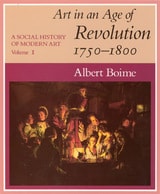
A Social History of Modern Art, Volume 1
Art in an Age of Revolution, 1750-1800Albert Boime
University of Chicago Press, 1990
This inaugural volume explores the artistic repercussions of the major political and economic events of the latter half of the eighteenth century: the Seven Years' War, the French Revolution, and the English industrial revolution. Boime examines the prerevolutionary popularity of the rococo style and the emergence of the cult of antiquity that followed the Seven Years' War. He shows how the continual experiments of Jacques-Louis David and others with neoclassical symbols and themes in the latter part of the century actively contributed to the transformation of French and English politics. Boime's analyses reveal the complex relationship of art with a wide range of contemporary attitudes and conditions—technological innovation, social and political tensions, commercial expansion, and the growth of capitalism.
"Provocative and endlessly revealing."—Christopher Knight, Los Angeles Herald Examiner
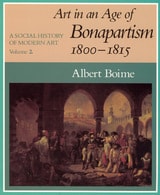
A Social History of Modern Art, Volume 2
Art in an Age of Bonapartism, 1800-1815Albert Boime
University of Chicago Press, 1990
Heavily illustrated, this volume is an invaluable social history of modern art during the Napoleonic era.
Stimulating and informative, this volume will become a valuable resource for faculty and undergraduates.—R. W. Liscombe, Choice
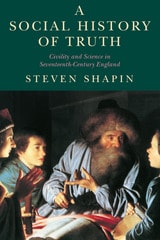
A Social History of Truth
Civility and Science in Seventeenth-Century EnglandSteven Shapin
University of Chicago Press, 1994
In A Social History of Truth, Shapin engages these universal questions through an elegant recreation of a crucial period in the history of early modern science: the social world of gentlemen-philosophers in seventeenth-century England. Steven Shapin paints a vivid picture of the relations between gentlemanly culture and scientific practice. He argues that problems of credibility in science were practically solved through the codes and conventions of genteel conduct: trust, civility, honor, and integrity. These codes formed, and arguably still form, an important basis for securing reliable knowledge about the natural world.
Shapin uses detailed historical narrative to argue about the establishment of factual knowledge both in science and in everyday practice. Accounts of the mores and manners of gentlemen-philosophers are used to illustrate Shapin's broad claim that trust is imperative for constituting every kind of knowledge. Knowledge-making is always a collective enterprise: people have to know whom to trust in order to know something about the natural world.
A Society Transformed
Hungary in Time-Space PerspectiveRichard Rose
Central European University Press, 1999
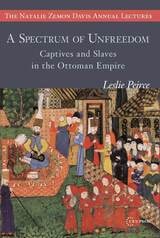
A Spectrum of Unfreedom
Captives and Slaves in the Ottoman EmpireLeslie Peirce
Central European University Press, 2021
Without the labor of the captives and slaves, the Ottoman empire could not have attained and maintained its strength in early modern times. With Anatolia as the geographic focus, Leslie Peirce searches for the voices of the unfree, drawing on archives, histories written at the time, and legal texts.
Unfree persons comprised two general populations: slaves and captives. Mostly household workers, slaves lived in a variety of circumstances, from squalor to luxury. Their duties varied with the status of their owner. Slave status might not last a lifetime, as Islamic law and Ottoman practice endorsed freeing one’s slave.
Captives were typically seized in raids, generally to disappear, their fates unknown. Victims rarely returned home, despite efforts of their families and neighbors to recover them. The reader learns what it was about the Ottoman environment of the sixteenth and seventeenth centuries that offered some captives the opportunity to improve the conditions of their bondage. The book describes imperial efforts to fight against the menace of captive-taking despite the widespread corruption among the state’s own officials, who had their own interest in captive labor.
From the fortunes of captives and slaves the book moves to their representation in legend, historical literature, and law, where, fortunately, both captors and their prey are present.

A Tale of Two Villages
Coerced Modernization in the East European CountrysideAlina Mungiu-Pippidi
Central European University Press, 2010
A Tough Little Patch of History
Gone with the Wind and the Politics of MemoryJennifer W. Dickey
University of Arkansas Press, 2014
More than seventy-five years after its publication, Gone with the Wind remains thoroughly embedded in American culture. Margaret Mitchell’s novel and the film produced by David O. Selznick have melded with the broader forces of southern history, southern mythology, and marketing to become, and remain, a cultural phenomenon.
A Tough Little Patch of History (the phrase was coined by a journalist in 1996 to describe the Margaret Mitchell home after it was spared from destruction by fire) explores how Gone with the Wind has remained an important component of public memory in Atlanta through an analysis of museums and historic sites that focus on this famous work of fiction. Jennifer W. Dickey explores how the book and film threw a spotlight on Atlanta, which found itself simultaneously presented as an emblem of both the Old South and the New South. Exhibitions produced by the Atlanta History Center related to Gone with the Wind are explored, along with nearby Clayton County’s claim to fame as “the Home of Gone with the Wind,” a moniker bestowed on the county by Margaret Mitchell’s estate in 1969. There’s a recounting of the saga of “the Dump,” the tiny apartment in midtown Atlanta where Margaret Mitchell wrote the book, and how this place became a symbol for all that was right and all that was wrong with Mitchell’s writing.
A View from the Inside
On the Front Line of Afro-American LiberationReggie Brown
Southern Illinois University Press, 2017
Brown joined the Black Panther Party and met with Fred Hampton, the Illinois chapter’s deputy chairman, engaging the man to speak at SIU just three weeks before his infamous assassination by Chicago police under orders from the FBI. Soon after, tensions would escalate into violence closer to home. Before his work in Carbondale was over, Brown would survive a terrible betrayal, an explosion that resulted in a month-long coma, the amputation of a leg, and a poisoning that was attempted as he lay in his hospital bed. After Brown’s injuries forced him to withdraw from Carbondale, his group would be falsely accused of shooting a local police officer, and their residence would be attacked with gunfire and tear gas. The narrative also reveals the challenges and struggles he faced in dealing with physical disabilities and the consequences of addiction.
A View from the Inside offers not only a fresh perspective on racial conflicts in southern Illinois during a pivotal era but also reflections on black identity, leadership, drug addiction, and more. In original poetry and rap as well as prose, Brown reveals a fascinating and significant moment in African American history.
Accounting for Capitalism
The World the Clerk MadeMichael Zakim
University of Chicago Press, 2018
The story of how everyday nineteenth-century clerks helped to articulate modern capitalism.
The clerk attended his desk and counter at the intersection of two great themes of modern historical experience: the development of a market economy and a society governed from below. Who better illustrates the daily practice and production of this modernity than someone of no particular account assigned with overseeing all the new buying and selling? In Accounting for Capitalism, Michael Zakim has written their story, a social history of capital that seeks to explain how the “bottom line” became a synonym for truth in an age shorn of absolutes, grafted onto our very sense of reason and trust.
This is a big story, told through an ostensibly marginal event: the birth of a class of “merchant clerks” in the United States in the middle of the nineteenth century. The personal trajectory of these young men from farm to metropolis, homestead to boarding house, and, most significantly, from growing things to selling them exemplified the enormous social effort required to domesticate the profit motive and turn it into the practical foundation of civic life. As Zakim reveals in his highly original study, there was nothing natural or preordained about the stunning ascendance of this capitalism and its radical transformation of the relationship between “Man and Mammon.”
Action=Vie
A History of AIDS Activism and Gay Politics in FranceChristophe Broqua
Temple University Press, 2026
Act Up-Paris became one of the most notable protest groups in France in the mid-1990s. Founded in 1989, and following the New York model, it became a confrontational voice representing the interests of those affected by HIV through openly political activism. Action=Vie, the English-language translation of Christophe Broqua’s study of the grassroots activist branch, explains the reasons for the group’s success and sheds light on Act Up's defining features—such as its unique articulation between AIDS and gay activism.
Featuring numerous accounts by witnesses and participants, Broqua traces the history of Act Up-Paris and shows how thousands of gay men and women confronted the AIDS epidemic by mobilizing with public actions. Act Up-Paris helped shape the social definition not only of HIV-positive persons but also of sexual minorities. Broqua analyzes the changes brought about by the group, from the emergence of new treatments for HIV infection to normalizing homosexuality and a controversy involving HIV-positive writers’ remarks about unprotected sex. This rousing history ends in the mid-2000s before marriage equality and antiretroviral treatments caused Act Up-Paris to decline.
Activist Leaders of San José
En sus propias vocesJosie Méndez-Negrete
University of Arizona Press, 2020
Sociologist and activist Josie Méndez-Negrete has returned to her hometown to document and record the stories of those who made contributions to the cultural and civic life of San José. Through interview excerpts, biographical and historical information, and analysis, Méndez-Negrete shows the contributions of this singular community throughout the twentieth century and the diversity of motivations across the generations.
Activists share with Méndez-Negrete how they became conscious about their communities and how they became involved in grassroots organizing, protest, and social action. Spanning generations, we hear about the motivations of activists in the 1930s to the end of the twentieth century. We hear firsthand stories of victories and struggles, successes and failures from those who participated.
Activist Leaders of San José narrates how parents—both mothers and fathers—were inspired to work for the rights of their people. Workers’ and education rights were at the core, but they also took on the elimination of at-large elections to open city politics, labor rights, domestic abuse, and health care. This book is an important record of the contributions of San José in improving conditions for the Mexican American community.

Adulthood in Britain and the United States from 1350 to Generation Z
Edited by Maria Cannon and Laura Tisdall
University of London Press, 2024
Who gets to be an adult—and who decides? This book argues that consideration of age is a crucial element in scholarship that addresses power and inequality. Exploring how concepts of adulthood have changed over time in Britain and the United States from 1350 to the present day, the essays collected here engage with the intersectional identities of gender, race, class, sexuality, and disability, and ask how these affect understandings of adulthood.
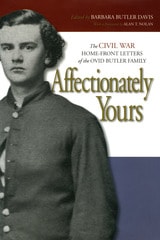
Affectionately Yours
The Civil War Home-Front Letters of the Ovid Butler FamilyBarbara Butler Davis
Indiana Historical Society Press, 2004

Africa and the Olympics
Winning Away from the PodiumTodd Cleveland
Ohio University Press, 2024
At the 2020 Tokyo Olympic Games (held in 2021 due to COVID-19), the fifty-four African countries that participated finished the tournament with the lowest medal haul for any continent, continuing a historic trend since the inception of the modern Games in 1896. Reflecting this relative lack of sporting success, African Olympians—aside from elite Kenyan distance runners—rarely register in the minds of even the most dedicated followers of the Games. Yet for all their seeming invisibility on the Olympic landscape, African states, athletes, and officials have long been “winning” at the Olympics, albeit often far removed from the medal podium. Africa and the Olympics shows how African actors have achieved these nonsporting victories and examines how they have used the Olympics to engage in transformative political activity, realize social mobility, and enhance the quality of life for individuals, communities, and entire nations. In tracing these historical and contemporary processes and the motivations that underlie them, the book complicates reductive notions of the Olympics as solely a sporting competition and instead considers Africa’s engagement with the Games as a series of opportunities to improve personal, communal, ethnic, national, and even continental plights. If few sports fans have thought extensively about Africa and the Olympics, scholars have been only slightly more engaged with the subject. Most of this scholarship focuses on the International Olympic Committee’s ban of apartheid South Africa from 1964 to 1988. Other works that consider the Olympics more broadly tend to deal with Africa only summarily, further reducing its already low profile. As a result, the academic literature resembles a patchwork of circumscribed studies dispersed in a range of fields and disciplines. Not since the publication of Africa at the Olympics almost fifty years ago has a single volume featured a comprehensive history of the continent and the Games. This book both updates and expands previous work and, most importantly, reframes the analytical engagement with this topic.
African American Fraternal Associations and the History of Civil Society in the United States, Volume 28
Katherine A. Lynch, ed.
Duke University Press, 0
The contributors construct a historical portrait of black fraternal orders during the nineteenth and twentieth centuries. They argue that African Americans were more likely than whites to form fraternal orders and to sustain them, using them to guard members against unemployment and other misfortunes. They examine the ritual life of fraternal organizations, paying particular attention to rites of initiation and to the values they reflected about collective identity, gender relations, equality, and collective action. Finally, they show how social networks that black fraternal organizations fostered led to successful legal battles for the right to assemble and to the later civil rights movement of the twentieth century.
Contributors. Bayliss J. Camp, Marshall Ganz, Orit Kent, Ariane Liazos, Jennifer Lynn Oser, Theda Skocpol, Joe W. Trotter
African American Organized Crime
A Social HistorySchatzberg, Rufus
Rutgers University Press, 1997
While stories of organized crime most often dwell on groups like the Mafia and Chinese Triad or Tongs, African Americans also have a long history of organized crime. Why have scholars and journalists paid so little attention to African American organized crime? What can a history of these criminal networks teach us about the social, political, and economic challenges that face African Americans today? What is specific to African American organized crime, and how do these networks differ from the criminal organizations of other racial and ethnic groups? How can a historical study of African American organized crime enrich our understanding of all criminal activity?
Rufus Schatzberg and Robert Kelly take us through almost a century of African American organized crime. Chapters focus on the numbers gambling that took place in New York City from 1920 to 1940, the criminal groups that operated in ghettos from the 1940s to the 1970s, and the gang activities that began in the 1970s and continues today. While providing a compelling analysis of African American organized crime, the authors also challenge existing stereotypes of African Americans and demonstrate the importance of studying any criminal activity within its historical and social context.
African American Travel Narratives from Abroad
Mobility and Cultural Work in the Age of Jim CrowGary Totten
University of Massachusetts Press, 2015
In this book, Gary Totten examines the global travel narratives of a diverse set of African American writers, including Ida B. Wells, Booker T. Washington, Matthew Henson, Jessie Redmon Fauset, and Zora Neale Hurston. While these writers deal with issues of identity in relation to a reimagined sense of self—in a way that we might expect to find in travel narratives—they also push against the constraints and conventions of the genre, reconsidering discourses of tourism, ethnography, and exploration. This book not only offers new insights about African American writers and mobility, it also charts the ideological distinctions and divergent agendas within this group of writers. Totten demonstrates how these travelers and their writings challenged dominant ideologies about African American experience, expression, and identity in a period of escalating racial violence. By setting these texts in their historical context and within the genre of travel writing, Totten presents a nuanced understanding of both popular and recovered work of the period.
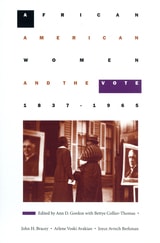
African American Women and the Vote, 1837–1965
Ann D. Gordon
University of Massachusetts Press, 1997
Written by leading scholars of African American and women's history, the essays in this volume seek to reconceptualize the political history of black women in the United States by placing them “at the center of our thinking.” The book explores how slavery, racial discrimination, and gender shaped the goals that African American women set for themselves, their families, and their race and looks at the political tools at their disposal. By identifying key turning points for black women, the essays create a new chronology and a new paradigm for historical analysis. The chronology begins in 1837 with the interracial meeting of antislavery women in New York City and concludes with the civil rights movement of the 1960s.
The contributors focus on specific examples of women pursuing a dual ambition: to gain full civil and political rights and to improve the social conditions of African Americans. Together, the essays challenge us to rethink common generalizations that govern much of our historical thinking about the experience of African American women.
Contributors include Bettina Aptheker, Elsa Barkley Brown, Willi Coleman, Gerald R. Gill, Ann D. Gordon, Evelyn Brooks Higginbotham, Cynthia Neverdon-Morton, Martha Prescod Norman, Janice Sumler-Edmond, Rosalyn Terborg-Penn, and Bettye Collier-Thomas.
African Apocalypse
The Story of Nontetha Nkwenkwe, a Twentieth-Century South African ProphetRobert R. Edgar; Hilary SapireRobert R.
Ohio University Press, 1999
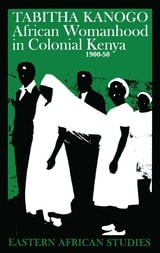
African Womanhood in Colonial Kenya, 1900–1950
1900-1950Tabitha Kanogo
Ohio University Press, 2000
This book explores the history of African womanhood in colonial Kenya. By focussing on key sociocultural institutions and practices around which the lives of women were organized, and on the protracted debates that surrounded these institutions and practices during the colonial period, it investigates the nature of indigenous, mission, and colonial control of African women.
The pertinent institutions and practices include the legal and cultural status of women, clitoridectomy, dowry, marriage, maternity and motherhood, and formal education. By following the effects of the all-pervasive ideological shifts that colonialism produced in the lives of women, the study investigates the diverse ways in which a woman’s personhood was enhanced, diminished, or placed in ambiguous predicaments by the consequences, intended and unintended, of colonial rule as administered by both the colonizers and the colonized. The study thus tries to historicize the reworkings of women’s lives under colonial rule. The transformations that resulted from these reworkings involved the negotiation and redefinition of the meaning of individual liberties and of women’s agency, along with the reconceptualization of kinship relations and of community.
These changes resulted in—and often resulted from—increased mobility for Kenyan women, who were enabled to cross physical, cultural, economic, social, and psychological frontiers that had been closed to them prior to colonial rule. The conclusion to which the experiences of women in colonial Kenya points again and again is that for these women, the exercise of individual agency, whether it was newly acquired or repeatedly thwarted, depended in large measure on the unleashing of forces over which no one involved had control. Over and over, women found opportunities to act amid the conflicting policies, unintended consequences, and inconsistent compromises that characterized colonial rule.
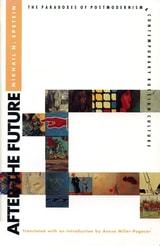
After the Future
The Paradoxes of Postmodernism & Contemporary Russian CultureMikhail N. Epstein
University of Massachusetts Press, 1995
This book brings together for the first time in English the major writings of Mikhail Epstein, one of post-Soviet Russia's most prominent theoreticians of cultural studies and postmodernism. Written from a non-Western point of view yet informed by a familiarity with Western literary theory, it offers a fresh, lucid perspective on the post-communist literary scene as well as a practical and theoretical introduction to the new discipline of Russian “culturology.”