Results by title
34 books match the query 'Social interaction'

Ambivalent Encounters
Childhood, Tourism, and Social Change in Banaras, IndiaHuberman, Jenny
Rutgers University Press, 2012
Jenny Huberman provides an ethnographic study of encounters between western tourists and the children who work as unlicensed peddlers and guides along the riverfront city of Banaras, India. She examines how and why these children elicit such powerful reactions from western tourists and locals in their community as well as how the children themselves experience their work and render it meaningful.
Ambivalent Encounters brings together scholarship on the anthropology of childhood, tourism, consumption, and exchange to ask why children emerge as objects of the international tourist gaze; what role they play in representing socio-economic change; how children are valued and devalued; why they elicit anxieties, fantasies, and debates; and what these tourist encounters teach us more generally about the nature of human interaction. It examines the role of gender in mediating experiences of social change—girls are praised by locals for participating constructively in the informal tourist economy while boys are accused of deviant behavior. Huberman is interested equally in the children’s and adults’ perspectives; her own experiences as a western visitor and researcher provide an intriguing entry into her interpretations.
Download the open access ebook here.

An Interpretation of Desire
Essays in the Study of SexualityJohn Gagnon
University of Chicago Press, 2003
Gagnon may be best known as the coauthor of Sexual Conduct—a book that introduced the seminal concept of sexual scripting—and as one of the coauthors of The Social Organization of Sexuality, a foundational work that is widely considered to be the most important study of human sexual behavior since the Kinsey report. The essays collected here first trace the influence of scripting theory on Gagnon, outlining the radical departure he took from the dominant biological and psychiatric models of sex research. The volume then turns to more recent essays that consider such vexed issues as homosexuality, the theories of Sigmund Freud, HIV, hazardous sex, and the social aspects of sexually transmitted diseases.

Anonymous
The Performance of Hidden IdentitiesThomas DeGloma
University of Chicago Press, 2023
In recent years, anonymity has rocked the political and social landscape. There are countless examples: An anonymous whistleblower was at the heart of President Trump’s first impeachment, an anonymous group of hackers compromised more than 77 million Sony accounts, and best-selling author Elena Ferrante resolutely continued to hide her real name and identity. In Anonymous, Thomas DeGloma draws on a fascinating set of contemporary and historical cases to build a sociological theory that accounts for the many faces of anonymity. He asks a number of pressing questions about the social conditions and effects of anonymity. What is anonymity, and why, under various circumstances, do individuals act anonymously? How do individuals accomplish anonymity? How do they use it, and, in some situations, how is it imposed on them?
To answer these questions, DeGloma tackles anonymity thematically, dedicating each chapter to a distinct type of anonymous action, including ones he dubs protective, subversive, institutional, and ascribed. Ultimately, he argues that anonymity and pseudonymity are best understood as performances in which people obscure personal identities as they make meaning for various audiences. As they bring anonymity and pseudonymity to life, DeGloma shows, people work to define the world around them to achieve different goals and objectives.

Bad News, Good News
Conversational Order in Everyday Talk and Clinical SettingsDouglas W. Maynard
University of Chicago Press, 2003
Uncovering vocal and nonvocal patterns in everyday conversations, clinics, and other organizations, Maynard shows practices by which people give and receive good or bad news, how they come to realize the news and their new world, how they suppress or express their emotions, and how they construct social relationships through the sharing of news. He also reveals the implications of his study for understanding public affairs in which transmitting news may influence society at large, and he provides recommendations for professionals and others on how to deliver bad or good tidings more effectively.
For anyone who wants to understand the interactional facets of news delivery and receipt and their social implications, Bad News, Good News offers a wealth of scholarly insights and practical advice.

Conversation and Community
Chat in a Virtual WorldLynn Cherny
CSLI, 1999
Economic Exchange and Social Interaction in Southeast Asia
Perspectives from Prehistory, History, and EthnographyKarl L. Hutterer, Editor
University of Michigan Press, 1978
Yet in social science research in Southeast Asia, the area of economic studies has lagged behind, despite the great study potential represented by the tremendous diversity of its physical and human environment. Economic Exchange and Social Interaction in Southeast Asia attempts to take advantage of that opportunity. As a number of the contributions to this volume show, many if not most of the systems organized on very different levels of integration interact with each other. Taken as a whole, they provide evidence of the incredible diversity of economic and social systems that may be investigated in Southeast Asia.
Facing Social Class
How Societal Rank Influences InteractionSusan T. Fiske
Russell Sage Foundation, 2012
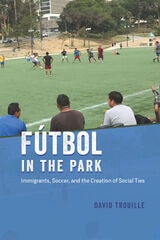
Fútbol in the Park
Immigrants, Soccer, and the Creation of Social TiesDavid Trouille
University of Chicago Press, 2021

Gambling Life
DEALING IN CONTINGENCY IN A GREEK CITYThomas M. Malaby
University of Illinois Press, 2003
Backgammon cafés, card clubs, and hidden gambling rooms in the city of Chania provide the context for Thomas M. Malaby to examine the ways in which people confront uncertainty in their lives. He shows how the dynamics of gambling -- risk, fate, uncertainty, and luck -- are reflected in other aspects of gamblers’ lives from courtship and mortality to state bureaucracy and national identity.
By moving beyond risk and fate as unexamined analytical categories, Malaby presents a new model for research concerning indeterminacy, seeing it as arising from stochastic, performative, and other sources. Gambling Life questions the longstanding valorization of order and pattern in the social sciences.
Getting Your Way
Strategic Dilemmas in the Real WorldJames M. Jasper
University of Chicago Press, 2006
Getting other people to do what we want is a useful skill for anyone. Whether you’re seeking a job, negotiating a deal, or angling for that big promotion, you’re engaged in strategic thought and action. In such moments, you imagine what might be going on in another person’s head and how they’ll react to what you do or say. At the same time, you also try to pick the best way to realize your goals, both with and without the other person’s cooperation. Getting Your Way teaches us how to win that game by offering a fuller understanding of how strategy works in the real world.
As we all know, rules of strategy are regularly discovered and discussed in popular books for business executives, military leaders, and politicians. Those works with their trendy lists of pithy maxims and highly effective habits can help people avoid mistakes or even think anew about how to tackle their problems. But they are merely suggestive, as each situation we encounter in the real world is always more complex than anticipated, more challenging than we had hoped. James M. Jasper here shows us how to anticipate those problems before they actually occur—by recognizing the dilemmas all strategic players must negotiate, with each option accompanied by a long list of costs and risks. Considering everyday dilemmas in a broad range of familiar settings, from business and politics to love and war, Jasper explains how to envision your goals, how to make the first move, how to deal with threats, and how to employ strategies with greater confidence.
Alexander the Great, Genghis Khan, Rosa Parks, Hugo Chávez, and David Koresh all come into play in this smart and engaging book, one that helps us recognize and prepare for the many dilemmas inherent in any strategic action.
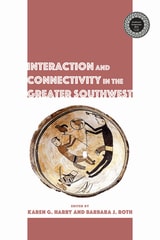
Interaction and Connectivity in the Greater Southwest
Karen Harry
University Press of Colorado, 2018
The book observes social interactions’ role in the diffusion of ideas and material culture; the way different social units, especially households, interacted within and between communities; and the importance of interaction and interconnectivity in understanding the archaeology of the Southwest’s northern periphery. Chapters demonstrate a movement away from strictly economic-driven models of social connectivity and interaction and illustrate that members of social groups lived in dynamic situations that did not always have clear-cut and unwavering boundaries. Social connectivity and interaction were often fluid, changing over time.
Interaction and Connectivity in the Greater Southwest is an impressive collection of established and up-and-coming Southwestern archaeologists collaborating to strengthen the theoretical underpinnings of the discipline. It will be of interest to professional and academic archaeologists, as well as researchers with interests in diffusion, identity, cultural transmission, borders, large-scale interaction, or social organization.
Contributors:
Richard V. N. Ahlstrom, James R. Allison, Jean H. Ballagh, Catherine M. Cameron, Richard Ciolek-Torello, John G. Douglass, Suzanne L. Eckert, Hayward H. Franklin, Patricia A. Gilman, Dennis A. Gilpin, William M. Graves, Kelley A. Hays-Gilpin, Lindsay D. Johansson, Eric Eugene Klucas, Phillip O. Leckman, Myles R. Miller, Barbara J. Mills, Matthew A. Peeples, David A. Phillips Jr., Katie Richards, Heidi Roberts, Thomas R. Rocek, Tammy Stone, Richard K. Talbot, Marc Thompson, David T. Unruh, John A. Ware, Kristina C. Wyckoff

Intoxication
An Ethnography of Effervescent RevelrySébastien Tutenges
Rutgers University Press, 2023
For two decades, Sébastien Tutenges has conducted research in bars, nightclubs, festivals, drug dens, nightlife resorts, and underground dance parties in a quest to answer a fundamental question: Why do people across cultures gather regularly to intoxicate themselves?
Vivid and at times deeply personal, this book offers new insights into a wide variety of intoxicating experiences, from the intimate feeling of connection among concertgoers to the adrenaline-fueled rush of a fight, to the thrill of jumping off a balcony into a swimming pool. Tutenges shows what it means and feels to move beyond the ordinary into altered states in which the transgressive, spectacular, and unexpected take place.
He argues that the primary aim of group intoxication is the religious experience that Émile Durkheim calls collective effervescence, the essence of which is a sense of connecting with other people and being part of a larger whole. This experience is empowering and emboldening and may lead to crime and deviance, but it is at the same time vital to our humanity because it strengthens social bonds and solidarity.
The book fills important gaps in Durkheim’s social theory and contributes to current debates in micro-sociology as well as cultural criminology and cultural sociology. Here, for the first time, readers will discover a detailed account of collective effervescence in contemporary society that includes: an explanation of what collective effervescence is; a description of the conditions that generate collective effervescence; a typology of the varieties of collective effervescence; a discussion of how collective effervescence manifests in the realm of nightlife, politics, sports, and religion; and an analysis of how commercial forces amplify and capitalize on the universal human need for intoxication.
This book is also freely available online as an open access digital edition.
Download the open access ebook here. (https://www.rutgersuniversitypress.org/media/wysiwyg/documents/intoxication.pdf)
Joy to the World
The Performance of Collective PleasureGary Alan Fine
University of Chicago Press, 2026
A celebration and exploration of the idea of pleasure and the unique role it serves in bringing individuals and communities together.
There are innumerable ways to take pleasure in life: a bite of cake in the late afternoon, a walk in the warm springtime air after a long winter, a listen to the opening chords of your favorite song. But each of these pleasures is transformed by the presence of others. In Joy to the World, sociologist Gary Alan Fine takes up one of the major themes of his lifetime of work: pleasure. Fine gives us the conceptual basis for a sociology of pleasure: a joyous view of the world that, at times, inspires us, through expectations of interaction, shared cultures, and routine practices that make life worth living in community.
Fine focuses on the impact of group relations as the platform for satisfaction, emphasizing the power of communities of practice. While pleasures may be enjoyed alone, the pleasure that occurs in social spaces performs a unique function in our personal and social lives; they help us understand ourselves as individuals who are part of a group. What is pleasurably transgressive in one context might seem inappropriate, cruel, or just plain nonsensical in another, and these shades of difference serve to solidify the bonds of the group.
Joy to the World urges us to understand what draws us together as well as to appreciate what drives us apart. Our joys, as well as our challenges, help us to be a part of a caring, conscientious, committed community.

Language and Social Relationship in Brazilian Portuguese
The Pragmatics of PolitenessBy Dale April Koike
University of Texas Press, 1992
"Give me the salt" and "Please pass the salt" make the same request, but in a polite situation the first utterance may give offense, while the second may not. How and why such differences in wording and intonation, in a particular context, produce different effects is the concern of pragmatics, the area of linguistics that deals with how speech is used in interaction. In this innovative study of pragmatics in Brazilian Portuguese, Dale Koike analyzes the politeness phenomenon, specifically in the context of speech acts known as "directives."
As acts intended to get someone to do something, directives bring into play a variety of sociocultural factors, depending on the relationship between the participants. Using empirical data obtained through natural language observation and from questionnaires of over one hundred adult native speakers, Koike identifies factors—such as age, education, and gender—that influence the strategies of politeness a given speaker is likely to use in making a directive. This research clarifies the unwritten language rules and assumptions that native speakers intuitively follow in phrasing their directive utterances.
Koike also includes important material on the acquisition of strategies for politeness by children and adult second-language learners, as well as on gender differences in politeness forms. Her research proposes important additions to the theory of speech acts as conceived by Austin and Searle, particularly in the application of deictic organization to account for a hierarchy of pragmatic forms.
Language and Social Relationship in Brazilian Portuguese will be of interest to a wide audience in diverse fields, including linguistics, anthropology, interaction analysis, communications, semantics, sociology, psychology, and education.

Literary Circles and Cultural Communities in Renaissance England
Edited by Claude J. Summers & Ted-Larry Pebworth
University of Missouri Press, 2001
Although the literary circle is widely recognized as a significant feature of Renaissance literary culture, it has received remarkably little examination. In this collection of essays, the authors attempt to explain literary circles and cultural communities in Renaissance England by exploring both actual and imaginary ways in which they were conceived and the various needs they fulfilled. The book also pays considerable attention to larger theoretical issues relating to literary circles.
The essayists raise important questions about the extent to which literary circles were actual constructs or fictional creations. Whether illuminating or limiting, the circle metaphor itself can be extended or reformulated. Some of the authors discuss how particular circles actually operated, and some question the very concept of the literary circle. Literary Circles and Cultural Communities in Renaissance England will be an important addition to seventeenth-century studies.

Microsociology
Discourse, Emotion, and Social StructureThomas J. Scheff
University of Chicago Press, 1990
Thomas J. Scheff brings together the study of communication and the social
psychology of emotions to explore the microworld of thoughts, feelings,
and moods. Drawing on strikingly diverse and rich sources—the findings of
artificial intelligence and cognitive science, and examples from literary
dialogues and psychiatric interviews—Scheff provides an inventive account
of the nature of social life and a theory of motivation that brilliantly
accounts for the immense complexity involved in understanding even the most
routine conversation.
"A major contribution to some central debates in social theory at the
present time. . . . What Thomas Scheff seeks to develop is essentially a
quite novel account of the nature of social life, its relation to language
and human reflexivity, in which he insists upon the importance of a theory
of emotion. . . . A work of true originality and jolting impact. . . .
Microsociology is of exceptional interest, which bears witness to the
very creativity which it puts at the center of human social contact."
—Anthony Giddens, from the Foreword
"Scheff provides a rich theory that can easily generate further exploration. And he drives home the message that sociological work on interaction, social bonds, and society cannot ignore human emotionality."—Candace Clark, American Journal of Sociology
"This outstanding and ground-breaking little volume contains a wealth of original ideas that bring together many insights concerning the relationship of emotion to motivation in a wide variety of social settings. It is strongly recommended to all serious students of emotion, of society, and of human nature."—Melvin R. Lansky, American Journal of Psychiatry

Race Talk in a Mexican Cantina
Tatcho Mindiola
Michigan State University Press, 2021

Run For The Wall
Remembering Vietnam on a Motorcycle PilgrimageMichalowski, Raymond J
Rutgers University Press, 2001
Every May, for more than a decade, an ever-increasing number of motorcyclists have made the “Run for the Wall,” a cross-country journey from Southern California to the “Wall,” the Vietnam war memorial in Washington, D.C. While the journey’s avowed purpose is political — to increase public awareness about those who remain either prisoners of war or missing in action in Southeast Asia — it also serves as a healing pilgrimage for its participants and as a “welcome-home” ritual many veterans feel they never received.
Run for the Wall is a highly readable ethnographic account of this remarkable American ritual. The authors, themselves motorcyclists as well as Run participants, demonstrate that the event is a form of secular pilgrimage. Here key concepts in American culture— “freedom,” and “brotherhood,” for example—are constructed and deployed in a variety of rituals and symbols to enable participants to come to terms with the consequences of the Vietnam war. While the focus is the journey itself, the book also explores other themes related to American culture and history, including the nature of community, the Vietnam war, and the creation of American secular ritual.
In moving, first-hand accounts, the book tells how participation in the POW-MIA social movement helps individuals find personal and collective meaning in America’s longest and most divisive conflict. Above all, this is a story of a uniquely American form of political action, ritual, pilgrimage, and the social construction of memory.

Signs in America's Auto Age
Signatures of Landscape and PlaceJohn A. & Keith A. Jakle & Sculle
University of Iowa Press, 2004

Space, Place, and Gender
Doreen Massey
University of Minnesota Press, 1994

Still Connected
Family and Friends in America Since 1970Claude S. Fischer
Russell Sage Foundation, 2011

Strong Interaction
Thomas Spence Smith
University of Chicago Press, 1992
Blending physiology and psychology with historical examples of social change and a sophisticated new model of social systems, this book contributes to our understanding how societies are possible.

Tacit Racism
Anne Warfield Rawls and Waverly Duck
University of Chicago Press, 2020
Every time we interact with another human being, we unconsciously draw on a set of expectations to guide us through the encounter. What many of us in the United States—especially white people—do not recognize is that centuries of institutional racism have inescapably molded those expectations. This leads us to act with implicit biases that can shape everything from how we greet our neighbors to whether we take a second look at a resume. This is tacit racism, and it is one of the most pernicious threats to our nation.
In Tacit Racism, Anne Warfield Rawls and Waverly Duck illustrate the many ways in which racism is coded into the everyday social expectations of Americans, in what they call Interaction Orders of Race. They argue that these interactions can produce racial inequality, whether the people involved are aware of it or not, and that by overlooking tacit racism in favor of the fiction of a “color-blind” nation, we are harming not only our society’s most disadvantaged—but endangering the society itself.
Ultimately, by exposing this legacy of racism in ordinary social interactions, Rawls and Duck hope to stop us from merely pretending we are a democratic society and show us how we can truly become one.

The Creativity of Action
Hans Joas
University of Chicago Press, 1996
Joas argues for adding a third model of action to the two predominant models of rational and normative action—one that emphasizes the creative character of human action. This model encompasses the other two, allowing for a more comprehensive theory of action. Joas elaborates some implications of his model for theories of social movements and social change and for the status of action theory in sociology in the face of competition from theories advanced by Luhmann and Habermas.
The problem of action is of crucial importance in both sociology and philosophy, and this book—already widely debated in Germany—will add fresh impetus to the lively discussions current in the English-speaking world.

The Hinge
Civil Society, Group Cultures, and the Power of Local CommitmentsGary Alan Fine
University of Chicago Press, 2021

The Performer-Audience Connection
Emotion to Metaphor in Dance and SocietyBy Judith Lynne Hanna
University of Texas Press, 1983
The Performer-Audience Connection is a pioneering foray into one of the major puzzles of human communication: the communication of emotion in dance. It is the first attempt of its kind systematically to investigate what performers wish to convey and what audiences perceive in the performance of dance.
The centerpiece of this provocative book is an examination of performer intentions and audience response at eight dance performances in Washington, D.C. Part of the Smithsonian Institution Division of Performing Arts Dance Series, these concerts featured a variety of dance genres and cultures: American tap dance, Kathakali dance-drama from Kerala, India, Japanese Kabuki, contemporary avant-garde dance, Philippine folk dance, the Indian classical tradition of Kuchipudi, and modern dance to an AfroAmerican spiritual.
How did dancer and audience interact at the emotional level on these eight occasions? What affected performer-audience rapport? Through interviews of both spectators and dancers, Judith Lynne Hanna explores the performers' ways of imparting emotion through movement and audience members' expectations and responses. In doing so she casts new light on important issues of cultural identity, sex role, historic attitudes toward dance, and even marketing the arts today.
A landmark work not only for performers who wish to reach their audiences more effectively but also for choreographers, anthropologists, specialists in nonverbal communication, behavioral scientists, educators, and all who are fascinated by the arts and the special magic of the "performer-audience connection."
The Politics of Small Things
The Power of the Powerless in Dark TimesJeffrey C. Goldfarb
University of Chicago Press, 2006
In The Politics of Small Things, Jeffrey Goldfarb provides an innovative way for understanding politics, a way of appreciating the significance of politics at the micro level by comparatively analyzing key turning points and institutions in recent history. He presents a sociology of human interactions that lead from small to large: dissent around the old Soviet bloc; life on the streets in Warsaw, Prague, and Bucharest in 1989; the network of terror that spawned 9/11; and the religious and Internet mobilizations that transformed the 2004 presidential election, to name a few. In such pivotal moments, he masterfully shows, political autonomy can be generated, presenting alternatives to the big politics of the global stage and the dominant narratives of terrorism, antiterrorism, and globalization.
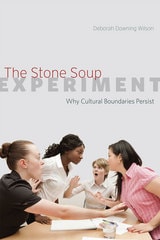
The Stone Soup Experiment
Why Cultural Boundaries PersistDeborah Downing Wilson
University of Chicago Press, 2015
The experience of the Stoners and Traders is a profound testament to human sociality. Even in the form of simulation, even as a game, the participants found themselves quickly—and with real conviction—bound to the ideologies and practices of their in-group. The Stoners enjoyed their days lounging, chatting, and making crafts, while the Traders—through a complex market of playing cards—competed for the highest bankrolls. When they came into contact, misunderstanding, competition, and even manipulation prevailed, to the point that each group became so convinced of its own superiority that even after the simulation’s end the students could not reconcile.
Throughout her riveting narrative, Downing Wilson interweaves fascinating discussions on the importance of play, emotions, and intergroup interaction in the formation and maintenance of group identities, as well as on the dynamic social processes at work when different cultural groups interact. A fascinating account of social experimentation, the book paints a vivid portrait of our deepest social tendencies and the powers they have over how we make friends and enemies alike.

The Swift Creek Gift
Vessel Exchange on the Atlantic CoastNeill J. Wallis
University of Alabama Press, 2011
A unique dataset for studying past social interactions comes from Swift Creek Complicated Stamped pottery that linked sites throughout much of the Eastern Woodlands but that was primarily distributed over the lower Southeast. Although connections have been demonstrated, their significance has remained enigmatic. How and why were apparently utilitarian vessels, or the wooden tools used to make them, distributed widely across the landscape?
This book assesses Woodland Period interactions using technofunctional, mineralogical, and chemical data derived from Swift Creek Complicated Stamped sherds whose provenience is fully documented from both mortuary mounds and village middens along the Atlantic coast. Together, these data demonstrate formal and functional differences between mortuary and village assemblages along with the nearly exclusive occurrence of foreign-made cooking pots in mortuary contexts. The Swift Creek Gift provides insight into the unique workings of gift exchanges to transform seemingly mundane materials like cooking pots into powerful tools of commemoration, affiliation, and ownership.

Tiny Publics
A Theory of Group Action and CultureGary Alan Fine
Russell Sage Foundation, 2012

Trust and Reciprocity
Interdisciplinary Lessons for Experimental ResearchElinor Ostrom
Russell Sage Foundation, 2003

Undoing Networks
Tero Karppi
University of Minnesota Press, 2020
Exploring and conceptualizing practices, technologies, and politics of disconnecting
How do we think beyond the dominant images and imaginaries of connectivity? Undoing Networks enables a different connectivity: “digital detox” is a luxury for stressed urbanites wishing to lead a mindful life. Self-help books advocate “digital minimalism” to recover authentic experiences of the offline. Artists envision a world without the internet. Activists mobilize against the expansion of the 5G network.
If connectivity brought us virtual communities, information superhighways, and participatory culture, disconnection comes with privacy tools, Faraday shields, and figures of the shy. This book explores nonusage and the “right to disconnect” from work and from the excessive demands of digital capitalism.

Urban Nightlife
Entertaining Race, Class, and Culture in Public SpaceMay, Reuben A. Buford
Rutgers University Press, 2014
Watch video now. (http://www.youtube.com/watch?v=VCs1xExStPw).

Virality
Contagion Theory in the Age of NetworksTony D. Sampson
University of Minnesota Press, 2012
In this thought-provoking work, Tony D. Sampson presents a contagion theory fit for the age of networks. Unlike memes and microbial contagions, Virality does not restrict itself to biological analogies and medical metaphors. It instead points toward a theory of contagious assemblages, events, and affects. For Sampson, contagion is not necessarily a positive or negative force of encounter; it is how society comes together and relates.
Sampson argues that a biological knowledge of contagion has been universally distributed by way of the rhetoric of fear used in the antivirus industry and other popular discourses surrounding network culture. This awareness is also detectable in concerns over too much connectivity, such as problems of global financial crisis and terrorism. Sampson’s “virality” is as established as that of the biological meme and microbe but is not understood through representational thinking expressed in metaphors and analogies. Rather, Sampson interprets contagion theory through the social relationalities first established in Gabriel Tarde’s microsociology and subsequently recognized in Gilles Deleuze’s ontological worldview.
According to Sampson, the reliance on representational thinking to explain the social behavior of networking—including that engaged in by nonhumans such as computers—allows language to overcategorize and limit analysis by imposing identities, oppositions, and resemblances on contagious phenomena. It is the power of these categories that impinges on social and cultural domains. Assemblage theory, on the other hand, is all about relationality and encounter, helping us to understand the viral as a positively sociological event, building from the molecular outward, long before it becomes biological.