Results by title
36 books match the query 'Social mobility'
Beyond Indigeneity
Coca Growing and the Emergence of a New Middle Class in BoliviaAlessandra Pellegrini Calderón
University of Arizona Press, 2016
Beyond Indigeneity offers new analysis into indigenous identity and social mobility that changes the discourse in Latin American social anthropology. Author Alessandra Pellegrini Calderón points out that Morales’s presidency has led to heightened publicity of coca issues and an intensification of indigeneity discourse, echoing a global trend of increased recognition of indigenous peoples’ claims. The “living well” attitude (vivir bien) enshrined in the new political constitution is generally represented as an indigenous way of life, one based on harmony and reciprocity, in sharp contrast to the capitalist logic of “living better” that is based on accumulation and expansion.
In this ethnography, Pellegrini explores the positioning of coca growers in Bolivia and their reluctance to embrace the politics of indigeneity by rejecting the “indigenous peoples’ slot,” even while they emerge as a new middle class. By staying in a space between ethnic categories and also between social classes, the coca growers break with the traditional model of social mobility in Latin America and create new forms of political positioning that challenge the dominant culturalist framework about indigeneity and peasants.
Bottleneck
Moving, Building, and Belonging in an African CityCaroline Melly
University of Chicago Press, 2017
Melly opens with an account of the generation of urban men who came of age on the heels of the era of structural adjustment, a diverse cohort with great dreams of building, moving, and belonging, but frustratingly few opportunities to do so. From there, she moves to a close study of taxi drivers and state workers, and shows how bottlenecks—physical and institutional—affect both. The third section of the book covers a seemingly stalled state effort to solve housing problems by building large numbers of concrete houses, while the fourth takes up the thousands of migrants who attempt, sometimes with tragic results, to cross the Mediterranean on rickety boats in search of new opportunities. The resulting book offers a remarkable portrait of contemporary Senegal and a means of theorizing mobility and its impossibilities far beyond the African continent.
Challenging Chicago
Coping with Everyday Life, 1837-1920Perry R. Duis
University of Illinois Press, 2006
Follow along and encounter some of Chicago’s most infamous citizens--the loathed Traction Baron, high-speed “scorchers,” and peddlers of “swill milk.” Learn about the perils of payday, the lunchtime problems of women, the lure of dime museums, and the fatal attraction of Chicago’s “cruelest place.” Against this bleak backdrop emerged the innovators and institutions that made Chicago the vibrant city it is today. The superbly textured narrative is enhanced by eighty-six historic photographs and illustrations.
Class Cultures and Social Mobility
The Hidden Strengths of Working-Class First-Generation GraduatesPaul Dean
Rutgers University Press, 2026
When working-class first-generation students enter college or the professional workplace, they often find themselves immersed in entirely new worlds. They must learn the unwritten rules for how to speak, dress, behave, and interact with new peers and colleagues. While striving to fit in and do well, they risk feeling imposter syndrome, a loss of identity, or broken ties with friends and family.
Class Cultures and Social Mobility tells the stories of upwardly mobile first-gen graduates who flipped the script and turned their working-class roots into a strength. This accessible and highly engaging book reveals how first-gen graduates overcame hardship while leveraging unique skills—their working-class cultural capital—in college and their professional careers. It demonstrates there needn’t be a choice between economic success and maintaining authenticity to one’s roots—we can balance the competing demands of the two class worlds together. Whether you're an educator, student, working professional, or advocate, this book provides a powerful way to reimagine the transformations that accompany class mobility.
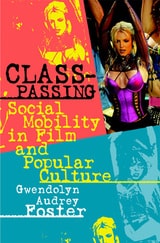
Class-Passing
Social Mobility in Film and Popular CultureGwendolyn Audrey Foster
Southern Illinois University Press, 2005
Oprah Winfrey, Donald Trump, Roseanne Barr, Martha Stewart, and Britney Spears typify class-passers—those who claim different socioeconomic classes as their own—asserts Gwendolyn Audrey Foster in Class-Passing: Social Mobility in Film and Popular Culture. According to new rules of social standing in American popular culture, class is no longer defined by wealth, birth, or education. Instead, today’s notion of class reflects a socially constructed and regulated series of performed acts and gestures rooted in the cult of celebrity.
In examining the quest for class mobility, Foster deftly traces class-passing through the landscape of popular films, reality television shows, advertisements, the Internet, and video games. She deconstructs the politics of celebrity, fashion, and conspicuous consumerism and analyzes class-passing as it relates to the American Dream, gender, and marriage.
Class-Passing draws on dozens of examples from popular culture, from old movie classics and contemporary films to print ads and cyberspace, to illustrate how flagrant displays of wealth that were once unacceptable under the old rules of behavior are now flaunted by class-passing celebrities. From the construction worker in Who Wants to Marry a Millionaire? to the privileged socialites Paris Hilton and Nicole Richie of The Simple Life, Foster explores the fantasy of contact between the classes. She also refers to television class-passers from The Apprentice, Queer Eye for the Straight Guy, and Survivor and notable class-passing achievers Warren Buffet, Bill Gates, and P. Diddy.
Class-Passing is a notable examination of the historical, social, and ideological shifts in expressions of class. The first serious book of its kind, Class-Passing is fresh, innovative, and invaluable for students and scholars of film, television, and popular culture.
Coming of Age in the Other America
Stefanie DeLuca
Russell Sage Foundation, 2016
Recent research on inequality and poverty has shown that those born into low-income families, especially African Americans, still have difficulty entering the middle class, in part because of the disadvantages they experience living in more dangerous neighborhoods, going to inferior public schools, and persistent racial inequality. Coming of Age in the Other America shows that despite overwhelming odds, some disadvantaged urban youth do achieve upward mobility. Drawing from ten years of fieldwork with parents and children who resided in Baltimore public housing, sociologists Stefanie DeLuca, Susan Clampet-Lundquist, and Kathryn Edin highlight the remarkable resiliency of some of the youth who hailed from the nation’s poorest neighborhoods and show how the right public policies might help break the cycle of disadvantage.
Coming of Age in the Other America illuminates the profound effects of neighborhoods on impoverished families. The authors conducted in-depth interviews and fieldwork with 150 young adults, and found that those who had been able to move to better neighborhoods—either as part of the Moving to Opportunity program or by other means—achieved much higher rates of high school completion and college enrollment than their parents. About half the youth surveyed reported being motivated by an “identity project”—or a strong passion such as music, art, or a dream job—to finish school and build a career.
Yet the authors also found troubling evidence that some of the most promising young adults often fell short of their goals and remained mired in poverty. Factors such as neighborhood violence and family trauma put these youth on expedited paths to adulthood, forcing them to shorten or end their schooling and find jobs much earlier than their middle-class counterparts. Weak labor markets and subpar postsecondary educational institutions, including exploitative for-profit trade schools and under-funded community colleges, saddle some young adults with debt and trap them in low-wage jobs. A third of the youth surveyed—particularly those who had not developed identity projects—were neither employed nor in school. To address these barriers to success, the authors recommend initiatives that help transform poor neighborhoods and provide institutional support for the identity projects that motivate youth to stay in school. They propose increased regulation of for-profit schools and increased college resources for low-income high school students.
Coming of Age in the Other America presents a sensitive, nuanced account of how a generation of ambitious but underprivileged young Baltimoreans has struggled to succeed. It both challenges long-held myths about inner-city youth and shows how the process of “social reproduction”—where children end up stuck in the same place as their parents—is far from inevitable.
Doing Meritocracy Right
How Business Leaders Can Turn an American Aspiration into Reality (and Why They Should)Thomas A. Cole
University of Chicago Press, 2025
As America’s most vaunted cultural value, meritocracy is celebrated by some as an institution and derided by others as a myth—or even a trap. Thomas A. Cole argues in Doing Meritocracy Right that if meritocracy is to persist as an institution—and it must—it requires structural support in the private sector. For America to achieve a version of meritocracy that more closely matches our aspirations, our business leaders must first offer equity of opportunity for individuals to demonstrate and develop their talents on equal terms.
Drawing on his decades of experience in advising CEOs and corporate boards, personally serving on the boards of major not-for-profits, and leading a large global law firm, Cole cites elite professional-service institutions—consultancies and law firms especially—as improbable laboratories for equity of opportunity. These workplaces, out of self-interest, are laser-focused on the quality of their professionals, seeking out talent and representation and then judging these individuals on (ideally) equal terms once they’re in place. Here, Cole sees an opportunity that no public initiative or platitudes can deliver: if workplaces seek out representational diversity by applying, with thought and care, a single standard of merit—one that emphasizes character—and by providing training and mentoring on an equitable basis, then they will offer a ladder to social and economic mobility that serves both individuals and society.
Cole argues that a meritocratic society is achieved in two interrelated stages: access to education; and post-education promotion to membership in the elite. The latter, he says, is the domain of business. Cole argues that the private sector is better positioned to effect reform and he encourages leaders in the private sector to pursue reform both in their organizations, in government, and in the universities and communities where they have influence.
Meritocracy in the private sector can’t control the many American inequities that exist on the ground of American society. But it can do social good by serving as a reliable, merit-determined path to the highest echelons of business and industry. Cole sets the stage for the discussion of reforms with a “brief history of our imperfect meritocracy,” and rounds out the book with a to-do list for business leaders.
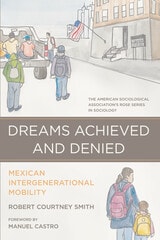
Dreams Achieved and Denied
Mexican Intergenerational MobilityRobert Courtney Smith
Russell Sage Foundation, 2024
For over twenty years, Smith followed the lives and mobility of nearly one hundred children of Mexican immigrants in New York City. Smith’s longitudinal, ethnographic data enabled him to intimately describe how specific mechanisms blocked or promoted mobility for years as his participants moved from adolescence through early adulthood and into established adulthood. Smith documents how having or gaining legal status made certain New York City or New York State policies and practices more efficacious in supporting individual and family efforts and strategies for mobility. Such immigrant-inclusive and mobility-promoting measures include enabling undocumented people to attend public colleges at in-state tuition rates, and later to get driver’s licenses, offering healthcare to all in New York City, and the City’s subway and school choice systems, which enabled students to attend better schools or take opportunities outside their neighborhoods.
Smith finds that keeping the immigrant bargain – whereby children of immigrants redeem their parents’ sacrifice by doing well in school, helping their parents and siblings, and becoming “good” people (in their parents’ words) – helped them towards better adult outcomes and lives. Having mentors, picking academically stronger schools and friends, and using second chance mechanisms also promoted more adult mobility. However, lacking legal status blocked mobility, by preventing them from benefiting from these same mobility-promoting city and state policies, from mentors, or from working hard and keeping the immigrant bargain.
Dreams Achieved and Denied deeply analyzes the historic upward mobility of U.S.-born Mexicans in New York City. Itcounters the dominant story research and public discourse tell about Mexican mobility in the U.S. and shows how thoughtful public policy can improve the lives of young immigrants and families.

Dynamics of Class and Stratification in Poland
1945–2015Irina Tomescu-Dubrow
Central European University Press, 2018

From Parents to Children
The Intergenerational Transmission of AdvantageJohn Ermisch
Russell Sage Foundation, 2012

Gringo Gulch
Sex, Tourism, and Social Mobility in Costa RicaMegan Rivers-Moore
University of Chicago Press, 2016
Rivers-Moore situates her ethnography at the intersections of gender, race, class, and national dimensions in the sex industry. Instead of casting sex workers as hapless victims and sex tourists as neoimperialist racists, she reveals each group as involved in a complicated process of class mobility that must be situated within the sale and purchase of leisure and sex. These interactions operate within an almost entirely unregulated but highly competitive market beyond the reach of the state—bringing a distinctly neoliberal cast to the market. Throughout the book, Rivers-Moore introduces us to remarkable characters—Susan, a mother of two who doesn’t regret her career of sex work; Barry, a teacher and father of two from Virginia who travels to Costa Rica to escape his loveless, sexless marriage; Nancy, a legal assistant in the Department of Labor who is shocked to find out that prostitution is legal and still unregulated. Gringo Gulch is a fascinating and groundbreaking look at sex tourism, Latin America, and the neoliberal state.
Jobs Aren't Enough
Toward a New Economic Mobility for Low-Income FamiliesRoberta Rehner Iversen and Annie Laurie Armstrong
Temple University Press, 2006
Letters, Kinship, and Social Mobility in Nigeria
Olufemi Vaughan
University of Wisconsin Press, 2023
Letter writing was a dominant form of communication for Western-educated elites in colonial Africa, especially in Nigeria. Exposure to the modern world and a growing sense of nationalism were among the factors that led people to begin exchanging letters, particularly in their interactions with British colonial authorities. Through careful textual analysis and broad contextualization, Vaughan reconstructs dominant storylines, including themes such as kinship, social mobility, Western education, modernity, and elite consolidation in colonial and post-colonial Nigeria. Vaughan brings his prodigious skills as an interdisciplinary scholar to bear on this wealth of information, bringing to life a portrait, at once intimate and expansive, of a community during a transformative period in African history.
Meanings of Mobility
Family, Education, and Immigration in the Lives of Latino YouthLeah Schmalzbauer
Russell Sage Foundation, 2023
To better understand these experiences, Schmalzbauer draws on interviews with 60 low-income Latino youth who graduated or were set to graduate from Amherst College, one of the most selective private colleges in the United States. The vast majority of these students were the first in their immigrant families to go to college in the U.S. She finds that while most of the students believed attending Amherst provided them with previously unimaginable opportunities, adjusting to life on campus came with significant challenges. Many of the students Schmalzbauer spoke with had difficulties adapting to the cultural norms at Amherst as well as with relating to their non-Latino, non-low-income peers. The challenges these students faced were not limited to life on campus. As they attempted to adapt to Amherst, many felt distanced from the family and friends they left behind who could not understand the new challenges they faced.
The students credit their elite education for access to extraordinary educational and employment opportunities. However, their experiences while in college and afterward reveal that the relationship between educational and social mobility is much more complicated and less secure than popular conversations about the “American Dream” suggest. Many students found that their educational attainment was not enough to erase the core challenges of growing up in a marginalized immigrant family: many were still poor, faced racism, and those who were undocumented or had undocumented family members still feared deportation.
Schmalzbeauer suggests ways elite colleges can better support low-income Latino students and lower the emotional price of educational mobility, including the creation of immigration offices on campus to provide programming and support for undocumented students and their families. She recommends educating staff to better understand the centrality of family for these students and the challenges they face, as well as educating more privileged students about inequality and the life experiences of their marginalized peers.
Meanings of Mobility provides compelling insights into the difficulties faced by low-income Latinos pursuing educational and social mobility in America’s elite institutions.
Movement and the Ordering of Freedom
On Liberal Governances of MobilityHagar Kotef
Duke University Press, 2015
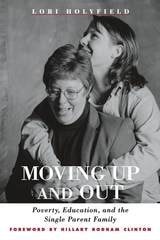
Moving Up And Out
Poverty, Education & Single Parent FamilyLori Holyfield, foreword by Hillary Rodham Clinton
Temple University Press, 2001

New Jersey Dreaming
Capital, Culture, and the Class of '58Sherry B. Ortner
Duke University Press, 2005
Ortner tracked down nearly all 304 of her classmates. She interviewedabout 100 in person and spoke with most of the rest by phone, recording her classmates’ vivid memories of time, place, and identity. Ortner shows how social class affected people’s livesin many hidden and unexamined ways. She also demonstrates that the Class of ‘58’s extreme upward mobility must be understood in relation to the major identity movements of the twentieth century—the campaign against anti-Semitism, the Civil Rights movement, and feminism.
A multisited study combining field research with an interdisciplinary analytical framework, New Jersey Dreaming is a masterly integration of developments at the vanguard of contemporary anthropology. Engaging excerpts from Ortner's field notes are interspersed throughout the book. Whether recording the difficulties and pleasures of studying one's own peer group, the cultures of driving in different parts of the country, or the contrasting experiences of appointment-making in Los Angeles and New York, they provide a rare glimpse into the actual doing of ethnographic research.
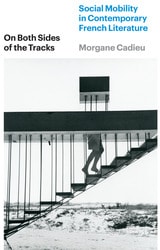
On Both Sides of the Tracks
Social Mobility in Contemporary French LiteratureMorgane Cadieu
University of Chicago Press, 2024
Social climbers have often been the core characters of novels. Their position between traditional tiers in society makes them touchstones for any political and literary moment, including our own. Morgane Cadieu’s study looks at a certain kind of social climber in contemporary French literature whom she calls the parvenant. Taken from the French term parvenu, which refers to one who is newly arrived, a parvenant is a character who shuttles between social groups. A parvenant may become part of a new social class but devises literary ways to come back, constantly undoing any fixed idea of social affiliation.
Focusing on recent French novels and autobiographies, On Both Sides of the Tracks speaks powerfully to issues of emancipation and class. Cadieu offers a fresh critical look at tales of social mobility in the work of Annie Ernaux, Kaoutar Harchi, Michel Houellebecq, Édouard Louis, and Marie NDiaye, among others, shedding fascinating light on upward mobility today as a formal, literary problem.
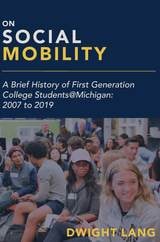
On Social Mobility
A Brief History of First-Generation College Students@Michigan: 2007 to 2019Dwight Lang
Michigan Publishing Services, 2019
Lang describes how working and lower class students openly acknowledge and struggle with challenging experiences on a predominantly middle and upper middle class campus. We appreciate how first generation students are risk takers, boundary crosser, and successful social class immigrants. Resourceful first-gen efforts become the basis of connection and community as students begin their social mobility journeys. Overtime a public story emerges: stories making the invisible visible; stories of courage and persistence; stories of structural changes; a thoughtful student movement that is hard to ignore. We come to better understand the power of shared determination.
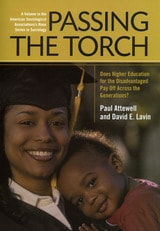
Passing the Torch
Does Higher Education for the Disadvantaged Pay Off Across the Generations?Paul Attewell
Russell Sage Foundation, 2007
The steady expansion of college enrollment rates over the last generation has been heralded as a major step toward reducing chronic economic disparities. But many of the policies that broadened access to higher education—including affirmative action, open admissions, and need-based financial aid—have come under attack in recent years by critics alleging that schools are admitting unqualified students who are unlikely to benefit from a college education. In Passing the Torch, Paul Attewell, David Lavin, Thurston Domina, and Tania Levey follow students admitted under the City University of New York’s “open admissions” policy, tracking its effects on them and their children, to find out whether widening college access can accelerate social mobility across generations.
Unlike previous research into the benefits of higher education, Passing the Torch follows the educational achievements of three generations over thirty years. The book focuses on a cohort of women who entered CUNY between 1970 and 1972, when the university began accepting all graduates of New York City high schools and increasing its representation of poor and minority students. The authors survey these women in order to identify how the opportunity to pursue higher education affected not only their long-term educational attainments and family well-being, but also how it affected their children’s educational achievements. Comparing the record of the CUNY alumnae to peers nationwide, the authors find that when women from underprivileged backgrounds go to college, their children are more likely to succeed in school and earn college degrees themselves. Mothers with a college degree are more likely to expect their children to go to college, to have extensive discussions with their children, and to be involved in their children’s schools. All of these parenting behaviors appear to foster higher test scores and college enrollment rates among their children. In addition, college-educated women are more likely to raise their children in stable two-parent households and to earn higher incomes; both factors have been demonstrated to increase children’s educational success.
The evidence marshaled in this important book reaffirms the American ideal of upward mobility through education. As the first study to indicate that increasing access to college among today’s disadvantaged students can reduce educational gaps in the next generation, Passing the Torch makes a powerful argument in favor of college for all.
Paths to Power
Elite Mobility in Contemporary ChinaBy David M. Lampton with the assistance of Yeung Sai-cheung
University of Michigan Press, 2000
Persistence, Privilege, and Parenting
The Comparative Study of Intergenerational MobilityTimothy Smeeding
Russell Sage Foundation, 2012
Polished
College, Class, and the Burdens of Social MobilityMelissa Osborne
University of Chicago Press, 2024
While college initiates a major transition in all students’ lives, low-income and first-generation students attending elite schools are often entering entirely new worlds. Amid the financial and academic challenges of adapting to college, their emotional lives, too, undergo a transformation. Surrounded by peers from different classes and cultural backgrounds, they are faced with an impossible choice: turn away from their former lives to blend in or stay true to themselves and remain on the outside.
An ethnography that draws on in-depth interviews with one hundred and fifty first-generation and low-income students across eighteen elite institutions, Polished uncovers the hidden consequences of the promise of social mobility in today’s educational landscape. Sociologist Melissa Osborne reveals how the very support designed to propel first-generation students forward can unexpectedly reshape their identities, often putting them at odds with their peers and families. Without direct institutional support, this emotional journey can lead to alienation, mental health challenges, poor academic outcomes, and difficult choices between upward mobility or maintaining authenticity and community. Whether you're an educator, advocate, or student, Polished provides a powerful perspective on the uncharted challenges of social mobility and personal identity during college.
Polished
College, Class, and the Burdens of Social MobilityMelissa Osborne
University of Chicago Press, 2024
An illuminating look at the emotional costs of mobility faced by first-generation and low-income college students.
While college initiates a major transition in all students’ lives, low-income and first-generation students attending elite schools are often entering entirely new worlds. Amid the financial and academic challenges of adapting to college, their emotional lives, too, undergo a transformation. Surrounded by peers from different classes and cultural backgrounds, they are faced with an impossible choice: turn away from their former lives to blend in or stay true to themselves and remain on the outside.
An ethnography that draws on in-depth interviews with one hundred and fifty first-generation and low-income students across eighteen elite institutions, Polished uncovers the hidden consequences of the promise of social mobility in today’s educational landscape. Sociologist Melissa Osborne reveals how the very support designed to propel first-generation students forward can unexpectedly reshape their identities, often putting them at odds with their peers and families. Without direct institutional support, this emotional journey can lead to alienation, mental health challenges, poor academic outcomes, and difficult choices between upward mobility or maintaining authenticity and community. Whether you're an educator, advocate, or student, Polished provides a powerful perspective on the uncharted challenges of social mobility and personal identity during college.
Recasting Folk in the Himalayas
Indian Music, Media, and Social MobilityStefan Fiol
University of Illinois Press, 2017

Social Mobility in Kerala
Modernity and Identity in ConflictFilippo Osella and Caroline Osella
Pluto Press, 2000
Social Stratification and Mobility in Central Veracruz
By Hugo G. Nutini
University of Texas Press, 2005
Since the Revolution of 1910, Mexican society has undergone a profound transformation, characterized by the disempowerment of the landed aristocracy and the rise of a new ruling class of plutocrats and politicians; the development of a middle class of white-collar professionals; and the upward mobility of formerly disenfranchised Indians who have become urban, working-class Mestizos. Indeed, Mexico's class system today increasingly resembles that of Western industrialized nations, proving that, while further democratic reforms are needed, the Revolution initiated an ongoing process of change that has created a more egalitarian society in Mexico with greater opportunities for social advancement.
This authoritative ethnography examines the transformation of social classes in the Córdoba-Orizaba region during the latter half of the twentieth century to create a model of provincial social stratification in Mexico. Hugo Nutini focuses on the increased social mobility that has affected all classes of society, especially the rural Indians who have taken advantage of education, job opportunities, and contact with the wider world to achieve Mestizo status. He also traces the transfer of power that followed the demise of the hacienda system, as well as the growing importance of the middle class. This description and analysis of the provincial social stratification system complements the work Nutini has done on the national class system, centered in Mexico City, to offer a comprehensive picture of social stratification and mobility in Mexico today.
Split
Class Divides UncoveredBen Tippet
Pluto Press, 2020
Foregrounding the economic nature of class, Split challenges the idea that class can be reduced to the cultural. From precarious labor to rising debt; from the housing crisis to environmental catastrophe; from an inflated prison population to the welfare state; Ben Tippet traces the class divide at the heart of all exploitation. Myth-busting meritocracy, he exposes the role that tax havens, colonialism and inheritance play in the wealth of the elite.
Split highlights the potential for a diverse and eclectic working-class bloc to fight back in an age of austerity and uncertainty.
Stagnant Dreamers
How the Inner City Shapes the Integration of the Second GenerationMaria G. Rendon
Russell Sage Foundation, 2019
Winner of the 2020 Robert E. Park Award for Best Book from the Community and Urban Sociology Section of the American Sociological Association
Winner of the 2020 Distinguished Contribution to Research Award from the Latino/a Section of the American Sociological Association
Honorable Mention for the 2020 Thomas and Znaniecki Award from the International Migration Section of the American Sociological Association
A quarter of young adults in the U.S. today are the children of immigrants, and Latinos are the largest minority group. In Stagnant Dreamers, sociologist and social policy expert María Rendón follows 42 young men from two high-poverty Los Angeles neighborhoods as they transition into adulthood. Based on in-depth interviews and ethnographic observations with them and their immigrant parents, Stagnant Dreamers describes the challenges they face coming of age in the inner city and accessing higher education and good jobs, and demonstrates how family-based social ties and community institutions can serve as buffers against neighborhood violence, chronic poverty, incarceration, and other negative outcomes.
Neighborhoods in East and South Central Los Angeles were sites of acute gang violence that peaked in the 1990s, shattering any romantic notions of American life held by the immigrant parents. Yet, Rendón finds that their children are generally optimistic about their life chances and determined to make good on their parents’ sacrifices. Most are strongly oriented towards work. But despite high rates of employment, most earn modest wages and rely on kinship networks for labor market connections. Those who made social connections outside of their family and neighborhood contexts, more often found higher quality jobs. However, a middle-class lifestyle remains elusive for most, even for college graduates.
Rendón debunks fears of downward assimilation among second-generation Latinos, noting that most of her subjects were employed and many had gone on to college. She questions the ability of institutions of higher education to fully integrate low-income students of color. She shares the story of one Ivy League college graduate who finds himself working in the same low-wage jobs as his parents and peers who did not attend college. Ironically, students who leave their neighborhoods to pursue higher education are often the most exposed to racism, discrimination, and classism.
Rendón demonstrates the importance of social supports in helping second-generation immigrant youth succeed. To further the integration of second-generation Latinos, she suggests investing in community organizations, combating criminalization of Latino youth, and fully integrating them into higher education institutions. Stagnant Dreamers presents a realistic yet hopeful account of how the Latino second generation is attempting to realize its vision of the American dream.
Tensions in the American Dream
Rhetoric, Reverie, or RealityRoderick Bush
Temple University Press, 2015
Tensions in the American Dream also addresses the relevancy of nation to empire in the context of the historical world capitalist system. The authors ask, is the American Dream a reality only questioned by those unwilling or unable to achieve it? What is the "good life" and how is it particularly "American"?
Texas-Style Exclusion
Mexican Americans and the Legacy of Limited OpportunityJennifer Van Hook
Russell Sage Foundation, 2024
Drawing on census and archival data on the quality of public schooling, Van Hook and Bachmeier find that Industrial Era European immigrants, who were primarily located in the northeastern U.S., benefited from programs and policies championed by the Americanization and Progressive movements. The Americanization movement sought to help acclimate new arrivals and transform “foreigners” into “Americans” by providing night school programs to promote civic integration and basic education, as well as other services. The Progressive movement, which aimed to improve education, work, and health conditions, sought to expand investment in public schools and make primary and secondary schooling mandatory, which kept working class children in school as opposed to entering the workforce. This access to education allowed for integration and astonishing intergenerational mobility.
Mexican immigrants in the 1920s and 1930s, the majority of whom resided in Texas, had radically different experiences from their European counterparts. Mexicans in Texas were subjected to racism, segregation, labor exploitation, and intentional school failures. This resulted in tremendous generational disadvantage that persists to the current day. Mexicans from this cohort who left Texas for states with strong Americanization and Progressive movements saw improved educational outcomes and integration. Additionally, Mexicans who immigrated after the Civil Rights Movement saw significantly greater inter-generational mobility and educational attainment than earlier cohorts due to the protections provided by civil rights laws. Van Hook and Bachmeier conclude that whether one is optimistic or pessimistic about the integration of Mexican Americans depends on when and where one looks.
Texas-Style Exclusion is an engaging examination of policies and practices that have been glossed over and forgotten that promoted mobility and integration for certain immigrant groups and impeded them for others.
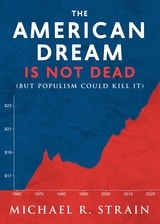
The American Dream Is Not Dead
(But Populism Could Kill It)Michael R. Strain
Templeton Press, 2020
Populists on both sides of the political aisle routinely announce that the American Dream is dead. According to them, the game has been rigged by elites, workers can’t get ahead, wages have been stagnant for decades, and the middle class is dying.
Michael R. Strain, director of economic policy studies at the American Enterprise Institute, disputes this rhetoric as wrong and dangerous. In this succinctly argued volume, he shows that, on measures of economic opportunity and quality of life, there has never been a better time to be alive in America. He backs his argument with overwhelming—and underreported—data to show how the facts favor realistic optimism.
He warns, however, that the false prophets of populism pose a serious danger to our current and future prosperity. Their policies would leave workers worse off. And their erroneous claim that the American Dream is dead could discourage people from taking advantage of real opportunities to better their lives. If enough people start to believe the Dream is dead, they could, in effect, kill it. To prevent this self-fulfilling prophecy, Strain’s book is urgent reading for anyone feeling the pull of the populists.
E. J. Dionne and Henry Olsen provide spirited responses to Strain’s argument.

The Duplex Nature of Indigeneity
Navigating Identity in the Ahuehuepan DiasporaFrans J. Schryer
University Press of Colorado, 2025
Using a variety of sources, perspectives, and methods, Schryer takes a duplexity approach, which allows understanding the complexity of social reality and its complementary nature—it identifies fields, clusters, and layers as interconnected components of social life. The innovative methods consist of the combination of ethnographic description and an ethnohistorical census that provides information on every person going back to approximately 1850. That census is further examined with the use of inferential and non-inferential statistical techniques, archival research in locations not normally accessible to scholars, Facebook, phone interviews conducted over several years, and help from Nahuatl-speaking people whose perspectives on the findings generate additional information and insights.
Unique in this presentation, which dips into the lives of generations of people to draw insight on those who lay claim to transnational Indigeneity, Schryer’s work contributes to research and theoretical discussion in the field of migration and globalization studies through a close examination of one Indigenous community over the course of many years, utilizing a mix of qualitative and quantitative research methods in anthropology.

The Edge of the Woods
Iroquoia, 1534-1701Jon Parmenter
Michigan State University Press, 2010
The Educated Underclass
Students and the False Promise of Social MobilityGary Roth
Pluto Press, 2019
The dream of social mobility is dying. Where previous generations routinely expected to surpass their parents' level of economic success, prospects for today's young people are increasingly bleak. What role does higher education play in the process? An essential and frightening one, according to author Gary Roth.
The Educated Underclass reveals the structural problems that are helping to create this problem. Gary Roth shows how universities—touted as the best way up the economic ladder for young people—actually reproduce traditional class hierarchies. And as more graduates emerge every year into economies that are no longer creating a steady stream of stable jobs, the odds of landing one decrease—and over-educated people end up scrapping for poorly compensated positions for which they're overqualified. Chapters include:
*Higher education and class
*The overproduction of intelligence
*Class in transition: historical background
*Underemployment through the decades
*Class status and economic instability
*And more!
Roth writes in his Introduction, “Education has become an intermediary institution between a social system that habitually sputters and declines while ever-greater amounts of consumer products are dangled in front of the system’s workforce. The result: a dynamic fraught with all sort of negative possibilities, both socially and psychotically.”
A broadside against the failures of our education system and our economy, Gary Roth’s The Educated Underclass aims to startle us out of our complacency and wake us up to action.
This Fine Place So Far from Home
Voices of Academics from the Working Classedited by C. L. Barney Dews and Carolyn Leste Law
Temple University Press, 1995
These autobiographical and analytical essays by a diverse group of professors and graduate students from working-class families reveal an academic world in which "blue-collar work is invisible." Describing conflict and frustration, the contributors expose a divisive middle-class bias in the university setting. Many talk openly about how little they understood about the hierarchy and processes of higher education, while others explore how their experiences now affect their relationships with their own students. They all have in common the anguish of choosing to hide their working-class background, to keep the language of home out of the classroom and the ideas of school away from home. These startlingly personal stories highlight the fissure between a working-class upbringing and the more privileged values of the institution.