Results by title
260 books match the query 'Soviet Union' and 32 start with a
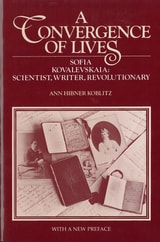
A Convergence of Lives
Sofia Kovalevskaia - Scientist, Writer, RevolutionaryKoblitz, Ann
Rutgers University Press, 1993
Sofia Kovalevskaia's interest in mathematics was roused at an early age--her attic nursery had been wallpapered with lecture notes for a course on calculus. She spent hours studying the mysterious walls, trying to figure out which page followed from the next. Kovalevskaia (1850-1891) became the only woman mathematician whose name all mathematicians recognize, thanks to her contributions to mathematical analysis. Indeed, she was the first professional woman scientist to win international eminence in any field: the first woman doctorate in mathematics, the first to hold a chair in mathematics, the first to sit on the editorial board of a major scientific journal.
She was also an accomplished writer, a proponent of women's rights and education, a wife and mother in an unconventional marriage, and a champion of radical political causes in Russia and Western Europe--a friend and correspondent of Dostoyevsky, Chekhov, George Eliot, Kropotkin, Helmholtz, and Darwin. This sympathetic portrait of a remarkable woman will appeal to any reader, non-mathematicians and mathematicians alike.
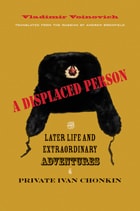
A Displaced Person
The Later Life and Extraordinary Adventures of Private Ivan ChonkinVladimir Voinovich
Northwestern University Press, 2012
In A Displaced Person—the third book in a trilogy that began with the modern classic The Life and Extraordinary Adventures of Private Ivan Chonkin and continued with Pretender to the Throne—author Vladimir Voinovich turns his satirical eye to the difficult last days of the Soviet Communism he so lampooned. Often absurd, A Displaced Person follows a series of random events that brings Chonkin to the United States, where he becomes a farmer and, eventually, a member of a congressional delegation sent to the Soviet Union in 1989, during perestroika, to discuss agriculture with the Soviet leader Mikhail Gorbachev. A Displaced Person carries on the rich Russian tradition of an essentially comic response to the absurdities inherent in totalitarian regimes.
A Documentary History of Communism and the World
From Revolution to CollapseEdited by Robert V. Daniels
Brandeis University Press, 1994
A Documentary History of Communism in Russia
From Lenin to GorbachevEdited by Robert V. Daniels
University Press of New England, 2001
A Foreign Policy in Transition
Moscow's Retreat from Central America and the Carribbean, 1985-1992Jan S. Adams
Duke University Press, 1992
Jan S. Adams analyzes the factors shaping Gorbachev's foreign policy in Central America by surveying Soviet political views old and new, by describing Gorbachev's bold restructuring of the Soviet foreign policy establishment, and by assessing the implications of his policy of perestroika. A series of country studies demonstrates how changes in Soviet policies and domestic and economic circumstances contributed to significant shifts in the internal conditions and external relations of the Central American and Caribbean nations. Adams discusses in detail such topics as the reduction of Soviet military and economic aid to the region and pressures exerted by Moscow on client states to effect the settlement of regional conflicts by political rather than military means.
The author concludes by speculating about which trends in foreign policy by Russia and other Soviet-successor states toward Central America and the Caribbean may persist in the post-Soviet period, discussing as the implications of these changes for future U.S. policy in the region.
A Herzen Reader
Alexander Herzen, Kathleen Parthe
Northwestern University Press, 2012
A History of Russia
Medieval, Modern, Contemporary, c.882-1996Paul Dukes
Duke University Press, 1998
With its breadth of scope and conciseness of presentation, this third edition of A History of Russia will be invaluable to students of European and Russian history, and also to students of Russian language, literature, and social science.

A Life in Music from the Soviet Union to Canada
Memoirs of a Madrigal Ensemble SingerAlexander Tumanov
University of North Texas Press, 2019
A Martian Stranded on Earth
Alexander Bogdanov, Blood Transfusions, and Proletarian ScienceNikolai Krementsov
University of Chicago Press, 2011
Much like Vladimir Lenin, his onetime rival for the leadership of the Bolshevik party during its formative years, Alexander Bogdanov (1873–1928) was a visionary. In two science fiction novels set on Mars, Bogdanov imagined a future in which the workers of the world, liberated from capitalist exploitation, create a “physiological collective” that rejuvenates and unites its members through regular blood exchanges. But Bogdanov was not merely a dreamer. He worked tirelessly to popularize and realize his vision, founding the first research institute devoted to the science of blood transfusion.
In A Martian Stranded on Earth, the first broad-based book on Bogdanov in English, Nikolai Krementsov examines Bogdanov’s roles as revolutionary, novelist, and scientist, presenting his protagonist as a coherent thinker who pursued his ideas in a wide range of venues. Through the lens of Bogdanov’s involvement with blood studies on one hand, and of his fictional and philosophical writings on the other, Krementsov offers a nuanced analysis of the interactions between scientific ideas and societal values.
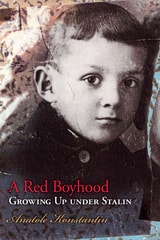
A Red Boyhood
Growing Up Under StalinAnatole Konstantin
University of Missouri Press, 2008
Many children growing up in the Soviet Union before World War II knew the meaning of deprivation and dread. But for the son of an “enemy of the people,” those apprehensions were especially compounded.
When the secret police came for his father in 1938, ten-year-old Anatole Konstantin saw his family plunged into a morass of fear. His memoir of growing up in Stalinist Russia re-creates in vivid detail the daily trials of people trapped in this regime before and during the repressive years of World War II—and the equally horrific struggles of refugees after that conflict.
Evicted from their home, their property confiscated, and eventually forced to leave their town, Anatole’s family experienced the fate of millions of Soviet citizens whose loved ones fell victim to Stalin’s purges. His mother, Raya, resorted to digging peat, stacking bricks, and even bootlegging to support herself and her two children. How she managed to hold her family together in a rapidly deteriorating society—and how young Anatole survived the horrors of marginalization and war—form a story more compelling than any novel.
Looking back on those years from adulthood, Konstantin reflects on both his formal education under harsh conditions and his growing awareness of the contradictions between propaganda and reality. He tells of life in the small Ukrainian town of Khmelnik just before World War II and of how some of its citizens collaborated with the German occupation, lending new insight into the fate of Ukrainian Jews and Nazi corruption of local officials. And in recounting his experiences as a refugee, he offers a new look at everyday life in early postwar Poland and Germany, as well as one of the few firsthand accounts of life in postwar Displaced Persons camps.
A Red Boyhood takes readers inside Stalinist Russia to experience the grim realities of repression—both under a Soviet regime and German occupation. A moving story of desperate people in desperate times, it brings to life the harsh realities of the twentieth century for young and old readers alike.
A Rhetorical Crime
Genocide in the Geopolitical Discourse of the Cold WarWeiss-Wendt, Anton
Rutgers University Press, 2018
A Rhetorical Crime shows how genocide morphed from a legal concept into a political discourse used in propaganda battles between the United States and the Soviet Union. Over the course of the Cold War era, nearly eighty countries were accused of genocide, and yet there were few real-time interventions to stop the atrocities committed by genocidal regimes like the Cambodian Khmer Rouge.
Renowned genocide scholar Anton Weiss-Wendt employs a unique comparative approach, analyzing the statements of Soviet and American politicians, historians, and legal scholars in order to deduce why their moral posturing far exceeded their humanitarian action.
A Second Exodus
The American Movement to Free Soviet JewsEdited by Murray Friedman and Albert D. Chernin
Brandeis University Press, 1999

A Time for Spies
Theodore Stephanovich Mally and the Era of the Great IllegalsWilliam E. Duff
Vanderbilt University Press, 1999

A Time to Gather Stones
Vladimir Soloukhin, Translated from the Russian and with an Introduction by Valerie Z. Nollan
Northwestern University Press, 1993
Aesthetics of Alienation
Reassessment of Early Soviet Cultural TheoriesEvgeny Dobrenko
Northwestern University Press, 2005
In chapters on Proletkult, RAPP, LEF, and Pereval, Dobrenko reexamines the theories generated by these major Marxist literary groupings of the early Soviet Union. He shows how each approached the problems of literature's response to the presumed social mandate of the young communist society, and how Socialist Realism emerged as a conglomerate of these earlier, revolutionary theories. With extensive and detailed reference to supporting testimony and documents, Dobrenko clearly demonstrates how Socialist Realism was created from within the revolutionary culture, and how this culture and its disciples fully participated in this creative process. His work represents a major breakthrough in our current understanding of the complex sources that contributed to early Soviet culture.
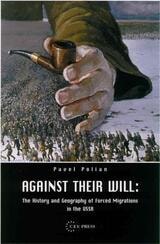
Against Their Will
The History and Geography of Forced Migrations in the USSRPavel Polian
Central European University Press, 2003

Aleksandr Askoldov
The CommissarMarat Grinberg
Intellect Books, 2016
This book is the first companion to the film in any language. It recounts the film’s plot and turbulent production history, and it also offers a close analysis of the artistic vision of its director, Aleksandr Askoldov, and the ways that viewers can trace in the film not only his complex aesthetics, but also the personal crises he endured in the years leading up to the film. The result is an indispensable companion to an unforgettable film.
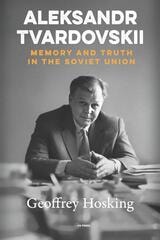
Aleksandr Tvardovskii
Memory and Truth in the Soviet UnionGeoffrey Hosking
Central European University Press, 2025
By giving a balanced account of his strengths and weaknesses, his achievements and failures, the author succeeds in giving the fullest picture available anywhere of a controversial man who turns out to be more complex than he has been portrayed so far. To understand him better is to understand why the Soviet intelligentsia changed so fundamentally in the USSR’s final decades, a change that helps to explain the rise of Gorbachev twenty years later. The study—which includes an in-depth analysis of Tvardovskii’s major works—also helps to better understand the fate of culture under an authoritarian regime and the intricacies of the struggle against censorship.
American Diplomacy
George F. Kennan
University of Chicago Press, 1985
This expanded edition retains the lectures and essays first published in 1951 as American Diplomacy, 1900-1950 and adds two lectures delivered in 1984 as well as a new preface by the author. In these additional pieces, Kennan explains how some of his ideas have changed over the years. He confronts the events and topics that have come to occupy American opinion in the last thirty years, including the development and significance of the Cold War, the escalation of the nuclear arms race, and the American involvement in Vietnam.
"A book about foreign policy by a man who really knows something about foreign policy."—James Reston,New York Times Book Review
"These celebrated lectures, delivered at the University of Chicago in 1950, were for many years the most widely read account of American diplomacy in the first half of the twentieth century. . . . The second edition of the work contains two lectures from 1984 that reconsider the themes of American Diplomacy"—Foreign Affairs, Significant Books of the Last 75 Years.
American Diplomacy
Sixtieth-Anniversary Expanded EditionGeorge F. Kennan
University of Chicago Press, 2012
For more than sixty years, George F. Kennan’s American Diplomacy has been a standard work on American foreign policy. Drawing on his considerable diplomatic experience and expertise, Kennan offers an overview and critique of the foreign policy of an emerging great power whose claims to rightness often spill over into self-righteousness, whose ambitions conflict with power realities, whose judgmentalism precludes the interests of other states, and whose domestic politics frequently prevent prudent policies and result in overstretch. Keenly aware of the dangers of military intervention and the negative effects of domestic politics on foreign policy, Kennan identifies troubling inconsistencies in the areas between actions and ideals—even when the strategies in question turned out to be decided successes.
In this expanded sixtieth-anniversary edition, a substantial new introduction by John J. Mearsheimer, one of America’s leading political realists, provides new understandings of Kennan’s work and explores its continued resonance. As America grapples with its new role as one power among many—rather than as the “indispensable nation” that sees “further into the future”—Kennan’s perceptive analysis of the past is all the more relevant. Today, as then, the pressing issue of how to wield power with prudence and responsibility remains, and Kennan’s cautions about the cost of hubris are still timely. Refreshingly candid, American Diplomacy cuts to the heart of policy issues that continue to be hotly debated today.
“These celebrated lectures, delivered at the University of Chicago in 1950, were for many years the most widely read account of American diplomacy in the first half of the twentieth century.”—Foreign Affairs, Significant Books of the Last 75 Years
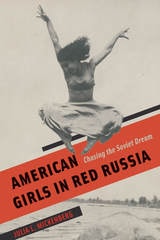
American Girls in Red Russia
Chasing the Soviet DreamJulia L. Mickenberg
University of Chicago Press, 2017
Mickenberg reveals the complex motives that drew American women to Russia as they sought models for a revolutionary new era in which women would be not merely independent of men, but also equal builders of a new society. Soviet women, after all, earned the right to vote in 1917, and they also had abortion rights, property rights, the right to divorce, maternity benefits, and state-supported childcare. Even women from Soviet national minorities—many recently unveiled—became public figures, as African American and Jewish women noted. Yet as Mickenberg’s collective biography shows, Russia turned out to be as much a grim commune as a utopia of freedom, replete with economic, social, and sexual inequities.
American Girls in Red Russia recounts the experiences of women who saved starving children from the Russian famine, worked on rural communes in Siberia, wrote for Moscow or New York newspapers, or performed on Soviet stages. Mickenberg finally tells these forgotten stories, full of hope and grave disappointments.
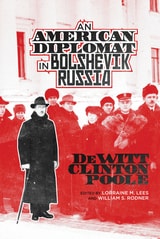
An American Diplomat in Bolshevik Russia
DeWitt Clinton Poole, Edited by Lorraine M. Lees and William S. Rodner
University of Wisconsin Press, 2014
Historians Lorraine M. Lees and William S. Rodner introduce and annotate Poole's recollections, which give a fresh, firsthand perspective on monumental events in world history and reveal the important impact DeWitt Clinton Poole (1885–1952) had on U.S.–Soviet relations. He was active in implementing U.S. policy, negotiating with the Bolshevik authorities, and supervising American intelligence operations that gathered information about conditions throughout Russia, especially monitoring anti-Bolshevik elements and areas of German influence. Departing Moscow in late 1918 via Petrograd, he was assigned to the port of Archangel, then occupied by Allied and American forces, and left Russia in June 1919.
An Anti-Bolshevik Alternative
The White Movement and the Civil War in the Russian NorthLiudmila Novikova, Translated by Seth Bernstein
University of Wisconsin Press, 2018
Novikova draws on declassified archives and sources in both Russia and the West to reveal the White movement in the north as a complex social and political phenomenon with a distinct regional context. She documents the politics of the Northern Government and its relations with the British and American forces who had occupied the ports of Murmansk and Arkhangelsk at the end of World War I. As the civil war continued, the increasing involvement of the local population transformed the conflict into a ferocious "people's war" until remaining White forces under General Yevgeny Miller evacuated the region in February 1920.
An Empire of Others
Creating Ethnographic Knowledge in Imperial Russia and the USSRAlexis Hofmeister
Central European University Press, 2014
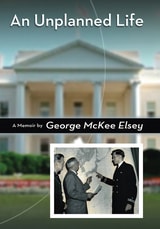
An Unplanned Life
A MemoirGeorge McKee Elsey
University of Missouri Press, 2005
Elsey’s duties continued with Harry Truman’s succession to the presidency. He decoded the famous message from Secretary of War Henry Stimson reporting the dropping of the atomic bomb on Hiroshima and carried it to President Truman. In 1947, he shed his Naval Reserve uniform and joined the White House’s civilian staff as assistant to the special counsel to the president. In 1949, he became administrative assistant to the president, and, in 1952, he became a member of the Mutual Security Agency staff. During those years, he grew very close to Harry Truman, and thus, a major portion of An Unplanned Life relates to his experiences then.
In the first postwar winter, Elsey was frequently the only staff member who accompanied President Truman on the USS Williamsburg. In September 1946, Elsey submitted a report to Truman on U.S.-Soviet relations, which came to be well known as the “Clifford-Elsey Report.” Providing Truman with notes for some two hundred of his “back-of-the-train” informal talks, Elsey played a part in the best remembered feature of the “Whistle-Stop Campaign” that resulted in “the political upset of the century.” In addition to his years at the White House, Elsey also touches on his post–White House years—his time in private industry, his months with Clark Clifford when Clifford was trying unsuccessfully to extricate America from Vietnam, and his long association with the American Red Cross.
An Unplanned Life is a fascinating look at the life of an extraordinary individual who played an important and unprecedented part in two different presidents’ decisions and affected the course of our nation. Anyone with an interest in history will find this memoir fascinating and invaluable.

And Quiet Flows the Vodka
or When Pushkin Comes to Shove: The Curmudgeon's Guide to Russian Literature with the Devil's Dictionary of Received IdeasAlicia Chudo
Northwestern University Press, 2000
Written in the tradition of 1066 and All That, The Pooh Perplex, and The Classics Redefined, And Quiet Flows the Vodka will, with any luck, be the final word on the ghastly first two millennia of Russian literature, history, and culture.

And They Lived Happily Ever After
Norms and Everyday Practices of Family and Parenthood in Russia and Eastern EuropeHelene Carlback
Central European University Press, 2012
Andrei Tarkovsky
Elements of CinemaRobert Bird
Reaktion Books, 2008
Bird brings a novel approach to his dissection of Tarkovsky’s wholly original techniques and sensibilities, arranging the films into elemental categories of Water, Fire, Earth, and Air. Solaris, Ivan’s Childhood, Mirror, Nostalgia, Andrei Rublev, and Sacrifice all get their due here; through them, Bird explores how the filmmaker probed the elusive correlation between cinematic representation and a more primeval perception of the world. Though the book also considers Tarkovsky’s work in radio, theatre, and opera—as well as his work as an actor, screenwriter, and film theorist—Bird throughout keeps his focus firmly on Tarkovsky as a consummate filmmaker.
Anton
A NovelAleksandr Chudakov, Timothy D. Sergay
Northwestern University Press, 2027
A landmark work of contemporary Russian literature, now in English for the first time
Set in a fictitious town in North Kazakhstan settled by political and ethnic exiles, this panoramic narrative follows the relationship between the titular character Anton, a Moscow historian of the vital “1960s generation,” and his grandfather, Leonid, a titan of physical and intellectual rigor who is now on the verge of death. As Anton contemplates the fading away of that once-powerful vitality, he lets his thoughts plunge deep into the past, presented in a series of fine-grained sketches, scattered reminiscences, and subtly interconnected episodes, back and forth from childhood to present day. The resulting novel is a “Soviet family Robinson”: the history of rugged and free-thinking intellectuals eking out a tolerable, even enviable homestead existence despite the difficulties of the Stalin years. One of the most vibrant works of literary fiction created since the fall of the Soviet Union, Aleksandr Chudakov’s Anton is a testament to humanity's tenacity and tenderness.
Architecture of Life
Soviet Modernism and the Human SciencesAlla Vronskaya
University of Minnesota Press, 2022
Explores how Soviet architects reimagined the built environment through the principles of the human sciences
During the 1920s and 1930s, proponents of Soviet architecture looked to various principles within the human sciences in their efforts to formulate a methodological and theoretical basis for their modernist project. Architecture of Life delves into the foundations of this transdisciplinary and transnational endeavor, analyzing many facets of their radical approach and situating it within the context of other modernist movements that were developing concurrently across the globe.
Examining the theories advanced by El Lissitzky, Moisei Ginzburg, and Nikolay Ladovsky, as well as those of their lesser-known colleagues, this illuminating study demonstrates how Soviet architects of the interwar period sought to mitigate Fordist production methods with other, ostensibly more human-oriented approaches that drew on the biological and psychological sciences. Envisioning the built environment as innately connected to social evolution, their methods incorporated aspects of psychoanalysis, personality theory, and studies in spatial perception, all of which were integrated into an ideology that grounded functional design firmly within the attributes of the individual.
A comprehensive overview of the ideals that permeated its expanded project, Architecture of Life explicates the underlying impulses that motivated Soviet modernism, highlighting the deep interconnections among the ways in which it viewed all aspects of life, both natural and manufactured.
.

Art of the Baltics
The Struggle for Freedom of Artistic Expression under the Soviets, 1945-1991Edited by Alla Rosenfeld
Rutgers University Press, 2001
Art of the Baltics is the first major survey of the development of modernist art in Estonia, Lithuania, and Latvia during the post-World War II Soviet period. The contributors discuss and reappraise the art of Baltic artists working in modernist styles. They argue that Estonian, Lithuanian, and Latvian art did not develop in similar ways. Estonia, for example, had closer contact with Scandinavian countries, while Lithuania clearly was part of Central Europe, and was more influenced by Poland.
This book contains nearly three hundred illustrations—many in color—that serve to visually compare the art of the three Baltic countries. It also has three useful historical timelines that contextualize the art presented. In addition to historical overviews of each country, Art of theBaltics contains essays on the art of the region, written by both Baltic and American scholars. The articles extensively cover the Baltic art of the 1960s through the 1980s, which reflect the Zimmerli Art Museum’s holdings of the Norton and Nancy Dodge Collection of Nonconformist Art from the Soviet Union. To round out the scope of this work, contributors also discuss the pre-Soviet art of the region, as well as the recent creative developments that resulted from these small countries gaining independence in 1991.

Atomic Diplomacy
Hiroshima and PotsdamGar Alperovitz
Pluto Press, 1995