Results by title
40 books match the query 'Spanish literature'
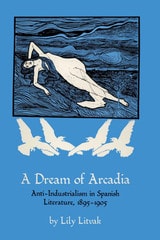
A Dream of Arcadia
Anti-Industrialism in Spanish LIterature, 1895–1905By Lily Litvak
University of Texas Press, 1975
The dream of “progress” that animated many nineteenth-century artistic and political movements gave way at the turn of the century to a dissatisfaction with the Industrial Civilization and a recurrent pessimism about a future dominated by mechanization. Art Nouveau, which was both a style and a movement, embodied this dissatisfaction, marking the turn-of-the-century period with an aesthetic that consciously set out to revolutionize literature, the arts, and society within the framework of a brutalizing, wildly burgeoning Industrial Civilization. Generally associated with northern European culture, Art Nouveau also had a great impact in the south, particularly in Spain.
A Dream of Arcadia is the first work to explore Spain’s fertile and imaginative Art Nouveau. Through the eyes of four major Spanish writers, Lily Litvak views several different aspects of the turn-of-the-century struggle against the advances of industrialism in Spain. Her interpretation of the early works of Ramón del Valle Inclán, Miguel de Unamuno, José Martínez Ruiz (Azorín), and Pío Baroja exposes a longing for a preindustrial arcadia based on a return to nature, the revival of handicrafts and medieval art, an attraction to rural primitive societies, and a revulsion against the modern city. Set against the European literary and artistic background of the period, her observations place the Spanish manifestations of Art Nouveau within the context of the better-known northern phenomena. Of particular interest is her discussion of the influences of John Ruskin, William Morris, and the Pre-Raphaelites, which demonstrates how the general European mood was articulated in Spain.
Litvak concludes that Valle Inclán, Unamuno, Azorín, and Baroja must be considered as more than simply fin de siècle writers, for they became part of a general movement, generated by Art Nouveau, that spans an entire century. A Dream of Arcadia demonstrates that Art Nouveau was more than a flash on Europe's artistic horizon; it is a philosophy with ramifications that have led to communes, handcrafted articles, and nomadic adolescents in search of truth.
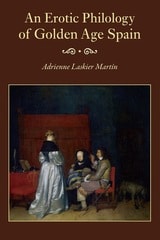
An Erotic Philology of Golden Age Spain
Adrienne Laskier Martin
Vanderbilt University Press, 2007
By utilizing theories of deviance, sexuality, and gender; the rhetoric of eroticism; and textual criticism, An Erotic Philology of Golden Age Spain historicizes and analyzes the particular ways in which classical Spanish writers assign symbolic meaning to non-normative sexual practices and their practitioners. It shows how prostitutes, homosexuals, transvestites, women warriors, and female tricksters were stigmatized and marginalized as part of an ordering principle in the law, society, and in literature. It is against these sexual outlaws that early modern orthodoxy establishes and identifies itself during the Golden Age of Spanish letters.
These eroticized figures are recurring objects of contemplation and fascination for Spain's most canonical as well as lesser known writers of the period, in a variety of poetic, prose and dramatic genres. They ultimately reveal attitudes towards sexual behavior that are far more complex than was previously thought. An Erotic Philology of Golden Age Spain thoughtfully anatomizes the interdisciplinary systems at the heart of the varied sexual behaviors depicted in early modern Spanish literature.
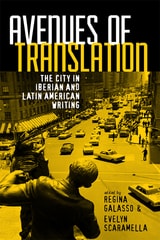
Avenues of Translation
The City in Iberian and Latin American WritingGalasso, Regina
Bucknell University Press, 2019
Cities both near and far communicate in a variety of ways. Travel between, through, and among urban centers initiates contact, and cities themselves are sites of ever-changing cultural and historical encounters. Predictable and surprising challenges and opportunities arise when city borders are crossed, voices meet, and artistic traditions find their counterparts. Using the Latin word for “translation,” translatio, or “to carry across,” as a point of departure, Avenues of Translation explores how translation perpetuates, diversifies, deepens, and expands the literary production of cities in their greater cultural context, and how translation shapes an understanding of and access to a city's past and present literary and cultural practices. Thinking about translation and the city is a way to tell the backstories of the cities, texts, and authors that are united by acts of translation.
Published by Bucknell University Press. Distributed worldwide by Rutgers University Press.
Baroque Horrors
Roots of the Fantastic in the Age of CuriositiesDavid R. Castillo
University of Michigan Press, 2011
"David Castillo takes us on a tour of some horrific materials that have rarely been considered together. He sheds a fantastical new light on the baroque."
---Anthony J. Cascardi, University of California Berkeley
"Baroque Horrors is a textual archeologist's dream, scavenged from obscure chronicles, manuals, minor histories, and lesser-known works of major artists. Castillo finds tales of mutilation, mutation, monstrosity, murder, and mayhem, and delivers them to us with an inimitable flair for the sensational that nonetheless rejects sensationalism because it remains so grounded in historical fact."
---William Egginton, Johns Hopkins University
"Baroque Horrors is a major contribution to baroque ideology, as well as an exploration of the grotesque, the horrible, the fantastic. Castillo organizes his monograph around the motif of curiosity, refuting the belief that Spain is a country incapable of organized scientific inquiry."
---David Foster, Arizona State University
Baroque Horrors turns the current cultural and political conversation from the familiar narrative patterns and self-justifying allegories of abjection to a dialogue on the history of our modern fears and their monstrous offspring. When life and death are severed from nature and history, "reality" and "authenticity" may be experienced as spectator sports and staged attractions, as in the "real lives" captured by reality TV and the "authentic cadavers" displayed around the world in the Body Worlds exhibitions. Rather than thinking of virtual reality and staged authenticity as recent developments of the postmodern age, Castillo looks back to the Spanish baroque period in search for the roots of the commodification of nature and the horror vacui that accompanies it. Aimed at specialists, students, and readers of early modern literature and culture in the Spanish and Anglophone traditions as well as anyone interested in horror fantasy, Baroque Horrors offers new ways to rethink broad questions of intellectual and political history and relate them to the modern age.
David Castillo is Associate Professor and Director of Graduate Studies in the Department of Romance Languages and Literatures at the University at Buffalo, SUNY.
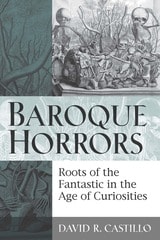
Jacket art: Frederick Ruysch's anatomical diorama. Engraving reproduction "drawn from life" by Cornelius Huyberts. Image from the Zymoglyphic Museum.
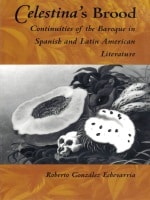
Celestina's Brood
Continuities of the Baroque in Spanish and Latin American LiteratureRoberto González-Echevarría
Duke University Press, 1993
Roberto González Echevarría, one of the most eminent and influential critics of Hispanic literature writing today, uses Rojas' text as his starting point to offer an exploration of modernity in the Hispanic literary tradition, and of the Baroque as an expression of the modern. His analysis of Celestina reveals the relentless probing of the limits of language and morality that mark the work as the beginning of literary modernity in Spanish, and the start of a tradition distinguished by a penchant for the excesses of the Baroque. González Echevarría pursues this tradition and its meaning through the works of major figures such as Cervantes, Lope de Vega, Calderón de la Barca, Alejo Carpentier, Carlos Fuentes, Gabriel García Márquez, Nicolás Guillén, and Severo Sarduy, as well as through the works of lesser-known authors.
By revealing continuities of the Baroque, Celestina's Brood cuts across conventional distinctions between Spanish and Latin American literary traditions to show their profound and previously unimagined affinity.
Covert Gestures
Crypto-Islamic Literature as Cultural Practice in Early Modern SpainVincent Barletta
University of Minnesota Press, 2005
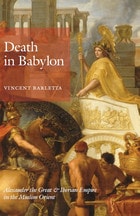
Death in Babylon
Alexander the Great and Iberian Empire in the Muslim OrientVincent Barletta
University of Chicago Press, 2010
Though Alexander the Great lived more than seventeen centuries before the onset of Iberian expansion into Muslim Africa and Asia, he loomed large in the literature of late medieval and early modern Portugal and Spain. Exploring little-studied chronicles, chivalric romances, novels, travelogues, and crypto-Muslim texts, Vincent Barletta shows that the story of Alexander not only sowed the seeds of Iberian empire but foreshadowed the decline of Portuguese and Spanish influence in the centuries to come.
Death in Babylon depicts Alexander as a complex symbol of Western domination, immortality, dissolution, heroism, villainy, and death. But Barletta also shows that texts ostensibly celebrating the conqueror were haunted by failure. Examining literary and historical works in Aljamiado, Castilian, Catalan, Greek, Latin, and Portuguese, Death in Babylon develops a view of empire and modernity informed by the ethical metaphysics of French phenomenologist Emmanuel Levinas. A novel contribution to the literature of empire building, Death in Babylon provides a frame for the deep mortal anxiety that has infused and given shape to the spread of imperial Europe from its very beginning.
Dystopias of Infamy
Insult and Collective Identity in Early Modern SpainJavier Irigoyen-García
Bucknell University Press, 2022
Engaging the Emotions in Spanish Culture and History
Luisa Elena Delgado
Vanderbilt University Press, 2016
The collection ranges across topics such as eighteenth-century sensibility, nineteenth-century concerns with the transmission of emotions, early twentieth-century cinematic affect, and the contemporary mobilization of political emotions including those regarding nonstate national identities. The complexities and effects of emotions are explored in a variety of forms—political rhetoric, literature, personal letters, medical writing, cinema, graphic art, soap opera, journalism, popular music, digital media—with attention paid to broader European and transatlantic implications.
Food, Texts, and Cultures in Latin America and Spain
Rafael Climent-Espino
Vanderbilt University Press, 2020
The studies span from the Middle Ages to the twenty-first century, and the contributing scholars occupy diverse fields within Latin American and Hispanic Studies. As such, their essays showcase eclectic critical and theoretical approaches to the subject of Latin American and Iberian food.
Food, Texts, and Cultures in Latin America and Spain also introduces the first English-language publication of works from such award-winning scholars as Adolfo Castañón of the Mexican Academy of Language; Sergio Ramírez, winner of the 2017 Miguel de Cervantes Prize in Literature; and Carmen Simón Palmer, winner of the 2015 Julián Marías Prize for Research.
Hispanic Baroques
Reading Cultures in ContextNicholas Spadaccini
Vanderbilt University Press, 2005
Hispanisms and Homosexualities
Sylvia Molloy and Robert Irwin, eds.
Duke University Press, 1998
In Hispanisms and Homosexualities, editors Sylvia Molloy and Robert Irwin bring together a group of essays that advance Hispanic studies and gay and lesbian studies by calling into question what is meant by the words Hispanic and homosexual. The fourteen contributors to this volume not only offer queer readings of Spanish and Latin American texts and performances, they also undermine a univocal sense of homosexual identities and practices. Taking on formations of national identity and sexuality; the politics of visibility and outing; the intersections of race, sexuality, and imperial discourse; the status of transvestism and posing; and a postmodern aesthetic of camp and kitsch, these essays from both established and emerging scholars provide a more complex and nuanced view of related issues involving nationality, ethnicity, and sexuality in the Hispanic world.
Hispanisms and Homosexualities offers the most sophisticated critical and theoretical work to date in Hispanic and queer studies. It will be an essential text for all those engaged with the complexities of ethnic, cultural, and sexual subjectivities.
Contributors. Daniel Balderston, Emilie Bergmann, Israel Burshatin, Brad Epps, Mary S. Gossy, Robert Irwin, Agnes I. Lugo-Ortiz, Sylvia Molloy, Oscar Montero, José Esteban Muñoz, José Quiroga, Rubén Ríos Avila, B. Sifuentes Jáuregui, Paul Julian Smith
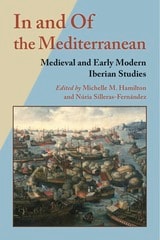
In and Of the Mediterranean
Medieval and Early Modern Iberian StudiesMichelle M. Hamilton
Vanderbilt University Press, 2014
Isabel Rules
Constructing Queenship, Wielding PowerBarbara F. Weissberger
University of Minnesota Press, 2003
A deconstruction of the strategies used to shape the image of a powerful woman ruler
As queen of Spain, Isabel I of Castile (known to history as Isabella the Catholic, 1474–1504) oversaw the creation of Europe’s first nation-state and laid the foundations for its emergence as the largest empire the West has ever known—nearly a century before the better-known and more widely studied Elizabeth I of England.
What we know of this remarkable ruler is typically gleaned from hagiographic texts that negate her power and accept her own propagandistic self-fashioning as legitimate heir, pious princess, devoted wife, and heaven-sent healer of the wounds inflicted on Spain’s body politic by impotent kings, seditious nobles, and such undesirable others as Jews, Muslims, and sodomites. Isabel Rules is the first book to examine the formation of the queen’s public image, focusing on strategies designed to cope with the ideological and cultural dissonance created by the combination of her gender and her profoundly patriarchal political program for unifying and purifying Spain.Barbara Weissberger identifies two primary and interrelated strategies among the supporters of the queen—often writing in her employ—and her critics. Her loyalists use Marian imagery to portray Isabel as a pious, chaste, and submissive queen consort to her husband Ferdinand, while her opponents imagine the queen as a voracious and lascivious whore whose illicit power threatens the virility of her male subjects and inverts the traditional gender hierarchy. Weissberger applies a materialist feminist perspective to a wide array of texts of the second half of the fifteenth century in order to uncover and study the masculine psychosexual anxiety created by Isabel’s anomalous power. She then demonstrates the persistence of the two sides of the propagandistic construction of the Catholic queen, reviewing modern treatments in Francoist schoolbooks and in the fiction of Juan Goytisolo, Alejo Carpentier, and Salman Rushdie.
Literature Among Discourses
The Spanish Golden AgeWlad Godzich and Nicholas Spadaccini, EditorsIntroduction by Wlad Godzich and Nicholas Spadaccini
University of Minnesota Press, 1986
Literature Among Discourses was first published in 1986. Minnesota Archive Editions uses digital technology to make long-unavailable books once again accessible, and are published unaltered from the original University of Minnesota Press editions.
Literature in the High Middle Ages referred to anything written. Those who institutionalized the study of literature in the eighteenth and nineteenth centuries ignored this medieval meaning, and literary history, especially in the hands of teachers, became what Wlad Godzich and Nicholas Spadaccini call a peregrination from one masterpiece to another. In Spanish literature, a cluster of such masterpieces came to be identified quite early, constituting a siglo de oro,a Golden Age. These outstanding works of the sixteenth and seventeenth centuries became a paradigm of achievement for the German romantics who formulated the project of literary history; for this reason, the authors of Literature among Discourses have chosen to begin their own exploratory voyage with the Spanish Golden Age.
Their intent is not simply to complete the historical record by studying "popular" texts alongside the canonical works, nor is it to establish these texts as a treasure trove of raw materials awaiting entry into and transformation by the masterpiece. They ask, rather, why the masterpiece came to occupy its place—how specific texts (or classes of texts) came to be differentiated from other discursive entities and labeled "literature." Taken together, their essays reveal an era in which literature is never a given, but is instead constantly being forged in a manner as complex as the social dynamic itself.
Contributors include: the editors, José Antonio Maravall, Michael Nerlich, Ronald Sousa, Constance Sullivan, Jenaro Talens, José Luís Canet, and Javier Herrero. Wlad Godzich is director of the Center for Humanistic Studies, and Nicholas Spadaccini, professor of Spanish and Portuguese, at the University of Minnesota.

Literature and Liminality
Festive Readings in the Hispanic TraditionGustavo Pérez Firmat
Duke University Press, 1986
Gustavo Perez Firmat examines three of these marginal or liminal phenomena—paying particular attention to the distinction between "center" and "periphery"—as they appear in Hispanic literature. Carnival (the traditional festival in which normal behavior is overturned), choteo (an insulting form of humor), and disease are three liminal entities discussed. Less an attempt to frame a general theory of such "liminalities" than an effort to demonstrate the interpretive power of the liminality concept, this work challenges conventional boundaries of critical sense and offers new insights into a variety of questions, among them the notion of convertability in psychoanalysis and the relation of New World culture to its European forebears.
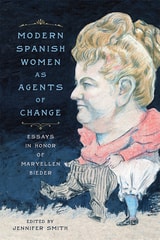
Modern Spanish Women as Agents of Change
Essays in Honor of Maryellen BiederSmith, Jennifer
Bucknell University Press, 2019
Published by Bucknell University Press. Distributed worldwide by Rutgers University Press.
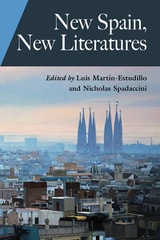
New Spain, New Literatures
Luis Martín-Estudillo
Vanderbilt University Press, 2010
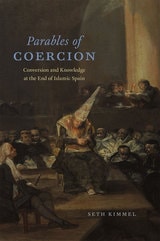
Parables of Coercion
Conversion and Knowledge at the End of Islamic SpainSeth Kimmel
University of Chicago Press, 2015
In its careful examination of how Spanish authors transformed the history of scholarship through debate about forced religious conversion, Parables of Coercion makes us rethink what we mean by tolerance and intolerance, and shows that debates about forced conversion and assimilation were also disputes over the methods and practices that demarcated one scholarly discipline from another.

Persephone's Girdle
Narratives of Rape in Seventeenth-Century Spanish LiteratureMarcia L. Welles
Vanderbilt University Press, 2000
Marcia Welles applies her extensive knowledge of Spanish Golden Age literature and her insightful grasp of current literary theory to synthesize a wide range of material into a uniquely engaging and refreshing interpretation of well-known texts. While the subject of rape and violence has been studied in other European literatures, Persephone's Girdle is the first to do so in the field of early modern Spanish literature.
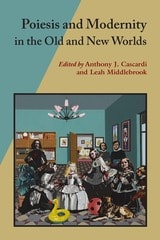
Poiesis and Modernity in the Old and New Worlds
Anthony J. Cascardi
Vanderbilt University Press, 2012
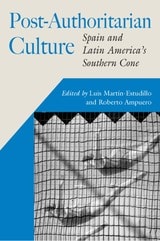
Post-Authoritarian Cultures
Spain and Latin America's Southern ConeLuis Martín-Estudillo
Vanderbilt University Press, 2008
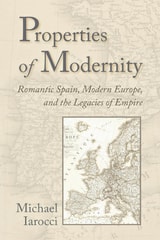
Properties of Modernity
Romantic Spain, Modern Europe, and the Legacies of EmpireMichael Iarocci
Vanderbilt University Press, 2006
Through a close study of Cadalso, Saavedra, and Larra, Iarocci argues that Spanish writers were intensely concerned with the same issues taken up by more famous Romantics and that the ways in which they address these issues provides us with a richer notion, not only of Spain, but of all of Europe.
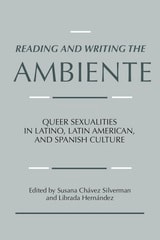
Reading and Writing the Ambiente
Queer Sexualities in Latino, Latin American, and Spanish CultureSusana Chávez-Silverman
University of Wisconsin Press, 2000
In this dynamic collection of essays, many leading literary scholars trace gay and lesbian themes in Latin American, Hispanic, and U.S. Latino literary and cultural texts. Reading and Writing the Ambiente is consciously ambitious and far-ranging, historically as well as geographically. It includes discussions of texts from as early as the seventeenth century to writings of the late twentieth century.
Reading and Writing the Ambiente also underscores the ways in which lesbian and gay self-representation in Hispanic texts differs from representations in Anglo-American texts. The contributors demonstrate that—unlike the emphasis on the individual in Anglo- American sexual identity—Latino, Spanish, and Latin American sexual identity is produced in the surrounding culture and community, in the ambiente. As one of the first collections of its kind, Reading and Writing the Ambiente is expressive of the next wave of gay Hispanic and Latin scholarship.
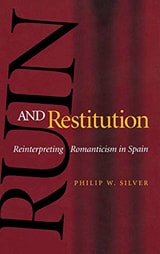
Ruin and Restitution
Reinterpreting Romanticism in SpainPhilip W. Silver
Vanderbilt University Press, 1997
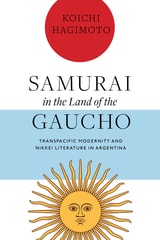
Samurai in the Land of the Gaucho
Transpacific Modernity and Nikkei Literature in ArgentinaKoichi Hagimoto
Vanderbilt University Press, 2023
In the early twentieth century, historical imaginings of Japan contributed to the Argentine vision of “transpacific modernity." Intellectuals such as Eduardo Wilde and Manuel Domecq García celebrated Japanese customs and traditions as important values that can be integrated into Argentine society. But a new generation of Nikkei or Japanese Argentines is rewriting this conventional narrative in the twenty-first century. Nikkei writers such as Maximiliano Matayoshi and Alejandra Kamiya are challenging the earlier, unapologetic view of Japan based on their own immigrant experiences.
Compared to the experience of political persecution against Japanese immigrants in Brazil and Peru, the Japanese in Argentina generally lived under a more agreeable sociopolitical climate. In order to understand the "positive" perception of Japan in Argentine history and literature, Samurai in the Land of the Gaucho turns to the current debate on race in Argentina, particularly as it relates to the discourse of whiteness. One of the central arguments is that Argentina's century-old interest in Japan represents a disguised method of (re)claiming its white, Western identity.
Through close readings of diverse genres (travel writing, essay, novel, short story, and film) Samurai in the Land of the Gaucho yields a multi-layered analysis in order to underline the role Japan has played in both defining and defying Argentine modernity from the twentieth century to the present.
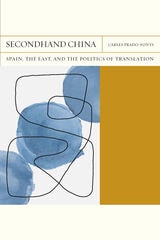
Secondhand China
Spain, the East, and the Politics of TranslationCarles Prado-Fonts
Northwestern University Press, 2022
Uncovering an eclectic and surprising archive, Prado-Fonts draws on diverse cultural artifacts from popular literature, journalism, and early cinema to offer a rich account of how China was seen across the West between 1880 and 1930. Enrique Gaspar, Luis de Oteyza, Vicente Blasco Ibáñez, and lesser-known authors writing in Spanish and Catalan put themselves in dialogue with Leo Tolstoy, John Dewey, W. Somerset Maugham, Bertrand Russell, Pearl Buck, and André Malraux, as well as stereotypical figures from popular culture like Fu Manchu and Charlie Chan. Throughout, Prado-Fonts exposes translation as a technology of cultural hegemony and China as an appealing object for representation. A timely contribution to our understanding of how we create and consume knowledge about the world, Secondhand China is essential reading for scholars and students of Orientalism, postcolonial studies, translation studies, comparative literature, and cultural studies.
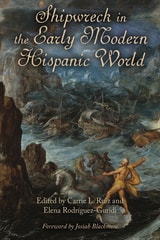
Shipwreck in the Early Modern Hispanic World
Carrie L. Ruiz
Bucknell University Press, 2022
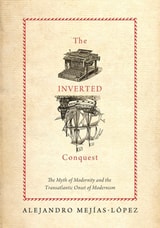
The Inverted Conquest
The Myth of Modernity and the Transatlantic Onset of ModernismAlejandro Mejias-Lopez
Vanderbilt University Press, 2009
Expanding Bourdieu's concepts of cultural field and symbolic capital beyond national boundaries, The Inverted Conquest shows how modernismo originated in Latin America and traveled to Spain, where it provoked a complete renovation of Spanish letters and contributed to a national identity crisis. In the process, described by Latin American writers as a reversal of colonial relations, modernismo wrested literary and cultural authority away from Spain, moving the cultural center of the Hispanic world to the Americas.
Mejias-Lopez further reveals how Spanish American modernistas confronted the racial supremacist claims and homogenizing force of an Anglo-American modernity that defined the Hispanic as un-modern. Constructing a new Hispanic genealogy, modernistas wrote Spain as the birthplace of modernity and themselves as the true bearers of the modern spirit, moved by the pursuit of knowledge, cosmopolitanism, and cultural miscegenation, rather than technology, consumption, and scientific theories of racial purity.
Bound by the intrinsic limits of neocolonial and postcolonial theories, scholarship has been unwilling or unable to explore modernismo's profound implications for our understanding of Western modernities.
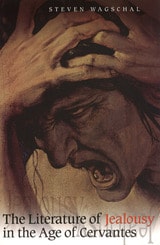
The Literature of Jealousy in the Age of Cervantes
Steven Wagschal
University of Missouri Press, 2007
Frequent and complex representations of jealousy in early modern Spanish literature offer symbolically rich and often contradictory images. Steven Wagschal examines these occurrences by illuminating the theme of jealousy in the plays of Lope de Vega, the prose of Miguel de Cervantes, and the complex poetry of Luis de Góngora. Noting the prevalence of this emotion in their work, he reveals what jealousy offered these writers at a time when Spain was beginning its long decline.
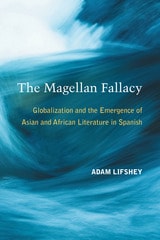
The Magellan Fallacy
Globalization and the Emergence of Asian and African Literature in SpanishAdam Lifshey
University of Michigan Press, 2012
The Magellan Fallacy argues that literature in Spanish from Asia and Africa, though virtually unknown, reimagines the supposed centers and peripheries of the modern world in fundamental ways. Through archival research and comparative readings, The Magellan Fallacy rethinks mainstream mappings of diverse cultures while advocating the creation of a new field of scholarship: global literature in Spanish. As the first attempt to analyze Asian and African literature in Spanish together, and doing so while ranging over all continents, The Magellan Fallacy crosses geopolitical and cultural borders without end. The implications of the book, therefore, extend far beyond the lands formerly ruled by the Spanish empire. The Magellan Fallacy shows that all theories of globalization, including those focused on the Americas and Europe, must be able to account for the varied significances of hispanophone Asia and Africa as well.
The Subject in Question
Early Contemporary Spanish Literature and ModernismC. Christopher Soufas
Catholic University of America Press, 2007
The Untold Story
Women and Theory in Golden Age TextsMary S. Gossy
University of Michigan Press, 1990
Three Spanish Querelle Texts
Grisel and Mirabella, The Slander against Women, and The Defense of Ladies against SlanderersPere Torrellas and Juan de Flores
Iter Press, 2013
Tortilleras
Hispanic & U.S. Latina Lesbian ExpressionLourdes Torres
Temple University Press, 2003
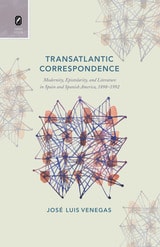
Transatlantic Correspondence
Modernity, Epistolarity, and Literature in Spain and Spanish America, 1898–1992José Luis Venegas
The Ohio State University Press, 2014
Each chapter frames literary works by authors from both sides of the Atlantic within key historical events spanning the loss of Spain’s overseas possessions in 1898 to the commemoration of Columbus’s quincentennial in 1992. This broad range of historical reference is counterpointed by the nuanced examination of a single formal feature in a wide variety of canonical and non-canonical texts. Drawing on insights from postcolonial studies, the book addresses the link between historical transformations that traverse decades and continents and specific stylistic choices in order to foster an understanding of Hispanic literary and cultural studies that is not limited by categories such as “movement,” “generation,” and “national literature.”
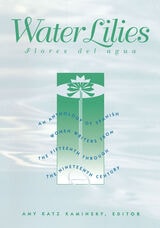
Water Lilies
An Anthology of Spanish Women Writers from the Fifteenth through the Nineteenth CenturyAmy Kaminsky
University of Minnesota Press, 1995
Poetry and prose by Spanish women presented here in both English and Spanish.
A dazzling sampler, Water Lilies brings to light a rich and until now largely invisible version of Spanish literary history. These hard-to-find works, most translated for the first time, are printed on facing pages in Spanish and English and located within a critical, biographical, and historical overview.
Here are five centuries of writing by Spanish women, the unknown recovered from obscurity, the well-known seen as they rarely have been-in the context of a women’s literary history. Some of these writers, like Rosalía de Castro in “The Bluestockings” and Teresa de Cartagena in Wonder at the Work of God, question the relationship between the woman writer and the act of writing. Some, like the poet Carolina Coronado in “The Twin Geniuses: Sappho and Saint Teresa of Jesus,” overtly seek a literary tradition. Others, like Saint Teresa in her Life and Luisa Sigea in her poetry, provide touchstones for women in search of such a tradition.Legends and stories of women’s friendships, the inconstancy of men, and the love of God; Spain’s first autobiographical text; secular and religious poetry from medieval through recent times; an excerpt from one of the few chivalresque novels written by a woman; a full-length Golden Age comedia: this is the wide range of works Water Lilies comprises. Brought together for the first time, the writers articulate their resistance to, and their complicity in, a literary history that, until now, has tried to exclude them.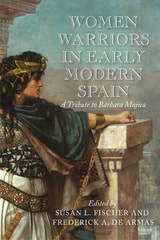
Women Warriors in Early Modern Spain
A Tribute to Barbara MujicaSusan L. Fischer
University of Delaware Press, 2019
Published by University of Delaware Press. Distributed worldwide by Rutgers University Press.
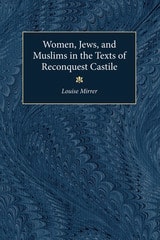
Women, Jews and Muslims in the Texts of Reconquest Castile
Louise Mirrer
University of Michigan Press, 1996
This volume is the first in the field of medieval Hispanic studies to reexamine the canon in the light of recent critical work on language, gender, power, and the effects of domination. It shows how the texts imaginarily liberate Christian women from the authority of their husbands, in order to demonstrate how women's access to the discourses of power leads to tragedy and ruin for the men who fail to silence them.
Women, Jews, and Muslims in the Texts of Reconquest Castile makes the argument that dominant-"other" struggle, waged on the terrains of gender, religion, and war, is the most appropriate paradigm for discussing literary texts produced in the last centuries of reconquest. More than any other culture, medieval Spain reminds us of the provisional nature of national, religious, and sexual identity.
Exploring the gendering of subjects in society, the volume will be of interest to those in cultural and gender studies, Hispanic studies, medieval studies, and Middle Eastern studies. All texts are translated, and maps and illustrations help orient the reader.
Louise Mirrer is Professor and Chair, Department of Spanish and Portuguese, University of Minnesota.
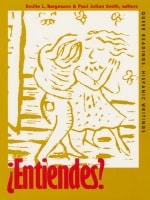
¿Entiendes?
Queer Readings, Hispanic WritingsEmilie L. Bergmann and Paul Julian Smith, eds.
Duke University Press, 1995
Combining intimate knowledge of Spanish-speaking cultures with contemporary queer theory, these essays address texts that share both a common language and a concern with lesbian, gay, and bisexual identities. Using a variety of approaches, the contributors tease the homoerotic messages out of a wide range of works, from chronicles of colonization in the Caribbean to recent Puerto Rican writing, from the work of Cervantes to that of the most outrageous contemporary Latina performance artists. This volume offers a methodology for examining work by authors and artists whose sexuality is not so much open as "an open secret," respecting, for example, the biographical privacy of writers like Gabriela Mistral while responding to the voices that speak in their writing. Contributing to an archeology of queer discourses, ¿Entiendes? also includes important studies of terminology and encoded homosexuality in Argentine literature and Caribbean journalism of the late nineteenth century.
Whether considering homosexual panic in the stories of Borges, performances by Latino AIDS activists in Los Angeles, queer lives in turn-of-the-century Havana and Buenos Aires, or the mapping of homosexual geographies of 1930s New York in Lorca’s "Ode to Walt Whitman," ¿Entiendes? is certain to stir interest at the crossroads of sexual and national identities while proving to be an invaluable resource.