Results by title
4 books match the query 'Stauffer, John'
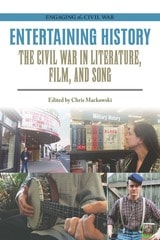
Entertaining History
The Civil War in Literature, Film, and SongEdited by Chris Mackowski
Southern Illinois University Press, 2020
From Ulysses S. Grant’s Memoirs to Abraham Lincoln: Vampire Hunter, from Roots to Ken Burns’s The Civil War, from “Dixie” to “Ashokan Farewell,” and from Civil War photography to the Gettysburg Cyclorama, trendy and well-loved depictions of the Civil War are the subjects of twenty contributors who tell how they and the general public have been influenced by them. Sarah Kay Bierle examines the eternal appeal of Gone with the Wind and asks how it is that a protagonist who so opposed the war has become such a figurehead for it. H. R. Gordon talks with New York Times–bestselling novelist Jeff Shaara to discuss the power of storytelling. Paul Ashdown explores ColdMountain’s value as a portrait of the war as national upheaval, and Kevin Pawlak traces a shift in cinema’s depiction of slavery epitomized by 12 Years a Slave. Tony Horwitz revisits his iconic Confederates in the Attic twenty years later.
The contributors’ fresh analysis articulates a shared passion for history’s representation in the popular media. The variety of voices and topics in this collection coalesces into a fascinating discussion of some of the most popular texts in the genres. In keeping with the innovative nature of this series, web-exclusive material extends the conversation beyond the book.
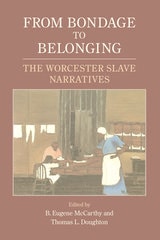
From Bondage to Belonging
The Worcester Slave NarrativesB. Eugene McCarthy
University of Massachusetts Press, 2007
First published between 1842 and 1895, the autobiographical narratives gathered in this volume document the experiences of eight former slaves who eventually took up residence in Worcester, Massachusetts. Each narrative tells a gripping individual story, its author clearly visible in the dress of his or her own words. Together they illuminate not only the inhumanity of slavery but also the dreams and dilemmas of emancipation, tracing the personal journeys of seven men and one woman from bondage to freedom.
In their well-researched introduction, B. Eugene McCarthy and Thomas L. Doughton situate the Worcester slave narratives within a broader historical framework and analyze their meaning and significance. Drawing on a wide range of sources, they reconstruct the black community of Worcester and compare it with other New England black communities of the time, describing how the town evolved from a society with slaves in the colonial era to a hub for free blacks by the eve of the Civil War. They explain why these writings must be understood as part of a long-established tradition of African American self-representation, and show how the four narratives published before 1865 focus on the experience of slavery, while the four written after the war offer the fresh perspective of living in freedom. Headnotes describe the distinctive literary features of each narrative and provide additional information about the lives of the authors. The editors discuss why these ex-slaves came to Worcester, the circumstances in which each wrote his or her narrative, and the audiences they had in mind. No other collection of slave narratives offers such a diverse range of testimony within a specific historical and literary context, or a more compelling account of the transition from bondage to belonging.
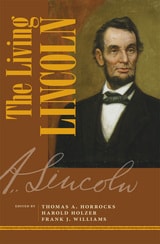
The Living Lincoln
Edited by Thomas A. Horrocks, Harold Holzer, and Frank J. Williams
Southern Illinois University Press, 2011
In an opening section focusing largely on Lincoln's formative years, insightful explorations into his early self-education and the era before his presidency come from editors Frank J. Williams and Harold Holzer, respectively. Readers will also glimpse a Lincoln rarely discerned in books: calculating politician, revealed in Matthew Pinsker's illuminating essay, and shrewd military strategist, as demonstrated by Craig L. Symonds. Stimulating discussions from Edna Greene Medford, John Stauffer, and Michael Vorenberg tell of Lincoln's friendship with Frederick Douglass, his gradualism on abolition, and his evolving thoughts on race and the Constitution to round out part two. Part three features reflections on his martyrdom and memory, including a counterfactual history from Gerald J. Prokopowicz that imagines a hypothetical second term for the president, emphasizing the differences between Lincoln and his successor, Andrew Johnson. Barry Schwartz's contribution presents original research that yields fresh insight into Lincoln's evolving legacy in the South, while Richard Wightman Fox dissects Lincoln's 1865 visit to Richmond, and Orville Vernon Burton surveys and analyzes recent Lincoln scholarship.
This thought-provoking new anthology, introduced at a major bicentennial symposium at Harvard University, offers a wide range of ideas and interpretations by some of the best-known and most widely respected historians of our time. The Living Lincoln is essential reading for those seeking a better understanding of this nation's greatest president and how his actions resonate today.
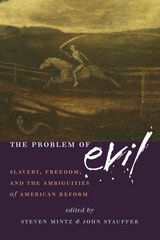
The Problem of Evil
Slavery, Freedom and the Ambiguities of American ReformSteven Mintz
University of Massachusetts Press, 2007
Divided into four parts, with introductions to each section by editors Steven Mintz and John Stauffer, the essays provide succinct guides to the evolution of American slavery, the origins of antislavery thought, the challenges of emancipation, and the post-emancipation legacy of slavery. They also offer fresh perspectives on key individuals, from Benjamin Franklin and Frederick Douglass to Harriet Jacobs and John Brown, and shed new light on the differences between female and male critiques of slavery, the defense of slavery by the South's intellectual elite, and Catholic attitudes toward slavery and abolition.
Above all, The Problem of Evil helps us understand the circumstances that allow social evils to happen, how intelligent and ostensibly moral people can participate in the most horrendous crimes, and how, at certain historical moments, some individuals are able to rise above their circumstances, address evil in fundamental ways, and expand our moral consciousness.