Results by title
33 books match the query 'Stone implements'
Aggregate Analysis in Chipped Stone
Christopher T Hall
University of Utah Press, 2004
Less than two decades ago, archaeologists considered lithic debitage, the flakes and debris left from the manufacture of stone tools, little more than uninformative waste. Since then, fieldworkers have increasingly recognized that stone flakes can provide information both singly and in aggregate.
Many methods are now available for analyzing lithic debitage, yet no single method is entirely reliable as a vehicle to meaningful interpretation of past behavior. Part of the problem lies in the disparity between tightly controlled experimental conditions and the difficulty of sorting individual sequences out of the masses of stone found in many archaeological sites. Contributors to this volume seek to identify the strengths and weaknesses in the more widespread and competing analytical forms while arguing for the use of multiple lines of evidence. As the title indicates, their primary focus is on mass analysis of aggregates rather than individual flakes. Thus several chapters also address problems of subdividing aggregates to better deal with the “mixed assemblages” generated by multiple factors over time.

American Flintknappers
Stone Age Art in the Age of ComputersBy John C. Whittaker
University of Texas Press, 2004
Making arrowheads, blades, and other stone tools was once a survival skill and is still a craft practiced by thousands of flintknappers around the world. In the United States, knappers gather at regional "knap-ins" to socialize, exchange ideas and material, buy and sell both equipment and knapped art, and make stone tools in the company of others. In between these gatherings, the knapping community stays connected through newsletters and the Internet.
In this book, avid knapper and professional anthropologist John Whittaker offers an insider's view of the knapping community. He explores why stone tools attract modern people and what making them means to those who pursue this art. He describes how new members are incorporated into the knapping community, how novices learn the techniques of knapping and find their roles within the group, how the community is structured, and how ethics, rules, and beliefs about knapping are developed and transmitted. He also explains how the practice of knapping relates to professional archaeology, the trade in modern replicas of stone tools, and the forgery of artifacts. Whittaker's book thus documents a fascinating subculture of American life and introduces the wider public to an ancient and still rewarding craft.
Caciques and Cemi Idols
The Web Spun by Taino Rulers Between Hispaniola and Puerto RicoJose R Oliver
University of Alabama Press, 2009
Cemís are both portable artifacts and embodiments of persons or spirit, which the Taínos and other natives of the Greater Antilles (ca. AD 1000-1550) regarded as numinous beings with supernatural or magic powers. This volume takes a close look at the relationship between humans and other (non-human) beings that are imbued with cemí power, specifically within the Taíno inter-island cultural sphere encompassing Puerto Rico and Hispaniola. The relationships address the important questions of identity and personhood of the cemí icons and their human “owners” and the implications of cemí gift-giving and gift-taking that sustains a complex web of relationships between caciques (chiefs) of Puerto Rico and Hispaniola.
Ceremonial Lithics in Classic Mesoamerica
Zachary Hruby
University Press of Colorado, 2025
Ceremonial Lithics in Classic Mesoamerica explores how and why ceremonial lithic artifacts were made in ancient Mesoamerica’s Classic period, focusing on their implications for economic and sociopolitical organization. Technological analyses of unique examples are interpreted to understand the processes of lithic production and how chipped stone was ritualized across Mesoamerica.
Investigations of ritualized lithics also draw on iconography, epigraphy, and ethnohistory to understand the meaning of these objects, including the so-called eccentric flints and obsidians of the Maya area and Central Mexico, massive debitage deposits in tomb contexts, and the use of utilitarian objects in ceremonial contexts. In the cases of the largest and most elaborate artifacts (e.g., the effigy flints of Copan, Honduras and the obsidian serpents of Teotihuacan), authors examine what the basic production processes may have been, while cases of blade and debitage deposits focus on how the objects were produced within their social context, in what sequence, and why they may have been chosen for ritual deposition.
Ceremonial Lithics in Classic Mesoamerica is the first book to address from a pan-Mesoamerican perspective how and why these objects were made. While obsidian and flint carried their own respective symbolic meanings, the final form of an artifact and the process of its production also contributed to its identification. Hence, this volume is an essential step toward understanding the ancient meanings imbued in these material objects.
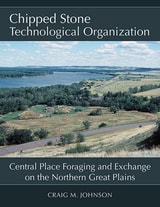
Chipped Stone Technological Organization
Central Place Foraging and Exchange on the Northern Great PlainsCraig M. Johnson
University of Utah Press, 2019
Central place foraging theory, through the field processing model, posits that the farther a source material is from the central living area, the more it will be processed before it is transported back, to avoid hauling heavy, nonusable parts on long trips. Johnson’s data support this theory and demonstrate that this model applies not only to nomadic hunter-gatherers but also to semisedentary farmer-hunters. His results also indicate that toolstone usage creates distinctive spatial patterns along the Missouri River, largely related to village distance from the sources. This is best illustrated with Knife River flint, which gradually declines in popularity downriver from its source in west-central North Dakota but increases in central South Dakota because of exchange.
Chipped Stone Tools in Formative Oaxaca, Mexico
Their Procurement, Production and UseWilliam J. Parry
University of Michigan Press, 1987
Contemporary Lithic Analysis in the Southeast
Problems, Solutions, and InterpretationsPhilip J. Carr
University of Alabama Press, 2012
William Andrefsky Jr. / Andrew P. Bradbury / Philip J. Carr / CarolynConklin /
Crowfield (Af Hj-31)
A Unique Paleoindian Fluted Point Site from Southwestern OntarioD. Brian Deller and Christopher J. Ellis with contributions by James R. Keron and Roger H. King and a foreword by Henry T. Wright
University of Michigan Press, 2011
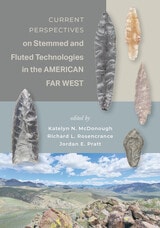
Current Perspectives on Stemmed and Fluted Technologies in the American Far West
Edited by Katelyn N. McDonough, Richard L. Rosencrance, and Jordan E. Pratt
University of Utah Press, 2023
This volume provides the most comprehensive overview of archaeological research into the late Pleistocene and early Holocene occupation of the North American Far West in over a decade. It focuses on the relationship between stemmed and fluted point technologies in the region, which has recently risen to the forefront of debate about the initial settlement of the Americas. Established and early career researchers apply a wide range of analytical approaches to explore chronological, geographical, and technological aspects of these tools and what they reveal about the people who made them. While such interrelationships have intrigued archaeologists for nearly a century, until now they have not been systematically examined together in a single curated volume.
Contributions are organized into three main sections: stemmed point technologies, fluted point technologies, and broader interactions. Topics range from regional overviews of chronologies and technologies to site-level findings containing extensive new data. The culmination of many years of work by dozens of researchers, this volume lays new groundwork for understanding technological innovation, diversity, and exchange among early Indigenous peoples in North America.
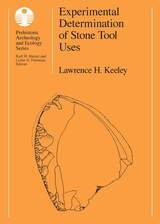
Experimental Determination of Stone Tool Uses
A Microwear AnalysisLawrence H. Keeley
University of Chicago Press, 1980
The most important discovery arising from Keeley's research was that, at magnifications of 100x to 400x, there was a high correlation between the detailed appearance of microwear polishes formed on tool edges and the general category of material worked by that edge. For example, different and distinctive types of microwear polish were formed during use on wood, bone, hide, meat, and soft plant material. These correlations between microwear polish and worked material were independent of the method of use (cutting, sawing, scraping, and so on). In combining evidence of polish type with other traces of use, Keeley was able to make precise reconstructions of tool functions. This book includes the results of a "blind test" of Keeley's functional interpretations which revealed remarkable agreement between the actual and inferred use of the tools tested.
Keeley applied his method of microwear analysis to artifacts from three excavation sites in Britain—Clacton-on-the-sea, Swanscombe, and Hoxne. His research suggests new hypotheses concerning such Paleolithic problems as inter-assemblage variability, the function of Acheulean hand axes, sidescrapers, and chopper-cores and points the way to future research in Stone Age studies.

Finding the People who Flaked the Stone at English Camp
Close, Angela E
University of Utah Press, 2006
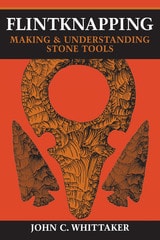
Flintknapping
Making and Understanding Stone ToolsBy John C. Whittaker
University of Texas Press, 1994
Flintknapping is an ancient craft enjoying a resurgence of interest among both amateur and professional students of prehistoric cultures. John C. Whitaker's bestselling guide is a detailed handbook on flintknapping, written from the archaeological perspective of interpreting stone tools as well as making them.
Flintknapping contains detailed, practical information on making stone tools. Whittaker starts at the beginner level and progresses to discussion of a wide range of techniques. He includes information on necessary tools and materials, as well as step-by-step instructions for making several basic stone tool types. Numerous diagrams allow the reader to visualize the flintknapping process, and drawings of many stone tools illustrate the discussions and serve as models for beginning knappers.
Written for a wide amateur and professional audience, Flintknapping will be essential for practicing knappers as well as for teachers of the history of technology, experimental archaeology, and stone tool analysis.
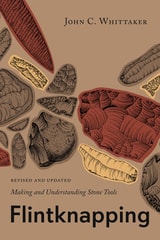
Flintknapping
Making and Understanding Stone ToolsJohn C. Whittaker
University of Texas Press, 2026
An updated edition of the classic guide to the ancient skill of flintknapping.
Flintknapping, the art of making stone tools, is an ancient craft generating renewed interest among both amateurs and professional students of prehistoric cultures. John C. Whittaker’s best-selling guide is a foundational and highly regarded handbook that combines practical instruction with the archaeological perspective of interpreting as well as making stone tools.
This updated edition provides clear, step-by-step guidance on tools, materials, and techniques for producing basic stone tool types. Diagrams and illustrations help readers visualize each stage and model their work. Whittaker also introduces the history of the field, the role of stone tools in human technological development, and experimental archaeology, concluding with an accessible discussion of how archaeologists study stone tools to understand the lives of our ancestors. For more than thirty years, Flintknapping has been essential for knappers, archaeologists, and teachers. This expanded and revised edition adds new insights, illustrations, and guidance for a new generation of readers.
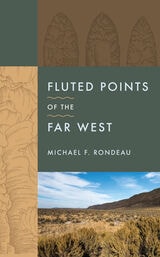
Fluted Points of the Far West
Michael F. Rondeau
University of Utah Press, 2022
Fluted Points of the Far West provides the first large-scale overview of fluted points in the far western United States, including details of their attributes, trends in production, and range of variability. It serves as a compendium of groundbreaking research by the California Fluted Lanceolate Uniform Testing and Evaluation Database (CalFLUTED) project. Details regarding size, morphology, material, basal flaking technology, breakage patterns, repair patterns, manufacturing (as revealed by unfinished fluted bifaces), margin grinding, and flute scratching are provided through this research, both in terms of general trends and noteworthy exceptions.
Designed as a ready reference, these data are also summarized for each of the four sample states covered: California, Nevada, Oregon, and Utah. Summaries introduce the history and circumstances of fluted point studies by state, a list of references for each state used in the CalFLUTED study reports, a comprehensive listing of the relevant CalFLUTED study reports, and a breakdown by state of fluted point attribute details as listed above.
Reviews and discussions cover a range of topics, including classification of fluted points, identifying flute scars, and indicative traits that a fluted point is not from the prehistoric Far West. Additional discussions cover hafting alternatives, fluted point dating, far western fluted point typology, and the likely direction of further research on a range of fluted point topics.
Ground Stone Analysis
A Technological ApproachJenny L Adams
University of Utah Press, 2002
Archaeologists refer to stone artifacts that are altered by or used to alter other items through abrasion, pecking, or polishing as "ground stone." This includes mortars, and pestles used to process vegetal materials, pigments, clays, and tempers; abraders, polishing stones, and hammerstones for manufacturing other artifacts; and artifacts shaped by abrasion or pecking, such as axes, pipes, figurines, ornaments, and architectural pieces. Because there is a fuzzy line between flaked and ground stone artifacts, some analysts state that ground stone includes any stone item not considered flaked.
This manual presents a flexible yet structured method for analyzing stone artifacts and classifying them in meaningful categories. The analysis techniques record important attributes based on design, manufacture, and use.
Part I contains discussions on determining function, classification, attributes of grinding technology, use-wear analysis, modeling tool use, utilization of ethnographic and experimental resources, and research suggestions. Part II contains definitions and descriptions of artifact types. Here the author also seeks to unravel the knot that has developed around conflicting application of terms.
A significant reference for any archaeological fieldworker or student who encounters such artifacts.
Ground Stone Analysis
A Technological ApproachJenny L. Adams
University of Utah Press, 2014
Archaeologists define stone artifacts that are altered by or used to alter other items through abrasion, pecking, or polishing as “ground stone.” This includes mortars and pestles, abraders, polishers stones, and hammerstones, and artifacts shaped by abrasion or pecking, such as axes, pipes, figurines, ornaments, and architectural pieces.
The first edition of Ground Stone Analysis sparked interest around the world. In the decade following its publication, there have been many advances in scientific technology and developments in ethnographic and experimental research. The second edition incorporates these advances, including examples of international research that have utilized a technological approach to ground stone analysis. This study presents a flexible yet structured method for analyzing and classifying stone artifacts. These techniques record important attributes based on design, manufacturing, and use and are applicable to any collection in the world.
The methods presented guide quantitative and qualitative assessments of artifacts and assemblages. Recording forms and instructions for completing them will be available on the University of Utah Press’s open access portal at www.UofUpress.com. Ground Stone Analysis is an important, useful reference for any archaeological field worker or student who encounters ground stone artifacts and is interested in learning more about the people who used them.
Click here to view Appendices A-F

In the Eastern Fluted Point Tradition
Joseph A. M. Gingerich
University of Utah Press, 2013
Eastern North America has one of the largest inventories of Paleoindian sites anywhere in the Americas. Despite this rich record of early human settlement during the late Pleistocene, there are few widely published reports or summaries of Paleoindian research in the region. The contributors to this volume present more than four decades of Early Paleoindian research in eastern North America, including previously unpublished site reports and updates on recent research. Their work helps create a more cohesive picture of the early human occupation of North America.
This data-rich volume provides specific information on artifacts and basic site descriptions which will allow for more thorough comparisons of eastern fluted point sites. Divided into four sections—chronology and environment, reinvestigations of classic sites, new sites and perspectives, and synthesis and conclusions—the volume will encourage further consideration of the sites included and their role in shaping our understanding of huntergatherer lifeways during the late Pleistocene. In the Eastern Fluted Point Tradition is a must read for scholars of Paleoindian archaeology and those generally interested in the prehistory of North America.
In the Eastern Fluted Point Tradition
Volume IIEdited by Joseph A. M. Gingerich
University of Utah Press, 2017
Lithic Debitage
William Andrefsky
University of Utah Press, 2003
Debitage, the by-product flakes and chips from stone tool production, is the most abundant artifact type in prehistoric archaeological sites. For much of the period in which archaeology has employed scientific methodology, debitage has been discarded or ignored as debris. Now archaeologists have begun to recognize its potential to provide information about the kinds of tools produced and the characteristics of the technology being employed. Debitage can even provide clues regarding human organizational systems such as settlement mobility and site functions.
This volume brings together some of the most recent research on debitage analysis and interpretation. It presents stone tool production experiments and offers detailed archaeological investigations for interpreting variability at the individual and collective levels. Although there are a number of volumes that focus on general analysis of lithic artifacts, this is the first volume to address debitage and should be of use to a wide range of archaeological researchers.
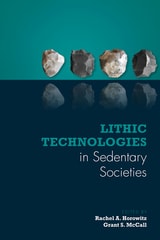
Lithic Technologies in Sedentary Societies
Rachel A. Horowitz
University Press of Colorado, 2019
Lithic analysis focused on sedentary societies, especially in places like Mesoamerica, has previously been neglected mostly because of the high frequency of informal tools, but such bias limits the ways in which both lithic production and economic organization are investigated. Bringing the importance of studying such technologies to the fore and emphasizing the vital anthropological questions that lithics can answer, Lithic Technologies in Sedentary Societies is a valuable resource for scholars and students of lithic technology and sedentary, complex societies.
Contributors: Fumi Arakawa, Mary A. Davis, James Enloe, Dan Healan, Francesca Manclossi, Theodore Marks, Jayur Madhusudan Mehta, Jason S. R. Paling, Steve Rosen, John Whittaker
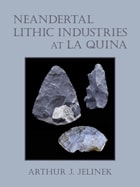
Neandertal Lithic Industries at La Quina
Arthur J. Jelinek
University of Arizona Press, 2013
This study of the significance of changes through time revealed by an analysis of the chipped stone at La Quina reports on the excavations of the Cooperative American–French Excavation Project from 1985 to 1994. It moves beyond the largely descriptive and subjective approaches that have traditionally been applied to this kind of evidence and applies several important quantitative analytical techniques. These new approaches incorporate the history of previous excavations at the site, the results of the work of the Cooperative Project, and the most recent scientific understanding of relevant climatic changes.
This is a major contribution to our understanding of Neandertal behavior and industry. It adds new dimensions and perspectives based on innovative techniques of analysis. The analytic methods applied to lithic artifacts that form the heart of the book are the product of considerations about how to best interpret a sequence of multiple contextual samples. The author concludes the book with an extraordinarily useful chapter that places his findings into the larger context of our contemporary knowledge of Neandertal life in the region.
The book comes with a compact disc, which includes coded observations used in the analysis in as many as 47 data fields for the more than 11,500 artifacts that will allow professionals and students to further explore the collection of lithic artifacts.
Origins Of A Pacific Coast Chiefdom
Jeanne E Arnold
University of Utah Press, 2001
When Europeans first visited California, they encountered one of the most culturally diverse regions of the New World. The coasts and ecologically richest areas were dotted with small polities which were supported not by horticulture but exclusively by hunting, fishing, and gathering, placing them among the more complex hunter-gatherer groups in the world.
The Origins of a Pacific Coast Chiefdom considers the Chumash, perhaps the most hierarchically organized of the California groups. It explores the final thousand years of coastal Chumash culture, which culminated in the complex society witnessed by the earliest Spanish explorers.
Chumash life was characterized by settled villages, massive production of prestige goods, sophisticated plank canoes, and extensive maritime exchange systems—features more characteristic of agricultural societies. Archaeological sites in the island Chumash area are exceptionally well preserved, permitting precise interpretations of both subtle and major changes in technologies, subsistence, prestige goods, and specialized shell and lithic industries. The data and interpretations presented here are the result of fifteen years of intensive investigation on the Channel Islands.
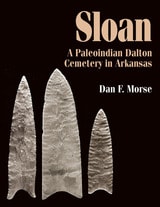
Sloan
A Paleoindian Dalton Cemetery in ArkansasDan Morse
University of Arkansas Press, 1997
New in Paper!
Excavated in 1974, the Sloan site in northeast Arkansas is the earliest recognized cemetery in the New World, containing the graves of a small group of Native Americans who died over ten thousand years ago. Although no skeletons were found in the acidic soil, the number, size, and quality of its artifacts attest to the presence of a far more complicated and sophisticated culture than had previously been thought to exist during the Dalton period.
Bringing together the work of thirteen eminent scholars, Dan F. Morse describes and assesses the assemblage of points, adzes, scrapers, abraders, and other stone artifacts as an indicator of the territorial stability of late Pleistocene peoples. The tools show that hunter-gatherer-fisher populations lived in small, semipermanent villages, hunted and butchered white-tailed deer, processed and ate vegetables, and made dugout canoes. And they buried their dead in cemeteries, a practice previously associated only with the rise of horticultural societies. Many of the tools are unused, suggesting ritual interments and a well-developed system of trade with groups in rockier areas.
Including an overview of the Dalton period in the southeastern United States and a discussion of the region’s geologic and vegetal prehistory—and newly supported by extensive high-quality image galleries now available at the website of the Arkansas Archeological Survey (see inside cover)—this comprehensive study of the Sloan artifacts provides a multifaceted assessment of a site rich in information about the technology of a single prehistoric society.
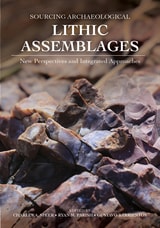
Sourcing Archeological Lithic Assemblages
New Perspectives and Integrated ApproachesEdited by Charles Speer, Ryan M. Parish, and Gustavo Barrientos
University of Utah Press, 2022
For most of our existence, humans have manipulated stone into tools that are essential for survival. Generally resistant to degradation, stone tools comprise a large portion of the material culture found at archaeological sites worldwide. Recovery of stone tools during archaeological excavation indicates the location where they were discarded, often tied to where they were used. “Sourcing” refers to attempts to determine the origin of the raw materials used to produce these tools. Knowing the beginning and end points of a tool’s use-life, as well as the likely paths it took between those two locations, can offer insight into trade and procurement patterns. The scholars gathered in this volume employ a variety of unique approaches to real-life contexts in multiple geographic regions. These studies illustrate the numerous, robust options available to archaeologists and researchers today, as well as the problems that must be faced and resolved.
Part 1 of the book explores technological approaches to sourcing in conjunction with innovative survey strategies. The chapters describe a particular method while often offering suggestions for improving the chemical analysis. Part 2 focuses on region-specific and methodological sourcing applications. In a concluding review, Michael D. Glascock critiques each of the chapters and presents his views, developed across 40 years of work in the field, on sourcing raw materials. Broadly, these contributions demonstrate how knowledge of lithic sources, geologic processes, the nature of variation, and regional availability can provide a more thorough understanding of past peoples.
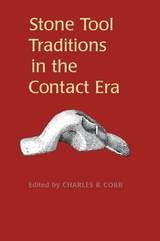
Stone Tool Traditions in the Contact Era
Edited by Charles Richard Cobb
University of Alabama Press, 2003
Explores the impact of European colonization on Native American and Pacific Islander technology and culture
This is the first comprehensive analysis of the partial replacement of flaked stone and ground stone traditions by metal tools in the Americas during the Contact Era. It examines the functional, symbolic, and economic consequences of that replacement on the lifeways of native populations, even as lithic technologies persisted well after the landing of Columbus. Ranging across North America and to Hawai'i, the studies show that, even with wide access to metal objects, Native Americans continued to produce certain stone tool types—perhaps because they were still the best implements for a task or because they represented a deep commitment to a traditional practice.Chapters are ordered in terms of relative degree of European contact, beginning with groups that experienced brief episodes of interaction, such as the Wichita-French meeting on the Arkansas River, and ending with societies that were heavily influenced by colonization, such as the Potawatomi of Illinois. Because the anthology draws comparisons between the persistence of stone tools and the continuity of other indigenous crafts, it presents holistic models that can be used to explain the larger consequences of the Contact Era.
Marvin T. Smith, of Valdosta State University has stated that, “after reading this volume, no archaeologist will ever see the replacement of lithic technology by metal tools as a simple matter of replacement of technologically inferior stone tools with their superior metal counterparts. This is cutting-edge scholarship in the area of contact period studies.”
Stone Tools and the Evolution of Human Cognition
April Nowell
University Press of Colorado, 2010
Dating as far back as 2.5-2.7 million years ago, stone tools were used in cutting up animals, woodworking, and preparing vegetable matter. Today, lithic remains give archaeologists insight into the forethought, planning, and enhanced working memory of our early ancestors. Contributors focus on multiple ways in which archaeologists can investigate the relationship between tools and the evolving human mind-including joint attention, pattern recognition, memory usage, and the emergence of language.
Offering a wide range of approaches and diversity of place and time, the chapters address issues such as skill, social learning, technique, language, and cognition based on lithic technology. Stone Tools and the Evolution of Human Cognition will be of interest to Paleolithic archaeologists and paleoanthropologists interested in stone tool technology and cognitive evolution.
The Fisher Site
Archaeological, Geological and Paleobotanical Studies at an Early Paleo-Indian Site in Southern Ontario, CanadaPeter L. Storck
University of Michigan Press, 1997
The Leavitt Site
A Parkhill Phase Paleo-Indian Occupation in Central MichiganMichael J. Shott, with a foreword by Henry T. Wright
University of Michigan Press, 1993
The Sandy Ridge and Halstead Paleo-Indian Sites
Unifacial Tool Use and Gainey Phase Definition in South-Central OntarioLawrence J. Jackson with a foreword by Henry T. Wright and phytolith analysis by Anita Buehrle
University of Michigan Press, 1998
Thedford II
A Paleo-Indian Site in the Ausable River Watershed of Southwestern OntarioD. Brian Deller and Christopher J. Ellis with a foreword by Henry T. Wright
University of Michigan Press, 1992
Toward a Behavioral Ecology of Lithic Technology
Cases from Paleoindian ArchaeologyTodd A. Surovell
University of Arizona Press, 2009
Because the fundamental processes of making, using, and discarding stone tools are, at root, exercises in problem solving, Todd Surovell asks what conditions favor certain technological solutions. Whether asking if a biface should be made thick or thin or if a flake should be saved or discarded, Surovell seeks answers that extend beyond a case-by-case analysis. One avenue for addressing these questions theoretically is formal mathematical modeling.
Here Surovell constructs a series of models designed to link environmental variability to human decision making as it pertains to lithic technology. To test the models, Surovell uses data from the analysis of more than 40,000 artifacts from five Rocky Mountain and Northern Plains Folsom and Goshen complex archaeological sites dating to the Younger Dryas stadial (ca. 12,600-11,500 years BP). The primary result is the production of powerful new analytical tools useful to the interpretation of archaeological assemblages.
Surovell's goal is to promote modeling and explore the general issues governing technological decisions. In this light, his models can be applied to any context in which stone tools are made and used.
Use-Wear Analysis of Flaked Stone Tools
Patrick C. Vaughan
University of Arizona Press, 1985
Works in Stone
Contemporary Perspectives on Lithic AnalysisMichael J. Shott
University of Utah Press, 2014