Results by title
24 books match the query 'Student movements'
Activist Archives
Youth Culture and the Political Past in IndonesiaDoreen Lee
Duke University Press, 2016
An Unseen Unheard Minority
Asian American Students at the University of IllinoisSharon S. Lee
Rutgers University Press, 2022
Beyond the Barricades
The Sixties Generation Grows UpJack Whalen
Temple University Press, 1990
Centering Student Activism
Feminist Rhetorical Interruptions of Sexual Assault CultureShari J. Stenberg
Utah State University Press, 2026
Centering Student Activism is a deep exploration of institutional responses to sexual assault. It addresses critical issues facing campuses today, examining how students navigate institutional dynamics and utilize the power of new and traditional rhetorical strategies to effect change. In doing so, it provides a profound understanding of the mechanisms by which coalitions can transform educational environments.
Centering Student Activism features a national interview-based study of contemporary student activists who deploy rhetorical strategies and tactics—old and new, embodied and digital—with agility and awareness. They aim their strategies and tactics of “intersectional rhetorical feminism” to interrupt and transform a sedimented culture. The students’ activism highlights not only the harms experienced by survivors in the aftermath of their assaults but also how their efforts to communicate those harms are often stymied or silenced by official responses and practices. These student activists pair interruption with rhetorical transformation as they seek to create a survivor-centric culture. In so doing they spotlight the systemic roots of sexual violence and respond to sexual assault through intersectional, coalition-based work.
Through detailed analysis and compelling narratives, Shari J. Stenberg underscores the importance of community care and mutual support in advocacy efforts. Centering Student Activism is an essential work for navigating institutional dynamics, providing an important resource to students, educators, and administrators who seek to understand how universities silence survivors and how students create ways to speak back and transform institutional culture.
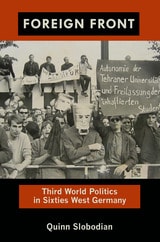
Foreign Front
Third World Politics in Sixties West GermanyQuinn Slobodian
Duke University Press, 2012

Generation at the Crossroads
Apathy and Action on the American CampusLoeb, Paul R
Rutgers University Press, 1994
Challenging prevailing media stereotypes, Generation at the Crossroads explores the beliefs and choices of the students who came of age in the 1980s and 1990s. For seven years, at over a hundred campuses in thirty states, Paul Loeb asked students about the values they held. He examines their concepts of responsibility, the links they draw between present and future, and how they view themselves in relation to the larger human community in which they live. He brings us a range of voices, from "I'm not that kind of person," to "I had to take a stand." Loeb looks at how the rest of us can serve young people as better role models, and give them courage and vision to help build a better world.
This insightful book explores the culture of withdrawal that dominated American campuses through most of the eighties. He locates its roots in historical ignorance, relentless individualism, mistrust of social movements, and a general isolation from urgent realities. He examines why a steadily increasing minority has begun to take on critical public issues, whether environmental activism, apartheid, hunger and homelessness, affordable education, or racial and sexual equity. Loeb looks at individuals who have overcome precisely the barriers he has described, and how their journeys can become models. The generational choices he explores will shape our common future.
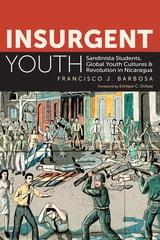
Insurgent Youth
Sandinista Students, Global Youth Cultures, and Revolution in NicaraguaFrancisco J. Barbosa
University Press of Colorado, 2026
This history of the Sandinista student movement is a window into the cultural milieu that produced a revolution where it seemed least likely to occur: among the youth of a country under the firm grip of a US-backed dictatorship whose power was secured by one of the best armed and most highly trained military forces in the region. By examining the articulation of political, gendered, and age-specific identities within the revolutionary process, Insurgent Youth sheds light on the everyday struggles of young Nicaraguans.
In the early 1970s a new emphasis on personal freedom and pleasure, under the influence of a global counterculture, challenged Sandinista gender ideology, especially masculinity, from within. This shift transformed the social world of Nicaraguan youth in general and Sandinista students in particular, eventually affecting the character of clandestine struggle and debates over revolutionary praxis within the Sandinista National Liberation Front (FSLN). Insurgent Youthshows how this new youth identity, which included the classic 1960s triumvirate of “sex, drugs, and rock ‘n’ roll,” constituted a social vernacular among young Nicaraguans of all classes—a common language and array of social practices that ultimately aided FSLN recruitment efforts among working-class youth. At the same time, this new identity posed a danger to the movement in that it embodied a tacit questioning of both mainstream and Sandinista notions of gender and the political, bringing threatening class and ideological contradictions present within the movement to the surface.
Insurgent Youth places what was happening in Nicaragua into the context of the worldwide student movement, challenging patriarchy and colonialism in Latin America and across the globe. This deep dive into the Nicaraguan revolution and the youth culture surrounding it provides a unique perspective on, and understanding of, modern Latin American history.
Learning to Lead
Undocumented Students Mobilizing EducationJennifer R. Nájera
Duke University Press, 2024
Marching Students
Chicana and Chicano Activism in Education, 1968 to the PresentMargarita Berta-Avila
University of Nevada Press, 2011
Contributors: Alejandro Covarrubias, Xico González, Eracleo Guevara, Adriana Katzew, Lilia R. De Katzew, Rita Kohli, Edward M. Olivos, Alejo Padilla, Carmen E. Quintana, Evelyn M. Rangel-Medina, Marianna Rivera, Daniel G. Solórzano, Carlos Tejeda

Materializing Imaginaries in Senegal
Modern African Literature and Global 1968Fatoumata Seck
Duke University Press, 2026

Photopoetics at Tlatelolco
Afterimages of Mexico, 1968By Samuel Steinberg
University of Texas Press, 2016
In the months leading up to the 1968 Olympic games in Mexico City, students took to the streets, calling for greater democratization and decrying crackdowns on political resistance by the ruling PRI party. During a mass meeting held at the Plaza of the Three Cultures in the Tlatelolco neighborhood, paramilitary forces opened fire on the gathering. The death toll from the massacre remains a contested number, ranging from an official count in the dozens to estimates in the hundreds by journalists and scholars. Rereading the legacy of this tragedy through diverse artistic-political interventions across the decades, Photopoetics at Tlatelolco explores the state’s dual repression—both the massacre’s crushing effects on the movement and the manipulation of cultural discourse and political thought in the aftermath.
Examining artifacts ranging from documentary photography and testimony to poetry, essays, chronicles, cinema, literary texts, video, and performance, Samuel Steinberg considers the broad photographic and photopoetic nature of modern witnessing as well as the specific elements of light (gunfire, flares, camera flashes) that ultimately defined the massacre. Steinberg also demonstrates the ways in which the labels of “massacre” and “sacrifice” inform contemporary perceptions of the state’s blatant and violent repression of unrest. With implications for similar processes throughout the rest of Latin America from the 1960s to the present day, Photopoetics at Tlatelolco provides a powerful new model for understanding the intersection of political history and cultural memory.
Power Politics
Environmental Activism in South Los AngelesBrodkin, Karen
Rutgers University Press, 2009
Power Politics is a rich and readable study of a grassroots campaign where longtime labor and environmental allies found themselves on opposite sides of a conflict that pitted good jobs against good air. Karen Brodkin analyzes how those issues came to be opposed and in doing so unpacks the racial and class dynamics that shape Americans' grasp of labor and environmental issues. Power Politics' activists stood at the forefront of a movement that is building broad-based environmental coalitions and placing social justice at the heart of a new and robust vision.
Prairie Power
Voices of 1960s Midwestern Student ProtestRobbie Lieberman
University of Missouri Press, 2019

Radicals in the Heartland
The 1960s Student Protest Movement at the University of IllinoisMichael V. Metz
University of Illinois Press, 2019
Positioning the events in the context of their time, Michael V. Metz delves into the lives and actions of activists at the center of the drama. A participant himself, Metz draws on interviews, archives, and newspaper records to show a movement born in demands for free speech, inspired by a movement for civil rights, and driven to the edge by a seemingly never-ending war. If the sudden burst of irrational violence baffled parents, administrators, and legislators, it seemed inevitable to students after years of official intransigence and disregard. Metz portrays campus protesters not as angry, militant extremists but as youthful citizens deeply engaged with grave moral issues, embodying the idealism, naiveté, and courage of a minority of a generation.
Rise Up!
Activism as EducationAmalia Dache
Michigan State University Press, 2019

Searching for Life's Meaning
Changes and Tensions in the Worldviews of Chinese Youth in the 1980sLuo Xu
University of Michigan Press, 2002
Drawing on his own experience as a teacher at Capital Normal University in Beijing, China during the 1980s, as well as exhaustive research, Luo Xu investigates the social and political climate of 1980s China in order to help better define the culture that ultimately drove the events at Tiananmen. Supporting his arguments with solid primary source documents, Xu contends that the contemplation of the meaning of life, along with other philosophical questions, were integral components of the general social crisis leading up to the movement of 1989.
Elegantly written and accessible to a general readership, this study will also be useful to specialists. Searching for Life's Meaning is a concise but detailed introduction to the mentalities of the Chinese generation presently assuming leadership in China. It should be valuable reading in courses on Chinese history and politics, and will be of interest to scholars in the related fields of Asian studies, anthropology, cultural studies, and youth studies. The book will also appeal to business- people and other professionals concerned with managing relations with the world's fastest growing polity.
Luo Xu is Assistant Professor of History, State University of New York College at Cortland.
Speaking of Flowers
Student Movements and the Making and Remembering of 1968 in Military BrazilVictoria Langland
Duke University Press, 2013
Embodying Cold War political and gendered tensions, Brazil's increasingly violent military government mounted fierce challenges to student political activity just as students were beginning to see themselves as representing an otherwise demobilized civil society. By challenging the students' political legitimacy at a pivotal moment, the dictatorship helped to ignite the student protests that exploded in 1968. In her attentive exploration of the years after 1968, Langland analyzes what the demonstrations of that year meant to later generations of Brazilian students, revealing how student activists mobilized collective memories in their subsequent political struggles.

Strategizing against Sweatshops
The Global Economy, Student Activism, and Worker EmpowermentMatthew S. Williams
Temple University Press, 2020
For the past few decades, the U.S. anti-sweatshop movement was bolstered by actions from American college students. United Students Against Sweatshops (USAS) effectively advanced the cause of workers’ rights in sweatshops around the world. Strategizing against Sweatshops chronicles the evolution of student activism and presents an innovative model of how college campuses are a critical site for the advancement of global social justice.
Matthew Williams shows how USAS targeted apparel companies outsourcing production to sweatshop factories with weak or non-existent unions. USAS did so by developing a campaign that would support workers organizing by leveraging their college’s partnerships with global apparel firms like Nike and Adidas to abide by pro-labor codes of conduct.
Strategizing against Sweatshops exemplifies how organizations and actors cooperate across a movement to formulate a coherent strategy responsive to the conditions in their social environment. Williams also provides a model of political opportunity structure to show how social context shapes the chances of a movement’s success—and how movements can change that political opportunity structure in turn. Ultimately, he shows why progressive student activism remains important.
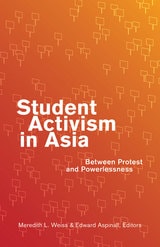
Student Activism in Asia
Between Protest and PowerlessnessMeredith L. Weiss
University of Minnesota Press, 2012
Since World War II, students in East and Southeast Asia have led protest movements that toppled authoritarian regimes in countries such as Indonesia, South Korea, and Thailand. Elsewhere in the region, student protests have shaken regimes until they were brutally suppressed—most famously in China’s Tiananmen Square and in Burma. But despite their significance, these movements have received only a fraction of the notice that has been given to American and European student protests of the 1960s and 1970s. The first book in decades to redress this neglect, Student Activism in Asia tells the story of student protest movements across Asia.
Taking an interdisciplinary, comparative approach, the contributors examine ten countries, focusing on those where student protests have been particularly fierce and consequential: China, Japan, Hong Kong, Taiwan, South Korea, Indonesia, Burma, Malaysia, Thailand, and the Philippines. They explore similarities and differences among student movements in these countries, paying special attention to the influence of four factors: higher education systems, students’ collective identities, students’ relationships with ruling regimes, and transnational flows of activist ideas and inspirations.
The authors include leading specialists on student activism in each of the countries investigated. Together, these experts provide a rich picture of an important tradition of political protest that has ebbed and flowed but has left indelible marks on Asia’s sociopolitical landscape.
Contributors: Patricio N. Abinales, U of Hawaii, Manoa; Prajak Kongkirati, Thammasat U, Thailand; Win Min, Vahu Development Institute; Stephan Ortmann, City U of Hong Kong; Mi Park, Dalhousie U, Canada; Patricia G. Steinhoff, U of Hawaii, Manoa; Mark R. Thompson, City U of Hong Kong; Teresa Wright, California State U, Long Beach.
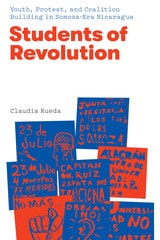
Students of Revolution
Youth, Protest, and Coalition Building in Somoza-Era NicaraguaBy Claudia Rueda
University of Texas Press, 2019
Students played a critical role in the Sandinista struggle in Nicaragua, helping to topple the US-backed Somoza dictatorship in 1979—one of only two successful social revolutions in Cold War Latin America. Debunking misconceptions, Students of Revolution provides new evidence that groups of college and secondary-level students were instrumental in fostering a culture of insurrection—one in which societal groups, from elite housewives to rural laborers, came to see armed revolution as not only legitimate but necessary.
Drawing on student archives, state and university records, and oral histories, Claudia Rueda reveals the tactics by which young activists deployed their age, class, and gender to craft a heroic identity that justified their political participation and to help build cross-class movements that eventually paralyzed the country. Despite living under a dictatorship that sharply curtailed expression, these students gained status as future national leaders, helping to sanctify their right to protest and generating widespread outrage while they endured the regime’s repression. Students of Revolution thus highlights the aggressive young dissenters who became the vanguard of the opposition.
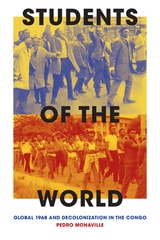
Students of the World
Global 1968 and Decolonization in the CongoPedro Monaville
Duke University Press, 2022
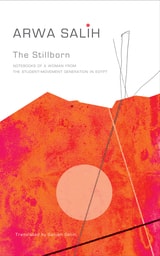
The Stillborn
Notebooks of a Woman from the Student-Movement Generation in EgyptArwa Salih
Seagull Books, 2017
A poignant reckoning with the Marxism of a generation and its militant postcolonial intellectuals.
Arwa Salih was a member of the political bureau of the Egyptian Communist Workers Party, founded in the wake of the Arab–Israeli War and the vibrant Egyptian student movement of the early 1970s. Written more than a decade after Salih quit the party and left political life—and published shortly after she tragically took her own life—The Stillborn offers a devastatingly honest look at the tragic failure of both the national liberation and communist projects in Egypt.
This powerful, unflinching critique speaks not only to and about Salih’s own generation of left-wing activists, but also extends its gaze outward. The Stillborn addresses the broader, still fiercely salient dilemmas of revolutionary politics that continue to echo throughout the developing world in the postcolonial era.
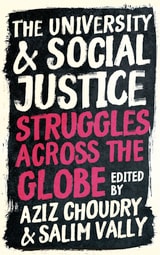
The University and Social Justice
Struggles Across the GlobeAziz Choudry
Pluto Press, 2020
Whether calling for the decommodification or the decolonization of education, many of these struggles have attempted to draw on (and in turn, resonate with) longer histories of popular resistance, broader social movements and radical visions of a fairer world. In this critical collection, Aziz Choudry, Salim Vally and a host of international contributors bring grounded, analytical accounts of diverse struggles relating to higher education into conversation with each other.
Featuring contributions written by students and staff members on the frontline of struggles from 12 different countries, including Canada, Chile, France, India, Mexico, Nigeria, Occupied Palestine, the Philippines, South Africa, Turkey, the UK and the USA, the book asks what can be learned from these movements' strategies, demands and visions.
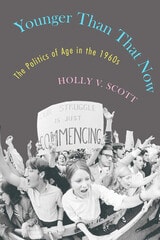
Younger Than That Now
The Politics of Age in the 1960sHolly V. Scott
University of Massachusetts Press, 2016
Retrospectives of the 1960s routinely include the face of youth rebellion: long-haired students occupying campus buildings, young men burning draft cards, hippies dancing at Woodstock. In Younger Than That Now, Holly V. Scott explores how the idea of “youth” served as a tactic in the political and social activism of these years. In the early part of that decade, young white activists began to learn from the civil rights movement's defiance of racism. They examined their own lives and concluded that campus rules and the draft were repression as well. As a group, they were ripe for revolution, and their age gave them a unique perspective for understanding and protesting against injustice. In short, young people began to use their youth as a political strategy.
Some in the New Left were dubious of this strategy and asked how it might damage long-term progress. Young feminists and people of color were particularly quick to question the idea that age alone was enough to sustain a movement. And the media often presented young people as impulsive and naive, undermining their political legitimacy. In tracing how “youth” took on multiple meanings as the 1960s progressed, Scott demonstrates the power of this idea to both promote and hinder social change.