Results by title

10 books match the query 'Surgery, Plastic'

cover of Atomic Bombshells: How Plastics Shaped Postwar Bodies

Atomic Bombshells

How Plastics Shaped Postwar Bodies

Isabelle Held

Duke University Press, 2026

Bullet bras, bazookas, bombshells, bikinis. In Atomic Bombshells, Isabelle Held challenges the usual narratives of how war technologies enter domestic use by following plastics on their journey into women’s bodies. Held explores the effects of military-industrial science and the emergence of nylon, silicone, and plastic foams on embodied and expressive configurations of gender, sexuality, and race. She focuses on the United States between the late 1930s with the launch of nylon—whose potential was widely celebrated as the world’s first fully synthetic fiber and the ideal replacement for silk stockings—and the late 1970s, when policies began addressing the dangerous health consequences of implantable plastics. Held untangles the complex relationships between chemical companies, the US military, the Federal Drug Administration, plastic surgeons, advertising agencies, the Hollywood star system, go-go dancers, drag queens, and fashion and industrial designers. Using feminist, queer, and trans lenses, she shows that there was never just one bombshell identity. In so doing, Held complicates typical understandings of the shaping and reshaping of gender.
[more]
cover of Beauty and the Beast

Beauty and the Beast

Michael Taussig

University of Chicago Press, 2012

Beauty and the Beast begins with the question: Is beauty destined to end in tragedy? Drawing on extensive fieldwork in Colombia, Michael Taussig scrutinizes the anxious, audacious, and sometimes destructive attempts people make to transform their bodies through cosmetic surgery and liposuction. He balances an examination of surgeries meant to enhance an individual’s beauty with an often overlooked counterpart, surgeries performed—often on high profile criminals—to disguise one’s identity. Situating this globally shared phenomenon within the economic, cultural, and political history of Colombia, Taussig links the country’s long civil war and its bodily mutilation and torture to the beauty industry at large, sketching Colombia as a country whose high aesthetic stakes make it a stage where some of the most important and problematic ideas about the body are played out.

Central to Taussig’s examination is George Bataille’s notion of depense, or “wasting.” While depense is often used as a critique, Taussig also looks at the exuberance such squandering creates and its position as a driving economic force. Depense, he argues, is precisely what these procedures are all about, and the beast on the other side of beauty should not be dismissed as simple recompense. At once theoretical and colloquial, public and intimate, Beauty and the Beast is a true-to-place ethnography—written in Taussig’s trademark voice—that tells a thickly layered but always accessible story about the lengths to which people will go to be physically remade.
[more]
cover of Connective Tissue: Factory Accidents and Reconstructive Plastic Surgery in South India

Connective Tissue

Factory Accidents and Reconstructive Plastic Surgery in South India

Lily N. Shapiro

Rutgers University Press, 2025

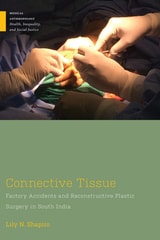
An ethnography of factory accidents and their attendant reconstructive plastic surgeries in Coimbatore, Tamil Nadu, Connective Tissue explores notions of risk, work and labor practices, and the way meaning is made from experiences of trauma, care, and recovery. The book charts a rough chronology of the accident—from the workspace that preceded it, the transformation of the workspace by the accident, through journeys to and treatment in the hospital, and then the various and complex ways in which the accident reverberates into the future during recovery.
 
Connective Tissue revisits scholarship on factory labor by analyzing the accident as constitutive of the experience of work itself, and it refines existing conversations about the body, trauma, and care by introducing an analysis informed by theories of labor and production. Author Lily N. Shapiro argues that care does not happen in spite of or on the margins of capitalism, but rather that capitalism happens in and through care and caring relations. These experiences are intersected by identities of caste, class, and gender, and entangled in state discourse about labor rights, welfare, and industrial law.

 
[more]
cover of Creating Beauty To Cure the Soul: Race and Psychology in the Shaping of Aesthetic Surgery

Creating Beauty To Cure the Soul

Race and Psychology in the Shaping of Aesthetic Surgery

Sander L. Gilman

Duke University Press, 1998

Why do physicians who’ve taken the Hippocratic Oath willingly cut into seemingly healthy patients? How do you measure the success of surgery aimed at making someone happier by altering his or her body? Sander L. Gilman explores such questions in Creating Beauty to Cure the Soul, a cultural history of the connections between beauty of body and happiness of mind. Following these themes through an impressive range of historical moments and players, Gilman traces how aesthetic alterations of the body have been used to “cure” dissatisfied states of mind.
In his exploration of the striking parallels between the development of cosmetic surgery and the field of psychiatry, Gilman entertains an array of philosophical and psychological questions that underlie the more practical decisions rountinely made by doctors and potential patients considering these types of surgery. While surveying and incorporating the relevant theories of Sigmund Freud, Alfred Adler, Karl Menninger, Paul Schilder, contemporary feminist critics, and others, Gilman considers the highly unstable nature of cultural notions of health, happiness, and beauty. He reveals how ideas of race and gender structured early understandings of aesthetic surgery in discussions of both the “abnormality” of the Jewish nose and the historical requirement that healthy and virtuous females look “normal,” thereby enabling them to achieve invisibility. Reflecting upon historically widespread prejudices, Gilman describes the persecutions, harrassment, attacks, and even murders that continue to result from bodily difference and he encourages readers to question the cultural assumptions that underlie the increasing acceptability of this surgical form of psychotherapy.
Synthesizing a vast body of related literature and containing a comprehensive bibliography, Creating Beauty to Cure the Soul will appeal to a broad audience, including those interested in the histories of medicine and psychiatry, and in philosophy, cultural studies, Jewish cultural studies, and race and ethnicity.


[more]
cover of Leaders in Plastic Surgery: The Dingman-Grabb Era 1946-1986

Leaders in Plastic Surgery

The Dingman-Grabb Era 1946-1986

Robert M. Oneal, MD, and Lauralee A. Lutz

Michigan Publishing Services, 2017

Leaders in Plastic Surgery traces the inspirational leadership of Reed O. Dingman, DDS, MD, and William C. Grabb, MD, and details the origins and growth of plastic and reconstructive surgery and the training of residents in Ann Arbor, Michigan, and the University of Michigan. It covers the years before and during the period of explosive innovations that have led the specialty to provide hope, correction, and rehabilitation to vast numbers of people suffering from a wide range of congenital abnormalities and acquired deformities. The authors, because of their long, personal association with plastic surgery in Ann Arbor, have brought to life the extensive accomplishments of the two leaders in terms of surgical techniques, surgical education, and important applied research while also documenting the many important contributions from the younger faculty and the trainees to the training program during those forty years. Many from that time frame have contributed their own memories, which has greatly enriched the documentation of an amazing history of an era past but not forgotten.
[more]
cover of Portraits of Violence: War and the Aesthetics of Disfigurement

Portraits of Violence

War and the Aesthetics of Disfigurement

Suzannah Biernoff

University of Michigan Press, 2017

Portraits of Violence explores the image and idea of facial disfigurement in one of its most troubling modern formations, as a symbol and consequence of war. It opens with Nina Berman’s iconic photograph Marine Wedding, which provoked a debate about the medical, military, and psychological response to serious combat injuries. While these issues remain urgent, it is equally crucial to interrogate the representation of war and injury. The concepts of valor, heroism, patriotism, and courage assume visible form and do their cultural work when they are personified and embodied. The mutilated or disabled veteran’s body can connote the brutalizing, dehumanizing potential of modern combat.
 
Suzannah Biernoff draws on a wide variety of sources mainly from WWI but also contemporary photography and computer games. Each chapter revolves around particular images: Marine Wedding is discussed alongside Stuart Griffiths’ portraits of British veterans; Henry Tonks’ drawings of WWI facial casualties are compared to the medical photographs in the Gillies Archives; the production of portrait masks for the severely disfigured is approached through the lens of documentary film and photography; and finally the haunting image of one of Tonks’s patients reappears in BioShock, a highly successful computer game. The book simultaneously addresses a neglected area in disability studies; puts disfigurement on the agenda for art history and visual studies; and makes a timely and provocative contribution to the literature on the First World War.

[more]
cover of Pretty Modern: Beauty, Sex, and Plastic Surgery in Brazil

Pretty Modern

Beauty, Sex, and Plastic Surgery in Brazil

Alexander Edmonds

Duke University Press, 2010
Pretty Modern is a riveting account of Brazil’s emergence as a global leader in plastic surgery. Intrigued by a Carnaval parade that mysteriously paid homage to a Rio de Janeiro plastic surgeon, anthropologist Alexander Edmonds conducted research that took him from Ipanema socialite circles to glitzy telenovela studios to the packed waiting rooms of public hospitals offering free cosmetic surgery. The result is provocative exploration of the erotic, commercial, and intimate aspects of beauty in a nation with extremes of wealth and poverty and a reputation for natural sensuality. Drawing on conversations with maids and their elite mistresses, divorced housewives, black celebrities, and favela residents aspiring to be fashion models, Edmonds analyzes what sexual desirability means and does for women in different social positions. He argues that beauty is a distinct realm of modern experience that does not simply reflect other inequalities. It mimics the ambiguous emancipatory potential of capital, challenging traditional hierarchies while luring consumers into a sexual culture that reduces the body to the brute biological criteria of attractiveness. Illustrated with color photographs, Pretty Modern offers a fresh theoretical perspective on the significance of female beauty in consumer capitalism.
[more]
cover of Surgery Junkies: Wellness and Pathology in Cosmetic Culture

Surgery Junkies

Wellness and Pathology in Cosmetic Culture

Pitts-Taylor, Victoria

Rutgers University Press, 2007
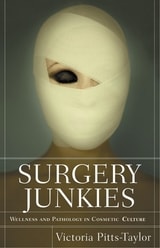
​Despite the increasing prevalence of cosmetic surgery, there are still those who identify individuals who opt for bodily modifications as dupes of beauty culture, as being in conflict with feminist ideals, or as having some form of psychological weakness. In this ground-breaking book, Victoria Pitts-Taylor examines why we consider some cosmetic surgeries to be acceptable or even beneficial and others to be unacceptable and possibly harmful. Drawing on years of research, in-depth interviews with surgeons and psychiatrists, analysis of newspaper articles, legal documents, and television shows, and her own personal experience with cosmetic surgery, Pitts-Taylor brings new perspectives to the promotion of "extreme" makeovers on television, the medicalization of "surgery addiction," the moral and political interrogation that many patients face, and feminist debates on the topic. Pitts-Taylor makes a compelling argument that the experience, meanings, and motivations for cosmetic surgery are highly social and, in doing so, provides a much needed "makeover" of our cultural understanding of cosmetic surgery.
[more]
cover of The Look of a Woman: Facial Feminization Surgery and the Aims of Trans- Medicine

The Look of a Woman

Facial Feminization Surgery and the Aims of Trans- Medicine

Eric Plemons

Duke University Press, 2017
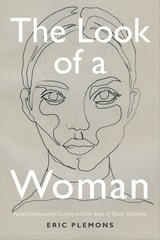
Developed in the United States in the 1980s, facial feminization surgery (FFS) is a set of bone and soft tissue reconstructive surgical procedures intended to feminize the faces of trans- women. While facial surgery was once considered auxiliary to genital surgery, many people now find that these procedures confer distinct benefits according to the different models of sex and gender in which they intervene. Surgeons advertise that FFS not only improves a trans- woman's appearance; it allows her to be recognized as a woman by those who see her. In The Look of a Woman Eric Plemons foregrounds the narratives of FFS patients and their surgeons as they move from consultation and the operating room to postsurgery recovery. He shows how the increasing popularity of FFS represents a shift away from genital-based conceptions of trans- selfhood in ways that mirror the evolving views of what is considered to be good trans- medicine. Outlining how conflicting models of trans- therapeutics play out in practice, Plemons demonstrates how FFS is changing the project of surgical sex reassignment by reconfiguring the kind of sex that surgery aims to change.
[more]
cover of Under the Knife: Cosmetic Surgery, Boundary Work, and the Pursuit of the Natural Fake

Under the Knife

Cosmetic Surgery, Boundary Work, and the Pursuit of the Natural Fake

Samantha Kwan and Jennifer Graves

Temple University Press, 2020

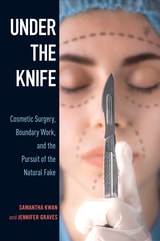
Most women who elect to have cosmetic surgery want a “natural” outcome—a discrete alteration of the body that appears unaltered. Under the Knife examines this theme in light of a cultural paradox. Whereas women are encouraged to improve their appearance, there is also a stigma associated with those who do so via surgery.  

Samantha Kwan and Jennifer Graves reveal how women negotiate their “unnatural”—but hopefully (in their view) natural-looking—surgically-altered bodies. Based on in-depth interviews with forty-six women who underwent cosmetic surgery to enhance their appearance, the authors investigate motivations for surgery as well as women’s thoughts about looking natural after the procedures. Under the Knife dissects the psychological and physical strategies these women use to manage the expectations, challenges, and disappointments of cosmetic surgery while also addressing issues of agency and empowerment. It shows how different cultural intersections can produce varied goals and values around body improvement. 

Under the Knife highlights the role of deep-seated yet contradictory gendered meanings about women’s bodies, passing, and boundary work. The authors also consider traditional notions of femininity and normalcy that trouble women’s struggle to preserve an authentic moral self.
[more]