Results by title
28 books match the query 'Teenage girls'

'Where Are You Going, Where Have You Been?'
Joyce Carol OatesShowalter, Elaine
Rutgers University Press, 1994
Joyce Carol Oates’s prize-winning story “Where Are You Going, Where Have You Been?” takes up troubling subjects that continue to occupy her in her fiction: the romantic longings and limited options of adolescent women; the tensions between mothers and daughters; the sexual victimization of women; and the American obsession with violence. Inspired by a magazine story about a serial killer, its remarkable portrait of the dreamy teenager Connie has made it a feminist classic. Connie’s life anticipates the emergence of American society from the social innocence of the fifties into the harsher contemporary realities of war, random violence, and crime. The story was the basis for the movie Smooth Talk, which became the subject of much feminist debate.
This casebook includes an introduction by the editor, a chronology of Oates’s life, an authoritative text of “Where Are You Going, Where Have You Been,” an essay by Oates on Smooth Talk, the original Life article about the serial killer, ten critical essays (including two about the film), and a bibliography.
The contributors are Brenda O. Daly, Christina Marsden Gillis, Don Moser, Tom Quirk, B. Ruby Rich, R.J.R. Rockwood, Larry Rubin, Gretchen Schulz, Marie Mitchell Oleson Urbanski, Joyce M. Wegs, Marilyn C. Wesley, and Joan D. Winslow.
Aboriginal Adolescence
Burbank, Victoria Katherine
Rutgers University Press, 1999
All Blue So Late
PoemsLaura Swearingen-Steadwell
Northwestern University Press, 2018
The skeleton of this fine collection is a series of direct addresses to the author’s fourteen-year-old self, caught at the moment between girlhood and womanhood, when her perspective on everything suddenly changes. Swearingen-Steadwell’s poetic adventures through worlds within and without reveal the restlessness of the seeker. They offer unabashed tenderness to anyone who reckons with solitude, and chases joy.
American Girls and Global Responsibility
A New Relation to the World during the Early Cold WarHelgren, Jennifer
Rutgers University Press, 2017
Jennifer Helgren argues that a new internationalist girl citizenship took root in the country in the years following World War II in youth organizations such as Camp Fire Girls, Girl Scouts, YWCA Y-Teens, schools, and even magazines like Seventeen. She shows the particular ways that girls’ identities and roles were configured, and reveals the links between internationalist youth culture, mainstream U.S. educational goals, and the U.S. government in creating and marketing that internationalist girl, thus shaping the girls’ sense of responsibilities as citizens.

Celebrating Debutantes and Quinceañeras
Coming of Age in American Ethnic CommunitiesEvelyn Ibatan Rodriguez
Temple University Press, 2013
Drawing on over fifty in-depth interviews with members of these fast-growing American Asian and Latino populations, Rodriguez shows how these communal celebrations of daughters have been adapted by immigrant families to assert their cultural pride and affirm their American belonging. Celebrating Debutantes and Quinceañeras provides an intimate and compelling portrait of the various ways immigrants and their children are purposefully, strategically, and creatively employing Filipino American debutantes and Mexican American quinceañeras to simultaneously challenge and assimilate into U.S. culture and forge new understandings of what it means to be "Mexican," "Filipino," and "American."
Complicated Lives
Girls, Parents, Drugs, and Juvenile JusticeLopez, Vera
Rutgers University Press, 2017
Complicated Lives focuses on the lives of sixty-five drug-using girls in the juvenile justice system (living in group homes, a residential treatment center, and a youth correctional facility) who grew up in families characterized by parental drug use, violence, and child maltreatment. Vera Lopez situates girls’ relationships with parents who fail to live up to idealized parenting norms and examines how these relationships change over time, and ultimately contribute to the girls’ future drug use and involvement in the justice system.
While Lopez’s subjects express concerns and doubt in their chances for success, Lopez provides an optimistic prescription for reform and improvement of the lives of these young women and presents a number of suggestions ranging from enhanced cultural competency training for all juvenile justice professionals to developing stronger collaborations between youth and adult serving systems and agencies.
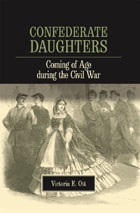
Confederate Daughters
Coming of Age during the Civil WarVictoria E. Ott
Southern Illinois University Press, 2008
Confederate Daughters: Coming of Age during the Civil War explores gender, age, and Confederate identity by examining the lives of teenage daughters of Southern slaveholding, secessionist families. These young women clung tenaciously to the gender ideals that upheld marriage and motherhood as the fulfillment of female duty and to the racial order of the slaveholding South, an institution that defined their status and afforded them material privileges. Author Victoria E. Ott discusses how the loyalty of young Southern women to the fledgling nation, born out of a conservative movement to preserve the status quo, brought them into new areas of work, new types of civic activism, and new rituals of courtship during the Civil War.
Social norms for daughters of the elite, their preparation for their roles as Southern women, and their material and emotional connections to the slaveholding class changed drastically during the Civil War. When differences between the North and South proved irreconcilable, Southern daughters demonstrated extraordinary agency in seeking to protect their futures as wives, mothers, and slaveholders.
From a position of young womanhood and privilege, they threw their support behind the movement to create a Confederate identity, which was in turn shaped by their participation in the secession movement and the war effort. Their political engagement is evident from their knowledge of military battles, and was expressed through their clothing, social activities, relationships with peers, and interactions with Union soldiers.
Confederate Daughters also reveals how these young women, in an effort to sustain their families throughout the war, adjusted to new domestic duties, confronting the loss of slaves and other financial hardships by seeking paid work outside their homes.
Drawing on their personal and published recollections of the war, slavery, and the Old South, Ott argues that young women created a unique female identity different from that of older Southern women, the Confederate bellehood. This transformative female identity was an important aspect of the Lost Cause mythology—the version of the conflict that focused on Southern nationalism—and bridged the cultural gap between the antebellum and postbellum periods.
Augmented by twelve illustrations, this book offers a generational understanding of the transitional nature of wartime and its effects on women’s self-perceptions. Confederate Daughters identifies the experiences of these teenage daughters as making a significant contribution to the new woman in the New South.
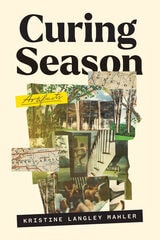
Curing Season
ArtifactsKristine Langley Mahler
West Virginia University Press, 2022
“A lovely and rapturous excavation and examination of the past, a lesson in writing oneself into history when it doesn’t offer you a space.” —Jenny Boully, author of Betwixt-and-Between: Essays on the Writing Life
After spending four years of adolescence in suburban North Carolina, Kristine Langley Mahler, even as an adult, is still buffeted by the cultural differences between her pioneer-like upbringing in Oregon and the settled southern traditions into which she could never assimilate. Collecting evidence of displacement—a graveyard in a mall parking lot, a suburban neighborhood of white kids bused to desegregate public schools in the 1990s, and the death of her best friend—Curing Season is an attempt to understand her failed grasp at belonging.
Mahler’s yearning for acceptance remains buried like a splinter, which she carefully tweezes out in the form of artifacts from her youth. But it isn’t until she encounters a book of local family histories that she takes inhabitation and truth apart, grafting and twisting and imprinting her history on theirs, until even she can no longer tell the difference between their truth and her own. Using inventive essay forms, Mahler pries apart the cracks of exclusion and experiments with the nature of belonging, memory, and place. Curing Season is a coming-of-age memoir for anyone who grew up anywhere but home.
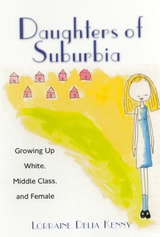
Daughters of Suburbia
Growing Up White, Middle Class, and FemaleEdited by Lorraine Delia Kenny
Rutgers University Press, 2000
In order to move beyond characterizations of "the normal" (a loaded term that can obscure much of what actually defines this culture), Kenny highlights both the experiences of the middle-school students and the stories of three notoriously "bad" white middle-class teenage girls: Amy Fischer, the "Pistol-Packing Long Island Lolita," Cheryl Pierson, who hired a classmate to murder her father, and Emily Heinrichs, a former white supremacist and a teen mom. Arguing that middle-class whiteness thrives on its invisibility--on not being recognized as a cultural phenomenon--Kenny suggests that what the media identify as aberrant, as well as what they choose not to represent, are the keys to identifying the unspoken assumptions that constitute middle-class whiteness as a cultural norm. Daughters of Suburbia makes the familiar strange and gives substance to an otherwise intangible social position. Lorraine Kenny is the Public Education Coordinator for the American Civil Liberties Union's Reproductive Freedom Project. She has taught anthropology at Sarah Lawrence College.
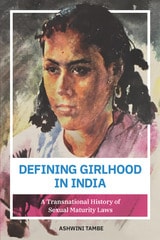
Defining Girlhood in India
A Transnational History of Sexual Maturity LawsAshwini Tambe
University of Illinois Press, 2019

Fine Dreams
Linda N. Masi
University of Massachusetts Press, 2024
Longlisted for the 2025 Nigeria Prize for Literature
A 2024 Foreword INDIES Finalist
Set in a fictional town, at a fictional school, Linda N. Masi’s debut novel, Fine Dreams, rewrites myth and history. Framed by a ghost’s first-person narrative, the book centers on four young friends, the stars of their school’s track team. While studying for exams, they are kidnapped and taken to a terrorist encampment. Two are claimed as “wives” by their captors, one is forced to wear a suicide vest, and each is subjected to appalling violence and terror. While their stories resonate with a widely publicized 2014 abduction, these four young women could have been taken in any of the many incidents that have plagued the Nigerian people for years.
Even though they are abducted and abused by men in power and forced to survive in a dark place like Persephone, Masi’s protagonists offer new endings for Persephone’s story. In Masi’s telling, these resilient young women recover their dreams and hopes to live in daylight once again. No matter where they travel or where they stay, they gain self-determination and reclaim their dreams.

From the Dance Hall to Facebook
Teen Girls, Mass Media, and Moral Panic in the United States, 1905-2010Shayla Thiel-Stern
University of Massachusetts Press, 2014
In From the Dance Hall to Facebook, Shayla Thiel-Stern takes a close look at several historical snapshots, including working-class girls in dance halls of the early 1900s; girls' track and field teams in the 1920s to 1940s; Elvis Presley fans in the mid-1950s; punk rockers in the late 1970s and early 1980s; and girls using the Internet in the early twenty-first century. In each case, issues of gender, socioeconomic status, and race are explored within their historical context. The book argues that by marginalizing and stereotyping teen girls over the past century, mass media have perpetuated a pattern of gendered crisis that ultimately limits the cultural and political power of the young women it covers.
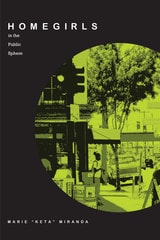
Homegirls in the Public Sphere
By Marie "Keta" Miranda
University of Texas Press, 2003
Girls in gangs are usually treated as objects of public criticism and rejection. Seldom are they viewed as objects worthy of understanding and even more rarely are they allowed to be active subjects who craft their own public persona—which is what makes this work unique. In this book, Marie "Keta" Miranda presents the results of an ethnographic collaboration with Chicana gang members, in which they contest popular and academic representations of Chicana/o youth and also construct their own narratives of self identity through a documentary film, It's a Homie Thang!
In telling the story of her research in the Fruitvale community of Oakland, California, Miranda honestly reveals how even a sympathetic ethnographer from the same ethnic group can objectify the subjects of her study. She recounts how her project evolved into a study of representation and its effects in the public sphere as the young women spoke out about how public images of their lives rarely come close to the reality. As Miranda describes how she listened to the gang members and collaborated in the production of their documentary, she sheds new light on the politics of representation and ethnography, on how inner city adolescent Chicanas present themselves to various publics, and on how Chicana gangs actually function.
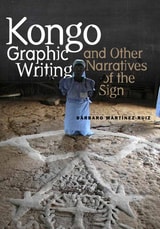
Kongo Graphic Writing and Other Narratives of the Sign
Barbaro Martinez-Ruiz
Temple University Press, 2013
Author Bárbaro Martínez-Ruiz, a practitioner of the Palo Monte devotional arts, illustrates with graphics and rock art how the Bakongo’s ideographic and pictographic signs are used to organize daily life, enable interactions between humans and the natural and spiritual worlds, and preserve and transmit cosmological and cosmogonical belief systems.
Exploring cultural diffusion and exchange, collective memory and identity, Kongo Graphic Writing and Other Narratives of the Sign artfully brings together analyses of the complex interconnections among Kongo traditions of religion, philosophy and visual/gestural communication on both sides of the African Atlantic world.
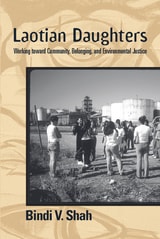
Laotian Daughters
Working toward Community, Belonging, and Environmental JusticeBindi V. Shah
Temple University Press, 2011
Laotian Daughters focuses on second-generation environmental justice activists in Richmond, California. Bindi Shah's pathbreaking book charts these young women's efforts to improve the degraded conditions in their community and explores the ways their activism and political practices resist the negative stereotypes of race, class, and gender associated with their ethnic group.
Using ethnographic observations, interviews, focus groups, and archival data on their participation in Asian Youth Advocates—a youth leadership development project—Shah analyzes the teenagers' mobilization for social rights, cross-race relations, and negotiations of gender and inter-generational relations. She also addresses issues of ethnic youth, and immigration and citizenship and how these shape national identities.
Shah ultimately finds that citizenship as a social practice is not just an adult experience, and that ethnicity is an ongoing force in the political and social identities of second-generation Laotians.

Little Lost River
A NovelPamela Johnston
University of Nevada Press, 2008
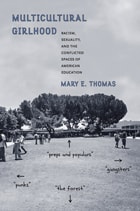
Multicultural Girlhood
Racism, Sexuality, and the Conflicted Spaces of American EducationMary E. Thomas
Temple University Press, 2011
High school turf wars are often a teenage rite of passage, but there are extremes—as when a race riot at a Los Angeles campus in the spring of 2005 resulted in a police lockdown. In her fascinating book,Multicultural Girlhood, Mary Thomas interviewed 26 Latina, Armenian, Filipina, African-American, and Anglo girls at this high school to gauge their responses to the campus violence. They all denounced the outbreak, calling for multicultural understanding and peaceful coexistence.
However, as much as the girls want everyone to just “get along,” they also exhibit strong racist beliefs and validate segregated social spaces on campus and beyond. How can teenagers and “girl power” work together to empower instead of alienate multicultural groups? In her perceptive book, Thomas foregrounds the spaces of teen girlhood and the role that space plays in girls' practices that perpetuate social difference, and she explains the ways we navigate the intellectual terrain between scholarship and school yard.
Pretty in Punk
Girl's Gender Resistance in a Boy's SubcultureLeblanc, Lauraine
Rutgers University Press, 1999
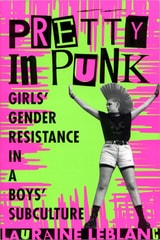
Pretty in Punk combines autobiography, interviews, and sophisticated analysis to create the first insider’s examination of the ways punk girls resist gender roles and create strong identities.
Why would an articulate, intelligent, thoughtful young women shave off most of her hair, dye the remainder green, shape it into a mohawk, and glue it onto her head? What attracts girls to male-dominated youth subcultures like the punk movement? What role does the subculture play in their perceptions of themselves, and in their self-esteem? How do girls reconcile a subcultural identity that is deliberately coded “masculine” with the demands of femininity?
Research has focused on the ways media and cultural messages victimize young women, but little attention has been paid to the ways they resist these messages. In Pretty in Punk, Lauraine Leblanc examines what happens when girls ignore these cultural messages, parody ideas of beauty, and refuse to play the games of teenage femininity. She explores the origins and development of the punk subculture, the processes by which girls decide to “go punk,” patterns of resistance to gender norms, and tactics girls use to deal with violence and harassment.
Pretty in Punk takes readers into the lives of girls living on the margins of contemporary culture. Drawing on interviews with 40 girls and women between the ages of 14-37, Leblanc examines the lives of her subjects, illuminating their forms of rebellion and survival. Pretty in Punk lets readers hear the voices of these women as they describe the ways their constructions of femininity—from black lipstick to slamdancing—allow them to reject damaging cultural messages and build strong identities. The price they pay for resisting femininity can be steep—girls tell of parental rejection, school expulsion, institutionalization, and harassment. Leblanc illuminates punk girls’ resistance to adversity, their triumphs over tough challenges, and their work to create individual identities in a masculine world.

Private Correspondences
Trudy Lewis
Northwestern University Press, 1996

Sexting Panic
Rethinking Criminalization, Privacy, and ConsentAmy Adele Hasinoff
University of Illinois Press, 2015

Shadow Girl
A Memoir Of AttachmentDeb Abramson
University of Iowa Press, 2002
In this psychological portrait of a family bound together by the uneasy permutations of love, Abramson relies not on sensationalist narrative but on a collection of the many small moments that glitter along the bumpy path of her life. Now and then she provides a broader, connecting perspective by stepping out of her story to reflect on the meaning of it all from the standpoint of the insightful, healed person she has managed—against all odds—to become.
Rich in metaphor and intimate detail, this is a lyrical story about moving from isolation toward connection, about seeing childhood not as a crippling refuge but as a point of departure, about discovering that it is possible to “have your shadows as well as your light.”

Teenage Dreams
Girlhood Sexualities in the U.S. Culture WarsCharlie Jeffries
Rutgers University Press, 2022
The Cost of Being a Girl
Working Teens and the Origins of the Gender Wage GapYasemin Besen-Cassino
Temple University Press, 2017
The gender wage gap is one of the most persistent problems of labor markets and women’s lives.
Most approaches to explaining the gap focus on adult employment despite the fact that many Americans begin working well before their education is completed. In her critical and compelling new book, The Cost of Being a Girl, Yasemin Besen-Cassino examines the origins of the gender wage gap by looking at the teenage labor force, where comparisons between boys and girls ought to show no difference, but do.
Besen-Cassino’s findings are disturbing. Because of discrimination in the market, most teenage girls who start part-time work as babysitters and in other freelance jobs fail to make the same wages as teenage boys who move into employee-type jobs. The “cost” of being a girl is also psychological; when teenage girls work retail jobs in the apparel industry, they have lower wages and body image issues in the long run.
Through in-depth interviews and surveys with workers and employees, The Cost of Being a Girl puts this alarming social problem—which extends to race and class inequality—in to bold relief. Besen-Cassino emphasizes that early inequalities in the workplace ultimately translate into greater inequalities in the overall labor force.

The Hangman's House
Andrea Tompa
Seagull Books, 2020
Our narrator, a teenage “Girl,” observes life through tangled, almost interminable sentences, trying to understand and process the many questions in her life: why her family is falling apart; why her mother has three jobs; why her father becomes an alcoholic; why her grandmother dreams of “Hungarian times”; and, most troubling, why there is persecution all around. Brutal though the times are, Girl’s narration is far from a mere indictment. It is suffused with love, tenderness and irony.
Written by a woman and featuring a young woman narrator, The Hangman's House focuses intently on how women play the principal roles in holding together the resilient fabric of society. Evocative of the celebrated wry humor that distinguishes the best of Hungarian literature, Tompa’s novel is a tour de force that will introduce a brilliant writer to English-language readers.

Thinking Outside the Girl Box
Teaming Up with Resilient Youth in AppalachiaLinda Spatig
Ohio University Press, 2014
Thinking Outside the Girl Box is a true story about a remarkable youth development program in rural West Virginia. Based on years of research with adolescent girls—and adults who devoted their lives to working with them—Thinking Outside the Girl Box reveals what is possible when young people are challenged to build on their strengths, speak and be heard, and engage critically with their world.
Based on twelve years of field research, the book traces the life of the Lincoln County Girls’ Resiliency Program (GRP), a grassroots, community nonprofit aimed at helping girls identify strengths, become active decision makers, and advocate for social change. In the late 1990s and early 2000s, the GRP flourished. Its accomplishments were remarkable: girls recorded their own CDs, published poetry, conducted action research, opened a coffeehouse, performed an original play, and held political rallies at West Virginia’s State Capitol. The organization won national awards, and funding flowed in. Today, in 2013, the programming and organization are virtually nonexistent.
Thinking Outside the Girl Box raises pointed questions about how to define effectiveness and success in community-based programs and provides practical insights for anyone working with youth. Written in an accessible, engaging style and drawing on collaborative ethnographic research that the girls themselves helped conduct, the book tells the story of an innovative program determined to challenge the small, disempowering “boxes” girls and women are so often expected to live in.
Trampoline
An Illustrated NovelRobert Gipe
Ohio University Press, 2015

Wait
Alison Stine
University of Wisconsin Press, 2011
In a small town under a spell, a child bride prays for the sheriff’s gun. Iron under a bed stops a nightmare. The carousel artist can carve only birds. Part fairy tale and part gothic ballad, Wait spans a single year: the year before a young woman’s marriage. Someone is always watching—from the warehouse, from the woods. And on the outskirts of town, someone new is waiting.
Young, White, and Miserable
Growing Up Female in the FiftiesWini Breines
University of Chicago Press, 2001