Results by title
22 books match the query 'Trail'

A Trail of Fire for Political Cinema
The Hour of the Furnaces Fifty Years LaterEdited by Javier Campo and Humberto Perez-Blanco
Intellect Books, 2018

Becoming Heidegger
On the Trail of His Early Occasional Writings, 1910-1927Theodore Kisiel
Northwestern University Press, 2007
Accompanied by incisive commentary, these pieces from Heidegger's student days, his early Freiburg period, and the time of his Marburg lecture courses will contribute substantially to rethinking the making and meaning of Being and Time. The contents are of a depth and quality that make this volume the collection for those interested in Heidegger's work prior to his masterwork. The book will also serve those concerned with Heidegger's relation to such figures as Aristotle, Dilthey, Husserl, Jaspers, and Löwith, as well as scholars whose interests are more topically centered on questions of history, logic, religion, and truth. Important in their own right, these pieces will also prove particularly useful to students of Heidegger's thought and of twentieth-century philosophy in general.
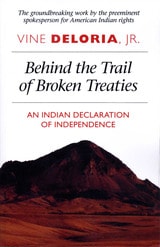
Behind the Trail of Broken Treaties
An Indian Declaration of IndependenceBy Vine Deloria, Jr.
University of Texas Press, 1985
Originally published in 1974, just as the Wounded Knee occupation was coming to an end, Behind the Trail of Broken Treaties raises disturbing questions about the status of American Indians within the American and international political landscapes. Analyzing the history of Indian treaty relations with the United States, Vine Deloria presents population and land ownership information to support his argument that many Indian tribes have more impressive landholdings than some small members of the United Nations. Yet American Indians are not even accorded status within the UN's trust territories recognition process.
A 2000 study published by the Annual Survey of International and Comparative Law recommends that the United Nations offer membership to the Iroquois, Cherokee, Navajo, and other Indian tribes. Ironically, the study also recommends that smaller tribes band together to form a confederation to seek membership—a suggestion nearly identical to the one the United States made to the Delaware Indians in 1778—and that a presidential commission explore ways to move beyond the Doctrine of Discovery, under which European nations justified their confiscation of Indian lands. Many of these ideas appear here in this book, which predates the 2000 study by twenty-six years. Thus, Behind the Trail of Broken Treaties anticipates recent events as history comes full circle, making the book imperative reading for anyone wishing to understand the background of the movement of American Indians onto the world political stage.
In the quarter century since this book was written, Indian nations have taken great strides in demonstrating their claims to recognized nationhood. Together with Tribes, Treaties, and Constitutional Tribulations, by Deloria and David E. Wilkins, Behind the Trail of Broken Treaties highlights the historical events that helped bring these changes to fruition. At the conclusion of Behind the Trail of Broken Treaties, Deloria states: "The recommendations made in the Twenty Points and the justification for such a change as articulated in the book may well come to pass in our lifetime." Now we are seeing his statement come true.
Blazing the Trail
Waymarks in the Exploration of SymbolsVictor Turner
University of Arizona Press, 1992
"The essays reveal a passionate struggle between a committed conceptualization and a dedication to the telling detail. Turner is willing to address the moral and spiritual dimensions of being human, which are all too easily set aside by much social science."—Anthropos
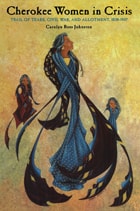
Cherokee Women In Crisis
Trail of Tears, Civil War, and Allotment, 1838-1907Carolyn Johnston
University of Alabama Press, 2003
American Indian women have traditionally played vital roles in social hierarchies at the family, clan, and tribal levels. In the Cherokee Nation, specifically, women and men are considered equal contributors to the culture. With this study, however, we learn that three key historical events in the 19th and early 20th centuries—removal, the Civil War, and allotment of their lands—forced a radical renegotiation of gender roles and relations in Cherokee society.
Carolyn Johnston (who is related to John Ross, principal chief of the Nation) looks at how Cherokee women navigated these crises in ways that allowed them to retain their traditional assumptions, ceremonies, and beliefs and to thereby preserve their culture. In the process, they both lost and retained power. The author sees a poignant irony in the fact that Europeans who encountered Native societies in which women had significant power attempted to transform them into patriarchal ones and that American women struggled for hundreds of years to achieve the kind of equality that Cherokee women had enjoyed for more than a millennium.
Johnston examines the different aspects of Cherokee women’s power: authority in the family unit and the community, economic independence, personal autonomy, political clout, and spirituality. Weaving a great-grandmother theme throughout the narrative, she begins with the protest of Cherokee women against removal and concludes with the recovery of the mother town of Kituwah and the elections of Wilma Mankiller and Joyce Dugan as principal chiefs of the Cherokee Nation and the Eastern Band of Cherokees.

Finding the Trail of Life
Rufus M. Jones
QuakerPress, 2014
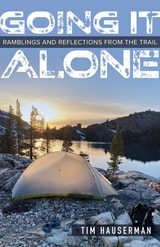
Going It Alone
Ramblings and Reflections from the TrailTim Hauserman
University of Nevada Press, 2022
Hauserman hikes the John Muir Trail through rainstorms and challenging climbs, explores the Tahoe Rim Trail on a fourteen-day excursion, and travels to Minnesota to conquer the Superior Hiking Trail, where he is inundated with bugs, faces drought, and is eerily alone on the trail with not a single other hiker in sight for days. Going It Alone combines his self-deprecating humor, what he identifies as “Stupid Tim Tricks,” and delightful descriptions of the natural surroundings.
Some might describe the wilderness as the middle of nowhere or as nothingness, but for Hauserman, it is everything. While his love for nature remains undaunted through these experiences, he also discovers that he has overly high expectations for his capabilities and that he cannot just wish his loneliness away. He eventually discovers that his long walks in the woods are less about hiking and more about learning how he wants to live his life.

Going It Alone
Ramblings and Reflections from the TrailTim Hauserman
University of Nevada Press, 2022
Hauserman hikes the John Muir Trail through rainstorms and challenging climbs, explores the Tahoe Rim Trail on a fourteen-day excursion, and travels to Minnesota to conquer the Superior Hiking Trail, where he is inundated with bugs, faces drought, and is eerily alone on the trail with not a single other hiker in sight for days. Going It Alone combines his self-deprecating humor, what he identifies as “Stupid Tim Tricks,” and delightful descriptions of the natural surroundings.
Some might describe the wilderness as the middle of nowhere or as nothingness, but for Hauserman, it is everything. While his love for nature remains undaunted through these experiences, he also discovers that he has overly high expectations for his capabilities and that he cannot just wish his loneliness away. He eventually discovers that his long walks in the woods are less about hiking and more about learning how he wants to live his life.

Gunflint
Reflections on the TrailJustine Kerfoot
University of Minnesota Press, 1991
“The best way to get to know Justine Kerfoot would be to explore a northern forest with her. The next best way to know ‘Just’ is on these pages. Here Justine is at her best, sharing with us her romantic and colorful, and sometimes a tad dangerous, life.” —Les Blacklock
Step off the Gunflint Trail, stride to a high point, and savor the view. Only the dark, cool waters and the rugged granite shores interrupt the panorama of the sweeping forest. In this engaging memoir, local pioneer Justine Kerfoot chronicled a year’s worth of experiences and insights while living on the legendary Gunflint Trail. The unique month-by-month chapters of Gunflint and Kerfoot’s rich memories provide a year-round view of a wilderness life that most of us glimpse only in all-too-short weekend interludes.
Justine Kerfoot (1906–2001) lived on Minnesota’s remote Gunflint Trail for more than six decades. She wrote of her adventures and travel in a weekly column for the Cook County News-Herald for forty-five years and is the author of Woman of the Boundary Waters (Minnesota, 1994).
Men Met Along the Trail
Adventures in ArchaeologyNeil M Judd
University of Utah Press, 2009
Written at the request of young associates who felt Judd’s lifetime of experiences in the field could be both instructive and amusing, Men Met Along the Trail provides a glimpse of archaeology when it was an emerging field of study, evolving from simple curio collecting to technologically advanced radiocarbon dating and pollen analysis. Featuring more than thirty original photographs and a new foreword by Don D. Fowler, this book is entertaining and informative, offering readers a vibrant and colorful picture of the adventures to be found in early Southwestern archaeology.
On a Trail of Southwest Discovery
The Expedition Diaries of Frederick W. Hodge and Margaret W. Magill, 1886–1888Curtis M. Hinsley and David R. Wilcox
University of Arizona Press, 2024
The Hemenway Southwestern Archaeological Expedition (1886–1889), directed by Frank Hamilton Cushing, was the first privately funded expedition to the American Southwest. This volume examines the expedition through the diaries of two participants who fell in love on the expedition: the field secretary, Fred Hodge, and the expedition artist, Margaret Magill—who was also Cushing’s sister-in-law. It also presents the first biographical treatment of Hodge, who became a major figure in early twentieth-century anthropology. The book’s first two sections chronicle the field operations of the expedition, while the third describes the long anthropological career of Hodge after the end of the expedition. Through deep research in primary and secondary sources and archival materials, the book details both the daily operations of the expedition and the growing romantic relationship between Hodge and Magill.
For those interested in settlements in early Arizona and Zuni Pueblo, the book provides rare insights into the lives of both men and women, offering an intimate view of an enterprise that is now considered a foundation of Hohokam archaeology—even as it reveals deep love and persistent personal conflicts.
On the Trail of the Maya Explorer
Tracing the Epic Journey of John Lloyd StephensSteve Glassman
University of Alabama Press, 2003
A Mesoamerican travel book from two perspectives and two centuries.
In 1839 John Lloyd Stephens, then 31 years old, and his traveling companion, artist Frederick Catherwood, disappeared into the vast rain forest of eastern Guatemala. They had heard rumors that remains of a civilization of incomparable artistic and cultural merit were moldering in the steamy lowland jungles. They braved Indian uprisings, road agents, heat, and biting insects to eventually encounter what is today known as the lost civilization of the Maya.
In 1841 Stephens published Incidents of Travel in Central America, Chiapas, and Yucatan to instant acclaim with both American and international audiences. His conversational style was fresh and crisp and his subject matter, the search for lost cities on the Central American isthmus, was romantic and adventurous. Stephens's book has been characterized as the "great American nonfiction narrative of the 19th century." Indeed, what Stephens wrote about the Maya makes a major contribution to Maya studies.
Steve Glassman retraces Stephens's route, visiting the same archaeological sites, towns, markets, and churches and meeting along the way the descendants of those people Stephens described, from mestizo en route to the cornfields to town elders welcoming the Norte Americanos. Glassman's work interlaces discussion of the history, natural environment, and architecture of the region with descriptions of the people who live and work there. Glassman compares his 20th-century experience with Stephens's 19th-century exploration, gazing in awe at the same monumental pyramids, eating similar foods, and avoiding the political clashes that disrupt the governments and economies of the area.
Stephens's books are still widely available, but his importance to literary professionals has been overlooked. With this new travelogue, Glassman reaffirms Stephens's reputation and brings his work to wider critical and public attention.
Reading The Trail
Exploring The Literature And Natural History Of The California CrestCorey Lee Lewis
University of Nevada Press, 2005
A provocative new way to read and interpret the classic works of John Muir, Mary Austin, and Gary Snyder, and to bring their ideas into the discussion of ecological values and the current environmental crisis. Lewis combines a perceptive discussion of their work and ideas with an engaging account of his own trail experiences as hiker/backpacker and volunteer trail builder, proposing that such a field-based, interdisciplinary approach to literary study and outdoors experience can enrich our appreciation for the work of nature writers.
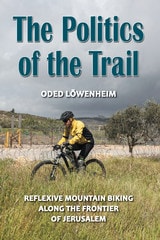
The Politics of the Trail
Reflexive Mountain Biking along the Frontier of JerusalemOded Löwenheim
University of Michigan Press, 2014
In The Politics of the Trail, Löwenheim confronts this tension by focusing on his encounters with three places along the trail: the separation fence between Israel and the Palestinians; the ruins of the Palestinian village Qalunya, demolished in 1948; and the trail connecting the largest 9/11 memorial site outside of the U.S. with a top-secret nuclear-proof bunker for the Israeli cabinet. He shares the stories of the people he meets along the way and considers how his own subjectivity is shaped by the landscape and culture of conflict. Moreover, he deconstructs, challenges, and resists the concepts and institutions that constitute such a culture and invites conversation about the idea of conflict as a culture.
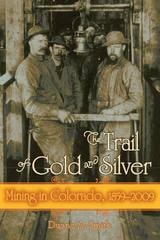
The Trail of Gold and Silver
Mining in Colorado, 1859-2009Duane A. Smith
University Press of Colorado, 2009
Written in a lively manner by one of Colorado's preeminent historians, this book honors the 2009 sesquicentennial of Colorado's gold rush. Smith's narrative will appeal to anybody with an interest in the state's fascinating mining history over the past 150 years.
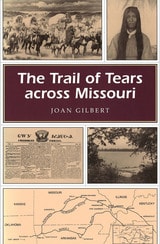
The Trail of Tears across Missouri
Joan Gilbert
University of Missouri Press, 1996
As settlers moved beyond the eastern seaboard during the early nineteenth century, the government forced thousands of American Indians from their ancestral lands. The Cherokees, the largest and most important tribe in the Southeast, fought exile with a combination of passive resistance and national publicity for their plight. Because they had successfully resisted the government's efforts to move them from their homeland, their removal was particularly brutal when it finally came. The Trail of Tears across Missouri is a moving account of the 1837-1838 removal of the Cherokees from the southeastern United States to Indian Territory (now Oklahoma).
After providing an overview of the Cherokees' life in the Southeast and of the events leading up to their exile, Joan Gilbert traces the mass exodus state by state from Tennessee to Arkansas. Successive chapters highlight the experiences and the hardships endured by those forced to travel with inadequate supplies of food, clothing, and transportation. It is estimated that four thousand Cherokees, nearly a quarter of the tribe, died.
In bringing the grim realities of the forced march to life, Gilbert draws from such primary sources as letters, newspaper stories, and the writings of missionaries, guides, and doctors who accompanied them. She focuses on the Cherokees' experiences as they passed through Missouri, using the journals of Dr. W. I. I. Morrow and guide B. B. Cannon.
In addition to chronicling the removal of the Cherokees, Gilbert also brings the story up to date by describing how the nation lives today and how the Trail of Tears has been commemorated.
Their Determination to Remain
A Cherokee Community's Resistance to the Trail of Tears in North CarolinaLance Greene
University of Alabama Press, 2023
The remarkable story of a North Carolina Cherokee community who avoided forced removal on the Trail of Tears
During the 1838 forced Cherokee removal by the US government, a number of close-knit Cherokee communities in the Southern Appalachian Mountains refused to relinquish their homelands, towns, and way of life. Using a variety of tactics, hundreds of Cherokees avoided the encroaching US Army and remained in the region.
In his book Their Determination to Remain: A Cherokee Community’s Resistance to the Trail of Tears in North Carolina, Lance Greene explores the lives of wealthy plantation owners Betty and John Welch who lived on the southwestern edge of the Cherokee Nation. John was Cherokee and Betty was White. Although few Cherokees in the region participated in slavery, the Welches held nine African Americans in bondage.
During removal, the Welches assisted roughly 100 Cherokees hiding in the steep mountains. Afterward, they provided land for these Cherokees to rebuild a new community, Welch’s Town. Betty became a wealthy and powerful plantation mistress because her husband could no longer own land. Members of Welch’s Town experienced a transitional period in which they had no formal tribal government or clear citizenship yet felt secure enough to reestablish a townhouse, stickball fields, and dance grounds.
Greene’s innovative study uses an interdisciplinary approach, incorporating historical narrative and archaeological data, to examine how and why the Welches and members of Welch’s Town avoided expulsion and reestablished their ways of life in the midst of a growing White population who resented a continued Cherokee presence. The Welch strategy included Betty’s leadership in demonstrating outwardly their participation in modern Western lifestyles, including enslavement, as John maintained a hidden space—within the boundaries of their land—for the continuation of traditional Cherokee cultural practices. Their Determination to Remain explores the complexities of race and gender in this region of the antebellum South and the real impacts of racism on the community.

Tracks on the Trail
Popular Music, Race, and the US PresidencyDana Gorzelany-Mostak
University of Michigan Press, 2023
From Bill Clinton playing his saxophone on The Arsenio Hall Show to Barack Obama referencing Jay-Z’s song “Dirt Off Your Shoulder,” politicians have used music not only to construct their personal presidential identities but to create the broader identity of the American presidency. Through music, candidates can appear relatable, show cultural competency, communicate values and ideas, or connect with a specific constituency. On a less explicit level, episodes such as Clinton’s sax-playing and Obama’s shoulder brush operate as aural and visual articulations of race and racial identity. But why do candidates choose to engage with race in this manner? And why do supporters and detractors on YouTube and the Twittersphere similarly engage with race when they create music videos or remixes in homage to their favorite candidates?
With Barack Obama, Ben Carson, Kamala Harris, and Donald Trump as case studies, Tracks on the Trail: Popular Music, Race, and the US Presidency sheds light on the factors that motivate candidates and constituents alike to articulate race through music on the campaign trail and shows how the racialization of sound intersects with other markers of difference and ultimately shapes the public discourse surrounding candidates, popular music, and the meanings attached to race in the 21st century. Gorzelany-Mostak explores musical engagement broadly, including official music in the form of candidate playlists and launch event setlists, as well as unofficial music in the form of newly composed campaign songs, mashups, parodies, and remixes.
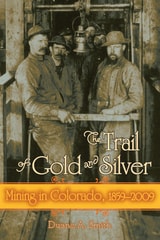
Trail Of Gold & Silver
D Smith
University Press of Colorado, 2009
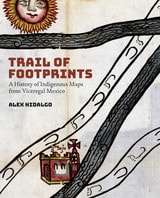
Trail of Footprints
A History of Indigenous Maps from Viceregal MexicoBy Alex Hidalgo
University of Texas Press, 2019
Trail of Footprints offers an intimate glimpse into the commission, circulation, and use of indigenous maps from colonial Mexico. A collection of sixty largely unpublished maps from the late sixteenth to the eighteenth centuries and made in the southern region of Oaxaca anchors an analysis of the way ethnically diverse societies produced knowledge in colonial settings. Mapmaking, proposes Hidalgo, formed part of an epistemological shift tied to the negotiation of land and natural resources between the region’s Spanish, Indian, and mixed-race communities. The craft of making maps drew from social memory, indigenous and European conceptions of space and ritual, and Spanish legal practices designed to adjust spatial boundaries in the New World. Indigenous mapmaking brought together a distinct coalition of social actors—Indian leaders, native towns, notaries, surveyors, judges, artisans, merchants, muleteers, collectors, and painters—who participated in the critical observation of the region’s geographic features. Demand for maps reconfigured technologies associated with the making of colorants, adhesives, and paper that drew from Indian botany and experimentation, trans-Atlantic commerce, and Iberian notarial culture. The maps in this study reflect a regional perspective associated with Oaxaca’s decentralized organization, its strategic position amidst a network of important trade routes that linked central Mexico to Central America, and the ruggedness and diversity of its physical landscape.
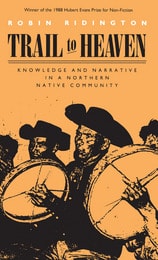
Trail to Heaven
Knowledge and Narrative in a Northern Native CommunityRobin Ridington
University of Iowa Press, 1992
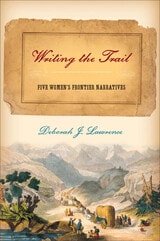
Writing the Trail
Five Women's Frontier NarrativesDeborah Lawrence
University of Iowa Press, 2006