Results by title
21 books match the query 'Transitional justice'
Archiving Sovereignty
Law, History, ViolenceStewart Motha
University of Michigan Press, 2018
Sovereignty is often cast as a limit-concept, constituent force, determining the boundary of law. Archiving Sovereignty reverses this to explain how judicial pronouncements inscribe and sustain extravagant claims to exceptionality and sovereign solitude. This wide-ranging, critical work distinguishes between myths that sustain neocolonial orders and fictions that generate new forms of political and ethical life.
Becoming Rwandan
Education, Reconciliation, and the Making of a Post-Genocide CitizenS. Garnett Russell
Rutgers University Press, 2020
Book of the Disappeared
The Quest for Transnational JusticeJennifer Heath and Ashraf Zahedi, Editors
University of Michigan Press, 2023
Book of the Disappeared confronts worldwide human rights violations of enforced disappearance and genocide and explores the global quest for justice with forceful, outstanding contributions by respected scholars, expert practitioners, and provocative contemporary artists. This profoundly humane book spotlights our historic inhumanity while offering insights for survival and transformation.
Cambodia's Trials
Contrasting Visions of Truth, Transitional Justice and National RecoveryEdited by Robin Biddulph and Alexandra Kent
National University of Singapore Press, 2023
More than four decades have passed since the end of Khmer Rouge rule in Cambodia in 1979. Even so, the country is still coming to terms with the destruction wrought by the Khmer Rouge during both the time they were in power and during the period of guerrilla resistance that lasted until 1998. The Khmer Rouge Tribunal, or the Extraordinary Chambers in the Court of Cambodia (ECCC), was established in 2006 to bring the Khmer Rouge leadership to justice. In many ways a product of the 1990s, when liberal democracy appeared to be on the rise both in Cambodia and internationally, the ECCC was imagined as a transitional justice initiative that would help ease the transition to liberal democracy.
The ECCC has long been the focus of scholarly attention in Cambodia’s recovery, but this compelling study argues that such an approach is dated, noting that the political circumstances in which the ECCC was born have since changed profoundly, both globally and locally. Cambodia’s current situation can no longer be analyzed solely in terms of transitional justice narratives or the work of the ECCC, and other ways in which Cambodians have come to terms with their past and built new lives must be considered. By decentering the ECCC in the scholarly narrative of Cambodia’s recovery, the volume’s authors offer fascinating new insights into the Khmer Rouge period and more recent years of social, cultural, and political change in Cambodia.
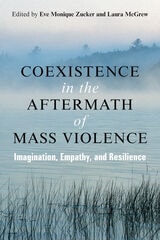
Coexistence in the Aftermath of Mass Violence
Imagination, Empathy, and ResilienceEdited by Eve Monique Zucker and Laura McGrew
University of Michigan Press, 2020
Coexistence in the Aftermath of Mass Violence demonstrates how imagination, empathy, and resilience contribute to the processes of social repair after ethnic and political violence. Adding to the literature on transitional justice, peacebuilding, and the anthropology of violence and social repair, the authors show how these conceptual pathways--imagination, empathy and resilience--enhance recovery, coexistence and sustainable peace. Coexistence (or reconciliation) is the underlying goal or condition desired after mass violence, enabling survivors to move forward with their lives. Imagination allows these survivors--victims, perpetrators, bystanders--to draw guidance and inspiration from their social and cultural imaginaries, to develop empathy, and to envision a future of peace and coexistence. Resilience emerges through periods of violence and its aftermaths through acts of survival, compassion, modes of rebuilding social worlds, and the establishment of a peaceful society.
Focusing on society at the grass roots level, the authors discuss the myriad and little understood processes of social repair that allow ruptured societies and communities to move toward a peaceful and stable future. The volume also illustrates some of the ways in which imagination, empathy, and resilience may contribute to the prevention of future violence and the authors conclude with a number of practical and policy recommendations. The cases include Cambodia, Rwanda, Sierra Leone, Somaliland, Columbia, the Southern Cone, Iraq, and Bosnia.
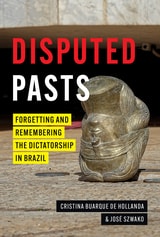
Disputed Pasts
Forgetting and Remembering the Dictatorship in BrazilCristina Buarque de Hollanda and José Szwako
University of Texas Press, 2026
How the memory of military dictatorship shapes Brazil's political divides and the far-right's rise.
Brazil’s military dictatorship ended in 1985, but its history still looms large over the country. Since the restoration of democracy, national politics have been shaped by heated contestation over the dictatorship’s legacy. Cristina Buarque de Hollanda and José Szwako examine how the state, the military, and civil society have variously mourned, celebrated, and suppressed memories of Brazil’s violent past—and to what ends.
As the dictatorship faltered under pressure from the opposition in the streets and in Congress, popular opinion favored democracy, which often meant forgetting. Today, the Brazilian left contends that the past has been silenced, paving the way for Jair Bolsonaro and the far right. Yet the past has been intensely contested: media outlets, social movements, and official commissions have long documented the dictatorship and spurred reparations. Disputed Pasts argues that the conservative ascendency is a reaction to these efforts of remembrance. The right seeks to rehabilitate the violent past by discrediting victims and elevating the dictatorship’s anti-communist ideology. Far from forgetting the past, Bolsonaro and Bolsonarismo actively remember and celebrate it.
Duty to Respond
Mass Crime, Denial, and Collective ResponsibilityNenad Dimitrijevic
Central European University Press, 2011
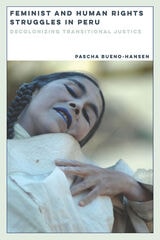
Feminist and Human Rights Struggles in Peru
Decolonizing Transitional JusticePascha Bueno-Hansen
University of Illinois Press, 2015
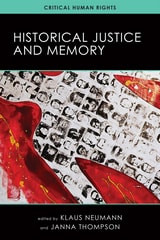
Historical Justice and Memory
Edited by Klaus Neumann and Janna Thompson
University of Wisconsin Press, 2015
The historical justice movement has inspired the spread of truth and reconciliation processes around the world and has pushed governments to make reparations and apologies for past wrongs. It has changed the public understanding of justice and the role of memory. In this book, leading scholars in philosophy, history, political science, and semiotics offer new essays that discuss and assess these momentous global developments. They evaluate the strength and weaknesses of the movement, its accomplishments and failings, its philosophical assumptions and social preconditions, and its prospects for the future.
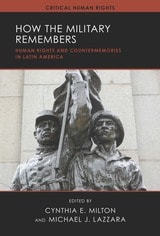
How the Military Remembers
Human Rights and Countermemories in Latin AmericaEdited by Cynthia E. Milton and Michael J. Lazzara
University of Wisconsin Press, 2025
With attention to the distinct cultural, political, and historical contexts across Latin America, the essays reveal how military figures and institutions appropriate mechanisms of truth-telling and accountability to reframe the past, blur the lines between perpetrator and victim, and weaponize memory itself.
Contributors: Mariana Achugar, Gabriela Fried Amilivia, Rebecca Atencio, Jo-Marie Burt, Rachel Hatcher, Nicolás Rodríguez Idárraga, Michael J. Lazzara, Cynthia E. Milton, Carla Granados Moya, María Emma Wills Obregón, Leith Passmore, Valentina Salvi, Gladys Vásquez Zevallos
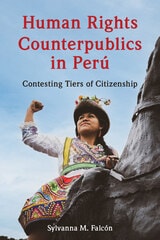
Human Rights Counterpublics in Perú
Sylvanna M. Falcón
University of Illinois Press, 2024
Engaging and intimate, Human Rights Counterpublics in Perú illuminates the power of human rights and memory work.
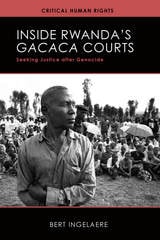
Inside Rwanda's /Gacaca/ Courts
Seeking Justice after GenocideBert Ingelaere
University of Wisconsin Press, 2018
Weaving together vivid firsthand recollections, interviews, and trial testimony with systematic analysis, Ingelaere documents how the gacaca shifted over time from confession to accusation, from restoration to retribution. He precisely articulates the importance of popular conceptions of what is true and just. Marked by methodological sophistication, extraordinary evidence, and deep knowledge of Rwanda, this is an authoritative, nuanced, and bittersweet account of one of the most important experiments in transitional justice after mass violence.
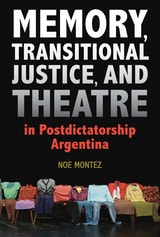
Memory, Transitional Justice, and Theatre in Postdictatorship Argentina
Noe Montez
Southern Illinois University Press, 2018
Montez explores how the sociohistorical phenomenon of the Teatroxlaidentidad—an annual showcase staged with the support of Argentina’s Grandmothers of the Plaza de Mayo—acted as a vehicle for drawing attention to the hundreds of children kidnapped from their families during the dictatorship and looks at why the memory narratives regarding the Malvinas Islands (also known as the Falklands) range from ideological appropriations of the islands, to absurdist commentaries about the failed war that signaled the dictatorship’s end, to the islands’ heavily contested status today.
Memory, Transitional Justice, and Theatre in Postdictatorship Argentina explores the vibrant role of theatrical engagement in postdictatorship Argentina, analyzes plays by artists long neglected in English-language articles and books, and explores the practicalities of staging performances in Latin America.

Phenomenal Justice
Violence and Morality in ArgentinaEva van Roekel
Rutgers University Press, 2020
Short-listed for the Juan E. Méndez Book Award for Human Rights in Latin America from Duke University Libraries
How do victims and perpetrators of political violence caught up in a complicated legal battle experience justice on their own terms? Phenomenal Justice is a compelling ethnography about the reopened trials for crimes against humanity committed during the brutal military dictatorship that ruled Argentina between 1976 and 1983. Grounded in phenomenological anthropology and the anthropology of emotion, this book establishes a new theoretical basis that is faithful to the uncertainties of justice and truth in the aftermath of human rights violations. The ethnographic observations and the first-person stories about torture, survival, disappearance, and death reveal the enduring trauma, heartfelt guilt, happiness, battered pride, and scratchy shame that demonstrate the unreserved complexities of truth and justice in post-conflict societies. Phenomenal Justice will be an indispensable contribution to a better understanding of the military dictatorship in Argentina and its aftermath.
Rwanda's Genocide Heritage
Between Justice and SovereigntyDelia Duong Ba Wendel
Duke University Press, 2025
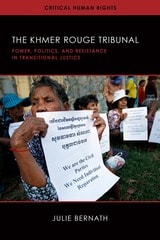
The Khmer Rouge Tribunal
Power, Politics, and Resistance in Transitional JusticeJulie Bernath
University of Wisconsin Press, 2023
Here, Julie Bernath takes a different tack, deliberately decentering the trials in an effort to understand the ECCC in its particular context—and, by extension, the degree to which notions of transitional justice generally must be understood in particular social, cultural, and political contexts. She focuses on “sites of resistance” to the ECCC, including not only members of the elite political class but also citizens who do not, for a variety of tangled reasons, participate in the tribunal—and even resistance from victims of the regime and participants in the trials. Bernath demonstrates that the ECCC both shapes and is shaped by long-term contestation over Cambodia’s social, economic, and political transformations, and thereby argues that transitional justice must be understood locally rather than as a homogenous good that can be implanted by international actors.
The Unruly Dead
Spirits, Memory, and State Formation in Timor-LesteLia Kent
University of Wisconsin Press, 2024
With generous, careful ethnography and incisive analysis, Kent challenges comfortable, linear narratives of transitional justice and argues that this memory work is reshaping the East Timorese social and political order—a process in which the dead are active, and sometimes disruptive, participants. Community ties and even the landscape itself are imbued with their presence and demands, and the horrific scale of mass death in recent times—at least a third of the population perished during the Indonesian occupation—means Timor-Leste’s dead have real, significant power in the country’s efforts to remember, recover, and reestablish itself.
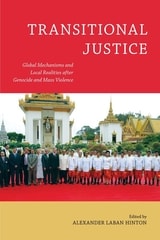
Transitional Justice
Global Mechanisms and Local Realities after Genocide and Mass ViolenceHinton, Alexander Laban
Rutgers University Press, 2011
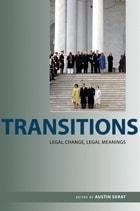
Transitions
Legal Change, Legal MeaningsAustin Sarat
University of Alabama Press, 2012
Transitions: Legal Change, Legal Meanings illustrates the various intersections, crises, and shifts that continually occur within the law, and how these moments of change interact with and comment on contemporary society.
Akhil Reed Amar / William L. Andreen /
Jack M. Beermann / Heather Elliott / Joshua
Alexander Geltzer / David Gray / Paul
Horwitz / Daniel H. Joyner / Nina
Mendelson / Meredith Render / Austin
Sarat / Ruti Teitel / Lindsey Ohlsson Worth
Understanding the Age of Transitional Justice
Crimes, Courts, Commissions, and ChroniclingAdler, Nanci
Rutgers University Press, 2018
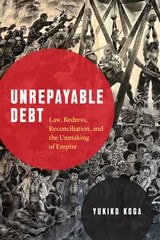
Unrepayable Debt
Law, Redress, Reconciliation, and the Unmaking of EmpireYukiko Koga
University of Chicago Press, 2026
What does it mean, and take, to repay the unrepayable?
Unrepayable Debt explores belated attempts to reckon with the savage plundering of labor and life under the Japanese empire. Located within global conversations on reparations for colonialism and slavery, and centered on slave labor lawsuits brought by Chinese victims seeking overdue justice in Japanese courts, Yukiko Koga traces a sea change in the legal sphere propelled by an unprecedented transnational redress movement. The lawsuits exposed not only the original violence but also a structure of transitional injustice etched onto the unmaking of the Japanese empire, which left victims silenced and unredressable for decades.
Challenging the idea of reckoning as a discrete event that brings closure through settlements, apology, or compensation, Koga’s ethnography details the slow and messy intergenerational work of reconciliation on the ground. The book shows how the re-pairing of severed relations, separated by lineages of victimhood and perpetration, lies at the core of repair. By bringing to the surface the prolonged and entangled processes of decolonization and deimperialization, Unrepayable Debt compels a rethinking of what redress, repair, and reconciliation mean, how they are practiced, and where accountability lies.