Results by title

19 books match the query 'Types'
cover of A Case for All-Girls' Catholic Schools: A Feminist Theological Perspective

A Case for All-Girls' Catholic Schools

A Feminist Theological Perspective

Cynthia L. Cameron

Catholic University of America Press, 2026
Many arguments have been made for the continued good work of all-girls’ schools: they prepare girls well for success in college and career, helping them be better students, better leaders, and more assertive citizens. All-girls’ Catholic schools offer something more: a rationale that is rooted in the theological commitments of the Roman Catholic Church. Indeed, in a contemporary culture that routinely marginalizes adolescent girls and holds them to unattainable expectations, the Church and its theologians and religious educators – because of their commitment to human dignity and flourishing – must advance a theological anthropology that centers adolescent girls. This theological anthropology of female adolescent flourishing then provides both a rationale for the Church’s continued support of all-girls’ Catholic schools and a vision for the mission of these schools as they advocate for the girls they serve. All-girls’ schools, therefore, can be places where the commitment to the flourishing of girls is prioritized and where the toxic milieu of contemporary culture can be resisted. In this book, Cynthia Cameron draws theological attention to female adolescence and uses the resulting robust theological anthropology to provide a theological argument for all-girls’ Catholic schools. It draws from the work of developmental and clinical psychologists who work with adolescent girls, from systematic, contextual, feminist, and intersectional theologians who explore what it means for humans to be created by God in the image of God, and from educational researchers focusing on the history and mission of Catholic schools in the United States. Ultimately, it argues that, in addition to the psychosocial and educational reasons for supporting all-girls’ Catholic schools, there must also be a theological reason. All-girls’ Catholic schools must be committed to the dignity and goodness of girls, to the basic truth that girls are already good as they are and not just for the adults that they may become.
[more]
cover of A Catholic Approach to Literacy for Struggling Students: Connecting Philosophy and Practice

A Catholic Approach to Literacy for Struggling Students

Connecting Philosophy and Practice

Margaret G. Walsh

Catholic University of America Press, 2025
Discover effective literacy methods that align with a Christian anthropological view of the human person, as described by Aquinas and Aristotle and joined to research-based strategies. Through this work you will learn the most important pieces to building the skills needed for literacy acquisition. The aim of this book is to provide parents and educators with the foundational understanding of how a person learns to read in order to equip them with the tools needed to effectively implement a full reading curriculum. Included are intervention methods that can be used in conjunction with reading curriculum to improve reading outcomes for students who struggle. The principles used in this book are research-based intervention methods that are blended with models of human development set out by Aristotle and St Thomas Aquinas. In the Summa Theologiae, St Thomas Aquinas writes about the faculties of the soul, relying on the foundational work of Aristotle in the De Anima. In Aquinas’ description of the powers of the soul, he outlines the way in which man comes to know, through the systematic use of his senses, imagination, memory, cogitative powers and finally his intellect and will. Effective intervention methods, as outlined in this work, align with the process Aquinas outlines. Understanding effective intervention strategies in light of the bigger picture of who man is and what he is made for, elevates learning and puts the development of literacy in a holistic perspective.
[more]
cover of Agency, Updated Edition: The Four Point Plan (F.R.E.E.) for ALL Children to Overcome the Victimhood Narrative and Discover Their Pathway to Power

Agency, Updated Edition

The Four Point Plan (F.R.E.E.) for ALL Children to Overcome the Victimhood Narrative and Discover Their Pathway to Power

Ian V. Rowe

Templeton Press, 0

Some children thrive where others do not. Why? Are there personal behaviors and institutional supports that make a difference in helping young people chart a course for their futures? Agency answers with a loud and clear “yes!”

This book describes the FREE framework, four pillars that can uplift every young person as they make the passage into adulthood: Family, Religion, Education, and Entrepreneurship.

With this framework in place, children are empowered to develop agency, which Ian V. Rowe defines as the force of one’s free will, guided by moral discernment. 

Rowe champions a game plan for creating new agents of agency and shows them the path that will set them FREE. Revised and expanded, this updated edition includes a new introduction and supplementary material, including a study guide for educators, sample lesson plans, and a student self-assessment.
[more]
cover of Agency: The Four Point Plan (F.R.E.E.) for ALL Children to Overcome the Victimhood Narrative and Discover Their Pathway to Power

Agency

The Four Point Plan (F.R.E.E.) for ALL Children to Overcome the Victimhood Narrative and Discover Their Pathway to Power

Rowe, Ian V.

Templeton Press, 2021

Every child in America deserves to know that a path to a successful life exists and that they have the power to follow it. But many never set foot on that path because they grow up hearing the message that systemic forces control their destinies, or that they are at fault for everything that has gone wrong in their lives. 

These children often come from difficult circumstances. Many are raised by young, single parents, live in disadvantaged neighborhoods, attend substandard schools, and lack the moral safeguards of religious and civic institutions. As a result, they can be dispirited into cycles of learned helplessness rather than inspired to pursue their own possibilities.

Yet this phenomenon is not universal. Some children thrive where others do not. Why? Are there personal behaviors and institutional supports that have proven to make a difference in helping young people chart a course for their futures? Agency answers with a loud and clear “yes!” 
This book describes four pillars that can uplift every young person as they make the passage into adulthood: Family, Religion, Education, and Entrepreneurship. Together, these pillars embody the true meaning of freedom, wherein people are motivated to embrace the ennobling responsibilities of building healthy social structures and shaping the outcomes of their own lives. 

For that reason, Ian Rowe calls the four pillars the FREE framework. With this framework in place, children are empowered to develop agency, which Rowe defines as the force of one’s free will, guided by moral discernment. Developing agency is the alternative to the debilitating ‘blame-the-system’ and ‘blame-the-victim’ narratives. It transcends our political differences and beckons all who dare to envision lives unshackled by present realities. 

In addition to making the case for agency, Rowe shares his personal story of success coming from an immigrant family. He defends America as an ever-improving country worthy of our esteem. He corrects misguided calls for “anti-racism” and “equity,” and champions a game plan for creating new agents of agency, dedicated to promoting the aspirational spirit of America’s children, and showing them the path that will set them FREE. 
 

[more]
cover of America's Theologian: Father Richard McBride of Notre Dame

America's Theologian

Father Richard McBride of Notre Dame

Todd Hartch

Catholic University of America Press, 2027
America's Theologian: Father Richard McBrien of Notre Dame is an intellectual biography of the Catholic theologian and commentator Richard McBrien (1936-2015), author of the best-selling Catholicism and 24 other books, arguably the most influential American Catholic voice of the 1980s and 1990s. Like Wilson Miscamble’s American Priest: The Ambitious Life and Conflicted Legacy of Notre Dame's Father Ted Hesburgh, this biography gives a respectful yet critical treatment of one of the lions of American liberal Catholicism. Openly radical in his younger days and critical of Vatican II for being too moderate, McBrien was frustrated with the slow pace of religious change in the 1970s but realized that his bold and straightforward approach was not working. His 1980 magnum opus, Catholicism, which sold 150,000 copies in its first edition and 50,000 more in later editions, marked a change of course. From this point forward, he adopted the rhetoric of moderation, used ambiguity to cloak his more radical ideas, and became an outspoken defender of Vatican II. His theology did not change, but he presented himself as a centrist who was defending the legacy of Vatican II. One of those impressed by Catholicism was University of Notre Dame President Ted Hesburgh, who recruited McBrien in 1980 to transform the university’s theology department. During his decade as chair, McBrien turned the Notre Dame theology department into an influential center of liberal Catholic theology.
[more]
cover of American Atrocity: The Types of Violence in Lynching

American Atrocity

The Types of Violence in Lynching

Guy Lancaster

University of Arkansas Press, 2021

Lynching is often viewed as a narrow form of violence: either the spontaneous act of an angry mob against accused individuals, or a demonstration of white supremacy against an entire population considered subhuman. However, in this new treatise, historian Guy Lancaster exposes the multiple forms of violence hidden beneath the singular label of lynching.

Lancaster, who has written extensively on racial violence, details several lynchings of Blacks by white posses in post-Reconstruction Arkansas. Drawing from the fields of history, philosophy, cognitive science, sociology, and literary theory, and quoting chilling contemporary accounts, he argues that the act of lynching encompasses five distinct but overlapping types of violence. This new framework reveals lynching to be even more of an atrocity than previously understood: that mobs did not disregard the humanity of their victims but rather reveled in it; that they were not simply enacting personal vengeance but manifesting an elite project of subjugation. Lancaster thus clarifies and connects the motives and goals of seemingly isolated lynch mobs, embedding the practice in the ongoing enforcement of white supremacy. By interrogating the substance of lynching, American Atrocity shines new light on both past anti-Black violence and the historical underpinnings of our present moment.
[more]
cover of Charter School City: What the End of Traditional Public Schools in New Orleans Means for American Education

Charter School City

What the End of Traditional Public Schools in New Orleans Means for American Education

Douglas N. Harris

University of Chicago Press, 2020

In the wake of the tragedy and destruction that came with Hurricane Katrina in 2005, public schools in New Orleans became part of an almost unthinkable experiment—eliminating the traditional public education system and completely replacing it with charter schools and school choice.  Fifteen years later, the results have been remarkable, and the complex lessons learned should alter the way we think about American education.
New Orleans became the first US city ever to adopt a school system based on the principles of markets and economics. When the state took over all of the city’s public schools, it turned them over to non-profit charter school managers accountable under performance-based contracts. Students were no longer obligated to attend a specific school based upon their address, allowing families to act like consumers and choose schools in any neighborhood. The teacher union contract, tenure, and certification rules were eliminated, giving schools autonomy and control to hire and fire as they pleased.
In Charter School City, Douglas N. Harris provides an inside look at how and why these reform decisions were made and offers many surprising findings from one of the most extensive and rigorous evaluations of a district school reform ever conducted. Through close examination of the results, Harris finds that this unprecedented experiment was a noteworthy success on almost every measurable student outcome. But, as Harris shows, New Orleans was uniquely situated for these reforms to work well and that this market-based reform still required some specific and active roles for government. Letting free markets rule on their own without government involvement will not generate the kinds of changes their advocates suggest.
 
Combining the evidence from New Orleans with that from other cities, Harris draws out the broader lessons of this unprecedented reform effort. At a time when charter school debates are more based on ideology than data, this book is a powerful, evidence-based, and in-depth look at how we can rethink the roles for governments, markets, and nonprofit organizations in education to ensure that America’s schools fulfill their potential for all students.

 
[more]
cover of Compressed Air Energy Storage: Types, systems and applications

Compressed Air Energy Storage

Types, systems and applications

David S-K. Ting

The Institution of Engineering and Technology, 2021
The intermittency of renewable energy sources is making increased deployment of storage technology necessary. Technologies are needed with high round-trip efficiency and at low cost to allow renewables to undercut fossil fuels. The cost of lithium batteries has fallen, but producing them comes with a substantial carbon footprint, as well as a cost to the local environment.
[more]
cover of Historic Architecture in Alabama: A Guide to Styles and Types, 1810-1930

Historic Architecture in Alabama

A Guide to Styles and Types, 1810-1930

Robert S. Gamble

University of Alabama Press, 2001

Discover the stories behind Alabama’s timeless structures.

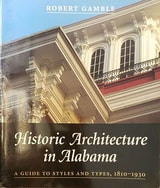
Robert Gamble outlines in detail the primary architectural currents and styles that have surfaced in Alabama over the years and defined the state's built landscape. The structures and styles, all well-illustrated,range from folk houses and early settlement buildings to railway terminals, churches, libraries, municipal and university buildings, palatial private mansions, and modest homes. Structures from every period and every major stylistic era—Federal, Greek Revival, Gothic Revival, Italianate, Romanesque and Mission Revival, and the Richardsonian—are documented meticulously, along with examples of early—Modern buildings, including Alabama's only Frank Lloyd Wright structure and skyscrapers from the Chicago school.

More than 200 photographs, supplemented by sketches, plans, and etchings, provide the general reader and the design professional with images of Alabama architecture in all its variety and range. Many illustrations offer rare views of buildings long since demolished. A substantial glossary of architectural terms and a thorough bibliography enhance this standard sure to be welcomed anew by any lover of old buildings, whether weekend rambler or serious student.


[more]
cover of How Schools Meet Students' Needs: Inequality, School Reform, and Caring Labor

How Schools Meet Students' Needs

Inequality, School Reform, and Caring Labor

Katie Kerstetter

Rutgers University Press, 2023
Meeting students’ basic needs – including ensuring they have access to nutritious meals and a sense of belonging and connection to school – can positively influence students’ academic performance. Recognizing this connection, schools provide resources in the form of school meals programs, school nurses, and school guidance counselors. However, these resources are not always available to students and are not always prioritized in school reform policies, which tend to focus more narrowly on academic learning. This book is about the balancing act that schools and their teachers undertake to respond to the social, emotional, and material needs of their students in the context of standardized testing and accountability policies. Drawing on conversations with teachers and classroom observations in two elementary schools, How Schools Meet Students’ Needs explores the factors that both enable and constrain teachers in their efforts to meet students’ needs and the consequences of how schools organize this work on teachers’ labor and students’ learning.
 
[more]
cover of Making Up Our Mind: What School Choice Is Really About

Making Up Our Mind

What School Choice Is Really About

Sigal R. Ben-Porath and Michael C. Johanek

University of Chicago Press, 2019

If free market advocates had total control over education policy, would the shared public system of education collapse? Would school choice revitalize schooling with its innovative force? With proliferating charters and voucher schemes, would the United States finally make a dramatic break with its past and expand parental choice?

Those are not only the wrong questions—they’re the wrong premises, argue philosopher Sigal R. Ben-Porath and historian Michael C. Johanek in Making Up Our Mind. Market-driven school choices aren’t new. They predate the republic, and for generations parents have chosen to educate their children through an evolving mix of publicly supported, private, charitable, and entrepreneurial enterprises. The question is not whether to have school choice. It is how we will regulate who has which choices in our mixed market for schooling—and what we, as a nation, hope to accomplish with that mix of choices. Looking beyond the simplistic divide between those who oppose government intervention and those who support public education, the authors make the case for a structured landscape of choice in schooling, one that protects the interests of children and of society, while also identifying key shared values on which a broadly acceptable policy could rest.
[more]
cover of Organizing Locally: How the New Decentralists Improve Education, Health Care, and Trade

Organizing Locally

How the New Decentralists Improve Education, Health Care, and Trade

Bruce Fuller

University of Chicago Press, 2015

We love the local. From the cherries we buy, to the grocer who sells them, to the school where our child unpacks them for lunch, we express resurgent faith in decentralizing the institutions and businesses that arrange our daily lives. But the fact is that huge, bureaucratic organizations often still shape the character of our jobs, schools, the groceries where we shop, and even the hospitals we entrust with our lives. So how, exactly, can we work small, when everything around us is so big, so global and standardized? In Organizing Locally, Bruce Fuller shows us, taking stock of America’s rekindled commitment to localism across an illuminating range of sectors, unearthing the crucial values and practices of decentralized firms that work.
           
Fuller first untangles the economic and cultural currents that have eroded the efficacy of—and our trust in—large institutions over the past half century. From there we meet intrepid leaders who have been doing things differently. Traveling from a charter school in San Francisco to a veterans service network in Iowa, from a Pennsylvania health-care firm to the Manhattan branch of a Swedish bank, he explores how creative managers have turned local staff loose to craft inventive practices, untethered from central rules and plain-vanilla routines. By holding their successes and failures up to the same analytical light, he vividly reveals the key cornerstones of social organization on which motivating and effective decentralization depends. Ultimately, he brings order and evidence to the often strident debates about who has the power—and on what scale—to structure how we work and live locally.

Written for managers, policy makers, and reform activists, Organizing Locally details the profound decentering of work and life inside firms, unfolding across postindustrial societies. Its fresh theoretical framework explains resurging faith in decentralized organizations and the ingredients that deliver vibrant meaning and efficacy for residents inside. Ultimately, it is a synthesizing study, a courageous and radical new way of conceiving of American vitality, creativity, and ambition. 
[more]
cover of Para Power: How Paraprofessional Labor Changed Education

Para Power

How Paraprofessional Labor Changed Education

Nick Juravich

University of Illinois Press, 2024

Paraprofessional educators entered US schools amidst the struggles of the late 1960s. Immersed in the crisis of care in public education, paras improved systems of education and social welfare despite low pay and second-rate status.

Understanding paras as key players in Black and Latino struggles for jobs and freedom, Nick Juravich details how the first generation of paras in New York City transformed work in public schools and the relationships between schools and the communities they served. Paraprofessional programs created hundreds of thousands of jobs in working-class Black and Latino neighborhoods. These programs became an important pipeline for the training of Black and Latino teachers in the1970s and early 1980s while paras’ organizing helped drive the expansion and integration of public sector unions.

An engaging portrait of an invisible profession, Para Power examines the lives and practices of the first generation of paraprofessional educators against the backdrop of struggles for justice, equality, and self-determination.
[more]
cover of Public Schools, Private Governance: Education Reform and Democracy in New Orleans

Public Schools, Private Governance

Education Reform and Democracy in New Orleans

J. Celeste Lay

Temple University Press, 2022

Two months after Hurricane Katrina, Louisiana took control of nearly all the public schools in New Orleans. Today, all of the city’s public schools are charter schools. Although many analyses mark the beginning of education reform in New Orleans with Katrina, in Public Schools, Private Governance, J. Celeste Layargues that the storm merely accelerated the timeline for reforms that had inched along incrementally over the previous decade. Both before and after Katrina, white reformers purposely excluded Black educators, community members, and parents.

Public Schools, Private Governance traces the slow, deliberate dismantling of New Orleans’ public schools, and the processes that have maintained the reforms made in Katrina’s immediate aftermath, showing how Black parents and residents were left without a voice and the officials charged with school governance, most of whom are white, with little accountability. Lay cogently explains how political minorities disrupted systems to create change and keep reforms in place, and the predictable political effects—exclusion, frustration, and resignation—on the part of those most directly affected.
[more]
cover of Shared Mission: Religious Education in the Catholic Tradition, Revised Edition

Shared Mission

Religious Education in the Catholic Tradition, Revised Edition

Leonardo Franchi

Catholic University of America Press, 2023
This book is a contribution to scholarship in the field of religious education. Its aim is simple: to offer a critical perspective on the nature of religious education in the light of contemporary developments in Catholic thinking in catechesis and wider thinking in education. The issues raised in the book will provide ample material for fruitful dialogue and constructive debate in the world of Catholic education. Part One revolves around four historical contexts selected specifically to illuminate contemporary developments in the field. While these historical periods have porous boundaries, they offer a working structure in support of the core claims of the book. Part Two explores the complex genealogy of the relationship between catechesis and Religious Education. Key thematic frames of reference within which the relevant Magisterial documents and associated academic literature are set out and explored chronologically thus allowing for some cross-referencing across the themes: unsurprisingly the range of the issues for debate resists a neat packaging within specific time-frames but does provide a helpful working structure. Part Three proposes that a Spirituality of Communion should underpin the Church’s work in catechesis, education and Religious Education. Shared Mission seems to be a satisfactory articulation of the necessary dialogic relationship between both fields and offers a suitable space for both distinction and reciprocity. The revised edition contains an appendix on the Global Compact on Education.
[more]
cover of The Adeodatus Handbook on Catholic Education and Culture: Volume 1: From Jesus the Teacher to St. John Henry Newman

The Adeodatus Handbook on Catholic Education and Culture

Volume 1: From Jesus the Teacher to St. John Henry Newman

Alex E. Lessard

Catholic University of America Press, 2025
Catholic education stands in need of renewal, for it too has experienced the consequences of the rupture of faith and reason in the modern period. Secularism affects Catholic schools as well as public ones when faith remains confined solely to a religion class or the celebration of the Mass. Our past provides a model of integration: the unity of divine revelations and the liberal arts and a life of wisdom that pursues what is truly highest. Modern people too often settle for less—little comforts and distractions—while the theologians, philosophers, and educators of the past spur us on to stop at nothing less than God’s invitation to enter his divine life. This first volume of the Adeodatus Handbook seeks to provide inspiration to return to the central vision of Catholic education: an integrated approach to the liberal arts that flows from God’s initiative toward us and is ordered toward eternal union with him. The essays of this volume unfold the narrative offered in this introduction in more detail. We consider them to be the most essential figures who have established the Catholic approach to education. Two of them, Plato and Aristotle, were pagan authors who formed the philosophical basis of the Catholic approach. The others, flowing from the Incarnation of the Son of God, appropriated the truths of nature contemplated by philosophy and drew them into a sacramental synthesis with the truths of divine revelation. There can be no genuine Christian education that does help the student to contemplate the whole of reality and to live a life of wisdom, rooted in the virtues that perfect human nature while ultimately receptive of the gifts and fruits of the Holy Spirit. The majority of the figures addressed in this volume are canonized saints, pointing us to the priority of holiness in Catholic education. Education serves the ultimate aim of human life: our perfect happiness in the beatific vision. To reach this, we need the support of mentors and friends. This requires the concrete embodiment of Christian community within the home and school. It can also, however, flow from our communion with the great sainted educators of our heritage. We have inherited their legacy, and with their prayers and support, we have been tasked with continuing in our own age. We will not be able to replicate their efforts, but with the grace and inspiration of the Holy Spirit, we can make our contribution in educating the youth, young adults, seminarians, and lay people of the Church of God.
[more]
cover of The Seeds We Planted: Portraits of a Native Hawaiian Charter School

The Seeds We Planted

Portraits of a Native Hawaiian Charter School

Noelani Goodyear-Ka'opua

University of Minnesota Press, 2013


In 1999, Noelani Goodyear-Ka‘ōpua was among a group of young educators and parents who founded Hālau Kū Māna, a secondary school that remains one of the only Hawaiian culture-based charter schools in urban Honolulu. The Seeds We Planted tells the story of Hālau Kū Māna against the backdrop of the Hawaiian struggle for self-determination and the U.S. charter school movement, revealing a critical tension: the successes of a school celebrating indigenous culture are measured by the standards of settler colonialism.


How, Goodyear-Ka‘ōpua asks, does an indigenous people use schooling to maintain and transform a common sense of purpose and interconnection of nationhood in the face of forces of imperialism and colonialism? What roles do race, gender, and place play in these processes? Her book, with its richly descriptive portrait of indigenous education in one community, offers practical answers steeped in the remarkable—and largely suppressed—history of Hawaiian popular learning and literacy.


This uniquely Hawaiian experience addresses broader concerns about what it means to enact indigenous cultural–political resurgence while working within and against settler colonial structures. Ultimately, The Seeds We Planted shows that indigenous education can foster collective renewal and continuity.

[more]
cover of Truth on Trial: The Rise and Fall of the Integrated Humanities Program at the University of Kansas

Truth on Trial

The Rise and Fall of the Integrated Humanities Program at the University of Kansas

Robert K. Carlson

Catholic University of America Press, 2026
In this reprinting of Truth on Trial, Robert Carlson outlines the sad state of higher education in America, where “learning” is increasingly disconnected from the pursuit of truth, goodness, and beauty that has always been its most important heritage, replaced by an environment where any view that is not ‘politically correct’ is persecuted and disdained. Drawing upon his own experiences in the transformational Integrated Humanities Program (IHP) at the University of Kansas (KU), Carlson details the crisis that faces education today, and uses the lessons learned through that program’s meteoric rise (and eventual demise) to propose a solution to that same crisis. Launching in the early 1970’s, the IHP was the “Great Books” brainchild of a trio of KU professors—Dennis Quinn, Franklyn Nelick, and John Senior—who understood that wonder is not only the beginning but also the sustaining principle of the best education, and who sought to offset the radical disintegration permeating Western culture in general and higher education in particular. Convinced that the fragmentation of such major cultural institutions as the family, the church, and the world of education was profoundly affecting students, these three teachers invited freshmen and sophomores at the public university to join their fledgling program, where they would study, hear, and discuss the classics of ancient and medieval literature, listen to their professors converse on “the greatest that has been thought and said,” memorize poems, stargaze, take courses in Latin and rhetoric, and much more. The program’s growth was immediate and rapid—student enrollment increased from 20 in 1970 to 140 in 1971, and 186 in 1972—but its counter-cultural stance put it on fragile ground at KU, and within a year, it was under intense scrutiny, culminating in a public, quasi-judicial proceeding in which a dean-appointed committee sought to determine whether the IHP should continue to exist. Quinn, Nelick, and Senior, professors with a combined total of 90+ years in teaching, were now on trial at the university, not because they had taught poorly, but because they had taught too well. On January 20, 1979, the Advisory Committee charged with investigating the Program rendered its verdict, placing it under the administration of a new Humanities Committee, effectively annihilating the IHP. While its initial trial felt like a defeat, God had other plans in store. Thankfully (and to paraphrase Twain’s famous words), the effects of the IHP’s death were greatly exaggerated. In the years since its untimely demise on the KU campus, its impact on the world of Catholic education has only grown stronger—the fruitfulness of its alumni and friends serving as the ultimate proof of its vision’s great worth. Since the program’s closing in 1979, it has inspired the founding of both Clear Creek Abbey and Wyoming Catholic College, as well as St. Gregory’s Academy in Pennsylvania (which eventually led to Gregory the Great Academy), and St. Martin’s Academy in Kansas. Perhaps most tellingly of all, its clear call to make wonder, beauty, and experience vital parts of any educational program has impacted countless homeschooling families, private and public school teachers, and educational programs in the subsequent years.
[more]
cover of Words Made Flesh: The Sacramental Mission of Catholic Education

Words Made Flesh

The Sacramental Mission of Catholic Education

R. Jared Staudt

Catholic University of America Press, 2024

Forming souls and building culture together form the sacramental mission of Catholic education. These profoundly related goals are laid out by the Church for education, following the general sacramental principle that permeates the whole of Catholic life. This approach seeks conformity to the Logos, the divine mind, that shapes the way disciples think, imagine, and pray. Guided by this approach, the student will be able to contemplate the truth of reality in a holistic and integrated fashion. As sacramental, it also leads to a concrete embodiment in the life of the Christian community and the daily actions of the disciple. A sacramental approach to education draws together the inner and outer life: mind and body, soul and culture, prayer and work, salvation and mission, the individual and community. For the future of society and renewal within the Church, we need nothing less than a reintegration of the person and our communities through the renewal of education, forming students deeply rooted in our heritage and prepared to hand it on in creative ways.
[more]