Results by title
18 books match the query 'United States. Central Intelligence Agency'
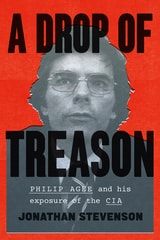
A Drop of Treason
Philip Agee and His Exposure of the CIAJonathan Stevenson
University of Chicago Press, 2021
The first biography of this contentious, legendary man, Jonathan Stevenson’s A Drop of Treason is a thorough portrait of Agee and his place in the history of American foreign policy and the intelligence community during the Cold War and beyond. Unlike mere whistleblowers, Agee exposed American spies by publicly blowing their covers. And he didn’t stop there—his was a lifelong political struggle that firmly allied him with the social movements of the global left and against the American project itself from the early 1970s on. Stevenson examines Agee’s decision to turn, how he sustained it, and how his actions intersected with world events.
Having made profound betrayals and questionable decisions, Agee lived a rollicking, existentially fraught life filled with risk. He traveled the world, enlisted Gabriel García Márquez in his cause, married a ballerina, and fought for what he believed was right. Raised a conservative Jesuit in Tampa, he died a socialist expat in Havana. In A Drop of Treason, Stevenson reveals what made Agee tick—and what made him run.
A Monument to Deceit
Sam Adams and the Vietnam Intelligence WarsC. Michael Hiam
University Press of New England, 2014
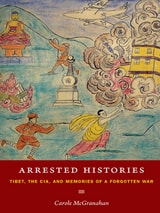
Arrested Histories
Tibet, the CIA, and Memories of a Forgotten WarCarole McGranahan
Duke University Press, 2010
Drawing on rich ethnographic and historical research, McGranahan tells the story of the Tibetan resistance and the social processes through which this history is made and unmade, and lived and forgotten in the present. Fulfillment of veterans’ desire for recognition hinges on the Dalai Lama and “historical arrest,” a practice in which the telling of certain pasts is suspended until an undetermined time in the future. In this analysis, struggles over history emerge as a profound pain of belonging. Tibetan cultural politics, regional identities, and religious commitments cannot be disentangled from imperial histories, contemporary geopolitics, and romanticized representations of Tibet. Moving deftly from armed struggle to nonviolent hunger strikes, and from diplomatic offices to refugee camps, Arrested Histories provides powerful insights into the stakes of political engagement and the cultural contradictions of everyday life.
Cold War Anthropology
The CIA, the Pentagon, and the Growth of Dual Use AnthropologyDavid H. Price
Duke University Press, 2016
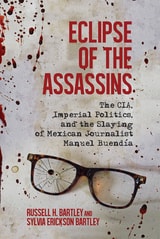
Eclipse of the Assassins
The CIA, Imperial Politics, and the Slaying of Mexican Journalist Manuel BuendíaRussell H. Bartley and Sylvia Erickson Bartley
University of Wisconsin Press, 2015
Authors Russell and Sylvia Bartley shed new light on the U.S.-instigated “dirty wars” that ravaged all of Latin America in the 1960s, ’70s, and ’80s and reveal—for the first time—how Mexican officials colluded with Washington in its proxy contra war against the Sandinista government of Nicaragua. They draw together the strands of a clandestine web linking:
- the assassination of prominent Mexican journalist Manuel Buendía
- the torture and murder of U.S. Drug Enforcement Administration agent Enrique Camarena
- the Iran-Contra scandal
- a major DEA sting against key CIA-linked Bolivian, Panamanian, and Mexican drug traffickers
- CIA-orchestrated suppression of investigative journalists
- criminal collusion of successive U.S. and Mexican administrations that has resulted in the unprecedented power of drug kingpins like “El Chapo” Guzmán.
Best books for public & secondary school libraries from university presses, American Library Association
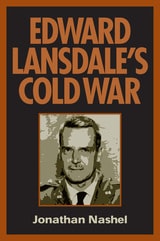
Edward Lansdale's Cold War
Jonathan Nashel
University of Massachusetts Press, 2005
The man widely believed to have been the model for Alden Pyle in Graham Greene's The Quiet American, Edward G. Lansdale (1908–1987) was a Cold War celebrity. A former advertising executive turned undercover CIA agent, he was credited during the 1950s with almost single-handedly preventing a communist takeover of the Philippines and with helping to install Ngo Dinh Diem as president of the American-backed government of South Vietnam. Adding to his notoriety, during the Kennedy administration Lansdale was put in charge of Operation Mongoose, the covert plot to overthrow the government of Cuba's Fidel Castro by assassination or other means.
In this book, Jonathan Nashel reexamines Lansdale's role as an agent of American Cold War foreign policy and takes into account both his actual activities and the myths that grew to surround him. In contrast to previous portraits, which tend to depict Lansdale either as the incarnation of U.S. imperialist ambitions or as a farsighted patriot dedicated to the spread of democracy abroad, Nashel offers a more complex and nuanced interpretation. At times we see Lansdale as the arrogant “ugly American,” full of confidence that he has every right to make the world in his own image and utterly blind to his own cultural condescension. This is the Lansdale who would use any conceivable gimmick to serve U.S. aims, from rigging elections to sugaring communist gas tanks. Elsewhere, however, he seems genuinely respectful of the cultures he encounters, open to differences and new possibilities, and willing to tailor American interests to Third World needs.
Rather than attempting to reconcile these apparently contradictory images of Lansdale, Nashel explores the ways in which they reflected a broader tension within the culture of Cold War America. The result is less a conventional biography than an analysis of the world in which Lansdale operated and the particular historical forces that shaped him—from the imperatives of anticommunist ideology and the assumptions of modernization theory to the techniques of advertising and the insights of anthropology.
Errand into the Wilderness of Mirrors
Religion and the History of the CIAMichael Graziano
University of Chicago Press, 2021
Michael Graziano’s intriguing book fuses two landmark titles in American history: Perry Miller’s Errand into the Wilderness (1956), about the religious worldview of the early Massachusetts colonists, and David Martin’s Wilderness of Mirrors (1980), about the dangers and delusions inherent to the Central Intelligence Agency. Fittingly, Errand into the Wilderness of Mirrors investigates the dangers and delusions that ensued from the religious worldview of the early molders of the Central Intelligence Agency. Graziano argues that the religious approach to intelligence by key OSS and CIA figures like “Wild” Bill Donovan and Edward Lansdale was an essential, and overlooked, factor in establishing the agency’s concerns, methods, and understandings of the world. In a practical sense, this was because the Roman Catholic Church already had global networks of people and safe places that American agents could use to their advantage. But more tellingly, Graziano shows, American intelligence officers were overly inclined to view powerful religions and religious figures through the frameworks of Catholicism. As Graziano makes clear, these misconceptions often led to tragedy and disaster on an international scale. By braiding the development of the modern intelligence agency with the story of postwar American religion, Errand into the Wilderness of Mirrors delivers a provocative new look at a secret driver of one of the major engines of American power.
Gentleman in the Shadows
Benjamin C. Evans Jr. and the Central Intelligence AgencyDouglas A. Wissing
Indiana Historical Society Press, 2019
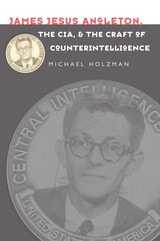
James Jesus Angleton, the CIA, and the Craft of Counterintelligence
Michael Holzman
University of Massachusetts Press, 2008
As chief of counterintelligence for the Central Intelligence Agency from the early 1950s to the early 1970s, James Jesus Angleton built a formidable reputation. Although perhaps best known for leading the agency's notorious “Molehunt”—the search for a Soviet spy believed to have infiltrated the upper levels of the American government—Angleton also played a key role in the U.S. intervention in the Italian election of 1948, in Israel's development of nuclear weapons, and in the management of the CIA's investigation of the assassination of John F. Kennedy. He later led CIA efforts to contain the Vietnam-era antiwar movement, including the campaign to destroy the liberal Catholic magazine Ramparts.
In this deeply researched biography, Michael Holzman uses Angleton's story to illuminate the history of the CIA from its founding in the late 1940s to the mid-1970s. Like many of his colleagues in the CIA, James Angleton learned the craft of espionage during World War II as an officer in the Office of Strategic Services (OSS), where he became a friend and protégé of the British double agent Kim Philby. Yet Angleton's approach to counterintelligence was also influenced by his unusual Mexican American family background and his years at Yale as a student of the New Critics and publisher of modernist poets. His marriage to Cicely d'Autremont and the couple's friendship with E. E. and Marion Cummings became part of a network of cultural connections that linked the U.S. secret intelligence services and American writers and artists during the postwar period.
Drawing on a broad range of sources, including previously unexamined archival documents, personal letters, and interviews, Holzman looks beneath the surface of Angleton's career to reveal the sensibility that governed not only his personal aims and ambitions but those of the organization he served and helped shape.
Perilous Missions
Civil Air Transport and CIA Covert Operations in AsiaWilliam M. Leary
University of Alabama Press, 2005
Civil Air Transport (CAT), founded in China after World War II by Claire Chennault and Whiting Willauer, was initially a commercial carrier specializing in air freight. Its role quickly changed as CAT became first a paramilitary adjunct of the Nationalist Chinese Air Force, then the CIA's secret "air force" in Korea, then "the most shot-at airline in the world" in French Indochina, and eventually becoming reorganized as Air America at the height of the Vietnam War. William M. Leary's detailed operational history of CAT sets the story in the perspective of Asian and Cold War geopolitics and shows how CAT allowed the CIA to operate with a level of flexibility and secrecy that it would not have attained through normal military or commercial air transportation.
The CIA in Ecuador
Marc Becker
Duke University Press, 2021
The CIA in Guatemala
The Foreign Policy of InterventionBy Richard H. Immerman
University of Texas Press, 1982
Using documents obtained through the Freedom of Information Act, recently opened archival collections, and interviews with the actual participants, Immerman provides us with a definitive, powerfully written, and tension-packed account of the United States' clandestine operations in Guatemala and their consequences in Latin America today.
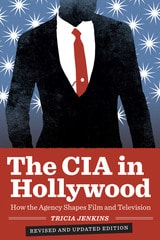
The CIA in Hollywood
How the Agency Shapes Film and TelevisionBy Tricia Jenkins
University of Texas Press, 2016
What’s your impression of the CIA? A bumbling agency that can’t protect its own spies? A rogue organization prone to covert operations and assassinations? Or a dedicated public service that advances the interests of the United States? Astute TV and movie viewers may have noticed that the CIA’s image in popular media has spanned this entire range, with a decided shift to more positive portrayals in recent years. But what very few people know is that the Central Intelligence Agency has been actively engaged in shaping the content of film and television, especially since it established an entertainment industry liaison program in the mid-1990s.
The CIA in Hollywood offers the first full-scale investigation of the relationship between the Agency and the film and television industries. Tricia Jenkins draws on numerous interviews with the CIA’s public affairs staff, operations officers, and historians, as well as with Hollywood technical consultants, producers, and screenwriters who have worked with the Agency, to uncover the nature of the CIA’s role in Hollywood. In particular, she delves into the Agency’s and its officers’ involvement in the production of The Agency, In the Company of Spies, Alias, The Recruit, The Sum of All Fears, Enemy of the State, Syriana, The Good Shepherd, and more. Her research reveals the significant influence that the CIA now wields in Hollywood and raises important and troubling questions about the ethics and legality of a government agency using popular media to manipulate its public image.
The Central Intelligence Agency
History and DocumentsWilliam M. Leary
University of Alabama Press, 1984
In late 1974 the U.S. Senate Select Committee on the CIA, headed by Frank Church of Idaho, began collecting documents and materials to buttress the committee hearings on the CIA’s role and activities that were to begin in the fall of 1975. Among the materials prepared for the Church Committee is History of the Central Intelligence Agency, which was written by committee staff member Anne Karalekas.
This book reproduces the History, with an introduction by Leary that establishes the historical framework for the Church Committee hearings, and also includes ten relevant documents covering events from 1944 to 1981.
The Family Jewels
The CIA, Secrecy, and Presidential PowerBy John Prados
University of Texas Press, 2014
In December 1974, a front-page story in the New York Times revealed the explosive details of illegal domestic spying by the Central Intelligence Agency. This included political surveillance, eavesdropping, detention, and interrogation. The revelation of illegal activities over many years shocked the American public and led to investigations of the CIA by a presidential commission and committees in both houses of Congress, which found evidence of more abuse, even CIA plans for assassinations. Investigators and the public soon discovered that the CIA abuses were described in a top-secret document agency insiders dubbed the “Family Jewels.” That document became ground zero for a political firestorm that lasted more than a year. The “Family Jewels” debacle ultimately brought about greater congressional oversight of the CIA, but excesses such as those uncovered in the 1970s continue to come to light.
The Family Jewels probes the deepest secrets of the CIA and its attempts to avoid scrutiny. John Prados recounts the secret operations that constituted “Jewels” and investigators’ pursuit of the truth, plus the strenuous efforts—by the agency, the executive branch, and even presidents—to evade accountability. Prados reveals how Vice President Richard Cheney played a leading role in intelligence abuses and demonstrates that every type of “Jewel” has been replicated since, especially during the post-9/11 war on terror. The Family Jewels masterfully illuminates why these abuses are endemic to spying, shows that proper relationships are vital to control of intelligence, and advocates a system for handling “Family Jewels” crises in a democratic society.
With a new epilogue that discusses former CIA employee Edward Snowden’s revelation of massive covert surveillance by the NSA, this powerful accounting of intelligence abuses committed by the CIA from the Cold War through the war on terror reveals why such abuses and attempts to conceal them are endemic to spying and proposes how a democratic nation can rein in its spymasters.
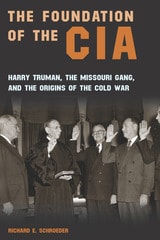
The Foundation of the CIA
Harry Truman, The Missouri Gang, and the Origins of the Cold WarRichard E. Schroeder
University of Missouri Press, 2017
Torture and Impunity
The U.S. Doctrine of Coercive InterrogationAlfred W. McCoy
University of Wisconsin Press, 2012
During the Cold War, McCoy argues, the U.S. Central Intelligence Agency covertly funded psychological experiments designed to weaken a subject’s resistance to interrogation. After the 9/11 terrorist attacks, the CIA revived these harsh methods, while U.S. media was flooded with seductive images that normalized torture for many Americans. Ten years later, the U.S. had failed to punish the perpetrators or the powerful who commanded them, and continued to exploit intelligence extracted under torture by surrogates from Somalia to Afghanistan. Although Washington has publicly distanced itself from torture, disturbing images from the prisons at Abu Ghraib and Guantanamo are seared into human memory, doing lasting damage to America’s moral authority as a world leader.

Unholy Wars
Afghanistan, America and International TerrorismJohn Cooley
Pluto Press, 2002
Cooley marshals a wealth of evidence - from the assassination of Sadat, the destabilisation of Algeria and Chechnya and the emergence of the Taliban, to the bombings of the World Trade Center and the US embassies in Africa. He examines the crucial role of Pakistan’s military intelligence organisation; uncovers China’s involvement and its aftermath; the extent of Saudi financial support; the role of 'America's most wanted man' Osama bin Laden; the BCCI connection; the CIA's cynical promotion of drug traffic in the Golden Crescent; the events in Pakistan since the military coup of October 1999; and, finally, the events of September 11th 2001 and their continuing impact on world affairs.