Results by title
43 books match the query 'Use'

Abiding Words
The Use of Scripture in the Gospel of JohnAlicia D. Myers
SBL Press, 2015
A collection of essays by experts from around the world
Like the other New Testament Gospels, the Gospel of John repeatedly appeals to Scripture (Old Testament). Preferring allusions and “echoes” alongside more explicit quotations, however, the Gospel of John weaves Scripture as an authoritative source concerning its story of Jesus. Yet, this is the same Gospel that is often regarded as antagonistic toward “the Jews,” especially the Jewish religious leaders, depicted within it.
Features:
- Introduces and updates readers on the question of John’s employment of Scripture
- Showcases useful approaches to more general studies on the New Testament’s use of Scripture, sociological and rhetorical analyses, and memory theory
- Explores the possible implications surrounding Scripture usage for the Gospel audiences both ancient and contemporary
Ancient Obscenities
Their Nature and Use in the Ancient Greek and Roman WorldsDorota Dutsch and Ann Suter, editors
University of Michigan Press, 2015
Blank Verse
A Guide to Its History and UseRobert B. Shaw
Ohio University Press, 2007
With its compact but inclusive survey of more than four centuries of poetry, Blank Verse is filled with practical advice for poets of our own day who may wish to attempt the form or enhance their mastery of it. Enriched with numerous examples, Shaw’s discussions of verse technique are lively and accessible, inviting not only to apprentice poets but to all readers of poetry.
Shaw’s approach should reassure those who find prosody intimidating, while encouraging specialists to think more broadly about how traditional poetic forms can be taught, learned, practiced, and appreciated in the twenty-first century. Besides filling a conspicuous gap in literary history, Blank Verse points the way ahead for poets interested in exploring blank verse and its multitude of uses.

Celebrity Culture and the Entertainment Industry in Asia
Use of Celebrity and its Influence on Society, Culture and CommunicationBy Vivienne Leung, Kimmy Cheng, and Tommy Tse
Intellect Books, 2017
Through first-hand interviews with celebrities and entertainment industry practitioners, the authors discuss the social, cultural, and economic influences of celebrity. Dialogues with celebrities such as Kwok-Leung Kam, Bob Lam, Denise Ho, Hilary Tsui, and Francis Mak provide insider accounts of celebrity formation, management, and marketing in Hong Kong and Mainland China, as well as South Korea and Taiwan.
Chipped Stone Tools in Formative Oaxaca, Mexico
Their Procurement, Production and UseWilliam J. Parry
University of Michigan Press, 1987
Creating an Inclusive Library
Approaches for Increasing Engagement and Use with Students of ColorNgoc-Yen Tran
Assoc of College & Research Libraries, 2024
Six themed sections provide an opportunity to further engage with issues affecting students of color and to take action to provide more just and equitable teaching and learning environments.
- Welcoming and Sense of Belonging
- Culturally Relevant Practices
- Building Representation and Inclusion
- Collaborations and Co-Creation
- Community Building and Engagement
- Fostering Diverse Student Employees

Cultivating Machines
The Use and Maintenance of Technology in Midwestern Agriculture, 1845–1900James Rick
Ohio University Press, 0
How farmers shaped the development of agricultural machinery
Throughout the second half of the nineteenth century, farmers in the midwestern United States and in Ontario began adopting new agricultural machines: threshers, reapers, and drills for more efficient production of grains, as well as sewing and washing machines for more efficient production within the farm household. By using, maintaining, and altering these machines within the natural and social contexts of their farms, rural people produced new technological systems of industrial agriculture. They also struggled with machine manufacturers and their agents for control of those systems—both individually and through farmers’ organizations. Cultivating Machines contributes to historiographies of capitalism, technology, and agriculture as it demonstrates the importance of everyday know-how and informed tinkering to the mechanization of grain agriculture.
In this study, James Rick moves from the middle decades of the nineteenth century, and the introduction of horse-powered machines, to the end of the century, when mechanized technologies became indispensable and central parts of farms themselves. Ultimately, large-scale wheat production, the increased complexity of machines, the need for replacement parts, and the efforts of manufacturers and their agents to assert themselves as authorities over industrial agriculture diminished the technological independence of farming people.
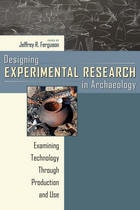
Designing Experimental Research in Archaeology
Examining Technology through Production and UseJeffrey R. Ferguson
University Press of Colorado, 2010
Each chapter addresses a particular classification of material culture-ceramics, stone tools, perishable materials, composite hunting technology, butchering practices and bone tools, and experimental zooarchaeology-detailing issues that must be considered in the development of experimental archaeology projects and discussing potential pitfalls. The experiments follow coherent and consistent research designs and procedures and are placed in a theoretical context, and contributors outline methods that will serve as a guide in future experiments. This degree of standardization is uncommon in traditional archaeological research but is essential to experimental archaeology.
The field has long been in need of a guide that focuses on methodology and design. This book fills that need not only for undergraduate and graduate students but for any archaeologist looking to begin an experimental research project.

Disarmed Democracies
Domestic Institutions and the Use of ForceDavid P. Auerswald
University of Michigan Press, 2000

Drones and Support for the Use of Force
James Igoe Walsh and Marcus Schulzke
University of Michigan Press, 2018
Drones and Support for the Use of Force uses experimental research to analyze the effects of combat drones on Americans’ support for the use of force. The authors’ findings—that drones have had important but nuanced effects on support for the use of force—have implications for democratic control of military action and civil-military relations and provide insight into how the proliferation of military technologies influences foreign policy.

Film Preservation
Competing Definitions of Value, Use, and PracticeKaren F. Gracy
American Library Association, 2009

Framing the Sixties
The Use and Abuse of a Decade from Ronald Reagan to George W. BushBernard von Bothmer
University of Massachusetts Press, 2010
Over the past quarter century, American liberals and conservatives alike have invoked memories of the 1960s to define their respective ideological positions and to influence voters. Liberals recall the positive associations of what might be called the “good Sixties”—the “Camelot” years of JFK, the early civil rights movement, and the dreams of the Great Society—while conservatives conjure images of the “bad Sixties”—a time of urban riots, antiwar protests, and countercultural revolt.
In Framing the Sixties, Bernard von Bothmer examines this battle over the collective memory of the decade primarily through the lens of presidential politics. He shows how four presidents—Ronald Reagan, George H. W. Bush, Bill Clinton, and George W. Bush—each sought to advance his political agenda by consciously shaping public understanding of the meaning of “the Sixties.” He compares not only the way that each depicted the decade as a whole, but also their commentary on a set of specific topics: the presidency of John F. Kennedy, Lyndon Johnson's “Great Society” initiatives, the civil rights movement, and the Vietnam War.
In addition to analyzing the pronouncements of the presidents themselves, von Bothmer draws on interviews he conducted with more than one hundred and twenty cabinet members, speechwriters, advisers, strategists, historians, journalists, and activists from across the political spectrum—from Julian Bond, Daniel Ellsberg, Todd Gitlin, and Arthur Schlesinger to James Baker, Robert Bork, Phyllis Schlafly, and Paul Weyrich.
It is no secret that the upheavals of the 1960s opened fissures within American society that have continued to affect the nation's politics and to intensify its so-called culture wars. What this book documents is the extent to which political leaders, left and right, consciously exploited those divisions by “framing” the memory of that turbulent decade to serve their own partisan interests.

Guide to Metering Systems
Specification, installation and useVic Tuffen
The Institution of Engineering and Technology, 2017
Improving the Visibility and Use of Digital Repositories
Kenneth Arlitsch
American Library Association, 2013
In Sullivan's Shadow
The Use and Abuse of Libel Law during the Long Civil Rights StruggleAimee Edmondson
University of Massachusetts Press, 2019
Drawing on archival research and scholarship in journalism, legal history, and African American studies, Edmondson offers a new narrative of brave activists, bold journalists and publishers, and hardheaded southern officials. These little-known courtroom dramas at the intersection of race, libel, and journalism go beyond the activism of the 1960s and span much of the country's history, beginning with lawsuits filed against abolitionist William Lloyd Garrison and concluding with a suit spawned by the 1988 film Mississippi Burning.
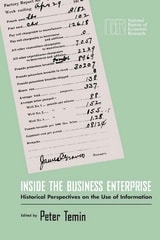
Inside the Business Enterprise
Historical Perspectives on the Use of InformationEdited by Peter Temin
University of Chicago Press, 1991
Because business enterprises are complex institutions, these questions can prove difficult to address. All too often, firms are treated as the atoms of economics, the irreducible unit of analysis. This accessible volume, suitable for course use, looks more closely at the American firm—into its internal workings and its genesis in the Gilded Age. Focusing on the crucial role of imperfect and asymmetric information in the operation of enterprises, Inside the Business Enterprise forges an innovative link between modern economic theory and recent business history.

Integrated Water Development
Water Use and Conservation Practice in Western ColoradoJames L. Wescoat Jr.
University of Chicago Press, 1984
Intentional Tech
Principles to Guide the Use of Educational Technology in College TeachingDerek Bruff
West Virginia University Press, 2019
Chalkboards and projectors are familiar tools for most college faculty, but when new technologies become available, instructors aren’t always sure how to integrate them into their teaching in meaningful ways. For faculty interested in supporting student learning, determining what’s possible and what’s useful can be challenging in the changing landscape of technology.
Arguing that teaching and learning goals should drive instructors’ technology use, not the other way around, Intentional Tech explores seven research-based principles for matching technology to pedagogy. Through stories of instructors who creatively and effectively use educational technology, author Derek Bruff approaches technology not by asking “How to?” but by posing a more fundamental question: “Why?”
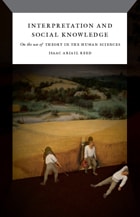
Interpretation and Social Knowledge
On the Use of Theory in the Human SciencesIsaac Ariail Reed
University of Chicago Press, 2011

Interrogative Investigations
The Form, Meaning, and Use of English InterrogativesJonathan Ginzburg and Ivan A. Sag
CSLI, 2001
This book closes the gap in research on this subject. By developing the frameworks of Head Driven Phrase Structure Grammar and Situation Semantics, the authors provide an account that rigorously integrates syntactic, semantic, and contextual dimensions of interrogatives. The challenge of providing exhaustive coverage of the interrogative constructions of English, including various constructions that occur solely in dialogue interaction, leads to new insights about a variety of contentious theoretical issues. These include matters of semantic ontology, the quantificational status of wh-phrases, the semantic effect of wh-fronting, the status of constructions in grammatical theory, the integration of illocutionary information in the grammar, and the nature of ellipsis resolution in dialogue. The account is stated with sufficient rigor to enable fairly direct computational implementation.
Music by Numbers
The Use and Abuse of Statistics in the Music IndustryEdited by Richard Osborne and Dave Laing
Intellect Books, 2021
An edited volume that examines the data and statistics that are key to the music industry.
The music industries are fueled by statistics: sales targets, breakeven points, success ratios, royalty splits, website hits, ticket revenues, listener figures, piracy abuses, and big data. Statistics are of consequence. They influence the music that consumers get to hear, they determine the revenues of music makers, and they shape the policies of governments and legislators. Yet many of these statistics are generated by the music industries themselves, and their accuracy can be questioned. Music by Numbers sets out to explore this shadowy terrain.
This edited collection provides the first in-depth examination of the use and abuse of statistics in the music industry. Written by noted music business scholars and practitioners in the field, the book addresses five key areas in which numbers are employed: sales and awards; music industry policy; live music; music piracy; and digital solutions. The authors address these subjects from a range of perspectives: some of them test the veracity of this data and explore its tactical use by music businesses; others help to generate these numbers by developing surveys and online projects and offering candid observations.
The aim of this collection is to expose the culture and politics of data. Music industry statistics are pervasive, but despite this ubiquity they are underexplored. This book offers a corrective by providing new ways by which to learn music by numbers.

Newer Dimensions of Patient Care
The Use of the Physical and Social Environment for Therapeutic PurposesEsther Lucille Brown
Russell Sage Foundation, 1961
No Shelf Required 2
Use and Management of Electronic BooksSue American Library Association
American Library Association, 2022
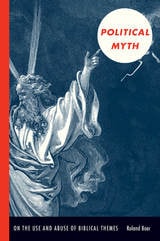
Political Myth
On the Use and Abuse of Biblical ThemesRoland Boer
Duke University Press, 2009
Boer elaborates a theory of political myth in dialogue with Ernst Bloch, Theodor Adorno, Alain Badiou, Jacques Lacan, and Slavoj Žižek. Through close readings of well-known biblical stories he then scrutinizes the nature of political myth in light of feminism, psychoanalysis, and Marxism. Turning to contemporary politics, he examines the statements of prominent American and Australian politicians to show how the stories of Creation, conquest, Paradise, and the Promised Land have been distorted into a fantasy of Israel as a perpetual state in the making and a land in need of protection. Boer explains how this fantasy of Israel shapes U.S. and Australian foreign and domestic policies, and he highlights the links between it and the fantasy of unfettered global capitalism. Contending that political myths have repressed dimensions which if exposed undermine the myths’ authority, Boer urges the Left to expose the weakness in the Right’s mythos. He suggests that the Left make clear what the world would look like were the dream of unconstrained capitalism to be realized.
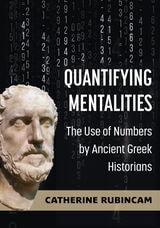
Quantifying Mentalities
The Use of Numbers by Ancient Greek HistoriansCatherine Rubincam
University of Michigan Press, 2021
As 21st-century citizens of developed countries, we are constantly bombarded by numbers in every aspect of our lives. Almost automatically, we learn to interpret how numbers are used in our language, what magnitude of numbers we expect to hear in particular contexts, how people in our community express degrees of confidence in the reliability of any particular number, etc. Context of this kind is lacking when we read a historical narrative composed in an ancient language, from a world vastly different from ours. In Quantifying Mentalities, Catherine Rubincam helps overcome this barrier to our accurate understanding of the numbers in the works of five major ancient Greek historians by providing a standard against which their credibility can be more accurately judged.
This systematic, quantified study is based on the compilation of statistics concerning a standard constellation of aspects of all the numbers in the historical works of the five earliest wholly or at least substantially surviving ancient Greek historians: Herodotus, Thucydides, Xenophon (Anabasis and Hellenica), Polybius, and Diodorus Siculus. Such a comprehensive study has not been attempted before. For scholars reading and writing about the history of ancient Greece the volume offers a tool for interpreting the numbers in these ancient texts with more sensitivity to the world in which they were written. Standard aspects of number use captured by the coding system are: the different types of number (cardinals, ordinals, compounds, and non-explicit but definite numbers); the subject category to which each number belongs (Time, Distance-Size, Military, Population, Money, and Miscellaneous); and the types of any qualifications attached to it (Approximating, Comparative, Alternative, and Emphatic). The statistics also facilitate comparisons of every aspect of number use between authors and texts, enabling the delineation of a numeric profile for each one. This allows us to read these texts with a greater sensitivity to how they might have sounded to the author and his original readers, thus providing a firmer foundation for reconstructing or interpreting ancient Greek history.

Relevant Linguistics
An Introduction to the Structure and Use of English for TeachersPaul W. Justice
CSLI, 2001
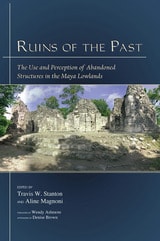
Ruins of the Past
The Use and Perception of Abandoned Structures in the Maya LowlandsTravis W. Stanton
University Press of Colorado, 2008

Seeing Green
The Use and Abuse of American Environmental ImagesFinis Dunaway
University of Chicago Press, 2015
Finis Dunaway closes that gap with Seeing Green. Considering a wide array of images—including pictures in popular magazines, television news, advertisements, cartoons, films, and political posters—he shows how popular environmentalism has been entwined with mass media spectacles of crisis. Beginning with radioactive fallout and pesticides during the 1960s and ending with global warming today, he focuses on key moments in which media images provoked environmental anxiety but also prescribed limited forms of action. Moreover, he shows how the media have blamed individual consumers for environmental degradation and thus deflected attention from corporate and government responsibility. Ultimately, Dunaway argues, iconic images have impeded efforts to realize—or even imagine—sustainable visions of the future.
Generously illustrated, this innovative book will appeal to anyone interested in the history of environmentalism or in the power of the media to shape our politics and public life.
Social Statistics in Use
Philip Morris Hauser
Russell Sage Foundation, 1975

The Social Life of Scriptures
Cross-Cultural Perspectives on BiblicismEdited and with an introduction by James S. Bielo
Rutgers University Press, 2009
Contributors offer a collection of closely analyzed and carefully conducted ethnographic and historical case studies, covering a range of geographic, theological, and cultural territory, including: American evangelicals and charismatics; Jamaican Rastafarians; evangelical and Catholic Mayans; Northern Irish charismatics; Nigerian Anglicans; and Chinese evangelicals in the United States.
The Social Life of Scriptures is the first book to present an eclectic, cross-cultural, and comparative investigation of Bible use. Moreover, it models an important movement to outline a framework for how scriptures are implicated in organizing social structures and meanings, with specific foci on gender, ethnicity, agency, and power.

The Use and Abuse of Biology
An Anthropological Critique of SociobiologyMarshall D. Sahlins
University of Michigan Press, 1976
The Use and Abuse of Biology: An Anthropological Critique of Sociobiology is Marshall Sahlins's fierce intellectual takedown of genetic determinism and the then-emerging field of sociobiology popularized by E.O. Wilson. Writing from his then-position at the University of Chicago, Sahlins argues that human behavior cannot be reduced to evolutionary biology, selfish genes, or a simple drive to maximize reproductive success. Instead, he demonstrates how human social structures—particularly kinship systems, which form the bedrock of many traditional societies—are defined by arbitrary cultural rules and symbolic meanings rather than biological or genetic proximity. By showing that culture dictates human action far more than animal instincts do, Sahlins's critique remains a foundational text in anthropological theory, warning against the dangers of importing Western capitalist concepts of competition and individualism into the study of human evolution. Sahlins argues that human behavior cannot be reduced to mere biological imperatives because culture interposes itself as a unique, symbolic meaning system between human genetics and social practice. He takes aim at "vulgar sociobiology," demonstrating through vast cross-cultural examples that fundamental social structures—especially human kinship systems—are constructed on variable cultural rules rather than calculated genetic or evolutionary self-interest. Furthermore, Sahlins provides an ideological critique, revealing that sociobiological models often reflect Western capitalist frameworks mistakenly projected onto nature. Ultimately, this foundational text remains an indispensable defense of the autonomy of cultural anthropology, asserting that while biology sets physical limits, it is the symbolic faculty of culture that dictates human society.

The Use and Development of the Xinkan Languages
By Chris Rogers
University of Texas Press, 2016
Once spoken only in Santa Rosa Department, Guatemala, the Xinkan language family is unique within Mesoamerica, comprising four closely related languages that are unrelated to any of the other language groups used within the region. Descriptions of Xinkan date to 1770 but are typically only sketches or partial word lists. Not even the community of indigenous people who identify as Xinka today—the last speakers—have had access to a reliable descriptive source on their ancestral tongue. Preserving this endangered communication system in accurate, thorough detail, The Use and Development of the Xinkan Languages presents a historical framework, internal classifications, and both synchronic and diachronic descriptions, incorporating all elements of grammar based on extensive unpublished data collected in the 1970s by Lyle Campbell and Terrence Kaufman.
This valuable contribution is enhanced by author Chris Rogers’s emphasis on contextualizing the findings. Introducing the languages, Rogers presents important information regarding the social and cultural milieu of the speakers. He also traces a phonological reconstruction of Proto-Xinkan and reconstructs historical morphology and syntax. These revelations are of particular interest because the development of Xinka and the many aspects of Xinka morphosyntax have not been well understood. A sample text, “Na Mulha Uy,” is included as well. Solving numerous complex, centuries-old linguistic puzzles, The Use and Development of the Xinkan Languages unlocks new potential for the rediscovery of a rich cultural history.
This book is a part of the Recovering Languages and Literacies of the Americas publication initiative, funded by a grant from the Andrew W. Mellon Foundation.

The Use of Books and Libraries
Harold Russell
University of Minnesota Press, 1933

The Use of Land and Water Resources in the Past and Present Valley of Oaxaca, Mexico
Anne V. T. Kirkby
University of Michigan Press, 1973

The Use of Language
Prashant Parikh
CSLI, 2001

The Use of Riches
J. I. M. Stewart
University of Chicago Press, 1983
That afternoon she has received a cable from an old acquaintance, an Italian marchesa. It seems that Arnander fathered an illegitimate son whom the archesa has been looking after. She can no longer do so and wants Jill to come and arrange the boy's future. The Crains hasten to Italy, Rupert going along to the preliminary interview with the marchesa, as he is suspicous that there may not really be an Arnander child, that this is a ruse to extract money.
The truth revealed to him by the marchesa is shattering, and the quintessentially civilized Craines find themselves plunged into an increasingly bizarre drama.

The Use of Social Science Data in Supreme Court Decisions
Rosemary J. Erickson and Rita J. Simon
University of Illinois Press, 1998
By offering insights into how data are used by the Supreme Court, the authors hope to show social scientists how to make their research more suitable for courtroom use and to show the legal community how such data can be used more effectively. The volume includes an overview of the kinds of research used, a list of cases in which such research was used, and a discussion of justices and how they voted on cases in which such data were used from 1972 to 1992.

The Use of the Old Testament in the New and other essays
studies in honor of William Franklin StinespringJames M. Efird
Duke University Press, 1972
Think Generic!
The Meaning and Use of Generic SentencesAriel Cohen
CSLI, 1999

What's the Use?
On the Uses of UseSara Ahmed
Duke University Press, 2019
When Media Are New
Understanding the Dynamics of New Media Adoption and UseJohn Carey and Martin C. J. Elton
University of Michigan Press, 2010
"John Carey and Martin Elton are among the most skilled and insightful researchers studying the dynamic changes in technology and the impacts on consumer attitudes and behaviors. Their comprehensive and actionable observations make this a must read for anyone interested in understanding the current (and future) media environment."
---Alan Wurtzel, President, Research and Media Development, NBC Universal
"When Media Are New should be read by every media manager faced with disruptive change brought on by new technology. The book transcends the fashionable topics and themes that are here today and gone tomorrow and instead places emphasis on those areas of research and implementation where fatal mistakes are made. They capture something universal, and therefore highly useful, by stripping away the hype and focusing relentlessly on consumers and the ways they adopt or fail to adopt new media products and technologies into their lives."
---Martin Nisenholtz, Senior Vice President, Digital Operations, The New York Times Company
"The burgeoning development of the Internet has deflected attention from a wider history of new media innovations that has shaped its success. John Carey and Martin Elton demonstrate that earlier initiatives to launch videophones, two-way interactive cable systems, videotext and other media innovations can teach us much about the present state and future course of information and communication technologies. This is a key reference on the new media, and must reading for students of the Internet---the platform for continuing the new media revolution."
---Professor William H. Dutton, Director, Oxford Internet Institute, University of Oxford
The world of communication media has undergone massive changes since the mid-1980s. Along with the extraordinary progress in technological capability, it has experienced stunning decreases in costs; a revolutionary opening up of markets (a phenomenon exemplified by but not limited to the rise of the Internet); the advent of new business models; and a striking acceleration in the rate of change. These technological, regulatory, and economic changes have attracted the attention of a large number of researchers, from industry and academe, and given rise to a substantial body of research and data. Significantly less attention has been paid to the actual and intended users of new media. When Media Are New addresses this research and publishing gap by investigating the human side of the technological changes of the last 50 years and the implications for current and future media. It will find a broad audience ranging from media scholars to policymakers to industry professionals.
John Carey is Professor of Communications and Media Management at Fordham Business School and has extensive experience in conducting research about new media for companies such as AT&T, Cablevision, NBC Universal, and the New York Times (among many others) as well as foundations and government agencies. His extensive publications have focused on user adoption of new media and how consumers actually use new technologies.
Martin C. J. Elton was Director of the Communication Studies Group in the UK, which pioneered in the study of user behavior with new media technologies, and founded the Interactive Telecommunication Program at New York University. He has published widely on user research, forecasting, and public policy and has conducted extensive research for many prominent foundations, companies, and government agencies in the USA and Europe.

Wittgenstein
The Senses of UseSandra Laugier
University of Chicago Press, 2025
One of philosopher Ludwig Wittgenstein’s most consequential claims was that the meaning of the word, its sense, is its use in language. This deceptively simple claim, the foundation of what became known as ordinary language philosophy, has animated thinkers across disciplinary bounds from metaphysics to ethics and more. In The Senses of Use, Sandra Laugier embarks on a fresh journey through Wittgenstein’s corpus that emphasizes the place of ordinary life and language in its thought. Through his Tractatus Logico-Philosophicus, Philosophical Investigations, and rich posthumously published works, Laugier offers a compelling new look at Wittgenstein as a philosopher of mind.

iLobby.eu
Survival Guide to EU Lobbying, Including the Use of Social MediaCaroline de Cock
Eburon Academic Publishers, 2010
With iLobby.eu, Caroline De Cock draws on extensive firsthand experience to present a thorough guide to lobbying the European Union using both traditional methods and social media tools. This practical handbook includes an introduction to lobbying, with tips and anecdotes, recommendations for the use of social media, comprehensive indices, and detailed examples of best and worst practices.